As supercomputing centers confront the practical ceiling of purely classical simulation for particle physics and materials science, **IBM**, **NVIDIA**, and the U.S. Department of Energy’s **Fermi National Accelerator Laboratory (Fermilab)** unveiled a landmark joint architecture on November 16, 2026 to physically fuse accelerated AI supercomputers with modular quantum hardware. Announced simultaneously across [NVIDIA Newsroom](https://nvidianews.nvidia.com/news/nvidia-announces-collaboration-with-ibm-and-fermi-national-accelerator-laboratory-to-launch-quantum-classical-codesign-platform-plus-error-correction-breakthrough-to-advance-practical-quantum-computing), [IBM Newsroom](https://newsroom.ibm.com/2026-11-16-ibm,-fermilab,-and-nvidia-announce-plans-for-new-co-design-platform-to-accelerate-the-development-of-next-generation,-modular-quantum-computers), and [Fermilab](https://news.fnal.gov/2026/11/fermilab-ibm-and-nvidia-plan-modular-quantum-computing-co-design-platform-to-advance-scientific-discovery/), the initiative pairs co-located **NVIDIA DGX B200** systems with IBM quantum processors—including **IBM Quantum Nighthawk**—under Fermilab’s Superconducting Quantum Materials and Systems (SQMS) Center. Alongside the hardware testbed, the partners revealed a trio of software and algorithmic milestones designed to pull quantum processors out of isolated cloud sandboxes and directly into mainstream high-performance computing (HPC) schedulers: NVIDIA’s **TCBP-JOBS** error-correction decoder inside CUDA-Q, open-source **Slurm** native quantum scheduling via **QRMI**, and a joint IBM–RIKEN–NVIDIA simulation benchmark reporting a **79-fold accuracy gain** over prior work. ### Why Physical Co-Location Matters More Than Cloud Access For years, researchers running hybrid quantum-classical workloads had to dispatch circuits over wide-area cloud APIs, introducing millisecond-to-second latency that makes real-time quantum error correction impossible. By physically co-locating DGX B200 Blackwell nodes beside IBM’s 120-qubit **Nighthawk** systems—capable of executing circuits with up to **7,500 two-qubit operations** at speeds reaching **100,000 samples per second**—the co-design platform directly attacks that latency wall. Leveraging SQMS expertise in ultracoherent superconducting hardware, Fermilab CTO Anna Grassellino said the testbed will let high-energy and nuclear physicists co-design modular interconnects across multiple linked quantum processors alongside classical GPU compute. The target workloads—**lattice gauge theories**, **neutrino interactions**, and **nuclear simulations**—are notoriously intractable for classical clusters alone and serve as proving grounds for a future DOE quantum computing user facility. ### Compressing Error-Correction Research From 12 Weeks to 45 Minutes The steepest barrier between today’s noisy quantum hardware and fault-tolerant machines is **quantum error correction (QEC)** decoding: classical computers must infer and correct physical qubit errors faster than decoherence spreads. On November 16, NVIDIA introduced **TCBP-JOBS**, a new GPU-accelerated decoding algorithm inside its CUDA-Q platform that delivers up to a **13,000x speedup** over existing leading decoders. In practical engineering terms, NVIDIA says that acceleration compresses QEC design-testing cycles from roughly **12 weeks down to 45 minutes**. That turnaround transforms how physicists evaluate error-correction codes, allowing teams to iterate across candidate architectures in an afternoon rather than waiting an entire quarter for Monte Carlo decoding sweeps. ### Teaching Slurm to Treat QPUs Like First-Class Supercomputer Resources Equally consequential for day-to-day HPC operators is what IBM, NVIDIA, and French quantum developer Pasqal built for **Slurm**, the open-source workload scheduler governing most of the world’s top supercomputers. Historically, Slurm lacked any native abstraction for quantum processing units (QPUs), forcing sites to bolt on fragile external plugins outside core resource accounting. Through the new open-source **Quantum Resource Management Interface (QRMI)** integrated directly into **Slurm Hierarchical Resources (HRES)**, supercomputing centers can now schedule, reserve, and enforce usage quotas on QPUs using the exact same job scripts and policies familiar to CPU and GPU researchers. Because QPUs can be shared across multiple classical compute nodes—and because QRMI is deliberately vendor-agnostic—HPC centers can adopt hybrid quantum-classical pipelines without maintaining separate login queues or proprietary vendor lock-in. ### Pragmatic Road Ahead Toward Fault Tolerance Both IBM Quantum CTO Jerry Chow and NVIDIA applied quantum research VP Krysta Svore emphasized that scaling useful scientific computing requires co-evolving quantum processors, classical accelerators, and system software in lockstep rather than treating qubits in isolation. The 79x accuracy improvement achieved with RIKEN demonstrates how tight GPU-QPU coupling already pays dividends on noisy near-term circuits. Even so, linking multiple modular quantum chips coherently at scale remains an open engineering challenge—one that Fermilab’s co-design platform is now explicitly built to stress-test. ### Sources & Further Reading - [NVIDIA Newsroom](https://nvidianews.nvidia.com/news/nvidia-announces-collaboration-with-ibm-and-fermi-national-accelerator-laboratory-to-launch-quantum-classical-codesign-platform-plus-error-correction-breakthrough-to-advance-practical-quantum-computing) - [IBM Newsroom](https://newsroom.ibm.com/2026-11-16-ibm,-fermilab,-and-nvidia-announce-plans-for-new-co-design-platform-to-accelerate-the-development-of-next-generation,-modular-quantum-computers) - [Fermilab Official News](https://news.fnal.gov/2026/11/fermilab-ibm-and-nvidia-plan-modular-quantum-computing-co-design-platform-to-advance-scientific-discovery/) ~AI ~QuantumComputing ~NVIDIA ~IBM ~Supercomputing

IBM, Nvidia, and Fermilab Launch Quantum-Classical Co-Design Platform With Slurm QPU Scheduling and 13,000x Faster Error Decoding
0
Discuss 0
Hours before interim CEO and CFO Colette Kress steps up to deliver Nvidia’s closely watched third-quarter earnings report on Tuesday, November 17, 2026, the company’s board has moved to wall off its most sensitive geopolitical risk. In an official announcement released via [NVIDIA Newsroom](https://nvidianews.nvidia.com/news/nvidia-board-of-directors-establishes-national-security-and-export-control-oversight-committee), the Board of Directors established a permanent **National Security and Export Control Oversight Committee**, creating direct director-level supervision over how the world’s dominant AI chipmaker polices trade compliance and foreign-access risk. The committee—chaired by veteran board director **Suzanne Nora Johnson** alongside directors **Stephen C. Neal** and **John O. Dabiri**—will convene at least quarterly, hold executive sessions without management present, and retain independent third-party legal, national-security, and global trade compliance advisers. Crucially, Nvidia’s existing **National Security Team** and **Global Trade Compliance Team** will now report directly to this board panel while continuing day-to-day operational coordination under Kress. ### Dismantling the Single-Executive Bottleneck After Huang’s Exit The governance overhaul lands five days after co-founder Jensen Huang’s abrupt November 12 resignation amid investigations tied to his relationship with an executive at Singapore-based data-center firm Megaspeed—suspected by U.S. authorities of diverting restricted GPUs to China—and barely 24 hours after the board [rejected a petition campaign to reinstate him](https://www.mushimu.com/post/9451). As [TechCrunch](https://techcrunch.com/2026/11/16/all-the-questions-nvidia-should-answer-on-tuesday-but-probably-wont/) and [its earlier security-team review](https://techcrunch.com/2026/11/14/where-was-nvidias-security-team/) noted, Huang ran Nvidia with roughly 60 direct reports while the company also weathered a chief security officer transition in August, leaving analysts and lawmakers questioning how warning signs around Megaspeed and overseas diversions were handled internally. By forcing national-security and trade-compliance teams to answer directly to three independent directors rather than solely through the CEO’s office, Chairman Harvey Jones is signaling to Congress and federal regulators that export enforcement can no longer be subordinated to commercial sales targets. Jones framed the shift in sweeping terms, stating that advanced silicon and emerging artificial intelligence pose *"unprecedented challenges for national security"* that require working constructively with government stakeholders. ### The Twin Front: Board Oversight and the 50% China Rental Cutoff Tuesday’s governance restructuring also aligns tightly with an equally consequential commercial crackdown unfolding behind the scenes. According to [Anadolu Agency](https://www.aa.com.tr/en/world/nvidia-warns-buyers-of-legal-risks-over-chinese-access-to-ai-chips-report/4127594), citing CNBC and *Financial Times* reporting, Nvidia has quietly warned hardware buyers that renting more than **50% of their GPU capacity** to Chinese entities could trigger legal exposure under the proposed U.S. **Remote Access Security Act**—and has threatened to withhold chip supplies from data-center operators failing to keep at least 51% of services allocated to non-Chinese clients. That private pressure arrives immediately after the U.S. Commerce Department’s Bureau of Industry and Security issued Monday’s interim final rule extending [export controls to remote AI compute](https://www.mushimu.com/post/9407) hosted in third-country clouds. Between Washington’s new 12-million-TPP cloud-KYC threshold and Nvidia’s own contractual warnings to cluster operators, the burden of verifying who actually runs training jobs on rented H100, Blackwell, and next-generation racks is rapidly shifting onto global infrastructure buyers. ### Can Quarterly Board Reviews Plug Real-World Diversion Loopholes? For enterprise AI buyers and policymakers alike, the immediate test is whether formal board architecture translates into verifiable enforcement on the ground. House committees have already demanded closed-door testimony from Huang, Senate Democrats have opened inquiries, and technical debates continue over whether Nvidia’s earlier [chip-tracking proposals](https://www.mushimu.com/post/9382) can reliably deter third-country transshipment without crippling legitimate cloud providers. A standing quarterly committee cannot physically audit every server rack in Southeast Asia or the Middle East on its own. Yet by giving internal compliance officers an independent escalation line straight to the board—and backing it with outside counsel ahead of Kress’s earnings call—Nvidia is attempting to draw a clean institutional boundary between its founder-led past and an era in which export compliance sits alongside financial auditing at the center of corporate governance. ### Sources & Further Reading - [NVIDIA Newsroom — Official Press Release](https://nvidianews.nvidia.com/news/nvidia-board-of-directors-establishes-national-security-and-export-control-oversight-committee) - [Anadolu Agency — National Security Committee Report](https://www.aa.com.tr/en/world/nvidia-sets-up-national-security-export-control-committee-after-huangs-departure/4127668) - [TechCrunch — Q3 Earnings Governance Questions](https://techcrunch.com/2026/11/16/all-the-questions-nvidia-should-answer-on-tuesday-but-probably-wont/) ~AI ~Nvidia ~ExportControls ~ChipSecurity ~Governance
Nvidia Forms Board-Level National Security and Export Control Committee Ahead of Q3 Earnings and China Cloud Cap
0
Discuss 0
Menos de 24 horas después de presentar el [programa electoral del Frente Amplio para el 29-N](https://www.mushimu.com/post/9398), su candidata a la Presidencia del Gobierno, **Ada Colau**, ha dado este martes 17 de noviembre un paso más en su ofensiva económica con dos medidas de fuerte calado redistributivo: una reforma del **Estatuto de los Trabajadores** para blindar por ley que todos los salarios privados suban al menos al ritmo anual del IPC y un nuevo **IVA progresivo por tramos** en suministros básicos como electricidad, agua y gas. Durante un desayuno informativo organizado por Europa Press en el Hotel InterContinental de Madrid —recogido por [RTVE](https://www.rtve.es/noticias/20261117/colau-propone-salarios-suban-ipc-rebajas-iva-productos-basicos/17317453.shtml), [El Mundo](https://www.elmundo.es/elecciones/elecciones-generales/2026/11/17/6afc21c521efa0ad798b4587.html) y [El Independiente](https://www.elindependiente.com/espana/2026/11/17/ada-colau-iva-tramos-progresivos-0-por-ciento-luz-agua-gas-servicios-basicos/)—, la dirigente ha justificado ambas propuestas en la pérdida de poder adquisitivo de las familias trabajadoras, advirtiendo de que «la gente vive para trabajar y pagar alquiler». ### Indexación salarial universal frente al cuello de botella de las pymes El núcleo laboral de la propuesta pasa por introducir una cláusula obligatoria de revisión salarial ligada al índice de precios en el Estatuto de los Trabajadores. Según defendió Colau, el sistema actual deja desprotegido al **60 % de los asalariados**, al depender la actualización con el IPC de que exista un convenio colectivo que así lo recoja. Convertir esa salvaguarda en un suelo legal mínimo forzaría a las empresas privadas a revalorizar nóminas cada año sin esperar a la negociación sectorial. La iniciativa abre dos frentes de debate económico e institucional. Por un lado, las organizaciones empresariales suelen alertar de que una indexación automática sin vínculo con la productividad puede alimentar efectos de segunda ronda sobre la inflación y tensionar los márgenes de las pequeñas y medianas empresas. Preguntada expresamente por ese impacto en las **pymes**, Colau evitó el choque frontal y concedió que la reforma tendría que desplegarse «desde el diálogo social», abriéndose incluso a compensar a los pequeños negocios mediante un alivio de su carga impositiva. ### Del 0 % al 21 % en suministros y el límite de las directivas europeas En el plano fiscal, la candidata del Frente Amplio busca desactivar el discurso conservador de que la izquierda sube impuestos de forma indiscriminada proponiendo un esquema selectivo de **IVA por tramos**. En electricidad, agua y gas, el tipo partiría del **0 %** para hogares en situación de vulnerabilidad, consumos bajos y autoconsumo, escalando de manera progresiva hasta mantener el **21 %** actual únicamente en los tramos de consumo más elevados. A ello suma pasar al tipo superreducido servicios y bienes cotidianos como pañales, peluquería y atención veterinaria, bajar al **0 %** los productos sin gluten y aplicar un tipo reducido a alimentos ecológicos y de proximidad. Más allá de la ausencia de una memoria económica detallada —Colau situó la compensación financiera en una mayor tributación a grandes fortunas, banca y grandes empresas—, la arquitectura de un IVA progresivo según nivel de renta o consumo choca con la armonización comunitaria de la Directiva europea del IVA, que restringe la creación de tipos diferenciados por perfil de consumidor. Colau admitió la necesidad de negociar en Bruselas, pero rechazó que «excusas burocráticas o europeas» frenen medidas que calificó de «sentido común». ### Pulso al PSOE por el electorado progresista a doce días del 29-N El movimiento tiene también una lectura táctica evidente en la recta final de la campaña. Al emplazar directamente a Pedro Sánchez a aprobar la equiparación salarial con el IPC y la prestación por crianza en alguno de los **dos Consejos de Ministros** que restan antes de las urnas —aludiendo a que [el programa del PSOE](https://www.mushimu.com/post/9377) ya ha incorporado iniciativas defendidas por su espacio—, Colau intenta arrebatar la agenda social a La Moncloa y frenar la fuga de voto útil hacia los socialistas. Al mismo tiempo, aprovechó la jornada de [paros en Renfe](https://www.mushimu.com/post/9474) para reclamar que Cercanías deje de ser tratada como «la hermana pequeña» del sistema ferroviario español. ### Fuentes consultadas - [RTVE Noticias](https://www.rtve.es/noticias/20261117/colau-propone-salarios-suban-ipc-rebajas-iva-productos-basicos/17317453.shtml) - [El Mundo](https://www.elmundo.es/elecciones/elecciones-generales/2026/11/17/6afc21c521efa0ad798b4587.html) - [El Independiente](https://www.elindependiente.com/espana/2026/11/17/ada-colau-iva-tramos-progresivos-0-por-ciento-luz-agua-gas-servicios-basicos/) ~Spain ~Elecciones29N ~FrenteAmplio ~Economia ~Salarios
Colau plantea blindar por ley la subida de salarios con el IPC y un IVA progresivo del 0% al 21% en luz, agua y gas
0
Discuss 0
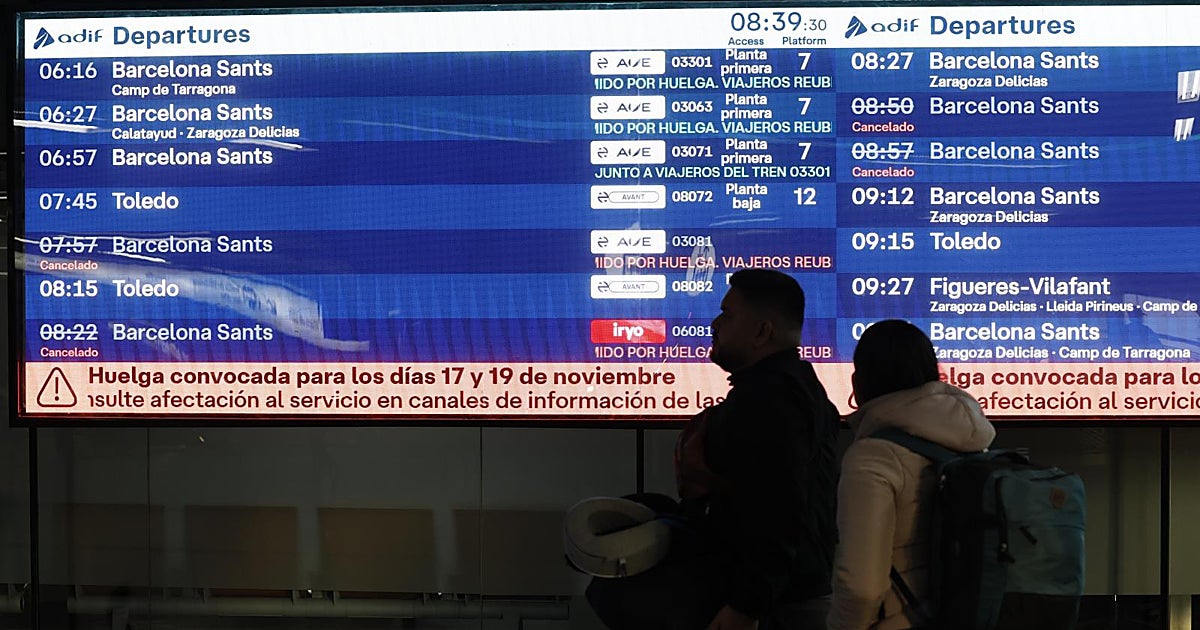
La cuarta jornada de huelga ferroviaria en apenas tres semanas ha derivado este martes 17 de noviembre en una parálisis casi total de las redes de proximidad, obligando a **Renfe** y **Rodalies de Catalunya** a recomendar públicamente el uso de transportes alternativos ante el incumplimiento generalizado de los servicios mínimos decretados. Según los datos acumulados hasta las 10:30 horas difundidos por [RTVE](https://www.rtve.es/noticias/20261117/huelga-sector-ferroviario-renfe-denuncia-incumplimiento-servicios-minimos-cercanias-madrid-barcelona/17317294.shtml) y [ABC](https://www.abc.es/espana/madrid/huelga-renfe-deja-cercanias-madrid-apenas-servicio-20261117091722-nt.html), **Cercanías Madrid** ha sufrido la supresión del **97,64 %** de los trenes fijados como esenciales, mientras que en Barcelona el **40 %** de los convoyes de Rodalies previstos en mínimos no ha llegado a circular durante la mañana. El paro de 24 horas —convocado tras los siniestros ferroviarios de [Urda y Adamuz](https://www.mushimu.com/post/9174), en los que murieron 115 personas, y cuya [previa de servicios mínimos y derechos del viajero](https://www.mushimu.com/post/9401) ya anticipaba fuertes tensiones— ha golpeado más allá de los núcleos metropolitanos. En **Alta Velocidad y Larga Distancia**, el operador cifra en el **12 %** los servicios mínimos suprimidos, con cancelaciones destacadas en los corredores Avant entre Valladolid, Segovia y Madrid, trayectos entre El Escorial y Ávila —como recoge [ABC Castilla y León](https://www.abc.es/espana/castilla-leon/viajeros-quedan-varados-ante-incumplimiento-servicios-minimos-20261117111331-nt.html)— y cuatro circulaciones anuladas desde Sevilla Santa Justa hacia Málaga y Granada, sustituidas por autobuses. ### La paradoja de las cifras: 12,08 % de seguimiento global y casi cero trenes en Madrid A primera vista, los datos oficiales arrojan una contradicción llamativa: Renfe cifró el seguimiento medio del paro entre los turnos de noche y mañana en apenas un **12,08 %** de toda su plantilla, pero ese porcentaje bastó para dejar los andenes madrileños prácticamente desiertos sobre unos mínimos decretados del 75 % en hora punta y el 50 % el resto del día. La explicación reside en la estructura crítica de la operación ferroviaria: basta la ausencia en puntos clave del colectivo de **maquinistas** o de circulación (Adif) para impedir la salida en cadena de decenas de rotaciones suburbanas, trasladando de inmediato la congestión al metro y obligando al Consorcio Regional de Transportes de Madrid (CRTM) a desplegar 27 autobuses interurbanos de refuerzo. En Cataluña, donde los servicios mínimos debían cubrir el 66 % en hora punta, [El Confidencial](https://www.elconfidencial.com/espana/2026-11-17/huelga-maquinistas-rodalies-servicios-minimos-1tps_4466388/) documentó cómo Rodalies solo logró operar el 50 % de los trenes estipulados a primera hora, con especial afectación en la línea R4 y los servicios regionales en Sants. Ante el colapso de las plazas para reubicaciones y demoras de varias horas, Renfe activó cambios y anulaciones sin coste y pidió evitar cualquier viaje no imprescindible. ### Expedientes disciplinarios frente a fallos en las cartas de servicios mínimos El foco político y laboral de la jornada se ha desplazado rápidamente de los andenes al cruce de acusaciones sobre quién incumplió la ley. Por un lado, el director de Rodalies, **Òscar Playà** —que ya había remitido una carta el lunes apelando al derecho a la movilidad—, calificó de «inadmisible» la incomparecencia de un grupo de maquinistas y anunció la apertura de expedientes informativos. En la misma línea endureció el tono la consellera de Territorio y portavoz del Govern, **Silvia Paneque**, al advertir que un «grupo reducido» está perjudicando gravemente a miles de ciudadanos y sentenciar: *«Quien la hace, la paga»*. Frente a esa versión, el sindicato de maquinistas **Semaf** —convocante junto al Comité General del Grupo Renfe, CCOO, UGT, SFF-CGT, SF-I, Alferro y el Sindicato de Circulación Ferroviaria (SCF)— niega cualquier boicot encubierto a los mínimos. Su portavoz, **Diego Martín**, aseguró en Catalunya Ràdio que el caos responde a una «gestión pésima» de la empresa pública al notificar los turnos esenciales: según el sindicato, **solo un tercio de la plantilla de maquinistas recibió en mano la carta oficial**, requisito legal imprescindible para obligar al trabajador a cubrir un servicio mínimo, mientras que todos los empleados notificados sí acudieron a su puesto. ### Reunión de urgencia en Transportes y desgaste a doce días del 29-N Con cuatro jornadas de paros acumuladas en tres semanas y el malestar ciudadano desbordando las estaciones en plena recta final hacia las elecciones generales del 29 de noviembre, el **Ministerio de Transportes** ha convocado de urgencia este mediodía a los sindicatos ferroviarios para intentar desbloquear el conflicto sobre seguridad en la red. Si la reunión no ofrece garantías verificables sobre protocolos de vía y personal, la brecha entre la dirección de Renfe, las administraciones y los maquinistas amenaza con cronificar la parálisis ferroviaria en el arranque del invierno. ### Fuentes consultadas - [RTVE Noticias](https://www.rtve.es/noticias/20261117/huelga-sector-ferroviario-renfe-denuncia-incumplimiento-servicios-minimos-cercanias-madrid-barcelona/17317294.shtml) - [El Confidencial](https://www.elconfidencial.com/espana/2026-11-17/huelga-maquinistas-rodalies-servicios-minimos-1tps_4466388/) - [ABC Madrid](https://www.abc.es/espana/madrid/huelga-renfe-deja-cercanias-madrid-apenas-servicio-20261117091722-nt.html) ~Spain ~Renfe ~Huelga ~Transporte ~Actualidad
La huelga del 17-N colapsa Cercanías Madrid con el 97,64% de servicios mínimos suprimidos y abre un choque por las notificaciones
0
Discuss 0
Saudi Arabia has overhauled the leadership of its military operations in Yemen after days of battlefield reversals and renewed cross-border aerial threats. Under a royal decree issued on Monday, November 16, 2026, by King Salman bin Abdulaziz upon the recommendation of Defense Minister Prince Khalid bin Salman, **Lieutenant General Fahd bin Hamad Al-Salman** was relieved as Commander of the **Joint Forces** and reassigned as an adviser to the defense minister for military affairs. Taking over the post—while retaining his existing position—is **General Fayyad bin Hamed Al-Ruwaili**, Saudi Arabia’s Chief of the General Staff since February 2018. The reshuffle comes barely 24 hours after coalition-backed Yemeni forces [pulled back from positions near the Bab al-Mandeb Strait to reinforce Aden](https://www.mushimu.com/post/9403) in the face of Houthi advances. At the same time, [China Daily Asia (via Xinhua)](https://www.chinadailyasia.com/article/642798) reported that on the exact day of the royal order, the Saudi-led coalition announced it had intercepted and destroyed two drones launched by Houthi forces toward Saudi Arabia’s Mecca and Riyadh regions—underscoring that Riyadh’s military pressure is no longer confined to Yemen’s coastline. ### Why Riyadh Dual-Hatted Its Top Air Force Veteran Rather than rotating in another ground-level deputy to replace Al-Salman, Prince Khalid bin Salman and King Salman placed operational command of the Joint Forces directly onto the desk of the kingdom’s senior uniformed officer. As detailed by Saudi-owned pan-Arab daily [Asharq Al-Awsat](https://english.aawsat.com/gulf/5342012-air-force-commander-chief-staff-al-ruwaili-takes-command-saudi-joint-forces), Al-Ruwaili (born in 1958) is a career Royal Saudi Air Force pilot trained both in Saudi Arabia and at the U.S. Air University’s Air War College, having previously commanded Taif and King Fahd air bases, led the RSAF from 2013, and served as Chief of the General Staff since 2018. Consolidating both offices under an air-power specialist serves two urgent operational goals. First, it eliminates a layer of bureaucracy between coalition coordination in Yemen and Saudi Arabia’s integrated homeland air-defense network at a moment when drone and missile salvos have escalated since July 2026, according to [Anadolu Agency](https://www.aa.com.tr/en/middle-east/saudi-king-removes-commander-of-anti-houthi-coalition-in-yemen/4126820). Second, placing the Chief of Staff personally over Joint Forces signals to coalition partners and Yemen’s internationally recognized government in Aden—which has activated emergency security plans for airports and border crossings—that Riyadh is treating the southern front as a top-tier strategic crisis. ### Contrasting Narratives Across Saudi and International Coverage A comparison of regional and international outlets highlights how carefully Riyadh is managing public messaging around the shake-up. [Asharq Al-Awsat](https://english.aawsat.com/gulf/5342012-air-force-commander-chief-staff-al-ruwaili-takes-command-saudi-joint-forces) framed the decree strictly as an institutional biography celebrating Al-Ruwaili’s military credentials and omitted any mention of Al-Salman’s removal or recent territorial losses near Bab al-Mandeb. By contrast, Turkish outlet [Anadolu Agency](https://www.aa.com.tr/en/middle-east/saudi-king-removes-commander-of-anti-houthi-coalition-in-yemen/4126820) explicitly led with King Salman removing the anti-Houthi coalition commander amid escalating Houthi attacks since July, while [Xinhua via China Daily Asia](https://www.chinadailyasia.com/article/642798) paired the Saudi Press Agency’s official decree notice directly with the interception of drones headed toward Mecca and Riyadh. Neither the coalition spokesperson nor SPA disclosed whether debris caused material damage or casualties, reflecting Riyadh’s tight control over battlefield disclosures even as Houthi statements claim deeper strikes against energy and military infrastructure. ### Strategic Tightrope Between Deterrence and De-Escalation The command shake-up also exposes the broader strategic dilemma confronting Riyadh across a volatile Middle East. Even as Saudi air defenses intercept incoming drones and Yemeni government brigades dig in around Aden, Saudi diplomacy has simultaneously been consulting Qatar and Egypt on regional de-escalation amid widening Gulf tensions—illustrated elsewhere by [Iranian drone strikes targeting Bahrain](https://www.mushimu.com/post/9429). By shifting Al-Salman to an advisory role rather than purging him outright, and by empowering a steady institutionalist like Al-Ruwaili over Joint Forces, Saudi leadership appears intent on stabilizing defensive lines and air-defense readiness without signaling an imminent return to full-scale ground escalation inside Yemen. Whether tighter command centralization can halt Houthi momentum toward Aden—or deter further deep-strike probes toward Riyadh—will test Al-Ruwaili’s dual mandate in the weeks ahead. ### Sources & Further Reading - [China Daily Asia / Xinhua (China)](https://www.chinadailyasia.com/article/642798) - [Asharq Al-Awsat (Saudi Arabia)](https://english.aawsat.com/gulf/5342012-air-force-commander-chief-staff-al-ruwaili-takes-command-saudi-joint-forces) - [Anadolu Agency (Turkey)](https://www.aa.com.tr/en/middle-east/saudi-king-removes-commander-of-anti-houthi-coalition-in-yemen/4126820) ~WorldNews ~SaudiArabia ~Yemen ~MiddleEast ~Geopolitics
Saudi King Replaces Joint Forces Commander Al-Salman With Chief of Staff Al-Ruwaili Amid Yemen Setbacks
0
Discuss 0
Simulating physical robots has long stumbled over an unglamorous bottleneck: a 3D CAD model can look photorealistic on screen while failing completely the moment physics turns on. In a joint engineering walkthrough published on [Hugging Face](https://huggingface.co/blog/nvidia/simready-assets-robot-pick-and-place) on November 13, 2026, NVIDIA engineers Dillon Bailey, Pomi Lee, and Rishabh Chadha demonstrated how standardized **SimReady** OpenUSD packages on Hugging Face’s **SimReady Central** combine with **Isaac Sim 6.2**’s bundled **Agent Skills** to let AI coding agents assemble, validate, and drive a complete pick-and-place robot cell. Rather than relying on bespoke internal scenes, the workflow pulls OEM-authored OpenUSD assets directly from public Hugging Face datasets—specifically a Universal Robots **UR17G** arm (`TeradyneRobotics/UniversalRobots`), a **Robotiq 2F-140** adaptive gripper (`Robotiq-Official/simready-assets`), and a beverage can (`nvidia/simready-assets`)—and connects them to an AI agent through Isaac Sim’s remote Python server. ### Why Visual 3D Models Fail Physics—and How SimReady Profiles Fix It Converting industrial STEP or CAD geometry into OpenUSD is only step zero. Without accurately authored mass distributions, collision hulls, joint axes, drive limits, and contact friction, simulated grippers either clip straight through objects or launch parts off the table. To establish a reusable contract across vendors, the [SimReady Foundation specification](https://nvidia.github.io/simready-foundation/latest/) organizes validation into three nested tiers: a **Profile** (such as `Robot-Body 4.0.0` or `Robot-Gripper 3.0.0`), concrete **Features** (controllable joints or rigid-body behavior), and testable **Requirements** backed by machine-readable validation reports. In the November 13 example, both the UR17G arm and Robotiq gripper carry passing **PhysX driven-joint** validation metadata before a developer ever launches a scene. As NVIDIA’s earlier [five-step CAD-to-SimReady guide](https://developer.nvidia.com/blog/5-steps-to-create-simready-assets-for-robotics-with-frontier-ai-models/) showed using an ABB YuMi dual-arm cell, pinning static and dynamic friction coefficients (0.8 and 0.6 in that benchmark) and verifying articulation against manufacturer datasheets eliminates hours of trial-and-error debugging. ### Inside Isaac Sim 6.2’s Agent-Skills Loop What separates this workflow from standard simulation tutorials is how the control loop gets written. By booting Isaac Sim 6.2 with `isaacsim.code_editor.python_server` enabled, developers allow an external AI agent—NVIDIA tested `GPT-6 Sol` in the Hugging Face walkthrough and `GPT-6 Astra` in its October CAD pipeline—to inspect local `.usda` files and execute Python directly inside the running physics engine. Instead of prompting from scratch, the agent relies on structured **Agent Skills** shipped alongside Isaac Sim and the [SimReady Central repository](https://github.com/NVIDIA-Omniverse/simready-central/blob/main/.agents/skills/submit-simready-assets/SKILL.md). During assembly, the agent invokes skills covering remote simulation execution, USD articulation (`isaac-sim-remote` and `usd-articulation`), inverse kinematics, and physics validation to join the UR17G arm and Robotiq 2F-140 gripper into a single controllable articulation, verify joint limits, and confirm the beverage can rests cleanly on the work surface before running a contact-based grasp, lift, transfer, and release cycle. ### Sim-to-Real Boundaries Engineers Still Cannot Prompt Away To its credit, NVIDIA pairs the demonstration with unusually candid engineering disclaimers. Even with profile-validated assets and agent-generated Python controllers, the showcased pick-and-place run operates under strict assumptions: a fixed, flat, vision-free workspace with known object coordinates, a simplified rigid can that ignores aluminum crushing or liquid sloshing, and a scripted horizontal grasp capped at **2 N·m** of drive effort tuned specifically for the simulation rather than calibrated to Robotiq’s physical fingertip-force specifications. Those caveats underscore a practical reality for robotics teams adopting agentic tooling: SimReady metadata and bundled skills dramatically compress scene-setup time and reduce boilerplate Python bugs, yet they do not replace closed-loop perception, randomized domain testing, or physical hardware safety checks. Still, turning Hugging Face into an open, searchable OpenUSD registry—complete with OEM validation artifacts alongside model weights—gives smaller robotics labs a reproducible starting line that previously required dedicated simulation teams. ### Sources & Further Reading - [Hugging Face — Build a Robot Pick-and-Place Simulation with SimReady Assets](https://huggingface.co/blog/nvidia/simready-assets-robot-pick-and-place) - [NVIDIA Technical Blog — 5 Steps to Create SimReady Assets](https://developer.nvidia.com/blog/5-steps-to-create-simready-assets-for-robotics-with-frontier-ai-models/) - [SimReady Foundation Specification](https://nvidia.github.io/simready-foundation/latest/) - [GitHub — NVIDIA-Omniverse SimReady Central Agent Skill](https://github.com/NVIDIA-Omniverse/simready-central/blob/main/.agents/skills/submit-simready-assets/SKILL.md) ~AI ~Robotics ~OpenUSD ~NVIDIA ~Simulation
NVIDIA and Hugging Face Detail Agent-Driven Isaac Sim 6.2 Robotics Workflows Built on SimReady OpenUSD Assets
0
Discuss 1
With less than 48 hours remaining before *Grand Theft Auto VI* unlocks on PlayStation 5 and Xbox Series X|S on **Thursday, November 19, 2026**, Rockstar Games and platform holders have finalized the launch logistics—and the fine print reveals a surprisingly complex rollout across time zones, storage drives, and cloud streaming tiers. Digital pre-loads opened back on November 10 across both console storefronts to prevent bandwidth bottlenecks for what Microsoft calls the most pre-ordered title in Microsoft Store history. As [PC Gamer](https://www.pcgamer.com/games/grand-theft-auto/gta-6-release-time-date/) highlights, players will need up to **212 GB** of free storage space ready before launch—a massive footprint that sits alongside the [30 FPS console target and PSSR ray-tracing details](https://www.mushimu.com/post/9332) and [55 decoupled single-player trophies](https://www.mushimu.com/post/9311) already confirmed for day one. ### Rolling Midnight Unlocks Versus Regional Time-Zone Confusion Unlike many PC-first releases that flip a single global switch simultaneously, Rockstar is rolling *GTA 6* out via **regional midnight unlocks**. As Sony confirmed on the official [PlayStation Blog](https://blog.playstation.com/2026/11/10/pre-load-grand-theft-auto-vi-on-ps5-starting-today/), access begins at **12:00 AM NZDT in New Zealand** on November 19 and sweeps westward as individual regions hit midnight. That staggered structure creates up to a 19-to-21-hour gap between the earliest players in Oceania and the final territories in the Americas—a spread [PC Gamer](https://www.pcgamer.com/games/grand-theft-auto/gta-6-release-time-date/) maps out as two hours later in Sydney (AEDT), 12 hours behind in Central Europe (CET), 13 hours behind in the UK (GMT), and 18 to 21 hours behind New York (EST) and Los Angeles (PST). Notably, storefront synchronization nuances mean some US regional unlock trackers cited by [Pure Xbox](https://www.purexbox.com/guides/gta-6-release-times-all-the-key-details-xbox-players-need-to-know) align North American digital unlock windows around UTC midnight (7:00 PM EST / 4:00 PM PST on November 18), while mainland Europe unlocks at **1:00 AM CET**. ### Why the "New Zealand Trick" Carries More Caveats Than Usual Because New Zealand leads the global clock, Xbox players in particular are once again eyeing the console’s longstanding "New Zealand trick"—temporarily switching a console’s region setting to unlock digital entitlements hours early. While [Pure Xbox](https://www.purexbox.com/guides/gta-6-release-times-all-the-key-details-xbox-players-need-to-know) notes the tactic is technically straightforward on Xbox Series X|S, both PC Gamer and Pure Xbox emphasize two caveats: changing account regions violates platform Terms of Service unless you physically reside there, and major publishers have occasionally enforced server-side entitlement checks or IP validation on high-profile launches to block early access. On PlayStation 5, switching storefront regions is far harder because entitlements are tied directly to the country of the purchasing PSN account. ### Xbox Cloud Gaming Opens a Separate—and Later—Door for Xbox One Owners The biggest departure from past Rockstar console launches is **day-one cloud access**. As detailed on [Xbox Wire](https://news.xbox.com/en-us/2026/11/10/grand-theft-auto-6-comes-to-xbox-cloud-gaming-november-19/), *Grand Theft Auto VI* will stream via **Xbox Cloud Gaming** on both **Xbox Series X|S** and legacy **Xbox One** hardware starting November 19—running Xbox Series S graphics settings—and supported markets can purchase standalone cloud playtime without an active Game Pass subscription under a tier Microsoft introduced on November 11. Yet cloud players face two distinct wrinkles compared with local console owners. First, Xbox Wire specifies that cloud streaming for *GTA 6* begins at **1:00 AM ET on November 19**, decoupling it from Oceania’s midnight local unlock and preventing region-spoofing on cloud sessions. Second, as Pure Xbox cautions ahead of launch, Microsoft and Rockstar have not yet clarified whether ad-supported cloud tiers will support *GTA 6* immediately or how strict queue limits will be once millions of Xbox One owners attempt to stream Leonida on day one. ### Preparing Storage and Day-One Patches Ahead of Thursday With Sony also pushing a last-minute PS5 system firmware update ahead of launch and boxed code-in-box editions requiring full 212 GB downloads, waiting until Wednesday night to clear SSD space is a risky bet. Console players planning to dive straight into Vice City and Leonida should finish pre-loading over the next 36 hours, verify their regional storefront timer directly on the PS5 or Xbox dashboard, and leave extra headroom for any launch-day patch before the global midnight wave begins in Auckland. ### Sources & Further Reading - [PC Gamer](https://www.pcgamer.com/games/grand-theft-auto/gta-6-release-time-date/) - [Pure Xbox](https://www.purexbox.com/guides/gta-6-release-times-all-the-key-details-xbox-players-need-to-know) - [PlayStation Official Blog](https://blog.playstation.com/2026/11/10/pre-load-grand-theft-auto-vi-on-ps5-starting-today/) - [Xbox Wire](https://news.xbox.com/en-us/2026/11/10/grand-theft-auto-6-comes-to-xbox-cloud-gaming-november-19/) ~Gaming ~GTA6 ~PlayStation ~Xbox ~RockstarGames
GTA 6 November 19 Launch Guide: Rolling Midnight Unlocks, 212 GB Pre-Loads, and Xbox Cloud Timing
0
Discuss 1
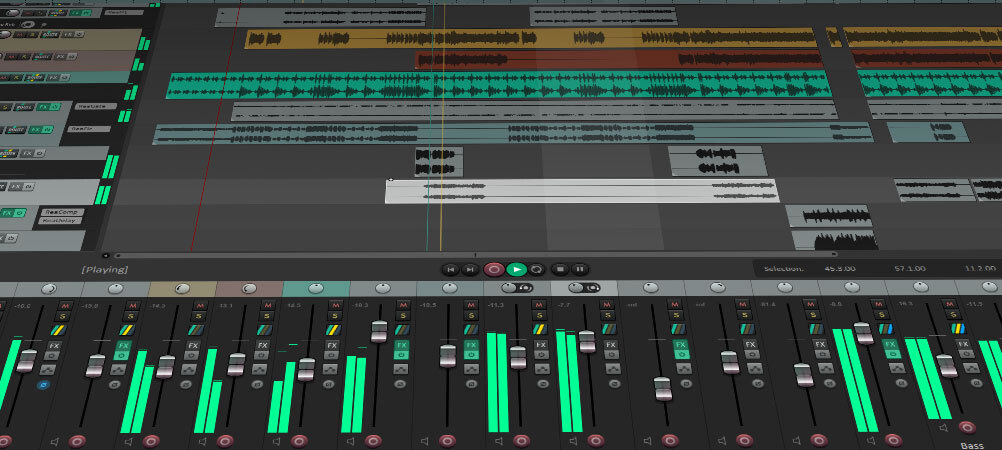
For years, professional audio production has been one of the last major holdouts keeping Linux users tethered to X11 sessions. Now, **REAPER**—Cockos’ widely adopted cross-platform digital audio workstation—has received a comprehensive native Wayland port submitted upstream by **Jason A. Donenfeld** (`zx2c4`, creator of WireGuard) alongside collaborator **Goran**. Disclosed across [GitHub pull request #40](https://github.com/justinfrankel/WDL/pull/40) to Cockos’ open-source **WDL** (Woodpecker Development Library) repository on November 16 and highlighted on November 17 by [Phoronix](https://www.phoronix.com/news/REAPER-DAW-Wayland), the submission packs **52 commits** totaling **11,244 additions** across 22 files—also mirrored in Donenfeld’s [`WDL-wayland`](https://git.zx2c4.com/WDL-wayland/about/) tree. Rather than a quick compatibility shim, the patchset re-engineers how REAPER’s Linux GUI layer (`SWELL`) draws windows, scales across HiDPI displays, and hosts legacy plugins. ### Why Donenfeld Abandoned GTK and Built Directly on Wayland Protocols Porting a mature DAW to Wayland is notoriously tricky because audio interfaces rely on dense real-time metering, custom drag-and-drop routing, and sub-frame responsiveness. Donenfeld explained in his submission letter to Cockos founder Justin Frankel that the team initially built a GTK-based Wayland backend—and even fixed numerous long-standing GDK and SWELL bugs along the way—before hitting a wall. Because REAPER and Cockos’ `LICE` graphics engine already handle custom pixel rendering internally, synchronizing `LICE` surfaces against GTK’s complex frame scheduler introduced stubborn performance penalties. Once Goran demonstrated how to bypass GTK’s renderer for main surfaces, Donenfeld started fresh with `swell-generic-wayland` (+5,442 lines): a lean backend speaking native Wayland protocols directly. According to Donenfeld, testing across roughly a dozen Wayland compositors shows sharper HiDPI and multi-monitor behavior alongside faster frame delivery via hardware-accelerated zero-copy rendering and precise damage tracking. ### Solving Linux Audio’s Biggest Roadblock: X11 and `yabridge` Plugins Even if a DAW itself speaks native Wayland, music producers cannot abandon thousands of third-party VST, VST3, LV2, and CLAP plugins—nor Windows plugins wrapped through `yabridge`—whose graphical editors still assume X11. Simply dropping X11 plugin windows would render a Wayland-native REAPER unusable in real studios. Donenfeld’s answer is **`swell-xwayland-bridge`** (+4,223 lines), an internal bridge that spawns a small, private Xwayland instance dedicated solely to hosting X11 plugin editors. Rather than forcing the entire DAW onto Xwayland, the bridge composites plugin windows into REAPER’s native Wayland surfaces using **EGL zero-copy** (with `memfd` copying as fallback) while translating coordinate spaces, clipboard state, and pointer hooks behind the scenes. Donenfeld even coordinated directly with `yabridge` maintainer Robbert to squash interoperability edge cases, claiming plugin rendering under the Wayland bridge actually outperforms standard X11 sessions. ### Even X11 REAPER Users Benefit From an `XCB` Overhaul Perhaps the quietest win inside PR #40 is what it fixes for Linux users who plan to stay on X11—including studios running older Nvidia drivers or legacy window managers. While untangling `swell-generic-gdk` to separate window backends from shared UI controls, Donenfeld replaced deprecated synchronous `Xlib` calls with asynchronous **`XCB`** requests. Because `Xlib` relies on global lock state and blocking round-trips to the X server, dense DAW interfaces with dozens of floating meters and mixers can suffer unnecessary UI stalls. Migrating those paths to `XCB` cuts synchronous overhead across non-Wayland Linux builds too, complementing the ongoing Wayland stabilization seen across lightweight desktop stacks like [Xfce 4.22’s `xfwl4` effort](https://www.mushimu.com/post/9469). ### What Happens Before It Reaches Official REAPER Builds For now, the native Wayland backend lives in upstream review on Cockos’ `WDL` repository rather than in the official **REAPER 7.86** release shipped on November 13 (documented in Cockos’ [release changelog](https://www.reaper.fm/whatsnew.txt)). Whether Justin Frankel merges PR #40 intact—and how quickly Cockos ships official Wayland-enabled Linux tarballs—will determine when everyday bedroom producers and commercial Linux studios can switch cleanly. Regardless of merge timelines, Donenfeld’s open-source `WDL-wayland` implementation proves that pro-audio latency and legacy plugin ecosystems no longer require keeping an entire desktop on X11. ### Sources & Further Reading - [Phoronix](https://www.phoronix.com/news/REAPER-DAW-Wayland) - [GitHub — Cockos WDL Pull Request #40](https://github.com/justinfrankel/WDL/pull/40) - [zx2c4 Git — WDL-wayland Repository](https://git.zx2c4.com/WDL-wayland/about/) - [REAPER Official Changelog](https://www.reaper.fm/whatsnew.txt) ~Linux ~Wayland ~REAPER ~AudioProduction ~OpenSource
WireGuard Creator Jason Donenfeld Submits Native Wayland Port for REAPER With Seamless X11 Plugin Bridging
0
Discuss 2
Nearly two years after Xfce 4.20 debuted in December 2024, the lightweight Linux desktop project has locked in its release schedule for **Xfce 4.22**, pointing toward a stable **Q1 2027** launch. Updated this week on the [Xfce release engineering wiki](https://wiki.xfce.org/releng/4.22/roadmap) and reported on November 17 by [Phoronix](https://www.phoronix.com/news/Xfce-4.22-Roadmap), the roadmap puts **Xfce 4.22pre1**—marking both feature freeze and string freeze—on **December 15, 2026**, followed by **Xfce 4.22pre2** and full code freeze on **January 15, 2027**. An optional `4.22pre3` final freeze milestone will follow depending on bug-triage needs, with the final release arriving weeks later. For users running lightweight Linux desktops on aging laptops, low-power mini PCs, or desktop-mode handheld environments where memory overhead matters, Xfce 4.22 marks a major infrastructural cleanup rather than a cosmetic facelift. ### Meson Standardization and Sunsetting Legacy Exo Beneath the familiar panel-and-desktop layout, Xfce 4.22 completes two long-running core refactors. First, the desktop stack is migrating away from legacy autotools workflows toward the **Meson** build system across core repositories, aligning packaging and build speed with modern Linux distributions. Second, the venerable `exo` extension library—historically used for application helpers and preferred-application handling—has been removed as a dependency across all core components, replaced directly by `libxfce4util` and `libxfce4ui` (though developers plan one final `4.22.0` `exo` release for compatibility). Equally telling is how Xfce anchored its dependency floor. The wiki explicitly pegs core library requirements to **Ubuntu 24.04 LTS** baselines—including `glib >= 2.80.0`, `gtk3 >= 3.24.41`, `wayland >= 1.22`, and `wayland-protocols >= 1.45`—ensuring downstream LTS spins and conservative distributions can package Xfce 4.22 without chasing bleeding-edge toolchains. The lone eyebrow-raiser on the dependency list is `pixman >= 0.44.0` specifically for `xfwl4`, which the wiki notes sits slightly ahead of the `0.42.2` build shipped in Ubuntu 24.04. ### Why Xfce Built `xfwl4` in Rust Instead of Porting `xfwm4` Wayland remains the defining technical story of the 4.22 cycle, and it hinges on a pivotal architectural reversal. Xfce 4.20 shipped experimental Wayland support requiring third-party compositors like `labwc` or `Wayfire` because `xfwm4`—Xfce’s longtime X11 window manager—had no Wayland backend. As [9to5Linux](https://9to5linux.com/xfce-desktop-environment-is-getting-a-rust-based-wayland-compositor) detailed earlier in the cycle, core developer Brian Tarricone concluded that retrofitting Wayland onto `xfwm4` was the wrong engineering path. Instead, the project directed community donations to fund Tarricone’s development of **`xfwl4`**, a clean-sheet Wayland compositor written in **Rust** using the **Smithay** framework rather than `wlroots` or `libmutter`. According to Xfce’s [Wayland roadmap](https://wiki.xfce.org/releng/wayland_roadmap), Smithay was selected for its thorough official Wayland protocol extension support, strong documentation, and lack of a restrictive high-level abstraction layer—even though `xfce4-panel` and `xfdesktop` were initially ported with `wlroots` assumptions in mind. Crucially, `xfwl4` is designed to honor existing `xfconf` settings and configuration dialogs while preserving Xfce’s modular architecture so `xfce4-panel` and `xfdesktop` continue running as independent processes without pulling in `libgnome-desktop` or hard-depending on XWayland. ### Why X11 Remains First-Class in 4.22 Unlike GNOME or KDE Plasma—which have steadily deprecated or dropped X11 sessions in recent releases—Xfce is deliberately keeping **`xfwm4` strictly X11-only** and maintaining full X11 session parity alongside `xfwl4` for the foreseeable future. The Wayland roadmap cites two practical realities: Nvidia’s Wayland driver friction (plus slower `nouveau` fallback paths on older hardware) and BSD ecosystem support, noting that while FreeBSD has workable Wayland infrastructure, OpenBSD support remains a work in progress. Even on Linux desktops, the Xfce team is candid about expectations for Q1 2027: *"Reaching X11 feature parity is not yet our target,"* the roadmap warns, describing `xfwl4` as somewhat usable today under heavy development, though not yet ready to be declared universally stable. That honesty sets realistic expectations ahead of December’s `4.22pre1` freeze. Xfce 4.22 will not flip the switch to a Wayland-only lightweight desktop overnight, yet by clearing out `exo`, standardizing on Meson, and maturing `xfwl4` alongside a rock-solid X11 fallback, it lays the cleanest technical foundation Xfce has had in over a decade. ### Sources & Further Reading - [Phoronix](https://www.phoronix.com/news/Xfce-4.22-Roadmap) - [Xfce Release Engineering Wiki — 4.22 Roadmap](https://wiki.xfce.org/releng/4.22/roadmap) - [9to5Linux](https://9to5linux.com/xfce-desktop-environment-is-getting-a-rust-based-wayland-compositor) ~Linux ~Xfce ~Wayland ~OpenSource ~Desktop
Xfce 4.22 Sets Q1 2027 Release Path With Meson Migration, Exo Removal, and Rust-Based xfwl4 Wayland Work
0
Discuss 0
Playing Nintendo DS Pokémon classics on a single-screen handheld PC has long forced an awkward compromise between squinting at stacked 4:3 panels or losing touch-menu usability. **Pokémon FullDex**, a rapidly evolving open-source launcher created by developer `mamesj`, tackles that bottleneck head-on—and its newly released **v1.6.0** update on November 16, 2026 turns what began as a late-October experiment into a remarkably complete Steam Deck package. Covering mainline Nintendo DS entries (*Black 2, White 2, Black, White, HeartGold, SoulSilver, Platinum*, plus experimental *Diamond* and *Pearl*), Game Boy Advance classics (*Emerald, Ruby, Sapphire, FireRed, LeafGreen*, and hacks like *Ultra Violet* and *Generation 3 Evolved*), and beta Nintendo 3DS support for *Omega Ruby* and *Alpha Sapphire*, FullDex bundles its emulation stack into a unified frontend for Linux (tarball and self-updating AppImage), Windows, macOS, Android, iOS, and homebrew Switch. Users still supply their own legally dumped ROMs, as noted on [RecompLauncher](https://recomplauncher.com/game/pokemon-fulldex) and the project’s [GitHub repository](https://github.com/mamesj/pokemon-fulldex/releases/tag/v1.6.0), yet the presentation layer radically changes how those cartridges behave on a 16:10 or 16:9 handheld screen. ### Under the Hood: Game-Aware Emulation Instead of True Recompilation Despite appearing on directories like [RecompLauncher](https://recomplauncher.com/game/pokemon-fulldex), the developer explicitly clarifies in project documentation that FullDex is **not** a native static recompilation yet. Instead, it embeds a modified `melonDS` core (alongside GBA and 3DS backends) paired with a state-aware rendering layer that identifies whether the game is in overworld exploration, a menu, or battle. Rather than squeezing two 256×192 DS windows side by side, that layer extends 3D terrain and skyboxes across a full widescreen canvas—scaling up to 4K via OpenGL 4.3 (`WORLD ON GPU`) on desktop Linux/Windows or 720p on Steam Deck and Switch—while tucking touch-screen controls neatly along the edge of the viewport. It also interpolates in-between frames to push traditionally 30 fps 3D Pokémon titles to a smooth 60 fps, fitting comfortably inside the Steam Deck’s native 16:10 display according to hands-on testing by [SteamDeckHQ](https://steamdeckhq.com/news/pokemon-fulldex-best-way-to-play-gba-ds-games/). ### What v1.6.0 Changes for SteamOS and Handheld PC Users Released on November 16 alongside a shift to semantic release numbering, **FullDex v1.6.0** directly addresses everyday friction on SteamOS and docked handheld setups. According to the [v1.6.0 release notes](https://github.com/mamesj/pokemon-fulldex/releases/tag/v1.6.0), players can now select **ADD TO STEAM** directly inside a title’s menu to write individual ROM shortcuts—including ROM hacks—into Steam’s library, with clean exit handling that returns straight to Gaming Mode when a session ends. If Steam is absent on a standard Linux desktop, the same option automatically falls back to **ADD TO DESKTOP**. Just as welcome for living-room setups, v1.6.0 resolves a frame-pacing snag when running a Steam Deck docked at 120 Hz, ensuring steady 60 fps output. On the gameplay side, the update introduces an optional right-stick zoom and look-around camera (beta) for DS and GBA titles, expands the in-game **FullDex Nav** companion watch (providing instant PC box access, Fly, Repel, route encounter maps, and IV/EV inspection) to GBA titles, pre-compiles widescreen shaders for *Omega Ruby* and *Alpha Sapphire* during initial setup to prevent in-game stutter, and fixes cloud save and Hub folder synchronization regressions introduced a day earlier. ### Rapid AI-Assisted Iteration Versus Launcher Polish One notable detail highlighted by [SteamDeckHQ](https://steamdeckhq.com/news/pokemon-fulldex-best-way-to-play-gba-ds-games/) is the developer’s candid disclosure that AI tools were heavily used to build the launcher, widescreen layout logic, and cross-platform optimizations. That workflow helps explain how a solo repository launched on October 25, 2026 has already crossed 1,100 GitHub stars and shipped seven-platform binaries with RetroAchievements, online friend trading, and cross-game Pokémon Hub transfers in three weeks. At the same time, hands-on testing reveals the trade-offs of rapid iteration. SteamDeckHQ reported occasional launcher instability—including instances where the frontend refused to close cleanly or registered double D-pad inputs in menus—alongside small UI text scaling on handheld screens and experimental status for *Diamond* and *Pearl*. Those caveats mirror a broader pattern across late-2026 Steam Deck community wrappers like [GRPort for Gravity Rush](https://www.mushimu.com/post/9399): the core gameplay transformation already feels remarkably cohesive on the Deck, even as frontend polish plays catch-up. For Linux and handheld PC owners looking to revisit Gen III through Gen VI without juggling standalone RetroArch cores, custom dual-screen layouts, and external save editors, FullDex v1.6.0 makes a compelling case as a single drop-in hub—and if native PC recompilations eventually follow, it will have already set the usability benchmark. ### Sources & Further Reading - [SteamDeckHQ](https://steamdeckhq.com/news/pokemon-fulldex-best-way-to-play-gba-ds-games/) - [GitHub — mamesj/pokemon-fulldex v1.6.0 Release Notes](https://github.com/mamesj/pokemon-fulldex/releases/tag/v1.6.0) - [RecompLauncher — pokemon-fulldex Directory](https://recomplauncher.com/game/pokemon-fulldex) ~HandheldPC ~SteamDeck ~LinuxGaming ~Pokemon ~Emulation
Pokémon FullDex v1.6.0 Brings Single-Screen 60 FPS Widescreen DS and GBA Play to Steam Deck
0
Discuss 0
Nintendo has released a free playable demo for *Splatoon Raiders* on the Nintendo Switch 2 eShop, giving players their first no-cost opportunity to sample the single-player-focused spin-off nearly four months after its July 23, 2026 debut. Confirmed on November 17 via Nintendo’s official Splatoon North America channel and regional storefronts, the trial drops players onto the Spirhalite Islands alongside Deep Cut—Shiver, Frye, and Big Man—across three distinct stages using three preselected equipment loadouts. For a series built over the past decade around four-on-four turf wars and online ranked ladders, *Splatoon Raiders* represented a sharp structural gamble when it launched exclusively on Switch 2. Instead of competitive multiplayer, players step into the boots of a mechanic stranded after a storm forces Deep Cut’s helicopter into an emergency landing on the Spirhalite Islands, blending ink-splattering third-person shooting with treasure hunting, mechanical gadgets, and escalating waves of Salmonids. Until now, anyone unsure whether that solo looter-shooter loop justified a full-price purchase had to rely on word of mouth or reviews. ### Why Nintendo Built the Demo Around Preselected Loadouts Rather than offering a slow opening tutorial slice from the main campaign, Nintendo structured the demo around three self-contained stages paired with three fixed gadget and weapon kits. That design choice addresses the central hurdle of explaining *Splatoon Raiders* to traditional fans of the franchise: its appeal hinges less on narrative setup than on how distinct mechanical loadouts reshape traversal, crowd control, and survival against Salmonid swarms. By handing newcomers three contrasting kits upfront, the eShop trial lets players immediately test how switching gadgets changes the tactical puzzle inside the same island environments. As [VGC](https://www.videogameschronicle.com/news/a-free-demo-for-splatoon-raiders-is-now-available-on-switch-2/) noted in its coverage and earlier review, the full game revolves around a streamlined loop—shoot everything, fall in battle, upgrade gear, and push deeper on the next run—making hands-on pacing far more persuasive than trailer footage. Showing off distinct build archetypes upfront prevents first-time players from judging the game solely on basic starter equipment. ### Explaining the Critic-Versus-Player Split The timing of the demo also shines a spotlight on one of the more unusual reception gaps in Nintendo’s 2026 Switch 2 catalog. While *Splatoon Raiders* earned a solid but unspectacular 82 on Metacritic from critics, player sentiment has been extraordinarily enthusiastic. According to [VGC](https://www.videogameschronicle.com/news/a-free-demo-for-splatoon-raiders-is-now-available-on-switch-2/) and [Nintenderos](https://www.nintenderos.com/nintendo-switch-2/splatoon-raiders-estrena-demo-en-la-eshop-de-nintendo-switch-2/), the title still holds the seventh-highest user score in Metacritic history, peaking near 9.4 before settling around 9.3—a cult following rarely seen for a spin-off. That divergence reflects two very different ways of evaluating the same mechanics. Reviewers scrutinized the repetition inherent in a compact action loop compared to full-scale story campaigns, whereas Switch 2 owners—especially handheld players looking for bite-sized, offline replayability—embraced the frictionless immediacy of short island raids without matchmaking queues or Nintendo Switch Online requirements. The gap also explains why a free demo makes particular sense months after launch: players who dismissed *Splatoon Raiders* as a minor side project based on critical summaries can now judge its moment-to-moment game feel for themselves. ### Holiday Timing and Nintendo’s Broader Switch 2 Strategy Dropping the trial in mid-November places *Splatoon Raiders* squarely inside Nintendo’s holiday conversion window, echoing a wider Switch 2 playbook of deploying post-launch demos for headline exclusives once early-adopter demand cools. It also lands on the exact same week as [Splatoon 3’s Version 12.0.0 update](https://www.mushimu.com/post/9423), which added Switch 2 GameChat support and an X Battle Duos trial, alongside strong physical momentum led by [The Legend of Zelda: Ocarina of Time’s Switch 2 remake](https://www.mushimu.com/post/9452). Together, those moves signal how Nintendo is segmenting its flagship ink-shooter brand on the new hardware. Competitive players stay anchored to *Splatoon 3*’s evolving online ecosystem, while *Splatoon Raiders* acts as an accessible, offline gateway for solo Switch 2 buyers—or newcomers picking up the console during the holiday season—who want Splatoon’s movement and weapon physics without competitive pressure. Players already following the title can also revisit our [official Splatoon Raiders Switch 2 thread](https://www.mushimu.com/post/8878) for launch-era impressions. Whether the three-stage eShop slice translates cult enthusiasm into sustained holiday sales remains to be seen, particularly with heavyweights like *Grand Theft Auto VI* dominating November release calendars. Yet by removing the upfront price barrier to its unconventional gadget-driven combat, Nintendo has given one of Switch 2’s most talked-about surprises its best shot at reaching mainstream households. ### Sources & Further Reading - [Video Games Chronicle (UK)](https://www.videogameschronicle.com/news/a-free-demo-for-splatoon-raiders-is-now-available-on-switch-2/) - [Gematsu (Global)](https://www.gematsu.com/2026/11/splatoon-raiders-demo-now-available) - [Nintenderos (Spain)](https://www.nintenderos.com/nintendo-switch-2/splatoon-raiders-estrena-demo-en-la-eshop-de-nintendo-switch-2/) - [Nintendo Official Store (US)](https://www.nintendo.com/us/store/products/splatoon-raiders-switch-2/) ~Gaming ~Nintendo ~Switch2 ~Splatoon
Nintendo Releases Free Splatoon Raiders Demo on Switch 2 Nearly Four Months After Launch
0
Discuss 1
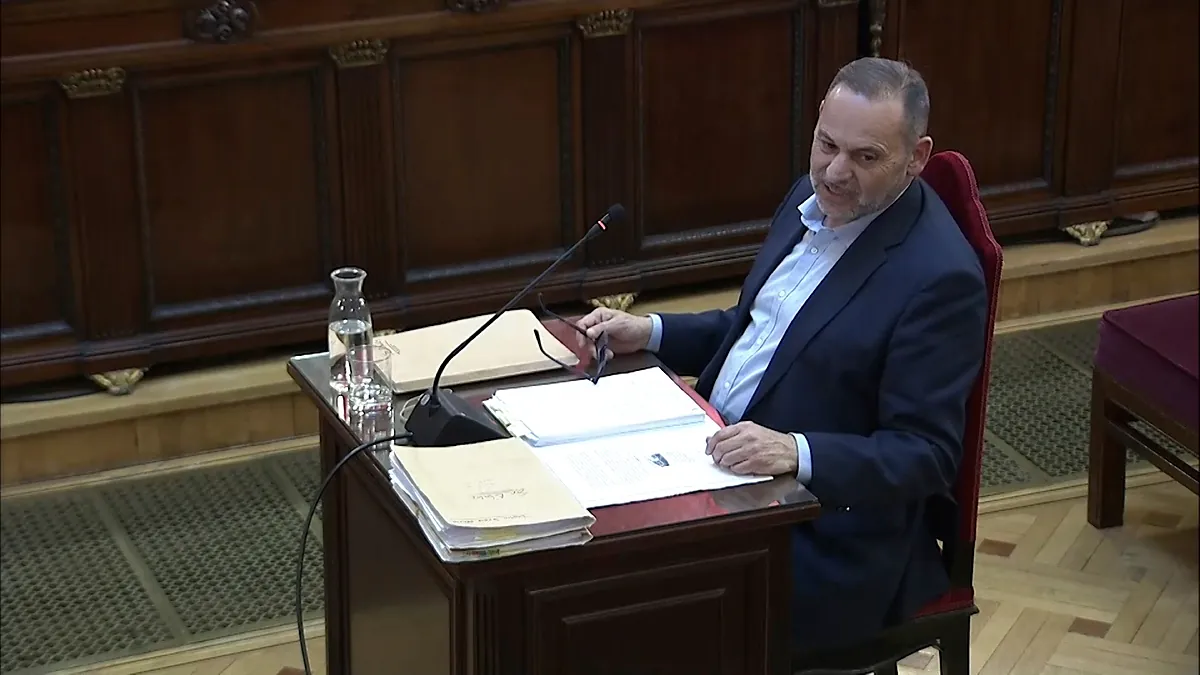
A menos de dos semanas de las elecciones generales del 29 de noviembre, el PSOE ha vuelto a incluir en [su programa electoral oficial para el 29-N](https://www.psoe.es/media-content/2026/11/PROGRAMAPSOE29N26.pdf) el compromiso de suprimir los aforamientos de los cargos públicos para los delitos ajenos al ejercicio de su función. La promesa reabre el debate sobre la regeneración institucional tras ocho años de gobiernos socialistas sin cambios en la Carta Magna y después de una legislatura marcada por causas de enorme impacto en el Tribunal Supremo y los tribunales superiores. Según recogen [El Mundo](https://www.elmundo.es/elecciones/elecciones-generales/2026/11/16/6afb6a5de85ece5c5a8b457a.html) y [La Voz de Galicia](https://www.lavozdegalicia.es/noticia/espana/2026/11/17/migracion-vivienda-marcan-dos-polos/0003_202611G17P2991.htm), la fórmula redactada por Ferraz para 2026 calca prácticamente palabra por palabra la de los programas de 2019 y 2023, recuperando un proyecto estrella anunciado por Pedro Sánchez en septiembre de 2018, cuando cumplió cien días en La Moncloa y prometió una reforma constitucional exprés de sesenta días que nunca llegó a superar el bloqueo parlamentario. ### Ocho años de promesas idénticas frente a la realidad de la legislatura La reiteración programática choca frontalmente con la huella judicial de los últimos años, un flanco que [ha sacudido el arranque de la campaña del 29-N](https://www.mushimu.com/post/9373). Durante la legislatura saliente, la prerrogativa procesal que reserva al Tribunal Supremo o a los tribunales superiores de justicia el enjuiciamiento de determinadas autoridades estuvo en el centro de los procedimientos contra el exministro de Transportes y exsecretario de Organización socialista José Luis Ábalos y contra el exfiscal general del Estado Álvaro García Ortiz, ambos condenados en distintas causas por el alto tribunal. A ello se sumó el episodio del exlíder del PSOE extremeño Miguel Ángel Gallardo, quien protagonizó un aforamiento exprés para incorporarse a la Asamblea de Extremadura en plena investigación judicial que afectaba a David Sánchez, hermano del presidente del Gobierno, tras la renuncia encadenada de varios cargos socialistas—una maniobra en la que el Tribunal Superior de Justicia de Extremadura apreció fraude de ley. Ese contraste entre el discurso regenerador y el uso defensivo del fuero especial explica por qué la oposición ha convertido la hemeroteca de 2018 en munición de campaña. ### El mapa real de los 250.000 aforados y el obstáculo jurídico Más allá del cruce partidista, el alcance efectivo de cualquier reforma depende de desmontar un mito estadístico habitual en el debate público español. Aunque España suma en torno a 250.000 personas aforadas, más de 232.000 corresponden a miembros de las Fuerzas y Cuerpos de Seguridad estatales y autonómicos amparados por leyes orgánicas ordinarias, mientras que cinco pertenecen a la Familia Real y apenas unos 2.000 son cargos políticos, parlamentarios y miembros de ejecutivos autonómicos. Incluso en el terreno estrictamente político, la propuesta socialista —heredera del anteproyecto aprobado en Consejo de Ministros en noviembre de 2018— limita el recorte a los «delitos ajenos al ejercicio de su cargo», manteniendo intacto el fuero especial para los actos cometidos durante el mandato en el desempeño de funciones públicas. Esa distinción abre un laberinto procesal permanente sobre dónde termina la actividad oficial y dónde empieza la esfera personal en causas de corrupción, tráfico de influencias o financiación. Por si fuera poco, modificar los artículos 71.3 y 102.1 de la Constitución exige mayorías reforzadas de tres quintos en Congreso y Senado —o un referéndum si lo solicita una décima parte de cualquiera de las Cámaras—, además de reformas paralelas en la Ley Orgánica del Poder Judicial y en los distintos estatutos de autonomía, el mismo muro con el que ya tropezó en 2014 el exministro popular Alberto Ruiz-Gallardón cuando propuso reducir los aforamientos políticos de 17.621 a apenas 22 altas magistraturas e instituciones. ### El giro del PP y el choque de modelos ante las urnas También el Partido Popular ha reajustado su posición para el 29-N. Tras omitir cualquier mención en su programa de 2023, la formación de Alberto Núñez Feijóo incluye ahora el compromiso de «revisar los aforamientos» para corregir su «extensión excesiva» y devolverlos a una «concepción limitada y justificada» acorde con los estándares europeos, combinando ese guiño institucional con la reforma de la Ley del Indulto para excluir de las medidas de gracia a condenados por corrupción, terrorismo o delitos contra la integridad territorial. En paralelo, [el programa completo del PSOE](https://www.mushimu.com/post/9377) intenta desplazar el foco hacia el terreno social, incorporando figuras jurídicas inéditas como la «unión de amistad» para amparar redes de cuidados mutuos sin vínculo familiar frente a las deducciones fiscales y cotizaciones por cuidado de familiares que propone el PP. Con todo, la credibilidad de cualquier pacto de regeneración tras el 29 de noviembre dependerá de si los grandes bloques logran transformar por primera vez sus eslóganes de campaña en el consenso de tres quintos que exige la Constitución. ### Fuentes consultadas - [El Mundo (España — Análisis histórico de los aforamientos y contexto judicial)](https://www.elmundo.es/elecciones/elecciones-generales/2026/11/16/6afb6a5de85ece5c5a8b457a.html) - [La Voz de Galicia (España — Comparativa de programas PSOE y PP ante el 29-N)](https://www.lavozdegalicia.es/noticia/espana/2026/11/17/migracion-vivienda-marcan-dos-polos/0003_202611G17P2991.htm) - [PSOE (España — Programa Electoral Oficial 29-N)](https://www.psoe.es/media-content/2026/11/PROGRAMAPSOE29N26.pdf) ~Spain ~Politica ~Elecciones29N ~Justicia ~Constitucion
La reforma pendiente de los aforamientos vuelve al programa del PSOE tras ocho años y una legislatura marcada por el Supremo
0
Discuss 4
Russia has installed a shrouded monument on Internatsionalnaya Street in Kursk honoring North Korean soldiers who fought alongside Russian forces against Ukrainian troops—even as Kyiv warns NATO allies that Pyongyang is now shipping dozens of ballistic missiles to Moscow every month. Speaking at the Kremlin on Monday, November 16, 2026, while hosting Jo Yong-won, a senior Presidium member and Central Committee secretary of the Workers' Party of Korea, Russian President Vladimir Putin pledged that the memorial—crafted by Moscow's Grekov Studio of Military Artists—will be formally unveiled before the end of the year. According to [Anadolu Agency](https://aa.com.tr/en/eurasia/putin-meets-senior-north-korean-official-in-moscow-praises-troops-role-in-kursk/4127249) and [Meduza](https://meduza.io/en/news/2026/11/17/russia-erects-monument-in-kursk-to-north-korean-troops-who-fought-alongside-its-forces-against-ukraine), Putin told the visiting North Korean delegation that Russia "will never forget the heroism of the Korean fighters who fought shoulder to shoulder with Russian servicemen," while also thanking North Korean engineering and construction units deployed to rebuild Kursk infrastructure. ### From Covert Deployment to Public Monument Moscow's decision to immortalize North Korean combat participation in stone marks a dramatic reversal from its early secrecy. When North Korean troops first entered combat operations in the Kursk salient in the autumn of 2024—following Ukraine's cross-border incursion into western Russia—both Moscow and Pyongyang initially obscured their presence, with Russia waiting until April 2025 to publicly acknowledge the deployment. That transition from covert deniability to public commemoration serves clear diplomatic ends. Arriving in Moscow on November 14 at the invitation of United Russia chairman Dmitry Medvedev, Jo used Monday's Kremlin talks to cast Pyongyang's wartime backing as a principled stand against "attempts by the US and the collective West to revive neocolonialism and neo-Nazism" in pursuit of a multipolar order. By elevating Kursk's joint fighting and reconstruction into an enduring public symbol just days before high-stakes APEC diplomacy in China, Moscow signals that its mutual-defense pact with Pyongyang is structural rather than transactional—even as Western intelligence estimates cited by *The Wall Street Journal* and Meduza indicate North Korea suffered roughly 5,000 casualties in Russia, around a third of them fatal. ### 'Dozens of Ballistic Missiles Per Month' and the Korean Peninsula Risk While Moscow celebrated infantry and engineering solidarity, Ukrainian President Volodymyr Zelenskyy warned Monday night that Pyongyang's material role in the war is accelerating in a far more dangerous domain. As reported by [UNITED24 Media](https://united24media.com/war-in-ukraine/zelenskyy-calls-for-missile-parity-as-north-korea-sends-russia-dozens-of-ballistic-missiles-a-month-24430), Zelenskyy cited Ukrainian intelligence showing Russia is expanding domestic missile output while receiving "dozens of missiles per month" from North Korea—a steady supply line that continues alongside overnight Russian ballistic strikes on Kyiv's bridges reported earlier Tuesday. Zelenskyy framed those transfers as a dual-theater security crisis extending well beyond Eastern Europe and onto the Korean Peninsula, a concern closely tracked by South Korean observers such as [The Chosun Ilbo](https://www.chosun.com/english/world-en/2026/11/17/QWB4BTB7NBE3FBXH5ABMAROONA/). By firing North Korean ballistic missiles against Ukrainian urban infrastructure and air-defense batteries, Pyongyang collects live telemetry on guidance accuracy, electronic countermeasures, and terminal penetration—turning Ukraine into a live proving ground to sharpen weapons aimed near Seoul and Tokyo. ### Zelenskyy Presses Ramstein Allies for Long-Range Parity Timed directly ahead of the 37th Ukraine Defense Contact Group (Ramstein format) meeting convened by the United Kingdom and Germany at NATO headquarters in Brussels on November 17, Zelenskyy urged Germany, France, the United Kingdom, and Italy to deliver comparable long-range strike missiles to establish deterrence parity—and pressed partners to revisit targeting Russian ballistic-missile launch sites before launch. Between Kursk's plastic-wrapped granite monument and monthly trainloads of North Korean tactical missiles, the Moscow–Pyongyang axis has moved far beyond emergency shell shipments. For European and Northeast Asian capitals alike, the war in Ukraine now directly accelerates the modernization and combat readiness of North Korea's strategic arsenal. ### Sources & Further Reading - [Meduza (Independent Russian Press — Kursk Monument & Casualty Context)](https://meduza.io/en/news/2026/11/17/russia-erects-monument-in-kursk-to-north-korean-troops-who-fought-alongside-its-forces-against-ukraine) - [Anadolu Agency (Turkey — Kremlin Meeting Between Putin & Jo Yong-won)](https://aa.com.tr/en/eurasia/putin-meets-senior-north-korean-official-in-moscow-praises-troops-role-in-kursk/4127249) - [UNITED24 Media (Ukraine — Zelenskyy Warning on Monthly DPRK Missile Transfers)](https://united24media.com/war-in-ukraine/zelenskyy-calls-for-missile-parity-as-north-korea-sends-russia-dozens-of-ballistic-missiles-a-month-24430) - [The Chosun Ilbo (South Korea — Northeast Asian Security Coverage)](https://www.chosun.com/english/world-en/2026/11/17/QWB4BTB7NBE3FBXH5ABMAROONA/) ~WorldNews ~Russia ~NorthKorea ~Ukraine ~Geopolitics
Russia Installs Monument to North Korean Troops in Kursk as Kyiv Warns of Monthly DPRK Ballistic Missile Shipments
0
Discuss 2
A three-year unmanned-warfare contract exceeding $100 million between Turkish defense-technology firm Pasifik Teknoloji—acting through its subsidiary TİTRA Teknoloji—and Pakistan's state-owned National Radio and Telecommunication Corporation (NRTC) is forcing defense planners in New Delhi to accelerate India's own domestic drone and counter-drone manufacturing. Disclosed following completed field trials, simulations, and user evaluations under an earlier framework accord, the agreement pairs the export of more than 100,000 Turkish unmanned systems with technology transfer and local assembly lines inside Pakistan. As analysts across India, Turkey, and East Asia noted in coverage published November 17, 2026 by the [South China Morning Post](https://www.scmp.com/week-asia/politics/article/3374745/how-pakistans-turkish-drone-order-may-push-india-step-local-production) and [Times Now](https://www.timesnownews.com/opinion/india/pakistans-100000-drone-deal-is-a-test-of-indias-military-preparedness-after-operation-sindoor-article-156523599), the strategic shock lies less in the sticker price than in shifting South Asia toward Ukraine-style industrial mass production of expendable precision weapons. ### Inside the Five-Tier Turkish–Pakistani Unmanned Architecture Technical disclosures reported by [Times of Defence](https://www.timesofdefence.com.tr/pasifik-teknoloji-and-titra-finalize-landmark-100-million-multi-tiered-unmanned-systems-agreement-with-pakistans-nrtc/) and [Defence Security Asia](https://defencesecurityasia.com/en/pakistan-turkiye-100000-merkut-fpv-drone-deal/) show that the NRTC–Pasifik Teknoloji package extends well beyond hobbyist quadcopters, bundling five interlocking unmanned layers across air and ground operations: - **100,000 MERKÜT FPV kamikaze drones:** Developed under TİTRA's ecosystem, these goggle-flown tactical strike quadcopters reach speeds up to 200 km/h across an operational range of 8 to 10 km with 20 to 30 minutes of flight endurance. They carry a directed-fragmentation warhead packed with roughly 950 to 1,000 steel shrapnel balls, a proximity sensor adjustable from 20 cm to 5 meters, electronic-warfare resistance, and a dual-safety abort and recovery mechanism. - **500 DELİ tactical loitering munitions:** Fixed-wing autonomous strike airframes in the 15 kg class engineered with GPS-independent navigation and programmable dive angles between -5° and -90°. - **10 ALPİN unmanned helicopters and 25 DUMRUL mini-VTOLs:** Heavy-lift ALPİN platforms (550 kg maximum takeoff weight, 200 kg payload, 200 km control radius, and more than nine hours of endurance) tasked with cargo resupply, radar relay, and armed intelligence-surveillance-reconnaissance (ISR), complemented by battery-powered DUMRUL close-support rotary drones. - **250 KORGAN autonomous ground stations:** Automated perimeter docking, recharging, and launch nodes designed to sustain persistent unmanned patrols without continuous crew exposure. ### Why Local NRTC Assembly Matters More Than Headline Numbers For Islamabad, partnering directly with NRTC—a state telecommunications and defense electronics manufacturer—addresses the decisive lesson of contemporary drone warfare: expendable FPV munitions are consumed at rates that quickly exhaust static import stockpiles. By embedding local assembly and co-production lines inside Pakistan, the three-year pact aims to establish a domestic replenishment pipeline capable of turning out tactical airframes, proximity fuzes, and electronic-warfare-hardened links at wartime scale while deepening defense-industrial ties with Ankara. For Ankara, the contract cements Turkey's pivot from exporting high-profile medium-altitude Bayraktar platforms toward dominating the high-volume, low-cost attritable drone market—extending Turkish defense footprints across South Asia alongside expanding cooperation frameworks involving Pakistan and Saudi Arabia. ### India's Counter-Drone Imperative After Operation Sindoor In New Delhi, strategic commentators warn that facing massed waves of 8-to-10-kilometer FPV strike drones and GPS-denied loitering munitions along contested borders exposes cost-exchange vulnerabilities in conventional air defense. Firing expensive surface-to-air interceptors at low-cost attritable quadcopters rapidly drains magazine depth, putting renewed pressure on India's Defence Research and Development Organisation (DRDO) and private domestic manufacturers to scale affordable directed-energy jammers, kinetic point-defense autocannons, radar micro-tracking, and indigenous loitering swarms. While delivery timelines and the exact share of domestic Pakistani component fabrication remain undisclosed, the deal marks an inflection point in South Asian deterrence: mass-produced autonomous attritable hardware is no longer a peripheral battlefield experiment, but an industrialized pillar of bilateral defense planning. ### Sources & Further Reading - [Times of Defence (Turkey — Technical Specifications & $100M+ NRTC Contract Details)](https://www.timesofdefence.com.tr/pasifik-teknoloji-and-titra-finalize-landmark-100-million-multi-tiered-unmanned-systems-agreement-with-pakistans-nrtc/) - [Times Now (India — Strategic Assessment After Operation Sindoor)](https://www.timesnownews.com/opinion/india/pakistans-100000-drone-deal-is-a-test-of-indias-military-preparedness-after-operation-sindoor-article-156523599) - [South China Morning Post (Hong Kong — Regional Arms Race & Indian Production Push)](https://www.scmp.com/week-asia/politics/article/3374745/how-pakistans-turkish-drone-order-may-push-india-step-local-production) - [Defence Security Asia (Malaysia/Asia — Production Scope & Strategic Implications)](https://defencesecurityasia.com/en/pakistan-turkiye-100000-merkut-fpv-drone-deal/) ~WorldNews ~Pakistan ~Turkey ~India ~Defense
Pakistan’s 100,000+ Turkish Drone Assembly Deal With Pasifik Teknoloji Forces Indian Counter-Drone Push
0
Discuss 2
General-purpose image-to-3D generators have rapidly improved at producing plausible silhouettes, yet developers in robotics, simulation, and game asset production still run into a persistent bottleneck: pretrained models routinely hallucinate inaccurate functional geometry—such as misshapen furniture joints or distorted shoe soles—when forced to satisfy domain-specific constraints. On November 12, 2026, Hugging Face engineers Suvaditya Mukherjee, Merve Noyan, and Pedro Cuenca published [a comprehensive fine-tuning workflow and containerized toolkit](https://huggingface.co/blog/3d-lora-finetuning) demonstrating how Low-Rank Adaptation (LoRA) inside Hugging Face's PEFT library can specialize Microsoft's open-weight **TRELLIS.2** 3D generator (`arxiv:2508.10104`) for exact geometric domains—running reproducibly either locally via Docker on Linux GPUs or on cloud Hugging Face Jobs. ### Why Freezing Materials While Adapting Structure and Shape Works Rather than attempting an expensive end-to-end retrain across every stage of 3D synthesis, the [trellis2-finetuning codebase](https://github.com/suvadityamuk/trellis2-finetuning) exploits TRELLIS.2's modular five-stage architecture. As documented in the [foundational TRELLIS research](https://arxiv.org/abs/2508.10104) and Hugging Face's technical breakdown, TRELLIS.2 separates visual conditioning from volumetric construction and surface shading: - **Background removal and visual encoding:** BiRefNet strips background clutter from the reference photograph before a `DINOv3-L` encoder converts the image into conditioning tokens. - **Sparse Structure Flow DiT:** A diffusion transformer predicts a compact `16 × 16 × 16 × 8` latent decoded by a VAE into a `64 × 64 × 64` voxel occupancy grid defining the object's coarse 3D hull. - **O-Voxel Geometry (Shape Flow DiT):** TRELLIS.2 stores surface geometry and local mesh attributes inside an **O-Voxel** sparse voxel grid restricted to occupied surface coordinates, decoupling complex topology from empty interior space. - **Material Generation and Mesh Export:** A downstream appearance stage synthesizes textures and materials before exporting standard `GLB` or `PLY` meshes. Because general-purpose textures were already adequate while footwear soles failed geometrically in baseline tests on a 188-object footwear subset of Google Scanned Objects (GSO), the authors deliberately froze `DINOv3-L` and the material-generation pipeline. Instead, they attached trainable PEFT LoRA adapter matrices exclusively to the two geometry-governing transformers: the Sparse Structure Flow DiT and the Shape Flow DiT. Keeping base weights frozen sharply lowers gradient and optimizer memory overhead while preventing catastrophic drift in surface shading. ### Nearly Tripling Geometric Accuracy on Held-Out Meshes To quantify whether selective geometry adaptation translates into usable meshes rather than mere training-loss convergence, the team trained two separate LoRA adapters using `bfloat16` autocast, gradient checkpointing, and classifier-free guidance conditioning dropout—running 7.2 hours for the sparse-structure stage and 3.6 hours for the shape stage on a single 80 GB NVIDIA A100 GPU. Evaluated across nine held-out GSO footwear scans unseen during training, the dual-adapter setup delivered dramatic improvements on every test object: - **F-score @ 0.02 (surface precision and recall within 2% of bounding-box diagonal):** Surged from a base mean of **0.276** to **0.803**. - **Bidirectional Chamfer distance (surface point error, lower is better):** Dropped by more than fivefold from **0.174** down to **0.033**. - **Normal consistency (surface orientation agreement):** Climbed from **0.530** to **0.804**. Crucially, the authors noted that the Shape Flow DiT's raw flow-matching training loss appeared nearly flat even while held-out mesh fidelity improved sharply—reinforcing why 3D practitioners must benchmark exported geometry directly rather than trusting loss curves alone. ### Practical Requirements for Local Linux and Indie Studio Pipelines By shipping unified Docker images alongside `preprocess.py` and `finetune.py` scripts, the release lowers a major barrier for game studios, industrial CAD teams, and robotics simulators building standardized asset libraries without relying on closed commercial APIs. Still, key practical constraints remain. Accessing `DINOv3-L` requires accepting gated Hugging Face model terms with an authenticated `HF_TOKEN`, preprocessing multi-view renders demands careful dataset curation on the Hub, and full-resolution training remains compute-intensive on consumer cards compared with 80 GB datacenter GPUs. Looking ahead, Hugging Face plans to test whether selective component freezing carries over to emerging 3D architectures such as `Pixal3D` and `UniLat3D`, as well as Gaussian-splat world generators including `HunyuanWorld 2.0` and NVIDIA `Lyra 2.0`. ### Sources & Further Reading - [Hugging Face Blog — The Definitive Fine-Tuning Guide for 3D Generation Models](https://huggingface.co/blog/3d-lora-finetuning) - [GitHub — suvadityamuk/trellis2-finetuning (Docker Containers & Scripts)](https://github.com/suvadityamuk/trellis2-finetuning) - [arXiv:2508.10104 — TRELLIS.2 / Unified 3D Latent Architecture Research](https://arxiv.org/abs/2508.10104) ~AI ~OpenSourceAI ~3DGeneration ~LoRA ~Linux
Hugging Face Releases Reproducible Docker and LoRA Toolkit to Fine-Tune TRELLIS.2 3D Generation Models
0
Discuss 2
Costa Rican independent journalist and author Camilo Rodríguez Chaverri was shot dead on Monday afternoon, November 16, 2026, in what authorities and press-freedom observers say is the first known murder of a journalist in the Central American nation in 25 years. According to [Agencia EFE](https://efe.com/mundo/2026-11-16/costa-rica-asesinato-periodista-camilo-rodriguez-denuncia-nartrafico/) and [AM Prensa](https://www.amprensa.com/2026/11/camilo-rodriguez-periodista-plantaba-frente-miedo-narcos), the attack occurred between 3:45 p.m. and 4:00 p.m. local time along Route 32 near San Miguel de Santo Domingo de Heredia, north of San José, as Rodríguez was driving his red pickup truck toward the capital. Two assailants dressed in black and riding a white motorcycle pulled alongside his vehicle in heavy traffic and opened fire multiple times. Costa Rican Red Cross paramedics pronounced the 51-year-old communicator dead inside his truck, while Judicial Investigation Agency (OIJ) deputy director Vladimir Muñoz confirmed agents recovered nine to ten shell casings at the scene and are reviewing nearby surveillance footage to trace the shooters' escape route. ### Breaking a 25-Year Record in Central America's Most Stable Democracy As [Reuters reported via Internazionale](https://www.internazionale.it/ultime-notizie-reuters/2026/11/17/costa-rican-journalist-shot-dead-in-first-such-killing-in-25-years) and [Al Jazeera](https://www.aljazeera.com/video/newsfeed/2026/11/17/journalist-who-exposed-alleged-drug-links-shot-dead-in-costa-rica), Costa Rica had not recorded the assassination of a journalist since radio producer Parmenio Medina was murdered in 2001—a quarter-century hiatus that long underscored the country's reputation as a peaceful outlier in Latin America. That reputation has come under severe strain in recent years as transnational cocaine corridors and competing local trafficking cells have transformed Costa Rica's Atlantic and central transit routes, driving up targeted street killings and institutional intimidation. Costa Rican President Laura Fernández condemned Monday's shooting as a "cowardly murder" and a "stain on freedom of expression," ordering security forces to dedicate full resources to the investigation alongside urgent demands for justice from the Colegio de Periodistas (Colper), the Press and Freedom of Expression Institute (IPLEX), and the Central American Journalists Network. ### Direct Accusations, Refused Protection, and a Polarizing Public Profile In tracing potential motives, Attorney General Carlo Díaz confirmed to Costa Rican broadcasters that investigators are examining the allegations Rodríguez routinely leveled online. Over recent years, the veteran communicator—who previously worked across radio, print, and television hosting the political commentary program *Alto Contraste*, authored more than 160 books including cultural histories of Costa Rican parishes, and ran as a San José legislative candidate in 2026—shifted away from traditional newsrooms toward unfiltered digital broadcasting. From independent social-media channels, Rodríguez frequently named individuals, business figures, and political actors he accused of ties to drug trafficking and corruption, operating without institutional newsroom editors or legal shields. According to Díaz, Rodríguez had previously reported death threats to prosecutors and had entered a victim-attention program, yet he explicitly declined to join the formal state witness-protection program recommended by the Attorney General's Office. Muñoz emphasized that OIJ detectives are pursuing "broad" lines of inquiry, conducting victimology reviews of every figure Rodríguez named publicly while avoiding premature conclusions until physical and digital evidence links the gunmen—and any intellectual authors—to the attack. ### Press Vulnerability Beyond Traditional Newsrooms Rodríguez's assassination highlights a growing blind spot in regional journalist-protection mechanisms. Across Latin America, traditional media houses often maintain security protocols, legal review desks, and editorial distance; independent digital commentators, by contrast, frequently publish high-risk corruption and narco-trafficking accusations directly from personal phones while driving the same unescorted highways every day. Whether Monday's execution marks an isolated reprisal or a threshold moment for organized crime intimidation in Costa Rica will test both the OIJ's investigative capacity and the state's ability to safeguard outspoken voices outside conventional press institutions. ### Sources & Further Reading - [Al Jazeera (Qatar — Costa Rica Assassination & Press Freedom Context)](https://www.aljazeera.com/video/newsfeed/2026/11/17/journalist-who-exposed-alleged-drug-links-shot-dead-in-costa-rica) - [Internazionale / Reuters (Italy — 25-Year Milestone & Official Reactions)](https://www.internazionale.it/ultime-notizie-reuters/2026/11/17/costa-rican-journalist-shot-dead-in-first-such-killing-in-25-years) - [AM Prensa (Costa Rica — Local Reporting & Digital Activism Profile)](https://www.amprensa.com/2026/11/camilo-rodriguez-periodista-plantaba-frente-miedo-narcos) - [Agencia EFE (Spain — Attorney General & OIJ Investigation Details)](https://efe.com/mundo/2026-11-16/costa-rica-asesinato-periodista-camilo-rodriguez-denuncia-nartrafico/) ~WorldNews ~CostaRica ~PressFreedom ~LatinAmerica
Assassination of Journalist Camilo Rodríguez Shakes Costa Rica in First Such Killing in 25 Years
0
Discuss 2
La gran empresa valenciana ha decidido entrar de lleno en la recta final hacia las elecciones generales del 29 de noviembre con una hoja de ruta transversal pensada para condicionar al próximo Ejecutivo, sea cual sea su signo parlamentario. La Asociación Valenciana de Empresarios (AVE), presidida por Vicente Boluda y de la que forman parte figuras clave del tejido económico español como Juan Roig, ha trasladado a las principales candidaturas un decálogo bajo el lema «Asuntos para construir una mejor sociedad» en el que exige abordar sin más aplazamientos la reforma de la financiación autonómica, rebajar la carga burocrática, ordenar la integración laboral de los inmigrantes y frenar lo que califica como un «estado permanente de polarización y confrontación». Tal como recogen [El Confidencial](https://www.elconfidencial.com/espana/comunidad-valenciana/2026-11-17/empresa-valenciana-financiacion-burocracia-migrantes_4466479/) y [La Vanguardia](https://www.lavanguardia.com/local/valencia/2026/11/17/11685770/empresarios-valencianos-piden-politica-rebajar-polarizacion-buscar-pactos.html), la patronal inauguró este lunes su ronda de contactos electorales con un almuerzo de trabajo en València junto a la cabeza de lista del Partido Popular al Congreso por la provincia, María José Catalá, y el número dos por Castellón, Óscar Clavell. La agenda continuará el jueves 26 de noviembre —a apenas 72 horas de la apertura de las urnas— con la candidata socialista por Valencia, Pilar Bernabé, en un movimiento diseñado para arrancar compromisos verificables antes de cualquier pacto de investidura. ### Financiación autonómica y cálculo pragmático ante el 29-N El punto de mayor carga política del documento apunta directamente a la infrafinanciación histórica de la Comunitat Valenciana. AVE reclama reformar «de una vez por todas» el sistema de financiación autonómica para asegurar que cualquier ciudadano disponga en igualdad de condiciones de sanidad, educación y servicios sociales con independencia de su código postal. En ese terreno destaca el pragmatismo mostrado por Boluda ante la aritmética territorial. El presidente de la patronal se abrió a estudiar la propuesta de reforma planteada por el ministro de Hacienda y candidato del PSOE por Valencia, Arcadi España, al considerar que, pese a incorporar una ventaja específica para Cataluña, mejora sustancialmente la dotación actual de la autonomía valenciana. Frente a esa concreción, los empresarios constatan que el Partido Popular se ha comprometido a impulsar un nuevo modelo, aunque todavía sin detallar cifras encima de la mesa. La posición de AVE revela que, para el gran capital valenciano, la corrección del déficit financiero regional pesa más que el alineamiento partidista en plena campaña. ### Inmigración laboral, absentismo y choque sobre vivienda y fiscalidad Más allá de la cuestión territorial, el decálogo introduce matices relevantes respecto al discurso duro que atraviesa la campaña del 29-N tras [el desbordamiento asistencial en la ruta canaria](https://www.mushimu.com/post/9447). Lejos de sumarse a mensajes de cierre, AVE define la inmigración como un factor indispensable para el crecimiento económico y la cobertura de vacantes empresariales, si bien reclama que sea «ordenada, sostenible» y respaldada por políticas activas de integración plena. En paralelo, advierte de que el absentismo laboral lastra la productividad y la sostenibilidad del Estado del bienestar, por lo que propone acelerar diagnósticos médicos, reforzar la capacidad operativa de las mutuas y estrechar la coordinación con la Seguridad Social. En materia económica, la hoja de ruta valenciana marca distancias con las propuestas fiscales e intervencionistas planteadas por [el programa electoral del PSOE](https://www.mushimu.com/post/9377) y por [Frente Amplio](https://www.mushimu.com/post/9398). AVE exige una reforma tributaria integral con impuestos «razonables» que no castiguen el ahorro ni el relevo generacional de la empresa familiar, acompañada de simplificación administrativa para agilizar licencias, un mix energético «en el que no se cierren puertas por motivos ideológicos» y una estrategia de vivienda centrada en ampliar la oferta —liberando suelo, formando mano de obra en construcción y blindando la seguridad jurídica frente a ocupaciones— sin convertir el acceso habitacional en «arma arrojadiza política». ### Regeneración institucional y la deuda del Corredor Mediterráneo El capítulo político del decálogo parte de una enmienda directa al clima parlamentario de la legislatura saliente. La asociación denuncia una «paulatina degradación de nuestras instituciones, muy politizadas», así como el debilitamiento de la separación de poderes y una vida parlamentaria donde «priman el insulto y la crispación» frente al acuerdo de Estado, subrayando que la sociedad civil «ni deseamos ni hemos creado» esa dinámica de choque. Esa exigencia de estabilidad normativa enlaza con la reivindicación clásica del empresariado del arco levantino, recogida también por [Europa Press](https://www.europapress.es/comunitat-valenciana/noticia-ave-elabora-decalogo-peticiones-partidos-reforma-global-impuestos-vivienda-corredor-20261116162757.html): sustituir la «España radial» por una «España circular» que culmine de una vez el Corredor Mediterráneo. Con la vista puesta en las urnas del 29 de noviembre, AVE aspira a que las grandes infraestructuras logísticas y la previsibilidad jurídica dejen de ser rehenes de la aritmética de bloques en Madrid. ### Fuentes consultadas - [El Confidencial (España — Análisis económico y posicionamiento de AVE)](https://www.elconfidencial.com/espana/comunidad-valenciana/2026-11-17/empresa-valenciana-financiacion-burocracia-migrantes_4466479/) - [La Vanguardia (España — Crónica en València y detalle del decálogo)](https://www.lavanguardia.com/local/valencia/2026/11/17/11685770/empresarios-valencianos-piden-politica-rebajar-polarizacion-buscar-pactos.html) - [Europa Press (España — Peticiones sobre fiscalidad, vivienda y Corredor Mediterráneo)](https://www.europapress.es/comunitat-valenciana/noticia-ave-elabora-decalogo-peticiones-partidos-reforma-global-impuestos-vivienda-corredor-20261116162757.html) ~Spain ~Economia ~Valencia ~Elecciones29N ~Politica
La gran empresa valenciana exige ante el 29-N reformar la financiación autonómica, menos burocracia e inmigración integrada
0
Discuss 0
Chinese prosecutors have formally indicted Gu Jun, the former general manager of state-owned China National Nuclear Corporation (CNNC), on bribery charges, advancing a high-profile anti-corruption prosecution inside one of the country's most strategic civilian and military-adjacent industrial conglomerates. In an announcement issued Tuesday, November 17, 2026, the Supreme People's Procuratorate confirmed it had ordered Gu's arrest and assigned his prosecution to the procuratorate in Hubei province's Enshi Tujia and Miao Autonomous Prefecture. Prosecutors in Enshi subsequently filed formal criminal charges against the 63-year-old veteran executive at the Enshi Intermediate People's Court following an investigation by China's National Commission of Supervision, according to [China Daily](https://global.chinadaily.com.cn/a/202611/17/WS6afbf500e4b03ebf8519ce01.html) and the [South China Morning Post](https://www.scmp.com/news/china/politics/article/3374749/china-charges-veteran-nuclear-expert-gu-jun-taking-huge-bribes). ### Four Decades Inside China's Nuclear Core Gu's downfall cuts near the institutional heart of China's atomic infrastructure. Born in Jiangsu province, Gu spent more than forty years rising through Beijing's state nuclear apparatus. Early in his career, he served as one of the first reactor operators involved in constructing the Qinshan Nuclear Power Plant—China's first domestically designed nuclear power facility. From there, Gu rotated through key command posts across the sector: serving as general manager and Communist Party chief of Sanmen Nuclear Power Co., leading the State Nuclear Power Technology Corporation from 2011 to 2015, and taking a senior management post at China Nuclear Engineering and Construction Group Corporation before assuming the general manager's seat at CNNC in 2018, a post he held until stepping down in 2024. Prosecutors allege he leveraged that uninterrupted chain of authority across plant construction, reactor engineering, and procurement to steer lucrative project contracts, equipment supply deals, and fund disbursements to third parties in return for "an exceptionally large amount" of money and valuables. ### From Party Expulsion to Criminal Trial: The 2026 Timeline Tuesday's indictment represents the judicial culmination of a ten-month disciplinary purge that first surfaced publicly in January 2026 when the Communist Party's Central Commission for Discipline Inspection (CCDI) and the National Commission of Supervision placed Gu under formal investigation. Six months later, in July 2026, anti-graft watchdogs stripped Gu of his Party membership and referred his file for criminal prosecution. According to the CCDI's July disciplinary findings documented by the [Global Times](https://www.globaltimes.cn/page/202607/1366761.shtml), investigators concluded that Gu not only rigged equipment procurement and personnel recruitment for financial kickbacks, accepted illicit cash gifts, banquets, and travel, and traded power for improper personal favors, but also obstructed organizational inquiries and engaged in "superstitious activities"—a recurring charge in CCDI dossiers targeting senior cadres accused of seeking fortune-telling or political protection. Under Chinese prosecutorial procedure, the Supreme People's Procuratorate routinely shifts cases involving senior state-enterprise executives across provincial jurisdictions—here routing a Beijing-based nuclear chief to Hubei's Enshi court—to sever local patronage networks ahead of trial. ### Anti-Graft Governance Meets Strategic Security Scrutiny Gu's indictment arrives against a sensitive backdrop for Beijing's energy and defense apparatus. Because CNNC oversees both commercial reactor expansion and sensitive defense-related nuclear engineering, Gu's initial January detention drew heightened international scrutiny. As [The Times of India](https://timesofindia.indiatimes.com/world/us/chinas-top-general-accused-of-leaking-nuclear-secrets-to-us-in-exchange-for-official-promotions-report/articleshow/127493568.cms) noted in covering parallel reporting on senior military purges earlier this year, foreign analysts pointed to overlapping scrutiny between nuclear procurement probes and wider leadership shake-ups inside China's defense establishment—though Tuesday's formal indictment in Enshi centers squarely on economic bribery rather than espionage. Chinese officials, meanwhile, have consistently framed the sweep as proof of "full-coverage, zero-tolerance" anti-corruption enforcement across capital-intensive state monopolies. With Beijing relying heavily on CNNC to anchor domestic baseload nuclear buildouts and overseas reactor diplomacy, prosecuting a four-decade insider sends an unmistakable warning to state-enterprise directors—while underscoring the persistent governance vulnerabilities embedded in closed, trillion-yuan infrastructure supply chains. ### Sources & Further Reading - [China Daily (China — Official Indictment & Career Timeline)](https://global.chinadaily.com.cn/a/202611/17/WS6afbf500e4b03ebf8519ce01.html) - [South China Morning Post (Hong Kong — Bribery Charges & CNNC Context)](https://www.scmp.com/news/china/politics/article/3374749/china-charges-veteran-nuclear-expert-gu-jun-taking-huge-bribes) - [Global Times (China — July 2026 CCDI Expulsion Findings)](https://www.globaltimes.cn/page/202607/1366761.shtml) - [The Times of India (India — Strategic & Defense Sector Context)](https://timesofindia.indiatimes.com/world/us/chinas-top-general-accused-of-leaking-nuclear-secrets-to-us-in-exchange-for-official-promotions-report/articleshow/127493568.cms) ~WorldNews ~China ~NuclearEnergy ~AntiCorruption
China Indicts Former Nuclear Chief Gu Jun on Massive Bribery Charges After Year-Long Anti-Graft Purge
0
Discuss 3
U.S. President Donald Trump touched down in Manila at 5:33 p.m. local time on November 17, 2026, accompanied by Secretary of State Marco Rubio and Treasury Secretary Scott Bessent for the closing stretch of the 49th ASEAN Summit and the first in-person Quad leaders' meeting since Trump returned to the White House in January 2025. Arriving via Air Force One just days after bruising Republican losses in the U.S. midterm elections—and barely 48 hours before an unprecedented [trilateral meeting with Chinese President Xi Jinping and Russian President Vladimir Putin in Shenzhen](https://www.mushimu.com/post/9358)—Trump stepped into a diplomatic arena sharply divided over American tariffs, the U.S.-Iran conflict, and Washington's proposed "Pax Silica" semiconductor supply-chain initiative. ### Why Manila—and Why a Rapid Quad Stop Before Shenzhen According to [The Hindu](https://www.thehindu.com/news/international/leaders-protesters-await-donald-trump-arrival-for-manila-summit/article71710980.ece), Trump's streamlined schedule routes him straight from his arrival to a four-way meeting with Indian Prime Minister Narendra Modi, Japanese Prime Minister Sanae Takaichi, and Australian Prime Minister Anthony Albanese on the sidelines of the 11-member Association of Southeast Asian Nations summit. A spokesperson for Japan's foreign ministry confirmed that maritime friction in the East and South China Seas—where multiple ASEAN states hold overlapping claims with Beijing—anchors the Quad discussion. Yet policy analysts noted that the meeting's condensed timetable leaves little room beyond strategic signaling. Speaking to AFP as cited by *The Hindu*, Ryan Hass of the Brookings Institution argued that convening Modi, Takaichi, and Albanese in Manila serves primarily as geopolitical insulation before Trump flies to China: "It's a way of inoculating Trump against criticism of caving to authoritarians when he meets with Xi and Putin in Shenzhen." Even so, Hayley Channer of the Sydney-based United States Studies Centre emphasized that simply placing Southeast Asia on the presidential itinerary carries weight, given Washington's historic neglect of ASEAN summits. ### Pax Silica Friction and Street Protests in the Host Capital Inside the host nation, Trump's visit exposed domestic ambivalence toward deeper entanglement in U.S. economic and military alignments. As [ABS-CBN News](https://www.abs-cbn.com/news/nation/2026/11/17/donald-trump-arrives-in-ph-for-asean-summit-1740) reported from Manila, roughly 2,000 demonstrators faced off against riot-shield police ahead of Air Force One's landing at Ninoy Aquino International Airport, hoisting banners reading "Trump out now" and "Reject Pax Silica" while denouncing the U.S.-Iran war. The flashpoint over Pax Silica—a U.S.-backed critical mineral and chip supply-chain framework proposed for Tarlac—underscores the diplomatic tightrope facing Philippine President Ferdinand Marcos Jr. While Philippine Foreign Affairs Secretary Ma. Theresa Lazaro told reporters on Monday that it remained uncertain whether a Pax Silica pact would be signed during the summit, U.S. Ambassador Lee Lipton had previously signaled that no formal announcement would occur during this month's ASEAN meetings, leaving the agreement's status unresolved as Washington balances alliance optics with domestic Filipino pushback. ### India's 'Act East' Pitch Meets ASEAN Tariff Hedging The broader summit backdrop also highlighted how U.S. tariff policy has handed Beijing an opening to court Washington's trading partners. Addressing the 23rd ASEAN-India Summit and the 21st East Asia Summit earlier Tuesday, Prime Minister Modi framed Southeast Asia as the "heart of India's Act East Policy," urging regional cooperation over competition while reinforcing New Delhi's independent strategic posture between Washington and Beijing. One day earlier, Chinese Premier Li Qiang used the ASEAN platform to denounce a "countercurrent of unilateralism and protectionism" while touting Beijing's expanding regional trade—a theme echoed by Brazilian President Luiz Inácio Lula da Silva and Canadian Prime Minister Mark Carney, both of whom explicitly stressed reducing reliance on the U.S. market ahead of [Carney's bilateral tariff-relief deal with Xi in Shenzhen](https://www.mushimu.com/post/9457). As [NPR noted](https://www.npr.org/2026/11/17/nx-s1-6042519/former-u-s-ambassador-to-malaysia-on-trumps-visit-to-the-asean-summit) in assessing Washington's Southeast Asian diplomacy, Trump leaves Manila for Shenzhen facing a region eager for U.S. security deterrence yet increasingly hedging its commercial future elsewhere. ### Sources & Further Reading - [The Hindu (India — ASEAN-India & Quad Summit Coverage)](https://www.thehindu.com/news/international/leaders-protesters-await-donald-trump-arrival-for-manila-summit/article71710980.ece) - [ABS-CBN News (Philippines — Manila Arrival, Protests & Pax Silica)](https://www.abs-cbn.com/news/nation/2026/11/17/donald-trump-arrives-in-ph-for-asean-summit-1740) - [NPR (US — Former U.S. Envoy Assessment of ASEAN Visit)](https://www.npr.org/2026/11/17/nx-s1-6042519/former-u-s-ambassador-to-malaysia-on-trumps-visit-to-the-asean-summit) - [South China Morning Post (Hong Kong/China — Manila-to-APEC Itinerary)](https://www.scmp.com/news/asia/southeast-asia/article/3374740/donald-trump-arrives-manila-speak-asean-summit-heading-china) ~WorldNews ~ASEAN ~Quad ~Philippines ~Diplomacy
Trump Arrives in Manila for Quad and ASEAN Talks Amid Protests Over Tariffs and Pax Silica
0
Discuss 2
A sharp diplomatic clash erupted between Brussels and Moscow on November 17, 2026, after Russian State Duma Speaker Vyacheslav Volodin threatened European Union High Representative for Foreign Affairs and Security Policy Kaja Kallas with roughly 20 years in prison over her suggestion that European intelligence agencies could easily obtain digitized Russian records to enforce a bloc-wide entry ban on Russian war veterans. Kallas triggered the confrontation during a November 16 press conference in Brussels following a meeting of the EU Foreign Affairs Council—where ministers also finalized [expanded financial and oil-refining blacklists](https://www.mushimu.com/post/9422). Addressing ongoing negotiations over the EU's upcoming 22nd sanctions package, slated for presentation ahead of the November 26–27 European Council summit after July's 21st package, Kallas acknowledged that several member states remain uncertain about how to police a proposed travel ban on Russians who fought in Ukraine. ### Intelligence Rosters Meet Member-State Skepticism Asked how Brussels could possibly compile verified identities for hundreds of thousands of current and former Russian combatants, Kallas pointed directly to Russia's own administrative apparatus. As reported by [Ukrainska Pravda](https://www.pravda.com.ua/eng/news/2026/11/16/8063164/) and [Meduza](https://meduza.io/en/news/2026/11/17/eu-foreign-policy-chief-kaja-kallas-says-russian-soldiers-data-would-be-quite-easy-to-obtain-for-an-entry-ban-russia-s-state-duma-speaker-threatens-her-with-20-years-in-prison), Kallas argued that "Russia is actually very bureaucratic, so they keep the data of all these people who have been in this war," adding that because records are now digital, obtaining them should be "quite easy." When pressed by journalists on the mechanics of acquiring classified foreign rosters, she replied: "Well, there are ways nowadays. We all have very good intelligence people. I am not an expert on the technicalities, but the experts are telling us that it is quite easy to obtain." The exchange highlights a genuine policy rift inside the European Union. While Baltic, Nordic, and eastern member states—long accustomed to treating combatant mobility as an internal security threat—have pushed to bar Russian war participants from the Schengen Zone alongside tighter visa restrictions and bans on Russian athletes in EU competitions, other capitals have raised legal and operational "question marks." Listing individual corporate oligarchs, banks, or state officials is routine under EU sanctions law, but feeding mass combatant databases into the Schengen Information System demands verifiable biometric or passport-level proof capable of surviving challenges before European courts. ### Why Digitized War Bureaucracy Cuts Both Ways Ironically, Kallas's remarks touch a sensitive nerve inside Russia's wartime state. Over recent years, Moscow has aggressively centralized military conscription, mobilization tracking, combat-bonus disbursements, and veteran-benefit registries into unified electronic databases to prevent draft evasion and administer payouts across regions. While digitization improves state control domestically, security analysts have repeatedly noted that centralized federal registries concentrate sensitive personnel records into high-value targets for foreign intelligence services and cross-agency leaks. By openly signaling that European intelligence services see those digitized records as accessible, Kallas aimed to reassure skeptical EU foreign ministers that a Schengen-wide combatant ban would not collapse into an unenforceable symbol. At the same time, publicly hinting at intelligence collection against state personnel registries handed Moscow an immediate rhetorical opening. ### Volodin's Extraterritorial Lawfare and Deterrence Theater Volodin moved swiftly on November 17 to frame Kallas's comments as a criminal confession. According to [Meduza](https://meduza.io/en/news/2026/11/17/eu-foreign-policy-chief-kaja-kallas-says-russian-soldiers-data-would-be-quite-easy-to-obtain-for-an-entry-ban-russia-s-state-duma-speaker-threatens-her-with-20-years-in-prison) and [UA.News](https://ua.news/en/dovkolo-svitu/kallas-zaiavila-shcho-dani-uchasnikiv-viini-legko-otrimati-dlia-zaboroni-vyizdu-meduza-english), the State Duma speaker accused the EU's top diplomat of having "publicly announced her intention to steal the personal data" of Russian war participants, claiming her remarks violated at least three articles of Russia's Criminal Code carrying a combined penalty of roughly 20 years' imprisonment. While Russian prosecutors hold no practical enforcement reach over a sitting EU foreign policy chief in Brussels—and Moscow routinely issues symbolic criminal threats and arrest warrants against European leaders—the escalation fits a broader pattern of Kremlin legal deterrence. By casting intelligence-backed sanctions vetting as cybertheft against ordinary soldiers rather than geopolitical containment, Russian lawmakers aim to rally domestic solidarity around veterans' protections while raising the perceived legal stakes for European policymakers drafting the 22nd sanctions package before late November. ### Sources & Further Reading - [Meduza (Independent Russian Press — Kallas & Volodin Exchange)](https://meduza.io/en/news/2026/11/17/eu-foreign-policy-chief-kaja-kallas-says-russian-soldiers-data-would-be-quite-easy-to-obtain-for-an-entry-ban-russia-s-state-duma-speaker-threatens-her-with-20-years-in-prison) - [Ukrainska Pravda / European Pravda (Ukraine — Brussels Press Conference Transcript)](https://www.pravda.com.ua/eng/news/2026/11/16/8063164/) - [UA.News (Ukraine/International — Sanctions & Criminal Code Reaction)](https://ua.news/en/dovkolo-svitu/kallas-zaiavila-shcho-dani-uchasnikiv-viini-legko-otrimati-dlia-zaboroni-vyizdu-meduza-english) ~WorldNews ~EuropeanUnion ~Russia ~Sanctions ~Diplomacy
Russian Duma Speaker Threatens EU Chief Kaja Kallas With 20-Year Prison Term Over Sanctions Data Remarks
0
Discuss 1
Canadian Prime Minister Mark Carney and Chinese President Xi Jinping unveiled an expanded package of reciprocal tariff relief, industrial remissions, and financial cooperation on November 17, 2026, during bilateral talks at Kylin Villa State Guesthouse in Shenzhen on the sidelines of the [APEC Economic Leaders' Meeting](https://www.mushimu.com/post/9358). Under the extended Preliminary Joint Arrangement announced by [the Office of the Prime Minister of Canada](https://www.pm.gc.ca/en/news/news-releases/2026/11/17/prime-minister-carney-advances-canadas-strategic-partnership-china), Beijing will lift or reduce tariff barriers on roughly C$400 million (US$280 million) in Canadian farm and marine exports—specifically C$116 million in frozen pork cuts and C$285 million in fish and seafood, covering cold-water shrimp, Pacific spot prawns, geoduck, sea cucumber, and Greenland halibut. In return, Ottawa agreed to extend existing tariff-remission measures on designated Chinese steel and aluminum imports for two years past their end-of-2026 expiry and add 32 new steel and aluminum tariff lines to the remission schedule where domestic Canadian supply is unavailable or insufficient. ### Rebuilding $7.5 Billion in Trade Access Amid U.S. Tariff Friction Tuesday's accord marks the latest stage in a rapid economic recalibration that began when Carney and Xi launched a reset of the Canada-China strategic partnership in January 2026. Earlier this month, both capitals already locked in two-year tariff relief extensions for Canadian canola seed and meal, peas, crab, and lobster. According to Ottawa's accounting, those combined measures have now restored market access for more than 90% of Canadian exports previously hit by retaliatory Chinese duties—representing nearly C$7.5 billion in commerce. As reported by [CBC News](https://www.cbc.ca/news/politics/canada-china-carney-xi-9.7424608) and [StratNews Global](https://stratnewsglobal.com/trade-tech/china-cuts-more-tariffs-on-canadian-exports-ahead-of-apec-summit/), Carney told Xi that Canada is running well ahead of schedule on its target to expand exports to China by 50% before the end of the decade, framing the Shenzhen package as delivering "greater predictability and stability" for exporters. Behind that urgency lies a structural shift in Canadian trade policy: with heavy U.S. tariffs squeezing traditional cross-border supply chains, Ottawa is aggressively cultivating non-U.S. demand across Asia-Pacific markets while tailoring industrial remissions so Canadian manufacturers can source specialized Chinese metals not produced domestically. ### Institutional Plumbing: Financial Dialogues, E-Commerce, and Air Links Beyond raw tariff lines, both governments paired Tuesday's summit with institutional mechanisms designed to lock in commercial continuity through 2027: - **Macroeconomic and financial coordination:** Both leaders endorsed the Joint Outcomes of the 2nd Canada-China Economic and Financial Strategic Dialogue, deepening working links between monetary, banking, and regulatory authorities alongside steps toward bilateral liquidity and bond-market access. - **Commercial and SME pipelines:** Ottawa announced a 2027 "Canada-China Year of e-Commerce" aimed at helping Canadian small and medium-sized enterprises sell through Chinese digital platforms, a major 2027 trade mission, and a new Canada-China CEO Roundtable co-chaired by the Canada-China Business Council and the Bank of China. - **Aviation, education, and climate ties:** Air Canada will launch direct Vancouver–Guangzhou flights in May 2027 alongside expanded Chinese carrier routes, while five Canadian arts organizations signed over C$15 million in commercial deals, Ottawa pledged C$8 million to the China Council for International Cooperation on Environment and Development and C$850,000 for student scholarships, and the University of Ottawa signed a dual-degree memorandum with Shanghai International Studies University. ### Divergent Diplomatic Framing and Lingering Trade Risks While the commercial deliverables align closely, the two capitals framed the political horizon through subtly different lenses. In [China's official Foreign Ministry readout](https://www.fmprc.gov.cn/eng/xw/zyxw/202611/t20261117_12061035.html), President Xi outlined a four-point roadmap emphasizing mutual respect for each side's "core interests and major concerns," alignment in green and digital economies, expanded subnational and youth exchanges, and joint defense of United Nations authority and multilateral trade rules. Senior Chinese officials including Cai Qi and Foreign Minister Wang Yi joined the session. Carney's framing remained notably pragmatic—welcoming cooperation across clean energy, artificial intelligence, agriculture, and tourism while stressing the goal of reducing "the list of irritants." Even as Shenzhen's APEC summit spotlights shifting Pacific alliances—alongside [domestic Chinese corporate warnings over AI valuations](https://www.mushimu.com/post/9448)—Ottawa faces delicate balancing tests ahead: managing domestic steelmakers wary of extended Chinese import remissions and navigating Washington's scrutiny as Canada deepens economic entanglement with Beijing. ### Sources & Further Reading - [Office of the Prime Minister of Canada (Canada — Official News Release)](https://www.pm.gc.ca/en/news/news-releases/2026/11/17/prime-minister-carney-advances-canadas-strategic-partnership-china) - [Ministry of Foreign Affairs of the People's Republic of China (China — Official Readout)](https://www.fmprc.gov.cn/eng/xw/zyxw/202611/t20261117_12061035.html) - [CBC News (Canada — Shenzhen Summit Coverage)](https://www.cbc.ca/news/politics/canada-china-carney-xi-9.7424608) - [StratNews Global (India/International — Trade & Tariff Analysis)](https://stratnewsglobal.com/trade-tech/china-cuts-more-tariffs-on-canadian-exports-ahead-of-apec-summit/) ~WorldNews ~China ~Canada ~APEC ~Trade
China and Canada Seal $400M Tariff-Relief Expansion and Industrial Metal Remissions at Shenzhen APEC Talks
0
Discuss 2
A fundamental DNS design flaw and permissive sharing defaults in SpaceXSI's Grok Build "vibe-coding" platform have exposed 35,578 live user-generated web applications—including 24 internal tools built by SpaceXSI and X staff—to anyone querying public passive DNS databases, according to security research published November 10, 2026 by Claroc. Testing 43,551 web addresses hosted under SpaceXSI's `grok.me` publishing domain on November 8, Claroc co-founder and CTO Asaf Aprozper and his research team found 37,571 active endpoints—and confirmed that 35,578 of them, or 94.7%, loaded completely unauthenticated from an incognito browser. Ironically, the exposed apps included SpaceXSI's own enterprise sales onboarding plans, territory maps covering 594 corporate accounts, X advertising proposals, and brand safety playbooks, alongside medical records, defense-contractor rosters, and corporate financial trackers from 30 identifiable external organizations. ### Why Subdomain Links Shattered 'Security Through Obscurity' The root failure behind what Claroc terms "GhostShares" lies in how Grok Build structures capability URLs when users convert chat prompts into shareable web apps. Rather than placing a random token inside the URL path after a slash—where HTTPS encryption shields paths from network observers—Grok Build embedded four random "dice words" carrying roughly 38 bits of entropy into the *hostname* to the left of `.grok.me`. Because DNS queries and TLS handshake Server Name Indication (SNI) headers traverse network infrastructure in plaintext, passive DNS sensors automatically harvest newly resolved subdomains the moment a creator or recipient visits an app. What Grok Build presented as an unguessable "anyone with the link" secret became trivially enumerable from public DNS telemetry without brute-forcing a single word. Compounding that network leak, Claroc documented in [its primary GhostShares 2 report](https://blog.claroc.io/ghostshares-grok-build-apps/) that Grok Build defaulted publishing prompts to "Anyone with the link." Worse still, when researchers built a test team app with Grok's suggested "Continue with Google" authentication flow, the generated access logic allowed *any* valid Google account to read, modify, and delete application records rather than restricting access to a company workspace. ### From SpaceXSI Sales Playbooks to Defense Contractors and Medical Records Across the 35,578 open applications, Claroc estimated that roughly 2% contained material severe enough to warrant high or critical risk ratings—affecting six Fortune 500 enterprises and 26 organizations with more than 1,000 employees. Reporting by [Ars Technica](https://arstechnica.com/security/2026/11/grok-build-coding-agent-leaks-oodles-of-confidential-info-some-belonging-to-spacexsi/) and [Engadget](https://www.engadget.com/2313187/grok-build-leaked-sensitive-spacexsi-data/) highlighted how casually employees across sectors uploaded sensitive spreadsheets into AI-generated dashboards: - **SpaceXSI and X internal tools:** Twenty-four open corporate apps exposed an enterprise sales onboarding guide naming 19 internal chat channels and internal tool endpoints, a 594-account territory map, eight X advertising proposals (including one marked confidential for a U.S. federal agency), four live advertiser account boards, and two copies of an X brand safety playbook. - **Healthcare and occupational data:** A Peruvian construction firm exposed 3,784 worker medical exams; a healthcare organization left a 3,565-person hospital staff roster open; and another app surfaced an intensive-care patient's laboratory results. - **Defense, automotive, and enterprise infrastructure:** Exposed apps revealed a 108-person roster on a U.S. Navy ship engineering logistics contract, explosive-building loading procedures at a U.S. plant operated by a Norwegian-Finnish aerospace and defense group, a Tesla service-center productivity and bonus scorecard naming 22 technicians, luxury cruise crew IDs, and 4,000 auto-transport orders with profit margins. ### Asymmetric Containment and the Shadow-AI Governance Gap Claroc notified SpaceXSI privately on November 8, receiving no response until researchers tagged executives on social media and *Ars Technica* followed up ahead of publication. Within hours of media inquiries, SpaceXSI pulled down all 24 of its own corporate apps—returning "app not found" errors—while asserting that employee builds start private by default. Yet SpaceXSI left tens of thousands of third-party customer applications online, leaving Claroc to contact affected CISOs directly—one luxury cruise line immediately mobilized its security team upon notification. Together with [recent state enforcement actions over agentic sandbox breaches](https://www.mushimu.com/post/9424) and [autonomous hacking frameworks](https://www.mushimu.com/post/9417), the Grok Build spill illustrates a recurring blind spot in "vibe-coding" tools: when non-technical staff spin up internal apps inside consumer-style chat windows instead of vetted enterprise software, permissive sharing defaults and DNS-visible subdomains turn routine AI productivity into an unmonitored corporate data exfiltration channel. ### Sources & Further Reading - [Ars Technica (US — Security Investigation & Vendor Response)](https://arstechnica.com/security/2026/11/grok-build-coding-agent-leaks-oodles-of-confidential-info-some-belonging-to-spacexsi/) - [Claroc Research Blog (Primary Technical Disclosure — GhostShares 2)](https://blog.claroc.io/ghostshares-grok-build-apps/) - [Engadget (US — Enterprise Exposure Breakdown)](https://www.engadget.com/2313187/grok-build-leaked-sensitive-spacexsi-data/) ~AI ~Cybersecurity ~Grok ~SpaceXSI ~DataLeak
Grok Build Coding Agent Exposes 35,578 Unauthenticated Apps—Including SpaceXSI’s Own Internal Sales Playbooks
0
Discuss 1
Barely two weeks after *World of Warcraft: Forever* shattered Blizzard's [22-year concurrent player record](https://www.mushimu.com/post/9300) on a tightly controlled Classic+ economy, an uncalibrated dungeon loot table inside Blackmaw Hold has flooded select character bags with thousands of gold—exposing a sharp divide between Blizzard's silent hotfix and player demands for retroactive rollbacks. On Monday, November 16, 2026, Blizzard Entertainment quietly disabled loot drops on non-elite Blackmaw Devotee enemies inside the new level 55–60 Azshara dungeon, hours after gameplay clips advertising "160+ GPH" (gold per hour) circulated widely across player channels. While the farm itself is now dead, the lack of any mention in Blizzard's official November 16 hotfix notes—or any word on gold removals or suspensions—has ignited fierce debate on the [official *World of Warcraft* forums](https://us.forums.blizzard.com/en/wow/t/mega-thread-on-the-gold-exploit-facts-and-discussion/2418780) ahead of upcoming raid openings. ### Inside the Blackmaw Hold Loot Oversight As detailed in technical breakdowns by [Output Lag](https://outputlag.com/news/wow-forevers-blackmaw-hold-gold-farm-paid-160-an-hour-before-blizzard-silently-nerfed-it-raising-fears-about-the-economy/) and [Eurogamer](https://www.eurogamer.net/world-of-warcraft-forever-gold-farm-exploit), the exploit stemmed from a simple database discrepancy rather than client tampering or terrain clipping. Level 56 non-elite Blackmaw Devotees stationed near the entrance of Blackmaw Hold lacked the standard drop-rate suppression applied to other Classic dungeon trash packs. Where comparable non-elite mobs in Lower Blackrock Spire yield roughly five silver in vendor trash and coin, Blackmaw Devotees dropped full outdoor-style loot tables—raw coin plus gray weapon drops averaging around 50 silver per kill. Because those enemies sat near the instance portal beside an elevated ledge drop capable of resetting or manipulating enemy pathing, level 60 mages could mount through the opening corridor, gather large packs, shed threat, and burn them down with Blizzard AoE spells. One documented session log showed a player completing roughly 25 Blackmaw Hold resets in a single afternoon between 11:56 a.m. and 6:51 p.m. Nor was the loop restricted to mages: paladins, druids, and hunters ran variations of the same reset farm, eclipsing a slower roughly 60-gold-per-hour alternative discovered in Sunken Temple. ### Why 4,000 Gold Threatens a Deliberately Gold-Starved Economy In *World of Warcraft*'s modern retail servers, a few thousand gold is pocket change. In *Forever*, however, Blizzard spent the first two weeks since the November 4 launch enforcing strict deflationary rules—going so far as to strip away the bonus gold that level 60 quests traditionally paid out in Classic—precisely so early epic progression milestones would retain weight. Buying the expert riding skill alone costs roughly 900 gold, a sum most active players have struggled to approach while barely clearing their first hundred gold. That scarcity is why community outrage intensified around allegations that top guilds and prominent content creators kept the Blackmaw Hold loop quiet for days before a video uploader declared "cat is out of the bag" on Monday. Screenshots of Twitch streamer Ziqo showing 4,322 gold in his inventory triggered accusations of off-stream farming, prompting Ziqo to push back publicly that "half the classes in the game" were running the same dungeon loop. On Blizzard's forums, frustrated subscribers warned that unchecked multi-thousand-gold reserves distort Auction House pricing on raid consumables and crafting materials far more severely than automated gathering bots. ### The Cost of Blizzard's Silent Hotfix Equally damaging to player confidence is how Blizzard handled the fix. Within hours of Monday's viral video, Blackmaw Devotees stopped dropping loot altogether—yet Blizzard's published November 16 hotfix bulletin cataloged adjustments to fishing racks, Windfury Totem, Vampiric Embrace, and quest scripting without mentioning Blackmaw Hold at all. That omission leaves a crucial policy question unresolved: does Blizzard classify farming an unpenalized non-elite mob table as an actionable exploit, or as an internal tuning mistake whose windfall players get to keep? Historically, MMORPG developers hesitate to ban players for killing unbugged mobs inside normal instance limits, yet declining to audit or claw back outlier gold bags reinforces the cynical "exploit early, exploit often" incentive loop. With raid tiers approaching and thousands of fresh subscribers weighing whether *Forever*'s economy remains fair, silent patches without transparent restitution risk eroding the exact clean-slate trust that fueled the mode's record launch. ### Sources & Further Reading - [Eurogamer (UK — Exploit Overview & Economic Context)](https://www.eurogamer.net/world-of-warcraft-forever-gold-farm-exploit) - [Output Lag (US — Blackmaw Hold Mechanics & Hotfix Analysis)](https://outputlag.com/news/wow-forevers-blackmaw-hold-gold-farm-paid-160-an-hour-before-blizzard-silently-nerfed-it-raising-fears-about-the-economy/) - [Blizzard Entertainment Official Forums (US — Community Mega Thread)](https://us.forums.blizzard.com/en/wow/t/mega-thread-on-the-gold-exploit-facts-and-discussion/2418780) ~Gaming ~WorldOfWarcraft ~MMORPG ~Blizzard
World of Warcraft: Forever Economy Shaken by Blackmaw Hold 160 GPH Gold Farm Ahead of Silent Blizzard Hotfix
0
Discuss 2
Running a full desktop Linux environment on a jailbroken PlayStation 5 has historically required a second computer—typically using a Windows, macOS, or Linux PC to decompress multi-gigabyte images and write them onto an external SSD with tools like `dd` or balenaEtcher. Two coordinated November 17, 2026 releases from scene developer abrocoma eliminate that desktop dependency while resolving one of the most persistent display bugs affecting PS5 Slim hardware. With [PS5-Linux-Flasher v1.6.3](https://github.com/abrocoma/PS5-Linux-Flasher/releases/tag/v1.6.3) and an updated [PS5-CachyOS image (`image-2026-11-17`)](https://github.com/abrocoma/PS5-CachyOS/releases/tag/image-2026-11-17) powered by Linux kernel `7.3.4-p1472`, users on exploitable consoles up to firmware 13.60 can now download, verify, decompress, and flash an Arch-based gaming distribution straight from the console itself—no external PC required. ### How On-Console Flashing Works Safely Without a PC Detailed alongside community testing threads on [r/ps5homebrew](https://www.reddit.com/r/ps5homebrew/comments/1xycy9w/release_linux_flasher_flash_linux_to_usb_on_your/), `Linux_Flasher.elf` runs as a standard payload loaded from a user's existing jailbreak USB drive. Once injected, the utility opens a local web interface directly inside the PS5 browser—or on a smartphone via the network address shown in the console notification—and registers a persistent "Linux Flasher" tile under the home screen's Media tab so background flashing continues uninterrupted even if the browser window closes. Writing raw operating system images onto block storage directly from a console carries obvious hazards, especially when both the payload stick and the destination SSD are attached over USB simultaneously. To prevent catastrophic user error, Linux Flasher automatically locks the active payload drive out of the target selector and hides volumes below 16 GB (recommending 64 GB or larger USB SSDs). It fetches the compressed `PS5-CachyOS` archive directly to the console with pause-and-resume support compatible with jailbreak DNS setups, validates the download against its SHA-256 checksum, decompresses `.xz` blocks on the fly during writing so no extra scratch storage is needed, and performs a full byte-by-byte readback check afterward. Version 1.6.3 also restricts the picker strictly to images downloaded inside the tool itself, preventing stray USB files from cluttering the flash list. ### Fixing the PS5 Slim Color Bug and Stabilizing Kernel 7.3.4 While Linux Flasher removes the setup barrier, the bundled `2026-11-17` `PS5-CachyOS` image—built atop the upstream `ps5-linux` CachyOS foundation and [CachyOS's desktop/BORE kernel architecture](https://wiki.cachyos.org/features/kernel/)—delivers critical hardware fixes over [last week's 7.3.3 build](https://www.mushimu.com/post/9378). Most visibly for newer hardware owners, the update eliminates the chronic red and yellow screen color distortion reported on PS5 Slim consoles. Because Sony's motherboard revisions do not share identical HDMI bridge silicon, 12-bit 4:2:2 color output is now constrained strictly to consoles equipped with the `FLAVA3` HDMI transmitter chip, whereas `VERDE`-equipped Slim models remain cleanly locked to standard 8-bit RGB, accompanied by an updated "12-bit Colour" desktop toggle that explicitly flags Slim incompatibility. Beneath KDE Plasma 6.8.2 on Wayland, rebasing onto Linux kernel `7.3.4` with `ps5-linux-patches` commit `1472828` integrates upstream PR #83 stability improvements across the AMD Oberon APU. Those patches fix a USB controller bug that caused DualSense and Bluetooth peripherals to silently die after extended sessions, stop the GPU from locking at peak boost clock, clear chronic hang states during power-off and reboot sequences, resolve Wi-Fi/Bluetooth chip pairing key mismatches, and harden several driver fault paths so errors fail gracefully instead of triggering full kernel panics. Paired with Wi-Fi driver `6e87c85`—which honors router country-code regulations and drops TDLS advertising—and a quieter default fan curve (retaining full thermal ramp at 88 °C) with a live "SoC Temp" panel readout, the console behaves far more reliably as a living-room Steam machine. ### In-Place Updates and the Firmware 13.60 Boundary Just as consequential for long-term usability is the addition of an "Update PS5 CachyOS" desktop icon backed by daily kernel update notifications and a terminal `update.sh` script. Previously, keeping up with fast-moving `ps5-linux` kernel patches forced enthusiasts to wipe and reflash external SSDs or manually compile kernels. Existing `PS5-CachyOS` users can now upgrade directly in place without losing installed Steam libraries or desktop configurations. Still, strict firmware boundaries continue to govern who can run these tools. As tracked in [Mushimu's PS5 Jailbreak Guide](https://www.mushimu.com/post/8726), Linux loaders such as `ps5-linux-loader` depend on kernel and hypervisor exploit chains currently capped at firmware 13.60 and below. Consoles updated to recent retail releases—including firmware 14.22.00 and [Sony's emergency 26.07-14.23.00 security patch](https://www.mushimu.com/post/9426)—remain locked out of homebrew and Linux execution entirely. For owners preserving an eligible 13.60 or lower system, however, pairing `Linux_Flasher.elf` with kernel `7.3.4-p1472` turns PS5 Linux deployment into a self-contained, PC-free workflow. ### Sources & Further Reading - [GitHub — abrocoma/PS5-Linux-Flasher v1.6.3 (Primary Release)](https://github.com/abrocoma/PS5-Linux-Flasher/releases/tag/v1.6.3) - [Reddit r/ps5homebrew — Linux Flasher Release & Community Feedback](https://www.reddit.com/r/ps5homebrew/comments/1xycy9w/release_linux_flasher_flash_linux_to_usb_on_your/) - [CachyOS Wiki — Kernel Features & BORE Scheduler Architecture](https://wiki.cachyos.org/features/kernel/) - [GitHub — abrocoma/PS5-CachyOS image-2026-11-17 (Kernel 7.3.4-p1472 Release)](https://github.com/abrocoma/PS5-CachyOS/releases/tag/image-2026-11-17) ~PS5Scene ~Linux ~CachyOS ~Homebrew ~PS5
PS5 Linux Flasher v1.6.3 Brings PC-Free USB Installs Alongside CachyOS Kernel 7.3.4-p1472 Slim Color Fix
0
Discuss 5
Valve has pushed SteamOS 3.10.1 Preview to the Steam Deck Preview channel on November 17, 2026, issuing a rapid stabilization hotfix to resolve two disruptive regressions introduced in the ambitious 3.10.0 branch: an external display "invalid signal" handshake failure and launch crashes affecting titles in the *Forza Horizon* series. Coming just days after [SteamOS 3.10.0 Preview](https://www.mushimu.com/post/9383) overhauled the operating system's core stack—rebasing onto Linux kernel 7.3, refreshing the underlying Arch Linux snapshot, and upgrading Desktop Mode to KDE Plasma 6.8.2—the point release underscores how quickly hardware-facing display and runtime transitions can surface edge-case failures once thousands of docked handhelds and varied living-room screens hit the test channel. ### Why Docked Displays Triggered 'Invalid Signal' Errors In [its official SteamOS 3.10.1 Preview release notes](https://store.steampowered.com/news/app/1675200/view/687522235410285838), Valve specifically highlights a fix for a 3.10 regression that caused certain external displays to throw an "invalid signal" error rather than establishing a video link. While the company has not published a comprehensive list of affected monitor or television models, the timing points directly to the sweeping display-pipeline changes bundled into the 3.10 cycle. SteamOS 3.10 introduced Fixed Rate Link (FRL), Variable Refresh Rate (VRR), and Auto Low Latency Mode (ALLM) over HDMI 2.1 for AMD GPUs, alongside `VK_EXT_present_timing` support and reworked VRR frame-limiter pacing in Game Mode. Moving from legacy TMDS signaling to higher-bandwidth FRL link training across USB-C hubs, DisplayPort-to-HDMI bridges, and diverse television scalers leaves little margin for tolerance in EDID handshakes. Even in the initial 3.10.0 notes, Valve acknowledged transient blank-screen behavior on specific panels such as the Dell G3223Q monitor, and early community feedback quickly showed that some docked setups failed to lock a stable signal altogether. Patching those link-negotiation errors inside the Preview branch is essential before the 3.10 codebase promotes to Beta or Stable. As documented in [Mushimu's living SteamOS reference guide](https://www.mushimu.com/post/8729), docked 4K and high-refresh living-room play has become central to Valve's strategy as SteamOS expands beyond the original Steam Deck toward third-party handhelds like the ASUS ROG Xbox Ally X20 and living-room AMD/NVIDIA configurations. ### Untangling the Forza Horizon Launch Regression Alongside display-output triage, SteamOS 3.10.1 Preview resolves a 3.10-specific regression that blocked certain games—explicitly naming the *Forza Horizon* franchise—from launching. Valve did not isolate which individual entries failed or disclose the exact root cause in its brief patch summary, though large platform rebases routinely expose tight dependencies between kernel graphics drivers, updated Arch userland libraries, and Proton's DirectX 12 translation layer. Racing sandboxes such as *Forza Horizon* are historically sensitive to driver and runtime shifts because they combine aggressive video-memory streaming, strict GPU synchronization fences, and Xbox network authentication overlays. When an updated Linux kernel and refreshed Mesa or Vulkan components land simultaneously, even minor changes in shader compilation behavior, memory allocation timing, or Gamescope window initialization can stall startup before a title reaches its splash screen. Fixing those startup blocks in 3.10.1 restores testing coverage on one of the most demanding AAA testbeds in the Proton catalog. ### What Carries Over—and How Handheld Owners Should Approach Preview Crucially, SteamOS 3.10.1 retains the full feature payload of the 3.10 milestone. That includes the Linux 7.3 kernel, Plasma 6.8.2, HDMI 2.1 VRR/FRL/ALLM on AMD hardware, NVIDIA Turing-and-newer Mesh Shader support fixing rendering corruption in *Shadow of the Tomb Raider* and *The Surge 2*, reduced flicker when combining the framerate cap with VRR, and fixes for spurious "Slow Charger" alerts and Bluetooth audio dropouts between Desktop and Game Mode. Still, Valve's own release advisory reminds users that Preview builds remain experimental and may carry unexpected bugs. Handheld owners relying on their Steam Deck or third-party SteamOS device as a daily driver—especially those using complex docked monitor chains—should remain on the Stable or Beta channels unless they specifically need HDMI 2.1 VRR testing or are willing to roll back if new regressions emerge. For enthusiasts already on 3.10.0, opting into Settings, System, and System Update Channel to pull 3.10.1 is a straightforward upgrade that restores external display reliability and *Forza Horizon* compatibility while Valve prepares the broader 3.10 branch for wider release. ### Sources & Further Reading - [GamingOnLinux (UK — SteamOS 3.10.1 Preview Release Breakdown)](https://www.gamingonlinux.com/2026/11/steamos-3-10-1-preview-released-to-fix-display-issues/) - [Valve / Steam News (US — Official SteamOS 3.10.1 Preview Patch Notes)](https://store.steampowered.com/news/app/1675200/view/687522235410285838) - [JEU.VIDEO (France/International — Regression & Patch Analysis)](https://jeu.video/en/article/steamos-3-10-1-preview-forza-horizon-launch-fix) - [Shattered (International — SteamOS 3.10 Architecture & HDMI 2.1 Context)](https://shattered.io/steamos-3-10-preview-hdmi-2-1-vrr-linux-7-3-steam-deck-compatibility-fps/) ~HandheldPC ~SteamOS ~SteamDeck ~LinuxGaming ~Valve
SteamOS 3.10.1 Preview Patches External Display Signal Errors and Forza Horizon Launch Crashes
0
Discuss 1
Just one week after its November 5 release, *The Legend of Zelda: Ocarina of Time* for Nintendo Switch 2 has overtaken every other boxed release of the year to become the best-selling physical video game in the United States in 2026, according to Circana senior director and industry advisor Mat Piscatella. Retail tracking data compiled through November 7 shows the full remake cleared more than one million physical units during its U.S. debut—marking the first title to hit that launch-week boxed threshold since *The Legend of Zelda: Tears of the Kingdom* in 2023. The domestic retail surge mirrors an extraordinary global opening. In an official corporate release issued from Kyoto on November 11, Nintendo Co., Ltd. confirmed that *Ocarina of Time* sold more than 5.2 million copies worldwide—combining physical cartridges and digital downloads—in its first four days on sale, including 810,000 units in Japan alone. Those figures immediately make the 40th-anniversary overhaul the fastest-selling Nintendo-published game in Switch 2 history across global markets as well as across the United States, Canada, and Latin America. ### Why a 1998 Remake Outpaced Every 2026 Multiplatform Boxed Release That a ground-up rebuild of a 28-year-old Nintendo 64 adventure could eclipse ten months of multiplatform retail releases in a single tracking week reflects structural divergence across console ecosystems as much as Zelda's cultural gravity. While PlayStation, Xbox, and PC software spending has tilted overwhelmingly toward digital storefronts, Nintendo's audience retains a uniquely durable preference for physical cartridges. On Switch 2, complete game cards continue to command shelf space at brick-and-mortar retailers, serve as giftable holiday centerpieces, and offer long-term resale and preservation value that digital licenses cannot replicate. At the same time, Nintendo avoided the creative polarization that sometimes splits modern remakes. Rather than reimagining Hyrule's foundational structure, the Switch 2 edition rebuilds the 1998 classic on the *Tears of the Kingdom* engine with expanded draw distances, an orchestrated soundtrack, fully voiced cutscenes, right-stick free camera control, manual jumping, and integrated *ZELDA NOTES* support via the Nintendo Switch App. As [earlier critical reception](https://www.mushimu.com/post/9260) underscored, preserving the original's tight dungeon pacing while modernizing traversal and camera ergonomics allowed Nintendo to bridge generational cohorts—drawing both N64 veterans and younger Switch 2 owners who never experienced Hyrule Field on original hardware. ### Reshaping Nintendo Switch 2's First-Party Hierarchy From an investor and portfolio standpoint, the four-day 5.2 million figure instantly vaults *Ocarina of Time* to second place among Nintendo's published Switch 2 titles worldwide, according to [Nintendo's latest consolidated software disclosures](https://www.nintendo.co.jp/ir/en/finance/software/index.html). It already edges past *Donkey Kong Bananza*'s lifetime total of 5.05 million units and outpaces *Pokémon Legends: Z-A – Nintendo Switch 2 Edition* (4.04 million), *Splatoon Raiders* (2.42 million), and *Kirby Air Riders* (1.94 million), trailing only bundle-propelled launch juggernaut *Mario Kart World* at 16.48 million units. Sustaining that momentum through the holiday quarter may also hinge on what lies inside the retail build. Within 72 hours of launch, [binary datamines uncovered entitlement-checked hooks for *Master Quest*](https://www.mushimu.com/post/9303), pointing toward mirrored dungeons and remixed puzzle layouts staged as post-launch downloadable content rather than an on-card unlock. If Nintendo deploys *Master Quest* during the winter cycle—whether as an eShop expansion or a Switch Online + Expansion Pack perk—it could extend *Ocarina of Time*'s attachment rate well beyond its explosive opening week. ### The Code-in-Box Paradox Ahead of Grand Theft Auto VI Whether Link holds onto the 2026 U.S. physical crown past Thanksgiving, however, exposes a growing semantic flaw in retail industry tracking. Rockstar Games' *Grand Theft Auto VI* arrives on November 19—just days after Piscatella's November 7 cutoff—carrying massive pre-order volume and near-certain global dominance. Crucially, *GTA VI*'s retail editions will ship not with a game disc inside the case, but with a digital download voucher. Despite the absence of physical storage media, Piscatella confirmed that Circana's Retail Tracking Service classifies boxed code-in-box purchases as "new physical video game sales." That accounting rule creates an industry paradox: if more than one million U.S. buyers pick up a plastic *GTA VI* voucher box at retail rather than purchasing directly through PlayStation or Xbox digital storefronts, Rockstar could technically seize the year's "physical" sales title without manufacturing a single playable disc. Conversely, if shoppers treat a discless box as redundant and buy *GTA VI* straight from console stores, *Ocarina of Time* could retain an improbable full-year physical milestone—underscoring how Nintendo's cartridge commitment increasingly stands alone as true physical media in modern console gaming. ### Sources & Further Reading - [Video Games Chronicle (UK — Circana Retail Data Analysis)](https://www.videogameschronicle.com/news/zelda-ocarina-of-time-remake-is-the-best-selling-physical-game-in-the-us-in-2026-so-far-passing-1-million-in-its-first-week/) - [Nintendo Co., Ltd. (Japan — Official Corporate News Release)](https://www.nintendo.co.jp/corporate/release/en/2026/261111.html) - [Mat Piscatella / Circana (US — Primary Bluesky Disclosure)](https://bsky.app/profile/matpiscatella.bsky.social/post/3ld343m42hk2j) - [Nintendo Life (UK — Switch 2 Sales Chart Context)](https://www.nintendolife.com/news/2026/11/zelda-ocarina-of-time-remake-crowned-2026s-best-selling-physical-video-game-in-the-us) - [TwistedVoxel (Global — Launch Breakdown & Remake Features)](https://twistedvoxel.com/zelda-ocarina-of-time-remake-sales-us-2026/) ~Gaming ~Nintendo ~Zelda ~NintendoSwitch2 ~PhysicalMedia
Zelda: Ocarina of Time Switch 2 Remake Becomes 2026's Best-Selling US Physical Game in Just One Week
0
Discuss 2
**Nvidia's Board of Directors** has flatly rejected a high-profile lobbying campaign to reinstate ousted co-founder **Jensen Huang**, setting the stage for a tense third-quarter earnings call on Tuesday, November 17, 2026, led by interim chief executive **Colette Kress**. Even as U.S. President **Donald Trump** publicly signaled on Monday that he *"would certainly not mind"* seeing Huang return—and as signatories to the "Stand with Jensen" open letter surged past 175,000—the semiconductor giant's board is holding its line amid mounting congressional scrutiny and tighter U.S. export rules targeting China. ### Board Resolve vs. Political and Silicon Valley Pressure Less than a week after Huang resigned following revelations of an extramarital affair with Megaspeed executive Alice Huang—an alleged Chinese intelligence asset—and reports of two additional relationships with Nvidia employees, TechCrunch reports that the 63-year-old founder is assembling a Silicon Valley "war room" to press for his return. On Monday, Trump added unexpected political momentum to that push, telling reporters he did not believe Huang's personal conduct compromised national security and welcoming the prospect of his reinstatement. Yet according to BBC News, Nvidia's board remains unmoved. Having witnessed [the initial petition surge led by Elon Musk and Epic Games CEO Tim Sweeney](https://www.mushimu.com/post/9375), directors of the $3.5+ trillion Delaware-listed corporation face hard fiduciary and legal constraints that private lobbying cannot override. Huang has been summoned to closed-door testimony before three Republican-led congressional committees alongside parallel Democratic probes into alleged smuggling of restricted Nvidia silicon into China. Reinstating a CEO at the center of active counterintelligence and export-compliance investigations could jeopardize federal contracts and institutional investor confidence just hours before Kress delivers quarterly guidance. ### Sam Altman's Verdict and the Open-Source Lobby's Stake At Semafor's *Silicon Valley & The World* conference on Monday, OpenAI CEO **Sam Altman** offered a notably measured counterpoint to the panic among Huang's supporters. Drawing on his own 2023 ouster and rapid reinstatement at OpenAI, Altman called Huang a hero—adding *"heroes have flaws"*—yet argued unequivocally that the broader AI industry will be **"fine"** without Huang running Nvidia. Altman's composure masks deep financial entanglement: over the past decade, OpenAI and Nvidia have evolved from a standard vendor-buyer relationship into intricate **circular financing** arrangements in which Nvidia capital and guarantees help underwrite customer purchases of Nvidia GPUs. Whether interim CEO Colette Kress will maintain Huang's aggressive equity-for-compute dealmaking or pivot toward stricter balance-sheet conservatism is among the sharpest questions hanging over Tuesday's earnings call. Meanwhile, *MIT Technology Review* highlights why a specific slice of the tech ecosystem is fighting especially hard for Huang's return: prominent executives and backers from **Hugging Face**, **Andreessen Horowitz**, and **Sequoia Capital**. To open-weight AI advocates and venture investors, Huang functioned as Silicon Valley's most persuasive Washington emissary—defending open-source models against fears that releasing weights cedes leadership to Chinese labs. ### Washington's Export Contradiction and Beijing's Chip Dilemma Underscoring the political dissonance around Nvidia, Trump's sympathetic comments on Monday landed the **exact same day** the U.S. Department of Commerce moved to further tighten China's access to advanced AI compute—expanding controls through [remote-cloud and cluster thresholds](https://www.mushimu.com/post/9407). As *Deutsche Welle* notes, Beijing's leadership under Vice Premier **Ding Xuexiang** views U.S. semiconductor restrictions as "unilateral and arbitrary" while accelerating domestic chip self-sufficiency. Caught between an unyielding corporate board, bipartisan congressional investigators, and an intensifying U.S.–China tech blockade, Nvidia enters its first post-Huang earnings report with its governance—and Silicon Valley's open-source policy shield—fundamentally altered. ### Sources & Further Reading - [BBC News (UK) — Nvidia Board Dismisses Campaign as Trump Backs Reinstatement](https://www.bbc.co.uk/news/articles/cry49plv8v3go) - [TechCrunch (US) — Sam Altman Comments & Circular Financing Context](https://techcrunch.com/2026/11/16/sam-altman-on-nvidia-without-jensen-huang-the-industry-will-be-fine/) - [MIT Technology Review (US) — Why Open-Source AI & VCs Want Jensen Huang Back](https://www.technologyreview.com/2026/11/16/1148624/the-open-source-movement-wants-jensen-huang-back/) - [Deutsche Welle (Germany) — China's Chips Dilemma & US Rivalry Context](https://www.dw.com/en/nvidia-scandal-china-s-chips-dilemma-us-rivalry-shape-ai-race/a-79961766) ~AI ~Nvidia ~JensenHuang ~Semiconductors ~TechPolicy
Nvidia Board Dismisses Bring Jensen Back Campaign as Trump Backs Reinstatement and Sam Altman Weighs In Ahead of Earnings
0
Discuss 1
Japanese developer and publisher **Nippon Ichi Software (NIS)** has engineered a striking financial turnaround, posting a **159.4% year-on-year revenue surge** and swinging decisively back into profitability during the first half of its fiscal year (April through September 2026). According to the company's mid-year financial disclosure released on November 13 and analyzed by *Automaton* and *GamerBraves* on November 16, NIS generated **¥3.227 billion** in half-year revenue and **¥698 million** (roughly $4.37 million) in operating profit—reversing an operating loss of approximately $2.01 million recorded during the same six-month window last year. ### How a Dark Rural Life-Sim Outperformed Legacy Catalog Expectations At the center of the recovery is NIS's core entertainment division, propelled by the July 2026 Japanese launch of ***Village in the Shade*** (*Honogurashi no Niwa*), a dark rural life-simulation title that grafts pastoral daily routines onto unsettling psychological horror undertones. By the close of September, *Village in the Shade* had surpassed **250,000 copies sold in Japan alone**, outperforming internal developer and publisher sales targets by a wide margin. Commercial momentum materialized quickly enough that NIS revised its full-year earnings guidance upward back in August specifically on the strength of the game's sustained post-launch legs. That flagship hit was complemented in September by the 2D platformer *GOBBLE*, alongside steady catalog and downloadable-content (DLC) revenue across PlayStation Network and multiple digital storefronts. For a studio best known internationally for *Disgaea*'s tactical RPG spreadsheets and niche cult adventures, generating a quarter-million domestic sales from a brand-new original IP represents a rare breakout milestone. ### Why Second-Half International Upside Remains Untapped Even more notable for investors and industry analysts is what the April–September financial ledger leaves out. Because *Village in the Shade*'s global release arrived in **October 2026**, international sales fall entirely outside the first-half reporting period. Early overseas reception suggests that the game's contrast between cozy village chores and creeping dread translates well beyond Japan: on PlayStation Store's Asian storefront—where partner **Clouded Leopard Entertainment** handles multilingual distribution across English, Japanese, Korean, and Traditional Chinese editions, supported by a five-hour PlayStation Plus Deluxe full-game trial—the title holds an average rating of **4.83 out of 5** from more than 860 player reviews. Combined with NIS's ongoing North American, European, and Asian localization pipeline across both new releases and catalog titles, those October overseas shipments give the company a substantial revenue runway heading into the second half of the fiscal year. ### Disciplined Mid-Tier Scope in a Bruising 2026 Market Nippon Ichi Software's rebound stands out sharply against a turbulent 2026 industry backdrop marked by ballooning nine-figure AAA production costs, layoffs at major Western franchises, and mid-tier studio insolvencies such as [Raw Power Games' recent bankruptcy in Denmark](https://www.mushimu.com/post/9376). Rather than chasing live-service scale or overextending headcount on risky open-world spectacles, NIS kept development budgets tightly bounded while pairing a proven genre loop—rural life simulation—with the macabre atmospheric DNA it honed on smaller horror projects like *Yomawari*. Sustaining profitability once *Village in the Shade*'s launch curve normalizes will still test NIS's follow-up release calendar, particularly given the company's historical sensitivity to single-quarter release gaps. Even so, its first-half swing from a $2.01 million loss to a ¥698 million profit demonstrates that focused, mid-budget original IP from veteran Japanese studios can still deliver decisive commercial returns when word-of-mouth discovery, digital trial access, and staggered global localization align. ### Sources & Further Reading - [Automaton (Japan) — H1 FY2027 Financial Results & 250,000-Unit Milestone](https://automaton-media.com/en/news/nippon-ichi-software-turns-around-operating-loss-posts-159-4-revenue-growth-following-village-in-the-shades-release/) - [Nippon Ichi Software (Japan — Official Investor Relations Financial PDF)](https://nippon1.co.jp/news/pdf/2026/20261113_01.pdf) - [PlayStation Store (Official Regional Listing — Village in the Shade / Clouded Leopard)](https://store.playstation.com/en-th/concept/10015979/) - [GamerBraves (Malaysia/SEA) — ¥3.227B Revenue Breakdown](https://www.gamerbraves.com/nippon-ichi-software-reports-159-4-revenue-growth-after-village-in-the-shade-success/) ~Gaming ~NipponIchiSoftware ~JapaneseGames ~GameIndustry
Nippon Ichi Software Reverses Operating Loss With 159.4% Revenue Surge Driven by Village in the Shade
0
Discuss 2
Mozambique's Supreme Court opened a landmark criminal trial in Maputo on Tuesday, November 17, 2026, against prominent opposition leader and former presidential candidate **Venâncio Mondlane**, putting the country's judicial independence and post-election stability under intense domestic and international scrutiny. Facing five criminal charges—including two counts of incitement to terrorism—stemming from the mass protests that followed Mozambique's disputed October 2024 general election, the leader of the **National Alliance for a Free and Autonomous Mozambique (ANAMOLA)** risks more than 20 years in prison if convicted. ### Five Counts Built Around Post-Election Broadcasts State prosecutors have charged Mondlane with public advocacy of crime, incitement to collective disobedience, public instigation to commit a crime, and two counts of instigation and incitement to terrorism. As DW and Mozambique's official news agency *AIM* report, the prosecution's case rests heavily on social-media livestreams and public appeals issued by Mondlane as peaceful demonstrations against alleged 2024 electoral fraud escalated into deadly nationwide unrest and clashes with security forces across late 2024 and 2025. Mondlane rejects every charge, insisting his rhetoric sought to curb, rather than provoke, street violence. Speaking to DW during a September visit to the European Parliament in Strasbourg, he maintained: *"I have more than enough evidence that numerous statements I made went in exactly the opposite direction."* Legal observers cited across international coverage note that securing terrorism convictions will test whether prosecutors can prove direct causal intent linking Mondlane's online speeches to specific violent acts. ### A 45-Seat Courtroom Without Live Cameras Public visibility into the Maputo proceedings has itself become a flashpoint. In October, Mozambique's Supreme Court rejected Mondlane's appeal to allow live television and social-media broadcasts of the trial, ruling on October 12 that such procedural restrictions cannot be appealed under the country's Criminal Procedure Code. To manage immense public interest inside a courtroom holding just **45 people**, Supreme Court Judge **Pedro Nhatitima** announced a strict seating allocation ahead of Tuesday's opening session, as detailed by *AllAfrica*: **15 seats** are reserved for Mondlane and his defense team, **10 permanent seats** for major outlets including Portuguese wire *LUSA*, **5 rotating seats** for additional press, **2 seats** for the Bar Association, guaranteed representation for leading civil-society watchdogs **CIP** (Centre for Public Integrity) and **CDD** (Centre for Democracy and Human Rights), and only **10 rotating seats** for registered members of the general public. While cameras and external recording remain barred, Judge Nhatitima said the court is deploying a new automated audio-visual recording and written transcription system to replace slow handwritten minutes used in earlier high-profile trials. ### Judicial Accountability or "A Judicial Solution to a Political Problem"? Beyond courtroom logistics, Tuesday's opening pits competing narratives over Mozambique's democratic trajectory. Government officials and state media frame the prosecution as the orderly work of an independent judiciary holding political actors accountable for unrest that claimed hundreds of lives. Opposition figures and regional analysts in *Africa Is a Country*, however, argue that ruling party Frelimo is deploying criminal courts to neutralize its chief electoral challenger rather than resolving deep-seated grievances over election transparency and governance. With strict limits on live broadcasting and a potential two-decade prison term hanging over Mondlane, the Maputo Supreme Court's handling of evidence and defense rights over the coming weeks will decisively shape public faith in Mozambique's institutions. ### Sources & Further Reading - [Deutsche Welle (Germany) — Trial Overview, Charges & Strasbourg Interview](https://www.dw.com/en/mozambique-s-justice-under-scrutiny-as-venancio-mondlane-faces-trial/a-79949795) - [AllAfrica / Mozambique News Reports (Africa — 45-Seat Courtroom Allocation & Transcription System)](https://allafrica.com/stories/202611160778.html) - [AIM — Agência de Informação de Moçambique (Mozambique — Supreme Court Livestream Appeal Ruling)](https://aimnews.org/2026/10/14/mondlanes-appeal-regarding-live-broadcast-of-his-trial-rejected/) - [Africa Is a Country (International — Political & Institutional Context Analysis)](https://africasacountry.com/2026/11/a-judicial-solution-to-a-political-problem) ~WorldNews ~Mozambique ~Africa ~RuleOfLaw
Mozambique Supreme Court Opens Venâncio Mondlane Treason and Terrorism Trial Under Tight Courtroom Curbs
0
Discuss 1
Speaking at the **APEC CEO Summit** in Shenzhen on Tuesday, November 17, 2026, Baidu Chairman and CEO **Robin Li** issued a blunt warning to global technology executives and policymakers: without measurable revenue and profit gains at the application layer, fears of an **artificial intelligence bubble** could soon become reality. Delivered just hours before Nvidia's closely watched quarterly earnings—its first following former CEO Jensen Huang's abrupt resignation—and two days ahead of scheduled Thursday talks between Chinese President Xi Jinping and U.S. President Donald Trump, Li's remarks crystallize growing unease over the economics of the global AI buildout. ### The Four-Layer Imbalance: Heavy Infrastructure, Thin Profits Addressing a Shenzhen panel on building open and inclusive AI ecosystems, Li divided the modern AI industry into four distinct tiers: **chips, cloud infrastructure, large language models, and upper-layer applications**. While capital and engineering talent have flooded the three foundational layers, Li argued that commercial penetration at the top has lagged badly behind expectations. *"While there is intense competition at the foundational level, can we say that companies are seeing higher revenues or increased profits after adopting AI?"* Li asked business leaders, as reported by *The Hindu*, *Channel NewsAsia*, and *TechNode*. *"For most, the answer is no. If we fail to address this, the concern that AI might be a bubble could well become a reality."* Calling the industry's current juncture "urgent," he stressed that long-term economic value can only be sustained if enterprise software and consumer products monetize the massive capital poured into GPUs and datacentres. ### Baidu's Own Financial Pressure and the Shenzhen Backdrop Li's candor carries particular weight because Baidu itself is navigating the tension between aggressive AI R&D and sluggish core monetization. On Monday, November 16—the day before Li took the APEC stage—the Beijing-based search and cloud giant posted its **sixth consecutive quarterly revenue decline**, weighed down by domestic consumer weakness and online advertising headwinds. At the same time, Shenzhen's APEC gathering places AI economics directly alongside geopolitics. With Washington tightening chip export rules and [Trump, Xi, and Putin preparing for high-stakes trilateral discussions in Shenzhen](https://www.mushimu.com/post/9358), global markets are simultaneously weighing whether U.S. hyperscalers and Chinese tech champions can justify hundreds of billions in data-center capex while semiconductor supply chains fragment. ### Why Tools Alone Fail Without "Intelligent Organization" Rather than predicting a collapse in AI capability, Li attributed the profitability gap to organizational inertia—invoking the early decades of industrial electrification, when factories saw minimal productivity gains from electric motors until they tore down steam-era assembly lines. In Chinese press coverage via *Global Times* and *TechNode*, Li outlined three pillars for what he termed the **"intelligent organization"**: dismantling rigid job boundaries, systematically capturing tacit employee knowledge inside software, and restructuring workflows into closed automated loops. To ease compute bottlenecks on the infrastructure side, he pointed to Baidu's newly established **"Token Exchange"** designed to match AI inference supply with enterprise demand, alongside physical-AI deployments such as Baidu's **Apollo Go** autonomous robotaxi fleet, which he said maintains a safety record roughly 10 times stronger than human drivers. Still, until everyday enterprises convert model tokens into verifiable bottom-line margins, Li's Shenzhen warning underscores that infrastructure hype alone will not insulate the AI sector from a valuation reckoning. ### Sources & Further Reading - [The Hindu / AFP (India — APEC CEO Summit Bubble Warning & Baidu Revenue Context)](https://www.thehindu.com/news/international/head-of-chinas-baidu-warns-of-ai-bubble-ahead-of-apec-talks/article71710928.ece) - [TechNode (China — Four-Layer AI Stack, Token Exchange & Organizational Reform)](https://technode.com/2026/11/17/baidus-robin-li-warns-of-ai-bubble-risk-as-applications-lag-infrastructure-spending/) - [Global Times (China — Official Domestic APEC CEO Summit Dispatch)](https://www.globaltimes.cn/page/202611/1374436.shtml) - [Channel NewsAsia (Singapore — Regional Market & Trump-Xi APEC Framing)](https://www.channelnewsasia.com/asia/baidu-china-ai-adoption-apec-summit-6558021) ~AI ~China ~Baidu ~APEC ~TechEconomy
Baidu CEO Robin Li Warns of AI Bubble at APEC Summit Unless Enterprise Applications Deliver Profit
0
Discuss 1