Pakistan’s 100,000+ Turkish Drone Assembly Deal With Pasifik Teknoloji Forces Indian Counter-Drone Push
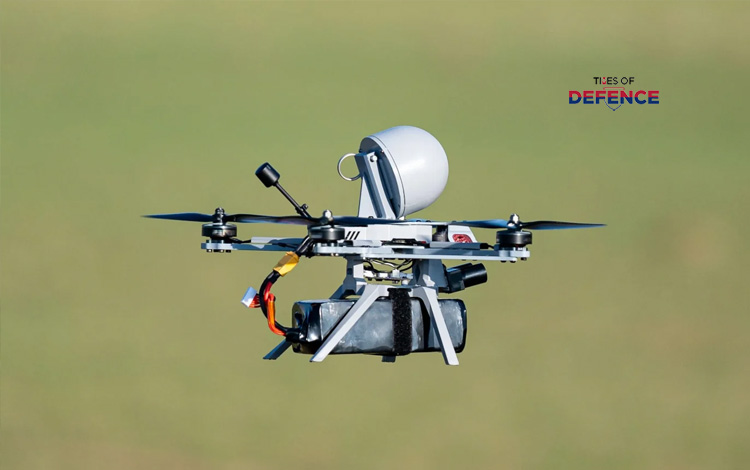
A three-year unmanned-warfare contract exceeding $100 million between Turkish defense-technology firm Pasifik Teknoloji—acting through its subsidiary TİTRA Teknoloji—and Pakistan's state-owned National Radio and Telecommunication Corporation (NRTC) is forcing defense planners in New Delhi to accelerate India's own domestic drone and counter-drone manufacturing. Disclosed following completed field trials, simulations, and user evaluations under an earlier framework accord, the agreement pairs the export of more than 100,000 Turkish unmanned systems with technology transfer and local assembly lines inside Pakistan. As analysts across India, Turkey, and East Asia noted in coverage published November 17, 2026 by the [South China Morning Post](https://www.scmp.com/week-asia/politics/article/3374745/how-pakistans-turkish-drone-order-may-push-india-step-local-production) and [Times Now](https://www.timesnownews.com/opinion/india/pakistans-100000-drone-deal-is-a-test-of-indias-military-preparedness-after-operation-sindoor-article-156523599), the strategic shock lies less in the sticker price than in shifting South Asia toward Ukraine-style industrial mass production of expendable precision weapons. ### Inside the Five-Tier Turkish–Pakistani Unmanned Architecture Technical disclosures reported by [Times of Defence](https://www.timesofdefence.com.tr/pasifik-teknoloji-and-titra-finalize-landmark-100-million-multi-tiered-unmanned-systems-agreement-with-pakistans-nrtc/) and [Defence Security Asia](https://defencesecurityasia.com/en/pakistan-turkiye-100000-merkut-fpv-drone-deal/) show that the NRTC–Pasifik Teknoloji package extends well beyond hobbyist quadcopters, bundling five interlocking unmanned layers across air and ground operations: - **100,000 MERKÜT FPV kamikaze drones:** Developed under TİTRA's ecosystem, these goggle-flown tactical strike quadcopters reach speeds up to 200 km/h across an operational range of 8 to 10 km with 20 to 30 minutes of flight endurance. They carry a directed-fragmentation warhead packed with roughly 950 to 1,000 steel shrapnel balls, a proximity sensor adjustable from 20 cm to 5 meters, electronic-warfare resistance, and a dual-safety abort and recovery mechanism. - **500 DELİ tactical loitering munitions:** Fixed-wing autonomous strike airframes in the 15 kg class engineered with GPS-independent navigation and programmable dive angles between -5° and -90°. - **10 ALPİN unmanned helicopters and 25 DUMRUL mini-VTOLs:** Heavy-lift ALPİN platforms (550 kg maximum takeoff weight, 200 kg payload, 200 km control radius, and more than nine hours of endurance) tasked with cargo resupply, radar relay, and armed intelligence-surveillance-reconnaissance (ISR), complemented by battery-powered DUMRUL close-support rotary drones. - **250 KORGAN autonomous ground stations:** Automated perimeter docking, recharging, and launch nodes designed to sustain persistent unmanned patrols without continuous crew exposure. ### Why Local NRTC Assembly Matters More Than Headline Numbers For Islamabad, partnering directly with NRTC—a state telecommunications and defense electronics manufacturer—addresses the decisive lesson of contemporary drone warfare: expendable FPV munitions are consumed at rates that quickly exhaust static import stockpiles. By embedding local assembly and co-production lines inside Pakistan, the three-year pact aims to establish a domestic replenishment pipeline capable of turning out tactical airframes, proximity fuzes, and electronic-warfare-hardened links at wartime scale while deepening defense-industrial ties with Ankara. For Ankara, the contract cements Turkey's pivot from exporting high-profile medium-altitude Bayraktar platforms toward dominating the high-volume, low-cost attritable drone market—extending Turkish defense footprints across South Asia alongside expanding cooperation frameworks involving Pakistan and Saudi Arabia. ### India's Counter-Drone Imperative After Operation Sindoor In New Delhi, strategic commentators warn that facing massed waves of 8-to-10-kilometer FPV strike drones and GPS-denied loitering munitions along contested borders exposes cost-exchange vulnerabilities in conventional air defense. Firing expensive surface-to-air interceptors at low-cost attritable quadcopters rapidly drains magazine depth, putting renewed pressure on India's Defence Research and Development Organisation (DRDO) and private domestic manufacturers to scale affordable directed-energy jammers, kinetic point-defense autocannons, radar micro-tracking, and indigenous loitering swarms. While delivery timelines and the exact share of domestic Pakistani component fabrication remain undisclosed, the deal marks an inflection point in South Asian deterrence: mass-produced autonomous attritable hardware is no longer a peripheral battlefield experiment, but an industrialized pillar of bilateral defense planning. ### Sources & Further Reading - [Times of Defence (Turkey — Technical Specifications & $100M+ NRTC Contract Details)](https://www.timesofdefence.com.tr/pasifik-teknoloji-and-titra-finalize-landmark-100-million-multi-tiered-unmanned-systems-agreement-with-pakistans-nrtc/) - [Times Now (India — Strategic Assessment After Operation Sindoor)](https://www.timesnownews.com/opinion/india/pakistans-100000-drone-deal-is-a-test-of-indias-military-preparedness-after-operation-sindoor-article-156523599) - [South China Morning Post (Hong Kong — Regional Arms Race & Indian Production Push)](https://www.scmp.com/week-asia/politics/article/3374745/how-pakistans-turkish-drone-order-may-push-india-step-local-production) - [Defence Security Asia (Malaysia/Asia — Production Scope & Strategic Implications)](https://defencesecurityasia.com/en/pakistan-turkiye-100000-merkut-fpv-drone-deal/) ~WorldNews ~Pakistan ~Turkey ~India ~Defense