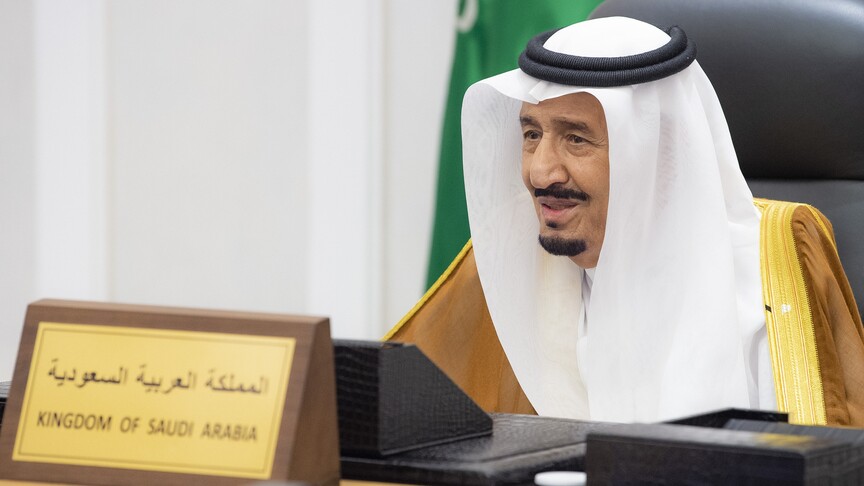
Saudi King Replaces Joint Forces Commander Al-Salman With Chief of Staff Al-Ruwaili Amid Yemen Setbacks
Saudi Arabia has overhauled the leadership of its military operations in Yemen after days of battlefield reversals and renewed cross-border aerial threats. Under a royal decree issued on Monday, November 16, 2026, by King Salman bin Abdulaziz upon the recommendation of Defense Minister Prince Khalid bin Salman, **Lieutenant General Fahd bin Hamad Al-Salman** was relieved as Commander of the **Joint Forces** and reassigned as an adviser to the defense minister for military affairs. Taking over the post—while retaining his existing position—is **General Fayyad bin Hamed Al-Ruwaili**, Saudi Arabia’s Chief of the General Staff since February 2018. The reshuffle comes barely 24 hours after coalition-backed Yemeni forces [pulled back from positions near the Bab al-Mandeb Strait to reinforce Aden](https://www.mushimu.com/post/9403) in the face of Houthi advances. At the same time, [China Daily Asia (via Xinhua)](https://www.chinadailyasia.com/article/642798) reported that on the exact day of the royal order, the Saudi-led coalition announced it had intercepted and destroyed two drones launched by Houthi forces toward Saudi Arabia’s Mecca and Riyadh regions—underscoring that Riyadh’s military pressure is no longer confined to Yemen’s coastline. ### Why Riyadh Dual-Hatted Its Top Air Force Veteran Rather than rotating in another ground-level deputy to replace Al-Salman, Prince Khalid bin Salman and King Salman placed operational command of the Joint Forces directly onto the desk of the kingdom’s senior uniformed officer. As detailed by Saudi-owned pan-Arab daily [Asharq Al-Awsat](https://english.aawsat.com/gulf/5342012-air-force-commander-chief-staff-al-ruwaili-takes-command-saudi-joint-forces), Al-Ruwaili (born in 1958) is a career Royal Saudi Air Force pilot trained both in Saudi Arabia and at the U.S. Air University’s Air War College, having previously commanded Taif and King Fahd air bases, led the RSAF from 2013, and served as Chief of the General Staff since 2018. Consolidating both offices under an air-power specialist serves two urgent operational goals. First, it eliminates a layer of bureaucracy between coalition coordination in Yemen and Saudi Arabia’s integrated homeland air-defense network at a moment when drone and missile salvos have escalated since July 2026, according to [Anadolu Agency](https://www.aa.com.tr/en/middle-east/saudi-king-removes-commander-of-anti-houthi-coalition-in-yemen/4126820). Second, placing the Chief of Staff personally over Joint Forces signals to coalition partners and Yemen’s internationally recognized government in Aden—which has activated emergency security plans for airports and border crossings—that Riyadh is treating the southern front as a top-tier strategic crisis. ### Contrasting Narratives Across Saudi and International Coverage A comparison of regional and international outlets highlights how carefully Riyadh is managing public messaging around the shake-up. [Asharq Al-Awsat](https://english.aawsat.com/gulf/5342012-air-force-commander-chief-staff-al-ruwaili-takes-command-saudi-joint-forces) framed the decree strictly as an institutional biography celebrating Al-Ruwaili’s military credentials and omitted any mention of Al-Salman’s removal or recent territorial losses near Bab al-Mandeb. By contrast, Turkish outlet [Anadolu Agency](https://www.aa.com.tr/en/middle-east/saudi-king-removes-commander-of-anti-houthi-coalition-in-yemen/4126820) explicitly led with King Salman removing the anti-Houthi coalition commander amid escalating Houthi attacks since July, while [Xinhua via China Daily Asia](https://www.chinadailyasia.com/article/642798) paired the Saudi Press Agency’s official decree notice directly with the interception of drones headed toward Mecca and Riyadh. Neither the coalition spokesperson nor SPA disclosed whether debris caused material damage or casualties, reflecting Riyadh’s tight control over battlefield disclosures even as Houthi statements claim deeper strikes against energy and military infrastructure. ### Strategic Tightrope Between Deterrence and De-Escalation The command shake-up also exposes the broader strategic dilemma confronting Riyadh across a volatile Middle East. Even as Saudi air defenses intercept incoming drones and Yemeni government brigades dig in around Aden, Saudi diplomacy has simultaneously been consulting Qatar and Egypt on regional de-escalation amid widening Gulf tensions—illustrated elsewhere by [Iranian drone strikes targeting Bahrain](https://www.mushimu.com/post/9429). By shifting Al-Salman to an advisory role rather than purging him outright, and by empowering a steady institutionalist like Al-Ruwaili over Joint Forces, Saudi leadership appears intent on stabilizing defensive lines and air-defense readiness without signaling an imminent return to full-scale ground escalation inside Yemen. Whether tighter command centralization can halt Houthi momentum toward Aden—or deter further deep-strike probes toward Riyadh—will test Al-Ruwaili’s dual mandate in the weeks ahead. ### Sources & Further Reading - [China Daily Asia / Xinhua (China)](https://www.chinadailyasia.com/article/642798) - [Asharq Al-Awsat (Saudi Arabia)](https://english.aawsat.com/gulf/5342012-air-force-commander-chief-staff-al-ruwaili-takes-command-saudi-joint-forces) - [Anadolu Agency (Turkey)](https://www.aa.com.tr/en/middle-east/saudi-king-removes-commander-of-anti-houthi-coalition-in-yemen/4126820) ~WorldNews ~SaudiArabia ~Yemen ~MiddleEast ~Geopolitics