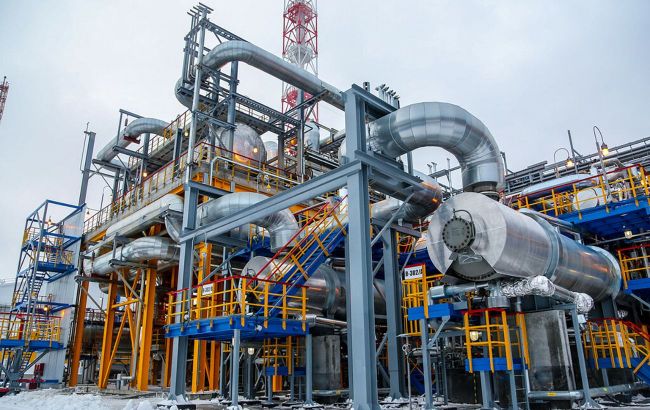
The European Union has enacted a comprehensive expansion of its restrictive measures against the Russian Federation, blacklisting eleven of the country’s largest petroleum refining complexes, digital payment platform YooMoney, and more than forty commercial banks and financial intermediaries. Published on Monday, November 16, 2026, in the Official Journal of the European Union, the legal package marks a decisive strategic pivot in Western sanctions doctrine. Rather than relying solely on maritime price caps and crude export ceilings, Brussels has moved aggressively downstream to directly target the physical infrastructure and domestic clearing mechanisms that process raw hydrocarbons into military fuel, generate operational revenues for the Kremlin, and bypass conventional international banking restrictions.
Throttling Downstream Energy Infrastructure
The center of gravity of the new measures is the formal designation of Russia's primary refining and petrochemical assets. The blacklist includes crown jewels of the Russian energy sector: the Gazpromneft-Moscow Oil Refinery, the massive Omsk Refinery in Western Siberia, the Kirishinefteorgsintez (KINEF) complex near Saint Petersburg, the Saratov and Khabarovsk refineries, the Novoshakhtinsk Oil Products Plant, TAIF-NK in Tatarstan, and the Petersburg Oil Terminal.
This structural targeting represents a calculated escalation. While previous sanctions packages sought to keep Russian crude flowing to global markets under price-cap mechanisms to avoid supply shocks, blacklisting the refineries directly imposes full asset freezes and comprehensive bans on the provision of European engineering, catalysts, replacement turbines, and diagnostic software. Because Russian refineries remain heavily reliant on legacy European and American automation systems (such as Honeywell and Siemens control architectures), the denial of specialized servicing compounds the operational strain already inflicted by long-range drone strikes, severely restricting the Kremlin's capacity to refine high-octane gasoline, aviation kerosene, and arctic-grade diesel for its armed forces.
Severing Shadow Financial Rails: YooMoney and Tier-Two Lenders
Simultaneously, the European Council delivered its most sweeping financial blow since the initial expulsion of major Russian banks from SWIFT in 2022. By blacklisting YooMoney—the dominant electronic wallet and digital payment processor fully owned by state-controlled Sberbank—the EU aims to sever a critical conduit for semi-formal, cross-border digital transactions.
Following the initial disconnection of Russia's primary banking tier from Visa, Mastercard, and Western payment gateways, YooMoney evolved into a ubiquitous platform for gray-market e-commerce, CIS remittances, and peer-to-peer funding networks frequently leveraged to crowdfund micro-electronics, commercial drones, and thermal optics for frontline units. Alongside YooMoney, over forty regional and specialized credit institutions were subjected to asset freezes, including Bank 131, Agropromcredit, Snezhinsky Bank, Slavia Bank, Solid Bank, and International Financial Club Bank. European intelligence assessments indicated that these smaller, regional balance sheets were increasingly functioning as secondary clearing hubs, shielding sanctioned state corporations from primary Western monitoring.
Oligarchic Tech Networks: Wildberries, Ozon, and Defense Logistics
Beyond physical refineries and regional lenders, the sanctions package targeted key figures at the intersection of Russian consumer tech and military logistics. Individual asset freezes and travel bans were slapped on Sergei Matviyenko (businessman son of Federation Council Speaker Valentina Matviyenko), Alexander Chachava (founder of venture capital firm Leta Capital and formerly the largest shareholder in e-commerce giant Ozon), and Tatyana Kim, the billionaire founder and CEO of Wildberries, Russia’s largest online marketplace.
Crucially, the EU Official Journal emphasized that the digital platforms themselves—such as Wildberries and Ozon—were not placed under sectoral bans, avoiding direct disruption to consumer retail. However, EU authorities concluded that Kim and Chachava provided material, financial, and logistical support to the Russian defense-industrial complex, facilitating supply-chain routing for dual-use components and benefiting commercially from wartime state contracts.
Secondary Enforcement and Global Market Realignments
The immediate consequence of the November 16 designations will be felt far beyond the European continent. Under EU sanctions law, all assets belonging to the designated entities within European jurisdictions are frozen, and EU operators are strictly prohibited from making funds, economic resources, or technical assistance available to them.
More significantly, the blacklisting of major refining complexes and specialized financial nodes triggers heightened secondary-sanctions compliance across non-EU trading hubs, including the United Arab Emirates, Turkey, India, and Central Asia. International maritime insurers, commodity traders, and foreign commercial banks will now face intense regulatory scrutiny from Brussels and Washington if they engage in transactions involving refined products originating from the blacklisted installations. By simultaneously targeting the physical catalytic crackers of the refining industry and the digital wallets of the shadow economy, the European Union has signaled that its economic containment of Moscow is entering a far more intrusive, downstream phase.
### Sources & Further Reading
- [Meduza (Independent Russian Coverage & Sanctions Breakdown)](https://meduza.io/en/news/2026/11/16/eu-sanctions-russia-s-biggest-oil-refineries-payment-service-yoomoney-and-more-than-40-banks)
- [RBC Ukraine (Regional Primary & Infrastructure Reporting)](https://newsukraine.rbc.ua/news/eu-expands-new-sanctions-against-russia-targeting-1794834438.html)
- [European External Action Service (Official EU Primary Documentation)](https://www.eeas.europa.eu/eeas/eu-extends-sanctions-nearly-all-major-russian-banks_en)
~WorldNews ~EuropeanUnion ~Russia ~Sanctions ~Economy