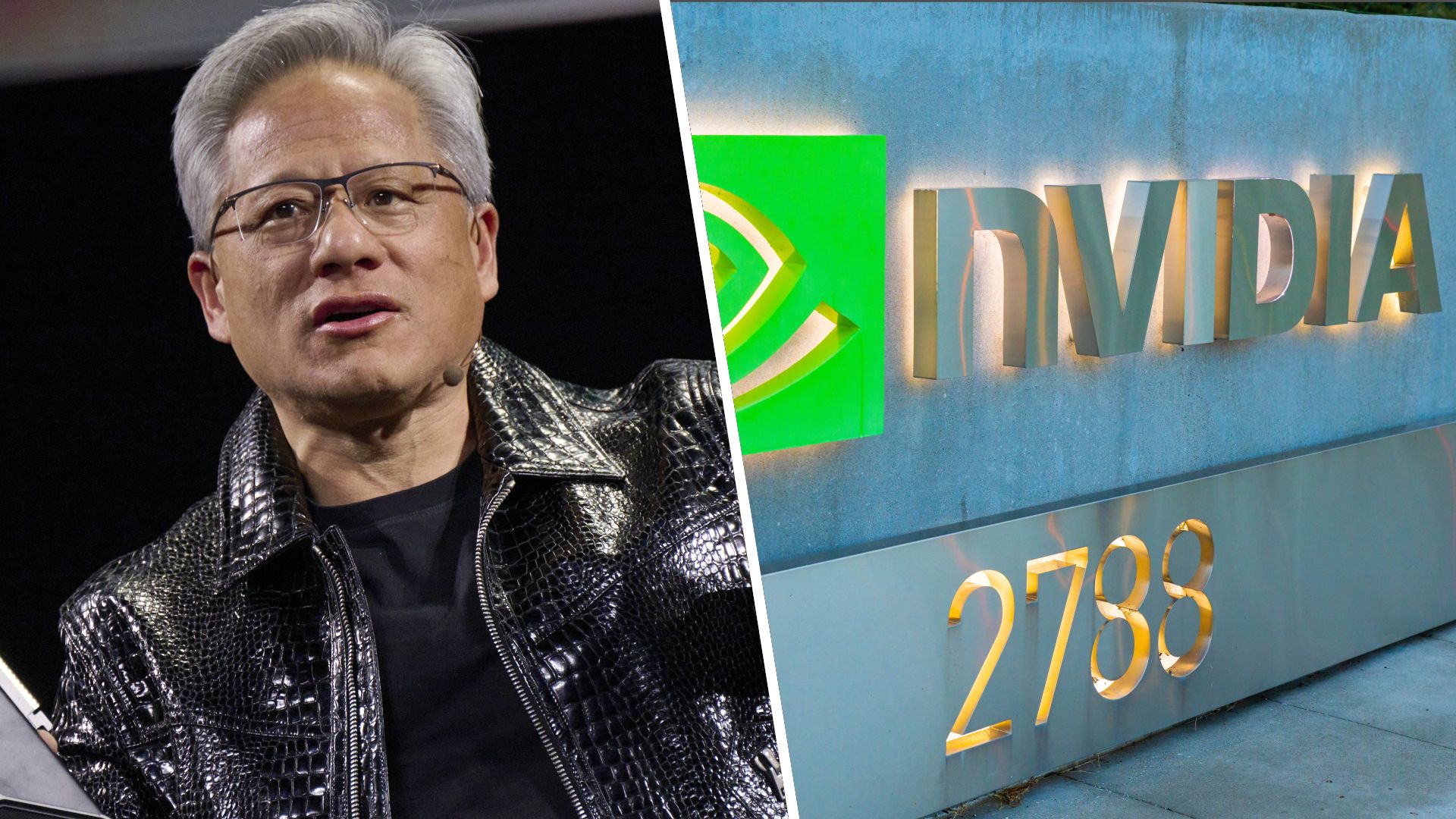
In a development that has sent shockwaves through the global semiconductor sector, the artificial intelligence industry, and international intelligence communities, Nvidia co-founder and Chief Executive Officer Jensen Huang has formally admitted to an extramarital affair with Alice Huang, a senior executive at Chinese AI firm Megaspeed who is currently under active investigation by United States intelligence agencies as an alleged asset of China’s Ministry of State Security (MSS). The revelation, first uncovered in joint reporting by *The New York Times*, *Axios*, and the *Financial Times*, has triggered an immediate independent investigation by Nvidia’s board of directors into potential conflicts of interest, corporate governance breaches, and intellectual property exposure.
According to a verified internal memorandum distributed to Nvidia’s global workforce and obtained by *Axios*, Jensen Huang addressed the relationship directly after weeks of strenuous corporate denials from Santa Clara PR representatives, who had previously insisted that all interactions between the two executives were strictly professional and commercial. “I owe my family and all of you an apology,” Huang wrote in the leaked communication. “I was unfaithful to my wife. My actions hurt her and our children. There is no excuse for what I did.” Huang stated that he takes “full responsibility” for his conduct, but made clear that he has no intention of stepping down from the chief executive post he has held since founding the company in 1993, adding: “I am fully committed to Nvidia and will work to earn back your confidence.”
The corporate fallout has been swift. Nvidia’s board of directors has convened an independent special investigative committee, retaining external forensic auditors and national security legal counsel to scrutinize the full digital, physical, and communications trail between Jensen Huang and Alice Huang. While the preliminary board assessment indicates that no proprietary architectural blueprints, proprietary CUDA compiler source code, model weights, or classified semiconductor pipeline schedules were directly compromised, the board is conducting comprehensive audit logging across executive communications channels. Crucially, the board affirmed that it is not currently seeking Huang’s removal or suspension, recognizing that Nvidia’s unprecedented $3.5-trillion market valuation, datacenter AI hardware dominance, and enterprise roadmap remain deeply anchored to his executive vision and ecosystem leadership ([post #9283](https://www.mushimu.com/post/9283)).
The personal scandal unfolds against the backdrop of an acute geopolitical cold war over advanced computing hardware and artificial intelligence sovereignty between Washington and Beijing. The Trump administration’s Department of Commerce Bureau of Industry and Security (BIS), alongside the Federal Bureau of Investigation (FBI), has spent months tracking illicit semiconductor diversion rings that funnel export-restricted Hopper and Blackwell enterprise GPUs into mainland Chinese datacenters through third-party intermediaries in Southeast Asia and the Middle East. According to *The New York Times*, federal counterintelligence officials have placed Alice Huang under intense scrutiny over suspicions that her commercial positioning at Megaspeed was leveraged to facilitate backchannel procurement pathways and feed strategic telemetry regarding cutting-edge silicon architectures directly to Beijing’s Ministry of State Security. The Chinese Ministry of Foreign Affairs in Beijing, along with Megaspeed leadership, has categorically denied the espionage allegations, dismissing the probe as politically motivated weaponization of trade restrictions.
The intersection of executive intimacy and state-sponsored technological competition introduces an unprecedented corporate governance crisis for Nvidia. Under United States export enforcement mandates, executives leading tier-one defense-adjacent computing manufacturers are subject to rigorous foreign contact disclosure obligations and scrutiny over potential kompromat vulnerabilities. For years, Jensen Huang has walked a delicate diplomatic tightrope: aggressively lobbying Washington for export carve-outs to preserve Nvidia’s commercial footprint in Greater China while simultaneously complying with increasingly stringent performance density limits on datacenter silicon shipped to Chinese enterprise clients. The disclosure that Huang harbored a covert romantic relationship with a foreign national suspected of state intelligence ties severely undermines Nvidia’s lobbying leverage on Capitol Hill, where bipartisan congressional committees on strategic competition are already drafting requests for transcribed executive testimony and subpoenaing internal compliance records.
Beyond the regulatory crosshairs, the controversy arrives at a vulnerable juncture for the broader artificial intelligence hardware sector. While open physical AI models and frontier robotics benchmarks continue to expand their dependency on high-throughput GPU clusters ([post #9298](https://www.mushimu.com/post/9298)), public skepticism surrounding the multi-billion-dollar datacenter capital expenditure cycle is mounting across the United States. Aggressive utility grid buildouts, escalating power tariffs for residential consumers, water consumption for liquid cooling infrastructure, and localized zoning battles have made hyperscaler expansion increasingly unpopular with American voters heading into recent midterm cycles. With lawmakers already scrutinizing AI datacenter subsidies and environmental impacts, the spectacle of Nvidia’s iconic chief executive becoming embroiled in an international espionage inquiry provides political ammunition to critics demanding tighter oversight, mandatory hardware supply chain tracking, and strict export enforcement.
As the independent board committee pursues its forensic examination over the coming weeks, Wall Street and Silicon Valley will closely watch whether Jensen Huang can maintain his singular grip on the world’s most influential computing enterprise. While his technical achievements over three decades remain undisputed, the convergence of marital infidelity, executive vulnerability, and superpower espionage marks the most dangerous chapter in Nvidia’s history, testing whether even the architects of the artificial intelligence boom can escape the gravity of modern geopolitical warfare.
~ArtificialIntelligence ~Nvidia ~Hardware ~Semiconductors ~Geopolitics