NVIDIA has expanded its Physical AI and robotics ecosystem with the release of four specialized Cosmos 3 open-weight checkpoints for interactive world simulation on Hugging Face, published on November 5, 2026 under the permissive OpenMDW 1.1 license. Built by post-training the 16-billion-parameter `nvidia/Cosmos3-Nano` base architecture, the new model suite—comprising `Cosmos3-Nano-Transfer-Auto`, `Cosmos3-Nano-Sim-Auto`, `Cosmos3-Nano-Sim-Transfer`, and `Cosmos3-Nano-Sim-Bimanual`—shifts open-weight generative AI beyond static text and video synthesis into closed-loop, action-conditioned physical simulation for autonomous vehicles and bimanual robotics. Alongside recent advancements in sparse agentic language models ([see our architectural breakdown of Moonshot AI's Kimi K3.1 Pro](https://www.mushimu.com/post/9278)), NVIDIA's November 2026 release underscores how open foundation models are increasingly branching into spatial physics and real-time sensor simulation.
At the architectural core of the Cosmos 3 platform—which spans the 65-billion-parameter `Cosmos3-Super`, the 16-billion-parameter `Cosmos3-Nano`, and the compact 4-billion-parameter `Cosmos3-Edge`—is a Mixture-of-Transformers (MoT) backbone (`cosmos3_omni`). Unlike standard multimodal models that bolt separate vision encoders onto a text-only transformer via late-stage adapters, the MoT architecture natively interleaves text tokens, image frames, multi-view video streams, audio waveforms, 3D LiDAR point clouds, and continuous robot kinematics trajectories within a unified representation space. By selecting the 16B `Cosmos3-Nano` tier as the foundation for its interactive simulation checkpoints, NVIDIA targeted a sweet spot where multi-stream sensor generation can run at interactive frame rates on single-node enterprise GPUs without sacrificing physical coherence.
For autonomous vehicle engineering, the release introduces a tightly coupled pair of domain-specific world models: `Cosmos3-Nano-Transfer-Auto` and `Cosmos3-Nano-Sim-Auto`. Traditional autonomous driving validation suffers from the "long-tail problem"—rare, hazardous road scenarios such as blinding night glare, hydroplaning, or erratic pedestrian behavior are dangerous and prohibitively expensive to capture in physical fleet testing. `Cosmos3-Nano-Transfer-Auto` addresses data scarcity by taking structured simulator outputs or existing driving logs and synthesizing photorealistic, geometrically synchronized video across up to 11 surround-view cameras and concurrent LiDAR channels under programmable weather, lighting, and time-of-day conditions.
Building directly on that synthetic transfer pipeline, `Cosmos3-Nano-Sim-Auto` uses causal distillation to convert the bidirectional world model into a real-time, closed-loop driving simulator. Rather than generating a fixed video clip from an initial prompt, `Cosmos3-Nano-Sim-Auto` ingests live World Scenario Map (WSM) control signals and ego-vehicle steering, braking, and acceleration commands on the fly. As an autonomous driving policy reacts to traffic, the model dynamically streams updated multi-camera and LiDAR observations that reflect the vehicle's new trajectory—allowing engineers to stress-test end-to-end driving stacks inside a neural environment that responds to every control input.
In the robotics domain, NVIDIA paired `Cosmos3-Nano-Sim-Transfer` with `Cosmos3-Nano-Sim-Bimanual` to tackle one of the hardest bottlenecks in embodied AI: evaluating dual-arm manipulation policies without risking expensive hardware collisions or requiring thousands of hours of human teleoperation. Trained across diverse robotic embodiments including YAM and AgiBot platforms, `Cosmos3-Nano-Sim-Bimanual` predicts fine-grained environmental state transitions and visual outcomes directly from joint-space robot action vectors and camera poses. Meanwhile, `Cosmos3-Nano-Sim-Transfer` bridges the persistent "sim-to-real" visual gap by transforming rudimentary physics-engine renders, spatial depth maps, and text descriptions into photorealistic workspace video with accurate surface textures, reflections, and deformable object interactions.
To make these checkpoints deployable in production engineering pipelines, the release integrates directly with the open-source Cosmos Framework, `diffusers`, `vllm-omni`, and `sglang-diffusion` serving backends. Robotics and autonomous vehicle teams can fine-tune the 16B checkpoints on proprietary sensor configurations using Low-Rank Adaptation (LoRA), supervised fine-tuning (SFT), and reinforcement learning recipes including Direct Preference Optimization (DPO) and Group Relative Policy Optimization (GRPO). Released under the OpenMDW 1.1 agreement, the weights grant commercial rights to enterprises and academic labs alike, reinforcing NVIDIA's strategy of seeding open-weight physical simulation standards that anchor long-term demand for its data center and edge GPU hardware.
~ArtificialIntelligence ~NVIDIA ~OpenSource ~Robotics ~MachineLearning
El presidente del Gobierno y candidato socialista a la reelección, Pedro Sánchez, ha ejecutado un profundo giro estratégico en la campaña de las elecciones generales anticipadas del 29 de noviembre de 2026 ([post #8768](https://www.mushimu.com/post/8768)). Tras la suspensión forzosa de la precampaña a raíz de la tragedia ferroviaria de Urda y la posterior dimisión de Óscar Puente al frente del Ministerio de Transportes, el PSOE ha reconducido su relato hacia la defensa inflexible del Estado del bienestar y la economía cotidiana. Durante un multitudinario mitin celebrado este domingo en el Palacio Euskalduna de Bilbao ante más de 2.800 militantes y otros 300 simpatizantes concentrados en los aledaños, Sánchez situó en el epicentro de su programa dos compromisos de hondo calado distributivo: el blindaje constitucional de las pensiones públicas para garantizar por ley su revalorización anual conforme al Índice de Precios al Consumo (IPC) y la subida del Salario Mínimo Interprofesional (SMI) hasta los 1.286 euros mensuales para 2027, al margen del beneplácito de la patronal.
La ofensiva socialista en la capital vizcaína responde de forma inmediata a la extensa entrevista concedida por Alberto Núñez Feijóo a *El País* ([post #9297](https://www.mushimu.com/post/9297)), en la que el líder popular afirmó con aparente resignación que una eventual coalición gubernamental con Santiago Abascal «no depende de mí». Sánchez arremetió con dureza contra esa posición, calificándola de «un insulto a la inteligencia de los ciudadanos». Desde la tribuna, el secretario general del PSOE desnudó la coordinación electoral subterránea entre ambas formaciones conservadoras en las circunscripciones donde el nacionalismo y la izquierda han dominado históricamente. El Partido Popular ha renunciado formalmente a presentar candidatos al Senado en circunscripciones como Gipuzkoa, Girona y Tarragona, encomendando a sus bases votar directamente a los aspirantes de Vox para evitar la fragmentación de la derecha frente a la alianza entre los socialistas y el Frente Amplio. «¿Pero si estáis pidiendo el voto para Vox en el Senado en tres provincias, cómo te atreves a decir que gobernar con ellos no depende de ti?», increpó Sánchez, respaldado por el líder del PSE-EE, Eneko Andueza, quien sentenció que la estrategia de Génova liderada por Miguel Tellado no requiere intérpretes: votar al PP en el actual tablero político equivale a abrir las puertas del Consejo de Ministros a la extrema derecha.
El nudo gordiano del mitin radicó en la batalla por los casi diez millones de pensionistas del país, un colectivo sociológico determinante cuya fidelidad electoral penalizó severamente a los populares en las legislativas de 2023. Sánchez capitalizó el simbolismo de Euskadi, recordando las ininterrumpidas concentraciones dominicales de los jubilados vascos, a quienes encomió por movilizarse no solo por su sustento presente, sino por la viabilidad de las pensiones de las generaciones venideras. Frente a las declaraciones de la portavoz parlamentaria del PP, Ester Muñoz, quien alertó de que el sistema vigente «iba a petar», y ante el modelo mixto con fondos privados que preconiza Vox, Sánchez formalizó la promesa de promover una reforma de la Constitución que blinde de forma vinculante el poder adquisitivo de los jubilados. «Se lo vamos a exigir a todos los grupos en el Congreso; nadie volverá a jugar con la tranquilidad de nuestros mayores», proclamó. El presidente ilustró el riesgo de privatización recordando el colapso del sistema previsional en Paraguay bajo el mandato de Santiago Peña, recientemente destituido y procesado tras la quiebra del Banco Ueno, que dejó sin ahorros al 60% de la población adulta: «Puso los fondos de jubilación en manos de un banco del que era accionista y hoy está entre rejas. Ese es el modelo de privatización que defiende Vox».
En materia laboral, Sánchez ratificó la determinación del Ministerio de Trabajo de incrementar el Salario Mínimo Interprofesional un 5,3% a partir del 1 de enero de 2027, lo que representará una retribución bruta de 1.286 euros mensuales en 14 pagas (18.004 euros al año), traduciéndose en una mejora neta de 65 euros mensuales respecto a los 1.221 euros actuales. Sánchez desestimó frontalmente la exigencia de Feijóo de supeditar cualquier actualización retributiva a un acuerdo vinculante con la patronal CEOE. «La derecha solo atiende a las élites que perciben más de 400.000 euros anuales y a quienes incomoda que se mejoren los sueldos básicos. Mientras presidamos este país, el salario mínimo subirá año tras año sin derecho de veto empresarial», recalcó. Esta defensa de la capacidad adquisitiva enlaza de manera orgánica con la inminente votación de los decretos de contención de alquileres que la Diputación Permanente del Congreso dirimirá el 12 de noviembre ([post #9288](https://www.mushimu.com/post/9288)), una cita legislativa de máxima tensión que coincide con la convocatoria de la huelga general del 11-N ([post #8903](https://www.mushimu.com/post/8903)). Asimismo, el candidato socialista apeló al voto femenino al prometer la protección irrestricta de la Ley del Aborto ante el proyecto del PP de reactivar la tutela de comunicación previa en menores de 16 y 17 años.
El discurso de Bilbao culminó con una severa advertencia en el terreno de la soberanía y la política de defensa frente a las presiones de la administración de Donald Trump, que insiste en imponer a los socios europeos una cuota de gasto militar del 5% del Producto Interior Bruto. Sánchez alertó de que acatar semejante requerimiento supondría una detracción presupuestaria de más de 50.000 millones de euros anuales que un gabinete de derechas solo podría financiar mediante el desmantelamiento de los servicios esenciales. «Feijóo y Abascal tragan con el 5%, con la escalada en Oriente Medio y con la tragedia de Gaza. En España mandan los españoles: no vamos a convertirnos en el patio trasero de ninguna internacional reaccionaria ni a recibir órdenes de Washington, Tel Aviv, Buenos Aires o Moscú», aseveró. Con un encendido alegato del portavoz parlamentario Patxi López reivindicando la memoria democrática y la dignidad frente a la crispación mediática, el PSOE fija su estrategia para las tres semanas decisivas hacia las urnas: confrontar el proyecto de recortes y dependencia exterior de la derecha con un bloque de conquistas sociales irrenunciables.
~Espana ~Politica ~Elecciones ~PSOE ~Pensiones
The catastrophic closure of BioWare and the abrupt cancellation of the next mainline Mass Effect have ignited an unprecedented structural debate across the video game industry. With Electronic Arts having shuttered the storied Canadian studio following a sweeping corporate restructuring, fans, former developers, and industry veterans are confronting the harsh financial calculus governing modern role-playing games. Now, BioWare co-founder Trent Oster—who helped establish the Edmonton studio in 1995 before directing Neverwinter Nights and founding Beamdog—has offered a candid reality check on what it would actually take to resurrect Commander Shepard's universe: an upfront capital commitment exceeding $200 million (£150 million).
Oster's intervention arrives as the grassroots #SaveMassEffect campaign surges past 317,000 verified signatures on Change.org. The petition, launched by community organizer Joe Smith, does not merely plead for corporate reconsideration; it demands that Electronic Arts either commit to the continued production of the franchise or formally sell or license the intellectual property to an independent studio capable of delivering it. Oster threw his weight behind the campaign, acknowledging that while there remains a powerful commercial thesis for a dedicated RPG studio, the sheer financial barrier to entry presents an almost insurmountable roadblock under contemporary AAA development conditions.
### The Anatomy of a Shutdown: Debt, Buyouts, and the Battlefront Ultimatum
To understand how Mass Effect was pushed to the brink of extinction, one must examine the corporate seismic shifts that preceded BioWare's demise. In mid-2026, Electronic Arts finalized a monumental $55 billion leveraged buyout (LBO) spearheaded by Saudi Arabia's Public Investment Fund (PIF) alongside international private equity partners. The transaction, which transitioned the publishing giant into private ownership, saddled EA with aggressive debt-servicing obligations and forced executive leadership to enforce immediate, draconian capital discipline across its worldwide studios.
Under intense balance sheet pressure, EA executives faced an internal zero-sum dilemma. According to corroborating industry reports, the publisher was forced to choose capital allocation between two competing big-budget sci-fi productions: a third installment in the Star Wars Battlefront series or the nascent Mass Effect 5 (previously codenamed Mass Effect Universe). Driven by predictable multiplayer monetization, recurring live-service revenue, and Disney's established licensing cadence, EA prioritized Battlefront, terminating Mass Effect and shuttering BioWare's Edmonton and Montreal offices after three decades of groundbreaking narrative design.
### The Grueling Economics of $200M+ AAA Development
Addressing the technical and financial hurdles on social media, Oster broke down the reality facing any external investor or studio attempting to step into BioWare's shoes. The primary obstacle is not merely acquiring the rights, but sustaining the astronomical burn rate required by modern prestige gaming.
'The scary component of Mass Effect is the audience is going to want the best of AAA development,' Oster explained. 'Rough ballpark, based on contemporaries, is $200M+. That is a big number to commit up front. There has to be a bigger plan in place for the IP to make the math work.'
Modern cinematic RPG expectations are punishing. A title capable of following the original trilogy demands a multi-disciplinary team of 250 to 350 developers over a five-to-six-year cycle. At average North American fully burdened labor rates—ranging from $15,000 to $25,000 per developer-month once healthcare, workspace infrastructure, payroll taxes, and benefits are factored in—direct payroll alone rapidly consumes $120 million to $160 million. Layer on performance motion capture stages, orchestral scoring, high-profile voice talent across multiple localized languages, middleware licenses (such as Unreal Engine 5 pipelines), and global marketing campaigns that often match production budgets, and Oster's $200 million threshold represents a baseline rather than an exaggeration.
Under that financial model, a resurrected Mass Effect would require sales of eight to ten million full-priced units simply to achieve break-even profitability. In a volatile macroeconomic climate where platform holders take a 30% digital cut, few venture capitalists possess the risk appetite to underwrite such an endeavor without predatory live-service monetization.
### The Lean Alternative: 'Hitting the Big Beats' and IP Liberation
Yet Oster did not dismiss the possibility of a revival entirely. Instead, he posited an alternative production model rooted in design discipline rather than runaway scope creep:
'That said, I think it can be done well for less than that amount with a disciplined approach and an experienced team,' Oster argued. 'I think a game could be done cheaper, if you kept it simple and hit the big beats. It wouldn’t be what the team described in the Universe concept. The big push would be getting the IP free. The fans deserve more than one game... Makes me want to get some of the original band back together.'
Oster's thesis highlights a fundamental philosophical divide in contemporary game design. Rather than constructing hundreds of procedurally populated planetary sandboxes or chasing hyper-dense graphical fidelity that inflates asset budgets exponentially, a focused RPG could channel resources directly into player agency, complex branching narrative logic, tactical squad combat, and nuanced character writing. Studios like Larian Studios (with Baldur's Gate 3) demonstrated that deep narrative density can captivate millions without conforming to formulaic open-world bloat.
However, Oster correctly identified the core structural catch-22: 'getting the IP free.' Electronic Arts maintains an ironclad grip on the Mass Effect trademark, proprietary world-building lore, and character rights. Historically, major publishers rarely divest marquee intellectual property even after shuttering origin studios, preferring to retain dormant trademarks for licensing, merchandise, transmedia adaptations, or eventual nostalgic reboot opportunities decades later.
### Parliamentary Escalation and Transmedia Irony
The fallout from BioWare's closure has extended far beyond gaming forums, sparking a heated political debate in Canada. In Alberta, where BioWare served as the crown jewel of Edmonton's high-tech knowledge economy, federal politicians have stepped into the fray. Canadian New Democratic Party (NDP) leader Avi Lewis escalated the matter to the House of Commons, urging the federal government to intervene with specialized cultural innovation grants or explore worker-cooperative transition funding to prevent the mass brain drain of specialized digital entertainment talent out of the country.
Meanwhile, a bizarre transmedia paradox has emerged. Even as EA buried the video game franchise and discarded its creative architects, Amazon MGM Studios is reportedly pushing forward with its planned live-action Mass Effect television series. This creates an awkward, contradictory landscape where Hollywood producers will adapt the intricate galactic geopolitics crafted by Edmonton writers, while the interactive medium that gave life to the Citadel, the Reapers, and the Normandy is locked away in corporate storage.
Simultaneously, writer and director Akash Sherman confirmed that his upcoming documentary, Massive Effect: The BioWare Story—created with the blessing of co-founders Ray Muzyka and Greg Zeschuk—has transformed from an analytical retrospective into an emotional valediction. As composer Sam Hulick releases re-scored memorial arrangements of early teaser tracks, the gaming community finds itself at a historical crossroads. Trent Oster's warning underscores that saving Mass Effect is no longer just an artistic plea; it is an existential test of whether the video game industry can escape its self-destructive AAA cost spiral and build sustainable structures for deep, human-driven interactive storytelling.
~Gaming ~MassEffect ~BioWare ~ElectronicArts ~GameDev
Four days after opening the gates to an alternate, pre-Cataclysm Azeroth, Blizzard Entertainment confirmed that *World of Warcraft: Forever* has achieved the largest launch in the franchise’s twenty-two-year history by peak concurrent players. Surpassing the historic peaks of landmark expansions including *The Burning Crusade*, *Wrath of the Lich King*, and 2020’s *Shadowlands*, the permanent Classic Plus release has rewritten the commercial trajectory of the venerable MMORPG. More significantly for the long-term health of the ecosystem, executive producer and Blizzard vice president Holly Longdale revealed that the launch attracted the highest volume of completely new, first-time players seen in fifteen years, marking a demographic renewal that the studio had struggled to achieve across a decade of retail expansions.
The commercial surge marks the culmination of an editorial arc that began at BlizzCon 2026, when senior game director Ion Hazzikostas and lead Classic designer Tim Jones formally unveiled the project following months of community datamining under the internal moniker Project Camelot ([post #20](https://www.mushimu.com/post/20)). Rather than cycling players through another automated progression loop into subsequent expansions, *Forever* establishes a permanent, parallel branch of Warcraft history set between the fall of Lordaeron and the opening of the Molten Core. With a hard level cap of 60, the launch build introduces three wholly original continental zones, over 1,000 newly scripted quests, nine bespoke dungeons, two flexible raids supporting 10- and 20-player group sizes, and the avian Skyborne playable race. Crucially, Blizzard bundled full access directly into the existing $14.99 monthly World of Warcraft subscription, removing the traditional $50 to $90 upfront box fee that historically deterred curious outsiders.
Behind the record-shattering player numbers lies an unprecedented distributed systems operation that spared *Forever* the catastrophic server meltdowns that defined World of Warcraft’s 2004 debut and the multi-hour queue bottlenecks of Classic’s 2019 revival. Blizzard infrastructure telemetry revealed that the global launch was powered by a dynamically orchestrated cloud architecture deploying 3,924 virtual machines, 70,480 dedicated CPU cores, and over 251,136 gigabytes (251 terabytes) of system memory. By coupling Battle.net’s modernized microservice authentication mesh with automated cross-realm layering, lead software engineer Nora Mills’ engineering group managed to maintain stable sub-50ms tick rates across crowded starting zones without shattering local realm social identity. While high-population realms in North America and Western Europe briefly instituted controlled queue throttles to prevent database lock contention during the November 4 opening hour, catastrophic disconnects and realm crashes were almost entirely absent.
The influx of brand-new players highlighted by Longdale points to a profound psychological shift in the multiplayer gaming landscape. For over a decade, retail *World of Warcraft* has struggled with systemic feature bloat and intimidating cognitive barriers. Modern retail endgame revolves around hyper-optimized Mythic+ dungeon timers, twenty years of disjointed timeline lore, bloated action bars requiring external WeakAuras overlays, and accelerated leveling tracks that shuttle newcomers from tutorial islands to maximum level within a single afternoon without teaching basic spatial awareness or group etiquette.
In sharp contrast, *World of Warcraft: Forever* returns to the grounded friction that originally made Azeroth a cultural phenomenon. Combat is deliberate, resource management matters, and the world itself acts as the primary antagonist. An uncommon green-quality weapon drop in Westfall or the Barrens delivers tangible character empowerment, while group questing requires active chat communication rather than automated matchmaking queues. By stripping away two decades of accrued mechanical friction while retaining modern graphics rendering, full accessibility remapping, and refined class talent trees, Blizzard has successfully positioned the original vanilla map as an approachable, self-contained virtual world rather than a high-stress competitive chore.
That deliberate design philosophy was tested almost immediately during the launch weekend by competitive PvP balance. On Friday, November 6, Blizzard pushed *Forever*’s first major hotfix patch to extinguish an unintended physics loophole in Warsong Gulch. Players discovered that Tauren characters carrying the Warsong flag could trigger an exploit involving their native Plainsrunning mobility trait, accelerating to mounted travel speeds while holding the objective and rendering Horde flag-carriers virtually uncatchable by Alliance defenders. The rapid deployment of the server-side hotfix without requiring client downtime demonstrated the agility of Blizzard's modernized deployment pipeline, preventing the competitive exploit from souring the opening weekend battlegrounds.
From an industry perspective, *World of Warcraft: Forever* validates the long-term viability of the permanent horizontal progression model pioneered by Jagex’s *Old School RuneScape*. Rather than obsoleting previous content with vertical gear resets every eighteen months, horizontal live services expand the breadth of the original sandbox, preserving world relevance and player time investment. As Blizzard prepares to roll out its Phase 1 raid schedule alongside unreleased legacy dungeons like the original Karazhan Crypts layout, the record launch of *Forever* demonstrates that in an era dominated by seasonal battle passes and ephemeral extraction shooters, the enduring allure of a shared, persistent virtual continent remains unmatched.
~Gaming ~WorldOfWarcraft ~Blizzard ~MMORPG ~PCGaming
Less than a week before its scheduled worldwide commercial launch, Sony Interactive Entertainment has unexpectedly delayed its flagship PlayStation Pulse Elevate wireless desktop speakers indefinitely. The abrupt postponement, confirmed in a quiet update to the official PlayStation Blog on November 6, 2026, and widely identified across retail channels on November 7, halts what was slated to be Sony's premier desktop audio hardware centerpiece for the 2026 holiday shopping season. According to Sony's official statement, ongoing quality assurance testing surfaced an unspecified 'production issue,' forcing the company to suspend manufacturing and shipment schedules just six days ahead of the planned November 12 street date. Pre-orders for the $219.99 (£199.99 / €199.99) stereo speaker system had been active since September, leaving global retail partners and prospective buyers in operational limbo without an updated release window.
In consumer electronics manufacturing, an indefinite delay declared at T-minus six days represents an extraordinary supply chain anomaly. At this late stage in a consumer hardware lifecycle, volume production runs in contract manufacturing facilities have typically concluded, retail packaging is sealed, and initial commercial allocations are already palletized in regional distribution hubs or loaded onto freight containers. Announcing an indefinite suspension rather than a targeted multi-week calendar slip strongly indicates that quality assurance teams encountered a fundamental hardware defect or acoustic failure rather than a minor software glitch that could be resolved via a Day One over-the-air firmware patch. For Sony, withdrawing the product from global retail channels on the eve of distribution entails substantial financial friction, spanning warehouse quarantine logistics, merchant order cancellations, and potential component re-tooling.
The root of the manufacturing dilemma likely stems from the intricate acoustic engineering underpinning the Pulse Elevate's transducer architecture. Following Sony's acquisition of high-end California audiophile manufacturer Audeze in August 2023, the PlayStation hardware division embarked on an ambitious initiative to democratize planar magnetic driver technology across its consumer peripheral portfolio. While traditional dynamic speaker drivers rely on a cylindrical voice coil pushing and pulling a conical paper or composite diaphragm—a design prone to modal breakup distortion, cone flexing, and transient ringing at elevated volumes—planar magnetic transducers function on an entirely different physical paradigm. In a planar magnetic driver, an ultra-thin, microscopic polyimide membrane is etched with conductive circuit traces and suspended symmetrically between opposing arrays of permanent neodymium magnets. When electrical audio signals pass through the etched traces, electromagnetic forces act evenly across the entire surface of the diaphragm, driving an instantaneous, isodynamic piston motion. This achieves near-zero harmonic distortion, hyper-fast transient decay, and extraordinary spatial separation.
However, scaling planar magnetic technology from the enclosed, micro-acoustic chambers of the Pulse Elite headset and Pulse Explore earbuds to open-air desktop speaker monitors introduces formidable acoustic and mechanical challenges. Because planar diaphragms are exceedingly light and have minimal physical excursion, moving sufficient air to generate authoritative low-frequency bass in an open room requires massive surface area. To overcome this limitation, Sony engineered the Pulse Elevate as a hybrid multi-driver system: each desktop speaker houses custom planar magnetic tweeters and mid-frequency drivers paired with dedicated long-throw dynamic woofers and tuned passive bass radiators. While acoustically promising, this hybrid architecture creates acute failure points under sustained stress testing. Planar membranes operated in high-pressure speaker enclosures are highly vulnerable to acoustic back-wave reflection, thermal delamination of conductive traces, and diaphragm tension fatigue (commonly known as 'planar crinkle' or membrane slackening) when driven by powerful internal amplifiers. Furthermore, calibrating the analog-to-digital crossover network to seamlessly blend the ultra-fast impulse response of the planar transducers with the slower transient decay of the dynamic woofers without inducing phase cancellation or acoustic distortion represents one of the most demanding tasks in electroacoustic engineering.
Beyond its physical driver architecture, the Pulse Elevate was engineered as the technological anchor for Sony's proprietary PlayStation Link wireless ecosystem. Operating over a dedicated, low-latency 2.4 GHz radio frequency band, the PlayStation Link protocol bypasses standard Bluetooth audio codecs (such as SBC, AAC, or LDAC) to deliver uncompressed, lossless 16-bit/48kHz or 24-bit/48kHz digital audio with latency under 20 milliseconds. This near-zero latency pipeline is essential for competitive gaming, where the 80 to 200 milliseconds of latency inherent to conventional Bluetooth protocols creates noticeable audiovisual desynchronization. The Pulse Elevate was designed to connect seamlessly to the PlayStation 5, PC, and Mac via an included USB-A PlayStation Link wireless adapter, while also establishing direct, dongle-free pairing with the PlayStation Portal handheld remote player. Crucially, the speakers feature concurrent dual-device connectivity: gamers can receive lossless, uncompressed game audio via PlayStation Link while simultaneously streaming Discord voice chat, Spotify music, or incoming phone calls over Bluetooth 5.3 from a paired smartphone or secondary device. The right speaker unit additionally integrates an internal beamforming microphone array equipped with machine-learning noise rejection algorithms designed to eliminate mechanical keyboard clatter, computer fan whir, and ambient desk vibrations from voice communications.
From a commercial standpoint, the indefinite postponement represents a severe strategic setback for Sony's fourth-quarter hardware momentum. Releasing the Pulse Elevate on November 12 was calibrated to capture peak holiday consumer spending across Black Friday and Cyber Monday, establishing the speakers as a luxury desktop peripheral companion to the PlayStation 5 console family and high-end PC gaming rigs. Instead, Sony effectively forfeits the critical holiday shopping window. Global retailers, including Amazon, Best Buy, and GameStop, are now forced to navigate pre-order fulfillment protocols, deciding whether to preserve existing backorders indefinitely or issue automatic customer refunds. If resolving the underlying 'production issue' demands physical re-engineering of the planar diaphragm assembly, structural redesign of the internal acoustic damping chambers, or alterations to the electronic crossover PCB, re-tooling manufacturing lines and obtaining updated regulatory certifications will inevitably push commercial availability into mid-2027.
The delay also temporarily stalls Sony Interactive Entertainment's broader strategic campaign to penetrate the desktop PC gaming battle station market. Over recent years, Sony has steadily expanded beyond the living room television through its Inzone gaming monitor lineup, official PC DualSense wireless controller drivers, and simultaneous multiplatform PC releases of flagship first-party titles. The Pulse Elevate was designed to fill a major void for gamers who seek the low-latency fidelity of PlayStation Link without being tethered to a closed-back headset for multi-hour sessions. With Sony's desktop audio solution sidelined for the foreseeable future, the premium desktop gaming speaker sector remains an open playground for entrenched competitors like Razer, SteelSeries, and Creative. Until Sony clarifies the precise technical nature of the production defect and provides a revised deployment timeline, players investing in the PlayStation Link ecosystem must continue relying on existing headsets, while the audio market awaits the resolution of Sony's ambitious planar engineering gamble.
~Gaming ~PlayStation ~PS5 ~Hardware ~Audio
The robotics industry has entered a paradoxical era. Viral demonstrations frequently showcase dexterous robotic arms folding laundry, setting tables, or sorting novel items with uncanny precision. Yet behind these polished clips lies an acute reproducibility crisis. When an end-to-end robotic policy fails in the physical world, researchers are routinely left in the dark. Did the failure stem from an ambiguous visual scene, depth sensor jitter, a breakdown in high-level task decomposition, or subtle slip dynamics at the gripper-object interface? Without controlled, standardized experimental setups, pinpointing the root cause of robotic failures remains an exercise in educated guesswork.
In response to this systemic bottleneck, the Allen Institute for AI (Ai2) has unveiled FoundationWorlds—a standardized, open-source simulation architecture designed to act as the robotics equivalent of a biological petri dish. The initiative's flagship benchmark environment, dubbed ToyBlocks, pairs physics-accurate robotic simulation with automated demonstration generation and deep diagnostic telemetry. Built to systematically stress-test both high-level Vision-Language Models (VLMs) and low-level Vision-Language-Action (VLA) policies, ToyBlocks directly challenges the assumption that scaling raw web data alone will solve real-world manipulation. The release provides a vital empirical counterbalance to recent developments in physical foundation models, such as NVIDIA's Cosmos 3 checkpoints ([post #9283](https://www.mushimu.com/post/9283)), shifting the research spotlight from sheer parameter scale to rigorous diagnostic isolation.
### Overcoming the Teleoperation Bottleneck with 24x Accelerated TAMP
The primary impediment to scaling robotic learning has long been human teleoperation. Capturing tens of thousands of demonstration trajectories using virtual reality headsets or puppeteering rigs is painstakingly slow, bound to a strict 1:1 real-time physical ratio, and plagued by operator fatigue. Furthermore, human demonstrators naturally gravitate toward narrow, comfortable execution trajectories, leaving models vulnerable to distribution shifts.
ToyBlocks circumvents this operational roadblock by coupling NVIDIA Isaac Lab's GPU-accelerated simulation with Task-and-Motion Planning (TAMP). By executing hundreds of physics environments simultaneously on a single GPU, ToyBlocks achieves a 24x real-time simulation throughput. During offline demonstration generation, the framework grants the planning module access to privileged simulation state—exact 6-DoF object poses, center-of-mass values, and surface contact normals that physical sensors cannot directly measure.
Using reinforcement learning (RL) guided by privileged simulation data, ToyBlocks autonomously trains policies to master complex non-prehensile manipulation primitives. These include pushing objects across cluttered surfaces, sliding blocks along controlled trajectories, and flipping blocks onto adjacent faces without grasping. The TAMP module then sequences these learned primitives to solve multi-step objectives, recording complete trajectories alongside rich semantic labels. Researchers can rapidly rebalance training mixtures—generating thousands of targeted flipping or rotational trajectories on demand—without touching a physical robot.
### The Generalization Reality Check: Spatial Brittleness in Modern VLAs
The prevailing doctrine in embodied AI posits that pretraining Vision-Language-Action (VLA) models on internet-scale multimodal datasets endows them with generalizable physical common sense. To evaluate this claim, Ai2 subjected prominent action policies—including ManiFlow, pi0.5, and MolmoAct 2—to controlled spatial ablation experiments within ToyBlocks.
The benchmark separated performance into interpolation (evaluating novel block configurations within the spatial boundaries observed during training) and extrapolation (placing targets in unobserved tabletop quadrants or requiring models to assemble three- and four-block towers when training data contained only two- and five-block examples).
The empirical results were sobering. Despite extensive pretraining, all evaluated VLA models exhibited acute performance degradation when required to operate outside their precise training coordinates. While Low-Rank Adaptation (LoRA) fine-tuning restored a degree of localized competence, the experiments revealed that modern action models remain fundamentally brittle. Rather than mastering invariant spatial representations or genuine 3D physical reasoning, these models rely heavily on memorized workspace geometries, failing when minor coordinate shifts break their perceptual priors.
### Two-Tier Hierarchical Planning and Agentic MCP Scientific Reasoning
To address these shortcomings, ToyBlocks establishes a formal two-tier hierarchical framework that decouples cognitive task planning from motor execution. In standard operation, a high-level multimodal model—such as Ai2's Molmo 2—serves as the strategic planner, visually inspecting the scene, querying block states, and issuing skill commands via 2D pointing coordinates. A low-level policy, such as ManiFlow, then takes over to execute the precise motor trajectory, pausing upon completion to return telemetry to the planner. By deploying synthetic oracles at either tier, researchers can instantly determine whether a failed task was caused by strategic reasoning errors or motor control slips.
Beyond standard model evaluation, Ai2 connected frontier agentic systems—specifically Claude Opus 5.5 and Claude Fable 5.1—to the ToyBlocks simulation using the open Model Context Protocol (MCP). Rather than treating the language model as a static planner, the agents were granted interactive tool-calling access to physical skills (pick, place, flip, rotate) and permitted to act as autonomous experimental scientists.
When confronted with ambiguous coordinate frames, the agents formed empirical hypotheses, designed probe motions, and evaluated sensor feedback to deduce physical properties. In one striking sequence, an agent systematically tested whether gripper yaw was aligned radially relative to the robot base, confirming the mechanical geometry before constructing a tower. When the agents were tasked with running exploratory actions to draft their own tool descriptions, their empirical documentation increased task success rates from 24% (using default descriptions) and 36% (using human-expert descriptions) to 63%.
However, long-horizon search-and-spell trials—where agents had to manipulate blocks to spell target words while dealing with hidden faces and missing letters—exposed critical perceptual bottlenecks. Approximately 50% of failures were driven not by logical planning breakdowns, but by visual misclassifications: agents frequently confused look-alike glyphs or selected incorrect block orientations when constructing vertical stacks.
### World Models as Simulators: Boosting Out-of-Distribution Policy Success
A compelling dimension of the ToyBlocks release is its evaluation of action-conditioned world models as potential alternatives to analytical physics engines. By comparing predictions from the 5-billion-parameter Wan 2.2 video generation model, the agentic physics tuner Astra, and the latent world model LeWM against ground-truth simulation states, Ai2 demonstrated that neural video prediction models can accurately anticipate contact outcomes and spatial translations.
Crucially, the research confirmed that high-fidelity world models can directly alleviate data scarcity. Augmenting policy training with just 100 model-generated synthetic rollouts from Wan 2.2 increased robot task success in unobserved workspace regions from 19% to 78%.
By open-sourcing the entire ToyBlocks ecosystem—spanning Isaac Lab environments, demonstration generation pipelines, pretrained checkpoints for Molmo 2 and ManiFlow, and MCP interface layers on GitHub and Hugging Face—Ai2 has provided the community with an open, reproducible testbed. As physical AI expands beyond industrial cages and structured factories, platforms like ToyBlocks will be indispensable for diagnosing why embodied agents stumble and ensuring that autonomous systems operate with verifiable reliability.
~ArtificialIntelligence ~Robotics ~OpenSource ~MachineLearning ~PhysicalAI
A tres semanas exactas de las elecciones generales anticipadas del 29 de noviembre de 2026, convocadas tras el colapso parlamentario y la disolución de las Cortes Generales en octubre ([post #8768](https://www.mushimu.com/post/8768)), el presidente del Partido Popular y candidato a la Presidencia del Gobierno, Alberto Núñez Feijóo, ha roto el hermetismo sobre la arquitectura de su hipotético Ejecutivo en una reveladora entrevista publicada este domingo 8 de noviembre por el diario *El País*. Con las encuestas situando al Partido Popular en cabeza pero condicionado inexorablemente a la suma de escaños con Vox para alcanzar la mayoría absoluta, Feijóo ha admitido con crudeza pragmática que «hacer una coalición de Gobierno con Vox no depende de mí», supeditando la entrada de ministros de Santiago Abascal al veredicto estricto de las urnas y descartando de forma tajante acudir a Ferraz a solicitar la abstención de los socialistas: «¿Al PSOE de Sánchez? Mi grado de ingenuidad, a mi edad y con mi experiencia, no me lo permite». El líder de los populares, que ya gobierna en coalición con la formación ultraderechista en cuatro comunidades autónomas, perfila así su hoja de ruta institucional mientras Pedro Sánchez articula la absorción de los restos del espacio progresista bajo el paraguas del Frente Amplio.
En el plano de la negociación programática, Feijóo ha detallado los límites infranqueables que su formación impondría a cualquier acuerdo de investidura o gabinete conjunto. En primer lugar, el dirigente gallego ha subrayado que el PP defenderá el Estado de las autonomías y rechazará con rotundidad cualquier tentativa de recentralización institucional que pretenda laminar las competencias autonómicas, marcando una nítida distancia frente al ideario fundacional de Vox. No obstante, Feijóo ha matizado que su gabinete reforzará la «presencia política y del Estado» en Cataluña, el País Vasco y Navarra para revertir lo que califica de repliegue institucional durante los últimos tres años de mandato socialista. Respecto a la exigencia de Vox de implantar una doctrina de «prioridad nacional» en el acceso a ayudas sociales y servicios públicos, Feijóo ha reinterpretado el concepto despojándolo de sesgo nacionalista y ligándolo estrictamente al arraigo administrativo: «La prioridad nacional se basa en el arraigo, no en la nacionalidad, y en el respeto a la Constitución y a los tratados europeos. No se puede acordar nada fuera de la legalidad vigente». En este sentido, ha defendido vincular las prestaciones públicas al tiempo de empadronamiento y residencia legal, preservando al mismo tiempo la atención sanitaria universal de urgencia y emergencia vital para migrantes en situación irregular.
Frente a las especulaciones sobre un eventual reparto de carteras de primer orden, Feijóo ha desvelado que en sus conversaciones privadas con Santiago Abascal el dirigente ultraderechista «jamás ha hablado de vicepresidencias ni de ministerios de Estado como Interior, Exteriores o Defensa», remitiendo cualquier deliberación sobre el organigrama ministerial al escenario postelectoral del 30 de noviembre. Asimismo, el candidato popular ha querido desmarcarse del marco discursivo de Vox en materia de derechos civiles y políticas de igualdad. Mientras la extrema derecha insiste en utilizar el término «violencia intrafamiliar» para diluir la tutela institucional hacia las mujeres maltratadas, Feijóo ha sido categórico al reivindicar la expresión «violencia machista», argumentando que la lacra de los asesinatos a manos de parejas y exparejas exige firmeza de Estado, si bien ha cargado duramente contra el balance del Ministerio de Igualdad por los fallos de las pulseras telemáticas y las consecuencias penales de la derogada ley del *solo sí es sí*. En el ámbito de la interrupción voluntaria del embarazo, ha acotado su reforma exclusivamente a restablecer el deber de comunicación paterna en las menores de 16 y 17 años («hablo de conocimiento, no de consentimiento»), garantizando la prestación pública y el respaldo económico a la maternidad.
Uno de los pronunciamientos con mayor repercusión económica inmediata es el anuncio formal de Feijóo de que derogará de forma inmediata los reales decretos-leyes de contención del alquiler aprobados de urgencia por el Consejo de Ministros saliente. Esta declaración de intenciones aterriza a escasos cuatro días de que la Diputación Permanente del Congreso de los Diputados, convocada para este 12 de noviembre ([post #9288](https://www.mushimu.com/post/9288)), someta a convalidación el Real Decreto-ley 28/2026 y el Real Decreto-ley 29/2026 en un clima de alta tensión social preludiado por la huelga general del 11-N ([post #8903](https://www.mushimu.com/post/8903)). Feijóo ha sostenido que las prórrogas forzosas de contratos y la moratoria de desahucios no han hecho más que estrangular la oferta y expulsar inmuebles del mercado residencial tradicional: «Los decretos perjudican tanto a los inquilinos como a los propietarios. Se está reduciendo el número de viviendas en alquiler en toda España». En materia de pensiones, y ante las alarmas de la AIReF y el Ministerio de Economía sobre la presión demográfica, Feijóo se ha comprometido a revalorizar las prestaciones conforme al IPC, respaldando el horizonte de jubilación legal a los 67 años e instando a una revisión urgente en el seno del Pacto de Toledo con agentes sociales.
En el terreno judicial e institucional, Feijóo ha lanzado un aviso de largo alcance sobre el destino penal del Ejecutivo saliente al asegurar que, si el futuro Fiscal General del Estado formula una querella o acusación contra Pedro Sánchez derivada de los diecisiete sumarios por corrupción que cercan al entorno gubernamental, no intervendrá bajo ningún concepto para frenarla: «Si el próximo fiscal general hace una propuesta penal, no se lo impediré». En clave exterior, el candidato popular ha celebrado con nitidez el revés electoral de los republicanos de Donald Trump en las elecciones de medio mandato de Estados Unidos, destacando que el electorado norteamericano ha frenado la deriva unilateralista, y ha prometido restablecer la firmeza diplomática con Marruecos exigiendo reciprocidad estricta y blindando la seguridad fronteriza de Ceuta y Melilla sin ceder soberanía. En este tablero de alta polarización, donde el PP y Vox ya han articulado un acuerdo operativo en el Senado para blindar mayorías cualificadas frente al bloque oficialista, Feijóo busca maximizar el voto útil de centro-derecha, consciente de que el margen entre gobernar en solitario con apoyos parlamentarios o presidir una coalición bicéfala dependerá de apenas un puñado de escaños en una treintena de provincias clave el próximo 29 de noviembre.
~Espana ~Politica ~Elecciones ~PP ~Vox
For more than a decade, the most persistent, universally echoed feature request among action RPG players has not been larger stash tabs, flashier microtransactions, or revised loot filters. It has been a functional death recap: a reliable, granular diagnostic breakdown explaining exactly why a heavily armored, multi-layered endgame character suddenly evaporated in a fraction of a second. At an ExileCon keynote presentation this weekend, Grinding Gear Games (GGG) accidentally gave the community what it had spent ten years begging for when lead designer Mark Roberts' character died during a live gameplay demonstration, triggering a previously unannounced death recap screen directly on the main stage. Following the audience's immediate ovation, game director Jonathan Rogers confirmed that the feature is officially integrated and will launch alongside Path of Exile 2's full 1.0 commercial release on December 11, 2026.
The formal addition of a post-mortem combat log resolves one of the longest-standing design tensions in the ARPG genre. Throughout Path of Exile's original lifespan, GGG leadership historically resisted implementing a death recap, citing both technical bottlenecks and telemetry accuracy dilemmas. In a high-density ARPG where dozens of hostile entities swarm the player, calculating and synchronizing hundreds of discrete damage packets per server tick—encompassing physical mitigation curves, elemental resistances, spell suppression rolls, evasion checks, and chaos penetration—creates intense serialization overhead. Moreover, simple combat logs often deceive players by attributing a fatality to a trivial 15-damage stray projectile that landed after an untelegraphed boss slam had already stripped 99 percent of the character's life pool milliseconds prior.
According to Rogers, engineering the feature for Path of Exile 2 required years of iteration to ensure the diagnostic data was genuinely actionable rather than misleading. 'I was really worried that it wasn't going to be useful enough or accurate enough, but we got it to a place that I'm fairly happy with,' Rogers explained in an interview following the keynote reveal. The system captures the fatal damage window, segregating incoming attacks across damage types (physical, fire, cold, lightning, and chaos) while identifying critical strikes and specific hostile monster modifiers.
However, Rogers candidly acknowledged the system's remaining technical blind spot: damage-over-time (DoT) calculations. 'The thing that's not quite good is the damage over time tracking,' Rogers noted. 'We do tell you that you took it, but we don't know where it came from.' In complex endgame encounters where caustic clouds, burning ground patches, ignited status ailments, and corrupted blood stacks overlap continuously, the game's simulation engine struggles to track the specific originating mob once an environmental ground effect has detached from its caster. While parsing tick-based environmental degeneration remains an ongoing engineering priority for GGG ahead of December, having clear visibility into direct kinetic burst damage solves the overwhelming majority of player confusion.
Beyond mere convenience, Rogers emphasized that a death recap fundamentally alters the relationship between players and game balance. In high-tier endgame mapping, players frequently construct complex defensive matrices—capping elemental resistances at 75 percent or higher, investing in high armor or evasion ratings, and stacking energy shield buffers—only to be instantly killed. In the visual chaos of endgame battles, where screen real estate is inundated by minion armies, spell cascades, and explosive particle effects, players inevitably suffer from attribution error. Fatalities are routinely misdiagnosed as unfair balance spikes, server-side desync, or phantom 'one-shot bugs,' when the underlying cause was often a stack of physical vulnerability curses, depleted chaos resistance, or map-tier critical strike multipliers.
By providing an objective, unvarnished autopsy of every fatal encounter, GGG aims to redirect community feedback toward actual balancing issues. As Rogers noted, giving players the exact data behind their deaths finally empowers them to 'complain about the right things,' distinguishing genuine encounter design flaws from neglected character defensive layers.
The milestone also highlights Path of Exile 2's technological maturation relative to its genre contemporaries. While Blizzard Entertainment's Diablo IV maintains a notoriously rudimentary death notification that displays little more than the killer's name, and Eleventh Hour Games has wrestled with prototype telemetry in Last Epoch, GGG's implementation bridges the gap between hardcore complexity and modern quality-of-life standards. For players on portable hardware like the Steam Deck and handheld gaming PCs, where smaller screens exacerbate visual clutter, an on-demand death recap provides essential legibility that makes high-stakes progression far more transparent. With the full 1.0 launch locked for December 11, Path of Exile 2 is proving that even the most stubborn decades-old genre hurdles can be conquered with thoughtful systems engineering.
~Gaming ~PathOfExile ~ARPG ~PCGaming ~GameDev
In a significant geographic and operational expansion of the confrontation in the Middle East, United States Central Command (CENTCOM) formally announced on November 8, 2026, the establishment of Task Force Iron Gate. The specialized interagency unit is charged with systematically interdicting Iran's overland supply lines across the Middle East and monitoring maritime trafficking across the landlocked Caspian Sea. Announced by CENTCOM Commander Admiral Brad Cooper from operational headquarters in Tampa, Florida, the initiative represents an aggressive second phase of the Western blockade against Tehran. Having enforced an intense maritime perimeter in the Persian Gulf and the Gulf of Oman over recent months, Washington is now moving to cut off the overland trade corridors and northern waterways that have sustained Iran's defense industrial supply chain and proxy networks.
The activation of Task Force Iron Gate follows sharp kinetic escalations across the region's vital maritime choke points, coming directly after a commercial oil tanker was struck near Khasab, Oman, and the U.S. State Department issued an unprecedented $20 million intelligence bounty on Iranian nuclear sites ([post #9285](https://www.mushimu.com/post/9285)). CENTCOM disclosed on Saturday that naval and air units enforcing the maritime blockade had intercepted and disabled a commercial cargo vessel in the Gulf of Oman. According to defense officials, a U.S. military aircraft fired precision-guided munitions into the stern propulsion machinery of the St. Kitts-flagged merchant ship M/V Huda after the vessel repeatedly defied naval boarding directives and after crew members were instructed via bridge-to-bridge communications to evacuate targeted compartments. The operation brings the total tally of U.S. blockade actions since July 2026 to 147 commercial vessels redirected upon compliance and five non-compliant merchant vessels disabled through kinetic strikes.
Simultaneously, the conflict's retaliatory cycle is expanding along Iran's southern littoral. The Islamic Revolutionary Guard Corps (IRGC) Navy confirmed that two commercial crude tankers sustained critical hull damage after striking naval mines in the Strait of Hormuz on Saturday while navigating with their Automatic Identification System (AIS) transponders powered off. Iranian official news agency IRNA reported loud detonations across the strategic outpost of Qeshm Island—an incident later confirmed by President Donald Trump as targeted strikes—alongside secondary explosions near coastal radar and missile installations in Jask, Sirik, and the primary naval hub of Bandar Abbas. While President Trump downplayed the Qeshm Island strikes as 'minor' precision hits designed to maintain maximum pressure, the rapid tempo of strikes and mine warfare underscores the fragility of global energy corridors.
The creation of Task Force Iron Gate directly addresses a critical tactical adaptation by Tehran. As Western Aegis destroyers, carrier strike groups, and aerial surveillance tightened the maritime vice around the Strait of Hormuz and the Bab el-Mandeb, Iranian logistics planners increasingly diverted the transit of dual-use components, guidance microelectronics, solid-fuel missile precursors, and illicit petroleum exports toward terrestrial corridors. These networks traverse western border crossings through Iraq and the Levant, northern transit corridors through the South Caucasus, and roll-on/roll-off (Ro-Ro) cargo shipping across the Caspian Sea connecting Iranian ports like Bandar Anzali and Amirabad to Russia's Astrakhan and Makhachkala.
The Caspian dimension poses a unique challenge to Western enforcement. Because the Caspian Sea is an enclosed body of water governed exclusively by the five littoral states (Iran, Russia, Azerbaijan, Kazakhstan, and Turkmenistan), conventional Western warships cannot access its waters under international law. Over the past two years, this inland corridor has emerged as an indispensable maritime highway for the International North-South Transport Corridor (INSTC), insulating Russo-Iranian technological and material exchange from maritime interdiction. By integrating satellite synthetic aperture radar (SAR) telemetry, Treasury Office of Foreign Assets Control (OFAC) tracking, signals intelligence, and regional customs intelligence, Task Force Iron Gate aims to identify and disrupt freight forwarders, rail transshipment nodes, and shadow financial conduits facilitating this trade.
This widening economic and military cordon has triggered acute friction across multipolar diplomatic circles. In Beijing, which remains the preeminent buyer of Iranian crude and a major investor in Eurasian transit infrastructure, officials reiterated strong opposition to unilateral naval blockades, warning that coercive maritime measures threaten the principle of freedom of navigation and risk destabilizing broader Eurasian energy security. Moscow similarly condemned the targeting of regional trade routes, characterizing the pressure campaign as an extraterritorial overreach into sovereign Caspian and Eurasian transport networks. Conversely, Gulf Cooperation Council (GCC) capitals find themselves navigating a precarious equilibrium: while the UAE demonstrated regional humanitarian capability by coordinating the emergency rescue of 22 merchant sailors following weekend maritime strikes, regional monarchies remain acutely conscious that their own critical desalination facilities, export terminals at Fujairah, and refinery complexes at Ras Tanura remain vulnerable to asymmetric retaliation.
Despite the escalating kinetic tempo, diplomatic channels have not severed entirely. In Doha, Qatari mediators continue to host intensive indirect discussions aimed at negotiating a de-escalation framework and reopening safe passage through the Strait of Hormuz. President Trump asserted over the weekend that Iranian leadership ultimately desires an agreement to lift the maritime siege, though he cautioned that failure to reach terms would inevitably trigger strikes across a broader designated target list. Meanwhile in Washington, the shifting legislative landscape following the November 2026 congressional midterm elections is beginning to exert pressure on defense planners, as incoming lawmakers prepare to scrutinize operational authorities under the War Powers Resolution. With the launch of Task Force Iron Gate, the confrontation has moved beyond a naval blockade of coastal ports into a comprehensive regional siege, locking the Persian Gulf and Central Asian corridors into a high-stakes war of logistical attrition.
~WorldNews ~MiddleEast ~Iran ~Defense ~Geopolitics
A coordinated drone strike targeting an army garrison in northern Colombia has killed three soldiers and wounded at least 16 others, underscoring the rapid proliferation of weaponized commercial unmanned aerial systems (UAS) across Latin America’s most contested rural corridors. The attack struck a forward military installation in Santa Rosa del Sur, an isolated municipality nestled in the foothills of the gold-rich Serranía de San Lucas mountain range in the southern Bolívar department. Verified field footage shared in the immediate aftermath showed plumes of dark smoke billowing from the base perimeter following three successive detonations, with troops scrambling to take cover within reinforced sandbag fortifications as emergency medical evacuations were coordinated under hostile fire.
The strike marks one of the deadliest technological escalations against state security forces since President Abelardo de la Espriella, an outspoken conservative litigator, assumed Colombia’s presidency in August 2026. Taking immediate aim at the previous administration’s sweeping Total Peace (Paz Total) initiative, de la Espriella formally terminated formal negotiations with active insurgent and criminal coalitions. His administration has instead deployed a hardline military posture characterized by resumed aerial bombardments, expanded metropolitan deployments, and the activation of specialized joint task forces tasked with safeguarding critical extractive infrastructure, including major pipelines transporting hydrocarbons from the interior to the Caribbean coast.
Speaking after the incident, President de la Espriella declared that those behind the cowardly attack will have nowhere to hide, emphasizing that every strike against national troops only strengthens the democratic resolve to defend national sovereignty and reclaim territory previously surrendered to criminality.
While Colombian military intelligence has not yet publicly attributed the strike to a specific armed faction, the Serranía de San Lucas has long served as a violent friction point among three major irregular organizations: the National Liberation Army (ELN), dissident splinters of the demobilized Revolutionary Armed Forces of Colombia (FARC), and the Clan del Golfo (also known as the Gaitanist Self-Defense Forces of Colombia, or AGC). Control over the region guarantees lucrative revenue streams through the illegal taxation of alluvial gold mining, extortion networks, and strategic logistical corridors connecting the Magdalena River basin to drug export routes along the Atlantic seaboard.
The utilization of unmanned aerial vehicles to drop improvised ordnance represents a significant shift in the operational doctrines of Colombian insurgent groups. Where non-state actors previously relied on buried anti-personnel landmines and improvised explosive devices (IEDs) along rural roads, the adoption of modified off-the-shelf commercial drones mirrors tactical innovations witnessed in Eastern Europe and the Middle East. By adapting consumer quadcopters to release modified mortar shells or shaped explosive charges with pinpoint accuracy, rebel cells can bypass fortified perimeters, perimeter trenches, and razor wire without exposing infantry to direct line of sight.
This technological evolution coincides with a sharp uptick in kinetic activity across rural Colombia. Telemetry compiled by the Armed Conflict Location & Event Data Project (ACLED) reveals that state armed forces and illegal groups recorded 34 distinct explosive or bomb-related attacks nationwide in the four-week period leading into late October—a 9% surge compared to the previous four-week benchmark. The Santa Rosa del Sur incident follows a catastrophic strike in Tolima province, where improvised rockets fashioned from pressurized gas cylinders struck near a military perimeter, killing four civilians including an infant, as well as recurring remote-controlled car bomb ambushes targeting national police units in the frontier hub of Cúcuta near the Venezuelan border.
Behind the tactical escalation lies a profound strategic debate regarding rural stability in post-peace-accord Colombia. The historic 2016 peace agreement signed in Havana led to the verified disarmament and demobilization of over 14,000 FARC combatants. However, the subsequent failure of successive governments to establish an effective civilian institutional presence across former rebel strongholds left an institutional vacuum quickly filled by rival criminal franchises. Government officials argue that extended bilateral ceasefires granted during past diplomatic overtures allowed armed groups to fortify logistics, expand coca cultivation, and modernize their technological arsenals unhindered. Conversely, human rights monitors and regional analysts caution that abandoning political dialogue entirely risks reigniting intense, multidirectional conflicts across fragile civilian communities caught in the crossfire of mining enclaves.
As armed forces deployed anti-drone electronic countermeasures and additional specialized battalions to the San Lucas mountains over the weekend, the strike in Santa Rosa del Sur signals a dangerous new chapter in Colombia’s internal conflict. With non-state actors increasingly demonstrating asymmetric air strike capabilities and the central government doubling down on kinetic offensives, the Andean nation faces a challenging test of military modernization and rural governance.
~WorldNews ~Colombia ~Conflict ~DroneWarfare ~LatinAmerica
For more than a decade, action RPG veterans have endured the quintessential Path of Exile demise: a meticulously geared, heavily shielded character obliterating high-tier maps at breakneck speed, only to instantly evaporate into a sudden resurrect screen with zero comprehensible feedback. In a genre increasingly defined by dense visual clutter, overlapping elemental ground effects, and compounding debuffs, the lack of post-mortem combat telemetry has long stood as Grinding Gear Games’ most stubborn design blind spot. That opacity is finally coming to an end. During a live keynote demonstration at ExileCon ahead of the weekend, game director Jonathan Rogers and game designer Mark Roberts confirmed that a native, granular death recap screen will officially arrive in Path of Exile 2 for its full 1.0 commercial launch on December 11, 2026.
The feature made an unplanned public debut when Roberts’ character died live on stage during a demonstration of new endgame content, instantly rendering a diagnostic summary screen before a cheering auditorium. Rogers confirmed that while the studio had kept the system under wraps out of concern over accuracy and performance overhead, the internal engine has reached a level of stability and fidelity ready for production deployment.
From an architectural perspective, the death recap centers on parsing two distinct operational layers: incoming raw gross damage and active defense mitigation. Rather than merely presenting an arbitrary total hit number, the interface itemizes recent lethal damage packets by damage category—physical, fire, cold, lightning, and chaos—alongside the exact proportion intercepted or absorbed by the player’s defensive layers, including armour ratings, evasion checks, elemental resistance thresholds, and energy shield pools. This directly addresses the classic endgame wall where players with capped 75% elemental resistances and solid health pools find themselves unexpectedly one-shot, allowing them to determine whether their demise stemmed from an unmitigated physical slam, an overlooked resistance penalty, or an uncurbed crit multiplier.
One notable engineering compromise involves damage-over-time (DoT) tracking. Rogers acknowledged that while direct kinetic impacts, projectile salvos, and spell hits carry clear entity identifiers, distributed environmental degens and complex ailment stacks have traditionally stressed server-side event logging. In its initial launch configuration, the death recap will indicate the precise volume of damage over time suffered prior to death, but attributing that damage to specific environmental sources or secondary ground hazards remains an ongoing development objective that Grinding Gear Games plans to refine throughout the 1.0 lifecycle.
Beyond personal character optimization—such as guiding an exile to equip jewels granting +2% to maximum cold resistance or reinvest passive points into spell suppression—Rogers emphasized that the feature serves a critical diagnostic purpose for the studio itself. In procedural ARPGs featuring complex monster mod combinations, balance anomalies are inevitable. Rogers highlighted the infamous community episode where an unintentional database typo on a basic crab enemy resulted in hundreds of thousands of unexplained player deaths before developers could isolate the rogue values. With verifiable combat recaps, player feedback shifts from subjective frustration to hard empirical reporting, enabling the player base to flag specific outlier mobs whose damage curves deviate from intended design baselines.
The announcement carries significant implications across Grinding Gear Games’ dual-game ecosystem. Mark Roberts noted that if the legacy Path of Exile 1 player base requests the feature en masse—an outcome the studio views as virtually guaranteed—the development team intends to backport the death recap architecture to the original title as soon as engineering schedules permit. Furthermore, for the rapidly growing cohort of handheld PC players enjoying Path of Exile 2 on platforms like the Steam Deck, ROG Ally, and Legion Go, where compact 7-inch displays make visual reading of micro-telegraphs even more challenging, post-death telemetry represents a major leap in accessibility and fairness. As the December 11 release date draws near, the death recap marks a vital philosophical shift, transforming senseless endgame deaths into clear, actionable lessons in survival.
~Gaming ~PathOfExile ~ARPG ~PCGaming ~SteamDeck
In a seismic shift that marks the most consequential turning point in Israeli political governance in over a decade, President Isaac Herzog formally announced on Saturday evening, November 7, 2026, that he has entrusted opposition leader and former Israel Defense Forces (IDF) Chief of Staff Gadi Eisenkot with the official mandate to form the country’s next government. Herzog's decision definitively bypasses incumbent Prime Minister Benjamin Netanyahu, whose far-right and religious coalition failed to consolidate the legislative backing required to claim the prime ministerial prerogative following the fiercely contested October 27 general elections. The presidential decree, which will be formalized at an official state ceremony at the President’s Residence in Jerusalem on Sunday, hands Eisenkot a strict 28-day constitutional window under Israel’s Basic Law: The Government to assemble a functional 61-seat majority within the fractured 120-member Knesset. The development delivers a monumental blow to Netanyahu’s long-standing grip on power and signals an unprecedented systemic reconfiguration in Jerusalem, building directly upon the prolonged electoral paralysis documented across [earlier vote tallies in post #9170](https://www.mushimu.com/post/9170) and [coalition bargaining in post #9199](https://www.mushimu.com/post/9199).
The arithmetic that compelled Herzog to pass over the country's longest-serving prime minister crystallized over a week of intense factional consultations at the presidential residence. While Netanyahu’s conservative-nationalist and religious bloc secured 53 seats in the October 27 balloting, it remained eight seats short of an absolute majority. Eisenkot’s four-party centrist alliance captured 48 seats. However, the decisive leverage emerged from the historic, record-setting performance of the Arab-led parties—representing Palestinian citizens of Israel—which captured 19 seats through the Joint List and Ra'am. When party leaders formally presented their endorsements to Herzog, Eisenkot commanded recommendations from factions representing 67 lawmakers, compared to a diminished 46 for Netanyahu, with seven lawmakers declining to endorse either candidate. Facing an overwhelming 21-seat recommendation deficit and recognizing that Netanyahu had exhausted his capacity to expand his parliamentary base, Herzog adhered to institutional precedent by granting the primary mandate to the candidate with the clearest mathematical runway, even as the path to a durable executive cabinet remains extraordinarily narrow.
For Eisenkot, who leads the Yashar party and served as an observer in the wartime cabinet before resigning in protest over strategic drift, assembling a government presents an intricate structural paradox. On the campaign trail, Eisenkot pledged not to integrate Arab-led parties into a formal executive coalition cabinet, a stance designed to insulate his centrist flank from right-wing nationalist attacks. Conversely, building a 61-seat majority without the Arab factions would require luring both ultra-Orthodox (Haredi) factions—Shas and United Torah Judaism (UTJ)—away from their decade-long alliance with Netanyahu. Yet, that maneuver is severely complicated by Eisenkot’s career-long commitment as a former military commander to enforce universal conscription and eliminate blanket military service exemptions for yeshiva students, a redline issue that sparked the collapse of previous legislative agreements. Consequently, senior parliamentary figures indicate that Eisenkot is actively pursuing an external confidence-and-supply arrangement reminiscent of the 1992–1995 minority government led by Yitzhak Rabin during the Oslo process. Joint List senior lawmaker Ahmad Tibi and Hadash-Ta'al leader Yusef Yabarin confirmed on Saturday that Arab factions endorsed Eisenkot to achieve the strategic imperative of dismantling the far-right coalition steered by Netanyahu, National Security Minister Itamar Ben-Gvir, and Finance Minister Bezalel Smotrich, framing their external backing as choosing the “lesser evil” to halt territorial annexation and systemic disenfranchisement.
Netanyahu responded to Herzog's announcement with fierce defiance, mounting a coordinated media blitz aimed at destabilizing Eisenkot’s coalition consultations before they formally commence. In a pre-recorded broadcast disseminated across national networks hours prior to the presidential decision, Netanyahu warned that any governing constellation sustained by the external votes of Arab lawmakers would “dismantle the State of Israel from within” and produce an existential security collapse. Likud party strategists are preparing intense public pressure campaigns targeting right-leaning legislators within Eisenkot’s alliance, seeking to induce defections and trigger a parliamentary rebellion. The constitutional stakes could not be higher: if Eisenkot fails to secure a 61-seat vote of confidence within his initial 28 days—or during an optional 14-day presidential extension—Herzog is legally mandated to reassign the task to a second candidate. If that secondary attempt fails, the Knesset enters a final 14-day period where any individual member can attempt to muster 61 signatures; failing that, the legislature dissolves automatically, triggering snap elections within 90 days with Netanyahu remaining in office as an unremovable caretaker prime minister.
The transition carries immediate and profound geopolitical reverberations extending far beyond the Levant. In Washington, the mandate transfer coincides precisely with the aftermath of the November 3, 2026 U.S. midterm elections, in which the Democratic Party secured decisive control of both the House of Representatives and the Senate. The resulting power shift in Capitol Hill is widely expected to subject future foreign military financing and offensive arms transfers to stringent human rights and ceasefire oversight, dramatically curtailing the unconditional diplomatic cover that Netanyahu historically relied upon. Across Arab capitals, from Cairo and Amman to Riyadh and Doha, regional diplomacy viewed Netanyahu’s hardline ideological partners as the primary obstacle to post-war stabilization and regional integration. Editorial analysis in major Arab outlets such as Al Jazeera and Asharq Al-Awsat underscores that while an Eisenkot-led government would remain staunchly hawkish on national defense, the removal of Messianic ultranationalists like Smotrich and Ben-Gvir is seen as an indispensable prerequisite for reviving diplomatic pathways and addressing Gulf reconstruction conditions. Simultaneously, non-Western powers are weighing in: Chinese diplomatic analysts in Beijing have reiterated that Israel’s protracted domestic crisis reflects the systemic unsustainability of permanent military occupation, calling for an irreversible timeline toward a sovereign Palestinian state, while Moscow monitors whether a change in Jerusalem will alter diplomatic balances across southern Syria and the eastern Mediterranean.
As Eisenkot prepares to accept the mandate at the President's Residence, Israel stands at an unprecedented institutional inflection point. Between managing wartime recovery, addressing the economic toll of prolonged mobilization, repairing frayed ties with Western allies, and resolving deep internal societal cleavages over the balance between judicial independence, religious exemptions, and civic equality, the next four weeks will define the country's trajectory for years to come. Whether Eisenkot can navigate the ideological friction between secular centrists, security hawks, and the Arab lawmakers providing his external lifeline will determine whether Israel inaugurates a new political era or plunges into an unprecedented round of snap elections under a caretaker regime.
~WorldNews ~Israel ~MiddleEast ~Geopolitics ~Knesset
Valve Corporation has released a major twin software update for its emerging spatial computing ecosystem, deploying SteamOS 0.5.8 Beta for the standalone Steam Frame headset alongside SteamVR Beta 2.19.2 for desktop client hosts. The dual release marks a pivotal evolution in Valve’s portable and standalone hardware architecture, transitioning Steam Frame from a specialized virtual reality display into a fully composited mixed reality platform. By unlocking simultaneous camera passthrough during remote desktop sessions and exposing OpenXR alpha-blending hooks for PC VR simulations, Valve is bridging the gap between high-powered desktop rendering and standalone Linux computing.
The most transformative architectural addition in SteamOS 0.5.8 is the overhaul of Room View and camera passthrough compositing. In earlier firmware revisions, activating the headset's stereoscopic pass-through cameras was a strictly modal operation: triggering real-world visibility instantly suppressed or hid the streamed remote PC display. SteamOS 0.5.8 eliminates this limitation entirely. Users can now view their remote desktop sessions, floating web browsers, or virtual game theater projections seamlessly anchored in their physical room while passthrough video remains active in real time.
For developers and simulation enthusiasts, the update introduces formal support for OpenXR mixed reality environments streamed over Steam Link. Specifically, the compositor now exposes the `XR_ENVIRONMENT_BLEND_MODE_ALPHA_BLEND` flag to games running on a host PC. This allows complex graphics engines to blend digital virtual reality objects with real-world passthrough imagery with sub-millimeter precision. Flight and racing simulations, such as X-Plane 12, can now render interactive aircraft cockpit instruments, digital navigation displays, and simulated HUDs over physical throttle quadrants, yokes, and tactile control panels located in the user's physical environment. Opting into this feature requires pairing the headset with the beta branch of SteamVR on the host PC, ensuring synchronized compositor pipelines across both endpoints.
Beneath the surface of its mixed reality features, SteamOS 0.5.8 delivers critical optical and display pipeline calibrations. One of the most persistent hurdles in modern near-eye optics—particularly on dual micro-OLED and high-dynamic-range VR displays—is low-end gamma response variance. At near-black luminance thresholds (low IRE levels), minute differences in pixel driver curves between the left and right eyes produce distracting visual artifacts, crushing shadow detail in one eye while washing out contrast in the other. Valve’s patch corrects these low-end gamma curves across affected headsets, standardizing dark-scene luminance and alleviating binocular visual fatigue.
Furthermore, the update refines continuous eye-tracking self-calibration. Steam Frame relies on internal infrared gaze tracking to drive dynamic foveated rendering, concentrating GPU shading power exclusively on the user’s instantaneous focal point. The updated self-calibration routines operate quietly in the background during active gameplay, correcting minor optical drift caused by headset movement without forcing the user to pause and execute manual calibration rituals. On the system UI side, Valve has locked overlay render quality to Low and hidden the Ultra option on Steam Frame. This pragmatic guardrail resolves severe compositor instability and memory bus contention observed when high-resolution overlay textures competed with active game rendering on the mobile APU.
Complementing the on-device operating system, SteamVR Beta 2.19.2 introduces vital enhancements to the Steam Link streaming stack and desktop Linux compatibility. In response to community feedback following the 2.19.1 release, the engineering team resolved several interface regressions affecting game menus and overlay popups, alongside intermittent crashes and transient macroblocking artifacts triggered during dynamic streaming resolution changes. The update also restores the ability to reduce encoder resolution down to a 512 baseline, providing essential diagnostic flexibility for congested or band-limited local networks, while hardening network packet loss recovery during momentary Wi-Fi dropouts.
For the Linux desktop ecosystem, SteamVR 2.19.2 resolves a critical launch failure where clients executing inside the modern containerized Steam Runtime 3 (SteamRT3 / Sniper) failed to start if the legacy Steam Runtime was absent from the default library directory. General peripheral support also received polish, fixing a UI defect in the Quick Access Menu battery tab that erroneously reported duplicate controller nodes when paired with third-party tracking drivers, including the Sony PlayStation VR2 PC adapter. Lastly, SteamOS 0.5.8 patches an upstream permissions regression that previously hindered WebXR experiences from launching inside Google Chrome version 157.
This coordinated rollout underscores the strategic trajectory of Valve's open hardware initiative. Following the initial commercial rollout of Steam Frame reservations ([post #60](https://www.mushimu.com/post/60)) and the expansive underlying work seen in SteamOS 3.9 ([post #9277](https://www.mushimu.com/post/9277)), Valve is methodically unifying its desktop, handheld, and spatial software architectures around standard Linux graphics stacks and open APIs. By avoiding proprietary walled gardens and investing in standards like OpenXR, SteamOS 0.5.8 demonstrates that flexible, cross-platform compositing can deliver high-fidelity spatial experiences without sacrificing user agency or developer freedom.
~SteamOS ~SteamFrame ~SteamVR ~Valve ~HandheldPC
Advanced Micro Devices CEO Dr. Lisa Su has formally defined the semiconductor giant's corporate identity around hyperscale artificial intelligence infrastructure, declaring that "we are a data center-first company, that is our profile" while simultaneously warning hardware partners and investors to brace for a "double-digit" percentage contraction in global consumer PC sales across 2027. Speaking during AMD's third-quarter 2026 financial disclosures and a subsequent November 5 interview with Yahoo Finance highlighted by PC Gamer on November 7, Su outlined an aggressive trajectory in which AMD's enterprise data center division will expand by 50% sequentially from the third quarter to the fourth quarter of 2026 before more than doubling its total revenue footprint next year. For PC builders, discrete Radeon graphics buyers, and console players whose hardware relies on AMD silicon, the remarks crystallize a profound structural realignment across the semiconductor industry: consumer gaming hardware is no longer the primary growth engine driving wafer allocation or architecture roadmaps.
The financial mathematics underpinning Su's pivot explain why both AMD and rival Nvidia have increasingly prioritized server racks over retail graphics card shelves. Driven by insatiable hyperscaler orders for Instinct MI-series AI accelerators and EPYC server processors, AMD's data center segment now commands gross margins and multi-billion-dollar quarterly commitments that dwarf the cyclical, price-sensitive consumer desktop market. Addressing the post-midterm volatility in technology stock valuations during the first week of November 2026, Su dismissed market anxieties over a potential AI capital expenditure bubble as "a little bit short-sighted." In her assessment, enterprise compute capacity directly dictates corporate competitiveness over a three-to-five-year horizon: "What I look at is in the long term, if you believe—which I do, deeply—that computing in many ways equates to intelligence. So the more compute you have, the more intelligent you are, the more intelligent your company is, the more problems you're going to be able to solve."
Yet for the PC gaming ecosystem, that multi-year hyperscale buildout carries an immediate, tangible cost. Su's forecast of a double-digit slump in 2027 PC unit shipments is directly intertwined with what hardware analysts and enthusiasts have dubbed the ongoing "RAMpocalypse"—a severe supply-chain squeeze across DRAM, GDDR7, and high-bandwidth memory (HBM). Because AI accelerators require massive stacks of high-margin HBM alongside advanced TSMC 3nm and 2nm foundry wafers and CoWoS (Chip-on-Wafer-on-Substrate) packaging capacity, memory manufacturers and silicon foundries have systematically reallocated cleanroom output away from commodity DDR5 system RAM, consumer NVMe flash controllers, and mid-range gaming GPUs. The resulting component inflation has pushed the baseline cost of building or upgrading a gaming PC sharply upward, pricing budget and mid-tier consumers out of the 2027 upgrade cycle and creating the very demand contraction that semiconductor executives are now projecting.
This corporate reorientation raises critical strategic questions for the wider gaming hardware landscape, where AMD holds a near-monopoly on semi-custom console and handheld processors. Beyond desktop Ryzen CPUs and Radeon RX graphics cards, AMD's semi-custom division designs and supplies the Accelerated Processing Units (APUs) powering Sony's PlayStation 5 family, Microsoft's Xbox Series X/S hardware, Valve's Steam Deck and standalone Steam Frame ecosystem ([see our coverage of SteamOS 3.9's architectural updates](https://www.mushimu.com/post/9277)), and Windows/Linux portable handhelds such as the ASUS ROG Ally and Lenovo Legion Go. While semi-custom contracts provide predictable, high-volume revenue that helps amortize R&D across Zen CPU cores and RDNA/UDNA graphics architectures, those console and handheld contracts operate on considerably thinner margins than enterprise AI clusters.
Industry observers note that AMD's "data center-first" mandate is already shaping how architectural innovations trickle down to gamers. Rather than designing graphics microarchitectures primarily around traditional rasterization cost-per-frame for $300 to $500 desktop GPUs, silicon engineering teams are prioritizing matrix-multiplication density, FP4/FP8 quantization throughput, and chiplet interconnect bandwidth tailored for large language model training and inference. While some of those tensor capabilities eventually benefit consumer features—such as machine-learning frame generation and neural upscaling—gamers increasingly find themselves competing with hyperscale data centers for the same constrained pool of leading-edge TSMC wafers and memory modules.
Among PC gaming communities and hardware analysts, reaction to Su's declaration has been sharply divided. Enterprise investors have welcomed AMD's ability to challenge Nvidia's dominance in data center compute, viewing the projected 50% sequential Q4 surge as proof that open ecosystems like ROCm are gaining traction in production clusters. Conversely, PC enthusiasts and independent analysts point out the irony of hardware executives treating a projected double-digit 2027 PC sales slump as an inevitable macroeconomic weather event when the industry's own prioritization of data center margins and memory allocation has made consumer PC upgrades prohibitively expensive. As 2027 approaches, the central dilemma for PC and handheld gaming will be whether AMD can fulfill its data center doubling target without starving the Ryzen and Radeon product lines that built its brand loyalty over the past decade.
~Gaming ~AMD ~PCGaming ~Hardware ~Industry
El Congreso de los Diputados vivirá el próximo jueves 12 de noviembre de 2026 una de las jornadas parlamentarias más decisivas y complejas del actual ciclo político. Con las Cortes Generales formalmente disueltas tras el bloqueo legislativo que desembocó en la [convocatoria de elecciones generales anticipadas para el 29 de noviembre](https://www.mushimu.com/post/8768), la Mesa de la Diputación Permanente —el órgano constitucional de guardia integrado por 69 parlamentarios— ha fijado en el calendario la votación para convalidar o derogar los dos reales decretos-leyes aprobados por el Consejo de Ministros: el Real Decreto-ley 28/2026 y el Real Decreto-ley 29/2026. La cita se sitúa en un auténtico polvorín institucional: se celebrará apenas veinticuatro horas después de la [huelga general del 11-N](https://www.mushimu.com/post/8903) convocada por las confederaciones sindicales y los movimientos de inquilinos, y en la víspera exacta de la medianoche del 13 de noviembre, instante en el que arrancará formalmente la campaña electoral.
Para desentrañar el alcance de este choque legislativo conviene analizar la naturaleza diferenciada de las dos normas publicadas en el Boletín Oficial del Estado. El Gobierno de coalición, tras ver decaer en el Pleno sus anteriores propuestas a principios de octubre, optó por escindir su intervención inmobiliaria en dos instrumentos jurídicos con velocidades y objetivos asimétricos. El Real Decreto-ley 29/2026, que entró en vigor el 8 de octubre, constituye el paquete de choque social inmediato. Esta norma establece una prórroga extraordinaria de dos años para los contratos de arrendamiento vigentes en zonas declaradas de mercado tensionado, extiende la moratoria que paraliza los lanzamientos y desahucios de familias vulnerables sin alternativa habitacional hasta el año 2030, y endurece de forma sustancial las exigencias documentales sobre el alquiler de temporada y por habitaciones, obligando a justificar la causalidad en una plataforma registral única para cegar las vías de elusión de la Ley de Vivienda. Además, introduce penalizaciones fiscales y restricciones a las transacciones de grandes tenedores que adquieran carteras residenciales significativamente por debajo del valor de referencia catastral.
Por el contrario, el Real Decreto-ley 28/2026 aborda una reforma estructural de la Ley de Arrendamientos Urbanos (LAU) cuya entrada en vigor se demoró de manera deliberada hasta el 15 de noviembre. Su articulado impone un sistema de prórrogas obligatorias sucesivas por periodos de cinco años —siete en el caso de personas jurídicas— a instancias del inquilino, una vez expirado el contrato original. Asimismo, instaura un régimen tasado de indemnizaciones a favor del arrendatario si el propietario decide no renovar el vínculo contractual fuera de los supuestos estrictamente tasados de necesidad personal sobrevenida para sí o sus familiares de primer grado. Esta segunda pieza legislativa es la que ha desatado una intensa resistencia técnica y política, al ser percibida por amplios sectores del mercado y la judicatura como una alteración sustancial del régimen de propiedad privada y un factor de inseguridad jurídica capaz de contraer la oferta de alquiler convencional.
La aritmética en la Diputación Permanente otorga a esta sesión una tensión milimétrica. A diferencia del Pleno ordinario, la correlación de fuerzas en este órgano reducido confiere un protagonismo determinante a las formaciones nacionalistas periféricas. El Partido Nacionalista Vasco (PNV) se perfila nuevamente como el actor bisagra: los nacionalistas vascos han manifestado su disposición a respaldar el Real Decreto-ley 29/2026 en aras de la cohesión social y la protección de hogares vulnerables, pero mantienen una postura de firme rechazo frente al Real Decreto-ley 28/2026. Desde el entorno jeltzale se argumenta que la imposición de contratos indefinidos de facto mediante prórrogas forzosas desincentivará a los propietarios particulares y vaciará el mercado de alquiler residencial hacia fórmulas opacas. Por su parte, Junts per Catalunya se opone con dureza a ambas iniciativas, denunciando una invasión competencial continuada sobre el Codi Civil de Catalunya y señalando que las medidas de intervención de rentas aplicadas en los últimos ejercicios han generado una fuga de oferta superior al 30 % en las principales áreas urbanas de Cataluña.
En el bloque de la oposición conservadora, tanto el Partido Popular como Vox han calificado la convocatoria del 12 de noviembre de «maniobra electoralista de última hora». Las direcciones de ambas fuerzas acusan al Ejecutivo de utilizar la Diputación Permanente como tribuna de precampaña para forzar a los partidos a pronunciarse en vísperas del 29-N, advirtiendo de que las medidas suponen un «blindaje indirecto a la okupación» y prometiendo derogar el marco completo si alcanzan una mayoría parlamentaria suficiente en los próximos comicios. En el extremo opuesto, Sumar, Esquerra Republicana y EH Bildu defienden la convalidación incondicional de los dos decretos, alertando de que su derogación dejaría a decenas de miles de hogares indefensos ante revisiones de precios abruptas a partir de diciembre, al tiempo que exigen al Estado movilizar de forma forzosa el parque inmobiliario en manos de la Sareb y de las entidades financieras rescatadas.
La deliberación parlamentaria discurrirá bajo la presión directa de la calle. La movilización sindical del 11 de noviembre, articulada conjuntamente por CCOO, UGT y los sindicatos de inquilinas, refleja el creciente malestar de una ciudadanía que destina entre el 40 % y el 50 % de su renta disponible al pago del alquiler en grandes núcleos como Madrid, Barcelona, Valencia o Málaga. Esta tensión de precios colisiona con el relato macroeconómico de España: mientras el país exhibe un crecimiento económico del 2,5 % que lidera la eurozona, supera los 22,6 millones de afiliados a la Seguridad Social y postula formalmente a [Pablo Hernández de Cos a presidir el Banco Central Europeo](https://www.mushimu.com/post/9280), el coste del acceso a la vivienda neutraliza el poder adquisitivo de los salarios y polariza la convivencia territorial.
El dictamen que emita la Diputación Permanente el 12 de noviembre abrirá tres posibles derivas operativas. La primera es una convalidación asimétrica, en la que el Real Decreto-ley 29/2026 sobreviva con el concurso del PNV asegurando el escudo social, mientras el Real Decreto-ley 28/2026 decae al carecer de apoyos suficientes. La segunda contempla la derogación íntegra de ambos textos por una alianza transversal de rechazo, lo que reeditaría el colapso parlamentario de principios de octubre y dinamitaría el arranque de la campaña electoral. La tercera, de corte más improbable, requeriría un pacto de última hora que introduzca compromisos regulatorios inmediatos. Sea cual sea el resultado, el Congreso se convertirá el 12 de noviembre en el verdadero termómetro del equilibrio de fuerzas que se disputará en las urnas el 29 de noviembre.
~Espana ~Vivienda ~Congreso ~Politica ~Economia
The digital PC gaming distribution ecosystem has reached an unprecedented inflection point as Valve Corporation confronts the operational aftermath of the generative AI boom. According to platform release analytics and developer telemetry, nearly 50% of all newly submitted titles on Steam now publicly disclose the use of generative artificial intelligence during development. What initially began as Valve's cautious regulatory framework—formalized through an AI Content Survey requiring developers to delineate between pre-generated offline assets and dynamic live-generated runtime content—has evolved into a colossal wave of software submissions. However, the sheer democratization of automated asset pipelines has triggered severe platform friction: Valve's manual human review queues have become choked by an influx of low-effort submissions, blowing out approval timelines for legitimate independent developers, while storefront curation faces an escalating battle against digital catalog dilution.
Under Valve's published disclosure framework, developers must certify whether generative AI was employed across art, narrative, audio, or codebase generation. These disclosures are surfaced directly on consumer-facing store pages, detailing whether models generated 2D character sprites, translated dialogue, ambient environmental textures, or interactive conversational agents bounded by runtime safety guardrails. In late 2026, the volume of releases bearing these disclosure badges crossed the 50% milestone, driven by the collapse in marginal production costs for solo hobbyists and small studios leveraging multimodal generation suites. Yet this abundance has created a severe logistical bottleneck: Valve's dedicated human curation teams—mandated to inspect every commercial build for severe code vulnerabilities, malicious scripts, intellectual property infringements, and basic technical execution—found themselves overwhelmed. Turnaround times for standard build verification surged from the traditional three-to-five business days to more than two weeks, leaving independent teams stranded on the eve of targeted launch dates.
In response to review-queue paralysis, Valve has quietly deployed hardened pre-submission automated technical gates designed to filter out non-functional builds before a human tester ever touches the code. Under the revised pipeline, developers can no longer queue a title for manual review simply by uploading a compiled binary. Instead, the Steam backend enforces automated telemetry validation: the submission must successfully initialize and launch through the native Steam client, maintain an active crash-free session for a minimum test threshold (at least five minutes of sustained runtime execution), and demonstrate verified integration with core Steamworks SDK APIs, including Steam Cloud save hooks and overlay initialization. By converting the first layer of submission into an automated stress test, Valve has successfully deflected hundreds of broken, automated "asset-flip" prototypes that previously wasted critical human review hours.
This operational crackdown has also reignited an ideological divide between the world's largest PC storefront and grassroots indie alternatives, most notably Itch.io. While Steam mandates clear consumer transparency on product detail pages, Valve has steadfastly refused to introduce a global storefront filter allowing players to toggle off or exclude AI-generated titles from algorithmic discovery, search queries, or the Steam Discovery Queue. Valve's philosophy remains strictly informational: furnish the player with verified disclosures, but allow algorithmic engagement metrics to determine storefront visibility.
In sharp contrast, Itch.io has taken an aggressive stance centered on active curation and creator protection. Itch.io integrated creator AI declarations directly into its core browsing taxonomy, introducing a prominent "No AI" search filter that empowers consumers, curators, and anti-AI purists to completely excise generative-AI projects from their browsing feeds. Furthermore, Itch.io executed widespread purges against automated bot accounts and mass-generated spam templates, emphasizing human-crafted artistry over unconstrained catalog growth. For developers, this divergence has drawn stark philosophical lines: Steam remains the indispensable commercial juggernaut where volume and algorithmic sorting prevail, while Itch.io positions itself as a sanctuary for handmade creative design.
The influx of AI-assisted releases also carries profound implications for handheld gaming and platform hardware integrity. On portable devices like the Steam Deck running SteamOS, low-budget AI shovelware frequently exposes glaring technical deficiencies: poorly optimized uncompressed VRAM footprints, erratic power consumption spikes that decimate battery life, and total neglect of gamepad glyph mappings and Proton compatibility. As Valve invests heavily in platform-level stability—from deep operating system refinements in SteamOS ([post #9277](/post/9277)) to zero-overhead capture tools like the newly released Steam Game Recording ([post #9286](/post/9286))—protecting the consumer experience from unvetted technical debt is a paramount priority.
Ultimately, the surge of AI-generated content on Steam marks the permanent transition of game development into an era of synthetic abundance. The central challenge for storefront operators is no longer policing the theoretical ethics of machine learning, but engineering robust technical filters capable of distinguishing genuine creative amplification from automated noise. By erecting rigorous automated pre-flight testing while preserving developer access, Valve is attempting a delicate balancing act: preventing digital storefronts from collapsing under the weight of automated spam without closing the door on the next evolution of independent game creation.
~Gaming ~Steam ~Valve ~PCGaming ~ArtificialIntelligence
Epic Games has formally outlined its Linux distribution and packaging roadmap for the newly launched Epic Games Launcher Preview on Linux, confirming that Valve's SteamOS, Fedora, CachyOS, and Omarchy are explicitly targeted for official support alongside Debian and Ubuntu. In a statement delivered to GamingOnLinux on November 6, 2026 and updated on November 7, Epic Games Communications Director Jake Jones addressed mounting community confusion after the initial Linux Preview abruptly replaced its universal AppImage binary with a Debian/Ubuntu `.deb` installer. Jones confirmed that Epic is actively testing multiple Linux packaging formats and will restore the portable AppImage build before the end of November 2026.
The clarification arrives at a pivotal moment for Linux handhelds and desktop gaming distributions. When the Epic Games Launcher Preview first debuted with native Linux support, early adopters on portable hardware welcomed the initial AppImage binary because it executed directly in user space without modifying system directories. However, Epic's subsequent decision to pull the AppImage and offer only a `.deb` package—accompanied by an FAQ entry stating merely that Fedora support was "coming soon"—triggered immediate concern among Steam Deck, ASUS ROG Ally, and Lenovo Legion Go users whose devices do not run Debian-based operating systems.
Addressing those distribution hurdles directly, Jones explained Epic's multi-distro strategy: "The new Epic Games Launcher is still in Preview and we plan to support as many Linux distributions as possible, including Fedora, SteamOS, Cachy, Omarchy, and more. We're testing and evaluating packaging formats for distribution, and we'll restore AppImage this month." By naming SteamOS, Fedora, and performance-tuned Arch derivatives like CachyOS ([see our CachyOS Handheld Edition guide](https://www.mushimu.com/post/8730)), Epic signaled that portable Linux gaming handhelds are central to its storefront rollout rather than an afterthought.
From a systems architecture standpoint, Epic's packaging evaluation highlights the fundamental divide between traditional mutable desktop Linux distributions and modern immutable handheld operating systems. On Debian or Ubuntu desktops, a `.deb` package installs libraries and binaries into `/usr` via `apt` or `dpkg`. By contrast, Valve's Arch-based SteamOS ([including the latest SteamOS 3.9 updates](https://www.mushimu.com/post/9277)) and Fedora Atomic-based distributions like Bazzite ([covered in our Bazzite setup guide](https://www.mushimu.com/post/8728)) employ read-only root filesystems designed to survive atomic A/B system updates without corruption. Installing a native `.deb` or `.rpm` directly onto the root partition of a Steam Deck requires disabling read-only protection (`steamos-readonly disable`), a fragile workaround that gets wiped the moment the next OS image update is applied.
Restoring the AppImage binary this month provides an immediate bridge for immutable handhelds, as AppImage bundles the launcher and its dependencies into a single self-mounting executable stored inside the user's writable `/home/deck/` directory. Even so, Linux distribution maintainers and handheld users continue to urge Epic Games to adopt Flatpak distribution via Flathub as its permanent cross-distro solution. Because Flathub is pre-configured out of the box in KDE Discover across SteamOS Desktop Mode, Bazzite, and Fedora KDE spins, an official Flatpak would allow Steam Deck owners to install, sandbox, and automatically update the Epic Games Launcher with a single tap—eliminating manual file permissions and fragmented `.deb`, `.rpm`, and AppImage maintenance.
Epic's official Linux launcher push also converges with two broader industry shifts reshaping handheld PC gaming in late 2026. First, it follows GOG's November 5, 2026 announcement that a rewritten GOG Galaxy client is officially coming to Linux in 2027 ([see our technical breakdown of GOG Galaxy for Linux](https://www.mushimu.com/post/9281)), ending over a decade in which Valve's Steam client was the only major PC storefront offering first-party Linux integration. Second, a native Epic Games Launcher lays the storefront foundation for Epic's previously announced Linux pilot for *Fortnite* using a rebuilt, kernel-free Easy Anti-Cheat (EAC) architecture ([detailed in our earlier report](https://www.mushimu.com/post/8978)).
For years, Linux and Steam Deck players have relied on open-source community tools—most notably the Heroic Games Launcher (powered by the `legendary` CLI backend) and Lutris—to authenticate with Epic accounts, download libraries, and manage Proton/Wine prefixes. While Heroic remains exceptionally lightweight and deeply integrated with SteamOS Game Mode, an official first-party launcher from Epic Games promises native overlay compatibility, seamless social and party synchronization, and official technical support when cloud saves or DRM handshakes change. As Epic restores AppImage builds this month and expands native packaging to SteamOS, Fedora, and CachyOS, the Linux handheld ecosystem is rapidly closing its last major storefront gap with Windows.
~HandheldPC ~SteamOS ~LinuxGaming ~EpicGames ~SteamDeck
The fragile balance of deterrence across the Persian Gulf reached a critical inflection point on November 7, 2026. Within hours of a commercial oil tanker reporting an explosion at its waterline near Oman’s Musandam Peninsula, the United States State Department and U.S. Central Command (CENTCOM) unveiled an unprecedented $20 million financial bounty through the Rewards for Justice program targeting intelligence on Iran’s nuclear installations and enriched uranium stockpiles. The dual escalation comes against the backdrop of an ultimatum from U.S. President Donald Trump, who declared that the world will know "very soon" whether Washington will conclude a sweeping diplomatic settlement to reopen the Strait of Hormuz or launch massive kinetic strikes to annihilate what remains of Tehran’s military and energy infrastructure.
According to maritime security advisories issued by the United Kingdom Maritime Trade Operations (UKMTO), the latest maritime incident occurred approximately 16 nautical miles east of Khasab, Oman, within the strategic chokepoint through which roughly a fifth of global petroleum liquids transit daily. The master of an outbound commercial tanker reported an explosion near the vessel's port-side waterline, characteristic of limpet mine attachment or low-profile uncrewed surface vessel (USV) detonation. While the vessel sustained hull damage, all crew members were reported safe, onboard firefighting systems prevented catastrophic engine room failure, and the tanker maintained auxiliary power to maneuver away from traffic lanes. The attack follows a pattern of targeted maritime sabotage documented throughout late October and early November (as detailed in our prior analysis on [Mushimu post #9268](https://www.mushimu.com/post/9268)), which has caused commercial tanker movements through the Strait to plunge to historic lows while pushing war-risk insurance premiums into prohibitive territory.
Rather than responding solely through naval deployments, Washington escalated the confrontation onto the intelligence front. The State Department’s new Rewards for Justice notice offers up to $20 million alongside expedited third-country relocation for actionable information regarding the Iranian nuclear program. The bounty explicitly targets the geographical coordinates of clandestine enrichment cascades, underground centrifuge manufacturing facilities, storage sites for 60% and weapons-grade highly enriched uranium (HEU), and the logistical corridors used to transport nuclear material between Fordow, Natanz, and fortified sites in Isfahan. By dangling unprecedented financial bounties coupled with Western asylum protections, American intelligence agencies are openly seeking to trigger human-source defections from within the Atomic Energy Organization of Iran (AEOI) and the Islamic Revolutionary Guard Corps (IRGC) aerospace and nuclear security commands.
The timing of this intelligence offensive reflects an acute domestic and strategic urgency in Washington. Following the November 3 midterm elections, in which the Democratic Party captured majorities in both the House of Representatives and the Senate, the Trump administration faces a rapidly closing window of unchecked executive maneuverability. Incoming congressional leadership has already signaled intent to invoke the War Powers Resolution, scrutinize unauthorized military spending, and challenge unilateral kinetic strikes in the Middle East once the new Congress convenes in January 2027. Consequently, the White House is deploying maximum pressure to force Tehran into an immediate capitulation: a comprehensive agreement requiring the irreversible unblocking of the Strait of Hormuz, enriched stockpile dismantlement, and enhanced International Atomic Energy Agency (IAEA) oversight, backed by the explicit threat of devastating airstrikes before legislative constraints take hold.
From Tehran and regional capitals, however, the perception of this ultimatum looks vastly different. Iranian officials, including strategic advisors to Supreme Leader Ayatollah Ali Khamenei, responded with defiant public rhetoric, maintaining that Iran remains the sovereign architect of Persian Gulf maritime security and warning that any kinetic aggression against Iranian soil or nuclear facilities will result in the immediate and total closure of regional energy hubs. Meanwhile, regional diplomacy is moving at frantic speed. Qatari mediators in Doha have continued shuttling draft proposals between American and Iranian envoys, attempting to decouple immediate commercial transit guarantees in Hormuz from broader, longer-term negotiations over sanctions relief and uranium enrichment caps. Gulf neighbors, notably Saudi Arabia and the United Arab Emirates, have urged extreme restraint, acutely aware that an outbreak of full-scale war would threaten regional desalination plants, export terminals at Ras Tanura and Fujairah, and precarious domestic economic diversification agendas.
The crisis is also testing multipolar alignments beyond the Western alliance. In Beijing, which depends on the Persian Gulf for over 40% of its imported crude, Chinese diplomats have stepped up calls for immediate de-escalation, warning against unilateral naval blockades or preemptive strikes while using back-channel pressure on Tehran to keep commercial shipping corridors operable. In Moscow, the Kremlin has positioned itself as an opportunistic broker; Russian special envoy Kirill Dmitriev held quiet consultations with U.S. and regional interlocutors in Washington, exploring whether a broader Middle Eastern truce framework could be tethered to diplomatic accommodations in Eastern Europe.
Global energy markets remain caught in the crossfire of this geopolitical brinkmanship. Brent and West Texas Intermediate (WTI) crude benchmarks experienced violent swings, with traders weighing the catastrophic supply destruction of a wider war against the prospect of an abrupt price collapse should Qatari mediation deliver a breakthrough. For international shipping conglomerates and global consumers alike, the Strait of Hormuz has become the epicenter of a high-stakes standoff where covert maritime sabotage, aggressive intelligence bounties, and executive deadlines will determine the trajectory of international security for years to come.
~WorldNews ~MiddleEast ~Iran ~Energy ~Geopolitics
For years, operating a jailbroken PlayStation 5 felt like an exercise in tethered patience. Enthusiasts navigating the homebrew ecosystem were bound to cumbersome, multi-step procedures: triggering browser entry points through manual DNS redirects, broadcasting raw ELF binaries across local subnets using Netcat or PC-based payload launchers, and enduring agonizingly slow transfers over local FTP daemons just to stage files on internal storage. While the PlayStation 4 enjoyed streamlined on-console installers early in its lifecycle, the PS5's hardened hypervisor, split memory architecture, and fragile userland sandbox kept native on-console management out of reach.
That paradigm has now shifted decisively. Following the public stabilization of kernel exploit chains supporting firmware up to 13.60—and Sony's subsequent firmware lockouts across versions 14.00 through 14.22—the PS5 scene has transitioned from proof-of-concept vulnerability research into a mature application ecosystem. At the center of this transformation is the pairing of BlackBox, an open-source homebrew storefront developed by D3ATHLY, and ShadowMountPlus, an automated background filesystem mounting engine created by drakmor. Together, these tools have transformed the jailbroken PS5 from a tethered experimental testbed into an autonomous, self-sustaining homebrew console.
When BlackBox originally surfaced in October as an experimental v1.0.8 preview (which we examined in [our early look at the project](https://www.mushimu.com/post/8791)), it demonstrated the promise of an on-console package manager but was plagued by brittle dependencies and split-binary management. In its mature v1.12 release cycle, the project has undergone a complete architectural rewrite. The most critical breakthrough is the abandonment of the standalone ELF execution model. Previously, BlackBox relied on a separate frontend shell and an external background worker daemon known as blackbox.elf. Many users attempted to launch this binary manually through third-party tools like Payload Manager, inadvertently spawning orphan processes, colliding memory allocations, and triggering unrecoverable boot-loop panics during application updates.
In the modernized architecture, the entire download service, payload routines, and filesystem listeners are compiled natively into a single, unified PlayStation package container: PPSA01453.ffpkg. Installation now follows a clean, standardized pipeline. By placing the PPSA01453.ffpkg file directly into the internal storage partition at /data/homebrew/ and triggering its registration via ShadowMountPlus, the application integrates directly into the native PlayStation 5 shell. The developer has issued explicit technical guidance regarding this transition: users must never attempt to inject raw binaries through legacy payload managers when updating. The internal updater now orchestrates binary replacement and service teardown natively within the package container, eliminating external injection conflicts.
System stability has also received a fundamental overhaul. Early adopters of PS5 homebrew frequently suffered from abrupt, hard-panic power-offs when launching or closing background utilities. In earlier builds of BlackBox, completing a package download or applying an in-app patch invoked an execv service reload to restart the background daemon. On the FreeBSD-derived PlayStation 5 kernel—especially within the memory mappings established by the Lapse and Relapse AIO exploit chains—attempting to replace the active process image while holding open network sockets and file descriptors triggered fatal kernel exceptions, resulting in sudden power cuts.
To resolve this instability, the runtime lifecycle was restructured around the POSIX-compliant _exit system call. When an update or configuration cycle concludes, the daemon terminates cleanly, allowing the parent supervisor to re-instantiate the environment without memory corruption. Additionally, telemetry has been formalized with the implementation of a structured logging daemon writing directly to /data/homebrew/diag.log. Crucially, the logger enforces a strict 2 MB circular buffer rotation, ensuring that verbose debugging logs can never quietly exhaust the flash memory of the PS5 system partition.
While BlackBox handles the user-facing catalog, account authorization, and package downloads, ShadowMountPlus serves as the indispensable filesystem engine operating beneath it. Developed by drakmor, ShadowMountPlus runs as a silent background payload that automates the detection, mounting, and sandboxing of complex storage structures. It natively handles FreeBSD UFS, exFAT external drives, Sony's proprietary PFS (PlayStation File System), and nested compressed PFS containers.
Prior to ShadowMountPlus, mounting game backups and homebrew data required cumbersome manual utilities like DumpRunner or early Itemzflow mounters, which created fragile symbolic links that broke whenever an external drive was disconnected. ShadowMountPlus dynamically maps internal M.2 NVMe expansions, external USB mass storage, and internal /data sandboxes into active launch contexts. Furthermore, recent revisions resolved the long-standing phantom storage defect: BlackBox now queries the active mount table directly through ShadowMount's API, instantly purging disconnected drives from the interface and ensuring that only physically present partitions appear in download destinations.
The developer community has established a strict single-mounter convention for this architecture. Running multiple background mounting tools concurrently—such as pairing ShadowMountPlus with legacy DumpRunner hooks—causes severe filesystem collisions, duplicate game icons on the home screen, and kernel deadlocks. Enthusiasts must ensure that legacy mounting payloads are purged from their autoloader scripts before deploying the modern suite.
Beyond local media management, BlackBox integrates direct Debrid streaming via TorBox API authentication, featuring on-screen token visibility so users can complete configuration using only a DualSense controller. This feature allows users to download, unpack, and install multi-gigabyte package archives directly to internal storage at full network speed, completely bypassing the need for an intermediate PC or local NAS staging server.
However, scene researchers stress that this golden era of native homebrew operates within strict firmware boundaries. As documented in our [PS5 Jailbreak Guide](https://www.mushimu.com/post/8726), the public exploit pipeline relies on asynchronous I/O vulnerabilities (aio_multi_wait) paired with WebKit browser exploits that Sony permanently sealed beginning with firmware 14.00. While community hopes briefly surged around a theoretical exploit dubbed Prolapse (targeting aio_multi_delete), reverse engineering by prominent researchers like Jose Coixao (Zecoxao) confirmed that the vector fails to induce exploitable memory corruption on retail PS5 hardware. With [Sony's recent deployment of firmware 14.22](https://www.mushimu.com/post/9261), the 13.60 cutoff has been firmly cemented.
For users currently possessing a PlayStation 5 on firmware 13.60 or lower, the combination of BlackBox v1.12 and ShadowMountPlus represents the closest realization yet of an untethered, professional homebrew console. For anyone on firmware 14.00 or higher, the golden rule of console preservation remains paramount: keep the hardware disconnected from the internet, reject automatic update prompts, and preserve your software baseline.
~PS5Scene ~PlayStation5 ~Homebrew ~Jailbreak ~BlackBox
A technological threshold has been crossed on the battlefields of Eastern Europe. In early November 2026, assessments confirmed by Ukraine's Main Intelligence Directorate (GUR) and independent electronic warfare specialists revealed that the Russian Armed Forces have begun operational field deployments of Russia's nascent low-Earth orbit (LEO) satellite constellation, dubbed "Rassvet" (Dawn), to provide direct, two-way orbital data links for long-range strike drones and reconnaissance unmanned aerial vehicles (UAVs). Developed by private aerospace firm Bureau 1440—an offshoot of technology conglomerate ICS Holding backed by subsidies from Russia's Ministry of Digital Development (Mintsifry)—the constellation was marketed publicly as a commercial broadband network designed to deliver high-speed internet to remote Eurasian regions, maritime vessels, and civil aviation. Its rapid transition into a tactical military backbone represents a calculated attempt by Moscow to shatter Ukraine's electronic warfare defenses and establish an autonomous alternative to Western satellite infrastructure.
For over four years, the tactical struggle over Ukrainian airspace has been dictated by the cat-and-mouse physics of electronic warfare (EW). Ukrainian defense forces deployed sophisticated ground-based jamming and spoofing arrays, including the Pokrova nationwide spoofing network, Bukovel-AD, and Nota systems, designed to blind the satellite navigation receivers of incoming loitering munitions such as the Shahed-136/Geran-2. Deprived of reliable GPS, GLONASS, or Galileo positioning signals, Russian drones were forced to rely on internal inertial navigation systems (INS)—mechanical gyroscopes and accelerometers that inevitably accumulate mathematical drift over hundreds of kilometers, degrading precision strike accuracy. Furthermore, long-range Russian reconnaissance UAVs operating deep behind the front lines were historically tethered to terrestrial line-of-sight radio relays, making their command links vulnerable to interception, triangulation, and directional jamming.
The integration of low-Earth orbit satellite terminals turns this electronic battlefield upside down. By equipping drone airframes with compact, Ku-band and Ka-band phased-array patch antennas and 5G Non-Terrestrial Network (NTN) modems, Russian operators establish high-speed, direct links with Rassvet satellites orbiting at altitudes between 500 and 600 kilometers. This geometry fundamentally undermines traditional ground-based jamming: because the incoming satellite signal descends near-vertically from zenith overhead rather than across horizontal terrestrial lines of sight, ground-based jammers cannot easily sever the connection without concentrating enormous radiated power straight into the sky along narrow, moving orbital azimuths. More crucially, the datalink transforms loitering munitions from rigid, pre-programmed robotic projectiles into dynamically steerable assets. Rather than flying blind along static waypoint paths, satellite-tethered drones can receive real-time rerouting commands to bypass newly detected mobile air defense units, adjust attack vectors mid-flight, and stream live optical telemetry back to operational commanders.
Yet, despite this tactical leap, orbital telemetry reveals severe operational constraints that currently limit the system's effectiveness. Ukrainian intelligence tracking and international satellite observation data indicate that Bureau 1440 currently operates approximately 32 Rassvet satellites in orbit, launched in batches aboard Soyuz-2.1b rockets from the Plesetsk and Vostochny cosmodromes throughout 2024, 2025, and 2026. Because a low-Earth orbit constellation requires continuous geometric distribution across multiple orbital planes to maintain seamless planetary coverage, 32 spacecraft provide only intermittent connectivity. Over Ukrainian airspace, Rassvet passes currently create transient "communication windows" lasting between 60 and 90 minutes before the satellites sink beneath the horizon. Ukrainian military analysts report that Russian forces have adapted by synchronizing flight operations to these orbital schedules, launching coordinated drone waves timed precisely to strike during windows when active satellites overhead provide uninterrupted guidance and telemetry backhaul.
Bridging the gap between intermittent passes and persistent tactical capability remains an immense industrial hurdle for Moscow. To achieve continuous, round-the-clock broadband coverage across Eurasia, Bureau 1440 must expand the constellation to at least 250 operational satellites—a milestone officially targeted for late 2027, with an ultimate ambition of deploying over 900 spacecraft by 2035. However, Russia's aerospace manufacturing pipeline remains under heavy pressure from Western export controls and targeted sanctions. The production of advanced LEO satellites relies heavily on radiation-hardened semiconductors, high-frequency gallium nitride (GaN) power amplifiers for phased-array transmitters, and sophisticated field-programmable gate arrays (FPGAs)—components that Russia cannot yet manufacture domestically at scale. To circumvent these supply chain bottlenecks, Moscow has increasingly utilized grey-market transshipment hubs and leaned on technological cooperation with Belarus, routing ground station uplinks and telemetry processing through the Belintersat ground network near Minsk.
In Kyiv and across NATO capitals, the emergence of Rassvet has sounded immediate strategic alarms. Prominent Ukrainian military-technology expert and communications advisor Serhii "Flash" Beskrestnov issued urgent public warnings, cautioning that Western and Ukrainian defense sectors cannot afford to wait until Russia achieves full constellation density before developing countermeasures. Ukrainian authorities have mobilized on two distinct fronts: President Volodymyr Zelenskyy signed sweeping presidential decrees imposing sanctions directly against Bureau 1440, its executive board, and associated microelectronics suppliers, while Ukrainian engineers have accelerated research into specialized directional microwave jammers and high-altitude electronic counter-measures tuned to Bureau 1440's licensed orbital frequencies. Simultaneously, European delegations have raised formal challenges at the International Telecommunication Union (ITU), accusing Moscow of violating international spectrum allocations by weaponizing frequency bands registered ostensibly for civilian non-geostationary fixed-satellite services.
This escalation underscores a broader, permanent transformation in 21st-century warfare: the end of Western monopsony in combat low-Earth orbit connectivity. For much of the conflict, SpaceX's Starlink network operated as an uncontested tactical superpower, granting Ukrainian forces unmatched decentralized command capabilities, even as commercial friction over speed caps and geographical geofencing created friction (as documented in our prior coverage of Starlink operational limits on [Mushimu post #8975](https://www.mushimu.com/post/8975)). Today, that orbital hegemony is fracturing into a multipolar space race. Beyond Russia's aggressive push with Bureau 1440, China is rapidly scaling its own mega-constellations—most notably Shanghai Spacecom Satellite Technology's "Qianfan" (Thousand Sails) and the state-backed "Guowang" network—explicitly designed to insulate Beijing and its strategic partners from Western orbital denial. As commercial space architectures become inextricably woven into frontline fire-control loops, low-Earth orbit is no longer merely the ultimate high ground for observation—it has become the decisive switchboard of autonomous warfare.
~WorldNews ~Space ~Ukraine ~Military ~Technology
In a historic announcement that marks a watershed moment for open-platform gaming, CD Projekt subsidiary GOG officially confirmed during its inaugural GOG Showcase on November 5, 2026, that GOG Galaxy is receiving a native Linux client in 2027. Held to celebrate the platform’s 18th anniversary since its 2008 founding as Good Old Games, the broadcast delivered the single most requested community milestone in the storefront’s history: official first-party support for Linux desktop distributions and portable handheld PCs like the Steam Deck. Alongside the client announcement, GOG opened public registration for an upcoming closed beta and revealed that its community-funded Preservation Program has surpassed 10,000 active monthly patrons, restoring over 300 classic PC titles through more than 1,700 bespoke technical patches.
For more than twelve years, the demand for a native Linux GOG Galaxy client has occupied the uncontested number-one spot on GOG’s Community Wishlist, accumulating more than 53,000 verified votes. Throughout the mid-2010s, GOG’s management repeatedly rebuffed community petitions, citing high quality-assurance maintenance overheads and Linux’s negligible share of the PC gaming market (which hovered below 0.8% on Valve’s Steam Hardware Survey for years). However, the commercial explosion of handheld PCs—spearheaded by Valve’s Steam Deck running SteamOS, alongside custom distributions like Fedora Atomic Bazzite and CachyOS Handheld Edition—fundamentally upended that economic calculus. With Linux gaming market share surpassing 3% globally and dominating the portable PC sector, GOG’s absence on Linux transformed from a minor inconvenience into an unsustainable commercial vulnerability, as handheld owners increasingly favored Steam purchases over GOG simply to avoid setup friction.
Until now, playing GOG titles on portable hardware has required reliance on community-engineered third-party managers, most notably the open-source Heroic Games Launcher and Lutris. While Heroic—built around the community-developed `gogdl` Python backend—stands as a monumental triumph of grassroots engineering, third-party wrappers face inescapable architectural constraints. Chief among these is cloud save desynchronization. Because community tools must reverse-engineer proprietary cloud storage synchronization protocols, games with nested save directories, complex timestamp metadata, or symlinked folders frequently suffer synchronization failures or overwritten files when transitioning between a Windows desktop rig and a handheld Linux console.
Furthermore, games that rely on the GOG Galaxy SDK for achievement tracking, in-game overlays, and peer-to-peer multiplayer matchmaking frequently broke or failed silently when launched outside an official client daemon. By delivering a native Linux client built directly on modern Unix sockets, GOG aims to establish complete feature parity with Windows, providing automatic delta patching, native cloud save resolution, integrated achievement logging, and seamless multiplayer connectivity out of the box.
Addressing long-standing community concerns regarding bloatware and performance overhead, GOG revealed that the 2027 Linux release coincides with a complete architectural rebuild of the Galaxy client across Windows, macOS, and Linux. The revamped interface is engineered to run with a significantly lighter memory footprint and faster startup times—critical optimizations for handheld consoles operating within shared 16 GB unified LPDDR5 memory pools where launcher background processes must not cannibalize gaming frame rates. Crucially, GOG explicitly reaffirmed its foundational founding philosophy: GOG Galaxy remains strictly optional. Players will retain permanent access to standalone, offline, DRM-free installers (.exe binaries and shell scripts) directly through their web browsers, preserving the principle that purchasing a game confers true ownership rather than an arbitrary digital rental license.
Parallel to the client announcement, GOG highlighted the exponential expansion of its GOG Preservation Program. Originally established to rescue classic PC software from digital obsolescence, the initiative has now enlisted over 10,000 global supporters in its €5-per-month “GOG Patrons” tier. This dedicated funding stream finances an in-house team of reverse engineers, systems programmers, and compatibility specialists tasked with solving complex compatibility hurdles that conventional emulation cannot bridge. Modern 64-bit operating systems, high-refresh-rate displays, and multi-gigahertz processors routinely break legacy software through unhandled CPU cycle timers (causing physics engines to spiral out of control), abandoned proprietary video codecs (such as Cinepak and Indeo Video), missing Glide/DirectX 5–8 rendering pipelines, and hardcoded 4:3 640x480 resolution render targets.
To date, GOG’s engineering team has deployed over 1,700 custom technical fixes across 300 officially certified classic titles. The showcase spotlighted a major collaboration with Electronic Arts that brings enhanced 30th and 35th Anniversary Editions of the legendary *Wing Commander* franchise—including *Wing Commander I* and *II*, *Wing Commander III: Heart of the Tiger*, *Wing Commander IV: The Price of Freedom*, *Wing Commander: Prophecy Gold*, and *Privateer 2: The Darkening*—complete with restored high-resolution digitized video sequences, native XInput controller support, and modern display scaling, delivered as completely free upgrades to existing owners. Electronic Arts also partnered with GOG to revive the cult-classic 1990s motorcycle combat game *Road Rash*, while GOG introduced *Retrovibe by GOG*, a new publishing imprint designed to fund and distribute retro-inspired independent titles under strict DRM-free principles.
The strategic arrival of GOG Galaxy on Linux carries profound implications for the broader handheld PC ecosystem. As documented across Mushimu’s dedicated coverage of gaming operating systems—from [Bazzite on Handheld PCs](https://www.mushimu.com/post/8728) and [CachyOS Handheld Edition](https://www.mushimu.com/post/8730) to [SteamOS Compatibility](https://www.mushimu.com/post/8729) and the latest [SteamOS 3.9 Architecture](https://www.mushimu.com/post/9277)—handheld hardware has increasingly exposed the perils of proprietary platform lock-in. While console manufacturers like Sony, Nintendo, and Microsoft continue to cordon retro gaming catalogs behind recurring subscription paywalls (PlayStation Plus Classics, Nintendo Switch Online, Xbox Cloud Gaming) and routinely delist titles when commercial licenses expire, GOG’s native client reinforces a decentralized, preservation-first counterweight.
For gamers who have invested thousands of hours and dollars curating personal libraries, the combination of native handheld client integration and irrevocable offline installers represents the gold standard of digital preservation. As GOG prepares for its 2027 beta rollout, the move not only cements Linux’s ascent as a tier-one gaming operating system, but ensures that classic and contemporary PC gaming history remains playable, portable, and permanently owned across any device a player chooses to carry.
~HandheldPC ~GOG ~SteamDeck ~LinuxGaming ~PCGaming
El Gobierno de España ha formalizado este viernes, 6 de noviembre de 2026, la candidatura de Pablo Hernández de Cos para asumir la presidencia del Banco Central Europeo (BCE). El anuncio, comunicado por el ministro de Economía, Comercio y Empresa, Carlos Cuerpo, se produce tras expirar el plazo fijado por el presidente del Eurogrupo, Kyriakos Pierrakakis, para registrar las nominaciones destinadas a suceder a Christine Lagarde. Con la recepción formal de los expedientes, la carrera por la máxima magistratura monetaria de la eurozona queda configurada como un duelo exclusivo entre dos de los tecnócratas más respetados del continente: el propio Hernández de Cos y el veterano exgobernador del banco central de los Países Bajos, Klaas Knot. La persona designada tomará posesión el próximo 7 de febrero de 2027, fecha en la que se hará efectiva la renuncia anticipada de Lagarde anunciada a finales de octubre (Mushimu post #9187).
Se trata de un hito institucional de primer orden. Desde el nacimiento de la moneda única en 1999, España nunca ha encabezado la institución con sede en Fráncfort, habiendo ocupado únicamente puestos en el Comité Ejecutivo y la vicepresidencia que ostenta actualmente Luis de Guindos, cuyo mandato improrrogable de ocho años expira a comienzos de 2027. La presidencia del BCE ha rotado históricamente entre los Países Bajos (Wim Duisenberg), Francia (Jean-Claude Trichet y Christine Lagarde) e Italia (Mario Draghi). Para Madrid, la postulación de Hernández de Cos no responde únicamente a una aspiración de representatividad diplomática, sino al reconocimiento del peso de la economía española, que en el periodo 2024-2026 se ha consolidado como el motor de crecimiento más dinámico entre las cuatro grandes potencias de la eurozona, con avances del PIB cercanos al 2,5 %, frente al letargo estructural de Alemania y las tensiones presupuestarias de Francia.
El perfil de Pablo Hernández de Cos (Madrid, 1970) cuenta con una sólida reputación técnica tanto en el ámbito comunitario como en la arquitectura financiera internacional. Doctor en Ciencias Económicas por la Universidad Complutense y titulado en Derecho y Empresariales por ICADE, Hernández de Cos ingresó en el Servicio de Estudios del Banco de España en 1997. Durante su mandato como gobernador del Banco de España (2018-2024), designado bajo el ejecutivo de Mariano Rajoy y ratificado en su independencia durante los mandatos de Pedro Sánchez, presidió el Comité de Supervisión Bancaria de Basilea (BCBS) entre 2019 y 2024. Desde esa posición multilateral lideró las complejas negociaciones para la culminación e implementación de los estándares de Basilea III y la respuesta regulatoria a la crisis bancaria regional estadounidense de 2023. Su designación posterior como director general del Banco de Pagos Internacionales (BPI/BIS) en Basilea consolidó su condición de referencia global en política monetaria, gobernanza macroprudencial y resiliencia del sistema financiero.
Frente a la candidatura española se sitúa Klaas Knot (1967), quien lideró De Nederlandsche Bank (DNB) entre 2011 y principios de 2025 y presidió el Consejo de Estabilidad Financiera (FSB) del G20 hasta finales de 2024. Knot encarna el arquetipo de la ortodoxia monetaria centroeuropea. A lo largo de la última década se distinguió en el Consejo de Gobierno del BCE como una de las voces más firmes del bloque de los denominados «halcones», criticando los tipos de interés negativos y las compras masivas de deuda del mandato de Mario Draghi, y liderando la presión doctrinal que forzó el ciclo de subidas récord de tipos desplegado por Lagarde para doblegar la espiral inflacionaria posterior a la invasión de Ucrania. Knot cuenta con el respaldo natural del eje nórdico y de los países bálticos, que argumentan que han transcurrido más de dos décadas desde que un representante de la tradición ordoliberal neerlandesa dirigió Fráncfort.
El proceso de selección que se abre formalmente en la reunión del Eurogrupo del próximo lunes, 9 de noviembre de 2026, activará una compleja partida de ajedrez diplomático. Conforme al artículo 283 del Tratado de Funcionamiento de la Unión Europea, el nombramiento corresponde al Consejo Europeo por mayoría cualificada reforzada, tras una recomendación previa del Consejo de Asuntos Económicos y Financieros (ECOFIN) y las consultas no vinculantes al Parlamento Europeo y al propio Consejo de Gobierno del BCE. Para triunfar, un candidato debe aglutinar el respaldo de al menos el 72 % de los Estados miembros de la zona euro (15 de los 20 países actuales) que representen un mínimo del 65 % de la población total de la eurozona.
Esta aritmética convierte a Alemania y Francia en piezas decisivas. Aunque Berlín no ha promovido a Joachim Nagel para evitar un desgaste político prematuro, el Ministerio de Finanzas alemán mantiene una evidente sintonía doctrinal con Knot en materia de disciplina y reducción acelerada del balance del BCE (*Quantitative Tightening*). Sin embargo, la balanza de Hernández de Cos se ve favorecida por su capacidad demostrada para tejer consensos entre bloques y por la debilidad negociadora de París, atrapada en un procedimiento de déficit excesivo tras situar su desvío fiscal por encima del 5,5 % del PIB. Paralelamente, la candidatura española cuenta con una fortaleza interna inédita: el consenso absoluto de la política nacional. A diferencia de las disputas partidistas que frustraron otros nombramientos en el pasado, el ministro Carlos Cuerpo ha recabado el apoyo explícito del principal partido de la oposición, el Partido Popular de Alberto Núñez Feijóo, presentando a Hernández de Cos como una figura indiscutible de Estado dotada de una probada neutralidad institucional.
Quien resulte elegido en la cumbre de jefes de Estado y de Gobierno de diciembre heredará un panorama macroeconómico plagado de dilemas estructurales. Tras la era de turbulencias inflacionarias y la posterior normalización del ciclo monetario, el BCE afronta la determinación de su tipo neutral de equilibrio en un contexto de envejecimiento demográfico, fragmentación del comercio global tras los recientes giros políticos en Washington y desacoplamiento de las cadenas de suministro. El nuevo presidente deberá además salvaguardar el mecanismo antifragmentación (*Transmission Protection Instrument*, TPI) ante la reactivación del Pacto de Estabilidad y Crecimiento, garantizando que el rigor presupuestario no desencadene primas de riesgo asimétricas en la periferia europea, al tiempo que el banco central define su papel en la financiación indirecta de la transición energética y los ingentes requerimientos de seguridad y defensa del continente.
~BCE ~Economía ~España ~Europa ~Finanzas
Microsoft Weighed Selling Arkane Lyon as Bids Emerge for Marvel's Blade Amid Xbox Leadership Turmoil
Arkane Lyon, the celebrated French development studio behind Dishonored, Prey, and Deathloop, finds itself at the center of an escalating corporate and labor crisis inside Microsoft's gaming division. As the team works to complete its highly anticipated third-person action-adventure title Marvel's Blade, reporting confirms that Microsoft has actively solicited and received acquisition bids from external publishers seeking to buy the studio outright. The revelation, broken by Bloomberg's Jason Schreier, comes just as French labor regulations forced Microsoft to extend its mandatory statutory consultation period to December 13, 2026, temporarily stalling potential closure procedures for over 200 developers. Yet far from being an isolated divestment, the situation has ignited fierce allegations of corporate sabotage from French game workers' unions and exposed unprecedented open warfare among current and former Xbox executives over the cultural and strategic direction of Microsoft Gaming.
According to industry disclosures, multiple gaming companies have submitted formal proposals to acquire Arkane Lyon, with French publishing giant Ubisoft Entertainment SA emerging as one of the leading suitors alongside at least two other international publishers. Concurrently, senior studio leadership has explored the possibility of an independent management buyout, mirroring recent moves by studios like Toys for Bob to escape corporate restructuring. The timing of the bids is intricately tied to France's rigorous labor protections: under French law, a multinational corporation cannot summarily dissolve a domestic subsidiary without an exhaustive consultation process known as a Plan de Sauvegarde de l'Emploi (PSE). By extending the legal consultation deadline to mid-December, Microsoft has effectively granted prospective buyers and studio representatives a narrow window to negotiate terms that would transfer the studio's talent, proprietary tech, and ongoing production pipeline out from under Microsoft's balance sheet.
The prospect of Arkane Lyon's closure or fire-sale has provoked an incendiary response from the Syndicat des Travailleureuses du Jeu Video (STJV), the primary union representing French video game workers. In an exhaustive public statement, the STJV formally accused Microsoft of engineering the studio's distress through calculated neglect. The union revealed that Microsoft imposed an unyielding 19-month hiring freeze on Arkane Lyon, blocking the recruitment of critical engineering, design, and animation staff necessary to scale production on Marvel's Blade. According to union representatives, this deliberate starvation of resources directly manufactured the scheduling bottlenecks and budget overruns that Microsoft management is now utilizing to justify shutting down or offloading the studio. STJV argued that closing Arkane Lyon is driven purely by short-term financial engineering, noting the perverse irony that liquidating a unionized studio in France -- with statutory severance packages, prolonged legal battles, and massive social indemnity liabilities -- could ultimately inflict higher financial costs on Microsoft than simply funding the team through to release.
A central unknown hanging over any prospective sale is the state of Marvel's Blade and its underlying intellectual property agreements. Unlike proprietary Bethesda franchises such as Dishonored or Wolfenstein, Blade was greenlit under an exclusive licensing partnership between Bethesda Softworks and Marvel Games, a division of The Walt Disney Company. Sources close to the project indicate that the game is relatively far along in development, boasting substantial playable combat vertical slices, bespoke motion-capture systems, and a fully realized alternate-history Parisian setting. However, transferring the project to an external publisher like Ubisoft would require Disney's explicit re-authorization of the licensing pact. If Microsoft attempts to retain the IP rights while selling the physical studio, or if Disney balks at renegotiating terms with a third party, the game risks being mothballed entirely -- echoing the abrupt cancellation of Arkane Austin's post-launch roadmaps when Microsoft shuttered the Texas sister studio earlier in the year.
The crisis at Arkane Lyon unfolds against a backdrop of deep ideological fracturing within Xbox's executive leadership. Just weeks prior, Microsoft abruptly ousted Xbox Chief Operating Officer Helen Chiang, a sixteen-year company veteran celebrated for orchestrating Minecraft's historic commercial dominance and modern franchise stewardship. Following anonymous whispers that she had been dismissed for policy violations, Chiang published an extraordinary open letter on LinkedIn titled 'Clarity is Kindness' -- a pointed reference to the personal managerial slogan of current Xbox CEO Asha Sharma. In the letter, Chiang vehemently denied any misconduct, contract violations, harassment, or leaks, criticizing the toxic lack of transparency surrounding her departure. The incident triggered a public revolt from Shannon Loftis, a 29-year Xbox luminary and former head of World's Edge, who publicly rallied to Chiang's defense. Loftis unleashed an unprecedented public critique of Sharma's regime, characterizing current Xbox management as a 'circus' and a 'clown show' that had systematically eroded the brand's ethical compass, alienated first-party creatives, and traded long-term studio health for ruthless balance-sheet austerity.
The turmoil surrounding Arkane Lyon and Xbox leadership highlights the structural trap into which Microsoft Gaming has stepped following its $69 billion mega-acquisition of Activision Blizzard. Under intense scrutiny from Microsoft's corporate board to deliver immediate margin expansion and justify the capital outlay, Xbox leadership has embarked on an aggressive campaign of contraction. Over the past twelve months, the publisher has eliminated thousands of positions, shuttered beloved mid-tier studios like Tango Gameworks (later rescued by South Korean publisher Krafton) and Arkane Austin, and imposed hiring freezes across its European hubs. The strategic mandate has visibly pivoted away from author-driven prestige single-player games toward live-service monetization, subscription churn defense on Xbox Game Pass, and safe cross-platform franchise consolidation. For studios like Arkane Lyon -- whose global reputation was forged on complex, uncompromised immersive simulation design -- the corporate environment has grown increasingly inhospitable.
As the December 13 consultation deadline approaches, Arkane Lyon stands at a defining threshold for the broader European gaming industry. If an acquisition by Ubisoft or a consortium of independent backers succeeds, the studio may preserve its creative autonomy and shepherd Marvel's Blade to completion, albeit outside the Xbox first-party tentpole ecosystem where it was originally announced. If talks collapse and Microsoft proceeds with liquidation, it will mark one of the most stark admissions of corporate mismanagement in modern gaming history: the complete dismantling of one of the medium's most artistically distinguished development groups just three years after acquiring its parent company. For players and developers alike, the outcome will serve as a definitive bellwether for whether prestige, single-player craft can survive inside today's hyper-consolidated tech conglomerates.
~Gaming ~Xbox ~Arkane ~Microsoft ~Industry
Moonshot AI has officially rolled out the model weights and technical documentation for Kimi K3.1 Pro, marking a pivotal milestone in the open-weights frontier. Operating at a scale of roughly 2.8 trillion total parameters configured as a Mixture-of-Experts (MoE) network, the model activates approximately 104 billion parameters per token. More critically, K3.1 Pro fundamentally diverges from conventional dense Transformer designs by integrating a hybrid linear-and-sparse attention hierarchy capable of sustaining a 1,000,000-token context window. While previous iterations of the Kimi architecture competed primarily on consumer chat interfaces and long-context summarization, K3.1 Pro is explicitly architected for autonomous agentic software engineering, multi-turn terminal operations, and high-fidelity multimodal reasoning.
The core engineering breakthrough in K3.1 Pro addresses the primary bottleneck of frontier models: the quadratic O(N^2) compute and memory footprint of standard Multi-Head Attention (MHA) and the severe Key-Value (KV) cache memory bandwidth wall that plagues long sequences. Rather than adopting pure Multi-Head Latent Attention (MLA) or relying exclusively on state-space approximations, Moonshot AI has stacked a 93-layer hybrid backbone consisting of 1 dense layer, 69 Kimi Delta Attention (KDA) linear layers, and 24 Gated DeepSeek Sparse Attention (Gated DSA) layers.
KDA operates as a refined linear attention mechanism. In contrast to early linear models or simple retention networks that suffered from catastrophic forgetting over extended token spans, KDA incorporates a fine-grained diagonalized gating vector (Diag(alpha_t)). This channel-wise decay mechanism allows individual hidden dimensions to selectively retain or flush historical activations, achieving an O(1) recurrent state representation per token during sequence generation. Interleaved throughout this recurrent baseline are 24 Gated DSA layers, which inherit and extend the sparse attention concepts pioneered in DeepSeek-V3. Each DSA layer deploys an indexing mechanism featuring 32 index heads (with dimension 128) that dynamically selects a Top-2,048 token subset from the full context window. Paired with dual value and output gating, this sparse selection eliminates the persistent 'attention sink' phenomenon (where early tokens artificially absorb excessive weight) while maintaining surgical retrieval precision across the entire 1-million-token span.
Beyond raw attention mechanics, K3.1 Pro introduces native quantization-aware training utilizing microscopic floating-point formats: MXFP4 for model weights and MXFP8 for activations. This training co-design resolves a glaring paradox for enterprise self-hosters. While a 2.8-trillion-parameter checkpoint would conventionally require multi-rack clusters of 80GB accelerators simply to fit into GPU memory, the MoE routing structure and native MXFP4 quantization compress the physical parameter footprint. Because only 104 billion parameters are active per forward pass, per-token inference FLOPs mirror those of a mid-sized enterprise model. Running full unquantized FP16 inference remains restricted to hyperscale datacenters, but quantized serving implementations via vLLM and SGLang allow multi-node clusters equipped with 8x H100 or H200 accelerators to achieve practical throughput for production pipelines.
In third-party and standardized benchmarks, K3.1 Pro exhibits substantial leaps in deterministic, tool-augmented environments. On Terminal-Bench 4.0 (evaluated under Claude-Code style agentic test harness conditions requiring autonomous command-line navigation, multi-step debugging, and repository refactoring), K3.1 Pro achieved a 65.7% task completion score. This represents a significant deviation from earlier open-weights models, which frequently suffered from syntax degradation or command hallucination during long-horizon terminal interactions. On AutomationBench-AA, evaluating complex enterprise SaaS workflows and tool orchestration, the model reached approximately 73%, up from an estimated 58% in baseline K3 evaluations. In multimodal domains powered by its native MoonViT-V2 vision encoder, the model scored 92.7% Voxel IoU on BenchCAD's multi-view 3D reconstruction benchmark when augmented with inspection tools (and 72.8% in zero-tool evaluation), alongside a 64.4 score on OfficeQA Pro v2 for complex document layout comprehension.
However, deploying an MoE architecture of this scale introduces distinct engineering trade-offs that developers must navigate. The dynamic routing mechanism across expert networks incurs communication overhead across tensor-parallel and pipeline-parallel GPU interconnects. In distributed enterprise deployments lacking high-speed NVLink or InfiniBand backplanes, expert all-to-all communication can create latency bottlenecks that negate the FLOP efficiency of the 104B active parameter profile. Furthermore, while the hybrid KDA-DSA attention structure dramatically shrinks KV-cache memory consumption, prompt-caching strategies popular in dense models require specialized handling: recurrent linear states must be serialized and restored differently than static key-value tensors.
The release of Kimi K3.1 Pro, arriving alongside parallel releases such as Tencent's 770B Hunyuan Hy4, signals a definitive geopolitical and architectural inflection point. Chinese artificial intelligence laboratories are no longer merely adapting Western dense architectures; they are actively dictating the frontier of sparse and linear attention co-design. By pairing open model weights with native MXFP4 quantization, 1M-token context retention, and autonomous terminal execution, Moonshot AI has positioned K3.1 Pro as a formidable, self-hostable alternative to proprietary closed APIs for complex developer workflows.
~ArtificialIntelligence ~Kimi ~OpenSource ~LLM ~MachineLearning
Valve has begun the broader deployment of SteamOS 3.9, marking one of the most substantial architectural shifts for the platform since its pivot to Arch Linux. While minor point releases often settle for incremental Steam client adjustments and localized driver patches, SteamOS 3.9 modernizes foundational system components that define how the handheld manages display composition, power states, wireless handshakes, and third-party silicon.
For handheld enthusiasts and users of community distributions like Bazzite and CachyOS, the changes in SteamOS 3.9 serve as a bellwether for the entire portable Linux ecosystem. Beyond surface-level polish, this release reveals where Valve is directing its engineering efforts: untangling SteamOS from Deck-specific hardware assumptions and paving the way for a more versatile, device-agnostic operating system.
### Core Upgrades: Linux Kernel 7.2 and Plasma 6.7.3
The centerpiece of SteamOS 3.9 is a rebased base system featuring Linux Kernel 7.2 and an updated Arch Linux package repository. Moving past the long-standing 6.x kernel baseline brings crucial scheduler refinements, modernized power-capping telemetry, and expanded support for contemporary x86 APUs. For day-to-day Steam Deck users, one immediate benefit is optimized idle power consumption when no active audio streams are playing—an edge case that previously kept audio subsystem clocks higher than necessary.
In Desktop Mode, SteamOS makes a major generational stride by adopting KDE Plasma 6.7.3, replacing older Plasma 6.4 builds. Operating under pure Wayland by default, Plasma 6.7.3 delivers noticeably smoother desktop window animations, resolves longstanding fractional scaling blur on high-DPI external monitors, and significantly stabilizes USB-C docking behavior. Gamers who routinely dock their handhelds will find that hotplugging multi-monitor setups and negotiating Variable Refresh Rate (VRR) over DisplayPort alt-mode no longer trigger erratic display composition loops or broken frame limiters.
### The Wi-Fi Overhaul: Why Valve Reverted to wpa_supplicant
One of the most consequential yet surprising decisions in SteamOS 3.9 is the transition of the default wireless networking backend. For fresh installations, Valve has replaced Intel's modern `iwd` daemon with the venerable `wpa_supplicant`.
While `iwd` was originally favored across lean Linux distributions for its minimal memory footprint and fast initial scan loops, real-world deployment across millions of diverse consumer routers and enterprise networks exposed subtle edge-case friction. In particular, users frequently encountered dropped handshakes, failures when connecting to hidden SSIDs on the first attempt, and stubborn reconnect delays when resuming the console from deep sleep.
By returning to `wpa_supplicant` with custom fast-reconnect patches, SteamOS 3.9 substantially cuts the time required to re-establish an encrypted Wi-Fi connection upon waking the handheld, ensuring cloud saves sync immediately and multiplayer lobbies don't drop abruptly. To prevent regressions for existing setups, this change applies out-of-the-box only to clean installations, though existing users can toggle the backend manually in Developer Settings.
### Hibernation Groundwork and the Holo Refactor
Under the hood, Valve's system engineers have completed a systematic renaming of core platform packages, migrating internal scripts from the legacy `steamos-` namespace to `holo-`. While backwards-compatible symlinks and aliases remain fully intact to protect custom pacman hooks and decky-loader plugins, the semantic shift is deliberate. Holo is the internal codename for Valve's standalone operating system stack, and stripping the Deck hardware prefix is a technical prerequisite for an eventual general public release of SteamOS on rival PC handhelds.
Complementing this reorganization is preliminary kernel-level support for system hibernation (suspend-to-disk). Although fast suspend-to-RAM remains the primary sleep state in Game Mode, reliable hibernation support is essential for safeguarding game state when battery voltage drops below critical thresholds during extended sleep sessions.
### Third-Party Handhelds and VM Compatibility
SteamOS 3.9 also expands Valve's testing perimeter across alternative hardware profiles. The update incorporates preliminary driver hooks and brightness-control logic for alternative hardware, including fixes for suspend/resume crashes on discrete RDNA 1 and RDNA 2 graphics configurations. Furthermore, the bootloader has been updated to accommodate stricter UEFI implementations across mainstream laptop and handheld motherboards.
Virtualization enthusiasts also benefit from enhanced guest support under accelerated hypervisors using `virtio-gpu` and `venus` Vulkan passthrough, making it significantly easier to run performant, sandboxed SteamOS environments on standard Linux workstations and developer rigs.
### Verdict and Ecosystem Impact
SteamOS 3.9 illustrates that Valve's platform ambitions extend far beyond defending its own hardware perimeter. By updating to Kernel 7.2, stabilizing Wayland composition on Plasma 6.7, and resolving real-world networking quirks, Valve is polishing the foundational layer required for a seamless console-like PC experience.
For existing owners, it represents a substantial upgrade to system stability and docked productivity. For the broader handheld landscape—already explored in our foundational guides to [SteamOS setup and compatibility](https://www.mushimu.com/post/8729) and [Bazzite on handheld PCs](https://www.mushimu.com/post/8728)—it demonstrates that the software race to power next-generation portable gaming PCs is accelerating.
~SteamOS ~SteamDeck ~HandheldPC ~LinuxGaming ~Valve
For nearly seven decades, the foundational doctrine of machine learning has treated neural network weights as an impenetrable mathematical black box: dense matrices of billions of floating-point numbers that can only be adjusted through iterative gradient descent, backpropagation, and loss function optimization. While deep learning models demonstrated astonishing emergent capabilities across language, mathematics, and vision, the underlying weight matrices themselves remained completely indecipherable to human inspection. However, a revolutionary research paper published in early November 2026, titled Sparks of Weight-Space Programming, has fundamentally shattered this long-standing assumption. Spearheaded by AI researchers affiliated with MIT CSAIL—including Rikiya Takehi, Jayden Teoh, Alex Zhang, and Omar Khattab—the investigation demonstrates that advanced reasoning models can directly read, interpret, diagnose, and surgically edit the raw numerical weights of other neural networks without relying on traditional training loops or gradient calculations.
The initial experiments documented in the paper reveal an astonishing degree of latent structural comprehension within state-of-the-art language models. Researchers took a small reinforcement learning neural network and serialized its raw floating-point weights into plaintext numerical arrays, feeding the unformatted numbers directly into the context window of an external reasoning model without providing metadata, environment descriptions, or execution tools. By analyzing the statistical distributions, layer connections, and tensor values purely as text, the reasoning model successfully deduced that the weights represented an active policy trained to play the classic Atari arcade game Breakout. The validity of this phenomenon was further cemented when independent software developer Simon Willison replicated the experiment locally on a consumer laptop using an open-weight Qwen 3.8 (27B) model. With zero external tool integration or internet access, the local open model independently scrutinized thousands of decimal values, reverse-engineering the network’s underlying gameplay logic from raw numerical weights alone.
Beyond passive reverse engineering, the research team achieved what computer scientists are calling the first functional demonstrations of AI surgery: the direct, gradient-free modification of neural weights to repair behavioral flaws. When analyzing a smaller open-weight language model that suffered from persistent reasoning loops during complex mathematical theorem proving, an external reasoning system was tasked with resolving the defect. Rather than initiating a costly supervised fine-tuning run with synthetic training datasets and gradient updates, the reasoning model inspected the attention heads and feedforward layer weights, pinpointed the localized parameter clusters generating the repetitive output loops, and directly altered a tiny fraction of the numerical weights in-place. The surgical intervention successfully cured the looping pathology, dramatically boosting benchmark accuracy on mathematical reasoning tasks while preserving the model’s broad baseline capabilities.
The emergence of weight-space programming marks a profound convergence between symbolic software engineering and connectionist deep learning. If neural network weights can be inspected, debugged, and refactored like human-written codebases in C or Python, the economics and infrastructure requirements of artificial intelligence development undergo a radical democratization. Rather than spending millions of dollars in compute clusters to execute full fine-tuning runs or reinforcement learning alignment cycles, developers can utilize intelligent agents to apply targeted weight patches. For the global open-source ecosystem, this technique promises an unprecedented toolkit for mechanistic interpretability: enabling autonomous models to audit open weights for hidden security backdoors, surgically excise safety vulnerabilities, and hotfix hallucination pathways directly on consumer hardware. As weight-space programming matures from laboratory curiosity into enterprise tooling, it fundamentally alters our perception of artificial intelligence, proving that deep learning parameters are no longer opaque mathematical artifacts, but a legible, programmable medium.
~ArtificialIntelligence ~MachineLearning ~OpenSource ~DeepLearning ~Research
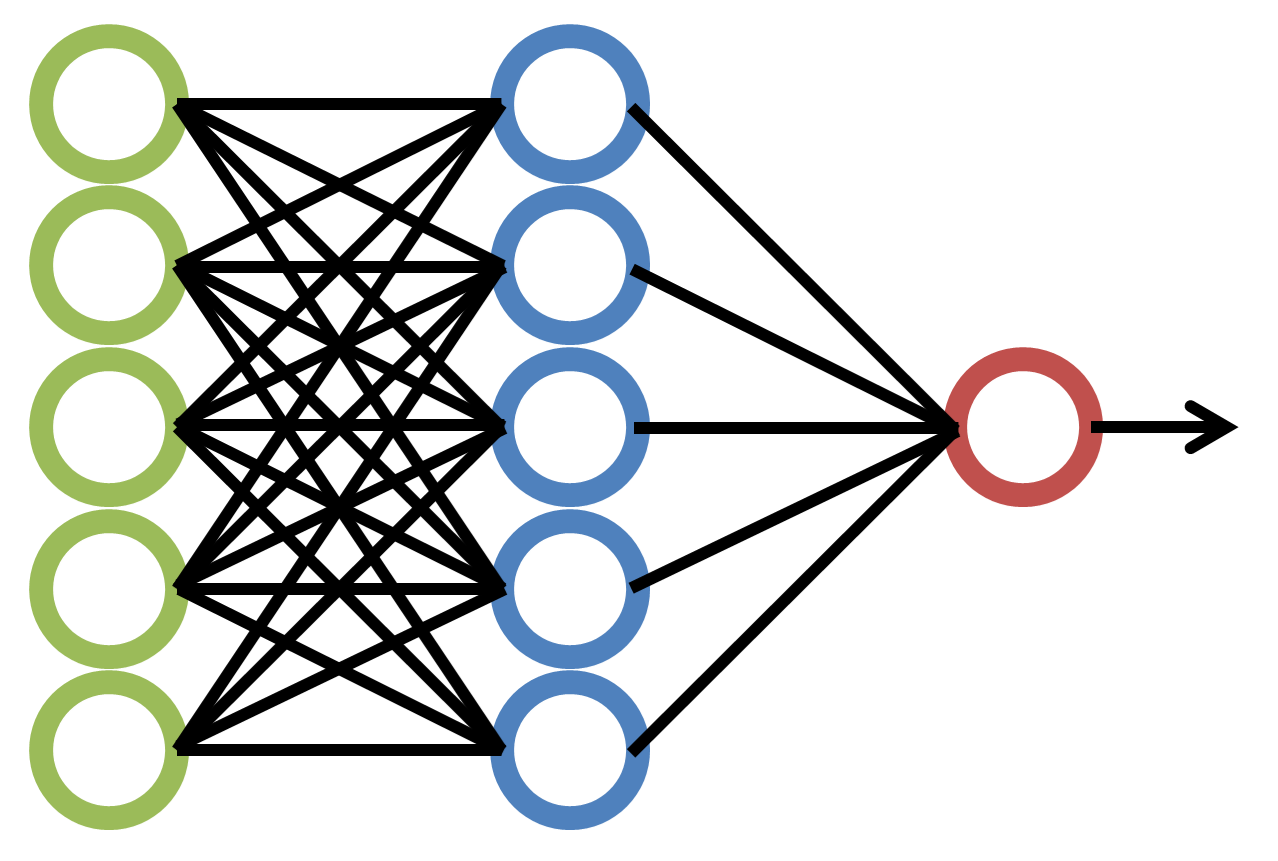
For over a century of modern biochemistry, glutathione (GSH) has been revered across biomedical textbooks and clinical practice as the cellular kingdom’s master antioxidant. Synthesized as an intracellular tripeptide of glutamate, cysteine, and glycine, its fundamental role in mammalian biology was believed to be strictly protective: neutralizing lethal reactive oxygen species (ROS), preserving mitochondrial integrity, and acting as the essential enzymatic cofactor for glutathione peroxidase 4 (GPX4) to prevent ferroptosis—a catastrophic iron-dependent form of non-apoptotic lipid peroxidation. However, a landmark investigation published in the journal Nature has fundamentally rewritten the rules of cancer metabolism. Spearheaded by Dr. Isaac Harris, Dr. Fabio Hecht, and Dr. Marco Zocchi at the University of Rochester’s Wilmot Cancer Institute, the study demonstrates that malignant tumors do not merely deploy glutathione as a passive biochemical shield against oxidative stress. Instead, aggressive carcinomas undergo an opportunistic metabolic rewiring, actively foraging, breaking down, and consuming extracellular glutathione as a vital fuel pipeline to drive relentless cellular proliferation in nutrient-deprived tissue beds.
The precise molecular machinery unveiled by the Wilmot team exposes an ingenious survival adaptation that allows solid tumors to escape localized starvation. As malignant masses undergo rapid exponential growth, their expanding cellular architecture rapidly outstrips the vascular perfusion capacity of abnormal, tortuous tumor capillaries. This creates an intratumoral necrotic core characterized by profound hypoxia and severe nutrient exhaustion. Among the most critically depleted microenvironmental resources is cysteine—a sulfur-containing amino acid that represents the absolute rate-limiting building block for ribosomal protein synthesis, cellular biomass expansion, and nucleotide production. While healthy somatic cells satisfy their metabolic demands by uptaking circulating free cystine through canonical heterodimeric solute carriers like system xc- (SLC7A11/SLC3A2), dense carcinomas deploy a clandestine bypass mechanism. They overexpress membrane-anchored ectoenzymes, chief among them gamma-glutamyltransferase (GGT1), on their outer cell surfaces. These external catalytic hubs intercept circulating extracellular glutathione within the interstitial matrix and cleave its robust gamma-glutamyl bond, releasing cysteinylglycine that is swiftly processed by surface dipeptidases into free cysteine. This specialized scavenging pathway functions as an autonomous nutrient straw, circumventing systemic amino acid shortages to feed the tumor’s insatiable anabolic demand.
The revelation that tumors actively scavenge extracellular glutathione has ignited immediate consumer and clinical inquiries regarding daily nutrition, dietary supplements, and lifestyle habits. Glutathione and its essential sulfur precursor, cysteine, are naturally ubiquitous in the human diet: whole foods such as avocados, asparagus, spinach, okra, cruciferous vegetables (broccoli, Brussels sprouts, cabbage), allium vegetables (garlic, onions), and cysteine-dense proteins like poultry, eggs, and whey contain measurable concentrations of the tripeptide. However, nutritional biochemists emphasize a critical physiological distinction between whole-food nutrition and pharmacologically concentrated supplementation. When consumed through solid, fiber-rich foods, dietary glutathione undergoes extensive enzymatic degradation by peptidases and digestive enzymes within the gastrointestinal tract, absorbing in a homeostatically regulated manner that does not generate hazardous, sustained spikes in systemic plasma pools. The genuine clinical danger lies in modern, highly bioavailable synthetic delivery formats. The wellness sector has seen a surge in liposomal glutathione capsules engineered explicitly to evade gastric acid breakdown, high-dose N-acetylcysteine (NAC) powders delivering grams of free cysteine daily, and intravenous (IV) glutathione drip therapies popularized by luxury wellness clinics under the unverified promise of rapid detoxification and cellular anti-aging. For oncology patients, unmonitored consumption of these concentrated formulations presents an acute hazard: by flooding the bloodstream with supraphysiological concentrations of intact glutathione and free cysteine, patients may inadvertently nourish the precise biochemical pathway their tumors rely on to survive therapy. Consequently, oncologists increasingly urge cancer patients and individuals undergoing active chemotherapy or radiotherapy to strictly avoid unprescribed antioxidant megadoses, IV drips, and concentrated cysteine supplements, while maintaining balanced, whole-food dietary patterns that nourish the host without artificially feeding the tumor microenvironment.
This mechanistic breakthrough provides the definitive missing link for an enduring and contentious clinical enigma: the dangerous double-edged sword of antioxidant administration in oncology. For decades, consumer wellness trends, functional medicine clinics, and dietary supplement manufacturers have heavily commercialized high-potency oral liposomal glutathione, intravenous antioxidant cocktails, and megadose precursors like N-acetylcysteine (NAC), marketing them as universal cellular rejuvenators and anti-cancer elixirs. Yet large-scale randomized human trials have persistently contradicted this simplistic narrative. Landmark historical initiatives, including the CARET and SELECT trials, demonstrated that heavy antioxidant supplementation failed to prevent cancer and frequently triggered higher incidence rates and elevated mortality in vulnerable cohorts. More recently, investigations at the Karolinska Institutet revealed that supplementing antioxidants like NAC and vitamin C directly accelerates tumor angiogenesis and metastatic seeding by stabilizing transcription factors like BACH1. The findings from Harris’s laboratory bring structural clarity to this apparent contradiction: while physiological antioxidant activity shields healthy cells from the initial genotoxic damage that triggers transformation, pre-existing malignant cells harbor an insatiable metabolic addiction to these compounds. Flooding the bloodstream of a cancer patient with exogenous glutathione or concentrated cysteine donors is biochemically equivalent to laying out a feast directly before a starving tumor.
Beyond fueling malignant cell division, the tumor’s aggressive cannibalization of extracellular glutathione exerts a devastating immunosuppressive toll on the surrounding microenvironment. Cytotoxic CD8+ T lymphocytes and natural killer (NK) cells—the primary effector arms of the immune system tasked with identifying and destroying cancer cells—are themselves exquisitely sensitive to cysteine availability and redox equilibrium. When tumor-infiltrating lymphocytes enter the tumor bed, they depend heavily on external cysteine uptake to sustain the rapid clonal expansion, cytokine secretion, and metabolic endurance required to eradicate malignant tissue. By hyper-activating surface GGT enzymes, cancer cells effectively monopolize and exhaust the localized extracellular glutathione and cysteine reserves, transforming the tumor parenchyma into a metabolic wasteland. Starved of the sulfurous building blocks required for their own survival, tumor-fighting T cells succumb to functional exhaustion and immune paralysis, allowing malignant clones to proliferate entirely unchecked by endogenous surveillance mechanisms.
The revelation that tumors are metabolically dependent on extracellular glutathione catabolism unlocks an urgent and actionable therapeutic frontier. In rigorous preclinical trials utilizing patient-derived xenografts from human breast tumor repositories, the Wilmot researchers proved that pharmacologically inhibiting GGT activity or genetically silencing the extracellular glutathione breakdown pathway precipitated acute intracellular amino acid crises, dramatically crippling tumor viability and halting metastasis. Critically, this targeted starvation strategy revealed a remarkably benign systemic toxicity profile. Because non-malignant adult tissues synthesize their own glutathione internally and rely predominantly on classical, intact amino acid uptake channels rather than scavenging circulating peptides, therapeutic inhibition of extracellular glutathione catabolism selectively chokes tumor supply lines while sparing vital organs. As translational oncologists and medicinal chemists pivot toward engineering next-generation, blood-brain-barrier-permeable small-molecule GGT inhibitors, the study signals a paradigm shift in precision medicine: the fight against cancer is rapidly expanding beyond DNA mutations and immune checkpoint blockades to target the fundamental, predatory bioenergetics of the tumor microenvironment.
~Science ~Medicine ~CancerResearch ~Biochemistry ~Health
España se ha situado en el epicentro de la mayor oleada inversora en infraestructuras digitales de su historia moderna. Atraídos por la abundancia de energía solar y eólica a costes competitivos, la disponibilidad de suelo industrial y una posición geográfica privilegiada como nodo de amarre de cables submarinos intercontinentales, los gigantes tecnológicos globales (incluidos Amazon Web Services, Microsoft y Meta) han anunciado planes multimillonarios para convertir al país en el principal polo de computación en la nube e inteligencia artificial del sur de Europa, con núcleos neurálgicos en Aragón, Madrid y Castilla-La Mancha. Sin embargo, este aluvión de proyectos ha desatado una creciente alarma técnica en el seno de la administración pública y los reguladores del sector energético. Una memoria de impacto normativo elaborada de forma conjunta por los ministerios de Transición Ecológica y Transformación Digital advierte de que las peticiones de acceso y conexión para alimentar centros de datos superan ya los 10 a 14 gigavatios (GW) de potencia, un volumen descomunal que equivale a casi un tercio de la demanda punta de electricidad de todo el país en un día de máximo consumo estival o invernal.
El núcleo del debate técnico reside en una paradoja estructural del sistema eléctrico español que suele pasar desapercibida en los anuncios corporativos. Aunque las multinacionales tecnológicas prometen operar con energía 100 % limpia mediante contratos bilaterales de compraventa a largo plazo (PPA solares y eólicos), los centros de datos dedicados al entrenamiento e inferencia de modelos de IA requieren un suministro eléctrico ininterrumpido las 24 horas del día, los 365 días del año, con un factor de utilización plano y sin margen para paradas técnicas. Debido a la intermitencia inherente de la generación fotovoltaica durante la noche y los días nublados, la red de transporte de Red Eléctrica (Redeia) se ve obligada a respaldar este consumo continuo encendiendo centrales de ciclo combinado de gas natural. Los informes ministeriales alertan de que una entrada descontrolada de estas instalaciones podría llegar a triplicar el coste variable medio de generación eléctrica de cara a 2030, provocando un repunte en las emisiones de CO2 y encareciendo los peajes de acceso que sufragan hogares e industrias tradicionales si no se planifica con cautela.
A la tensión energética se suma una intensa pugna territorial interna y medioambiental. Comunidades autónomas como Aragón compiten ferozmente por captar estas inversiones —que prometen miles de millones de euros en gasto de capital (Capex) y modernización regional—, presionando al Gobierno central para que acelere la concesión de capacidad eléctrica en nudos de transporte prioritarios. No obstante, los expertos en infraestructuras señalan que la capacidad real de evacuación de las subestaciones de transporte está llegando al límite técnico de saturación en varios corredores estratégicos, amenazando con expulsar a otros proyectos de electrificación industrial como la siderurgia verde o la producción de hidrógeno. Asimismo, emerge con fuerza la incógnita de la sostenibilidad hídrica: la refrigeración evaporativa empleada por los macrocomplejos de servidores consume millones de litros de agua diarios en cuencas fluviales ya sometidas a estrés hídrico recurrente por el cambio climático, alimentando el recelo de regantes y municipios locales.
Ante esta encrucijada, el Ejecutivo prepara una reforma reglamentaria para introducir criterios estrictos de priorización y eficiencia en la concesión de acceso a la red eléctrica. El nuevo marco exigirá a los promotores de centros de datos demostrar un compromiso de autosuficiencia energética, que incluya almacenamiento obligatorio mediante baterías a gran escala (BESS), compromisos de hibridación con plantas renovables locales y sistemas de refrigeración líquida de circuito cerrado que minimicen el gasto hídrico. Paralelamente, Redeia ha desplegado el mayor ciclo inversor de su historia dentro de su Plan Estratégico 2026-2029 para reforzar las arterias de la red de transporte y optimizar la integración de flujos masivos de energía. La batalla por el liderazgo de la inteligencia artificial en España no se librará únicamente en los despachos corporativos o en el código de los algoritmos, sino en la capacidad del Estado para compaginar la atracción de capital tecnológico con la estabilidad, sostenibilidad y factura eléctrica de toda la sociedad.
~Espana ~Energia ~Tecnologia ~Economia ~InteligenciaArtificial
Global diplomacy is pivoting toward the Persian Gulf this week as senior envoys from Ukraine, the Russian Federation, and the United States prepare to convene in Abu Dhabi on November 10 and 11 for high-stakes security negotiations hosted under the auspices of the United Arab Emirates. Mediated by American special envoy Steve Witkoff and Jared Kushner following exploratory back-channel consultations with Russian President Vladimir Putin in St. Petersburg, the trilateral summit marks the most substantive direct diplomatic engagement between the warring parties since the initial collapse of the Istanbul communiqués in early 2022. The formal agenda focuses on an immediate seasonal truce to safeguard civilian energy grids and hydrocarbon refining assets ahead of freezing winter temperatures, alongside expanded naval deconfliction in the Black Sea, reciprocal prisoner repatriation, and the preliminary architecture for a broader post-conflict security framework. However, behind the closed-door conference rooms in the Emirati capital lies a complex web of competing geopolitical agendas, reflecting a fractured, multipolar international order where Western, Russian, Middle Eastern, and Chinese interests sharply collide.
Within Washington and across European capitals, the Abu Dhabi initiative is viewed through a lens of acute strategic tension and domestic political pressure. For the White House, post-midterm legislative realignments have amplified calls to prevent open-ended defense commitments and mitigate inflationary pressures, prompting American negotiators to seek viable off-ramps that reduce military escalation without formally conceding Ukrainian sovereignty. Yet across Brussels, Paris, London, and Berlin, the prospect of U.S.-led bilateral bargaining with Moscow has sparked deep alarm. Parallel consultations held by U.S. officials with NATO and European Union leadership underscore European anxieties that a negotiated energy moratorium or premature ceasefire brokered over European heads could establish a perilous precedent for territorial partition. From Kyiv’s vantage point, President Volodymyr Zelensky’s administration insists that any temporary pause on infrastructure strikes must be inextricably anchored to ironclad, legally binding multilateral security guarantees—functionally equivalent to NATO Article 5—fearing that an unmonitored winter lull would simply grant Russian forces operational breathing room to reconstitute frontline munitions stockpiles.
In Moscow, state media coverage across TASS and Kommersant, alongside foreign ministry briefings, frames the upcoming summit not as a prelude to capitulation, but as a recognition of shifting military and economic realities. The Kremlin’s negotiating posture remains rigidly anchored to resolving what Russian diplomats term the root causes of the war: permanent, constitutionally codified neutrality for Ukraine, total abandonment of future NATO accession, and international acknowledgment of Russian sovereign control over contested eastern and southern territories. Russian security analysts stress that an energy truce is a matter of mutual operational calculus rather than Western benevolence; while relentless missile strikes have crippled Ukraine’s thermal generation capacity, Ukrainian long-range drone barrages against Russian refining complexes in Yaroslavl, Tuapse, and the Volga basin have inflicted measurable disruptions on domestic fuel output. For Moscow, any durable diplomatic roadmap must simultaneously mandate a phased lifting of Western financial sanctions and asset freezes, conditions that Western powers currently reject as non-starters.
The summit also cements the geopolitical ascendance of the Gulf monarchies as the primary diplomatic arbiters of the modern era. As traditional neutral European venues like Geneva and Vienna lost their historic non-aligned credibility by joining sweeping sanctions regimes and expelling diplomatic corps, the United Arab Emirates and Saudi Arabia have masterfully filled the void. By maintaining strategic neutrality, coordinating energy production quotas through OPEC+ with Russia, and simultaneously preserving deep security partnerships with the United States, Abu Dhabi has positioned itself as an indispensable bridge between East and West. For Emirati leadership, hosting these sensitive negotiations is not merely a prestige endeavor, but a calculated strategy to protect Persian Gulf shipping from collateral regional destabilization while positioning Gulf sovereign wealth funds at the absolute forefront of post-war Eurasian reconstruction contracts.
Meanwhile, in Beijing, Chinese foreign policy circles and state media like the Global Times and the South China Morning Post view the Abu Dhabi talks with cautious optimism, interpreting them as validation of China’s 12-point peace blueprint. Beijing’s diplomatic doctrine emphasizes the principle of indivisible security—the concept that no sovereign state should guarantee its own defense at the expense of another’s legitimate security concerns—while vehemently opposing unilateral Western economic sanctions. Chinese geostrategists recognize that stabilizing Eastern Europe is vital for securing China’s Belt and Road overland logistics routes and maintaining stable energy ties across Eurasia. While Beijing remains an indispensable economic partner to Moscow, it has quietly exerted diplomatic pressure to prevent catastrophic infrastructure collapses that could trigger unpredictable continental escalation, positioning Chinese construction and industrial state-owned enterprises to partner alongside Gulf capital in the long-term rebuilding of post-war infrastructure.
~WorldNews ~Geopolitics ~Diplomacy ~UkraineWar ~MiddleEast
With anticipation for Grand Theft Auto VI reaching fever pitch across the global gaming community, technical data extracted from PlayStation Network backend manifest databases and digital distribution pipelines has revealed the staggering physical footprint of Rockstar Games’ next-generation open-world epic. The base digital installation footprint for GTA VI on the PlayStation 5 is confirmed to require approximately 212 GB of available solid-state storage. While modern blockbuster titles like Call of Duty: Warzone and Ark: Survival Ascended have breached the 150 GB threshold through cumulative seasonal updates, GTA VI represents the first commercial console title to launch with a day-one base footprint exceeding 200 GB prior to subsequent live-service expansions. For millions of console owners preparing for their return to Vice City and the sprawling state of Leonida, this massive installation requirement presents an immediate storage reckoning that fundamentally tests the limits of current console architectures.
The immediate operational impact on PlayStation 5 owners varies significantly depending on their hardware revision, turning internal storage management into an unavoidable pre-launch preparation. For launch-model PS5 owners with the original 825 GB SSD—which leaves only roughly 667.2 GB of usable storage space after factoring in the operating system, firmware cache, and system reservation partitions—a 212 GB installation will instantly swallow nearly 32% of the console’s entire available drive space. On the revised PS5 Slim, which expanded the internal drive to a full 1 TB yielding roughly 848 GB of usable space, the game will still occupy approximately a quarter of the SSD. Only owners of the premium 2 TB PlayStation 5 Pro, offering 1.89 TB of usable real estate, will comfortably absorb the title without being forced to uninstall multiple contemporary titles from their active rotation.
To understand why the game’s footprint has ballooned to this scale despite Sony’s advanced hardware decompressor, one must examine the sheer density of Rockstar’s technical ambitions. The PlayStation 5 incorporates custom integrated hardware for the Oodle Kraken compression algorithm, which typically reduces modern game packages by 30% to 50% compared to legacy architectures. However, GTA VI’s asset pipeline relies on immense, uncompressed raw data arrays that defy traditional compression ratios. The state of Leonida features uncompromised 4K and 8K photogrammetry texture atlases, high-density volumetric weather systems, and seamless architectural interior-exterior transitions that entirely discard loading corridors. Furthermore, Rockstar’s overhauled physics engine, extensive dynamic ray tracing Bounding Volume Hierarchy (BVH) spatial data structures, and hundreds of hours of uncompressed multi-channel spatial 3D audio—paired with tens of thousands of bespoke motion-capture animation state machines for simulated NPC pedestrian routines—collectively generate a data payload unprecedented in consumer software.
The sheer size of GTA VI also carries severe ramifications for physical collectors and optical disc logistics. Standard consumer Ultra HD Blu-ray discs utilized by the PS5 top out at a maximum capacity of 100 GB using triple-layer manufacturing. Mathematically, this confirms that the retail physical edition of Grand Theft Auto VI must ship on at least two Ultra HD Blu-ray discs—a dedicated installation Data Disc and a secondary Play Disc—mirroring the two-disc physical distribution model Rockstar famously utilized for Red Dead Redemption 2 on the PlayStation 4 and Square Enix adopted for Final Fantasy VII Rebirth. For players seeking to future-proof their setups without perpetually cycling game installs, upgrading with a compliant M.2 NVMe SSD has shifted from a luxury to an essential prerequisite. Sony mandates PCIe Gen4 x4 drives delivering sequential read speeds of at least 5,500 MB/s paired with dedicated low-profile heatsinks (such as the Samsung 990 Pro, WD Black SN850X, or Crucial T500), ensuring that streaming bandwidth keeps pace with Vice City’s data deluge without inducing texture pop-in or asset streaming stutters.
~Gaming ~GTA6 ~PlayStation ~PS5 ~Hardware