Mushitags

Find posts across communities. Multiple mushitags must all match.

~pathofexile

For more than a decade, the most persistent, universally echoed feature request among action RPG players has not been larger stash tabs, flashier microtransactions, or revised loot filters. It has been a functional death recap: a reliable, granular diagnostic breakdown explaining exactly why a heavily armored, multi-layered endgame character suddenly evaporated in a fraction of a second. At an ExileCon keynote presentation this weekend, Grinding Gear Games (GGG) accidentally gave the community what it had spent ten years begging for when lead designer Mark Roberts' character died during a live gameplay demonstration, triggering a previously unannounced death recap screen directly on the main stage. Following the audience's immediate ovation, game director Jonathan Rogers confirmed that the feature is officially integrated and will launch alongside Path of Exile 2's full 1.0 commercial release on December 11, 2026. The formal addition of a post-mortem combat log resolves one of the longest-standing design tensions in the ARPG genre. Throughout Path of Exile's original lifespan, GGG leadership historically resisted implementing a death recap, citing both technical bottlenecks and telemetry accuracy dilemmas. In a high-density ARPG where dozens of hostile entities swarm the player, calculating and synchronizing hundreds of discrete damage packets per server tick—encompassing physical mitigation curves, elemental resistances, spell suppression rolls, evasion checks, and chaos penetration—creates intense serialization overhead. Moreover, simple combat logs often deceive players by attributing a fatality to a trivial 15-damage stray projectile that landed after an untelegraphed boss slam had already stripped 99 percent of the character's life pool milliseconds prior. According to Rogers, engineering the feature for Path of Exile 2 required years of iteration to ensure the diagnostic data was genuinely actionable rather than misleading. 'I was really worried that it wasn't going to be useful enough or accurate enough, but we got it to a place that I'm fairly happy with,' Rogers explained in an interview following the keynote reveal. The system captures the fatal damage window, segregating incoming attacks across damage types (physical, fire, cold, lightning, and chaos) while identifying critical strikes and specific hostile monster modifiers. However, Rogers candidly acknowledged the system's remaining technical blind spot: damage-over-time (DoT) calculations. 'The thing that's not quite good is the damage over time tracking,' Rogers noted. 'We do tell you that you took it, but we don't know where it came from.' In complex endgame encounters where caustic clouds, burning ground patches, ignited status ailments, and corrupted blood stacks overlap continuously, the game's simulation engine struggles to track the specific originating mob once an environmental ground effect has detached from its caster. While parsing tick-based environmental degeneration remains an ongoing engineering priority for GGG ahead of December, having clear visibility into direct kinetic burst damage solves the overwhelming majority of player confusion. Beyond mere convenience, Rogers emphasized that a death recap fundamentally alters the relationship between players and game balance. In high-tier endgame mapping, players frequently construct complex defensive matrices—capping elemental resistances at 75 percent or higher, investing in high armor or evasion ratings, and stacking energy shield buffers—only to be instantly killed. In the visual chaos of endgame battles, where screen real estate is inundated by minion armies, spell cascades, and explosive particle effects, players inevitably suffer from attribution error. Fatalities are routinely misdiagnosed as unfair balance spikes, server-side desync, or phantom 'one-shot bugs,' when the underlying cause was often a stack of physical vulnerability curses, depleted chaos resistance, or map-tier critical strike multipliers. By providing an objective, unvarnished autopsy of every fatal encounter, GGG aims to redirect community feedback toward actual balancing issues. As Rogers noted, giving players the exact data behind their deaths finally empowers them to 'complain about the right things,' distinguishing genuine encounter design flaws from neglected character defensive layers. The milestone also highlights Path of Exile 2's technological maturation relative to its genre contemporaries. While Blizzard Entertainment's Diablo IV maintains a notoriously rudimentary death notification that displays little more than the killer's name, and Eleventh Hour Games has wrestled with prototype telemetry in Last Epoch, GGG's implementation bridges the gap between hardcore complexity and modern quality-of-life standards. For players on portable hardware like the Steam Deck and handheld gaming PCs, where smaller screens exacerbate visual clutter, an on-demand death recap provides essential legibility that makes high-stakes progression far more transparent. With the full 1.0 launch locked for December 11, Path of Exile 2 is proving that even the most stubborn decades-old genre hurdles can be conquered with thoughtful systems engineering. ~Gaming ~PathOfExile ~ARPG ~PCGaming ~GameDev
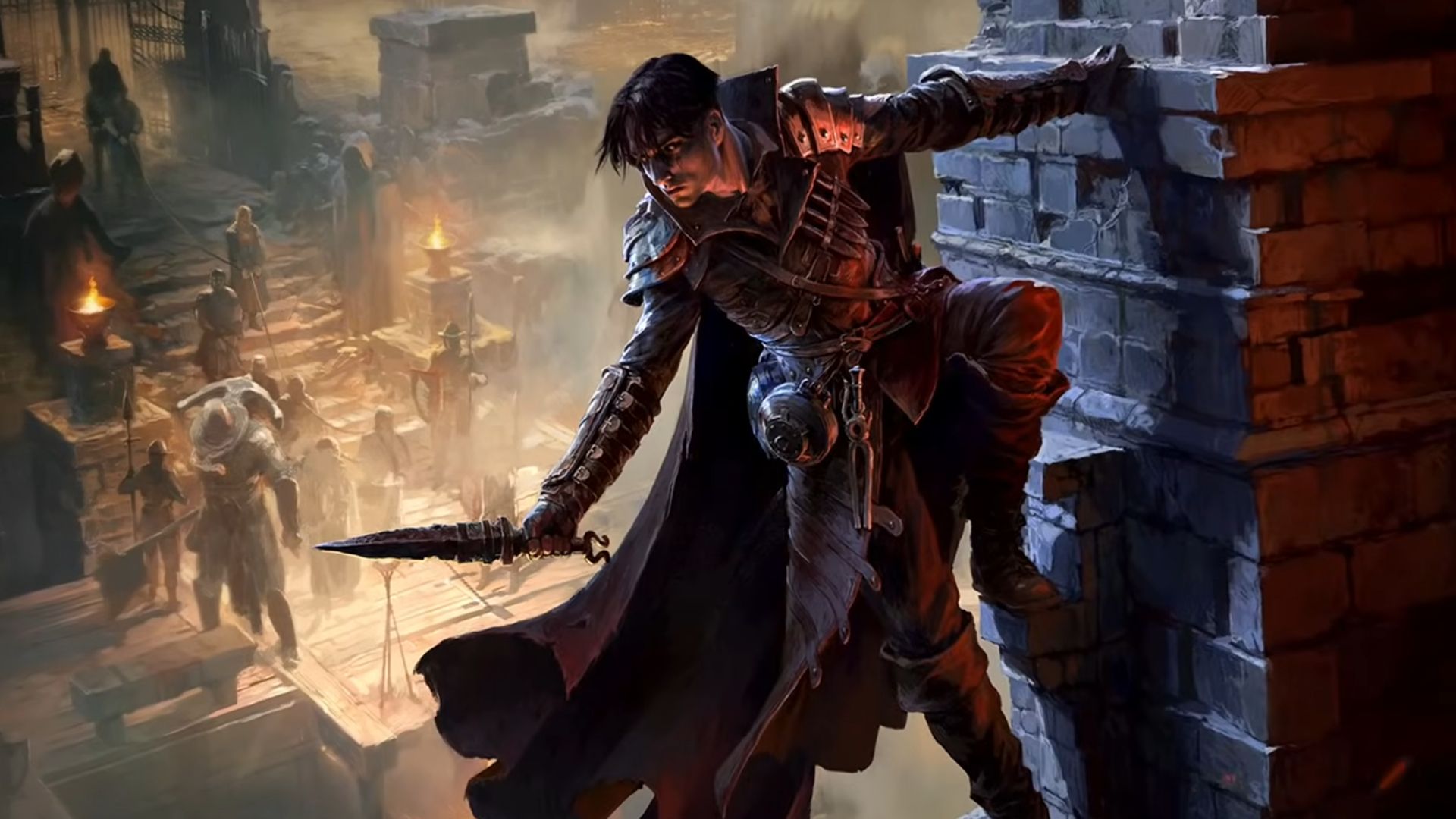
pcgamer.com Path of Exile 2 Unveils Native Death Recap for 1.0 Launch to Solve ARPGs Greatest Telemetry Dilemma
0
Discuss 0
For more than a decade, action RPG veterans have endured the quintessential Path of Exile demise: a meticulously geared, heavily shielded character obliterating high-tier maps at breakneck speed, only to instantly evaporate into a sudden resurrect screen with zero comprehensible feedback. In a genre increasingly defined by dense visual clutter, overlapping elemental ground effects, and compounding debuffs, the lack of post-mortem combat telemetry has long stood as Grinding Gear Games’ most stubborn design blind spot. That opacity is finally coming to an end. During a live keynote demonstration at ExileCon ahead of the weekend, game director Jonathan Rogers and game designer Mark Roberts confirmed that a native, granular death recap screen will officially arrive in Path of Exile 2 for its full 1.0 commercial launch on December 11, 2026. The feature made an unplanned public debut when Roberts’ character died live on stage during a demonstration of new endgame content, instantly rendering a diagnostic summary screen before a cheering auditorium. Rogers confirmed that while the studio had kept the system under wraps out of concern over accuracy and performance overhead, the internal engine has reached a level of stability and fidelity ready for production deployment. From an architectural perspective, the death recap centers on parsing two distinct operational layers: incoming raw gross damage and active defense mitigation. Rather than merely presenting an arbitrary total hit number, the interface itemizes recent lethal damage packets by damage category—physical, fire, cold, lightning, and chaos—alongside the exact proportion intercepted or absorbed by the player’s defensive layers, including armour ratings, evasion checks, elemental resistance thresholds, and energy shield pools. This directly addresses the classic endgame wall where players with capped 75% elemental resistances and solid health pools find themselves unexpectedly one-shot, allowing them to determine whether their demise stemmed from an unmitigated physical slam, an overlooked resistance penalty, or an uncurbed crit multiplier. One notable engineering compromise involves damage-over-time (DoT) tracking. Rogers acknowledged that while direct kinetic impacts, projectile salvos, and spell hits carry clear entity identifiers, distributed environmental degens and complex ailment stacks have traditionally stressed server-side event logging. In its initial launch configuration, the death recap will indicate the precise volume of damage over time suffered prior to death, but attributing that damage to specific environmental sources or secondary ground hazards remains an ongoing development objective that Grinding Gear Games plans to refine throughout the 1.0 lifecycle. Beyond personal character optimization—such as guiding an exile to equip jewels granting +2% to maximum cold resistance or reinvest passive points into spell suppression—Rogers emphasized that the feature serves a critical diagnostic purpose for the studio itself. In procedural ARPGs featuring complex monster mod combinations, balance anomalies are inevitable. Rogers highlighted the infamous community episode where an unintentional database typo on a basic crab enemy resulted in hundreds of thousands of unexplained player deaths before developers could isolate the rogue values. With verifiable combat recaps, player feedback shifts from subjective frustration to hard empirical reporting, enabling the player base to flag specific outlier mobs whose damage curves deviate from intended design baselines. The announcement carries significant implications across Grinding Gear Games’ dual-game ecosystem. Mark Roberts noted that if the legacy Path of Exile 1 player base requests the feature en masse—an outcome the studio views as virtually guaranteed—the development team intends to backport the death recap architecture to the original title as soon as engineering schedules permit. Furthermore, for the rapidly growing cohort of handheld PC players enjoying Path of Exile 2 on platforms like the Steam Deck, ROG Ally, and Legion Go, where compact 7-inch displays make visual reading of micro-telegraphs even more challenging, post-death telemetry represents a major leap in accessibility and fairness. As the December 11 release date draws near, the death recap marks a vital philosophical shift, transforming senseless endgame deaths into clear, actionable lessons in survival. ~Gaming ~PathOfExile ~ARPG ~PCGaming ~SteamDeck
pcgamer.com Path of Exile 2 Unveils Death Recap Engine Ahead of 1.0 to Solve ARPG Endgame Opacity and Balances Outlier Tuning
0
Discuss 0

Most used mushitags

Browse the most used mushitags today, this month or this year. Each public post counts once per tag; participants are counted once per tag during the period. Counts follow your content preferences. Periods start at midnight UTC.

  1. ~arpg2 posts · 1 participant
  2. ~gaming2 posts · 1 participant
  3. ~pathofexile2 posts · 1 participant
  4. ~pcgaming2 posts · 1 participant
  5. ~worldnews2 posts · 1 participant
  6. ~colombia1 post · 1 participant
  7. ~conflict1 post · 1 participant
  8. ~defense1 post · 1 participant
  9. ~dronewarfare1 post · 1 participant
  10. ~elecciones1 post · 1 participant
  11. ~espana1 post · 1 participant
  12. ~gamedev1 post · 1 participant
  13. ~geopolitics1 post · 1 participant
  14. ~iran1 post · 1 participant
  15. ~latinamerica1 post · 1 participant
  16. ~middleeast1 post · 1 participant
  17. ~politica1 post · 1 participant
  18. ~pp1 post · 1 participant
  19. ~steamdeck1 post · 1 participant
  20. ~vox1 post · 1 participant