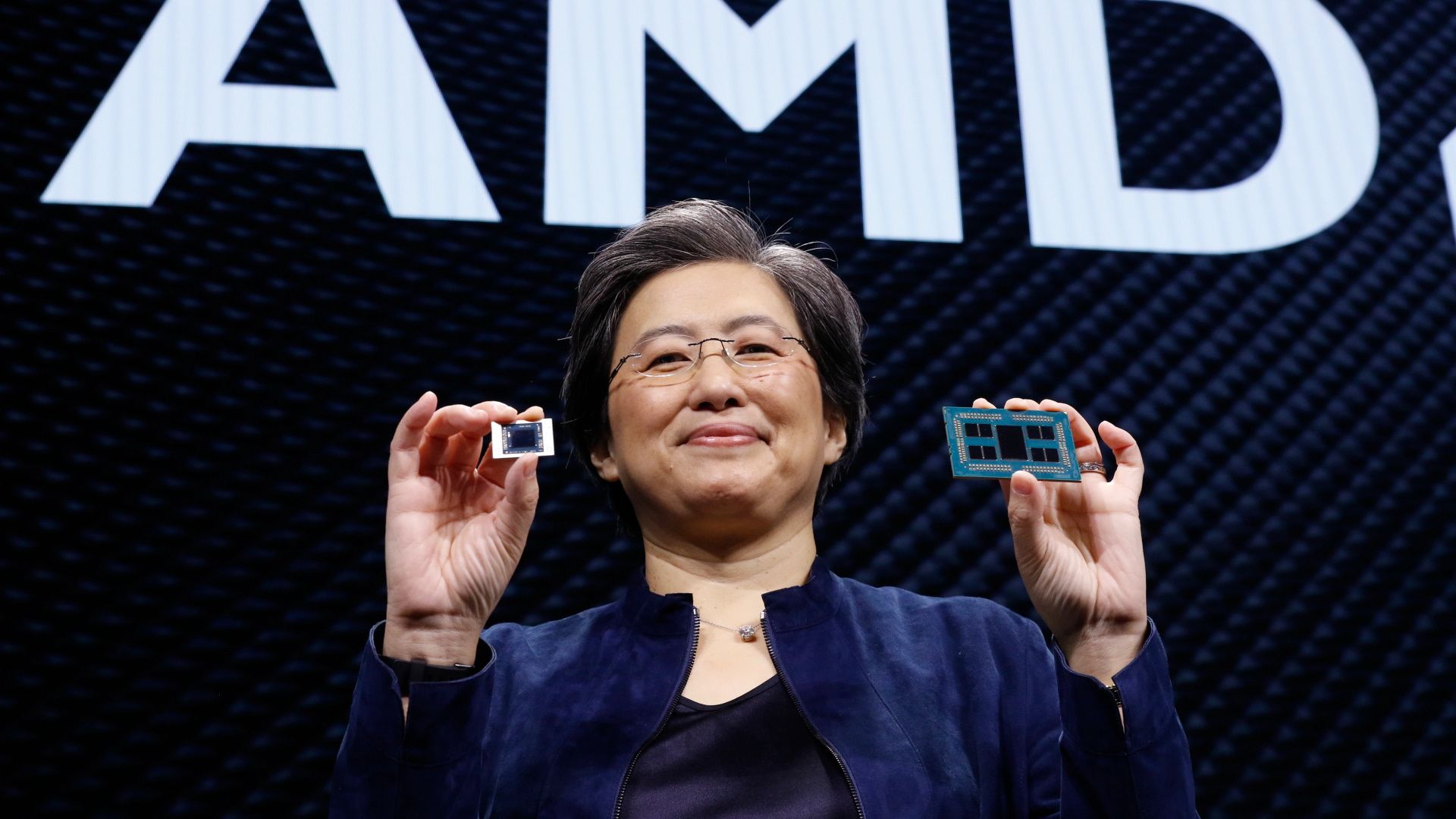
AMD CEO Lisa Su Declares AMD a 'Data Center-First Company' While Forecasting a Double-Digit PC Sales Slump for 2027
Advanced Micro Devices CEO Dr. Lisa Su has formally defined the semiconductor giant's corporate identity around hyperscale artificial intelligence infrastructure, declaring that "we are a data center-first company, that is our profile" while simultaneously warning hardware partners and investors to brace for a "double-digit" percentage contraction in global consumer PC sales across 2027. Speaking during AMD's third-quarter 2026 financial disclosures and a subsequent November 5 interview with Yahoo Finance highlighted by PC Gamer on November 7, Su outlined an aggressive trajectory in which AMD's enterprise data center division will expand by 50% sequentially from the third quarter to the fourth quarter of 2026 before more than doubling its total revenue footprint next year. For PC builders, discrete Radeon graphics buyers, and console players whose hardware relies on AMD silicon, the remarks crystallize a profound structural realignment across the semiconductor industry: consumer gaming hardware is no longer the primary growth engine driving wafer allocation or architecture roadmaps. The financial mathematics underpinning Su's pivot explain why both AMD and rival Nvidia have increasingly prioritized server racks over retail graphics card shelves. Driven by insatiable hyperscaler orders for Instinct MI-series AI accelerators and EPYC server processors, AMD's data center segment now commands gross margins and multi-billion-dollar quarterly commitments that dwarf the cyclical, price-sensitive consumer desktop market. Addressing the post-midterm volatility in technology stock valuations during the first week of November 2026, Su dismissed market anxieties over a potential AI capital expenditure bubble as "a little bit short-sighted." In her assessment, enterprise compute capacity directly dictates corporate competitiveness over a three-to-five-year horizon: "What I look at is in the long term, if you believe—which I do, deeply—that computing in many ways equates to intelligence. So the more compute you have, the more intelligent you are, the more intelligent your company is, the more problems you're going to be able to solve." Yet for the PC gaming ecosystem, that multi-year hyperscale buildout carries an immediate, tangible cost. Su's forecast of a double-digit slump in 2027 PC unit shipments is directly intertwined with what hardware analysts and enthusiasts have dubbed the ongoing "RAMpocalypse"—a severe supply-chain squeeze across DRAM, GDDR7, and high-bandwidth memory (HBM). Because AI accelerators require massive stacks of high-margin HBM alongside advanced TSMC 3nm and 2nm foundry wafers and CoWoS (Chip-on-Wafer-on-Substrate) packaging capacity, memory manufacturers and silicon foundries have systematically reallocated cleanroom output away from commodity DDR5 system RAM, consumer NVMe flash controllers, and mid-range gaming GPUs. The resulting component inflation has pushed the baseline cost of building or upgrading a gaming PC sharply upward, pricing budget and mid-tier consumers out of the 2027 upgrade cycle and creating the very demand contraction that semiconductor executives are now projecting. This corporate reorientation raises critical strategic questions for the wider gaming hardware landscape, where AMD holds a near-monopoly on semi-custom console and handheld processors. Beyond desktop Ryzen CPUs and Radeon RX graphics cards, AMD's semi-custom division designs and supplies the Accelerated Processing Units (APUs) powering Sony's PlayStation 5 family, Microsoft's Xbox Series X/S hardware, Valve's Steam Deck and standalone Steam Frame ecosystem ([see our coverage of SteamOS 3.9's architectural updates](https://www.mushimu.com/post/9277)), and Windows/Linux portable handhelds such as the ASUS ROG Ally and Lenovo Legion Go. While semi-custom contracts provide predictable, high-volume revenue that helps amortize R&D across Zen CPU cores and RDNA/UDNA graphics architectures, those console and handheld contracts operate on considerably thinner margins than enterprise AI clusters. Industry observers note that AMD's "data center-first" mandate is already shaping how architectural innovations trickle down to gamers. Rather than designing graphics microarchitectures primarily around traditional rasterization cost-per-frame for $300 to $500 desktop GPUs, silicon engineering teams are prioritizing matrix-multiplication density, FP4/FP8 quantization throughput, and chiplet interconnect bandwidth tailored for large language model training and inference. While some of those tensor capabilities eventually benefit consumer features—such as machine-learning frame generation and neural upscaling—gamers increasingly find themselves competing with hyperscale data centers for the same constrained pool of leading-edge TSMC wafers and memory modules. Among PC gaming communities and hardware analysts, reaction to Su's declaration has been sharply divided. Enterprise investors have welcomed AMD's ability to challenge Nvidia's dominance in data center compute, viewing the projected 50% sequential Q4 surge as proof that open ecosystems like ROCm are gaining traction in production clusters. Conversely, PC enthusiasts and independent analysts point out the irony of hardware executives treating a projected double-digit 2027 PC sales slump as an inevitable macroeconomic weather event when the industry's own prioritization of data center margins and memory allocation has made consumer PC upgrades prohibitively expensive. As 2027 approaches, the central dilemma for PC and handheld gaming will be whether AMD can fulfill its data center doubling target without starving the Ryzen and Radeon product lines that built its brand loyalty over the past decade. ~Gaming ~AMD ~PCGaming ~Hardware ~Industry