Trending news and stories on Mushimu

edited
When Grand Theft Auto VI launched on November 19, 2026, it did more than open the doors of Vice City and the fictional state of Leonida to tens of millions of players. Within hours, it was being measured not only in player counts and reviews, but in an economic event: analytics firm Sensor Tower estimated the game had generated around $2.36 billion in its first day, on the back of nearly 25 million copies sold across PlayStation 5 and Xbox Series X|S, including pre-orders. Roughly three out of four copies were on PlayStation. The estimate did not stand still. Sensor Tower's running tally climbed through launch day from $1.65 billion and 17.1 million copies at midday, to $1.84 billion and 19.1 million by Thursday morning, to the final first-day figure of about $2.36 billion and 24.6 million copies by the evening. Pre-orders had already crossed $2 billion through launch day, meaning roughly half of the estimated first-day revenue was booked before a single player loaded the game. Against that backdrop, the launch looked less like a debut than a coronation. Take-Two Interactive, the game's publisher, has not released official sales figures, but described demand as "unprecedented" and said it would share numbers "soon". Chief executive Strauss Zelnick had said beforehand that pre-orders had "vastly exceeded" internal expectations; on launch day itself, Take-Two shares closed down 3.7 percent, even as analysts described the demand as unprecedented. The scale invites comparison with the series' own benchmark. Grand Theft Auto V took $815.7 million in its first 24 hours and 11.21 million copies, a Guinness World Record. The GTA VI estimate is nearly three times that revenue and about 2.2 times the copy count, and it was still moving as the data firm updated its tracker. Analysts had moved before launch. Joost van Dreunen predicted that Take-Two would announce opening-weekend sales above $2 billion by November 23, and projected first-year sales of 38 million copies. Newzoo had described the pre-order campaign as the strongest on record and projected first-week revenue between $3.25 billion and $5.2 billion. For the industry, the launch is being framed as a rare proof that a single game can concentrate more anticipation than most entire sectors generate in a year. The political reverberations were immediate: Downing Street said the prime minister, Andy Burnham, would not be playing the game, while a spokesperson hailed Rockstar Games as a "British success story" tied to the company's Scottish studio in Edinburgh; the culture secretary, Lisa Nandy had praised the title, and retailers reported sharp lifts in console sales. The official figures are still weeks away. What happens when Take-Two finally releases them may matter less to the game's players than to the industry's understanding of how high the ceiling has just been raised. The number matters because it sits at the intersection of three unresolved questions: how the publisher converts gross revenue into its own net bookings once platform holders take their share, how consumer returns affect the final accounting, and whether the official figures due "soon" from Take-Two will confirm or disappoint the forecasts that now look almost conservative. Until they arrive, the story remains an estimate, and the launch remains the kind of event that resets the industry's own sense of scale. The run-up had already rewritten the record books in advance. After two delays, the game was first targeted for late 2025, then moved to May 2026, and finally released on November 19. Pre-orders opened in June and climbed steadily until the publisher revised its fiscal forecast upward to $3.5 billion for the launch quarter, an increase it attributed to recurrent consumer spending, chiefly the Ultimate Edition. Whether the estimate eventually converges with Take-Two's own accounting or not, the directional message is difficult to overstate: the largest audience anticipation of a generation produced a launch that, even by conservative estimates, exceeded the lifetime commercial logic of most entertainment products. The comparisons now being drawn with music and cinema are not rhetorical. They are arithmetic exercises that the numbers themselves invite. ### Sources & Further Reading - [BBC](https://www.bbc.com/news/articles/c9zr5nyv5dj2o) - [Eurogamer](https://www.eurogamer.net/gta-6-sales-estimate-rockstar-grand-theft-auto) - [PC Gamer](https://www.pcgamer.com/games/grand-theft-auto/take-two-expects-to-make-as-much-as-usd3-5-billion-during-the-gta-6-launch-period/) ~Gaming ~Rockstar ~TakeTwo ~GTA6
Grand Theft Auto VI Estimated at $2.36 Billion Launch Day Sales — the Biggest Entertainment Launch Ever
2
Discuss 5
Valve has officially granted day-one Steam Deck and Steam Machine Verified status to Ubisoft's *Rayman Legends Retold* ahead of its global debut on December 3, 2026. Certified under the bleeding-edge Proton 11.0-3 Release Candidate, the comprehensive testing suite confirms that the revitalized platformer achieves solid 60-plus frame-rate stability and native resolution scaling across SteamOS devices without requiring manual proton tinkering. However, the accompanying compatibility report also lays bare the ongoing structural friction between aggressive corporate digital rights management and the practical realities of mobile handheld gaming. ### Proton 11 RC and Architectural Modernization The technical milestone is significant because *Rayman Legends Retold* represents more than a cosmetic re-release. While Michel Ancel’s original 2013 masterpiece was built on Ubisoft’s proprietary 2D UbiArt Framework, the *Retold* edition introduces polygonal 3D character models, fully voiced narrative cinematics, and volumetric lighting while preserving the kinetic physics and rhythm-synchronized momentum of the original. Translating these hybrid 2.5D and 3D visual pipelines seamlessly to Linux without micro-stuttering or shader compilation hitches has historically posed hurdles for custom rendering engines. Under Proton 11.0-3 RC, Valve’s compatibility layer translates DirectX 12 calls via VKD3D-Proton directly to Vulkan with tailored pipeline cache pre-seeding. Early validation testing shows that the game runs at full native 1280x800 resolution on both LCD and OLED Steam Deck models with legibility scaling calibrated for portable viewing distances. Frame pacing during the high-speed, rhythm-heavy musical stages—such as the newly arranged compositions by Christophe Héral and Grant Kirkhope—remains locked, ensuring that audio-visual timing cues required for millimeter-perfect jumps do not suffer from input lag or pipeline stalls. ### The DRM Dilemma: Denuvo and Account Mandates on Portable Hardware Despite earning Valve’s green checkmark, the official verification disclosure details several caveats that cut directly against the core appeal of portable gaming. Chief among them is the requirement for an active Internet connection during first-time configuration, coupled with an active background Ubisoft Connect account integration and Denuvo Anti-Tamper enforcement. For handheld PC users who rely on the Steam Deck during travel, airplane flights, or transit without dependable cellular tethering, Denuvo’s periodic periodic token renewal and online handshakes remain an acute pain point. If a player leaves home in offline mode and the anti-tamper license expires or requests an authentication token, the title abruptly refuses to launch. While Valve's verification system technically allows games with online initial setups to qualify for Verified status if they pass offline execution tests afterward, the presence of multi-layered DRM continues to generate user pushback across the Linux gaming community, where local performance independence is highly valued. ### Peripheral Routing and Living-Room Couch Co-op Friction A secondary technical nuance highlighted in Valve’s testing notes involves peripheral management. Valve noted that *Rayman Legends Retold* does not automatically default to external Bluetooth or USB controllers when multiple gamepads are paired to the Steam Deck or a living-room Steam Machine setup. Instead, players entering 4-player local couch co-op or docked play must open the SteamOS Quick Access Menu and manually reorder controller priority slots before the title recognizes secondary pads. Given that local cooperative multiplayer—especially through fan-favorite minigames like *Kung Foot* with its overhauled rules and physics—is a primary selling point of the franchise, this controller assignment quirk introduces unnecessary friction for couch gaming. While easily resolved via software remapping once users know where to look, it highlights the subtle disconnect between traditional desktop Windows gamepad enumeration and unified console-like living room workflows. ### Preservation, Expanded Lore, and Ecosystem Maturation Beyond its technical wrapper, *Rayman Legends Retold* signals an important step in franchise revitalization. Produced under the direction of Loïc Gounon, the title incorporates a never-before-seen sixth realm, four brand-new musical challenges, and aerial dragon traversal segments alongside a bundled copy of *Rayman Origins: Enhanced Edition*. By preserving the timeless core gameplay while expanding the overarching lore of the Glade of Dreams, Ubisoft is positioning the release as an accessible entry point for newcomers and a collector's definitive edition for longtime enthusiasts. For the handheld PC ecosystem, proactive verification weeks before launch demonstrates that major publishers can no longer treat SteamOS and portable form factors as an afterthought. As handheld devices increasingly dominate portable PC hardware sales, achieving early Proton validation reflects Valve's immense influence over modern release pipelines—even as publishers continue to balance platform compliance against proprietary account ecosystems. ### Sources & Further Reading - [GamingOnLinux: Rayman Legends Retold is Steam Deck and Steam Machine Verified ahead of launch](https://www.gamingonlinux.com/2026/11/rayman-legends-retold-is-steam-deck-and-steam-machine-verified-ahead-of-launch/) - [Steam Store: Rayman Legends Retold Official Compatibility & Feature Specification](https://store.steampowered.com/app/4084710/Rayman_Legends_Retold/) - [MeriStation / AS: Rayman Legends Retold — New 3D Visuals, Expanded Content, and Editions](https://as.com/meristation/juegos/rayman-legends-retold/) - [Ubisoft Store: Rayman Legends Retold Editions and Feature Overview](https://www.ubisoft.com/es-es/games/rayman-legends-retold/editions/deluxe) ~SteamDeck ~HandheldPC ~SteamOS ~Ubisoft ~Proton
Rayman Legends Retold Secures Early Steam Deck Verification as Proton 11 Battles DRM and Controller Quirks
0
Discuss 12
Durante casi dos décadas, el comercio electrónico transfronterizo descansó sobre una anomalía logística y fiscal: pedir un artículo de apenas unos euros al otro lado del mundo y recibirlo en el buzón sin fricciones aduaneras ni costes de almacenamiento en destino. En noviembre de 2026, ese modelo ha entrado en fase de desmantelamiento definitivo. La entrada en vigor de la nueva tasa europea de gestión aduanera de **2 euros** por categoría de artículo —en virtud del **Reglamento Delegado (UE) 2026/2152**— junto a la exigencia de identificadores de producto en aduana y el impulso de la **Ley de Equidad Digital** de la Comisión Europea está obligando a las grandes plataformas extracomunitarias y al sector logístico español a replantear sus cadenas de suministro, según recogen *ABC*, *Cinco Días* y el análisis jurídico de *Garrigues*. ### Cómo funciona la tasa de 2 euros y su acumulación con el arancel transitorio El cambio normativo que ya impacta de lleno en los envíos B2C procedentes de fuera de la Unión Europea se articula en dos capas acumulativas. Desde el 1 de noviembre de 2026, el Reglamento Delegado (UE) 2026/2152 impone una **tasa de gestión aduanera de 2 euros** por cada categoría de artículo incluida en las ventas a distancia de comercio electrónico. Tal como detalla *Garrigues*, este gravamen no se calcula necesariamente por paquete físico, sino por línea de declaración o categoría arancelaria, y se suma al arancel transitorio de **3 euros** por categoría de artículo que ya venía aplicándose desde julio de 2026 a los envíos de hasta 150 euros. El objetivo declarado por Bruselas es sufragar el enorme coste operativo y de vigilancia que supone para las aduanas nacionales —incluidas las españolas— inspeccionar millones de pequeños paquetes diarios procedentes de terceros países. Pero, más allá de la recaudación, la medida introduce una segunda barrera técnica desde noviembre: la obligatoriedad de consignar **Identificadores de Producto (PIDs)** —códigos del comerciante, referencias del fabricante y estándares internacionales como EAN o UPC— en las declaraciones aduaneras para atajar la entrada de falsificaciones y artículos que incumplen la normativa comunitaria de seguridad. ### Del envío directo desde fábrica al almacenamiento dentro de Europa Como analiza *ABC* este 20 de noviembre, el verdadero terremoto no reside en los dos euros aislados, sino en el cambio de ecuación económica para las plataformas de bajo coste. Hasta ahora, el modelo dominante consistía en vender primero y despachar cada pedido individual directamente desde almacenes situados fuera de la Unión Europea, esquivando costes de inventario local. Al encarecerse el envío individualizado de pequeño importe y multiplicarse las exigencias de trazabilidad por categoría arancelaria, las grandes plataformas se enfrentan a un dilema clásico de la logística física: consolidar mercancía, importarla en grandes lotes, almacenarla dentro de territorio comunitario y distribuirla desde hubs europeos —como los polos logísticos de Cataluña, Madrid o Valencia— o asumir una pérdida de competitividad frente al comercio local y europeo. No obstante, gestionar inventarios propios en Europa implica asumir riesgo de stock, costes inmobiliarios y obligaciones fiscales y de seguridad de producto mucho más estrictas bajo el Reglamento General de Seguridad de Productos (GPSR). ### La ofensiva paralela contra los patrones oscuros El cerco aduanero coincide además con un endurecimiento en la defensa del consumidor digital. La Comisión Europea presentó en noviembre su propuesta de **Ley de Equidad Digital** acompañada de una revisión del Reglamento de Cooperación en Materia de Protección de los Consumidores (CPC), otorgando a Bruselas mayores poderes de investigación y sanción directa en casos transfronterizos de gran escala. La iniciativa apunta directamente a los denominados **patrones oscuros** (*dark patterns*), como interfaces diseñadas para inducir compras impulsivas, falsos contadores de urgencia o trabas deliberadas para cancelar suscripciones. Para el consumidor español, la transición promete un mercado más transparente y seguro frente a productos sin control técnico, pero también anticipa el fin paulatino de los envíos ultraligeros sin costes aduaneros añadidos. ### Fuentes consultadas - [ABC — Europa cambia las reglas del comercio electrónico](https://www.abc.es/espana/cataluna/europa-cambia-reglas-comercio-electronico-20261120103759-nt.html) - [Garrigues — Unión Europea: el 1 de noviembre de 2026 comienza la aplicación de la tasa de gestión en el comercio electrónico](https://www.garrigues.com/es_ES/noticia/union-europea-1-noviembre-2026-comienza-aplicacion-tasa-gestion-comercio-electronico) - [Comisión Europea (Representación en España) — La Comisión refuerza la legislación en materia de protección de los consumidores](https://spain.representation.ec.europa.eu/noticias-eventos/noticias-0/la-comision-refuerza-la-legislacion-en-materia-de-proteccion-de-los-consumidores-para-adaptarla-la-2026-11-11_es) - [Cinco Días (El País) — Europa pone precio a la gestión aduanera del comercio electrónico](https://cincodias.elpais.com/legal/2026-11-17/europa-pone-precio-a-la-gestion-aduanera-del-comercio-electronico.html) ~Espana ~ComercioElectronico ~UnionEuropea ~Aduanas ~Consumo
Europa cambia las reglas del comercio electrónico: la nueva tasa de 2 euros y el fin del envío directo sin fricciones
0
Discuss 13
Artificial intelligence lab **Anthropic** made Wall Street history on November 19, 2026, debuting on the Nasdaq under the ticker **ANT** in the largest initial public offering ever recorded, surpassing even SpaceX’s landmark listing. While its shares opened at **$111.53**—a surge of more than 30% above its $83 IPO allocation price—and briefly pushed its fully diluted valuation near $2 trillion before closing at **$97.17** (roughly **$1.76 trillion**), the debut also spotlighted a striking financial paradox: the company’s seven co-founders collectively cashed out nearly **$2 billion** in secondary share sales even as the bulk of their remaining equity is earmarked for philanthropic pledges. ### Inside the Record-Setting Nasdaq Debut According to *BBC News*, *NPR*, and *TechCrunch*, Anthropic’s IPO raised more than **$100 billion** in proceeds and immediately turned the creator of the Claude AI models into one of the most valuable public companies on Earth. Pricing at $83 per share had already implied a base equity valuation near $1.5 trillion, yet intense institutional and retail demand drove an immediate opening pop to $111.53 on Thursday morning. However, the sharp intraday swing from $111.53 down to a $97.17 close underscored lingering market tension over AI economics. As *BBC News* noted, public-market investors are no longer satisfied with benchmark leaps alone; they are demanding concrete proof that unprecedented capital expenditures on frontier compute clusters, custom silicon, and model training will translate into durable, high-margin enterprise cash flows rather than perpetual infrastructure burn. In that sense, Anthropic’s first session served as a live stress test for the entire generative AI sector, revealing both massive appetite for pure-play frontier AI exposure and acute sensitivity to valuation multiples. ### The $2 Billion Founder Cash-Out and $156 Billion Charity Pledge Filings analyzed by *TechCrunch* revealed that Anthropic’s seven co-founders—including CEO Dario Amodei, President Daniela Amodei, Tom Brown, Jack Clark, and Sam McCandlish—each sold roughly **3.4 million shares** during the offering. At the IPO pricing, that amounted to roughly **$280 million per founder**, or approximately **$1.95 billion** combined before taxes and underwriting fees. For founders who spent years building a research-driven rival to OpenAI inside a capped-profit and public-benefit framework, the secondary sale represents one of the largest coordinated founder liquidity events in technology history. At the same time, Anthropic’s governance structure and founder commitments set the offering apart from conventional Silicon Valley windfalls. Filings emphasized that the founders have pledged substantial portions of their remaining equity toward charitable and public-benefit initiatives, with *TechCrunch* estimating the philanthropic stake tied to the IPO’s valuation could reach **$156 billion**. Balancing fiduciary duties to public Nasdaq shareholders—who will now scrutinize every quarter’s gross margins, inference costs, and enterprise seat growth—against Anthropic’s safety-first charter and philanthropic mission will be one of corporate governance’s defining experiments. ### What Anthropic’s Public Valuation Means for the AI Sector Anthropic’s $1.76 trillion closing valuation establishes a new public benchmark for frontier AI labs, turning private-market paper valuations into a liquid, daily referendum on enterprise AI adoption. Competing labs, cloud hyperscalers, and enterprise software vendors will now watch how `ANT` trades over the coming quarters as a bellwether for whether AI infrastructure spending has finally entered its commercial payoff phase—and whether public markets will reward long-term safety research alongside aggressive revenue growth. ### Sources & Further Reading - [TechCrunch — Anthropic’s 7 founders cashed out nearly $2B in record-breaking IPO](https://techcrunch.com/2026/11/19/anthropics-7-founders-cashed-out-nearly-2b-in-record-breaking-ipo/) - [BBC News — Anthropic becomes one of world's most valuable public companies in stock market debut](https://www.bbc.co.uk/news/articles/c3x29ggenz12o) - [NPR — Anthropic raises more than $100B in IPO](https://www.npr.org/2026/11/19/g-s1-154344/up-first-newsletter-house-democrats-trump-xi-putin-anthropic) ~AI ~Anthropic ~IPO ~Nasdaq ~Claude
Anthropic Hits .76 Trillion Valuation in Record Nasdaq IPO as Seven Founders Cash Out Nearly  Billion
0
Discuss 10
Ten years after the United Kingdom’s 2016 referendum to leave the European Union, British Prime Minister Andy Burnham is meeting European Council President António Costa and European Commission President Ursula von der Leyen in Brussels on November 20, 2026, for a rare UK–EU summit aimed at locking in a sweeping post-Brexit reset. At the centerpiece of the talks is a reciprocal **youth mobility scheme** that would allow up to **100,000 young people per year** from each side to travel, work, and study across the Channel, according to *BBC News*, *NPR*, and *The Hindu*. ### What the 100,000-Person Youth Mobility Deal Entails According to *BBC News*, negotiators worked "down to the wire" ahead of Friday’s plenary session in Brussels to finalize the framework. Under the proposed cap, up to 100,000 young EU citizens annually would gain visas to work, study, and live in the UK, matched by an equal quota of 100,000 young Britons able to move to EU member states. Alongside youth mobility, Burnham has indicated that a bilateral "Channel action plan" on irregular migration, regulatory alignment on agrifood trade rules, and linked carbon emissions pricing are also on the negotiating table. For UK universities, hospitality businesses, and tech firms that have struggled with acute labor and talent shortages since free movement ended, a 100,000-person annual corridor offers a tangible economic valve without formally restoring EU freedom of movement. For Brussels, securing reciprocal access for young Europeans has been a top diplomatic prerequisite for granting London smoother trade and regulatory terms. ### Why Burnham Is Moving Now—and Why It Sparks Domestic Friction Burnham’s push reflects a sharp shift in Downing Street’s rhetoric a decade after the Brexit vote. As *NPR* reported, the summit is only the second formal UK–EU gathering since Britain exited the bloc, and Burnham framed it bluntly this week: "The Brexit we were given has not worked. We have lost more than we gained." Facing sluggish domestic growth and mounting pressure from businesses burdened by customs checks and carbon-border compliance, the UK government is betting that voters are ready for pragmatic re-integration. Yet the political risks in Westminster remain immediate. Conservative leader Kemi Badenoch has already accused Burnham of "reopening the divisions" of the 2016 referendum, arguing that a 100,000-person mobility quota amounts to backdoor free movement at a time when immigration remains a sensitive electoral flashpoint. Balancing Conservative attacks on migration numbers against the economic demands of British exporters and young voters will define whether Friday’s summit becomes a durable template or a lightning rod. ### Geopolitical Context: Europe’s Wider Strategic Convergence From an international perspective, *The Hindu* and *NPR* note that the Brussels summit is unfolding amid broader transatlantic uncertainty and intensifying security pressures in Eastern Europe. With Washington recalibrating its diplomatic posture and European capitals discussing closer defense and industrial coordination, both London and Brussels have strong incentives to reduce friction on their shared economic flank. Whether the Brussels plenary delivers signed texts on agrifood standards, emissions trading, and Channel enforcement alongside youth mobility will signal how far Burnham can push UK–EU convergence without triggering a formal treaty-renegotiation backlash at home. ### Sources & Further Reading - [BBC News — UK and EU to agree youth mobility scheme, BBC understands](https://www.bbc.co.uk/news/articles/c623j4kpg94go) - [NPR — The U.K. and EU hold a rare summit to strengthen ties](https://www.npr.org/2026/11/20/g-s1-154576/uk-eu-summit) - [The Hindu — U.K., E.U to announce youth mobility deal, as they discuss closer ties](https://www.thehindu.com/news/international/uk-european-union-summit-meeting-on-november-20-2026/article71723782.ece) ~WorldNews ~UKEU ~Brexit ~YouthMobility ~Europe
UK and EU Set to Seal 100,000-Person Youth Mobility Deal at Rare Brussels Reset Summit
0
Discuss 6
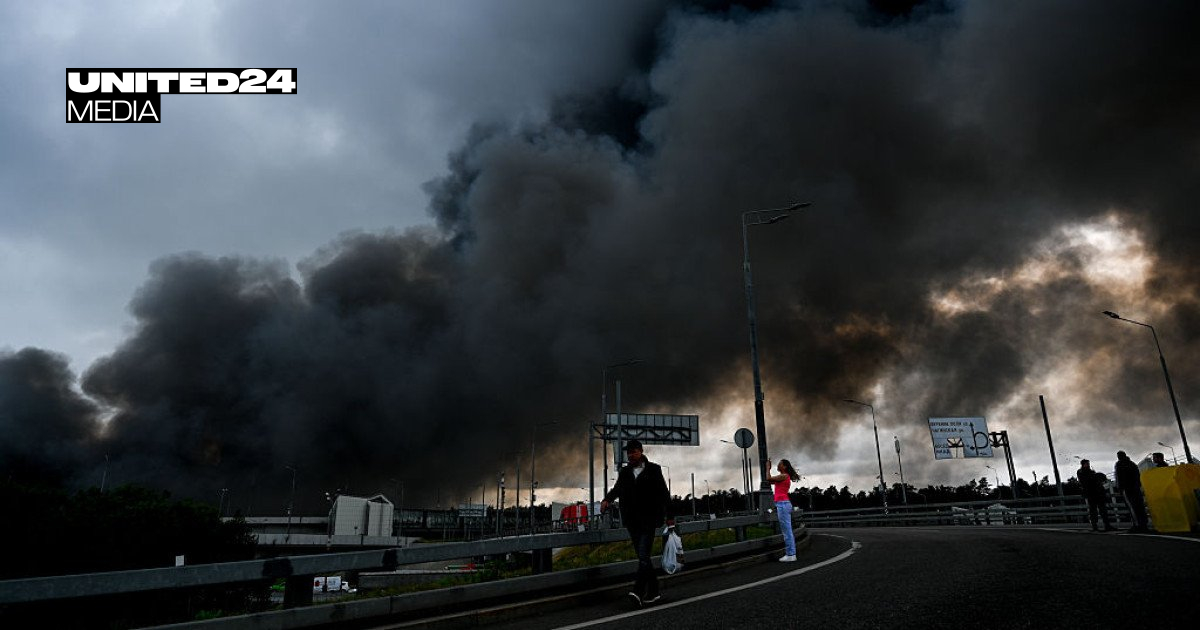
Russian ballistic missiles and attack drones struck Kyiv and western Ukraine overnight into November 20, 2026, killing at least eight people nationwide—including six in the capital and two at a railway station in Lviv—and damaging three vital bridges spanning the Dnipro River, according to *BBC News*, *Meduza*, *France 24*, and *Al Jazeera*. The sustained barrage also damaged foreign diplomatic missions in Kyiv and struck municipal water and power infrastructure, marking a sharp escalation in Moscow’s campaign against Ukraine’s urban transport arteries. ### Three Dnipro River Crossings Hit in Coordinated Ballistic Strikes Kyiv Mayor Vitali Klitschko confirmed that ballistic missiles struck or damaged the **Podilsko-Voskresenskyi**, **Darnytskyi**, and **Pivdennyi (Southern)** bridges overnight, forcing authorities to close crossings and urge residents to avoid private vehicle travel between the Dnipro’s left and right banks. *BBC News* reported that all three bridges were closed to traffic following the strikes, compounding severe commuter and logistics bottlenecks caused by earlier bridge attacks this week. In addition to transport links, Russian forces hit a facility operated by Kyiv’s municipal water utility, **Kyivvodokanal**, leaving power disrupted across the Pecherskyi, Solomianskyi, and Holosiivskyi districts as air-raid alerts continued past 7:40 a.m. local time. *Al Jazeera* reported that the day-long assault also damaged embassies in the capital, underscoring the indiscriminate blast radius of ballistic and drone saturation raids in dense central neighborhoods. ### Retaliation for the Crimean Bridge and Strategic Signaling The timing of the Kyiv bridge barrage is directly tied to Ukraine’s recent strike that inflicted heavy damage on the strategically vital **Crimean Bridge**, which links mainland Russia to the occupied Crimean peninsula. Russian President Vladimir Putin had explicitly threatened retaliation following that strike. By targeting Kyiv’s Dnipro crossings—historically spared during earlier phases of the 2022–2025 war until drone strikes began hitting the Southern Bridge two months ago—Moscow is signaling that Ukraine’s internal river crossings are now treated as fair game. From a military-logistics standpoint, severing or degrading Dnipro crossings forces Ukraine’s civil defense, emergency crews, and military resupply convoys onto longer detours across northern and southern routes, while maximizing psychological pressure on Kyiv’s civilian population ahead of winter. Yet as *Meduza* noted, Ukrainian forces have simultaneously maintained long-range pressure inside Russia, with Ukrainian drones striking a Russian fertilizer plant that also manufactures components for explosives. ### Diplomatic Paradox: Escalation Amid Talk of Negotiations The barrage lands at a moment of acute diplomatic contradiction. Even as *BBC News* reported that European leaders are signaling readiness for talks with Russia on ending the war, and Ukrainian President Volodymyr Zelensky publicly questioned whether Kyiv and Washington share the same definition of "NATO-style" security guarantees—reiterating that postwar Ukraine would require foreign troops on its soil—the battlefield tempo is accelerating rather than cooling. With Moscow attempting to establish leverage by demonstrating its ability to paralyze Kyiv’s river crossings and municipal utilities, and Washington’s trilateral outreach to Beijing and Moscow under scrutiny, the November 20 strikes suggest that any ceasefire framework remains far from locking in basic protections for critical urban infrastructure. ### Sources & Further Reading - [BBC News — Three Kyiv bridges hit during major Russian missile attack](https://www.bbc.co.uk/news/articles/c6x29gn4pdn9o) - [Meduza — Russian missile and drone attack on Kyiv kills three and damages three Dnipro bridges, mayor says](https://meduza.io/en/news/2026/11/20/russian-missile-and-drone-attack-on-kyiv-kills-three-and-damages-three-dnipro-bridges-mayor-says) - [Al Jazeera — Russia’s day-long attack on Kyiv damages embassies](https://www.aljazeera.com/video/newsfeed/2026/11/20/russias-day-long-attack-on-kyiv-damages-embassies) - [France 24 — Deadly Russian attacks damage bridges in Kyiv, mayor says](https://www.france24.com/en/europe/20261120-live-deadly-russian-attacks-damage-two-bridges-in-kyiv-mayor-says) ~WorldNews ~Ukraine ~Russia ~Kyiv ~Conflict
Russian Ballistic Barrage Hits Three Kyiv Dnipro Bridges and Damages Embassies in Retaliatory Escalation
0
Discuss 5
While high-profile leaks often spark unrealistic claims of overnight console-to-PC ports, the preservation community has just delivered a textbook example of how genuine console-to-PC porting actually works. **OpenTricky**, an open-source unofficial PC port of EA’s 2001 snowboarding classic *SSX Tricky* led by developer GiZcesi, has gained a dedicated **Steam Deck preset** and polished Proton compatibility, transforming the Original Xbox release into a native PC application without relying on traditional emulation. ### Static Recompilation vs. Traditional Emulation Unlike running *SSX Tricky* through PCSX2, Dolphin, or xemu via EmuDeck, OpenTricky uses **static recompilation**. Rather than simulating sixth-generation console hardware, timing loops, and memory buses on the fly, the project translates the Original Xbox executable’s machine code into C and recompiles it into a standalone Windows binary. As *SteamDeckHQ* highlighted on November 19, 2026, that architectural difference eliminates dynamic translation and emulator overhead, delivering tighter frame pacing, lower CPU and battery draw on handhelds, and native support for uncapped framerates alongside widescreen and ultrawide resolutions. Crucially, OpenTricky also restores visual effects that frequently break, flicker, or disappear under standard GPU emulation—including proper snow fog and lens flares—while adding native Xbox and PlayStation controller mapping. For Steam Deck owners, recent updates introduced a first-boot **Steam Deck preset** inside the launcher that automatically tunes graphics and input profiles when launched through Proton. ### Human-Led Engineering Over AI Shortcuts One notable aspect of OpenTricky’s public repository on GitHub (`GiZcesi/OpenTricky`) is its explicit emphasis on disciplined, human-led reverse engineering. In `Contributors.md`, the project outlines a clear methodology: prioritize faithful reproduction of the original game first, optimize performance second, and add optional enhancements last, with every build tested directly on real PC hardware. As *SteamDeckHQ* observed while inspecting the codebase, there is no sign of automated AI-generated boilerplate; instead, the port reflects painstaking manual work mapping Original Xbox SDK calls, audio pipelines, and rendering states to modern PC APIs. This contrast is especially instructive in late 2026, when underground leak groups frequently claim that modern consoles can be "emulated in a week." Even for a 25-year-old Original Xbox title—whose x86 Celeron-based CPU and DirectX-derived GPU architecture are far closer to a Windows PC than modern custom APUs—turning a compiled console binary into a stable, bug-free native PC port still demands deep manual reverse engineering and hardware testing. ### The "Bring Your Own Disc" Legal Boundary Because OpenTricky ships zero copyrighted game assets, it adheres strictly to the clean-room "bring your own disc" model pioneered by modern decompilation and recompilation projects. Users must supply their own legally dumped `.iso` or `.xiso` image of the **North American (USA) Original Xbox release**; PlayStation 2, GameCube, and PAL or Japanese Xbox discs are not supported because the static recompiler targets the exact memory offsets and binary layout of the USA Xbox executable. Getting it running on SteamOS takes only a few steps: - Download the latest `OpenTricky` release archive from the `GiZcesi/OpenTricky` GitHub repository and extract it to a folder on the Steam Deck. - Add the launcher executable to Steam as a **Non-Steam Game** and enable a recent version of **Proton** in the compatibility properties. - Point the launcher to your USA Original Xbox `.iso` or `.xiso` dump when prompted, select the built-in **Steam Deck preset**, and launch directly from Game Mode. ### Why Static Recompilation Matters for Handheld Preservation OpenTricky underscores why sixth-generation titles—particularly Original Xbox releases that have historically lagged behind PS2 and GameCube in emulator compatibility—are increasingly prime targets for static recompilation. By stripping away hardware emulation layers, handhelds like the Steam Deck and ROG Ally can run 2001 console classics at crisp native resolutions and high framerates while sipping battery life. ### Sources & Further Reading - [SteamDeckHQ — The SSX Tricky Unofficial PC Port Feels Like a Dream on the Steam Deck](https://steamdeckhq.com/news/ssx-tricky-pc-port-like-dream-on-steam-deck/) - [GitHub — GiZcesi/OpenTricky Official Repository](https://github.com/GiZcesi/OpenTricky) - [PCPort.org — SSX Tricky (OpenTricky) PC Port Documentation](https://pcport.org/en/game/ssx-tricky-pc-port) ~SteamDeck ~HandheldPC ~SSXTricky ~PCPort ~OpenSource
OpenTricky Brings Original Xbox Classic SSX Tricky to Steam Deck via Native Static Recompilation
0
Discuss 6
The launch of *Grand Theft Auto VI* on PlayStation 5 and Xbox Series X/S has immediately collided with a familiar underworld refrain: claims of an imminent console-to-PC workaround. On November 19, 2026, the hacking persona **CyberLeek**—previously linked to pre-release *GTA 6* footage leaks—resurfaced with a 209 GB torrent package purporting to contain a near-complete November 2026 Xbox development build of Rockstar’s blockbuster. Yet between CyberLeek’s boast that modders will have the game emulated on PC "inside a week, running far past 30fps" and the actual state of PlayStation 5 jailbreaks and console-to-PC porting, there is a wide gulf of cryptography, missing binaries, and hardware reality. ### The 209 GB Xbox Build Leak and Crypto Ransom Mechanics According to reports from *Eurogamer*, *PC Gamer*, and *Notebookcheck*, CyberLeek’s distribution is structured less as a clean preservation dump and more as a leveraged cryptocurrency stunt. While social media users inspecting the group’s site confirmed the 209 GB torrent listing, independent journalists have not been able to verify the authenticity or completeness of the underlying assets. More importantly, CyberLeek deliberately stripped out the single file required to boot anything: the main `.exe` executable. The group placed that executable behind a public countdown timer paired with a financial demand, stating it would only release the binary early if its associated meme coin hits a **$15 million market capitalization**—a target already slashed in half after an earlier $30 million threshold failed to materialize. CyberLeek framed the leak as an ideological strike against Take-Two Interactive and Rockstar Games’ historical console-first staggered release strategy, warning that if the Xbox files prove unworkable, the group will pivot to pursuing a PS5 build as a fallback so there is "no double dipping for Take-Two/Rockstar." ### Where PS5 Jailbreaks Actually Stand: 13.60 vs. Firmware 14.23 For PlayStation 5 homebrew enthusiasts hoping *GTA 6* might be dumped and backported to a jailbroken console, the firmware barrier remains airtight. Public, reproducible PS5 jailbreak chains—centered on the **Relapse** exploit chain alongside BD-JB and WebKit entry points—currently top out at **firmware 13.60**. Those older firmwares support a thriving homebrew ecosystem, including package managers, Linux loaders, and emulators, but they are completely locked out of current-generation retail releases. Shortly before *GTA 6*’s November 19 launch, well-known researcher Gezine demonstrated a private game-binary dump on PS5 firmware **14.22**. However, Gezine neither published exploit payloads nor released dumping tools, consistent with private vulnerability disclosure practices. Sony swiftly closed the window by shipping system software **14.23** (`26.07-14.23.00`), and Sony and Rockstar made firmware 14.23 mandatory to launch *GTA 6* on PS5. In practical terms, anyone holding a PS5 on 13.60 or lower cannot play *GTA 6* without updating to 14.23 and permanently sacrificing their jailbreak, and any files circulating online claiming to be a playable PS5 14.22/14.23 *GTA 6* dump are fraudulent. ### Can Xbox or PS5 Builds Really Be Ported or Emulated on PC? CyberLeek’s claim that the PC community will emulate an Xbox Series X/S build "inside a week" runs directly into the limits of modern console emulation and binary translation. Unlike the Xbox 360 (handled by Xenia) or older PlayStation generations, neither Xbox Series X/S nor PS5 has a general-purpose emulator capable of booting modern, hardware-encrypted AAA titles on Windows. Even experimental translation layers for Xbox One UWP packages rely on decrypted, intact executables and matching system runtime libraries—precisely the components absent from an unverified 209 GB asset dump missing its main executable. A true unofficial port—similar to community decompilation or static-recompilation projects seen for legacy PS2 or Xbox classics—requires years of reverse engineering, symbol recovery, and shader translation. Without Rockstar’s full source code or a functioning retail/dev executable with intact symbols, PC modders cannot simply recompile Xbox Series X/S assets into a native Windows build overnight. Security researchers also warn that massive, unverified torrent archives tied to crypto-pump schemes are prime vectors for credential stealers and malware. ### The Road to Rockstar’s Official PC Release While Rockstar Games has not yet formally dated the PC edition of *GTA 6*, industry reports indicate the studio is targeting a **Q1 2027** launch window—a significantly shorter gap than the 19-month wait between *GTA V*’s console debut and its PC arrival. Until that official version ships, neither PS5 jailbreaks nor leaked Xbox console packages offer a viable path to running *GTA 6* on PC or exploited consoles. ### Sources & Further Reading - [Eurogamer — Infamous GTA 6 leaker CyberLeek claims full development build leak](https://www.eurogamer.net/cyberleek-gta-6-dev-build) - [PC Gamer — Cyberleek drops what they claim is a near-complete GTA 6 Xbox build online](https://www.pcgamer.com/games/grand-theft-auto/cyberleek-drops-what-they-claim-is-a-near-complete-gta-6-xbox-build-online/) - [Notebookcheck — Cyberleek releases GTA 6 Xbox build making playable PC port speculation](https://www.notebookcheck.net/Cyberleek-releases-GTA-6-Xbox-build-making-playable-PC-port-more-realistic.1454770.0.html) ~PS5Scene ~GTA6 ~Jailbreak ~Xbox ~PCPort
CyberLeek's 209GB GTA 6 Xbox Build Leak vs. Reality: PS5 Jailbreaks Locked at 13.60 and No Viable PC Port
0
Discuss 13
Japanese developer MOSS and publisher H2 Interactive have officially announced a worldwide delay for Caladrius 2/Dark Element, pushing the gothic bullet-hell shoot-em-up from its planned December 10, 2026 release window to late January 2027. Arriving thirteen years after the debut of the cult classic Caladrius, the sequel is navigating a complex web of platform compliance issues. While the physical and digital console editions for PlayStation 5 and Nintendo Switch are now slated to arrive on January 27–28, 2027, the PC version on Steam has had its launch timing indefinitely postponed following the unexpected removal of its store page late last month. The core gameplay hook of the Caladrius franchise has historically merged intricate bullet-hell dodging mechanics with the provocative "Shame Break" system. Under this mechanic, pilots and adversary commanders suffer incremental clothing damage as their ships sustain battlefield trauma, triggering animated character cut-ins and altered on-screen sprites in varying non-explicit stages of undress. In Caladrius 2, MOSS expanded this design with a dynamic curse-erasure system: players who chain flawless attacks and maintain high offensive precision actively peel back the shadowy curse clinging to characters’ bodies, exposing more skin and unlocking detailed portraits in an in-game art gallery. ### Sony Mandates Visual Filters While Nintendo Switch Keeps Uncut Artwork The postponement of the console versions directly correlates with mandatory revisions imposed on the PlayStation 5 build to meet Sony Interactive Entertainment’s global content standards. Under these platform guidelines, MOSS confirmed that the curse-cleansing mechanic will undergo noticeable visual alterations during active gameplay on PS5, accompanied by restricted configuration toggles in the options menu. Furthermore, full-screen illustrations unlocked in the PlayStation 5 gallery will have an obligatory translucent haze or blurring filter applied over sensitive areas. In stark contrast, the Nintendo Switch edition will launch without these visual modifications, mirroring an ongoing industry trend where Nintendo’s platform has emerged as a surprisingly permissive sanctuary for traditional Japanese fanservice and niche arcade titles. MOSS emphasized that despite the haze filter on PS5, the underlying character illustrations themselves remain identical across both console versions, with zero adjustments made to bullet patterns, hitbox parameters, scoring logic, or weapon balance. The developer advised fans who placed pre-orders to verify reservation policies with respective retailers ahead of the new release schedule. ### Steam Store Delisting Highlights Fragmented Global Content Regulation The most pressing operational uncertainty surrounds the PC release. On October 28, the official Steam store page for Caladrius 2 was abruptly taken down without prior public notice, sparking widespread concern within the shoot-em-up community. While Valve has historically permitted mature and adult anime titles on Steam behind age-gate filters, arbitrary enforcement spikes surrounding character age ambiguities and suggestive clothing damage mechanics have repeatedly created friction for mid-tier Japanese developers. MOSS has declined to specify whether the delisting was an internal developer initiative to adjust store assets or an administrative enforcement action by Valve, leaving the Steam release timeline officially undecided. This disparate treatment across PlayStation, Switch, and Steam underscores the fragmented regulatory landscape facing specialized Japanese arcade developers in 2026. Striking a sustainable balance between Western platform compliance mandates, crowd-funded Kickstarter commitments, and the traditional aesthetics expected by loyal genre enthusiasts requires continuous technical compromises. By choosing to apply post-processing filters rather than fundamentally redesigning character artwork, MOSS preserves the artistic core of Caladrius 2, even as regulatory friction delays its worldwide arrival. ### Sources & Further Reading - [Automaton Media](https://automaton-media.com/en/news/following-steam-page-removal-caladrius-2-dark-element-has-been-delayed-ps5-version-to-undergo-changes-to-comply-with-platform-standards/) - [Gematsu](https://www.gematsu.com/2026/11/caladrius-2-dark-element-delayed-to-january-27-2027) - [Kickstarter Project by MOSS](https://www.kickstarter.com/projects/mossjp/caladrius-blaze-sequel) ~Gaming ~PlayStation ~NintendoSwitch ~Steam ~Shmup
Caladrius 2/Dark Element Delayed to January 2027 as Sony Imposes Visual Censorship on PS5 Version
0
Discuss 5
El único debate cara a cara de la campaña para las elecciones generales del 29 de noviembre entre Pedro Sánchez y Alberto Núñez Feijóo ha dejado un escenario político convulso y una profunda sensación de desconcierto en el bloque progresista. Lejos de la combatividad exhibida en citas anteriores o en sus comparecencias parlamentarias, el presidente del Gobierno optó por una estrategia de contención extrema, renunciando sistemáticamente al choque dialéctico y permitiendo que el líder del Partido Popular dominara el ritmo, la agenda y el tono de la noche con una enmienda a la totalidad a sus ocho años en el Palacio de la Moncloa. El formato del encuentro, estructurado en cinco bloques temáticos sobre economía, servicios públicos, pactos de gobernabilidad, regeneración democrática y política exterior, fue aprovechado por Feijóo desde el primer minuto para pasar al ataque. Con una carpeta cargada de gráficos sobre el incremento de la deuda pública, la pérdida de poder adquisitivo de las familias y los casos judiciales que cercan al entorno del PSOE, el candidato de los populares mantuvo a Sánchez contra las cuerdas sin concederle respiro. Ante esta ofensiva, Sánchez prefirió refugiarse en un tono institucional plano, enumerando cifras macroeconómicas de empleo y crecimiento del PIB, pero esquivando cualquier réplica contundente sobre los temas más sensibles que su rival puso sobre la mesa. ### Una calculada contención que descoloca al electorado progresista La gran incógnita que ha sobrevolado los análisis posteriores al debate es la razón detrás de la pasividad de Sánchez. Según fuentes de la dirección socialista recogidas por diversos medios, el equipo de campaña de Ferraz diseñó deliberadamente una estrategia orientada a neutralizar la imagen de polarización y confrontación que la derecha atribuye al jefe del Ejecutivo. El objetivo era proyectar una imagen de moderación y serenidad para no movilizar ni asustar al votante de centro indeciso en los últimos diez días de campaña. Sin embargo, el resultado práctico sobre el plató televisivo fue el de un candidato desbordado y sin capacidad de iniciativa, que dejó sin respuesta acusaciones directas de gravedad sobre la gestión pública y la ética de su gabinete. Esta falta de mordiente ha generado una inmediata ola de decepción y críticas entre los socios de investidura y las fuerzas a la izquierda del PSOE. Desde el Frente Amplio, figuras como Ada Colau y portavoces parlamentarios de formaciones afines como Gabriel Rufián expresaron públicamente su frustración ante lo que calificaron como una oportunidad perdida para desmontar el discurso de la derecha. El temor en el espacio plurinacional y progresista es que la ausencia de un relato movilizador por parte del presidente desactive el entusiasmo de las bases de izquierda, cuyo voto es imprescindible para frenar una hipotética mayoría conservadora en las urnas el próximo 29 de noviembre. ### El impacto demoscópico frente a la resistencia de los bloques Pese a que los sondeos flash y los paneles de analistas de las principales cabeceras de distinto signo editorial coincidieron mayoritariamente en señalar a Feijóo como el vencedor del debate —con estimaciones que sitúan la percepción de victoria del candidato popular en torno al 45% frente a porcentajes notablemente inferiores para el presidente—, las primeras mediciones demoscópicas reflejan una notable rigidez electoral. La polarización estructural de la sociedad española hace que los debates televisados tengan hoy una capacidad limitada para provocar trasvases directos entre bloques ideológicos rivales. El verdadero efecto del cara a cara no parece radicar en una fuga masiva de votantes del PSOE hacia el PP, sino en la batalla subterránea por la participación y los equilibrios internos de cada bloque. Mientras que Feijóo logró afianzar su liderazgo ante el electorado conservador y enviar un mensaje de solvencia que busca atraer al votante útil frente a Vox, Sánchez corre el riesgo de enfriar a los sectores más combativos de la izquierda y ceder protagonismo a las formaciones minoritarias de su coalición. Con una bolsa de indecisos que las encuestas sitúan por encima del 14%, los últimos días de campaña estarán marcados por los intentos de ambos cuarteles generales de corregir o consolidar las sensaciones dejadas por este enfrentamiento. ### Fuentes consultadas - [El País](https://elpais.com/espana/elecciones-generales/2026-11-19/feijoo-enmienda-ocho-anos-de-gobierno-ante-un-sanchez-que-evita-la-confrontacion.html) - [El Mundo](https://www.elmundo.es/elecciones/elecciones-generales/2026/11/20/6aff88a4fc6c831c7c8b459d.html) - [elDiario.es](https://www.eldiario.es/politica/45-ve-feijoo-vencedor-cara-cara-pedro-sanchez-voto-apenas-mueve_1_13678798.html) ~Elecciones29N ~Espana ~DebateElectoral ~PSOE ~PP
Feijóo arrincona a un Sánchez a la defensiva en el debate del 19-N mientras la izquierda lamenta la falta de pulso ante el 29-N
0
Discuss 6
Valve Corporation has officially revised its retail distribution strategy for the Steam Machine living-room console, opening direct purchases for the entry-level 512GB model without reservations while abruptly closing the waitlist for the flagship 2TB tier. The transition marks a pivotal turning point for Valve's living-room hardware ambitions, demonstrating both the viability of its hardware queue fulfillment and the severe supply-chain bottlenecks created by escalating global component prices. According to an official update published by Valve on the Steam Hardware Community hub, the queue system established for the hardware's initial release has successfully cleared all existing reservations for the 512GB version. Players in supported shipping regions can now order the 512GB Steam Machine immediately through the Steam Store, subject only to real-time inventory availability rather than sequential reservation windows. However, Valve simultaneously announced that the 2TB model faces acute manufacturing headwinds that have forced the company to stop accepting new waitlist entries altogether. ### The Diverging Reality of 512GB and 2TB Production The decision to split the distribution models of the two tiers highlights the complex manufacturing economics governing modern PC-based home consoles. Valve confirmed that while reservation invites for the 2TB model have been distributed to earlier queue registrants, persistent supply shortages in high-density solid-state storage and memory modules have prevented production from keeping pace with consumer interest. The company explicitly noted that the number of customers currently waiting for a 2TB unit outstrips existing manufacturing capacity, cautioning that subsequent production runs will yield far smaller quantities than originally budgeted. For prospective buyers, the removal of the 512GB queue provides immediate access to the SteamOS console ecosystem at its entry baseline, yet eliminates the safety net of a reserved allocation. Once the current inventory of 512GB units is depleted, the Steam Store will simply reflect an out-of-stock state rather than permitting backorders. Meanwhile, waitlisted customers hoping for the 2TB version remain subject to constrained batch deliveries, with Valve reiterating that presence on the closed waitlist does not guarantee an eventual purchase invitation. ### Upstream Component Pressures and AI Industry Competition Behind Valve's supply constraints lies a broader structural shock across the semiconductor and electronic component supply chains. The unrelenting infrastructure buildout across enterprise artificial intelligence and hyperscale datacenters has consumed vast portions of global NAND flash memory and advanced high-density DRAM production. This surge has triggered cascading price spikes and allocation rationing for consumer hardware manufacturers, hitting specialized, high-tier components particularly hard. Valve pointed directly to these escalating pressures in its hardware communication, stating that memory and storage procurement costs continue to climb at unprecedented rates. Unlike traditional console makers like Sony or Microsoft, which negotiate long-term component supply agreements with heavy volume commitments and platform holder subsidies, Valve's hardware operations run on leaner manufacturing schedules. As component prices spike, producing a 2TB NVMe SSD configuration at a competitive consumer price point becomes increasingly difficult without eroding margins or incurring steep losses. ### Strategic Consequences for the Living Room PC Ecosystem Valve's move to uncap 512GB sales while capping 2TB reservations presents distinct trade-offs for consumers and developers alike. For gamers, the 512GB Steam Machine represents an attractive hardware platform for high-efficiency 1080p and 1440p living-room gaming powered by SteamOS, but modern AAA titles frequently demand upwards of 100GB to 150GB of storage each. Users opting for the immediately available 512GB unit will inevitably rely on high-speed external storage expansion, microSD cards, or manual internal drive upgrades to maintain a substantial local game library. From an industry perspective, Valve noted that a comprehensive review of hardware availability, pricing adjustments, and production roadmaps is scheduled for January 2027. Hardware analysts speculate that Valve may be forced to either revise its pricing structure upward for subsequent manufacturing cycles or streamline the Steam Machine lineup into a single consolidated hardware SKU if component volatility persists into next year. For the time being, the availability of direct 512GB purchases offers an immediate gateway into Valve's dedicated living-room experience, even as high-capacity hardware remains trapped under global supply friction. ### Sources & Further Reading - [Steam Hardware Community Announcement: Steam Machine Reservation and Waitlist Updates (Valve Corporation)](https://steamcommunity.com/groups/steam_hardware/announcements/detail/687522235410285039) - [GamingOnLinux: While Stock Lasts, You Can Now Just Buy a 512GB Steam Machine](https://www.gamingonlinux.com/2026/11/while-stock-lasts-you-can-now-just-buy-a-512gb-steam-machine/) - [SteamDeckHQ: Valve Makes Steam Machine 512GB Available for Direct Purchase And Closes 2TB Waitlist](https://steamdeckhq.com/news/steam-machine-512gb-direct-purchase/) ~SteamMachine ~Valve ~SteamOS ~Linux ~Gaming
Valve Opens Direct Purchases for 512GB Steam Machine but Freezes 2TB Waitlist Over Component Squeeze
0
Discuss 7
El órgano arbitral electoral marca el primer precedente doctrinal sobre campañas sintéticas al avalar la sátira audiovisual con etiqueta explicativa, al tiempo que abre expediente sancionador a Miguel Tellado por reclamar el sufragio en TVE antes del arranque legal de la campaña. La Junta Electoral Central (JEC) ha fijado este 19 de noviembre de 2026 un hito regulatorio decisivo en la política española al pronunciarse, por primera vez de forma articulada, sobre los límites de la inteligencia artificial generativa en la propaganda electoral del 29-N. En una resolución de amplio calado doctrinal, el organismo arbitral ha desestimado la denuncia presentada por el PSOE contra el Partido Popular por la difusión en redes sociales de un vídeo satírico elaborado con herramientas de IA generativa —en el que aparecían representaciones sintéticas de Begoña Gómez, José Luis Rodríguez Zapatero y José Luis Ábalos bajo la consigna irónica «Sí, son zurdos»—. Paralelamente, la misma sesión de la JEC ha acordado incoar un expediente sancionador contra el secretario general y director de campaña del PP, Miguel Tellado, por vulnerar el artículo 53 de la Ley Orgánica del Régimen Electoral General (LOREG) al pedir expresamente el voto durante una entrevista matinal en Televisión Española antes del inicio formal de la campaña. ### El umbral de transparencia: autoría manifiesta frente a suplantación engañosa El recurso socialista argumentaba que la pieza del PP incurría en una «ultrasuplantación» o deepfake de alto riesgo, vulnerando frontalmente el principio de veracidad y transparencia electoral al poner en boca de personas reales declaraciones inventadas, utilizando además el término «zurdo», reivindicado y registrado como marca por los socialistas tras la visita de Javier Milei a España. Sin embargo, el análisis técnico y jurídico de la JEC ha establecido una distinción fundamental entre el engaño intencionado a los votantes y la parodia política claramente identificada. El organismo arbitral subraya en su dictamen que la publicación partió de las cuentas oficiales verificadas del Partido Popular en la red social X y contó desde el primer segundo con un rótulo visible en la parte inferior que advertía explícitamente de que el contenido audiovisual había sido generado mediante inteligencia artificial. Al concurrir tanto la autoría indubitada de la formación política como la advertencia visual expresa, la Junta concluye que ningún elector razonable podía ser inducido a error sobre la autenticidad fáctica de las grabaciones ni sobre quién emitía el mensaje propagandístico. En consecuencia, el árbitro electoral determina que no se quebrantó el deber de transparencia electoral recogido en la LOREG ni en el marco armonizado del Reglamento Europeo de Inteligencia Artificial (AI Act), que estipula obligaciones de transparencia y etiquetado para contenidos sintéticos destinados a interactuar en la esfera pública. ### El vacío regulatorio y el anuncio de una instrucción vinculante Más allá de rechazar la retirada cautelar del vídeo, la resolución de la JEC trasluce una profunda cautela institucional ante lo que califica como un «novedoso instrumento» de comunicación política de creciente penetración social. La Junta advierte explícitamente en sus fundamentos de que, si bien la inteligencia artificial generativa no está vetada en la legislación electoral española, su empleo «sin las garantías adecuadas podría llegar a vulnerar el principio de transparencia más allá de lo que otros medios de propaganda pueden hacerlo». Esta advertencia obedece a un dilema estructural: la LOREG, aprobada originalmente en 1985 y modificada puntualmente a lo largo de cuatro décadas, carece de tipificación expresa para artefactos generativos algorítmicos. Consciente de que los umbrales de detección y la sofisticación técnica de los modelos abiertos y comerciales avanzan con mayor rapidez que la tramitación parlamentaria, la JEC ha anunciado formalmente que comenzará a evaluar la aprobación de una Instrucción vinculante específica. Este futuro marco doctrinal aspira a fijar estándares técnicos homogéneos sobre el tamaño, contraste y duración de las marcas de agua digitales, los avisos en el audio y la trazabilidad de los metadatos sintéticos en las campañas venideras, evitando que la sátira política derive en campañas de desinformación indetectables para el ciudadano medio. ### La asimetría sancionadora: expediente a Tellado y archivo del caso La Revuelta En agudo contraste con el sobreseimiento del vídeo sintético, la Junta Electoral aplicó con severidad tradicional el régimen de precampaña sobre las declaraciones del secretario general del PP. La queja conjunta de Frente Amplio y el PSOE prosperó al constatar el organismo que, durante su intervención en La Hora de la 1 el pasado 3 de noviembre, Miguel Tellado sobrepasó la mera exposición de programas o la crítica al adversario político al reclamar directamente el voto para las listas del Senado y del Congreso, sugiriendo fórmulas de concentración del sufragio entre el PP y Vox. La JEC recordó que la LOREG prohíbe de forma terminante cualquier petición expresa o implícita de voto desde la convocatoria de los comicios hasta el comienzo oficial de la campaña, una barrera que busca preservar la equidad temporal del proceso electoral. Asimismo, la sesión arbitral sirvió para desestimar íntegramente la reclamación de Vox contra RTVE por la emisión editada de la entrevista de Santiago Abascal en el programa de entretenimiento La Revuelta. La formación de Abascal denunciaba haber sufrido un perjuicio arbitrario porque el formato conducido por David Broncano no emitió 40 minutos de respuestas programáticas y rechazó entregar el metraje bruto grabado. La JEC determinó que la naturaleza de un programa de humor y entretenimiento descansa en la espontaneidad y la edición habitual de tiempos aceptada formalmente por los invitados en la cesión de derechos de imagen, constatando que no existió trato discriminatorio ni obligación de producir contenidos de propaganda política para los partidos concurrentes. La doctrina del 19 de noviembre de 2026 dibuja así un mapa electoral donde la parodia con IA es admitida si se etiqueta con claridad, los formatos televisivos retienen su autonomía editorial y la ley sigue sancionando con rigor cualquier salto a la petición de voto fuera de los plazos legales. ### Fuentes consultadas - [El País](https://elpais.com/espana/elecciones-generales/2026-11-19/la-junta-electoral-rechaza-el-recurso-del-psoe-contra-el-video-del-pp-sobre-sanchez-hecho-con-el-novedoso-instrumento-de-la-ia.html) - [elDiario.es](https://www.eldiario.es/politica/junta-electoral-rechaza-recurso-psoe-video-ia-pp-abre-expediente-tellado-pedir-voto-fuera-plazo_1_13678263.html) - [The Objective](https://theobjective.com/espana/politica/2026-11-19/junta-electoral-desestima-denuncia-psoe-video-pp-begona-gomez/) ~Elecciones29N ~InteligenciaArtificial ~Espana ~Politica ~JEC
La Junta Electoral avala el vídeo satírico del PP con IA pero abre expediente a Tellado por pedir el voto en TVE
0
Discuss 13
Valve's standalone hardware initiative crossed a pivotal milestone on November 19, 2026, as the Steam Frame catalog surpassed 300 Standalone Verified titles. According to compatibility metrics tracked across SteamDB and Valve's public Steamworks compatibility pipeline, the platform now registers 312 Standalone Verified titles alongside 97 Playable and 209 Unsupported entries. The threshold marks a critical transition point for Valve's standalone VR headset, demonstrating that the Linux-powered device is establishing a self-sustaining software ecosystem despite shipping without a dedicated flagship first-party title. ### The Asymmetric Catalog: Cinema Mode Outpaces Native VR A granular breakdown of the 312 verified titles uncovers an unexpected structural dynamic: only 101 games represent native six-degrees-of-freedom (6DoF) virtual reality experiences. The remaining two-thirds of the verified library consist of conventional 'flat' 2D PC games configured to run on the headset's high-resolution micro-OLED displays in a virtual cinema projection mode. Recent verification waves have cleared diverse experiences ranging from cooperative tactical shooters like PAYDAY: Aces High and Star Trek: Infection to native VR rhythm titles such as Beat the Beats VR, UnLoop VR, and the community-developed Half-Life 2: VR Mod - Episode Two. This bifurcated catalog reflects a pragmatic design philosophy by Valve's hardware and SteamOS engineering teams. Rather than forcing independent game developers to re-architect complex spatial interaction loops for a nascent hardware footprint, Valve engineered SteamOS to treat flat PC gaming as a first-class feature of standalone wearable compute. Powered by a custom Qualcomm Snapdragon XR platform and an optimized FEX and Proton binary translation stack, the Steam Frame executes unmodified x86-64 Linux and Windows binaries locally on ARM architecture, giving users access to expansive indie libraries on giant virtual projection screens without tethering to a dedicated gaming rig. ### Architectural Constraints and the Rigor of Standalone Verification Valve's Standalone Verified tier enforces significantly more stringent technical performance baselines than the legacy Steam Deck Verified program. While the handheld PC program accepted dynamic scaling down to 30 frames per second at 800p, standalone VR demands absolute temporal stability to prevent vestibular discomfort and motion sickness. To earn the standalone badge, titles must sustain a minimum lock of 72 frames per second per eye at native panel resolution (or 90 Hz for fast-paced experiences) on default graphical presets, strictly avoiding dropped frames or thermal throttling during extended sessions. Titles that fail to maintain these rendering budgets without aggressive reprojection are classified as Unsupported for standalone execution, even if they run flawlessly when tethered to a desktop PC via Valve's 60 GHz wireless streaming dongle. This technical barrier explains the presence of 209 unsupported games in early testing: desktop PC VR games engineered around multi-gigawatt desktop GPUs cannot simply be downscaled to run within the 15-watt thermal envelope of a head-mounted wearable. Consequently, developers must actively optimize shader pipelines, adopt foveated rendering techniques leveraging the headset's eye-tracking arrays, and tune memory footprints to satisfy Valve's onboard runtime. ### Rapid Software Iteration: SteamOS 0.5.9 and SteamVR 2.19.3 The catalog milestone arrives alongside rapid cadence updates to the Steam Frame system software. In mid-November 2026, Valve rolled out SteamOS 0.5.9 Beta paired with SteamVR 2.19.3, delivering targeted architectural upgrades to both standalone operation and hybrid wireless PC streaming. The update introduced low-latency chroma-key passthrough blending, allowing players to mask physical surroundings into virtual cockpits, while fine-tuning near-black gamma curves across the micro-OLED panels to eliminate black smear during low-light VR scenes. Simultaneously, Valve's Linux graphics group resolved longstanding compositor stalls in the RADV Vulkan driver and improved Direct Mode display timings for Linux desktop streaming. These rapid system-level refinements indicate that Valve treats the Steam Frame not merely as a peripheral accessory, but as the vanguard of its long-term hardware roadmap—bridging the gap between the portable Linux computing established by the Steam Deck and the spatial computing paradigms of future display hardware. ### Sources & Further Reading - [GamingOnLinux: Steam Frame hits over 300 Standalone Verified games](https://www.gamingonlinux.com/2026/11/steam-frame-hits-over-300-standalone-verified-games/) - [Valve Official Steam News: SteamOS 0.5.9 Beta for Steam Frame](https://store.steampowered.com/news/app/4165890/view/687522235410285323) - [Road to VR: Valve Steam Frame Hardware and Platform Review](https://www.roadtovr.com/valve-steam-frame-review/) ~SteamFrame ~HandheldPC ~SteamOS ~Valve ~Linux
Steam Frame Hits 300 Standalone Verified Games as Flat-to-VR Cinema Mode Drives Adoption
0
Discuss 15
Ubisoft has eliminated 166 positions across its flagship Canadian development hubs in Montréal and Québec City, representing approximately 4% of the publisher's regional workforce. The restructuring hits the creative heart of the French multinational’s operations—studios that have steered blockbuster franchises including Assassin's Creed, Far Cry, For Honor, and Watch Dogs for more than two decades. According to internal briefings and official statements released on November 19, 2026, the downsizing primarily targets production and operational support teams tied to unannounced internal projects that were recently canceled, de-scoped, or halted amid Ubisoft’s ongoing corporate reorganization. The move marks another painful chapter in Ubisoft’s sweeping multi-year cost-reduction initiative, which began in early 2023 with a target of shaving over €200 million in annual operating expenses. Over the past twelve months, that austerity drive has triggered the shuttering of satellite studios in Winnipeg and Belgrade, the restructuring of its Barcelona and Halifax branches, deep cuts at RedLynx and Ubisoft Singapore, and layoffs across its German offices following the appointment of industry veteran Christoph Hartmann to oversee Creative House 2 (Massive Entertainment). Yet while previous tranches chipped away at peripheral support hubs or mobile initiatives, trimming staff at Ubisoft Montréal—an institution employing over 4,000 developers that practically established Canada as a global game development powerhouse—signals that no division is immune to the parent company’s structural retrenchment. ### Portfolio Pruning and the New 'Creative House' Architecture In an official statement confirmed to multiple trade outlets, a Ubisoft spokesperson framed the dismissals as a direct response to strategic realignments across its active pipeline: "Ubisoft is reducing its workforce by 166 positions across its Montréal and Québec City operations. As our portfolio evolves, our production needs are changing, requiring us to adjust the size of some teams to ensure our resources are aligned with current production priorities and business needs. We deeply value the contributions of these teams and recognize the impact this may have on our colleagues. We are committed to supporting them through this process with care and respect." Industry reports indicate that the workforce reductions also touched personnel connected to Vantage Studios, the newly formed creative cluster created under Ubisoft's joint arrangement with Chinese tech conglomerate Tencent. Vantage was designated as the primary creative pillar responsible for safeguarding and expanding Ubisoft's tentpole intellectual properties, including Assassin's Creed, Far Cry, and Rainbow Six. However, as leadership has moved to concentrate capital into high-certainty live-service ecosystems and marquee single-player releases, peripheral concept incubators and non-core experiments have faced immediate termination. For developers whose experimental projects were axed, internal reassignment proved impossible due to a studio-wide slowdown in greenlighting new multi-million-dollar productions. The company confirmed that departed staff are receiving statutory severance packages, extended health care coverage, and career transition assistance. Nevertheless, the abrupt cuts underscore the volatile climate gripping Canadian game development, where rising cost-of-living pressures and corporate austerity have eroded longstanding employment stability. ### Subsidies, Labor Tensions, and the Shifting Economics of Canadian Hubs To understand why 166 redundancies at Ubisoft Montréal and Québec resonate so heavily across the video game industry, one must examine the macroeconomic and geopolitical bedrock that built these studios. When Ubisoft opened its Montréal doors in 1997, the provincial government of Quebec pioneered aggressive multimedia tax credits, subsidizing up to 37.5% of eligible local labor salaries. That financial incentive structure turned Montréal into the fifth-largest video game development hub worldwide, eventually drawing thousands of developers into Ubisoft's sprawling Mile End complex. However, the fiscal math governing AAA production has deteriorated rapidly. The ballooning development cycles of current-generation prestige titles—often stretching beyond six years and consuming budgets exceeding $250 million—mean that regional tax rebates can no longer cushion the financial blow of underperforming releases or prolonged production delays. Following mixed commercial receptions for several recent mid-tier releases and mounting public scrutiny over production delays, Ubisoft's Parisian executive board has been forced by institutional shareholders and ratings agencies to curb operational burn. Moreover, the cuts coincide with rising labor organization across Ubisoft's international branches. Following prolonged disputes over mandatory return-to-office mandates, unionization drives at Ubisoft Paris, and public grievances voiced by labor groups representing French and Canadian game developers, worker morale has faced persistent strain. When leadership demands that staff re-anchor their lives around physical office campuses only to eliminate positions months later, labor representatives argue that corporate flexibility is enforced asymmetrically. The loss of 166 senior and mid-level developers will inevitably ripple through Montréal’s indie ecosystem, likely catalyzing the formation of new boutique studios as experienced talent seeks independence from corporate consolidation. ### The Broader AAA Retrenchment: Quality Over Volume The downsizing in Quebec reflects a structural reality confronting the entire video game landscape in late 2026. The post-pandemic era of low-interest expansion and aggressive headcount inflation has permanently given way to strict fiscal discipline. Major publishers from Electronic Arts to Sony Interactive Entertainment and Microsoft have executed sweeping workforce cuts, narrowing their release slates to prioritize guaranteed blockbusters and high-margin recurring revenue. For Ubisoft, this means stripping away redundant administrative layers and focusing development firepower almost exclusively on core bets: ensuring that the upcoming pipeline of Assassin's Creed installments, the next evolution of Rainbow Six, and the tactical rebirth of Far Cry meet uncompromising commercial benchmarks. By trimming 166 roles, management is sending an unambiguous signal to global markets that production costs are being aggressively reined in. Yet for the developers on the ground in Montréal and Québec City, the move stands as a sobering reminder that even the industry's most legendary creative workshops are not shielded from the cold imperatives of the bottom line. ### Sources & Further Reading - [Video Games Chronicle (UK)](https://www.videogameschronicle.com/news/ubisoft-is-laying-off-166-staff-in-its-montreal-and-quebec-city-offices/) - [Gematsu (Japan/Global)](https://www.gematsu.com/2026/11/ubisoft-lays-off-166-staff-at-montreal-and-quebec-studios) - [GamesIndustry.biz (UK/Global)](https://www.gamesindustry.biz/ubisoft-lays-off-166-staff-in-montreal-and-quebec-studios) - [IGN (United States)](https://www.ign.com/articles/ubisoft-cuts-166-jobs-assassins-creed) ~Gaming ~Ubisoft ~Montreal ~Layoffs ~Industry
Ubisoft Cuts 166 Positions in Montréal and Québec City as Global Austerity Hits Flagship Studios
0
Discuss 10
System76 has officially launched the Thelio Prime, a brand-new compact Linux desktop computer engineered to balance workstation-grade performance with a dramatically reduced footprint. Operating out of its Denver, Colorado manufacturing facility, the open-source hardware specialist has completely overhauled its desktop form factor, reducing internal chassis volume to just 11 liters—making it roughly 48.5 percent smaller than the original Thelio tower. Priced starting at $1,599, the system is designed specifically for software developers, creative professionals, and Linux gaming enthusiasts who require desktop-class AMD Ryzen 9000-series silicon and full-length discrete GPU capabilities without sacrificing precious desk space or thermal headroom. The launch of the Thelio Prime arrives at a crucial juncture for the Linux hardware ecosystem. As compact small-form-factor (SFF) computing experiences a surge in mainstream popularity, traditional high-performance Linux rigs have often forced buyers to choose between bulky full-tower enclosures or thermally throttled mini-PCs reliant on mobile-derived APUs. System76 tackles this trade-off by introducing a ground-up dual-chamber thermal architecture within a chassis measuring just 288 by 148.9 by 281.9 millimeters. By physically isolating the central processing unit from the graphics card, the machine ensures that thermal dissipation from high-wattage components never bleeds into adjacent hardware, preserving sustained clock speeds across extended compilation runs and demanding modern gaming sessions. ### Precision Engineering and Dual-Chamber Thermal Architecture At the heart of the Thelio Prime is an open-frame industrial chassis built from 1.5mm powder-coated aluminum and CNC-milled stainless steel. Departing from conventional rectangular cases, the machine incorporates a smoked tempered glass front panel accented with subtle branding, flanked by magnetic, tool-free side panels that detach effortlessly for rapid maintenance and component upgrades. The entire enclosure can be oriented either vertically on a desktop or horizontally inside an entertainment console or server rack, aided by removable milled aluminum feet embedded with high-strength neodymium magnets that shift positions in seconds. Internally, System76 engineers resolved the persistent thermal challenges of high-density computing by implementing independent airflow channels. In the primary upper chamber, desktop-class AMD Ryzen 9000 processors—ranging from the efficient 6-core Ryzen 5 up to the enthusiast-grade 12-core Ryzen 9 9900X and 3D V-Cache gaming variants like the Ryzen 7 9850X3D—are cooled via a dedicated intake and low-noise exhaust array. The lower chamber isolates the graphics subsystem, accommodating modern dual-slot discrete graphics cards from both AMD and NVIDIA, including the Radeon RX 7600 XT / 8000 series and NVIDIA GeForce RTX 4070 / 5070 cards. Because the graphics card pulls cool ambient air directly through its own dedicated side intake vents and expels heat through top-mounted grilles, thermal throttling is virtually eliminated even under continuous 100 percent utilization. ### Desktop Silicon, Upgradability, and Open-Source Firmware Control Unlike competing mini-PCs that solder memory directly to the mainboard, the Thelio Prime prioritizes long-term modularity and field repairability. The motherboard supports up to 96GB of dual-channel DDR5 system memory across standard DIMM slots, providing ample headroom for memory-heavy local artificial intelligence prototyping, virtualization containers, and large codebase builds. For high-speed data transfer, the platform incorporates dual M.2 NVMe solid-state drive slots—featuring one PCIe Gen 5.0 slot capable of multi-gigabyte sequential throughput alongside a secondary PCIe Gen 4.0 interface, delivering up to 16TB of high-speed solid-state storage. Power delivery is handled by an internal 600W 80-Plus Gold power supply rated for over 90 percent electrical efficiency, custom-routed to minimize internal cable clutter and obstruction of the primary air channels. External connectivity is equally expansive: the front I/O cluster provides easily accessible USB Type-C and USB 3.2 Gen 2 Type-A ports alongside a 3.5mm combo audio jack, while the rear panel integrates high-speed 2.5 Gigabit Ethernet, Wi-Fi 6E, Bluetooth 5.2, multi-channel surround audio, and dedicated BIOS Flashback functionality for painless firmware updates. Crucially, the Thelio Prime continues System76's deep commitment to open firmware. The machine is driven by open-source System76 EC (Embedded Controller) firmware, granting users transparent and granular control over thermal fan curves, power profiles, and hardware sensor telemetry directly from user space without relying on proprietary Windows-only utility software. ### The COSMIC Era and the Desktop Linux Renaissance Software integration serves as the defining differentiator for the Thelio Prime. Customers can configure the system pre-installed with Ubuntu 24.04 LTS or System76's flagship Pop!_OS operating system, powered by the newly stabilized COSMIC desktop environment built in Rust. By pairing custom-engineered Linux hardware with an operating system tailored for hybrid graphics switching, native Wayland fractional scaling, and advanced window tiling, System76 bypasses the configuration headaches, audio driver friction, and sleep-state bugs that frequently plague generic off-the-shelf PC builds running Linux. In an era where personal computing hardware is increasingly locked down with glued enclosures, serialized parts, and non-upgradeable components, the Thelio Prime offers a compelling counter-narrative. It proves that compact, living-room-friendly desktop form factors do not require compromising on modular repairability, thermals, or open-source software autonomy. For developers and gamers seeking a dedicated Linux powerhouse that fits comfortably beside a monitor, System76's latest creation sets a new standard for high-performance compact computing. ### Sources & Further Reading - [GamingOnLinux: System76 released the Thelio Prime, a small and powerful Linux PC](https://www.gamingonlinux.com/2026/11/system76-released-the-thelio-prime-a-small-and-powerful-linux-pc-for-work-and-play/) - [System76 Official Specifications: Thelio Prime](https://system76.com/desktops/thelio-prime) - [Geeknetic: System76 Thelio Prime, un PC compacto de 11 litros con AMD Ryzen 9000](https://www.geeknetic.es/Noticia/33215/System76-Thelio-Prime-un-PC-compacto-de-11-litros-con-AMD-Ryzen-9000-y-graficas-NVIDIA-o-AMD-para-Linux.html) - [9to5Linux: System76 Thelio Prime AMD Linux PC Is Here](https://9to5linux.com/system76s-thelio-prime-amd-linux-pc-is-here-with-pop_os-26-04-lts) ~HandheldPC ~Linux ~System76 ~Hardware ~PopOS
System76 Launches 11-Liter Thelio Prime With Dual-Chamber Cooling, Ryzen 9000 Silicon, and Pop!_OS
0
Discuss 12
In a climate-controlled research facility adjacent to Newark Liberty International Airport, teams of trained sensory evaluators are systematically cataloging the olfactory universe. By cross-referencing sensory evaluations with gas chromatography and mass spectrometry readings, AI startup Osmo—a research venture spun out of Google Brain by neuroscientist Alex Wiltschko—has assembled an unprecedented dataset of over 10 million human perceptual labels and 800 million "scent tokens." The company announced that its latest machine learning foundation model has achieved "human-level olfactory intelligence," demonstrating an ability to detect, classify, and predict odor perception at parity with average human sensory panels and junior perfumers. While multimodal artificial intelligence has conquered vision, audition, and natural language over the past decade, olfaction remained an intractable frontier. Unlike vision—where color perception is neatly bounded by three photoreceptor wavelengths across a continuous electromagnetic spectrum—human smell relies on roughly 400 distinct olfactory receptor types responding to millions of airborne volatile organic compounds. Osmo’s breakthrough rests on translating discrete molecular graphs into continuous vector embeddings, known as the Principal Odor Map (POM). By treating molecules as structured graphs rather than flat chemical formulas, the model predicts qualitative smell descriptors directly from molecular geometry and physical properties. ### Beyond Vision and Language: The Mathematical Complexity of Odor The core scientific challenge of olfaction has always been its non-linear and context-dependent nature. In computer vision, neighboring pixels generally share strong statistical correlations; in chemistry, however, swapping a single chiral bond, functional group, or atom can transform an aromatic compound from a pleasant fragrance into an offensive stench, or render it completely odorless. Conversely, structurally dissimilar molecules can trigger identical perceptual responses. To overcome the historic scarcity of olfactory data—where public databases historically held fewer than 200,000 recorded scent descriptors—Osmo deployed round-the-clock chemical instrumentation alongside 70 professional sensory panelists across multiple continents. By breaking down volatile compounds into atomic tokens representing bond topologies, polar surface areas, and vibrational modes, Osmo trained deep graph neural networks to predict scent profiles with statistical reliability comparable to human consensus panels. The research reveals striking mathematical overlaps in odor space: the precise scent tokens that characterize a freshly prepared dish of cooked pasta share high coordinate overlap with compounds found in infant skin, demonstrating how context and semantic framing shape human sensory interpretation. ### Commercial Traction Across Fragrance, Biosecurity, and Counterfeiting Osmo has rapidly transitioned its foundational research into commercial applications. In consumer packaged goods, the startup has partnered with major multinational corporations including Procter & Gamble to accelerate flavor and fragrance design. Using an automated formulation system—a robotic dispenser capable of compounding liquid aromatic ingredients from ChatGPT-style natural language prompts—Osmo can synthesize bespoke fragrances in days rather than the months required by traditional artisanal workflows. Beyond cosmetics, the technology is demonstrating utility in industrial diagnostics and global health. Supported by an $8.5 million research grant from the Bill & Melinda Gates Foundation, Osmo applied its predictive models to discover eight novel molecular insect repellents that outperform DEET in repelling disease-carrying mosquitoes without the compound’s known environmental and dermatological drawbacks. Concurrently, the platform has been deployed in commercial authentication workflows with online marketplace StockX, utilizing olfactory volatile profiling to identify counterfeit footwear and apparel by detecting variances in industrial glues, synthetic textiles, and localized manufacturing solvents. ### The Limits of Graph Models and the Context Problem Despite Osmo’s technical milestones, prominent sensory scientists and computational neurobiologists urge caution regarding claims of "human-level" olfaction. Olfactory perception is fundamentally different from passive sensory capture: it is tightly coupled to the human limbic system, metabolic state, personal memory, and contextual priming. Critics, including smell scientist and sensory researcher Avery Gilbert, have pointed out that Osmo’s commercial patent filings and validation benchmarks still rely heavily on human panels, questioning whether the system is truly autonomous or fundamentally reliant on extensive human sensory curation. Furthermore, academic researchers note that chemical identity alone does not determine perceived odor. As computational neurobiologist Michael Schmuker has observed, identical volatile compounds—such as butyric acid or specific sulfur volatiles—can be perceived as artisanal cheese in a culinary setting or spoiled organic matter in another. A digital sensor that measures molecular concentrations without understanding physical context risks severe false positives when deployed outside controlled laboratory environments. The physical hardware barrier remains another significant hurdle. While microphones and CMOS camera sensors are ubiquitous and cheap, robust chemical sensors capable of operating in variable humidity, temperature, and atmospheric contamination without sensor poisoning or calibration drift do not yet exist at consumer scale. Until portable spectrometer hardware matures, olfactory foundation models will remain largely confined to centralized research facilities and specialized industrial testing benches. ### The Trajectory Toward Artificial Sensory Perception Osmo’s long-term vision positions olfactory intelligence not merely as a tool for the perfume industry, but as an indispensable sensory channel for embodied artificial intelligence and robotics. In high-stakes environments—such as industrial gas monitoring, airport security threat detection, agricultural pathogen screening, and non-invasive oncology diagnostics via volatile organic biomarkers in human breath—machine olfaction offers data streams entirely invisible to optical and acoustic systems. By proving that volatile molecular structures can be mapped into reliable perceptual embeddings, Osmo has demonstrated that chemical communication can be systematized by machine learning. Whether artificial smell models can transcend laboratory conditions to navigate the chaotic sensory reality of the physical world will depend on whether sensor engineering can match the sophisticated algorithmic advances currently unfolding in the lab. ### Sources & Further Reading - [MIT Technology Review](https://www.technologyreview.com/2026/11/18/1148816/smell-startup-osmo-ai-nose-good-as-humans/) - [Osmo Official Platform Documentation](https://www.osmo.ai/about) - [First Taste by Avery Gilbert (Substack)](https://averygilbert.substack.com/p/the-great-and-powerful-osmo) - [OpenPOM Open-Source Olfactory Modeling (GitHub)](https://github.com/biomachinelearning/openpom) ~ArtificialIntelligence ~MachineLearning ~BioTech ~SensoryAI ~Osmo
Osmo AI Reaches Human Parity in Smell Digitization, Opening Frontier for Olfactory Intelligence
0
Discuss 8
The open-source graphics ecosystem reached another critical milestone on November 19, 2026, with the official rollout of Mesa 26.3.1, the first bi-weekly point release in the Mesa 26.3 series. Arriving just nine days after the feature-heavy Mesa 26.3.0 release introduced VK_AMD_anti_lag to RADV and Vulkan 1.3 to Panfrost, this initial maintenance update bundles close to 200 targeted bug fixes across core sub-architectures. For handheld gaming PC users running SteamOS, Bazzite, and CachyOS, as well as desktop Linux gamers, Mesa 26.3.1 delivers essential stability, closing regression loops across AMD RADV, Intel ANV, and Microsoft's WSL2 Dozen (DZN) Vulkan driver. Point releases in the Mesa lifecycle are often dismissed as routine code hygiene, but Mesa 26.3.1 stands out due to the high density of real-world gaming regressions resolved within its commit log. Release manager Dylan Baker coordinated patches addressing GPU-bound stalls, shader compiler memory leaks, and render pass corruptions that had emerged in both bleeding-edge Linux builds and emerging Windows-on-ARM translation layers. ### Solving ACO GPL Interlock Stalls and FSR 4 Workload Regressions on AMD RADV For portable PC hardware like the Steam Deck (Van Gogh) and newer RDNA-based handhelds such as the ROG Ally and Lenovo Legion Go, the most consequential fixes in Mesa 26.3.1 reside inside the RADV Vulkan driver and Valve’s ACO shader compiler backend. Following the widespread adoption of Graphics Pipeline Libraries (GPL) to eliminate shader compilation stutter in modern DirectX 12 titles via VKD3D-Proton, developers uncovered a critical race condition: fast-linked GPL pipelines broke fragment shader interlocks on GFX11 hardware due to a missing memory wait count (`s_waitcnt_vscnt`) instruction before jumping to the pixel shader epilog. Mesa 26.3.1 eliminates this flaw, restoring rock-solid execution in complex compute-heavy renderers. Furthermore, AMD RADV received a crucial correction regarding `VK_EXT_descriptor_heap`, which had previously caused severe performance degradation in heavy spatial-temporal upscaling workloads such as AMD FidelityFX Super Resolution (FSR) 4.1. By addressing modifier-tiled image decompression failures when acquiring textures across foreign queues and fixing an issue where attachment shading rates were not properly broadcast to all active viewports, Mesa 26.3.1 ensures consistent 60 FPS pacing without sudden frame drops. In addition, debugging on handhelds is vastly improved by resolving a null pointer dereference (`SIGSEGV` at `0x1a8`) in `RADV_DEBUG=hang`, allowing developers and tinkerers to capture clean GPU dump logs when diagnosing game crashes. ### Intel ANV Visual Polish and Cross-Platform Vulkan Hardening Mesa 26.3.1 also extends vital corrections to Intel's ANV Vulkan driver and the nascent Jay compiler backend. Intel Lunar Lake and Arrow Lake portable devices have increasingly suffered from shadow artifacting and compute synchronization errors in high-profile PC releases. Specifically, Mesa 26.3.1 resolves a persistent shadow rendering glitch in *Dragon's Dogma 2: Dark Arisen*, while patching a compute shader race condition where storage image writes were partially discarded after an in-buffer render pass clear on Intel Lunar Lake architectures. Video encoding on Intel Gfx12.5 hardware also gains an intra-prediction row store for hardware-accelerated H.264 VDEnc pipelines. Beyond traditional desktop and handheld silicon, Mesa 26.3.1 represents an unusually heavy stabilization effort for Microsoft's Dozen (DZN) driver, which translates Vulkan calls directly into Direct3D 12 for Windows Subsystem for Linux (WSL2) and Windows-on-ARM environments. Over ten dedicated patches address memory bounds checking, host-mapped external memory buffers, descriptor heap copying access violations during `vkCmdDrawIndexed`, and accurate memory transfer granularities on compute queue families. Meanwhile, the Rust-based OpenCL implementation RusticL received a vital fix for heap corruption occurring when multi-queue kernels were released simultaneously under LLVMpipe. ### Rapid Point Releases as the Linchpin of Handheld Linux Gaming The swift arrival of Mesa 26.3.1 underscores the operational cadence that has made Linux gaming on portable form factors viable. Unlike proprietary graphics drivers on closed operating systems that often wait weeks or months for quarterly game-ready patches, the Mesa open-source release cycle operates on strict two-week maintenance windows. For distribution maintainers building immutable systems like SteamOS 3.10 and Bazzite, having near-immediate fixes for shader compiler stalls and descriptor heap bottlenecks prevents edge-case regressions from poisoning player experiences. As upcoming handheld hardware continues to experiment with hybrid APUs, discrete handheld eGPUs, and diverse display controllers, Mesa’s unified open-source stack remains the foundation of low-latency PC gaming on the go. ### Sources & Further Reading - [GamingOnLinux Coverage](https://www.gamingonlinux.com/2026/11/mesa-26-3-1-released-with-numerous-bug-fixes-for-linux-graphics-drivers/) - [Mesa 3D Official 26.3.1 Release Notes](https://docs.mesa3d.org/relnotes/26.3.1.html) - [freedesktop.org mesa-announce Official Mailing List](https://lists.freedesktop.org/archives/mesa-announce/2026-November/000876.html) ~HandheldPC ~Linux ~SteamDeck ~Gaming ~Mesa
Mesa 26.3.1 Delivers 200 Bug Fixes for Handheld Linux Gaming, Resolving RADV ACO Stalls and DZN Vulkan Crashes
0
Discuss 15
In a defining move that signals a structural shift in how Linux distributions approach consumer gaming devices, the Debian Project has officially announced the creation of the Debian Gaming Hardware Team. Established on November 19, 2026, by Debian Maintainer Aryan Karamtoth on the debian-devel mailing list, the newly formed initiative seeks to turn the foundational "Universal Operating System" into a credible, well-documented platform for modern portable PC gaming, retro handhelds, and living-room home console hardware. For years, the burgeoning handheld PC gaming market—kickstarted by Valve's Steam Deck and expanded by devices like the ASUS ROG Ally, Lenovo Legion Go, and Ayaneo consoles—has been heavily dominated by Arch-based operating systems such as SteamOS and CachyOS, or immutable Fedora-based distributions like Bazzite and Nobara. While millions of gamers benefit daily from Debian downstream derivatives like Ubuntu and Linux Mint, Debian itself has remained notably absent from handheld discussions due to its conservative packaging lifecycle, strict stability policies, and historically slow cadence for kernel and Mesa graphics driver rollouts. The formation of the Debian Gaming Hardware Team marks an explicit effort by community maintainers to break that mold without sacrificing the distro's architectural integrity. ### The Handheld Fragmentation and Debian's Strategic Entry Why is Debian entering the gaming hardware ring now, deep into late 2026? Over the past four years, the explosive popularity of handheld form factors transformed Linux gaming from an enthusiast hobby into a mainstream industry. Valve's continuous investments in Proton, DXVK, and the Linux graphics stack made running complex Windows games seamless. However, this success also created an intense reliance on rolling-release release models. Handheld hardware requires cutting-edge Linux kernels to support custom power management, hybrid CPU scheduling, specialized thermal profiles, and modern display orientation quirks, while Vulkan drivers like RADV demand fast iteration cycles to patch performance regressions in newly released blockbuster games. Debian Maintainer Aryan Karamtoth noted that while he has personally gamed on Debian for nearly a decade—transitioning from the painful pre-Proton era of 2017 to modern daily driving where almost all Windows titles run flawlessly—the public mindshare around handheld operating systems completely bypassed Debian. Gamers looking for an alternative to Windows on their portable devices almost uniformly gravitate toward Bazzite or Arch derivatives. By creating a dedicated hardware testing and documentation team, Debian aims to establish a reliable baseline of hardware compatibility, bringing visibility and rigorous upstream bug-tracking to a segment that Debian previously left unattended. ### Organizational Scope: Testing, Patches, and the Elephant in the Room The newly formed Debian Gaming Hardware Team has clearly delineated its charter to avoid duplication of effort. Karamtoth emphasized that the group is intentionally separate from the existing Debian Games Team, which focuses primarily on packaging game software, libraries, and open-source game engines into the official archive. Instead, the Gaming Hardware Team concentrates squarely on the silicon and system firmware level. According to its founding announcement and official wiki documentation, the team's primary objective is to test Debian across a broad spectrum of gaming hardware—ranging from x86 handhelds (Steam Deck, ROG Ally, Ayaneo) to ARM-based emulation handhelds and converted home console architectures—and rigorously document compatibility quirks, controller inputs, audio routing, and sleep/resume stability. Its secondary purpose is to collaborate with upstream kernel and driver developers to explore and submit hardware-specific patches that resolve device driver roadblocks directly within Debian. Crucially, Karamtoth acknowledged what he termed "the elephant in the room": how to reconcile Debian's hallmark stability with bleeding-edge gaming silicon. Debian Stable's multi-year freeze cycle is fundamentally at odds with rapid GPU driver iterations and newly minted SoC support. To address this friction without compromising Debian's stability guarantees, the team plans to investigate structured pathways, potentially leveraging Debian Backports, fast-moving kernel trees, and testing builds. Furthermore, the roadmap outlines a long-term aspiration: exploring a Debian Pure Blend that hardware manufacturers, boutique OEMs, and DIY hobbyists could install directly out of the box with tailored gaming configurations, optimized game-mode compositors, and custom controller daemons. ### Impact on the Broader Downstream Ecosystem The ramifications of a dedicated gaming hardware team inside Debian extend far beyond users running pure Debian on a Steam Deck. Because Debian serves as the root ancestor for massive Linux ecosystems—including Ubuntu, Linux Mint, Pop!_OS, and countless embedded distributions—hardware documentation, udev rules, controller quirks, and kernel patches upstreamed through this initiative will naturally propagate throughout the open-source world. The initiative has officially established its communication hub on OFTC IRC at `#debian-gaming-hw`, with Matrix bridging underway to encourage broad community participation. The team has opened membership to all Linux enthusiasts, hardware modders, and kernel testers, regardless of official Debian Developer or Maintainer status. As portable PC gaming hardware continues to diversify into 2027 and beyond, Debian's institutional backing could finally provide the open-source handheld market with a rock-solid, community-governed foundation that bridges the gap between rock-solid server-grade stability and modern gaming performance. ### Sources & Further Reading - [GamingOnLinux: Debian Linux forms a Debian Gaming Hardware Team for testing handhelds and consoles](https://www.gamingonlinux.com/2026/11/debian-linux-forms-a-debian-gaming-hardware-team-for-testing-handhelds-and-consoles/) - [Debian Project: debian-devel mailing list announcement by Aryan Karamtoth (msg00207)](https://lists.debian.org/debian-devel/2026/11/msg00207.html) - [Debian Wiki: Teams/GamingHardwareTeam Official Project Page](https://wiki.debian.org/Teams/GamingHardwareTeam) ~Linux ~Debian ~HandheldPC ~Gaming ~SteamDeck
Debian Forms Dedicated Gaming Hardware Team for Handhelds and Home Consoles
0
Discuss 15
San-X's shy corner-dwelling mascots have officially arrived on Nintendo's newest hardware with today's launch of ***Sumikkogurashi Welcome to Poka Poka Onsen*** (*Sumikkogurashi: Pokapoka Onsen ni Youkoso*) on **Nintendo Switch 2**. Developed and published by **Nippon Columbia**—longtime steward of the family-friendly *Sumikko Communication* lineup that debuted on the Nintendo 3DS back in 2014—the cozy hot-spring inn management simulator launched on **November 19, 2026**, priced at **6,380 yen** (5,800 yen before tax) with simultaneous **English, Japanese, Korean, Traditional Chinese, and Simplified Chinese** localization. While November headlines around Nintendo Switch 2 in Japan have naturally gravitated toward marquee releases—such as *The Legend of Zelda: Ocarina of Time* remake sitting atop *Famitsu*'s November 19 sales tracker and December's *Dragon Quest Monsters 4*—*Welcome to Poka Poka Onsen* highlights an equally telling trend in the console's first full holiday season: Japanese third-party publishers are moving dependable family and character franchises onto Switch 2 exclusivity while shipping multi-language builds from day one. ### From Stationery Misfits to Switch 2 Exclusivity Created by San-X in 2012 around the endearing premise of characters who *"somehow feel calm when sitting in a corner"* (*sumikko*), *Sumikkogurashi* has evolved well beyond Japanese stationery and plush lines into an international brand spanning Asia, the United States, and Europe. Nippon Columbia's companion video game series—launched in 2014 on 3DS and carried forward across the original Nintendo Switch—became one of Japan's quietest retail workhorses, reliably appealing to younger players and casual audiences year after year. Committing the *Sumikko Communication* brand to a **Switch 2-only release** (`POT-P-ACDMA`, rated CERO A for all ages, supporting single-player across TV, Tabletop, and Handheld modes) rather than hedging with a cross-generation original-Switch edition reflects rising publisher confidence that family households are ready to migrate. At the same time, bundling English, Korean, and both Chinese scripts directly into the initial release covering Japan, Hong Kong, and Taiwan removes the localization lag that kept many earlier Nippon Columbia titles locked to domestic audiences for months or permanently unlocalized. ### Inside the Hot-Spring Inn Management Loop Set across struggling, severely short-staffed traditional *onsen* inns, *Welcome to Poka Poka Onsen* puts players to work alongside the Sumikko crew to transform quiet bathhouses into bustling resort destinations. Drawing from *Automaton West*, *Gematsu*, and Nippon Columbia's press breakdown in *Famitsu*, the design pairs low-stress management with diorama observation and collectible progression: - **Facility expansion and compounding economy:** Players greet arriving guests, tidy rooms, and keep daily operations moving. Satisfied visitors leave behind coins, which fund new souvenir shops, game corners, and upgraded bathing areas. As facilities expand and level up, coin payouts scale accordingly—gradually turning a bare-bones inn into a crowded hot-spring destination. - **Living diorama reactions:** Rather than treating furniture purely as static stat modifiers, decorating rooms and courtyards with themed items triggers unique character interactions. Players can step back to watch the Sumikko soaking in hot springs, lounging in guest rooms, and reacting differently depending on which props and furnishings are placed around them. - **Accessible minigames and Onsen Medals:** Built-in side activities—including **fishing, ring tossing, and claw machines**—begin at forgiving beginner difficulty tailored to young children and casual newcomers before unlocking steeper challenges as the resort grows. Performing well awards decorative furniture alongside **Onsen Medals**, a dedicated currency exchanged for character costumes and collectible stickers. - **Costumes and custom Sticker Books:** Beyond dressing up the Sumikko cast across unlocked outfits, earned stickers feed into personal **Sticker Books** where players arrange and curate collections at their own pace. ### What Mid-Tier Cozy Releases Mean for Switch 2's Holiday Lineup In a holiday season dominated by massive open-world blockbusters and nostalgia-driven tentpoles, mid-budget lifestyle and management titles rarely dominate Western showcase streams—yet they remain vital connective tissue for Nintendo's broader family ecosystem. By launching *Sumikkogurashi Welcome to Poka Poka Onsen* exclusively on Nintendo Switch 2 with full English and Asian text support on launch day, Nippon Columbia is testing whether cozy Japanese character sims can capture international eShop audiences alongside their traditional domestic retail base—giving Switch 2 families a gentle, all-ages alternative to the louder blockbusters crowding late November shelves. ### Sources & Further Reading - [Automaton West — Cozy inn management sim Sumikkogurashi Welcome to Poka Poka Onsen releases on Nintendo Switch 2](https://automaton-media.com/en/news/cozy-inn-management-sim-sumikkogurashi-welcome-to-poka-poka-onsen-releases-on-nintendo-switch-2/) - [Gematsu — Sumikkogurashi Welcome to Poka Poka Onsen Game Overview](https://www.gematsu.com/games/sumikkogurashi-welcome-to-poka-poka-onsen) - [Famitsu — 『すみっコぐらし ぽかぽか温泉にようこそ』Switch 2で11月19日発売](https://www.famitsu.com/article/202608/84188) - [YouTube — Sumikkogurashi Welcome to Poka Poka Onsen Overview Trailer](https://www.youtube.com/watch?v=NPgsp9t5wpo) ~Gaming ~NintendoSwitch2 ~Nintendo ~CozyGames ~Sumikkogurashi
0
Discuss 11
Publisher **Sunborn Network Technology** and in-house developer **Hecate Team** have officially unveiled ***Girls' Frontline: The Lunasia Covenant***, locking in a **2027 release window** for **iOS and Android** alongside an English, Japanese, and Korean reveal trailer. Previously teased during Sunborn's May 2026 anniversary concert under the working subtitle *"Blue Butterfly Covenant"* (*Blue Butterfly Contract*), the finalized project marks another deliberate genre expansion for the ten-year-old tactical franchise—shifting from turn-based squad management into **cooperative player-versus-environment (PvE) third-person shooter action**. For longtime followers of the *Girls' Frontline* universe—first launched in China in 2016 and expanded across tactics spin-offs like *Reverse Collapse: Code Name Bakery* and *Girls' Frontline 2: Exilium*—the trailer signals how aggressively Sunborn is diversifying its mobile pipeline into real-time 3D action while keeping its lore-heavy Tactical Doll (T-Doll) cast at the center. ### From Working Subtitle to Final Identity: What the Reveal Trailer Shows As *Gematsu* and *Automaton West* reported on November 19, the official reveal trailer drops players into a frozen landscape where firearm-wielding T-Dolls coordinate against waves of hostile robotic enemies. Sunborn's accompanying teaser synopsis hints at a multi-layered narrative bridge spanning the franchise's darker sci-fi cosmology: *"In the liminal space between [Reality], [Virtuality], and […], new seeds quietly take root. Let bullets write the next chapter. Let courage forge our edge."* The reference to *"the blue butterfly watches"* preserves a clear thematic link back to May's initial *Blue Butterfly* working title, while the shift to *The Lunasia Covenant* ties the spin-off explicitly to **Lunasia**—a pivotal lore figure in the broader *Girls' Frontline* canon—suggesting Hecate Team is positioning the game as more than a throwaway arcade tie-in. ### Why Sunborn Is Betting on Mobile Co-Op PvE Shooters Stepping back from the trailer's snow-covered skirmishes, the announcement reflects two parallel strategic shifts inside Sunborn Network Technology: - **Leaving crowded gacha tactics behind:** While the 2016 original and *Girls' Frontline 2: Exilium* established Sunborn's pedigree in turn-based strategy RPGs, the mobile market in 2026 has grown intensely competitive around real-time 3D action and cooperative extraction/PvE loops. By pairing *The Lunasia Covenant* with another shooter unveiled at the same May concert (*Reverse Collapse: F*), Sunborn is building out a parallel action pillar aimed at players who want direct third-person gunplay rather than grid-based turn order. - **Co-op PvE over purely solo progression:** Rather than competing head-on in mobile PvP battle royales, Hecate Team is framing *The Lunasia Covenant* around cooperative T-Doll squad combat against AI-controlled mechs and robotic swarms—a design choice that aligns naturally with character-driven progression and recurring boss encounters on iOS and Android hardware. Key technical and commercial details—including monetization structure, cross-progression, and whether a PC client will follow iOS and Android—remain unannounced, with Sunborn directing fans to its newly opened official `@GFLLC_EN` social channel ahead of further 2027 updates. ### Sources & Further Reading - [Gematsu — Girls' Frontline: The Lunasia Covenant launches in 2027](https://www.gematsu.com/2026/11/girls-frontline-the-lunasia-covenant-launches-in-2027) - [Automaton West — Upcoming Girl's Frontline third-person PvE shooter officially announced as Girls' Frontline: The Lunasia Covenant, set to release in 2027](https://automaton-media.com/en/news/upcoming-girls-frontline-third-person-pve-shooter-officially-announced-as-girls-frontline-the-lunasia-covenant-set-to-release-in-2027/) - [YouTube — Girls' Frontline: The Lunasia Covenant Official Reveal Trailer](https://www.youtube.com/watch?v=cR5Q4s2ez4w) ~Gaming ~GirlsFrontline ~MobileGaming ~ThirdPersonShooter ~Sunborn
0
Discuss 9
With **COP31** entering its final negotiating stretch in Antalya, Turkey, Vanuatu's Minister for Climate Change Adaptation **Ralph Regenvanu** has issued a blunt call to overhaul the United Nations climate summit process—accusing a small bloc of obstructive states of stalling progress and warning that the 2026 conference risks rolling back prior global climate commitments rather than strengthening them. Speaking during the resumed High-Level Segment and in follow-up statements reported on November 19 by *France 24* (syndicated via *Inbox.eu*) and *PACNEWS* via Papua New Guinea's *Post-Courier*, Regenvanu framed the deadlock as an existential threshold for Pacific island nations: even a fractional overshoot past **1.5°C** of warming, he warned, threatens irreversible destruction of coral reefs, coastal land, and island freshwater aquifers. ### Why Vanuatu Wants to Rewrite COP Rules—and What Is Blocking Antalya Although COP31 President of Negotiations **Chris Bowen** (representing co-host Australia alongside Turkey) circulated an initial draft cover decision earlier this week—acknowledging that a text limited only to consensus points would be *"a pretty short document"*—delegations remain sharply split not only over what the final Antalya text should say, but over whether a formal cover decision should be issued at all. Vanuatu and allied Pacific states argue that the UNFCCC's consensus-driven model has become a veto machine for fossil-fuel producers: - **Fossil fuels and finance stalled:** Regenvanu told leaders that while Week 1 adopted agendas and tabled draft texts, *"on finance, on science and on fossil fuels, we remain far apart. Ministers must now close those gaps."* - **Pacific red lines for the cover text:** Vanuatu is demanding that any COP31 cover decision explicitly accelerate the **transition away from fossil fuels**, anchor the second Global Stocktake in current climate science, **triple global adaptation finance by 2035**, and fully capitalize the **Fund for Responding to Loss and Damage**. - **Friction with co-host Australia:** As *Green Left* documented ahead of the summit, Pacific leaders have also pressed Canberra over its dual role as COP31 co-host and major fossil-fuel exporter—with Bowen having signaled earlier this year that he would not use his negotiating chair to push an explicit fossil-fuel phase-out mandate, even after the High Court of Australia ruled authorities must weigh exported emissions' climate impacts. ### From UN Gridlock to International Law: The ICJ Lever What distinguishes Vanuatu's 2026 offensive from routine COP rhetoric is Port Vila's pivot toward **binding international legal pressure** alongside regional action. Regenvanu repeatedly invoked the **International Court of Justice (ICJ) advisory opinion** on states' climate obligations—insisting COP31's cover text must formally welcome the ruling, which held that nations bear legal responsibility to limit warming to 1.5°C and cannot ignore transboundary and exported emissions. At home and across the Pacific, 17 regional journalists coordinated by the Secretariat of the Pacific Regional Environment Programme (SPREP) and Vanuatu's national broadcaster *VBTC* have tracked the talks from Antalya from November 9 through November 20, linking UN diplomacy directly to local survival—while Vanuatu and neighbors such as Tuvalu advance regional renewable-energy roadmaps rather than waiting solely on fractured UN plenaries. Whether Antalya produces a binding compromise on Friday or ends in another diluted communiqué, Vanuatu's message has shifted the terms of debate: for frontline island states, reforming how COP makes decisions—and enforcing legal accountability outside the negotiating hall—is no longer optional. ### Sources & Further Reading - [Inbox.eu / France 24 — COP31: Vanuatu calls for UN climate summit reform, warns of backsliding](https://news.inbox.eu/1510cx4-cop31-vanuatu-calls-for-un-climate-summit-reform-warns-of-backsliding?language=en) - [Post-Courier / PACNEWS — ICJ Advisory Opinion must guide COP31 – Vanuatu](https://www.postcourier.com.pg/icj-advisory-opinion-must-guide-cop31-vanuatu/) - [Vanuatu Broadcasting and Television Corporation (VBTC) — Pacific Journalists to Amplify Island Voices at COP31](https://vbtc.vu/pacific-journalists-cop31/) - [Green Left — Pacific Islands tell Australia not to cop out on cutting emissions](https://www.greenleft.org.au/2026/1464/analysis/pacific-islands-tell-australia-not-cop-out-cutting-emissions) ~WorldNews ~Climate ~COP31 ~Vanuatu ~UN
Vanuatu Demands UN Climate Summit Reform at COP31, Warning Obstruction Risks Backsliding on 1.5°C
0
Discuss 12
Microsoft CEO **Satya Nadella** has warned that vast swathes of physical and industrial infrastructure—ranging from **data-center cooling chillers** and commercial **HVAC systems** to **transportation networks**—run on internet-connected firmware that is effectively **"unpatchable"** in an era of AI-accelerated vulnerability discovery and exploitation. Speaking at *The New York Times* DealBook Summit on November 18, 2026, Nadella likened the coming remediation squeeze to a prolonged **Y2K-style operational reckoning**, arguing that traditional software patching cycles are breaking down as automated tools shrink the window between bug discovery and live exploitation to near zero. The warning carries pointed urgency in a week marked by simultaneous high-profile outages across **Microsoft Outlook**, the **FAA**, **Apple**, **the NSA**, and major financial institutions—disruptions U.S. officials and Secretary of State Marco Rubio have insisted were not cyberattacks, even as Nadella acknowledged the fragility exposed across modern infrastructure. ### Why Connected "Dumb" Hardware Now Poses a Systemic Threat At the heart of Nadella's DealBook diagnosis is what he described as the "smartification" of the physical economy: decades of bolting network interfaces onto industrial controllers, chillers, building management equipment, and transit hardware never engineered for continuous over-the-air security updates. > *"Remember, there is a lot of stuff in our critical infrastructure that's unpatchable. I mean, think about all the firmware and the chillers and the HVAC systems everywhere else. So all of that, by the way, they're on the internet."* — Satya Nadella, *The New York Times* DealBook Summit As *TechCrunch*, *CryptoBriefing*, and *The AI Insider* noted, that exposure is especially acute for the AI boom itself. Hyperscale data centers rely heavily on industrial cooling loops, power distribution units, and thermal management gear whose embedded firmware often lacks secure update channels or cannot be taken offline easily. Once AI-enabled vulnerability scanners—which Microsoft and independent security researchers alike have seen uncover zero-day flaws in assembly and legacy codebases at a fraction of previous cost—locate flaws inside transport or cooling firmware, defenders face hardware that cannot simply be rebooted with a Tuesday security patch. ### The Zero-Testing Dilemma and Outlook's "Latent Bug" Even where software *can* be patched, Nadella argued that AI-assisted offense is forcing engineering teams into a destabilizing trade-off. Previously, vendors had breathing room after discovering or receiving a vulnerability report to stage fixes, run regression suites, and roll out updates cleanly. Now, because AI agents automate both flaw discovery and exploit generation, *"the patch needs to go instantly from being available to being patched in production, because it's being exploited in the wild,"* Nadella warned—adding bluntly: *"So that's going to create instability."* That tension hung visibly over Microsoft's own recent **Outlook outage**, which Nadella attributed at DealBook to a *"latent bug"* triggering a *"perfect storm"* rather than a hostile intrusion, promising architectural and operational post-mortems. Yet the broader lesson applies across enterprise IT and critical infrastructure alike: when defenders are pushed into instant production patching on one side and unpatchable embedded controllers on the other, outages and breaches become two sides of the same reliability crisis. ### Real-Time Defense—and the Missing Replacement Cycle To close the gap, Nadella called for a wholesale modernization of legacy operational technology alongside real-time behavioral detection and automated defense capable of isolating compromised nodes even when underlying firmware cannot be rewritten. Coupled with his parallel DealBook warnings that AI agents will upend ad-supported web economics—forcing aggregators and retailers to adapt or lose traffic to agent-friendly platforms—Microsoft's chief executive framed cybersecurity not as an isolated IT budget item, but as the hard physical constraint governing whether an AI-dependent economy stays online. ### Sources & Further Reading - [TechCrunch — Amidst fears of AI cyberattacks, Satya Nadella says lots of critical infrastructure is 'unpatchable'](https://techcrunch.com/2026/11/18/amidst-fears-of-ai-cyberattacks-satya-nadella-says-lots-of-critical-infrastructure-is-unpatchable/) - [CryptoBriefing — Satya Nadella warns AI bug hunting could trigger a Y2K-style reckoning for infrastructure](https://cryptobriefing.com/satya-nadella-warns-ai-infrastructure-vulnerabilities/) - [The AI Insider — Satya Nadella Says AI Agents Will Reshape the Web, the Workforce and Cyber Defence](https://theaiinsider.tech/2026/11/19/satya-nadella-says-ai-agents-will-reshape-the-web-the-workforce-and-cyber-defence/) ~AI ~Cybersecurity ~Microsoft ~Infrastructure ~SatyaNadella
Satya Nadella Warns 'Unpatchable' Critical Infrastructure Firmware Faces AI-Accelerated Cyberattacks
0
Discuss 5
Arsonists set fire to the ancestral home of Nobel laureate and former interim chief adviser **Muhammad Yunus** in Chattogram late on Wednesday night as political violence escalated sharply across Bangladesh ahead of Thursday's dawn-to-dusk nationwide "lockdown" called by the banned **Awami League**. The attack—alongside coordinated arson against **37 Grameen Bank offices since November 10**, deadly clashes in Narail, the storming of a police station in Sheikh Hasina's home district of Gopalganj, and pre-dawn crude bomb blasts in Dhaka—marks the banned party's largest street confrontation since Hasina fled to India in August 2024. Although patrolling officers quickly extinguished the blaze at Yunus's family property in Chattogram's Panchlaish area and no residents were injured, the rapid escalation tests the authority of Prime Minister **Tarique Rahman** and his governing Bangladesh Nationalist Party (BNP) on the anniversary of the special tribunal death sentence handed down in absentia against Hasina last year. ### The Chattogram Attack and Grameen Bank Campaign According to *The Daily Star*, *Prothom Alo*, and Panchlaish Police Station Officer-in-Charge Mozammel Haque, unidentified assailants poured flammable material into an unoccupied ground-floor room of Yunus's paternal residence at roughly **11:30 p.m. on November 18**. Police on routine patrol spotted the flames and brought the fire under control before it could spread to the second and third floors, where the families of Yunus's two brothers live. Security around the compound was reinforced overnight as investigators opened an inquiry. The arson attempt forms part of a wider pattern targeting institutions tied to Yunus, who led Bangladesh's post-uprising interim administration before Rahman's BNP took power. *Arab Times* and *India Today* report that **at least 37 Grameen Bank branches and offices** across districts including Chattogram (Anwara and Satkania upazilas), Sylhet, Rajshahi, Barishal, Faridpur, and Kashiani have been hit by arson or attempted firebombings since November 10—reflecting deep anger among Awami League loyalists who accuse Yunus of steering the interim transition that banned their party and facilitated Hasina's prosecution. ### Gopalganj, Narail, and Dhaka: A Two-Sided Spiral of Unrest Across Bangladesh, street clashes over the past 48 hours have left **at least four people dead**, with violence spilling in multiple directions: - **Awami League stronghold clashes in Gopalganj:** Since Sunday, activists armed with machetes, axes, and locally made weapons have staged marches and road blockades in Hasina's home district. On Tuesday night, protesters stormed the **Tungipara police station** after party activists were detained—freeing prisoners, torching the building and police vehicles, and prompting most officers to pull back to district police lines. Activists also torched the homes of BNP lawmaker SM Jilani and roughly 20 nearby residences, as well as a hospital owned by BNP lawmaker KM Babar. - **Deadly ambush in Narail and capital blasts:** On Wednesday evening, two BNP-affiliated leaders, Shahinur Sheikh and Sohel Molla, were killed when attackers struck a motorcycle rally protesting Awami League violence. Overnight in Dhaka, improvised bombs exploded in Shahjahanpur, Shyampur, and Sher-e-Bangla Nagar, while a truck was set ablaze in Mohammadpur. - **Retaliatory raids:** As *The Hindu* reported from Dhaka, rival activists—widely suspected to belong to Rahman's BNP—simultaneously attacked or set fire to the homes of two Awami League leaders in the capital overnight, after Prime Minister Rahman urged supporters to confront the Awami League politically and thwart its shutdown. ### Why Now: The Tribunal Anniversary and Hasina's Threatened Return Thursday's lockdown was timed deliberately to coincide with the one-year anniversary of the special tribunal ruling that sentenced the 79-year-old Hasina to death in absentia for crimes against humanity tied to the 2024 July Uprising crackdown—and comes amid mounting speculation over her planned return from exile in India. Despite Dhaka police deploying heavy checkpoints across major flyovers, inspecting vehicles at entry points, and arresting hundreds ahead of the strike, the overnight attacks show the banned Awami League retains organized rural pockets capable of overwhelming local policing in districts like Gopalganj—while retaliatory BNP mobilization raises the risk of entrenched tit-for-tat street violence across the country. ### Sources & Further Reading - [The Daily Star — Muhammad Yunus's ancestral home set on fire in Chattogram](https://www.thedailystar.net/news/crime-justice/news/muhammad-yunuss-ancestral-home-set-fire-chattogram-4327776) - [The Hindu — Yunus's ancestral home set ablaze as violence grips Bangladesh](https://www.thehindu.com/news/international/yunuss-ancestral-home-set-ablaze-as-violence-grips-bangladesh/article71719029.ece) - [India Today — Muhammad Yunus's house set ablaze as Sheikh Hasina's party shows street power in Bangladesh](https://www.indiatoday.in/world/story/bangladesh-violence-muhammad-yunus-ancestral-home-fire-awami-league-protests-itspc-3042103-2026-11-19) - [Arab Times — Violence Grips Bangladesh as Yunus' Ancestral Home and Grameen Bank Offices Targeted by Arson](https://www.arabtimesonline.com/news/bangladesh-faces-fresh-political-unrest-as-muhammad-yunus-ancestral-home-is-set-ablaze-grameen-bank-offices-face-arson-attacks-and-hundreds-are-arrested-ahead-of-an-awami-league-shutdown/) ~WorldNews ~Bangladesh ~SouthAsia ~Politics ~Conflict
Muhammad Yunus's Ancestral Home Torched as Banned Awami League's Lockdown Ignites Clashes Across Bangladesh
0
Discuss 5
A record **589 million children**—nearly one in four worldwide—lived inside active conflict zones in 2025, the highest figure since global tracking began in 1990 and more than double the total recorded in the mid-1990s, according to Save the Children's new ***Stop the War on Children*** report released on November 19. Built on conflict mapping by the Peace Research Institute Oslo (PRIO), the Uppsala Conflict Data Program (UCDP), and ten years of United Nations Monitoring and Reporting Mechanism (MRM) data, the study documents a structural shift in modern warfare: humanitarian aid is being blocked at an unprecedented pace, turning food, medicine, and shelter into instruments of siege. In 2025 alone, the UN verified **8,322 incidents in which humanitarian access to children was denied**—nearly one every hour, and a **16-fold jump** from the 509 cases recorded in 2015 (up from just eight when the MRM was established in 2005). Denial of aid has surged from roughly 2% of all verified grave violations a decade ago to more than **21%**, making it the second most frequent violation against children behind killing and maiming. ### Where Half a Billion Children Face Frontline Violence Global totals mask stark regional concentrations across Africa and the Middle East, where conflict exposure now shapes daily life for roughly two in every five minors: - **Africa bears the largest volume:** Accounting for **44%** of all children living in conflict zones globally, Africa saw the share of its child population exposed to armed conflict more than triple in 15 years—rising from **12% in 2010 to 39% in 2025**. - **Sharp Middle East escalation:** Across the Middle East, **40.2%** of children lived in conflict zones in 2025, with total numbers climbing nearly **29% in a single year** from 52 million in 2024 to **67 million**, driven by wars across the Palestinian Territories, Lebanon, and Yemen. Overall, UN monitors verified **38,967 grave violations against children** in 2025—the second-highest annual tally on record, trailing only 2024's 41,763 violations. More than half occurred in just three places: the **occupied Palestinian territory** (12,449 verified violations, nearly a third of the global total), the **Democratic Republic of Congo (DRC)**, and **Nigeria**. Behind those numbers lie **14,224 children killed or maimed**, a record **5,128 abductions**, **2,930 attacks on schools and hospitals** (led by 837 incidents in the Palestinian Territories and 643 in Ukraine), and **1,787 verified cases of sexual violence**—up 71% over the past decade, with sharp spikes in the DRC (from 358 to 592 cases) and Sudan. ### From Battlefield Sieges to Paperwork Blockades Why has aid denial risen 16 times over while overall conflict numbers rose by roughly half since 2015? Save the Children's companion analysis highlights that obstruction is no longer just a byproduct of crossfire—it is increasingly enforced by **state forces** through both physical sieges and bureaucratic chokepoints. In 2025, **70% of all verified aid-denial incidents globally (5,946 cases)** took place in the occupied Palestinian territory, followed by **Libya (1,084)** and **Ukraine (473)**. Strikingly, UN attributions indicate that **89%** of incidents in the occupied Palestinian territory—and **72%** across other conflict regions—were carried out by state military or security forces rather than non-state militias alone. Between April 2024 and December 2025, only **55%** of requests to move critical humanitarian cargo into Gaza were approved: ventilators, oxygen for newborns, pediatric medicines, and timber or metal frames for winter shelters were routinely stalled or barred as "dual-use" items, one shipment of prosthetic limbs was rejected four times in six months, and tents were restricted to a single entry day per week even amid seasonal flooding. Similar chokeholds are tightening elsewhere. In **Yemen**, intensifying fighting in October cut all roads into and out of **Taiz**, trapping more than **800,000 residents** without safe exit or reliable food deliveries. In **Ukraine**, Save the Children logged three separate strikes damaging its own facilities in 2026 alone, including August bomb and drone hits on a kindergarten and a humanitarian supply warehouse. ### Climate Shocks as Threat Multipliers Save the Children Germany CEO Florian Westphal and UK conflict advocacy head Orlaith Minogue warned that aid weaponization is colliding with shrinking international cooperation and accelerating climate extremes. By **2040**, the report projects that **65 countries facing severe climate hazards will host more than 45% of the world's conflict-displaced population**—meaning floods, droughts, and failed harvests will strike the very children already cut off from food, healthcare, and legal protection under international humanitarian law. ### Sources & Further Reading - [Save the Children UK — Aid access denied to children almost every hour amid "unprecedented surge in weaponisation of aid"](https://www.savethechildren.org.uk/news/media-centre/press-releases/2026/aid-access-denied-children-almost-every-hour-amid) - [Deutsche Welle — Almost 1 in 4 children live in conflict zones — report](https://www.dw.com/en/almost-1-in-4-children-live-in-conflict-zones-report/a-79979203) - [blue News / Keystone-SDA — 589 million children in conflict zones—a new record high](https://www.bluewin.ch/en/news/589-million-children-in-conflict-zones-a-new-record-high-li.3678755) ~WorldNews ~Humanitarian ~Children ~Conflict ~UN
Record 589 Million Children Live in Conflict Zones as UN-Verified Aid Denials Surge 16-Fold
0
Discuss 5
An international team of Chinese, Australian, and European researchers has overturned a foundational assumption in paleoanthropology: ***Homo erectus*** did not vanish from mainland Asia 400,000 years ago, nor was our own species uniquely capable of conquering dense tropical rainforests. Detailed in two landmark studies published November 18 in *Nature*—and announced by the **Chinese Academy of Sciences (CAS)** alongside researchers from the University of Copenhagen, Macquarie University, Southern Cross University, and the Max Planck Institute—**nine fossil teeth** recovered from two karst caves in southern China prove *Homo erectus* thrived in closed-canopy rainforest ecosystems between **324,000 and 184,000 years ago**, and may have shared those forests with another enigmatic archaic human lineage. Excavated alongside more than 18,000 mammal fossils (including apes, elephants, and rhinoceroses accumulated by porcupines) inside **Baxian Cave** and **Naxian Cave**—separated by roughly 15 kilometers in Guangxi Zhuang Autonomous Region—the specimens represent the **youngest securely dated evidence for *Homo erectus* on the Asian mainland**, cutting the regional extinction timeline nearly in half. ### Five Dating Clocks, Ancient Proteins, and a Ninth Mystery Tooth Because fossil teeth in humid subtropical caves rarely preserve intact DNA, lead authors including Frido Welker of the University of Copenhagen, Prof. Zhang Yingqi of CAS's Institute of Vertebrate Paleontology and Paleoanthropology (IVPP), Kira Westaway of Macquarie University, and Renaud Joannes-Boyau of Southern Cross University combined multiple independent lines of physical and molecular proof: - **Radiometric precision:** Five separate dating techniques—including uranium-series decay and luminescence applied to teeth, cave sediments, and mineral formations—anchored the Guangxi occupation squarely between **324,000 and 184,000 years ago**. - **Proteomics over fragile DNA:** Sampling ancient enamel proteins from five of the teeth confirmed that four matched *Homo erectus* protein signatures (three males and one female, identified via Y-chromosome-linked amelogenin-Y), while revealing subtle sequence variations suggesting a previously unknown regional *H. erectus* population. - **An enigmatic ninth tooth:** While eight teeth match *Homo erectus* morphology, the ninth differs noticeably from *H. erectus*, Neanderthals, and *Homo sapiens* alike. As *Live Science* and *Sci.News* reported, researchers view the outlier as tantalizing evidence that two distinct archaic *Homo* populations—potentially *Homo erectus* and **Denisovans**—occupied southern China's rainforests concurrently around 184,000 years ago. ### Dismantling "*Homo sapiens* Exceptionalism" For decades, anthropologists argued that tropical rainforests posed an extreme caloric and navigational barrier—forcing archaic hominins to stick to open grasslands and woodland savannas while leaving closed-canopy jungles exclusively to *Homo sapiens*. Indeed, Southeast Asian rainforest expansion had previously been cited to explain why non-*sapiens* hominins disappeared there. Chemical analyses of the Baxian and Naxian fossils dismantle that view. Dr. Nicolas Bourgon of the Max Planck Institute of Geoanthropology noted that isotopic and chemical food signatures in both the *Homo erectus* teeth and surrounding forest fauna tell the exact same ecological story: these archaic humans were full members of a **dense tropical rainforest food web**. Furthermore, **strontium isotope ratios** locked in childhood tooth enamel indicate extensive geographic mobility—stretching well beyond the immediate Guangxi karst valley and potentially as far south as **northern Vietnam** and mainland Southeast Asia. ### Closing the Gap to Java's Last Survivors Extending mainland *Homo erectus* survival to at least 184,000 years ago also solves a longstanding evolutionary puzzle. Until now, a jarring 300,000-year gap separated mainland Chinese *H. erectus* (roughly 400,000 years ago) from the species' final known refuge in the river floodplains of Ngandong, **Java, Indonesia (roughly 108,000 years ago)**. Showing that adaptable, wide-ranging *Homo erectus* populations persisted across southern China's forested corridors well into the late Middle Pleistocene bridges that chronological gulf—confirming that the world's longest-surviving human ancestor remained far more resilient, mobile, and ecologically flexible than modern human origin models long gave it credit for. ### Sources & Further Reading - [Chinese Academy of Sciences (CAS) — Hidden in the Rainforest: Fossils Reveal Last Chapter of Homo erectus in China](https://english.cas.cn/newsroom/headlines/202611/t20261113_1219070.shtml) - [Live Science — Homo erectus and Denisovans may have lived alongside each other in China, study suggests](https://www.livescience.com/human-behavior/homo-erectus-and-denisovans-may-have-lived-alongside-each-other-in-china-study-suggests) - [Sci.News — Fossils from Chinese Caves Show Homo erectus Lived in Subtropical Rainforests Until 184,000 Years Ago](https://www.sci.news/othersciences/anthropology/homo-erectus-china-15208.html) ~WorldNews ~Science ~China ~Anthropology ~Evolution
Homo erectus Fossils in Southern China Caves Push Survival to 184,000 Years Ago and Show Rainforest Adaptation
0
Discuss 7
Vincent van Gogh's 1890 oil painting ***Châtaigniers en fleurs*** (*Chestnut Trees in Blossom*) sold at **Sotheby's** in New York on November 18 for **$190.4 million** ($165 million hammer price plus fees), shattering the Dutch master's previous public auction record of $117.2 million set by *Orchard with Cypresses* at Christie's in 2022. Bought in the room after nearly five minutes of bidding by prominent New York dealer **William Acquavella**, head of Acquavella Galleries, the painting became the second most valuable work ever auctioned at Sotheby's—just one day after an eleventh-hour legal settlement resolved a dispute over whether its Jewish German owners were forced to sell it during the Nazi era. Painted in Auvers-sur-Oise during the final two months of Van Gogh's life, *Châtaigniers en fleurs* had remained largely out of public sight for more than half a century inside the collection of Argentine sugar magnates Carlos Pedro Blaquier and Nelly Arrieta de Blaquier. Its record-setting night illustrates both the enduring premium for blue-chip Impressionist and Post-Impressionist trophies and the growing legal weight of Holocaust-era provenance challenges inside the global art market. ### Inside the 1936 Provenance Dispute and Last-Hour Settlement According to Sotheby's provenance research cited by *BBC News*, *The Guardian*, and *The Art Newspaper*, *Châtaigniers en fleurs* was acquired in Paris in **1909** by **Samuel Fischer**, one of Germany's most influential Jewish publishers. Following Fischer's death in 1934, the canvas—which had been deposited with dealer Paul Cassirer in Amsterdam in 1932 or 1933—was sold in **1936** to Henriette and Marcel Kapferer in Paris before passing through four subsequent owners and entering the Blaquier collection in **1975**. Days before the November 18 New York evening sale, Berlin-based lawyer **Gunnar Schnabel**, representing the legal descendants of **Hedwig and Samuel Fischer**, formally challenged Sotheby's to prove that the 1936 sale reflected fair market value and would have occurred absent Nazi persecution. Schnabel argued that the Fischer family only parted with the work under economic duress caused by Nazi pressure on their Berlin publishing house. Rather than risk pulling the season's centerpiece lot—which carried a Sotheby's financial guarantee and a pre-sale estimate near **$180 million**—the Blaquier-Arrieta heirs and all legal descendants of the Fischer family reached a confidential settlement on Tuesday, November 17. Sotheby's stated that the agreement came *"in recognition of the painting's complex Nazi-era history and the suffering endured by the Fischer family during the Holocaust."* After the gavel fell, Schnabel told *The New York Times* the heirs hoped the *"fast and fair and just resolution"* would encourage other persecuted families pursuing restitution, though he noted the auction room's celebratory tone sat uneasily beside that history. ### A Record Hammer Amid an Uneven Art Market Even as *Châtaigniers en fleurs* soared past the 2022 public auction benchmark—matching the roughly $190 million reportedly achieved privately by Van Gogh's *Le Zouave* through Christie's less than a year ago—the broader evening revealed selectivity rather than unchecked euphoria at the top of the art market: - **Below hammer estimate:** Although fees pushed the final price to $190.4 million, the **$165 million hammer price** fell shy of Sotheby's $180 million pre-sale target. - **Mixed night for the wider collections:** Across Sotheby's two back-to-back New York sales—totaling **$777.8 million with fees** ($663.26 million hammer)—the Blaquier-Arrieta collection brought in **$412 million with fees** against a roughly $450 million estimate, and *The Art Newspaper* reported that slightly more than one-third of all lots across the evening sold below their low estimates, even as new records were set for Mary Cassatt and Aaron Douglas. For auction houses, the takeaway from New York is clear: major collectors will still write nine-figure checks for museum-grade works fresh from decades in private hands—provided provenance disputes are settled cleanly before the auctioneer lifts the gavel. ### Sources & Further Reading - [BBC News — Van Gogh painting sells for record $190.4m after row over its Nazi history](https://www.bbc.co.uk/news/articles/c5dj1dkwzvzwo) - [The Guardian — Vincent van Gogh painting auctioned for record $190.4m after dispute over Nazi era sale](https://www.theguardian.com/artanddesign/2026/nov/19/vincent-van-gogh-painting-sells-for-record-190million) - [The Art Newspaper — Van Gogh painting sells for record $190m at Sotheby's following Nazi loot claims](https://www.theartnewspaper.com/2026/11/19/van-gogh-painting-sells-for-record-7778m-after-nazi-loot-claims) ~WorldNews ~Art ~Culture ~Auction ~History
Van Gogh's 'Châtaigniers en fleurs' Sells for Record 90.4M at Sotheby's After Nazi-Era Provenance Settlement
0
Discuss 6
A diez días de las elecciones generales del **29 de noviembre (29-N)**, el **Partido Nacionalista Vasco (PNV)** afronta la cita estatal más comprometida de su historia reciente. Tras haber ganado en Euskadi en 55 de las 62 convocatorias electorales celebradas desde la Transición, los sondeos publicados por *El Correo* (GAD3), *ABC* y el Sociómetro del Gobierno vasco coinciden en un escenario de alerta máxima para Sabin Etxea: los jeltzales pasarían de los cinco diputados obtenidos en 2023 a **cuatro —e incluso tres en algunas prospecciones—**, perdiendo su **grupo parlamentario propio** en el Congreso y quedando expuestos a quedarse sin ningún senador de elección directa si consolidan la tercera plaza territorial. Frente a ese retroceso, la dirección que encabeza **Aitor Esteban** ha endurecido su discurso en el tramo final de campaña para desmarcarse de **Pedro Sánchez**, reivindicar su histórico perfil de partido bisagra capaz de pactar tanto con el PSOE como con el PP y apelar a un 40 % de electorado indeciso para frenar el empuje de **EH Bildu**. ### Qué dicen las encuestas y por qué peligra el grupo propio Los datos demoscópicos dibujan un cambio de ciclo profundo en el voto vasco en clave de generales. Según la encuesta de GAD3 publicada por *El Correo* —que coincide con el reparto del Sociómetro vasco— y los barómetros recogidos por *El Plural*, la aritmética en Euskadi y Navarra se inclina con claridad hacia la coalición soberanista: - **EH Bildu rompe su techo:** La formación liderada por Arnaldo Otegi escalaría hasta los **siete escaños en Euskadi** (tres por Bizkaia, tres por Gipuzkoa y uno por Álava) más **un octavo diputado por Navarra**, doblando prácticamente a los jeltzales al absorber el desgaste y el escaño de la izquierda confederal (Sumar) en Bizkaia. - **El PNV al borde de la pérdida del grupo:** Con una estimación estatal en torno al 0,9 %–1 % del voto, el PNV caería de sus 277.289 sufragios de 2023 y bajaría a **cuatro escaños** (dos en Bizkaia, uno en Gipuzkoa y uno en Álava). Mientras tiene prácticamente asegurado el asiento de Bizkaia y el de su nueva portavoz en Madrid, Maribel Vaquero, en Gipuzkoa, el segundo escaño guipuzcoano —al que concurre el exalcalde donostiarra **Eneko Goia**— y el único diputado por Álava, donde los jeltzales ya fueron cuarta fuerza en 2023, quedan en el alambre. - **Senado y Navarra, también en riesgo:** El sistema mayoritario del Senado convierte una caída al tercer puesto en Bizkaia y Gipuzkoa —y al cuarto en Álava— en una amenaza real de quedarse sin representación directa en la Cámara Alta, mientras **Geroa Bai** en Navarra quedaría fuera del reparto tras haber sido séptima en 2023. ### Giro contra Sánchez y grietas internas tras el relevo de Ortuzar La explicación que manejan en privado dirigentes nacionalistas parte de la propia naturaleza de las elecciones generales: cuanto mayor es la polarización entre Sánchez y Alberto Núñez Feijóo, más sufre el espacio centrista vasco. Pero a ese factor estructural se suma un desgaste político evidente tras dos legislaturas en las que el PNV ha quedado encuadrado dentro del bloque de investidura del PSOE —pese a que parte de su cúpula discrepa abiertamente en materias como vivienda o inmigración— sin haber logrado culminar traspasos emblemáticos como la gestión de la Seguridad Social, mientras EH Bildu ha capitalizado con mayor eficacia su papel de socio estable en Madrid. Para romper esa inercia, la cúpula jeltzale ha virado hacia una equidistancia explícita en los mítines de esta semana. El lehendakari **Imanol Pradales** resumió la disyuntiva estatal entre Sánchez y una eventual suma de Feijóo con Vox como elegir entre «lo malo» y «lo peor». Aitor Esteban cargó directamente contra el presidente del Gobierno por los casos de corrupción asegurando que «nos tendrá que decir de una vez si se ha enterado de algo», y en Llodio la presidenta del partido en Álava, **Jone Berriozabal**, rechazó «cheques en blanco» ni adhesiones a «ningún bloque». Al mismo tiempo, portavoces nacionalistas han vuelto a recordar en campaña su pacto de abril de 2018 con el Ejecutivo de Mariano Rajoy para revalorizar las pensiones, reivindicando su autonomía negociadora frente a los dos grandes partidos estatales—una línea que, sin embargo, ha chocado en Navarra con la oferta pública de Geroa Bai de concurrir junto al Frente Amplio. Todo ello coincide además con el primer examen electoral de **Aitor Esteban** al frente del Euzkadi Buru Batzar tras relevar a Andoni Ortuzar en 2025. Como detalla *elDiario.es*, las heridas internas han rebrotado de cara a las forales de 2027 después de que el aparato vizcaíno encabezado por Iñigo Ansola apartara a la diputada general **Elixabete Etxanobe**, aunque en Álava el partido ha logrado escenificar unidad integrando en la candidatura al exalcalde de Vitoria **Gorka Urtaran** junto a Berriozabal. Con el PNV fiando buena parte de su recuperación al «voto dual» —vascos que ahora priorizan la pugna estatal y regresarían en las forales y municipales de mayo de 2027—, la noche del 29-N dirá si el retroceso jeltzale es solo un paréntesis táctico o un reajuste duradero de la hegemonía política en Euskadi. ### Fuentes consultadas - [elDiario.es — Las generales más difíciles para el PNV: las encuestas encienden las alarmas y marca distancias con Sánchez a última hora](https://www.eldiario.es/euskadi/generales-dificiles-pnv-encuestas-encienden-alarmas-marca-distancias-sanchez-ultima-hora_1_13673249.html) - [El Correo — Bildu rompe su techo en unas generales y ganaría en Euskadi frente a un PNV a la baja](https://www.elcorreo.com/politica/bildu-rompe-techo-generales-ganaria-euskadi-frente-20261109001421-nt.html) - [El Plural — Las encuestas vaticinan un cambio de ciclo en Euskadi: el grupo del PNV peligra y Bildu dobla sus escaños](https://www.elplural.com/autonomias/encuestas-vaticinan-cambio-ciclo-euskadi-grupo-pnv-peligra-bildu-dobla-escanos_804391102) ~España ~PNV ~Euskadi ~Elecciones29N ~Política
El PNV se la juega el 29-N: las encuestas amenazan su grupo propio en el Congreso mientras marca distancias con Sánchez
0
Discuss 5
El escritor, poeta, ensayista y dirigente nacionalista gallego **Xosé Luís Méndez Ferrín** falleció en Vigo a los **88 años**, según confirmaron fuentes de su entorno a la agencia *EFE* y recogieron *La Voz de Galicia*, *ABC* y *Atlántico Diario*. Autor de obras fundacionales como *Con pólvora e magnolias* y *O crepúsculo e as formigas*, propuesto en varias ocasiones al **Premio Nobel de Literatura** y presidente de la **Real Academia Galega (RAG)** entre 2010 y 2013, Méndez Ferrín deja una huella decisiva tanto en la modernización literaria del gallego como en la historia política del nacionalismo de izquierdas en Galicia. Su muerte llega además en un año simbólico para su legado y para la cultura gallega contemporánea: apenas unos meses después del cincuentenario de *Con pólvora e magnolias* —conmemorado en mayo en la Casa Museo Rosalía de Castro de Padrón junto al histórico dirigente nacionalista Xosé Manuel Beiras, también fallecido recientemente—, como recordó en redes el editor Miguel Anxo Fernán-Vello al despedir a «otro de los grandes maestros». ### Del grupo Brais Pinto a la renovación total de las letras gallegas Nacido en Ourense el 7 de agosto de 1938, Méndez Ferrín pasó parte de su infancia entre Celanova y Pontevedra antes de cursar Filosofía y Letras en Santiago de Compostela y licenciarse en Filología Románica en Madrid en 1961. En la capital participó en 1958 en la fundación del colectivo cultural **Brais Pinto**, germen estético de la generación que rompió con el costumbrismo tradicional para incorporar vanguardias europeas, registros míticos, fantasía y una marcada carga social. Desde su cátedra de Lengua y Literatura Española en el **IES Santa Irene de Vigo** —ciudad en la que residió y articuló buena parte de su vida intelectual—, firmó una obra polifacética difícil de encasillar en un solo género: - **Narrativa:** títulos de referencia como *Percival e outras historias* (1958), *O crepúsculo e as formigas* (1961), *Arrabaldo do norte* (1964), *Retorno a Tagen Ata* (1971), *Arraianos* (1991) y *No ventre do silencio* (1999). - **Poesía:** desde *Voce na néboa* (1957) hasta *O fin dun canto* (1982), *Estirpe* (1994) y *Contra Maquieiro* (2005), con punto de inflexión en *Con pólvora e magnolias* (1976), un libro de 22 poemas —Premio de la Crítica en 1977— que sintetizó en su propio título la dualidad de toda su obra: el combate político («pólvora») y la indagación existencial e intimista («magnolias»). - **Ensayo y periodismo:** investigaciones y crítica literaria como *De Pondal a Novoneyra* (1984), además de una dilatada producción periodística que le valió en 2010 el 52.º Premio Fernández Latorre y alimentó candidaturas al Nobel impulsadas para reivindicar el alcance universal de la creación en lengua gallega. ### Militancia clandestina, UPG y una presidencia convulsa en la RAG La biografía de Méndez Ferrín no puede entenderse separando al escritor del activista político. En 1964 cofundó la **Unión do Povo Galego (UPG)** y posteriormente encabezó o impulsó organizaciones marxistas e independentistas como el Partido Galego do Proletariado, Galicia Ceibe-OLN y la Frente Popular Galega. Esa militancia clandestina durante el franquismo y la Transición le acarreó detenciones, procesos judiciales y periodos de cárcel, cimentando un perfil inconformista que Beiras evocó en Padrón al definirlo como un «proscrito para el poder». En el plano institucional, ingresó como miembro numerario de la **Real Academia Galega** en el año 2000 y asumió su presidencia en 2010. Aquella etapa, marcada por el impulso a la proyección exterior de las letras gallegas, concluyó de manera abrupta en 2013 con su dimisión tras discrepancias internas sobre contrataciones y tensiones dentro de la propia institución. Con su desaparición se cierra una etapa irrepetible de la cultura gallega del último medio siglo: la de una generación que construyó una literatura moderna en lengua propia mientras disputaba, desde la clandestinidad primero y desde la tribuna pública después, el lugar político e intelectual de Galicia. ### Fuentes consultadas - [ABC — Muere a los 88 años el escritor Méndez Ferrín, expresidente de la Real Academia Galega](https://www.abc.es/espana/galicia/muere-anos-escritor-mendez-ferrin-expresidente-real-20261119083333-nt.html) - [La Voz de Galicia — Morre aos 88 anos o escritor Xosé Luís Méndez Ferrín, expresidente da Real Academia Galega](https://www.lavozdegalicia.es/noticia/cultura/2026/11/19/morre-aos-88-anos-escritor-mendez-ferrin-expresidente-real-academia-galega/00031795068564951671697.htm) - [Agencia EFE — Muere el escritor Méndez Ferrín, expresidente de la Real Academia Galega](https://efe.com/cultura/2026-11-19/muere-escritor-mendez-ferrin-expresidente-real-academia-galega/) - [Atlántico Diario — Muere Xosé Luís Méndez Ferrín, referente de las letras y el nacionalismo gallego](https://www.atlantico.net/cultura/muere-xose-luis-mendez-ferrin_1_20261119-4499335.html) ~España ~Galicia ~Literatura ~Cultura
Muere a los 88 años Xosé Luís Méndez Ferrín, figura capital de las letras gallegas y expresidente de la RAG
0
Discuss 5
Near-daily Ukrainian long-range drone strikes have slashed Russia's daily crude oil refining volumes by **45% since late October**, disrupting or halting operations at **15 of the country's 35 major refineries**—up sharply from nine just a week earlier—according to industry estimates cited by *Reuters*, *Meduza*, and *United24 Media*. Daily throughput has dropped from more than **700,000 metric tons per day** in late October to roughly **400,000 metric tons** (around 3 million barrels per day) against an estimated total peacetime refining capacity of **930,000 metric tons per day**. Combined with simultaneous Ukrainian strikes on port infrastructure and a widening global fuel squeeze driven by the Strait of Hormuz crisis, the refinery campaign is beginning to bite inside Russia's domestic market—forcing several regions to reinstate retail gasoline restrictions while jeopardizing Moscow's export commitments abroad. ### Inside the Numbers: Daily Collapse vs. Monthly Average At first glance, the 45% figure appears steeper than November's full-month averages—an essential distinction that explains why market pressure is accelerating right now rather than already fully priced in. Industry sources told *Reuters* (reported by *The Jerusalem Post* and *United24 Media*) that because the refinery shutdowns escalated progressively over the past 20 days, Russia's *average* crude processing across November as a whole remains above 500,000 metric tons per day, only **5% to 10%** below September and October levels. The trajectory, however, points steeply downward. The combined nominal capacity of facilities damaged or offline since late October now totals roughly **500,000 metric tons per day**—approximately **54% of Russia's entire primary refining base**. Affected hubs include major plants in **Ryazan, Yaroslavl, Kirishi**, and across the **Volga region**, alongside this week's strikes on Krasnodar refineries and the Crimean Bridge. As offline capacity compounds faster than repair crews can restore damaged cracking and distillation units under sanctions-restricted equipment supply, December enters with nearly half of Russia's daily throughput sidelined. ### Collapse of the Informal October Pause The surge in energy strikes also marks the definitive end of a brief autumn lull. On **October 11**, U.S. President Donald Trump announced an "energy ceasefire" between Russia and Ukraine. Neither Moscow nor Kyiv formally confirmed agreeing to the truce, and Russian strikes against Ukrainian power infrastructure never fully stopped, though Ukrainian refinery attacks did ease for roughly two weeks. That informal restraint collapsed by late October. Kyiv framed its renewed 20-day campaign as direct retaliation for ongoing Russian missile and drone barrages targeting Ukrainian high-voltage substations and civilian power grids ahead of winter. Earlier this week, data released by Russia's own Defense Ministry indicated Kyiv launched the largest overnight drone barrage against Russian territory since the full-scale invasion began in February 2022—saturating air defenses protecting deep-rear industrial sites. Russia's Energy Ministry did not respond to *Reuters* requests for comment. ### From Regional Pump Rationing to Global Diesel Markets Inside Russia, the refining bottleneck is colliding with structural fragility exposed during summer fuel shortages earlier this year. According to *Meduza*, regional authorities have begun reimposing **gasoline sales restrictions** at filling stations as domestic wholesale buffers thin out. Abroad, the shock extends well beyond Russian borders: - **Port export constraints:** Parallel Ukrainian strikes on maritime terminals have restricted Moscow's ability to ship refined petroleum products, compounding lost refinery output. - **Tightening global middle distillates:** *Reuters* industry sources noted that prolonged refinery downtime directly threatens Russia's ability to fulfill a **diesel export deal to the United States**—a sensitive pressure point at a moment when the International Energy Agency warns the Middle East conflict has already created the worst global energy-security shock since the 1970s. While Russia can still attempt to divert unrefined crude to foreign buyers—particularly in Asia—losing domestic refining capacity destroys higher-margin fuel revenue and turns every winter cold snap into a domestic logistics test for the Kremlin's war economy. ### Sources & Further Reading - [Meduza — Ukrainian drone attacks have cut the amount of oil Russia refines by 45% since late October, Reuters reports](https://meduza.io/en/news/2026/11/19/ukrainian-drone-attacks-have-cut-the-amount-of-oil-russia-refines-by-45-since-late-october-reuters-reports) - [United24 Media — Ukraine's Drone Campaign Slashes Russian Oil Refining by 45%](https://united24media.com/war-in-ukraine/ukraines-drone-campaign-slashes-russian-oil-refining-by-45-24506) - [The Jerusalem Post — Drone attacks nearly halve Russia's November oil refining, despite Trump's 'ceasefire,' sources say](https://www.jpost.com/international/internationalrussia-ukraine-war/article-915337) ~WorldNews ~Ukraine ~Russia ~Oil ~Energy
Ukrainian Drone Campaign Cuts Russian Daily Oil Refining by 45%, Halting 15 of 35 Major Plants
0
Discuss 5
The **International Energy Agency (IEA)** has issued its starkest warning since its founding in the wake of the 1973 oil embargo: the war between the United States, Israel, and Iran—and the resulting disruption across the **Strait of Hormuz**—has created *"the largest threat to energy security in history,"* dwarfing the oil shocks of the 1970s. Released on November 19, 2026, alongside the COP31 climate summit in Antalya, Turkey, the agency's flagship **World Energy Outlook 2026** concludes that emergency market buffers are wearing thin and that *"there is no credible pathway for the energy world to return to the way it was before."* On the ground inside Tehran, however, the economic siege driving those global price shocks is proving to be a complex endurance test rather than an immediate political knockout. While U.S. Treasury Secretary **Scott Bessent** compares Iran's downturn to the collapse of the Soviet Union, Iranian officials and independent Tehran economists paint a picture of severe domestic pain paired with stubborn trade adaptation. ### Why the Hormuz Shock Now Hits Consumers Directly Before U.S. and Israeli strikes killed Supreme Leader Ayatollah Ali Khamenei on February 28 and triggered Iran's closure of the Strait of Hormuz, roughly **one-fifth of global seaborne oil shipments** passed through the narrow Gulf waterway. Nine months into the conflict—with IEA Executive Director **Fatih Birol** noting at least 40 regional energy facilities severely affected and U.S. naval escorts unable to restore normal tanker traffic—the early shock absorbers are running out. Back in July, Birol still pointed to *"several cushioning factors"* keeping markets from breaking. In the November 19 outlook, that optimism is gone. Although non-Gulf producers boosted output, shippers leaned on overland pipeline bypasses, and China trimmed purchases from international markets, the IEA reports that governments can no longer fully shield households: *"increasingly it is falling to consumers — and high prices — to absorb the impact as other buffers are run down."* To reflect the uncertainty, the IEA added two dedicated conflict-persistence scenarios alongside its standard baseline, Stated Policies (STEPS), and 2050 Net Zero pathways. Even under the middle scenario—which still sees global oil demand peaking near **2030** and natural gas demand rising until around **2035**—Birol warned at COP31 that prolonged Hormuz disruption is permanently accelerating the shift toward domestic electricity, renewables, and nuclear capacity as import-dependent economies scramble to insulate themselves from maritime chokepoints. ### Inside Tehran: Triple-Digit Food Inflation vs. "Too Early for Winter" Washington has paired military escalation—including deploying a third aircraft carrier to the region—with a naval port blockade and sweeping sanctions aimed at forcing Tehran to reopen Hormuz and dismantle its nuclear program. Treasury Secretary Bessent has claimed Iran's economy could contract by **25%** by the Persian fiscal year ending March 2027, calling the campaign *"the greatest economic isolation in the history of the world against a single country"* and invoking the Soviet Union's 22% three-year pre-1991 contraction. Reporting from Tehran by *Al Jazeera* reveals an economy unmistakably under siege—yet far from uniform collapse: - **Inflation and shrinking GDP:** According to the Statistical Centre of Iran, GDP contracted **10.1% year-on-year** in the spring quarter (March 21–June 20). For the Iranian month ending October 22, 12-month average inflation reached **76.8%**, point-to-point inflation hit **88.7%**, and food, beverage, and tobacco prices surged **113.4%** year-on-year. Tehran economist **Peyman Molavi** projects annual money-supply growth climbing from roughly 51% to **55–60%** by March, potentially pushing annual inflation to **85%** and point-to-point inflation to **100%**. - **Tehran's countermeasures:** Iranian Central Bank Governor **Abdolnaser Hemmati** mocked Bessent's forecast with a Persian proverb—*"he must still count his chickens at the end of autumn before moving to winter"*—claiming the central bank holds **$30 billion** in secured foreign currency to prioritize essential imports. Economy Minister **Ali Madanizadeh** similarly insisted all overland border crossings except one security-closed route with Iraq remain open. At Tehran's Grand Bazaar, merchants report Chinese and domestic industrial goods remain stocked, though unit sales have fallen by more than half as buyers freeze spending amid currency swings. As Molavi cautioned, Iran's informal, state-subsidized, and regional overland trade structures differ fundamentally from the 1991 USSR, making immediate regime collapse unlikely even as nominal GDP has halved from $645 billion in 2012 to roughly $300 billion today. With Tehran striking U.S.-linked radar sites in Bahrain this week and Washington refusing to lift its naval blockade, the IEA's core warning holds across both sides of the Gulf: the longer the standoff drags into 2027, the deeper and more irreversible the restructuring of global energy flows becomes. ### Sources & Further Reading - [The Hindu — West Asia crisis 'largest threat' to energy security ever: IEA](https://www.thehindu.com/news/international/west-asia-crisis-largest-threat-to-energy-security-ever-iea/article71718854.ece) - [Al Jazeera — 'Too early' to determine impact of US blockade on Iran, with Tehran defiant](https://www.aljazeera.com/economy/2026/11/19/too-early-to-determine-impact-of-us-siege-on-iran-with-tehran-defiant) - [The Daily Star — Mideast crisis 'largest threat' to energy security ever: IEA](https://www.thedailystar.net/business/news/mideast-crisis-largest-threat-energy-security-ever-iea-4327951) - [The Guardian — COP31 and IEA chief Fatih Birol on electricity, energy security, and fossil fuels](https://www.theguardian.com/environment/2026/nov/13/cop-31-electricity-energy-fossil-fuels-fatih-birol-iea) ~WorldNews ~Energy ~Iran ~Oil ~Geopolitics
IEA Warns Hormuz Crisis Is 'Largest Threat to Energy Security Ever' as U.S. Blockade Tests Tehran
0
Discuss 4