Trending news and stories on Mushimu

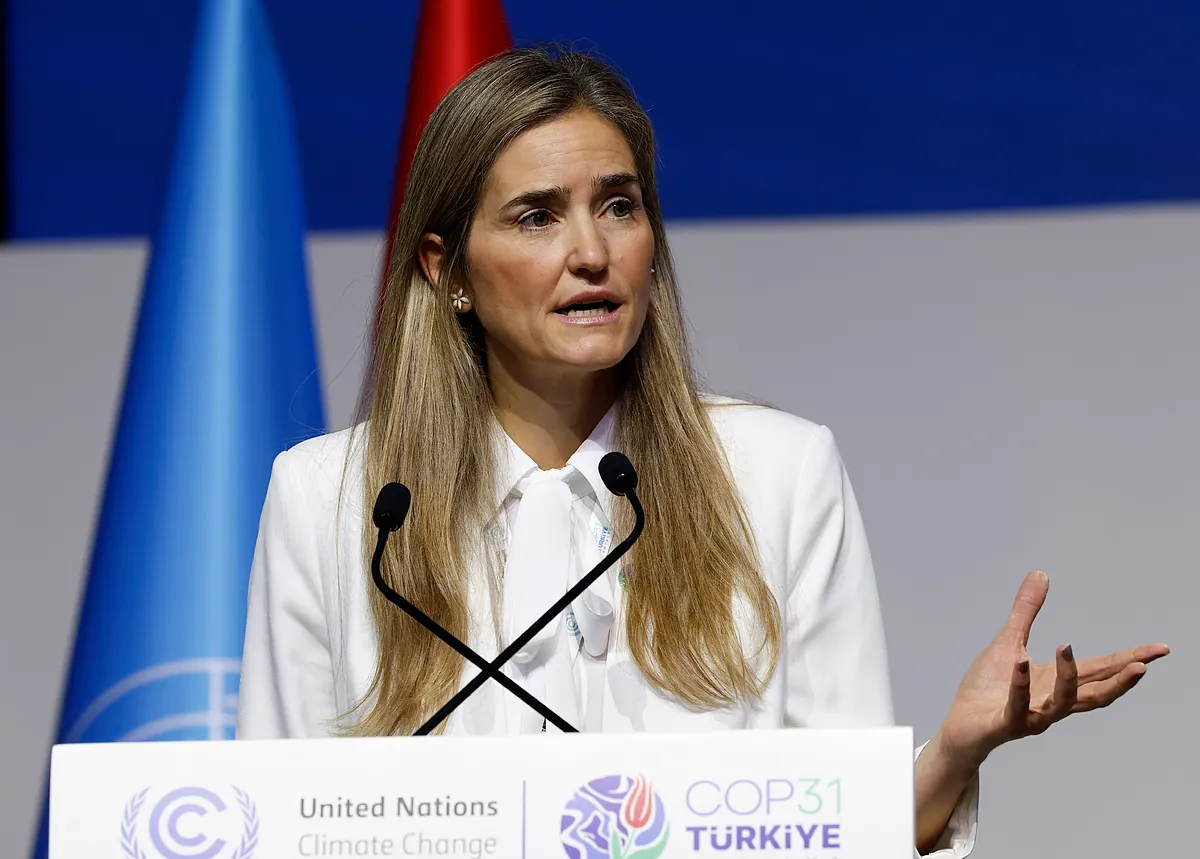
El titular del Juzgado de Instrucción número 49 de Madrid, José María Escribano, ha autorizado a la vicepresidenta tercera y ministra para la Transición Ecológica y el Reto Demográfico, Sara Aagesen, a declarar como testigo por videoconferencia desde su despacho o domicilio oficial en la causa sobre el rescate público de 475 millones de euros a Air Europa. La comparecencia telemática —fijada para el lunes 23 de noviembre a las 09:30 horas, apenas seis días antes de las elecciones generales del 29-N— permite a la dirigente socialista eludir la fotografía entrando a los juzgados en la recta final de la campaña electoral. ### La base legal de la videoconferencia y el alcance del «caso Air Europa» La decisión responde a un correo electrónico enviado el 27 de octubre por la jefa de secretaría de la ministra, veinte días después de que el magistrado firmase el auto de citación del 7 de octubre, según la documentación judicial recogida por *El Español* y *La Razón*. En su escrito, Aagesen invocaba la Ley de Enjuiciamiento Criminal (LECrim), cuyo articulado prevé que los miembros del Gobierno puedan prestar declaración en su domicilio o despacho oficial —cuando resulte conveniente y sobre hechos conocidos por razón de su cargo— con el argumento de «perturbar lo menos posible la actividad del juzgado y evitar desplazamientos innecesarios». Pese al foco mediático que rodeará su interrogatorio en plena campaña, la condición procesal de Aagesen en este procedimiento es estrictamente la de testigo, no la de investigada. El Juzgado de Instrucción 49 investiga presuntas irregularidades, prevaricación y malversación a raíz de una querella presentada por el Partido Popular y Vox en torno al rescate concedido a la aerolínea en noviembre de 2020 a través del fondo de solvencia gestionado por la SEPI (FASEE), órgano en cuyo consejo gestor se sentaba entonces Aagesen como secretaria de Estado de Energía. Hasta el momento, el único imputado formalmente en la causa es el vicepresidente de la SEPI, Bartolomé Lora. ### Diez testigos en dos días y el trasfondo medioambiental que abrió Errejón La declaración de la vicepresidenta abrirá el lunes 23 una intensa ronda de hasta diez comparecencias testificales repartidas en cuarenta y ocho horas. Ese mismo lunes deberán responder ante el juez la presidenta de Patrimonio Nacional, Ana de la Cueva; la exsubsecretaria de Hacienda Pilar Paneque; el exsecretario general de Industria Raúl Blanco; y Javier Loriente Sainz, entonces secretario general del consejo. Al día siguiente, martes 24 de noviembre, acudirán el presidente de Correos, Pedro Saura; el director de la Oficina Económica de Moncloa, Manuel de la Rocha —ambos vocales del fondo en 2020—; el subsecretario para la Transición Ecológica, Miguel Ángel González Suela; el actual presidente de la CNMV, Carlos San Basilio; el exdirector de Participadas de la SEPI José Ángel Partearroyo (citado también en la Audiencia Nacional por el caso Plus Ultra); el exdirector financiero de la aerolínea Félix Martín; y el exdiputado Íñigo Errejón. La citación de Errejón resulta especialmente significativa para entender el eje técnico de la instrucción: en noviembre de 2020 denunció públicamente que la inyección estatal a Air Europa incumplía «de manera clamorosa» las condiciones medioambientales fijadas por el Congreso de los Diputados para aprobar el rescate. ### El calendario judicial aprieta la última semana hacia las urnas Más allá de la discusión estrictamente procesal sobre el uso de la LECrim para evitar el «paseíllo», la resolución de Escribano ilustra cómo la agenda de los tribunales ha terminado superponiéndose al tramo decisivo de la campaña del 29-N, tal como ya se anticipaba al inicio de la contienda en [la cobertura sobre las causas abiertas que rodean la campaña](https://www.mushimu.com/post/9373). Según detalla *El Mundo*, la citación de Aagesen se suma a una quincena de diligencias concentradas en estas dos semanas, incluidas testificales el mismo martes en la Audiencia Nacional relacionadas con el entorno de la instrucción del caso David Sánchez y declaraciones el jueves 26 en la causa sobre la crisis migratoria de Ceuta. Para Moncloa, conseguir que la comparecencia de la vicepresidenta se celebre a puerta cerrada desde su despacho reduce el impacto visual de una jornada delicada a menos de una semana de las urnas, aunque no despeja el debate político de fondo sobre los criterios técnicos, ambientales y financieros aplicados en los rescates públicos de la pandemia. ### Fuentes consultadas - [El Mundo (Calendario de citaciones previas al 29-N y lista completa de testigos)](https://www.elmundo.es/espana/2026/11/18/6afda20b21efa0e3378b4589.html) - [El Español (Contenido del correo de Aagesen del 27 de octubre y contexto de Errejón)](https://www.elespanol.com/espana/tribunales/20261118/ministra-aagesen-libra-paseillo-dias-elecciones-declarara-online-rescate-air-europa/1003744462957_0.html) - [La Razón (Fundamentación jurídica de la LECrim alegada por la ministra)](https://www.larazon.es/espana/vicepresidenta-aagesen-logra-evitar-paseillo-campana-rescate-air-europa_202611186afda7fd103a0e0a474f0601.html) - [The Objective (Resolución del Juzgado de Instrucción 49 y comparecencia como testigo)](https://theobjective.com/espana/tribunales/2026-11-18/juez-caso-air-europa-ministra-aagesen-videoconferencia/) ~España ~Justicia ~Elecciones29N ~CasoAirEuropa ~Política
El juez del caso Air Europa autoriza a Sara Aagesen a declarar por videoconferencia seis días antes del 29-N
0
Discuss 6
Independent journalists, political cartoonists, and small digital creators in India report a sharp rise in silent content blocks across Instagram and X following youth-led protests by the satirical Cockroach Janata Party (CJP), according to a November 18, 2026 report by Deutsche Welle. At the center of the dispute are February 2026 amendments to India's Information Technology Rules, which slashed the deadline for platforms to strip flagged material from 36 hours down to just three hours—exposing social networks to liability loss if they fail to comply with takedown orders routed through the government's Sahyog portal. ### How a Satirical Movement Triggered a Digital Dragnet What began as online mockery quickly spilled onto New Delhi's streets. As Indian outlets *The Hindu* and *The News Minute* documented earlier this year, the Cockroach Janata Party was launched in May 2026 by 30-year-old strategist Abhijeet Dipke after Chief Justice of India Surya Kant drew widespread backlash for referring to certain online critics and petitioners as "cockroaches" and "parasites" during a court hearing. Reclaiming the label under the slogan "Voice of the Lazy & Unemployed," CJP satirized Prime Minister Narendra Modi's ruling Bharatiya Janata Party (BJP) while mobilizing youth anger over unemployment and exam-paper leaks such as NEET-UG 2026. According to *The Hindu*, CJP's site amassed nearly one million sign-ups and over 600,000 petition signatures demanding the education minister's resignation before its website was abruptly taken down on May 23 and its X handle was withheld in India. By July, street demonstrations in New Delhi drew police batons and tear gas—and set off a wider wave of restrictions against third-party commentary. ### Three-Hour Deadlines, Sahyog Notices, and Automated Self-Censorship Interviews gathered by Deutsche Welle illustrate how opaque the enforcement pipeline has become. Independent journalist Sadhika Tiwari said her July 20 clip of a crying young girl describing alleged police brutality racked up roughly 10 million views in hours before being restricted inside India. Small creator "CitySavitri," who had roughly 600 Instagram followers, saw a video examining the Hindu nationalist RSS's role in the BJP's electoral rise restricted within an hour of upload, while political cartoonist Satish Acharya had his Instagram profile blocked twice. Even established digital outlet Maktoob Media—whose X handle had previously been withheld without notice during India–Pakistan tensions—told DW its July protest coverage was restricted without prior explanation or official email. Legal and digital-rights specialists point directly to February's overhaul of the IT Rules under Section 79 of India's IT Act. Technology policy adviser Pranesh Prakash told DW that the amended framework lets authorized police officials notify platforms of allegedly unlawful content via the centralized Sahyog portal without filing formal charges or initiating court proceedings—creating what he called "the worst period of social media censorship that India has ever seen." Because platforms lose legal safe harbor if they miss the three-hour removal window, companies like Meta increasingly deploy automated tools to pre-emptively geo-block flagged posts inside India. In a revealing test, the Software Freedom Law Center, India (SFLC.in) reported submitting a mock takedown request against its own post using a fake email address; X initially logged the request before adding email verification codes after being alerted. ### New Delhi's Official Defense Versus Constitutional Friction Indian authorities flatly reject accusations of political censorship. Responding earlier to DW, Information Technology Ministry communications chief Vinod Kumar stated that student and protest posts were not being systematically removed, maintaining that "media enjoys freedom in India" and that action is restricted to "objectionable" or unlawful material affecting public order or national security. Meta similarly pointed users to its standard appeal channels and legal-compliance policies, while X offered no comment. Yet as *The News Minute* noted in its constitutional analysis, forcing intermediaries to choose between three-hour takedowns and criminal or civil liability pushes the burden of speech policing onto opaque algorithms and unverified administrative notices. Without public disclosure of Sahyog takedown volumes or prior judicial review, Indian creators and newsrooms are left guessing whether a satirical cartoon or street report vanished due to a police directive, a corporate bot, or quiet self-censorship. ### Sources & Further Reading - [Deutsche Welle (November 18 investigation into CJP-era takedowns, Sahyog, and Meta/IT Ministry responses)](https://www.dw.com/en/india-online-censorship-grows-after-cockroach-protests/a-79976982) - [The Hindu (Indian national coverage of CJP website takedown and founder Abhijeet Dipke)](https://www.thehindu.com/news/national/crackdown-on-cockroach-janta-party-access-to-all-accounts-lost-says-founder-abhijeet-dipke/article71014074.ece) - [The News Minute (Indian legal and free-speech analysis of the CJP crackdown)](https://www.thenewsminute.com/opinion/un-crushed-cockroaches-censorship-only-multiplies-dissent) ~India ~Censorship ~DigitalRights ~WorldNews
India’s Three-Hour Takedown Rule Fuels Surge in Silent Social Media Restrictions After “Cockroach” Protests
0
Discuss 5
edited
Hours before *Grand Theft Auto 6* unlocked across most global time zones on November 18, 2026, Rockstar Games' launch was already breaking industry benchmarks while surfacing telling technical compromises. According to analytics tracker Streams Charts, *GTA 6* hit 6.38 million concurrent live viewers across Twitch, YouTube, and Kick at 12:30 UTC—driven solely by early New Zealand unlocks and timezone-switching streams—more than tripling the previous all-time game launch record of 1.74 million viewers set during *Valorant*'s beta. Yet alongside that historic viewership surge, Digital Foundry's technical comparison across Sony's consoles has revealed a clear gap between the PlayStation 5 Pro and the base PS5, while Rockstar confirmed another notable break from *GTA 5*: players cannot replay completed missions from a menu. ### Why 6.38 Million Viewers Shattered the *Valorant* Benchmark Without Drops Live game viewership spikes usually rely on artificial incentives. Riot Games' previous 1.74 million peak for *Valorant* depended heavily on viewers idling in streams for closed-beta access drops. *GTA 6* cleared 6.38 million concurrent viewers with zero viewing rewards, immediately becoming the sixth-largest category in Twitch history even before North American and European console unlocks went live. That pre-launch surge reflects two converging forces: staggered midnight regional rollouts—prompting New Zealand's own tourism board to playfully nod to players "hopping timezones"—and a console-only launch window that left millions of PC players watching streams rather than playing. With Xbox Series S and cloud-streamed Xbox One versions scaling back visual detail and a PC release still absent at launch, livestreaming temporarily became the primary storefront window for a huge slice of the audience. ### Base PS5 Versus PS5 Pro: The Real Cost of Rockstar's 30 FPS Ceiling Rockstar's earlier decision to lock *GTA 6* at 30 frames per second across all consoles sparked frustration among players accustomed to 60 FPS performance modes, and Digital Foundry's launch-day testing explains why Rockstar refused to blink. On the PS5 Pro, Digital Foundry's John Linneman reported a "near-flawless 30fps" across more than 50 hours of play, with locked frame pacing, fluid cutscenes, and ray-traced global illumination augmented by ray-traced shadows. Even under deliberate stress tests—staging maximum city-wide chaos across Leonida—the Pro dipped only briefly to 24 FPS before recovering. https://www.youtube.com/watch?v=qsBU0bcpONA The base PlayStation 5 fares noticeably worse. While smoother than past Rockstar console launches, Linneman observed recurring "very minor" dips below 30 FPS simply driving through dense city streets, alongside sustained framerate drops during heavy destruction that only cleared once players left the area. As PC Gamer noted in assessing the PS5 Pro capture—highlighting dense horizon draw distances, individual hair strands on NPCs, and subtle details down to liquid draining inside bottles as characters drink—achieving that simulation and ray-traced fidelity on aging console silicon left zero CPU or GPU headroom for a 60 FPS console toggle, fueling optimism among PC players about how well the engine could scale on modern desktop GPUs later. ### Dropping Mission Replay for Open-Ended Save Slots Technical fidelity is not the only area where Rockstar reshaped *GTA 5*'s blueprint. Confirming findings from Eurogamer's 100-hour review playthrough, Rockstar's vice president of technology David Hynd explained that *GTA 6* removes the post-completion mission replay menu altogether, offering 15 manual save slots alongside an autosave slot instead. Rather than locking players into rigid, fail-prone mission scripts and letting them replay isolated set pieces later, Hynd said the studio built an open-ended design philosophy meant to make missions "harder to fail" when players experiment—forcing enemy AI and world systems to respond consistently across varied approaches. For players, that trade-off yields freer improvisation on a first run, at the price of having to budget manual saves roughly every 6–7 percent of story progress if they want to revisit favorite heists or showdowns. ### Sources & Further Reading - [Digital Foundry Tech Review (YouTube)](https://www.youtube.com/watch?v=qsBU0bcpONA) - [Video Games Chronicle (Digital Foundry base PS5 vs. PS5 Pro 30 FPS comparison)](https://www.videogameschronicle.com/news/gta-6-base-ps5-performance-analysis-shows-struggle-to-maintain-30-fps-at-all-times/) - [Eurogamer (6.38M livestream record and Rockstar's mission-replay/save-slot explanation)](https://www.eurogamer.net/grand-theft-auto-6-streaming-record-broken) - [PC Gamer (Visual fidelity breakdown and future PC scaling implications)](https://www.pcgamer.com/games/grand-theft-auto/gta-6-looks-gorgeous-and-seeing-it-run-at-a-stable-30-fps-on-ageing-ps5-pro-hardware-makes-me-hopeful-for-pc-performance/) - [Streams Charts (Live GTA 6 launch viewership tracking across Twitch, YouTube, and Kick)](https://streamscharts.com/news/gta-vi-breaks-streaming-launch-records-within-minutes-its-release) ~Gaming ~GTA6 ~PS5 ~PS5Pro ~Streaming
1
Discuss 1 9
Chinese President Xi Jinping broke more than a decade of diplomatic protocol on Wednesday, November 18, 2026, greeting U.S. President Donald Trump directly on the tarmac at Shenzhen Bao'an International Airport—the first time Xi has personally met a visiting foreign leader at an airport since taking office. Hours later, Trump and Russian President Vladimir Putin shook hands and exchanged pleasantries ahead of an evening reception, marking their first in-person encounter since their inconclusive Alaska talks in August 2025 and setting the stage for Thursday's unprecedented three-way summit on the sidelines of the 33rd Asia-Pacific Economic Cooperation (APEC) Economic Leaders' Meeting. ### The Choreography of Reciprocity on the Shenzhen Tarmac Beijing spared little pageantry as Air Force One touched down in China's southern technology hub. According to China's State Council English portal (citing Xinhua) and Channel NewsAsia, Trump and Xi stood side by side on a red carpet lined with cheering flag-wavers while a People's Liberation Army honor guard presented arms, a military band played both national anthems, and Chinese fighter jets roared overhead in salute before the two leaders shook hands and shared a brief embrace. In official Chinese readouts, Xi explicitly framed the unusual tarmac gesture as a direct reciprocation of the airport reception Trump hosted at Joint Base Andrews during Xi's September state visit to Washington, citing China's tradition of returning goodwill. Xi told Trump he hoped to hold in-depth discussions toward a "constructive China-U.S. relationship of strategic stability based on respect, fairness and reciprocity," while Trump praised China as a "great country" and Xi as a "great leader," predicting the trip would end in "complete success." ### Domestic Shadows and Tech Tension Behind the Warmth Beneath the carefully staged bonhomie, both Washington and Beijing entered Wednesday's reception carrying heavy strategic baggage. As NPR and the Associated Press report, Trump's effort to project American technological dominance in Asia was undercut at home by cascading U.S. communications and infrastructure outages affecting the Federal Aviation Administration, Microsoft, JPMorgan Chase, and the National Security Agency. After Trump initially brushed off the disruptions in Manila on Tuesday as the cost of being "big and powerful," Secretary of State and National Security Adviser Marco Rubio stepped in on Wednesday to insist there was "zero" evidence of foreign cyberattacks, attributing the blackouts to emergency vulnerability patching. At the same time, BBC News notes that Shenzhen's status as China's semiconductor and advanced manufacturing showcase inevitably spotlights the fallout from Nvidia chief executive Jensen Huang's recent ouster over an admitted affair with a woman suspected by U.S. intelligence of spying for Beijing—a claim Chinese officials have dismissed as a "smear." For Beijing, hosting Trump in Shenzhen while pairing military flyovers with warm personal diplomacy underscores a twin message: China wants tariff and supply-chain predictability, yet will negotiate from a posture of technological and military parity. ### Kyiv's Warning Ahead of Thursday's Three-Way Table Trump's brief pre-reception handshake with Putin added the sharpest geopolitical edge to Wednesday's choreography. Earlier in the day, Xi and Putin held roughly two hours of bilateral talks in which Xi hailed Beijing–Moscow ties as "stable as a mountain, unshaken by storms"—language echoed by Russia's push for a multipolar order. Trump and Putin are slated to hold one-on-one discussions on Thursday alongside the landmark joint Trump–Xi–Putin meeting, the first time all three presidents have sat down together in person. While no official trilateral agenda has been published, expectations center on strategic nuclear stability, trade friction, and the war in Ukraine. That prospect has already alarmed European capitals and Kyiv: Ukrainian President Volodymyr Zelensky warned against any settlement framework negotiated over the heads of Ukraine and European governments. Whether Thursday's three-way session delivers concrete guardrails on arms control and regional conflicts—or exposes how sharply Moscow's and Beijing's interests diverge from Washington's—will test whether tarmac symbolism can survive substantive bargaining. ### Sources & Further Reading - [BBC News (Trump–Putin handshake, Zelensky warning, and APEC reception)](https://www.bbc.co.uk/news/articles/ck9d75x5wwwwo) - [State Council of the People's Republic of China / Xinhua (Primary Chinese readout of Shenzhen arrival)](https://english.www.gov.cn/news/202611/18/content_WS6afd6cc7c6d00ca5f9a0e642.html) - [NPR / Associated Press (U.S. domestic outages backdrop and Rubio's rebuttal)](https://www.npr.org/2026/11/18/nx-s1-6045518/trump-china-xi-putin) - [Channel NewsAsia (Significance of Xi's first tarmac airport greeting since taking power)](https://www.channelnewsasia.com/asia/trump-arrives-china-shenzhen-apec-summit-trilateral-xi-putin-6562131) ~APEC ~Diplomacy ~China ~USPolitics ~WorldNews
Xi Grants Trump Rare Airport Embrace in Shenzhen as U.S., Chinese, and Russian Leaders Gather for Landmark Talks
0
Discuss 5
The arrival of a brand-new French-built Dassault Falcon 6X presidential aircraft in Accra on November 16, 2026—welcomed with a Ghana Air Force water salute and inspected by Defence Minister Kenneth Adjei—has ignited a fierce political dispute over public spending, fiscal credibility, and political consistency. Priced at $60.68 million (roughly GH¢720 million), the long-range jet replaces Ghana's 16-year-old Falcon 900EX, which officials say suffered fuel-tank corrosion, leaks, and months of grounding in France in 2025. While President John Mahama's administration argues that macroeconomic stabilization allows Accra to modernize executive transport without adding debt, opposition lawmakers and independent economists say the purchase clashes sharply with household austerity and the ruling party's own past rhetoric. ### Inside the Parliamentary Deal Behind the Delivery Much of the public uproar online focused on whether a country still emerging from a $3 billion (roughly GH¢36 billion) International Monetary Fund bailout should spend $60.68 million on an executive aircraft. Yet parliamentary records detailed by Ghana's *Daily Graphic* show the procurement did not happen overnight or outside legislative scrutiny. On December 3, 2025, Deputy Defence Minister Ernest Brogya Genfi laid two military aviation agreements before Parliament: the $60.68 million Falcon 6X purchase with Dassault Aviation and a €125.97 million four-year contract with Airbus Helicopter SAS for one H160 and three H175 helicopters. When the Defence and Interior Committee reviewed the package last December, Chairman James Agalga invoked Article 210 of Ghana's Constitution on armed forces readiness and cited estimates that the new fleet's 15-year lifecycle costs would run 30 to 40 percent below the expense of maintaining the aging aircraft. Crucially, the Minority's own Ranking Member on the Defence Committee, Rev. John Ntim Fordjour, backed the retooling motion in committee at the time—a parliamentary detail that complicates purely partisan attacks now that the aircraft has touched down. ### Why the Political Flashpoint Exploded on Arrival Even so, the ceremonial arrival at Kotoka International Airport turned an approved defence procurement into a potent symbol of cost-of-living frustration. On social media, critics contrasted the $60.68 million figure with wages for nurses and teachers, while viral posts alleged the cabin featured a luxury bedroom and bathroom. Government Communications Minister Felix Kwakye Ofosu publicly rejected those interior rumors on JoyNews, clarifying that the cabin uses reclining seats rather than a dedicated bedroom and remarking that President Mahama has no intention of "bathing in the air." Opposition Foreign Affairs Committee Ranking Member Samuel Abu Jinapor—a former Lands and Natural Resources Minister—pressed a sharper political critique on November 17, pointing to strain among teachers, nurses, judicial workers, and unemployed youth. Reading from archived media reports, Jinapor reminded voters that Mahama and senior National Democratic Congress (NDC) figures had fiercely attacked executive jet proposals while in opposition, once calling such spending "unpardonable disrespect and insensitivity." As Jinapor put it, "What was unacceptable in opposition cannot suddenly become acceptable in government merely because the occupants of power have changed." ### Recovery Claims Versus the Cost-Benefit Question To defend the timing, senior NDC lawmakers drew a line between Ghana's crisis years and current fiscal conditions. Parliamentary Defence Committee figure Peter Lanchene Toobu told BBC News that the NDC had objected only to buying a jet while Accra was actively seeking an IMF rescue, arguing that a stronger cedi and macroeconomic stability now allow cash-funded procurement without new borrowing. Kwakye Ofosu pointed to falling domestic prices—claiming a bag of cement has dropped from 115 cedis during the 2024 campaign to 80 cedis—as proof of broader relief, alongside operational savings from eliminating refueling stops on long-haul presidential trips. Independent economic voices remain far more skeptical. University of Ghana economist Prof. Godfred Alufar Bokpin told BBC News that while head-of-state aviation safety is legitimate, spending $60.68 million amid persistent youth unemployment, tight fiscal space, and visible infrastructure deficits remains "a bit difficult to understand" unless the government publishes a transparent cost-benefit analysis. For Mahama's administration, the controversy underscores a familiar post-IMF trap: even when technical safety arguments and prior parliamentary votes line up, flagship state purchases are judged first at the kitchen table. ### Sources & Further Reading - [Ghana Broadcasting Corporation (GBC Ghana Online — political clash and IMF context)](https://www.gbcghanaonline.com/general/ghana-defends-60m-presidential-jet-purchase-amid-cost-of-living-concerns/2026/) - [Daily Graphic (Ghana — exact $60.68M and €125.97M parliamentary contract details)](https://www.graphic.com.gh/news/general-news/see-the-inside-of-ghanas-new-60-68-million-presidential-aircraft-the-dassault-falcon-6x.html) - [BBC News (UK/Africa — government rebuttal, Falcon 900EX corrosion, and economist analysis)](https://www.bbc.co.uk/news/articles/ck792dez8dp3o) ~Ghana ~Africa ~Economy ~WorldNews
Ghana’s $60.68M Dassault Falcon 6X Presidential Jet Sparks Political Row Over Austerity and Past Promises
0
Discuss 4
A strategic enclave just 60 kilometers southwest of Baghdad has become the sharpest test of state authority in Iraq in years. Ahead of a Friday, November 20, 2026 withdrawal deadline set by Prime Minister Ali al-Zaidi, Iraqi security forces are massing outside Jurf al-Sakhar while the Iran-backed militia Kataib Hezbollah refuses to pull back—forcing emergency overnight mediation in Baghdad by Iran's Quds Force commander Esmail Qaani and splitting Iraq's ruling Shiite coalition. ### From Saddam-Era Complex to a Sealed Militia Enclave Spanning roughly 345 square kilometers in Babil province along the vital pilgrimage corridor between Baghdad and the holy city of Karbala, Jurf al-Sakhar—renamed Jurf al-Nasr by armed factions—has operated outside federal control for more than a decade. Originally home to Saddam Hussein's military-industrial complexes, whose sprawling bunkers and terrain lent themselves to concealment, the town fell to ISIS in 2014 before being recaptured later that year by the mostly Shiite Popular Mobilisation Forces (PMF). Kataib Hezbollah, one of the PMF's most powerful factions, subsequently sealed the district on security grounds, barring state institutions and preventing roughly 140,000 displaced residents from returning home. That status quo cracked last week when a leaked Iraqi Ministry of Interior intelligence dossier alleged that millions of dollars in crude oil had been siphoned since 2021 from two state pipelines traversing the restricted zone, processed through makeshift underground refineries. On November 13, a high-level investigative committee backed by Iraqi troops entered Jurf al-Sakhar and confirmed multiple illicit extraction and refining sites. Nine senior security and administrative officials in Babil—including the provincial police chief and the director of the Oil Pipelines Company—have since been dismissed, while al-Zaidi secured explicit public backing from Supreme Judicial Council President Faiq Zidan, pledging "no smuggling or stealing in a single inch of Iraq, from Zakho to Basra." ### Why Oil Smuggling Stripped Away Kataib Hezbollah's Pretext Since taking office in May 2026, al-Zaidi—who governs without a traditional party bloc behind him—has faced mounting U.S. pressure to bring all non-state weapons under Baghdad's command, with an initial September 30 disarmament target recently pushed back to June 2027. Three of five armed factions that previously pledged to disarm have handed over weapons, according to Middle East Monitor, but Kataib Hezbollah refused. By anchoring the Jurf al-Sakhar ultimatum in pipeline theft and illegal commercial enterprises—including allegations raised by security analyst Saif Raad of thousands of unlicensed fish farms inside the closed zone—Baghdad neutralized the militia's long-standing "counterterrorism" justification for holding the territory. Kataib Hezbollah has categorically denied the smuggling charges, accusing al-Zaidi of political extortion. Senior militia figure Abu Talib al-Saidi declared that the government's demand for a pullout "will never be realised," warning that any forced eviction would come at the cost of fighters' lives after the group reportedly mobilized roughly 8,000 fighters from multiple provinces toward Babil. Iraqi analysts quoted by Al Jazeera argue that such field posturing reflects defensive vulnerability rather than strength, as illicit revenue streams—rather than ISIS remnants—now lie at the center of the dispute. ### Fractures Inside the Coordination Framework and Iran's Balancing Act The confrontation has rattled Iraq's ruling Shiite Coordination Framework (CF), raising the specter of intra-Shiite armed conflict—a threshold Iraqi political elites have largely avoided crossing since 2003. According to Shafaq News, al-Zaidi walked out of a heated CF leadership meeting on November 16 after ruling out concessions or any extension past Friday's deadline, even as veteran powerbrokers Nouri al-Maliki, Hadi al-Amiri, Qais al-Khazali, and Ammar al-Hakim scrambled to mediate and warned of unrest spreading to other cities. Tehran, too, moved urgently to prevent a direct military clash between Baghdad's Counter-Terrorism Service and its closest Iraqi ally. Islamic Revolutionary Guard Corps (IRGC) Quds Force chief Esmail Qaani flew to Baghdad for talks with al-Zaidi that lasted until dawn on Tuesday, reportedly producing a fragile understanding that Kataib Hezbollah would withdraw "soon." Yet Iraqi observers note that Qaani has struggled to dictate terms as effortlessly as in previous crises. Whether Baghdad's push to place Jurf al-Sakhar's center and energy pipelines under Federal Police and Energy Police protection holds past November 20—or triggers an unprecedented showdown between Iraq's state forces and armed factions—will define the balance of power in Baghdad well ahead of next year's June 2027 disarmament horizon. ### Sources & Further Reading - [Al Jazeera (History of Jurf al-Sakhar, oil-smuggling dossier, and Qaani talks)](https://www.aljazeera.com/news/2026/11/18/what-is-iraqs-jurf-al-sakhar-and-what-is-behind-govt-push-to-control-it) - [Shafaq News (Iraqi reporting on Coordination Framework split and Energy Police deployment)](https://shafaq.com/en/Kurdistan/Jurf-Al-Sakhr-deadline-sparks-Coordination-Framework-dispute) - [Rudaw (Iraqi Supreme Judicial Council backing and INA statements)](https://rudaw.net/english/categories/iraq/1080177) - [Middle East Monitor (Kataib Hezbollah rejection and disarmament timeline)](https://www.middleeastmonitor.com/20261118-iraqs-kataib-hezbollah-rejects-government-ultimatum-to-withdraw-from-jurf-al-sakhr/) - [The National (UAE/MENA coverage of troop buildup and judicial consultations)](https://www.thenationalnews.com/news/mena/2026/11/16/iraqs-al-zaidi-meets-top-judge-to-discuss-jurf-al-sakhar-oil-smuggling-case/) ~Iraq ~MiddleEast ~Security ~WorldNews
Iraq’s Jurf al-Sakhar Standoff: Why an Oil-Smuggling Probe Pushes Baghdad and Kataib Hezbollah to the Brink
0
Discuss 3
edited
https://x.com/Synaptic_UK/status/2123086116047712423/video/1?a=ad3tAxAipFCAYfRs29Q&s=19 https://x.com/ohnePixelUpdate/status/2123099022189560071/video/1?a=TzwNB8VH982GhvT_4LY&s=19 https://x.com/GTA6ClipsES/status/2123049262984393025?a=Or_eKhGrH91nN2mYa_Q&s=19 https://x.com/Majewra/status/2123072924055740488?a=kLFo3ewGOEzsWXmvQd0&s=19 https://x.com/TheCanadianGTR/status/2123047834559947240?a=GIA4SQ7f4xLn6Kdmkd0&s=19 https://x.com/novaraszn/status/2123059791379743154?a=dk6oN-iVCiqIpadigb0&s=19 https://x.com/UlisesDavid__/status/2123081962751717672/video/1?a=kS93jscwIzPCmSsWzoI&s=19 https://x.com/GTA6Alerts/status/2123063010482967031?a=yEpkhGG4E7T3Kzv5L9o&s=19 https://x.com/TheCanadianGTR/status/2123043985262334409?a=t-F56svUS6y1Kh8dy3A&s=19 https://x.com/KoreanTitan_/status/2123024330653327455/video/1?a=z55wtBwpA4tzWgYZ39A&s=19 https://x.com/rathor7_/status/2123025538013139352?a=EU4zRNPXf2dkVJFebuM&s=19 https://x.com/MichaelDoesLife/status/2123039861087355358?a=jkRUHijFtNJhJMf2uPo&s=19 https://x.com/Windpress/status/2123048245316178302?a=Zad3iXXzjLH_tYQIa8Y&s=19 https://x.com/GTA_Uncensored/status/2123019887853310303?a=kjd0g5TsKdJZHO1PTxI&s=19
x.com
2
Discuss 24
La Sección Novena de la Audiencia Provincial de Barcelona ha confirmado este miércoles, 18 de noviembre de 2026, el auto del Juzgado de Instrucción número 5 de Martorell que decretó prisión provisional eludible bajo fianza de un millón de euros para Jonathan Andic, primogénito del fundador de Mango, Isak Andic, en la causa que investiga su fallecimiento en la montaña de Montserrat como presunto homicidio. La resolución, adoptada por dos votos frente al voto particular discrepante del presidente de la sala, Andrés Salcedo Velasco, mantiene también intactas el resto de medidas cautelares impuestas tras su detención el pasado 19 de mayo: retirada del pasaporte, prohibición de abandonar España y comparecencias semanales en el juzgado. ### Un cuadro indiciario frente a una motivación inicial «incompleta» El pronunciamiento tiene un peso procesal decisivo porque constituye la primera revisión de la Audiencia de Barcelona sobre la solidez de los indicios reunidos por la jueza instructora y los Mossos d'Esquadra desde que el primogénito de Isak Andic quedó en libertad el mismo día de su arresto al depositar la fianza millonaria. Lejos de limitarse a un trámite rutinario, el auto al que han tenido acceso *ABC*, *EFE*, *El País* y *Ara* reconoce expresamente que la resolución dictada en mayo en Martorell adolecía de una «motivación incompleta», pero concluye que el sumario sí reúne un sustrato fáctico suficiente para sostener las medidas cautelares. Según recoge el tribunal, ese cuadro indiciario se apoya en el contraste entre las declaraciones sobre el momento exacto de la caída y los datos técnicos recabados, la posición y distancia entre ambos caminantes, el conocimiento previo del sendero por parte del investigado —un recorrido que la víctima desconocía— y los desplazamientos efectuados a Collbató durante la semana previa a la excursión. A ello suma la Sala el trasfondo personal y corporativo de aquella caminata: los autos apuntan a que Isak Andic tenía ya formado el propósito de apartar definitivamente a su hijo de la gestión de Mango, tras una estrategia previa orientada a que fuera el propio investigado quien solicitara un año sabático. ### Riesgo de fuga y la disputa por la hipótesis accidental Uno de los argumentos centrales de la defensa para reclamar el archivo de las cautelares residía en que los propios informes de los Mossos no podían certificar materialmente la intervención física de terceras personas en el despeñamiento y en que la hipótesis de un accidente en montaña seguía abierta. La Audiencia responde a ese planteamiento fijando un criterio jurídico claro en fase de instrucción: la existencia de una explicación alternativa no anula los indicios racionales de criminalidad cuando la tesis acusatoria cuenta con un «sustrato objetivo propio» conectado con múltiples hechos base acreditados. Para justificar la fianza de un millón de euros y el arraigo forzoso en territorio español, la mayoría de la Sección Novena califica la prisión eludible de «modulación de la intensidad cautelar» proporcionada a dos factores combinados: la gravedad de las penas asociadas a un presunto homicidio y el riesgo de fuga que, a juicio del tribunal, se deriva de la elevada capacidad económica de Jonathan Andic. ### El significado del voto particular en una instrucción todavía abierta Que la resolución salga adelante por mayoría de dos a uno —y no por unanimidad— introduce, no obstante, una nota de cautela relevante para el futuro del procedimiento. El voto particular del presidente Andrés Salcedo Velasco, partidario de revocar la prisión bajo fianza, refleja las tensiones jurídicas que acompañan a una investigación sustentada en prueba indiciaria, reconstrucciones técnicas y análisis del entorno empresarial familiar, en paralelo a los recursos de la defensa contra nuevas periciales de inteligencia policial. Con esta resolución, la causa entra en una fase de consolidación instructora en Martorell: Andic seguirá en libertad provisional, pero bajo vigilancia judicial estricta y con el aval de la segunda instancia al grueso de la investigación desarrollada hasta la fecha, a la espera de que las diligencias pendientes determinen si los indicios alcanzan el umbral necesario para sentarle en el banquillo. ### Fuentes consultadas - [ABC (Extractos literales del auto de la Sección Novena)](https://www.abc.es/espana/cataluna/audiencia-barcelona-confirma-prision-bajo-fianza-jonathan-20261118163954-nt.html) - [El País (Cronología de la detención en Martorell y medidas cautelares)](https://elpais.com/espana/catalunya/2026-11-18/la-audiencia-de-barcelona-confirma-las-medidas-cautelares-contra-jonathan-andic-sin-pasaporte-y-visitas-al-juzgado.html) - [Agencia EFE (Confirmación de la fianza de un millón y voto discrepante)](https://efe.com/espana/2026-11-18/prision-fianza-jonathan-andic-isak-mango/) - [Ara (Análisis de la votación 2-1 y el criterio del riesgo de fuga)](https://es.ara.cat/sociedad/sucesos/audiencia-barcelona-avala-medidas-cautelares-jonathan-andic_1_5915011.html) ~España ~Justicia ~Cataluña ~CasoAndic
La Audiencia de Barcelona confirma la prisión bajo fianza de un millón para Jonathan Andic pese a un voto discrepante
0
Discuss 4
La 130.ª Asamblea Plenaria de la Conferencia Episcopal Española (CEE) ha frustrado el intento de su presidente, Luis Argüello, de recuperar las notas de orientación electoral ante las elecciones generales del 29 de noviembre. Aunque el arzobispo de Valladolid abrió el lunes la reunión en Madrid dejando entrever que el episcopado emitiría un pronunciamiento específico sobre los comicios, la votación celebrada esa misma tarde en sesión plenaria tumbó el borrador impulsado por la Presidencia al no alcanzar la mayoría cualificada de dos tercios exigida por los estatutos. En su lugar, los prelados han optado por una salida de compromiso: incluir un único párrafo en la nota final del viernes que remite a los fieles a los discursos pronunciados por el papa León XIV en España. ### La aritmética de los dos tercios y el peso de tres bloques internos El desenlace evidencia una fractura estratégica dentro de la cúpula católica española sobre el papel público de la Iglesia en una campaña marcada por el choque frontal entre bloques. Según han reconstruido *elDiario.es* y *Religión Digital*, Argüello ya había sondeado sin éxito en la Comisión Ejecutiva previa la aprobación de un documento con criterios explícitos de voto. Pese a ese tropiezo, en su discurso inaugural del 16 de noviembre —trece días antes del 29-N y en vísperas del 60.º aniversario de la CEE— criticó las «soflamas que polarizan», la «agresividad histérica» y las dialécticas de «amigo-enemigo», añadiendo que confiaba en que la Asamblea ofreciera «alguna declaración al respecto». Sin embargo, el debate a puerta cerrada dibujó tres sectores irreconciliables para alcanzar el umbral estatutario. El núcleo afín a Argüello defendía fijar criterios concretos que interpelaran a los programas electorales en materias como el aborto, la eutanasia o la educación concertada. Frente a él se alineó el bloque continuista con la línea de neutralidad institucional mantenida durante quince años bajo las presidencias de los cardenales Ricardo Blázquez y Juan José Omella —sin notas electorales desde las generales de 2011—, reforzado además tras los recientes nombramientos de perfil dialogante en sedes clave como Barcelona, con Octavi Vilà, y los nuevos obispos auxiliares de Madrid reseñados por *La Vanguardia*. Un tercer grupo intermedio aceptaba un mensaje general, pero rechazaba bajar a asuntos partidistas concretos. Aunque el texto de Presidencia logró mayoría simple, quedó por debajo de los dos tercios, evitando —en palabras de un obispo citado por *elDiario.es*— que la Iglesia quedara proyectada «como orientadora del voto de la derecha y la ultraderecha». ### Dos relatos sobre un mismo desenlace: «batalla» frente a «debate fraterno» El contraste entre la prensa generalista y los medios especializados ilustra la pugna por encuadrar la decisión antes de que el secretario general y portavoz episcopal, Francisco César García Magán, comparezca este viernes al cierre de la Plenaria. Mientras *elDiario.es* habla abiertamente de «pelea» y derrota del presidente episcopal al verse bloqueado su borrador, la revista católica *Vida Nueva* describe la sesión del lunes como un «debate fraterno» en el que los obispos concluyeron que un documento propio era redundante frente a la claridad previa del Pontífice. Esa diferencia de matiz responde a una lógica institucional clásica dentro de la CEE: preservar la cohesión colegial hacia el exterior cuando una minoría de bloqueo impide consensos doctrinales sobre la coyuntura política. Al rebajar la ambición desde un documento autónomo de orientaciones de voto a un solo párrafo de remisión papal, la Asamblea evita desautorizar públicamente a Argüello en vísperas electorales al tiempo que neutraliza el giro intervencionista que promovía su entorno. ### El comodín de León XIV como espejo de la pluralidad eclesial Remitir a los discursos de Robert Prevost —el papa León XIV— en las Cortes Generales y en el Palacio Real el pasado 6 de junio ofrece, además, un paraguas suficientemente amplio como para que ninguna sensibilidad episcopal se sienta excluida. En aquellas intervenciones, el Pontífice abordó cuestiones centrales para el sector conservador, como la defensa de la vida y la libertad religiosa y educativa, pero dedicó también pasajes rotundos a la acogida respetuosa de los migrantes, la lucha contra la corrupción, la memoria histórica, la crítica al rearme y la primacía del derecho internacional. Esa amplitud doctrinal explica por qué el texto mínimo sí pudo reunir consenso tras el rechazo al borrador inicial. Para los sectores más preocupados por la deriva de las leyes bioéticas —avivada esta semana por el debate sobre una eventual derogación de la eutanasia—, las palabras papales siguen vigentes; para los obispos reticentes a quedar atrapados en la agenda antiinmigración o identitaria de la campaña del 29-N, el magisterio de León XIV sobre derechos sociales y hospitalidad actúa como contrapeso. De fondo, la votación confirma que, incluso bajo la presidencia de Argüello, la Conferencia Episcopal sigue careciendo de una mayoría cualificada dispuesta a abandonar la prudencia electoral instaurada en la última década y media. ### Fuentes consultadas - [elDiario.es (Crónica de la votación y bloques en la Plenaria)](https://www.eldiario.es/sociedad/obispos-frustran-arguello-conferencia-episcopal-oriente-voto-elecciones_1_13673914.html) - [Vida Nueva (Detalles del párrafo aprobado y remisión a León XIV)](https://www.vidanuevadigital.com/2026/11/18/obispos-29n-elecciones-aprueban-parrafo-votar-segun-papa-leon/) - [La Vanguardia (Contexto de nombramientos episcopales y doctrina Blázquez-Omella)](https://www.lavanguardia.com/politica/20261116/11685362/argueello-apuesta-obispos-posicionen-sobre-elecciones-29-n.html) - [El Español (Discurso inaugural de Luis Argüello en la 130.ª Plenaria)](https://www.elespanol.com/castilla-y-leon/region/20261116/arguello-avanza-postura-obispos-elecciones-espero-asamblea-ofrezca-alguna-declaracion/1003744460047_0.html) ~España ~ConferenciaEpiscopal ~Elecciones29N ~Sociedad
Los obispos frenan el intento de Argüello de orientar el voto ante el 29-N y se remiten a León XIV
0
Discuss 4
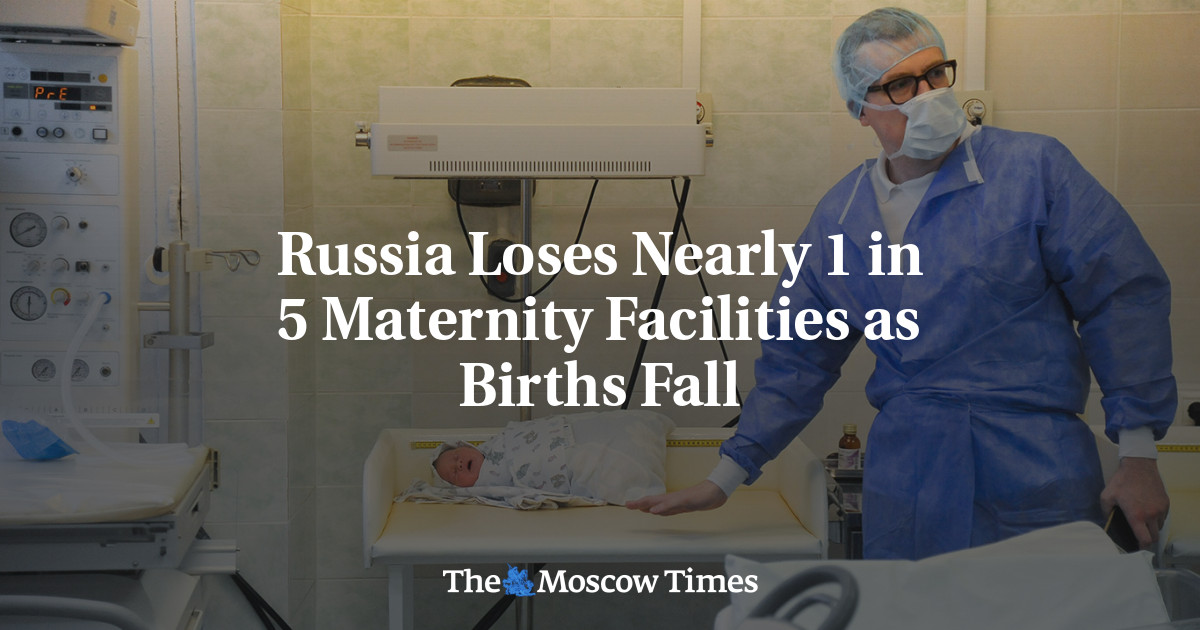
Russia has closed or halted routine childbirth deliveries at roughly 18 percent of its maternity facilities since late 2020, shrinking the network across Russia and occupied Crimea from 1,334 hospitals and wards to 1,090, according to an investigation by BBC Russia published on November 18, 2026. Drawn from Russia's Federal Register of Medical Organizations (FRMO) and corroborated by Meduza, The Moscow Times, and Novaya Gazeta Europe, the findings expose a stark contradiction inside state policy: even as the Kremlin campaigns aggressively for higher birth rates, regional budget pressures and hospital "routing" reforms are stripping local delivery care from small towns, rural districts, and even major regional cities. ### The Clinical Case for Centralization—and Its Blind Spots Russia's obstetric network is structured into three tiers: maternity wards in district hospitals, inter-district maternity hospitals, and high-tech perinatal centers in regional capitals. Health authorities are systematically dismantling the first two tiers, citing aging Soviet-era wards with too few deliveries to keep staff proficient, alongside what officials describe as declining maternal health that leaves fewer women eligible for low-risk local births. From a purely clinical standpoint, some physicians argue that concentrating births in better-equipped perinatal hubs saves lives. Kirill Danishevsky, editor-in-chief of the medical journal *Meditsina*, noted to BBC Russia that national infant mortality has dropped from 11 to 4 deaths per 1,000 live births since 2005, while maternal deaths have become rare. Yet the geographic reality of centralization undercuts that safety rationale whenever regions lack the top-tier infrastructure meant to absorb the closures. At least 15 Russian regions now have no full primary-tier district maternity wards remaining, while four—Kostroma, Magadan, the Jewish Autonomous Region, and the Nenets Autonomous District—have no perinatal centers at all. In the Jewish Autonomous Region, infant mortality stood at 7.7 per 1,000 live births in 2024, nearly double the national average. ### Passing the Financial and Logistical Burden Onto Mothers When a district maternity ward closes—sometimes replaced only by an emergency stabilization room—expectant mothers absorb the travel costs and clinical risks. In half of the affected areas, the nearest functioning maternity hospital lies 50 kilometers (31 miles) or farther away. Because regional maternal health budgets rarely reimburse prenatal travel or specify where patients should lodge before labor begins, families improvise at steep expense: women in remote parts of Yakutia can pay up to 210,000 rubles for three checkup trips to regional centers, while expectant mothers in the Lipetsk region routinely rent apartments in the regional capital starting at week 38 of pregnancy. Even medical institutions are clashing over the fallout, with hospitals suing one another over the cost of transferring complicated deliveries across regional borders. Nor is the squeeze confined to sparsely populated villages. As regional governments wrestle with budget shortfalls and public-sector cuts, closures have reached major urban centers such as Krasnoyarsk in Siberia, where two of the city's five maternity hospitals are shutting down despite direct appeals from medical staff to President Vladimir Putin. Over the past five years, BBC Russia documented at least 19 local protests or public campaigns against ward closures, occasionally forcing temporary delays or the retention of emergency delivery rooms. ### Pronatalist Rhetoric Collides With Demographic Secrecy The contraction of obstetric infrastructure collides directly with the Kremlin's flagship demographic drive. While officials urge women to have more children, seek to curb abortion access, and prepare a draft decree reported by *Izvestia* to step up Rosstat fertility-intent surveys from every five years to every three starting in 2027, the underlying birth trajectory continues to slide. Russia recorded 1.22 million births in 2024—the lowest annual total since 1999—before Rosstat halted publication of detailed monthly birth, death, and population totals in spring 2025. Even the surviving fertility metric tells a bleak story, slipping to 1.305 children per woman in 2025, the lowest rate since 2006. Independent demographer Alexei Raksha estimates that births fell roughly 4 percent further to 1.18 million in 2025 and dropped by another 17,000 year-on-year to 272,000 in the first quarter of 2026. Rather than reversing that slide, shuttering local maternity care risks deepening the very financial and future-security anxieties that Russian respondents cited in Rosstat's 2022 survey as primary barriers to having children. ### Sources & Further Reading - [Meduza (Independent Russian newsroom summary of FRMO data and regional costs)](https://meduza.io/en/feature/2026/11/18/russia-has-closed-one-in-six-maternity-hospitals-in-six-years-bbc-russia-finds-officials-blame-falling-birth-rates-and-declining-women-s-health) - [The Moscow Times (Demographic statistics, Krasnoyarsk closures, and Rosstat context)](https://www.themoscowtimes.com/2026/11/18/russia-loses-nearly-1-in-5-maternity-facilities-as-births-fall-a94300) - [Novaya Gazeta Europe (Russian-language investigative coverage of primary-tier closures)](https://novayagazeta.eu/articles/2026/11/18/s-2020-goda-v-rossii-zakrylos-kak-minimum-kazhdoe-shestoe-rodilnoe-otdelenie-news) ~Russia ~Healthcare ~Demographics ~WorldNews
Russia Has Closed Nearly One in Five Maternity Facilities in Six Years Amid Falling Births and Budget Cuts
0
Discuss 4
House Democrats formally nominated Minority Leader Hakeem Jeffries as their candidate for Speaker of the House on Wednesday, November 18, 2026, putting the 56-year-old New York congressman on course to become the first Black lawmaker to wield the gavel in U.S. congressional history. Running unopposed in a closed-door caucus ballot in Washington, Jeffries secured 251 votes to 11 against. The decisive internal tally clears the way for a formal floor vote of the full House of Representatives when the new Congress convenes on January 3, 2027, following sweeping Democratic gains in November's midterm elections. ### Why Arithmetic Shields Jeffries From a McCarthy-Style Revolt At first glance, the 11 votes cast against Jeffries—and public warnings from several incoming progressive lawmakers—echoed the intraparty rebellions that paralyzed House Republicans after the 2022 midterms. Yet the underlying House math tells a very different story. As BBC News and NPR report, Democrats have already clinched at least 257 seats for the incoming Congress with seven races still uncalled, giving them a commanding double-digit majority well above the 218-vote simple-majority threshold typically required on the House floor. Four years ago, narrow Republican margins allowed a handful of far-right holdouts to extract sweeping concessions from Kevin McCarthy before eventually ousting him in favor of outgoing Speaker Mike Johnson. By contrast, Jeffries enters January 3 with roughly 40 seats of breathing room, built heavily on moderate Democratic victories in districts Donald Trump carried in 2024. Recognizing that leverage, Jeffries even insisted prior to Wednesday's vote on putting caucus dissent on the record rather than papering over it behind closed doors, isolating the protest vote while demonstrating broad institutional backing. ### The Progressive Fault Lines: Gaza Aid, Campaign Finance, and Healthcare Even with a comfortable floor cushion, Wednesday's dissent illuminated the ideological pressures waiting inside the expanded Democratic tent. According to Al Jazeera, Ohio Congressman-elect Don Leonard emerged as one of the most outspoken holdouts, stating in a social media video that he would withhold support unless Jeffries committed to enforcing the Leahy Law on U.S. military aid to Israel and backing legislation to overturn the Supreme Court's *Citizens United* campaign-finance ruling. Other incoming progressives cited by NPR and BBC News—including seven newly elected members such as New Yorkers Darializa Avila Chevalier and Claire Valdez—pushed for commitments on Medicare for All and tougher restrictions on offensive weapons transfers to Israel. Jeffries, who has faced sustained scrutiny from the party's left flank over past ties to pro-Israel lobbying groups such as AIPAC, moved carefully ahead of the caucus vote. In an interview with *The Atlantic* on Tuesday, he called for "dramatic change" in the Middle East and reaffirmed support for a two-state solution, seeking to signal flexibility without alienating the centrist coalition that delivered the House majority. Hours before Wednesday's ballot, he posted a passage from the Book of Corinthians—"For we walk by faith, not by sight"—framing his ascent in steady, institutional terms. ### Divided Battlefields Across Capitol Hill While Jeffries' path to the speaker's rostrum—second in the U.S. presidential line of succession after the vice president—looks secure, broader congressional power dynamics remain in flux ahead of January. House Republicans moved earlier this month to install Ohio Rep. Jim Jordan as incoming minority leader, signaling an aggressive oppositional posture against the incoming Democratic majority, while Senate Republicans tapped South Dakota's John Thune for a second term as party leader. Inside the Senate Democratic caucus, however, progressive dissatisfaction is proving far harder to contain than in the House. Maryland Sen. Chris Van Hollen launched a challenge last week against longtime Senate Democratic leader Chuck Schumer, campaigning on populist economic messaging ahead of early December leadership elections. For Jeffries, whose leadership team since 2023 has emphasized message discipline, managing an energized progressive wing alongside swing-district moderates—while wielding House budget and oversight powers opposite the White House—will define his historic speakership from day one. ### Sources & Further Reading - [WVIA / NPR News (U.S. congressional reporting and vote tally)](https://www.wvia.org/news/2026-11-18/democrats-formally-nominate-hakeem-jeffries-for-speaker-of-the-house) - [BBC News (UK coverage of House arithmetic and progressive statement)](https://www.bbc.co.uk/news/articles/cmy49873dn95o) - [Al Jazeera (Middle East policy fault lines and progressive holdouts)](https://www.aljazeera.com/news/2026/11/18/hakeem-jeffries-becomes-first-black-nominee-for-us-house-speaker) ~USPolitics ~Congress ~HakeemJeffries ~WorldNews
Democrats Nominate Hakeem Jeffries 251–11 as First Black Candidate for U.S. House Speaker
0
Discuss 3
Multikernel Linux (`mklinux`) has officially broken out of its x86_64-only roots. On November 17–18, 2026, maintainer Cong Wang released `v7.0-mk5`—an out-of-tree 114-patch series built atop the upstream Linux 7.0 kernel—bringing full bare-metal multikernel support and prebuilt Debian/Ubuntu and Fedora packages to 64-bit ARM (`arm64` / `aarch64`) hardware for the first time. Alongside ARM64 bring-up, the release introduces strict IOMMU confinement for lent PCI devices, Intel VT-d interrupt remapping delegation, chained rebootless kernel takeovers, and an important `kexec_file_load()` ABI break that requires rebuilding user-space loaders. ### How Multikernel Isolates Cores Without a Hypervisor In a conventional Linux kernel, user-space workloads, device drivers, and hardware/software interrupt handlers all share the same kernel image and can contend for the same CPU cores. Even aggressive kernel tuning with `isolcpus`, `irqaffinity`, or threaded NAPI cannot structurally prevent bottom-half work from spilling onto application cores, while hypervisors like KVM introduce virtualization overhead and trap-and-emulate costs. Multikernel takes a split-kernel approach directly on bare metal. As LWN's technical overview and Multikernel Technologies' architecture documentation explain, a primary host kernel (instance 0) owns the initial pool of CPUs, physical memory, and PCI devices, then carves subsets out for independent "spawn" kernels booted natively via `kexec_file_load()`. Nothing is emulated or trapped: each spawn kernel runs on its own physical cores and RAM, communicating across isolated lock-free shared-memory rings while offloading general I/O or keeping dedicated real-time or crash-recovery workloads isolated from driver faults. ### Cracking ARM64 Boot, GICv3 Tenancy, and Force Halts Porting that model from x86_64 to ARM64 required solving hardware handoff challenges specific to ARM's interrupt and firmware stack. Rather than giving each spawn kernel full ownership of an ARM system's Generic Interrupt Controller (GICv3), `v7.0-mk5` treats spawns as GICv3 tenants: the host initializes the shared distributor and LPI tables, while each spawn kernel initializes only the redistributors and CPU interfaces belonging to its own assigned cores. CPUs are brought up, verified offline, and released through ARM's Power State Coordination Interface (PSCI), booting a standard `arm64` `Image` from a host-constructed device tree with SGIs sent by MPIDR acting as doorbells. Crucially for crash isolation, if a spawn kernel locks up or crashes, the host can force-halt its cores using ARM Software Delegated Exception Interface (SDEI) event 0—reaching a wedged CPU even when every normal exception is masked—and per-parent/child IPI message rings ensure one dying spawn can no longer wedge communications for sibling instances. Spawn instances on ARM64 remain restricted to PCI devices (routing MSIs through the host's Interrupt Translation Service), excluding non-PCI platform devices. ### Device Leases, IOMMU Confinement, and Chained Takeovers Two major systems-engineering upgrades in `v7.0-mk5` address safety and continuity across crashes on both x86_64 and ARM64: - **IOMMU-confined device leases:** When a host lends a PCI function to a spawn kernel, a `mk_pciback` stub driver locks the host out from rebinding it, and the IOMMU restricts that device's DMA strictly to the spawn's granted memory pages. When the lease ends, the function is reset while DMA confinement remains active. - **Chained takeovers and x86 park tables:** Previously, handing machine control from a failing host kernel to a successor (used in rebootless crash-recovery setups such as Kmorph) had single-hop limits. In `v7.0-mk5`, a successor can fence its host one CPU at a time, claim host VT-d units or ARM64 ITSes without disabling address translation, adopt normal memory as kernel memory, and arm a subsequent successor indefinitely—backed on x86 by a new per-CPU park table. ### Breaking ABI and Real-World Packaging Caveats Developers experimenting with `mklinux` cannot drop `v7.0-mk5` in blindly. The release moves the multikernel flag and instance ID to the upper half of `kexec_file_load()` flags (`KEXEC_FILE_MULTIKERNEL` and `KEXEC_FILE_MK_ID_MASK`) to eliminate a collision with `KEXEC_FILE_NO_CMA` and `KEXEC_FILE_FORCE_DTB`, breaking binary compatibility with loaders compiled against `v7.0-mk4` or earlier. Prebuilt `.deb` packages (built against Ubuntu 26.04 generic configs with `CONFIG_MULTIKERNEL=y`) and `.rpm` packages for `amd64` and `arm64` omit debug info/BTF and are not Secure Boot signed. Yet as heterogeneous ARM servers, high-core-count workstations, and isolated real-time partitions proliferate, `v7.0-mk5` marks the clearest milestone yet toward running multiple independent Linux kernels side by side on modern ARM silicon. ### Sources & Further Reading - [Phoronix (Release announcement and kernel context)](https://www.phoronix.com/news/Multi-Kernel-mklinux-7.0-mk5) - [GitHub multikernel/linux (Primary v7.0-mk5 release notes and changelog)](https://github.com/multikernel/linux/releases/tag/v7.0-mk5) - [Multikernel Technologies (Split-kernel architecture documentation)](https://multikernel.io/technology.html) - [LWN.net (Technical background on mklinux design)](https://lwn.net/Articles/1090582/) ~Linux ~ARM64 ~Kernel ~Multikernel
Multikernel Linux v7.0-mk5 Brings Bare-Metal Split-Kernel Isolation to ARM64 With IOMMU Device Leases
0
Discuss 7
Amsterdam-based speech startup Resonate Labs B.V.—better known as Reson8—released its 500-million-parameter speech recognition model, Rumble-2-Flash, as an open-weights download under the Apache 2.0 license on November 18, 2026. Originally launched in Reson8's hosted API on November 3 at €0.01 per hour of audio, the 0.5B model supports more than 40 languages with automatic language detection and ships with native day-0 support in Hugging Face Transformers and vLLM. For developers running local AI pipelines on Linux workstations or resource-constrained servers, the release shows how distillation across model families is shrinking multilingual speech-to-text down to sub-billion-parameter footprints. ### Cracking the Small-Model Accuracy Ceiling With GOLD Small automatic speech recognition (ASR) models have traditionally traded accuracy for latency, stumbling badly once audio leaves quiet studio recordings for compressed telephone lines or non-English accents. To prevent that drop-off without keeping Rumble-2-Flash locked to a bespoke runtime, Reson8 built the 0.5B model on Alibaba's Qwen3-ASR architecture—meaning any stack already running Transformers or vLLM can load `Reson8/Rumble-2-Flash` directly without forked code or `trust_remote_code` flags. Bridging Reson8's larger proprietary teacher model (`Rumble-2`) to a Qwen3-ASR student created a technical hurdle: standard on-policy distillation normally requires teacher and student models to share the exact same tokenizer. According to the engineering post published on Hugging Face by Reson8 researchers alongside co-authors Eustache Le Bihan and Eric Bezzam, the team solved that mismatch using GOLD—a token-merging method that aligns disparate tokenizers over the same underlying text so the teacher can grade the student's own generated transcripts token by token. Rather than training passively on static ground-truth text, the student learns directly from probability feedback on the exact errors it makes during decoding. ### Benchmarks, Throughput, and What Remains Unverified On Hugging Face's Open ASR Leaderboard multilingual track—covering Chinese, German, French, Italian, Spanish, Portuguese, Hindi, Dutch, and English—Rumble-2-Flash averages a 6.96% word error rate (WER) and 6.6% WER on the English track, outperforming Meta's 7B `omniASR-LLM` and OpenAI's Whisper Large v3 while running at over 7,000x real-time factor (RTFx) in full-batch evaluation, roughly an hour of audio in half a second. In a separate evaluation across 10 lower-resource languages including Basque and Maltese cited by SiliconANGLE, Reson8 reported a 17.6% mean WER compared with 39.82% for Whisper Large v3. Telephony audio provides a sterner test of real-world robustness. On AppTek's 302-hour call-center benchmark spanning 14 English accents—scored using AppTek's official evaluation script—Rumble-2-Flash posted a 7.86% WER. That places the 0.5B open model nearly level with NVIDIA's 30B Nemotron 3.5 Transcribe (7.78% WER), ahead of Qwen3-ASR 0.6B (8.7%), Mistral's Voxtral Small (9.12%), and IBM's Granite Speech 5.0 2B (11.07%), trailing only Qwen3-ASR 1.7B at 7.4%. At the same time, most of these comparative figures come from Reson8's own benchmark runs rather than third-party audits, and independent community verification on noisy non-English telephony sets will matter before enterprises swap out established pipelines. ### Open-Core Economics in European Voice AI Releasing a competitive 0.5B speech model under a permissive Apache 2.0 license raises an obvious commercial question: why give away a model that undercuts API rivals? Reson8's product split reveals a deliberate open-core boundary. Rumble-2-Flash targets batch transcription of prerecorded files—podcasts, voice notes, call archives, and lectures—offering prompt-level control tokens for digits versus spelled-out numbers, verbal fillers, and verbatim repeats. By contrast, real-time streaming, speaker diarization, and Reson8's flagship ability to inject up to 50,000 domain-specific medical, legal, or financial terms without fine-tuning remain exclusive to the commercial `Rumble-2` model and its EU-hosted, zero-retention infrastructure. By seeding developers with a fast, Apache 2.0 baseline that runs locally out of the box, Reson8 aims to pull European and multilingual builders into its ecosystem first—and monetize regulated, live enterprise workloads later. ### Sources & Further Reading - [Hugging Face Blog (Technical release and GOLD distillation details)](https://huggingface.co/blog/rumble-2-flash) - [Reson8 Official Blog (Company product benchmarks and open-core positioning)](https://www.reson8.dev/blog/rumble-2-flash) - [SiliconANGLE (US enterprise AI coverage and low-resource language figures)](https://siliconangle.com/2026/11/18/reson8-releases-rumble-2-flash-speech-model-as-a-free-open-weights-download/) - [TokenPost (International technology coverage)](https://www.tokenpost.com/news/technology/60508) ~AI ~OpenWeights ~SpeechRecognition ~LocalAI
Reson8 Open-Sources Rumble-2-Flash, an Apache 2.0 0.5B Speech Model for 40+ Languages
0
Discuss 4
Just as *Grand Theft Auto 6* dominates global launch week coverage, insolvency filings published in Edinburgh and London on November 18, 2026 have exposed the financial wreckage of Build a Rocket Boy—the Scottish studio founded by former *Grand Theft Auto* producer Leslie Benzies. Listed at UK Companies House on November 16 by joint administrators Opus Restructuring (Opus Advisory Group) and unlocked for public inspection two days later, the 59-page Notice of Administrator's Proposal and 11-page Statement of Affairs reveal that the *MindsEye* developer owes approximately £61.7 million ($81 million) to creditors. More striking still, administrators state that the insolvent studio's single largest potential asset is not its game technology or intellectual property, but ongoing and planned litigation against alleged "saboteurs." ### Anatomy of a £61.7 Million Collapse Build a Rocket Boy entered administration in September 2026 to shield itself from creditor claims after a decade-long expansion that once employed roughly 500 staff across the UK and overseas. According to the Companies House filings reviewed by Eurogamer, GamesIndustry.biz, and Rock Paper Shotgun, the studio burned through formidable institutional backing—including a £32 million round in 2020 and a $110 million Series D in 2023—while posting sequential operating losses of £63.1 million for the year ending December 2024 and £47.5 million for the period ending September 30, 2025. The creditor ledger underscores how concentrated the studio's exposure became after its original Roblox-like creation platform *Everywhere* stalled and its carved-out cinematic shooter *MindsEye* flopped commercially in mid-2025. Chinese publisher NetEase is owed roughly £36.4 million to £36.5 million, making it by far the largest external creditor. Asset manager Diameter Capital Partners (via the Diameter Dislocation Master Fund) is owed roughly £4.2 million to £4.25 million, alongside $19 million owed to "group undertakings" across related corporate entities. Even studio founder Leslie Benzies appears on the ledger as a creditor for £1,158,167.05, sitting above operational bills ranging from £10,434.11 to Amazon Web Services and £634.36 to Unity down to £19.90 owed to OpenAI. ### Why Administrators Are Betting on a Litigation Fund Normally, game studio insolvencies revolve around selling codebases, unfinished prototypes, or studio leases to satisfy secured and unsecured creditors. In Build a Rocket Boy's case, publisher IO Interactive had already walked away from *MindsEye* in March 2026, leaving little commercial runway. Instead, Opus Restructuring's filing records that prior to entering administration, directors worked with former legal advisers Brandsmiths to launch legal action against several unnamed third parties. The administrators note that Build a Rocket Boy's leadership blamed *MindsEye*'s commercial failure on "a coordinated campaign of negative online reviews and commentary" allegedly organized and funded by outside actors. Rather than writing off those claims, management secured agreements—and expects additional contributions—from third-party litigation funders to bankroll legal expenses, creating what the proposal calls a "substantial litigation fund." Because litigation financiers typically front legal fees in exchange for a share of any court award or settlement, the arrangement allows an insolvent company with minimal cash reserves to keep pursuing lawsuits without draining remaining estate funds—provided the underlying claims survive judicial scrutiny. Administrators explicitly caution that any recovery "remains uncertain." ### Sabotage Claims Meet a Troubled Development Record The legal thesis outlined in Companies House records closely mirrors the narrative previously pushed internally by co-CEO Mark Gerhard. In a leaked staff meeting reported earlier this year, Gerhard alleged that a "big American company" spent more than €1 million in 2025 on "criminal activity" executed through UK influencer agency Ritual Network, three unnamed journalists, and internal Build a Rocket Boy employees to manufacture negative sentiment around *MindsEye*. To date, neither Build a Rocket Boy nor its administrators have placed public evidence in the filings substantiating an organized €1 million smear campaign. By contrast, the game's public reception and workplace record are extensively documented. Reviewers panned *MindsEye* at launch for erratic mission design, rough combat, and technical instability, while former staff and unionized workers publicly accused leadership of disruptive micromanagement, grueling crunch, mishandled redundancies, and even took management to court over alleged surveillance software installed on employee PCs. One former staff member told GamesIndustry.biz after launch that the studio's unraveling was "not heralded by saboteurs, but by Mark and Leslie themselves." ### A Cautionary Tale for Venture-Backed AAA Spin-Outs That UK Companies House unsealed Build a Rocket Boy's insolvency dossier the same week *Grand Theft Auto 6* arrives in players' hands underscores a broader structural shift in AAA development. Between 2020 and 2023, venture and strategic investors poured nine-figure sums into veteran-led studios promising to out-scale incumbent publishers with metaverse platforms and cinematic blockbusters. When *Everywhere* failed to materialize and *MindsEye* stumbled, neither pedigree nor $110 million in late-stage equity could bridge the gap between burn rate and audience reception. Whether Build a Rocket Boy's litigation gamble yields anything for NetEase and other creditors—or merely prolongs a bitter post-mortem in court—will test how far insolvency administrators can stretch unproven grievance claims as a financial asset. ### Sources & Further Reading - [Eurogamer (UK coverage of Companies House proposal)](https://www.eurogamer.net/build-a-rocket-boy-mindseye-debt-administration-litigation) - [GamesIndustry.biz (Creditor breakdown and industry context)](https://www.gamesindustry.biz/build-a-rocket-boy-pursuing-litigation-against-alleged-saboteurs-to-repay-617m-in-debt) - [GamingBolt (Insolvency and litigation funding coverage)](https://gamingbolt.com/build-a-rocket-boys-debts-are-being-redirected-to-litigation-plans-following-insolvency) - [UK Companies House (Primary filing history for Build a Rocket Boy Ltd, SC537252)](https://find-and-update.company-information.service.gov.uk/company/SC537252/filing-history) ~Gaming ~MindsEye ~BuildARocketBoy ~Industry
Build a Rocket Boy Owes £61.7M After MindsEye Collapse and Bets Insolvency Recovery on Sabotage Lawsuits
0
Discuss 8
Two months after Nexus Mods' parent company Chosen acquired SteamDB in September 2026, the new custodians have unveiled their first concrete roadmap for the widely used Steam intelligence platform. In a status post titled "What We've Been Working On," Chosen CEO Victor Folmann confirmed that SteamDB is rolling out two visible additions—a dedicated Mods tab on game pages and affiliate links to authorized digital storefronts—alongside a six-person engineering and product hiring push. For Steam Deck, SteamOS, and handheld PC players who treat SteamDB as daily infrastructure for tracking patches, depot updates, and store discounts, the announcement offers the clearest look yet at how a famously lean, community-built database plans to pay its bills without eroding user trust. ### Monetization Without Paywalls or Grey-Market Keys For more than a decade, SteamDB operated largely as an independent passion project spearheaded by founder Pavel "xPaw" Djundik, relying on modest sponsorships and community goodwill while keeping existing analytics free. When Chosen—which took over Nexus Mods itself in June 2025—acquired SteamDB in September 2026, Folmann signaled that sustaining and expanding the database over the long haul would require new, "lighter-touch" revenue streams rather than relying indefinitely on a single maintainer's bandwidth. The centerpiece of that financial model is the introduction of affiliate links on individual game pages, giving shoppers direct links to third-party digital storefronts alongside Steam's own pricing history. Introducing commercial links to a neutral tracking utility inevitably invites skepticism: price comparison engines routinely face pressure to promote partners offering the highest referral cut rather than the lowest price to the consumer. To preempt that concern, Folmann laid out two explicit guardrails in the SteamDB update. First, SteamDB will partner exclusively with authorized game retailers, explicitly barring grey-market key resellers—a meaningful distinction for PC and handheld buyers wary of revoked keys or publisher chargebacks. Second, store listings will be ranked strictly by the cheapest available price in the visitor's local currency rather than by affiliate commission rate. When a merchant does not price a title in the user's native currency, SteamDB will still surface regional offers in other currencies provided the key activates in the user's territory. Whether those guardrails hold over time will ultimately be judged by how cleanly the interface separates optional purchase links from the raw depot, player-count, and price-history charts that made SteamDB indispensable. ### Bringing Mod Discovery and Manifest Tracking Together The second major addition—a new Mods tab on game pages—reflects the strategic logic behind uniting Nexus Mods and SteamDB under one roof. At launch, the tab pulls hosting data and popularity metrics directly from Nexus Mods, allowing visitors browsing a title's SteamDB record to immediately see whether an active modding scene exists, inspect top files, and gauge community activity without opening a separate site. Critically for the broader PC ecosystem, Folmann acknowledged that SteamDB users may expect Steam Workshop and other third-party mod repositories to appear alongside Nexus listings. He stated that the team is open to integrating Steam Workshop data as well as other modding platforms whose operators wish to participate. Behind the scenes, the integration cuts both ways: combining SteamDB's granular tracking of Steam app manifests and patch branches with mod-management workflows gives tools like Nexus Mods' ecosystem clearer visibility into when an incoming game update is likely to break existing mod loadouts—an acute pain point on portable Linux systems like Steam Deck, where silent background shader and depot updates frequently disrupt carefully tuned mod lists. ### From Solo Maintainer Utility to a Multi-Team Platform Perhaps the most telling signal in the November 2026 update is not a single UI tab, but the staffing plan behind it. Alongside back-end refinements to update-testing pipelines and faster incident response, SteamDB is actively recruiting six full-time roles: a Product Manager, a Product Designer, a Tech Lead, two Backend Engineers, and a Frontend Engineer. Scaling from a founder-led database to a staffed product organization changes both the opportunity and the risk profile for handheld PC and Linux gamers. On the upside, dedicated engineering capacity should accelerate maintenance of SteamDB's sprawling trackers—from Steam Deck compatibility flags and Proton compatibility pointers to real-time concurrency charts and discount alerts—while insulating the service from burnout. At the same time, adding product management and commercial partnerships introduces familiar pressures to justify headcount through deeper platform integration. Keeping Pavel Djundik's core promise intact—that existing free features stay free and unadorned—will determine whether SteamDB remains the neutral backbone of PC store intelligence or drifts into just another storefront funnel. ### Sources & Further Reading - [SteamDeckHQ (Handheld PC / Steam Deck coverage)](https://steamdeckhq.com/news/steamdb-nexus-mods-update-nov-26/) - [Rock Paper Shotgun (UK PC gaming analysis)](https://www.rockpapershotgun.com/steamdb-will-add-affiliate-links-to-authorised-game-retailers-and-a-new-tab-dedicated-to-mods-first-update-since-nexus-mods-takeover-confirms) - [SteamDB Official Blog (Primary announcement by Victor Folmann)](https://steamdb.info/blog/steamdb-update-nov-26/) ~SteamDB ~HandheldPC ~NexusMods ~PCGaming
SteamDB Outlines Post-Nexus Mods Roadmap: Authorized Affiliate Links, Mod Tabs, and Six-Role Hiring Push
0
Discuss 5
Alibaba has officially kicked off the **Qwen 4** generation—just not with the model that local AI builders have been refreshing Hugging Face for. On **November 16, 2026**, the company launched **Qwen4-Max**, a proprietary 2.4-trillion-parameter flagship available strictly through cloud APIs, while confirming that smaller open-weight models in the Qwen 4 lineup are still pending with no firm release date. For developers and enthusiasts waiting on the **Qwen 4 27B** tier, the launch clarifies both what Alibaba's next-generation architecture can do and why the local ecosystem is still leaning on **Qwen3.8-27B** in the meantime. ### What Alibaba Actually Shipped on November 16 Five days after putting a preview build on its Token Plan, Alibaba promoted `qwen4-max` to general availability across Alibaba Cloud Model Studio (QwenCloud), OpenRouter, and its QwenWork, Qoder, and QwenStudio applications. According to Alibaba Cloud's technical documentation and benchmark disclosures compiled by Yotta Labs, Qwen4-Max is a sparse Mixture-of-Experts (MoE) model built on a **2.4-trillion-parameter backbone** that activates **71 billion parameters per token**, paired with an additional **328 billion n-gram embedding parameters**. That parameter budget reveals a clear engineering shift. While Qwen4-Max retains the same 2.4T headline footprint as Qwen 3.8-Max, it activates 25% fewer parameters per token—a design choice that enabled Alibaba to cut international list pricing by 25% to **$1.50 per million input tokens** and **$4.50 per million output tokens**. The model also supports a **1-million-token context window** (up to 991,808 input tokens, or 983,616 with thinking enabled), native text, image, video, and PDF inputs, and configurable reasoning effort (`low`, `high`, and `xhigh`, with up to 262,144 combined thinking and output tokens). ### Why Everyone Is Waiting for Qwen 4 27B At Alibaba's Apsara Conference in September 2026, the company outlined four tiers for the Qwen 4 family, fueling intense anticipation among self-hosters for a **27B open-weight release**. The 27B parameter class has become the sweet spot for consumer and prosumer local inference: quantized to 4-bit, a 27B dense model fits comfortably on a single 24 GB or 32 GB GPU while delivering strong coding, tool-calling, and reasoning performance. However, as technical analyses from AskThisGuy and Yotta Labs underscore, **Qwen 4 27B has not been published yet**—there are no official weights, model cards, or download links on Hugging Face or ModelScope as of November 18. Alibaba's launch notes state only that smaller Qwen 4 models will be open-sourced later, leaving open-weight users on **Qwen3.8-27B** (released in August 2026 under an Apache 2.0 license) until the new weights arrive. Still, Qwen4-Max offers a strong preview of what a future Qwen 4 27B could inherit. Alibaba introduced **Gated DeltaNet** alongside **Qwen Sparse Attention** layers, gated residual connections, and the n-gram embedding layer first previewed in August's Qwen 3.8-Flash-Next. If those architectural efficiencies trickle down into the 27B tier, local builders could see noticeably lower memory-bandwidth overhead on long-context workloads without sacrificing reasoning accuracy. ### Global Rollout, Safety Guardrails, and Competitive Context Coverage from the Qatar News Agency (QNA) also highlights the geopolitical and governance framing around the November 16 release. Alongside multi-region deployment spanning Singapore, Beijing, Hong Kong, Frankfurt, Tokyo, and Virginia, Alibaba emphasized updated safety guardrails in Qwen4-Max designed to block offensive cyberattack workflows while preserving defensive security utility, alongside stricter protections against chemical, biological, radiological, and nuclear (CBRN) risks. On the performance front, Alibaba published results across 16 external benchmarks plus its internal Work360 suite, reporting that Qwen4-Max outperforms Qwen 3.8-Max across every shared metric and leads its comparison chart in four categories. Independent third-party evaluations will still be needed to validate those claims, especially for agentic coding and long-horizon GUI tasks. For now, the takeaway for the open-weights community is straightforward: **Qwen 4 has arrived at the frontier, not yet on local GPUs.** Developers who need Qwen 4's 1M-token multimodal reasoning today must use the closed API via Alibaba Cloud Model Studio or OpenRouter, while local deployments continue running Qwen3.8-27B—including community experiments like [running quantized Qwen3.8-27B on unconventional hardware](https://www.mushimu.com/post/8976)—until Alibaba sets a drop date for Qwen 4 27B. ### Sources & Further Reading - [Alibaba Cloud — Qwen4-Max Official Documentation](https://www.alibabacloud.com/help/en/model-studio/qwen4-max) - [Yotta Labs — Qwen 4 Max: Specs, Benchmarks, Pricing, and How to Access It](https://www.yottalabs.ai/post/qwen-4-max-specs-benchmarks-pricing-how-to-access) - [Qatar News Agency (QNA) — Alibaba Launches New AI Model Qwen4-Max](https://qna.org.qa/en/news/news-details?id=alibaba-launches-new-ai-model-qwen4-max&date=16/11/2026) - [AskThisGuy — Qwen 4 vs Qwen 3.8 27B: Release Status and Local Comparison](https://www.askthisguy.com/en/blog/qwen-4-vs-qwen-3-8-27b/) ~Qwen4 ~Alibaba ~OpenWeights ~LocalAI ~LLM
Alibaba Launches Qwen4-Max on the Cloud While Local Builders Wait for Qwen 4 27B
1
Discuss 13
La Fiscalía ha vuelto a alinearse con el recurso de revisión presentado por la Abogacía del Estado en defensa del ex fiscal general del Estado **Álvaro García Ortiz** contra la tasación de costas aprobada en el Tribunal Supremo, calificando de **«desproporcionadas»** las minutas fijadas a favor de la acusación particular ejercida por Alberto González Amador. En el escrito de alegaciones presentado ante la Sala Segunda —al que han tenido acceso *ABC*, *elDiario.es* e *Infobae* este 18 de noviembre de 2026—, la teniente fiscal **Mari Ángeles Sánchez Conde** solicita revocar el decreto que validó **38.508,26 euros** en honorarios de letrado (**39.009 euros** en total al sumar la procuradora) y pide realizar una nueva valoración individualizada. Mientras la defensa de García Ortiz reclama rebajar el importe hasta los **4.240 euros**, el nuevo choque procesal reabre una discusión jurídica de calado tras la condena al ex fiscal general: dónde termina la compensación legítima por gastos de defensa y dónde empieza la traslación de costes inflados por la repercusión mediática de una causa política e institucionalmente sensible. ### «Notoriedad pública» frente a complejidad técnica real El núcleo técnico de la impugnación que respalda el Ministerio Público apunta al criterio utilizado el pasado 3 de noviembre por la letrada de la Administración de Justicia del Supremo al desestimar la primera queja por honorarios excesivos. Según Sánchez Conde, el decreto justifica la cuantía invocando consideraciones genéricas sobre la «relevancia institucional» del asunto y elude el análisis concreto que exige la jurisprudencia. A juicio de la teniente fiscal, la resolución incurre en un «error conceptual» al confundir la **«notoriedad pública»** de la persona condenada con la **«complejidad jurídica o probatoria»** del procedimiento. El escrito recuerda que no existían tramas organizadas, pluralidad de acusados, delitos de blanqueo de capitales ni análisis masivos de documentación; se trató de un único acusado, un único hecho concreto y un juicio oral de apenas dos semanas. ### El contraste entre las penas pedidas y la condena final Tanto la Abogacía del Estado como la Fiscalía subrayan además el desfase entre lo que la acusación particular de González Amador —asistida por el letrado Gabriel Rodríguez-Ramos— reclamó durante el proceso y lo que finalmente prosperó en sentencia. La acusación particular llegó a imputar delitos mucho más graves, como prevaricación administrativa o infidelidad en la custodia de documentos, pidiendo cuatro años de prisión, 108.000 euros de multa por el tipo agravado del artículo 417.2 del Código Penal y **300.000 euros** de indemnización por daño moral. Frente a esas pretensiones, la Sala descartó la pena de cárcel y condenó a García Ortiz por el tipo básico de revelación de secretos del **artículo 417.1**, imponiéndole una multa de **7.200 euros**, inhabilitación y una indemnización civil de **10.000 euros**. La defensa destaca que solo los honorarios aprobados para el letrado equivalen al **385,08 % de la indemnización reconocida**, y la Fiscalía reprocha que no se haya ponderado el fracaso de la mayor parte de la construcción acusatoria al fijar las costas. ### Exigencia de acreditar la hoja de encargo profesional El escrito fiscal añade un tercer elemento de fricción directa con la acusación particular: exige que se acredite mediante la **hoja de encargo profesional** o pactos previos de honorarios si González Amador asumió efectivamente esa deuda frente a su abogado, recordando que intervenir en un procedimiento de enorme eco mediático ya reporta un «posicionamiento profesional» propio al letrado y no puede presumirse sin soporte documental. La Sala Segunda deberá decidir ahora si mantiene el decreto de casi 40.000 euros o si ordena recalcular una tasación ajustada al alcance real de la condena. ### Fuentes consultadas - [ABC (España): La Fiscalía vuelve a apoyar a García Ortiz y tacha de «desproporcionadas» las costas de 38.500 euros que le impuso el Supremo](https://www.abc.es/espana/fiscalia-vuelve-apoyar-garcia-ortiz-tacha-desproporcionadas-20261118144041-nt.html) - [elDiario.es (España): La defensa de García Ortiz impugna el pago de 39.000 euros en costas a González Amador](https://www.eldiario.es/politica/ex-fiscal-general-impugna-pago-39-000-euros-costas-gonzalez-amador-acusacion-sobredimensionada_1_13673080.html) - [Infobae / Agencias (España): El ex fiscal general y la Fiscalía se oponen de nuevo a las costas fijadas por el Supremo](https://www.infobae.com/espana/agencias/2026/11/18/el-ex-fiscal-general-y-la-fiscalia-se-oponen-de-nuevo-a-las-costas-fijadas-por-el-supremo/) ~España ~Justicia ~TribunalSupremo ~Fiscalía ~ÁlvaroGarcíaOrtiz
La Fiscalía tacha de «desproporcionadas» las costas de 38.500 euros a García Ortiz y pide revisar la minuta del Supremo
0
Discuss 10
El Partido Popular y Vox han trasladado al tramo final de la campaña del 29-N el debate europeo sobre la externalización migratoria. Tras el acuerdo sellado esta semana en Viena por Alemania, Austria, Dinamarca, Grecia y Países Bajos para abrir en 2027 un centro piloto en **Ruanda**, fuentes populares confirmaron a *El Mundo* este 18 de noviembre de 2026 que la dirección de **Alberto Núñez Feijóo** respalda la creación de «centros de retorno» en terceros países al amparo del **Reglamento europeo de retorno** aprobado definitivamente en octubre, mientras el presidente **Pedro Sánchez** rechaza de plano una fórmula a la que asegura no ver «ni futuro ni humanidad». La discusión conecta directamente la aritmética electoral española con la presión migratoria que afrontan rutas como la canaria —reflejada en [la saturación asistencial de El Hierro](https://www.mushimu.com/post/9447)— y perfila una divergencia nítida entre los dos bloques ante una eventual investidura tras el 29 de noviembre. ### Qué propone el programa del PP y dónde va más allá Vox Aunque tanto PP como Vox coinciden en mirar hacia terceros Estados extracomunitarios para ejecutar expulsiones bloqueadas, el encaje jurídico que defienden ambos partidos no es idéntico. En su programa electoral para el 29-N, el PP se compromete a «impulsar acuerdos para crear centros de retorno en terceros países» si alcanza La Moncloa, en sintonía con la reforma europea de retornos de octubre de 2026. Esa normativa comunitaria permite designar como «país de retorno» a un tercer Estado con convenio bilateral únicamente para **adultos sin menores a cargo sobre los que ya pese una decisión ejecutable de expulsión** tras haberse denegado en firme su solicitud de asilo y no poder ser devueltos a su país de origen —el mismo perímetro fijado en [el acuerdo piloto de Viena con Kigali](https://www.mushimu.com/post/9387) para un centro inicial de 100 plazas—. Junto a esos centros, fuentes del PP añaden a *El Mundo* una estrategia de condicionalidad sobre la ayuda al desarrollo: «Hay que sentarse con Senegal», señalan, advirtiendo de que los Estados de origen que no contengan los flujos irregulares podrían perder fondos europeos de cooperación. El líder de **Vox**, **Santiago Abascal**, dio un paso más allá en sus declaraciones públicas al reclamar «centros de deportaciones donde llevar a las personas que entren ilegalmente» para «echar inmediatamente a todos los que entran ilegalmente», una fórmula de expulsión sumaria e indiferenciada que desborda el marco actual del pacto firmado por los cinco socios de la UE con Ruanda. ### La réplica del Gobierno y las dudas jurídicas y de derechos humanos En el polo opuesto, Pedro Sánchez y las organizaciones de derechos humanos cuestionan tanto la eficacia como la base ética y económica de trasladar migrantes a países terceros. Según recoge *elDiario.es*, el ministro del Interior ruandés, Vincent Biruta, sostiene que las personas trasladadas desde Europa se integrarían en la sociedad local o regresarían voluntariamente a sus países sin quedar confinadas en campos cerrados. Sin embargo, datos de la OCDE citados por el mismo diario recuerdan que Ruanda figura entre los países menos adelantados y de ingresos bajos —con un PIB per cápita anual entre 1.028 y 1.124 dólares, frente a los 38.200 dólares de España—, mientras Amnistía Internacional cuestiona la capacidad real de Kigali para garantizar protección efectiva. Para el Ejecutivo socialista, además, el coste diplomático y operativo de replicar en España un esquema similar choca con la estrategia de acuerdos de migración circular en origen que Moncloa defiende en África Occidental. Si PP y Vox logran mayoría parlamentaria el 29-N, en cambio, la adhesión española a los nuevos hubs europeos de retorno quedaría abierta en la mesa de negociación. ### Fuentes consultadas - [El Mundo (España): El PP "apoya" deportar inmigrantes a países como Ruanda en aplicación del "Pacto de Retorno" europeo](https://www.elmundo.es/elecciones/elecciones-generales/2026/11/18/6afcb65e21efa0f6078b45b6.html) - [elDiario.es (España): Alemania, Austria, Dinamarca, Grecia y Países Bajos acuerdan la creación de centros de deportación de migrantes en Ruanda](https://www.eldiario.es/desalambre/alemania-austria-dinamarca-grecia-paises-bajos-acuerdan-creacion-centros-deportacion-migrantes-ruanda_1_13668063.html) - [Onda Cero (España): Nuevo plan europeo para deportar migrantes a Ruanda con respaldo de Bruselas](https://www.ondacero.es/noticias/mundo/nuevo-plan-europeo-deportar-migrantes-ruanda-centro-100-personas-respaldo-bruselas_202611166afb7fe59a31a65adcde1cc3.html) ~España ~Elecciones29N ~Inmigración ~PP ~UniónEuropea
El PP respalda los «centros de retorno» en terceros países como Ruanda ante el 29-N frente al rechazo frontal de Sánchez
0
Discuss 4
A diez días de las elecciones generales del 29 de noviembre, el líder del Partido Popular, **Alberto Núñez Feijóo**, ha reabierto el debate sobre los derechos civiles y las líneas rojas de futuros pactos postelectorales al admitir explícitamente la posibilidad de una **«derogación total o parcial»** de la Ley Orgánica de Regulación de la Eutanasia si alcanza La Moncloa. En una entrevista publicada este 18 de noviembre de 2026 en el pódcast *El sentido de la birra*, el candidato popular trazó una distinción deliberada: blindó que no habrá «ningún retroceso» en materia de aborto ni de derechos LGTBI, pero sí dejó abierta la supresión completa de la norma sobre ayuda médica para morir aprobada en 2021. Sus palabras colocan la agenda social en el centro de la recta final de la campaña del 29-N, justo cuando el bloque conservador busca ampliar su mayoría sin espantar al votante liberal ni chocar frontalmente con las exigencias de **Vox**, formación con la que el PP ya gobierna o ha pactado en comunidades como Extremadura, Aragón, Castilla y León y Andalucía. ### «Derogación total o parcial» frente a cuidados paliativos Preguntado de forma directa sobre la posición de su partido respecto a la ley de eutanasia vigente desde 2021, Feijóo respondió sin ambigüedad según recogen *El País*, *Servimedia* e *Infosalus*: «¿Nosotros estamos de acuerdo con la ley de la eutanasia? No. ¿Queremos modificar la ley de la eutanasia? Sí. ¿Esa modificación puede ser una derogación total o parcial? Por supuesto». Para sostener ese giro, el candidato del PP contrapuso la regulación actual con el impulso a una **ley nacional de cuidados paliativos**. A su juicio, «junto con la regulación de la muerte digna se tiene que garantizar una vida digna», defendiendo que resulta imprescindible «asesorar bien a una persona que aparentemente toma la decisión de poner fin a su vida» y «monitorizar esos casos para ver si es una decisión irrevocable» antes de que nadie se sienta empujado a acelerar el final por falta de atención médica o apoyo asistencial. Ese matiz revela el equilibrio táctico que intenta mantener Génova: mientras el programa electoral popular ponía el acento en el refuerzo sociosanitario y los cuidados paliativos, el formato distendido de entrevista obligó a Feijóo a concretar hasta dónde llegaría una eventual reforma legislativa, abriendo la puerta a desmontar íntegramente el texto aprobado hace cinco años. ### El límite con Vox y el contraste con Bildu en el tablero del 29-N En la misma conversación, Feijóo respondió a la inquietud de electores moderados que temen cesiones ideológicas si el PP necesita los escaños de **Santiago Abascal** tras el 29-N. El líder popular aseguró que Vox no le ha planteado «ninguna línea incruzable» en los ejecutivos autonómicos compartidos y afirmó no tener «ninguna duda del origen democrático» de Abascal, aunque matizó que no quiere ser presidente «a cualquier precio» y que respetará el marco previo de negociación territorial. Acto seguido, devolvió la pregunta hacia los pactos del bloque socialista, cuestionando si la alternativa para el electorado centrista pasa por depender de formaciones nacionalistas o independentistas: «Yo no voy a pactar con nadie que me exija excarcelar a etarras con condenas por asesinatos de 100 o 120 años», sentenció en alusión directa a EH Bildu, un día después de declarar que se siente más próximo a Abascal que a Arnaldo Otegi. ### Qué implicaciones tiene de cara a las urnas La doble jugada de Feijóo busca contener dos frentes simultáneos en el tramo decisivo hacia el 29-N: tranquilizar al centro sociológico garantizando que el aborto y los derechos LGTBI no estarán en discusión, mientras ofrece al electorado más conservador —y a un eventual socio de investidura en Vox— una revisión de fondo de la ley de eutanasia y un mensaje firme contra cualquier acuerdo con el soberanismo vasco. La respuesta de los socios potenciales y de los partidos progresistas marcará si este flanco ético y de alianzas acaba desplazando en los últimos debates a asuntos como la vivienda, el empleo o la seguridad del voto digital. ### Fuentes consultadas - [Servimedia (España): Feijóo abre la puerta a una derogación total o parcial de la ley de eutanasia](https://www.servimedia.es/noticias/feijoo-abre-una-derogacion-total-o-parcial-ley-eutanasia-niega-vox-haya-planteado-alguna-linea-incruzable/1413673624) - [RTVE (España): Diario de campaña 29-N (18 de noviembre)](https://www.rtve.es/noticias/20261118/diario-campana-29n-18-noviembre/17309188.shtml) - [La Voz de Galicia (España): Feijóo defiende poder pactar con Vox, pero no lo hará «con quien pida excarcelar etarras»](https://www.lavozdegalicia.es/noticia/elecciones-29n/2026/11/18/feijoo-defiende-poder-pactar-vox-hara-pida-excarcelar-etarras/00031795008037758451520.htm) - [El País (España): Feijóo abre la puerta a una «derogación total» de la ley de la eutanasia](https://elpais.com/espana/elecciones-generales/2026-11-18/feijoo-abre-la-puerta-a-una-derogacion-total-de-la-ley-de-la-eutanasia.html) ~España ~Elecciones29N ~PP ~Eutanasia ~Política

Feijóo abre la puerta a una «derogación total» de la ley de la eutanasia mientras blinda aborto y derechos LGTBI ante el 29-N
0
Discuss 2
edited
Australia has imposed a new tranche of targeted financial and travel sanctions against **three Israeli individuals and four organizations** over settlement expansion and settler violence in the occupied West Bank—marking the first time Canberra has blacklisted a private construction company building settlements on Palestinian land. Announced on November 18, 2026, by Australian Foreign Minister **Penny Wong** in coordination with a parallel British package unveiled a day earlier by UK Foreign Secretary **Ed Miliband**, the measures prohibit Australian citizens and businesses from trading with, bidding on commercial tenders alongside, or providing financial or logistical support to the designated figures and entities. ### Who Was Sanctioned—and Why Targeting a Builder Matters Earlier Western sanction rounds largely targeted individual violent extremists or ideological outpost organizers. Australia’s November 18 designations expand that legal reach into the commercial contracting machinery driving physical expansion on the ground: - **Individuals:** Veteran activist **Daniella Weiss** (the 80-year-old former mayor of Kedumim widely dubbed the "godmother" of the settler movement), alongside **Eliav Libi** and **Itamar Yehuda Levi**. - **Organizations:** The settler movement **Nachala** (led by Weiss, which Australian officials say has supported outposts tied to serious human rights abuses and advocated settling Gaza and expelling Palestinians), **Eyal Hari Yehuda Company Ltd.** (the construction firm led by Levi and Libi accused of accelerating West Bank settlement construction and demolishing Palestinian structures), **Amana** (the settler movement’s primary development arm), and **HaShomer Yosh**. Explaining the move in an official statement and in a November 18 interview on ABC Radio National, Wong warned that "the rapid expansion of settlements and settler violence are extinguishing the possibility of a two-state solution." She cited recent United Nations reporting on rising attacks, as well as demolitions and Palestinian displacement in the strategic **E1 settlement corridor** east of Jerusalem—a contested parcel long viewed by diplomats as critical to the territorial contiguity of any future Palestinian state. ### Western Allies Shift From Outposts to Economic Enablers Canberra’s announcement came 24 hours after London sanctioned **eight Israeli construction companies** involved in West Bank settlement development, reinforcing a broader policy shift among Commonwealth allies. Australia had previously sanctioned far-right Israeli Finance Minister **Bezalel Smotrich**—who also resides in Kedumim—while Britain placed Weiss under sanctions in May 2025. By freezing commercial links to contracting companies rather than relying solely on symbolic travel bans against individual activists, Canberra and London are raising compliance exposure for engineering firms, international suppliers, insurers, and cross-border fundraising networks. Under Australian law, domestic firms are barred not only from direct transactions with Eyal Hari Yehuda Company Ltd. and its co-designees, but also from joint tender bidding or indirect financing channels. ### Diplomatic Friction and Domestic Debate in Israel According to Australian outlet *InDaily*, Wong confirmed she had spoken directly with Israeli Foreign Minister **Gideon Sa'ar** to lay out Canberra’s opposition to West Bank settlement construction, which Australia regards as illegal under international law. Israeli government ministers and settler organizations have routinely dismissed unilateral Western sanctions as counterproductive interference in Israel’s domestic security and land policies. Yet diplomatic isolation is also intersecting with internal Israeli political flux. As *The Guardian* noted alongside its coverage of the sanctions, recent polling inside Israel indicates a majority of respondents believe settlement policy should adjust to avert further international penalties. Coming in the same week that Israel’s Knesset was jolted by [an opposition-backed speaker election defeat for Prime Minister Benjamin Netanyahu](https://www.mushimu.com/post/9533), Australia and Britain’s coordinated targeting of construction firms demonstrates that mid-tier U.S. allies are increasingly prepared to escalate economic pressure over West Bank expansion regardless of Washington’s diplomatic posture. ### Sources & Further Reading - [The Hindu (India/Reuters): Australia Sanctions Israeli Settlers, Organisations Over West Bank Expansion](https://www.thehindu.com/news/international/australia-sanctions-israeli-settlers-organisations-over-west-bank-expansion/article71715383.ece) - [The Guardian (UK/Australia): 'Godmother' of Illegal Israeli West Bank Settler Project Daniella Weiss Among Group Sanctioned by Australia](https://www.theguardian.com/world/2026/nov/18/australia-sanctions-construction-company-west-bank-settlement-expansion-ntwnfb) - [InDaily (Australia): Sanctions First for Construction Firm in West Bank](https://www.indailysa.com.au/news/just-in/2026/11/18/sanctions-first-for-construction-firm-in-west-bank) ~WorldNews ~Australia ~Israel ~WestBank ~Sanctions
Australia Sanctions Israeli Settlers and Construction Firm Over West Bank Expansion in Coordination With UK
0
Discuss 7
The Liberian-flagged liquefied petroleum gas carrier **Gas Husky** sank inside Bulgaria’s Black Sea exclusive economic zone after being struck by **four projectiles**, Bulgarian regional governor **Mario Smarkov** and maritime security officials confirmed on November 18, 2026. All **19 Filipino crew members** survived after abandoning the 2012-built vessel into a life raft and being airlifted by Bulgarian military rescue aircraft, yet the loss—coming just one day after a second cargo ship, the *Betul 8*, went down off the same coastline—has heightened alarm over unattributed drone strikes menacing commercial shipping near NATO waters. ### Timeline of the Sinking and Varna Rescue Operation According to Bulgaria’s Defense Ministry and reporting from *Türkiye Today*, *The Hindu*, and *Internazionale*, the Greek-managed *Gas Husky* had passed through the Bosporus from Alexandria, Egypt, bound for the Romanian port of **Midia** while carrying roughly **3,400 metric tons of LPG**. The vessel vanished from radar shortly after midnight on Tuesday, November 17, before its emergency distress beacon activated at **8:02 a.m.** roughly 50 nautical miles (about 80 kilometers) east of the Bulgarian town of Byala, southeast of Varna. Following an urgent call from Bulgaria’s maritime administration, Sofia deployed Air Force **Su-25 jets** and a **Cougar military helicopter**, locating the crew’s life raft and evacuating all 19 seafarers safely to the Chaika naval air base near Varna. On Wednesday, Governor Smarkov confirmed the strike count bluntly: "There is no doubt about the number of strikes, there were four, but we have no confirmation from the sailors about the kind of drones used." Two independent maritime security sources similarly attributed the damage—which targeted critical compartments including the bridge and engine room—to unmanned systems, while the ship’s Greece-based manager declined immediate public comment. ### A Pattern Along the Western Black Sea Corridor What makes the *Gas Husky* sinking strategically sensitive is its proximity to NATO territory and its rapid succession after neighboring attacks. Just 24 hours earlier, the wheat-carrying general cargo ship *Betul 8* sank in the same western Black Sea corridor, part of a wider cluster of recent unmanned maritime and aerial strikes that have already left more than 20 seafarers missing and feared dead across regional shipping lanes. Unlike deep-water naval engagements near Crimea or Novorossiysk, vessels transiting between Istanbul’s Bosporus and Romania’s Midia or Constanța hug the western Black Sea shelf inside Bulgarian and Romanian exclusive economic zones. Even when crews survive—as *Gas Husky*’s 19 sailors fortunately did—repeated strikes on energy and grain carriers inside NATO-adjacent maritime corridors raise marine war-risk insurance premiums and force coastal states to expand air-sea patrols. ### Attribution Gaps and Regional Security Risks So far, neither Bulgarian investigators nor independent maritime monitors have publicly assigned formal responsibility for launching the drones that hit *Gas Husky*. Until underwater or satellite forensics establish launch trajectories and munition fragments, commercial operators face growing ambiguity along a vital Black Sea trade artery connecting Mediterranean gas and grain flows to southeastern Europe. ### Sources & Further Reading - [The Hindu (India/Reuters): LPG Tanker That Sank Off Bulgaria Was Hit by Projectiles: Official](https://www.thehindu.com/news/international/lpg-tanker-that-sank-off-bulgaria-was-hit-by-projectiles-official/article71715541.ece) - [Internazionale (Italy/Reuters): LPG Tanker That Sank Off Bulgaria on Tuesday Was Hit by Projectiles](https://www.internazionale.it/ultime-notizie-reuters/2026/11/18/lpg-tanker-that-sank-off-bulgaria-on-tuesday-was-hit-by-projectiles-official-says) - [Türkiye Today (Regional Black Sea): LPG Tanker Gas Husky Sinks Off Bulgaria, a Day After BETUL 8 Went Down](https://www.turkiyetoday.com/world/lpg-tanker-gas-husky-sinks-off-bulgaria-a-day-after-betul-8-went-down-3232613) ~WorldNews ~BlackSea ~Bulgaria ~MaritimeSecurity ~Energy
LPG Tanker Gas Husky Sinks Off Bulgaria After Four Drone Strikes as Black Sea Shipping Risks Escalate
0
Discuss 4
Diplomacy between **Rwanda** and the **Democratic Republic of the Congo (DRC)** is approaching another critical test as negotiators prepare for reported talks in Geneva on November 19, 2026—nearly a year after the U.S.- and Qatar-mediated **Washington Accords for Peace and Prosperity** were signed on December 4, 2025. Yet even as Washington showcases the multibillion-dollar **Lobito Corridor** mineral railway in neighboring Angola as an economic anchor for regional peace, the core security bargain in eastern Congo remains deadlocked. Contrasting reporting on November 18 from *Al Jazeera*, the *BBC*, and Rwandan outlet *KT Press* reveals why a diplomatic blueprint designed to trade militia disarmament for troop withdrawals—backed by Western critical-mineral investment—has struggled to alter facts on the ground across North and South Kivu. ### The Core Impasse: FDLR Neutralization vs. Rwandan Disengagement Built atop the April 25, 2025 Declaration of Principles and a June 27, 2025 bilateral pact, the Washington Accords hinge on two tightly linked security obligations overseen by the **Joint Security Coordination Mechanism (JSCM)**—a body grouping the DRC, Rwanda, the United States, Qatar, Togo (as African Union mediator), and the AU Commission. On paper, the exchange is straightforward: Kinshasa committed to neutralizing the **Democratic Forces for the Liberation of Rwanda (FDLR)**, an ethnic Hutu armed group in eastern DRC linked to perpetrators of the 1994 Rwandan genocide, while Kigali pledged to disengage its forces, lift defensive measures, respect Congolese territorial integrity, and halt support for armed groups. In practice, JSCM meetings in July, August, and September 2026 stalled on verification and sequencing. As *KT Press* reports from Kigali’s perspective, Rwandan officials argue Kinshasa has offered timetables and disarmament-demobilization protocols rather than irreversible operational dismantling of the FDLR. Congolese officials and independent monitors counter that Kigali maintains defensive deployments and leverage while the **M23** rebel movement—negotiated separately along a Qatar-hosted Doha track—continues holding key territories and mining zones, leaving both governments accusing the other of bad faith over what counts as compliance. ### Can the Lobito Mineral Highway Deliver What Diplomacy Has Not? Alongside security talks, U.S. strategy relies heavily on the **Lobito Corridor**, examined in a November 18 *BBC* dispatch from Catumbela, Angola. Rehabilitating the Benguela Railway to move copper and cobalt from southern DRC (and Zambia) west to Angola’s Atlantic Port of Lobito is pitched by Washington as both a geopolitical counterweight to Chinese-bound eastern mineral exports and a peace dividend: formalizing transparent supply chains, lowering transport costs, and starving armed groups of illicit mining revenue. Locally in Angola, residents like 20-year-old Manuela Julia already welcome cheaper passenger rail transit compared with road taxis. Yet structural doubts remain in eastern DRC itself. Southern Katanga’s industrial copper belt sits far from the fractured artisanal gold, tin, and coltan zones of North and South Kivu, where localized fighting between Congo’s FARDC army, Wazalendo militias, and M23 persists regardless of Atlantic export infrastructure. ### Why Talks Keep Returning to Procedure With *Africa Intelligence* reporting another expected Geneva round on November 19—though *Al Jazeera* noted it could not independently confirm the meeting—mediators face a stubborn reality: procedural monitoring mechanisms cannot substitute for political trust when neither Kinshasa nor Kigali believes the other will move first. Unless negotiators align enforceable, simultaneous milestones linking FDLR operations, Rwandan disengagement, and M23’s parallel Doha track, railway corridors alone will struggle to pacify eastern Congo. ### Sources & Further Reading - [Al Jazeera (Qatar): Rwanda and DRC: What Is Holding Up the Washington Peace Process?](https://www.aljazeera.com/news/2026/11/18/rwanda-and-drc-what-is-holding-up-the-washington-peace-process) - [BBC News (UK): Lobito Corridor: Can Trump-Backed Mineral Highway Bring Peace and Prosperity to DR Congo and Angola?](https://www.bbc.co.uk/news/articles/cx053jrv9rz9o) - [KT Press (Rwanda): DR Congo Commits to Provide Timetable for Neutralisation of FDLR as Rwanda Awaits Action](https://www.ktpress.rw/2026/10/dr-congo-commits-to-provide-timetable-for-neutralisation-of-fdlr-as-rwanda-awaits-action/) ~WorldNews ~DRCongo ~Rwanda ~Africa ~Geopolitics
Rwanda–DRC Peace Process Stalls Over FDLR and Troop Pullback Despite U.S. Lobito Mineral Push
0
Discuss 8
A Russian court has handed down a **23-year strict-regime prison sentence** and an **800,000-ruble fine** to 50-year-old Saratov businessman **Vasily Grafsky** on charges of high treason, illegal trafficking in explosives, and money laundering tied to the April 2025 car-bomb assassination of Lieutenant General **Yaroslav Moskalik** outside Moscow. Grafsky pleaded **not guilty**, according to the Saratov Regional Court’s press service as reported by *Current Time*, *Meduza*, and *The Moscow Times*. The verdict—announced on November 18, 2026, following an earlier life sentence imposed in November 2025 on alleged bomber **Ignat Kuzin**—underscores how Russian courts are widening treason prosecutions well beyond alleged trigger-pullers to pursue suspected domestic logistics networks, surveillance spotters, and cryptocurrency payment channels inside provincial cities. ### The Prosecution’s Timeline: From Saratov Rail Photos to Balashikha General Moskalik, who served as deputy chief of the Main Operations Directorate of the Russian Armed Forces’ General Staff, was killed on **April 25, 2025**, when a remote-controlled explosive device detonated inside a vehicle in the Moscow suburb of **Balashikha**. While a military court convicted Kuzin in November 2025 of assembling and planting the bomb, prosecutors argued that the operation relied on multi-stage reconnaissance and transport across central Russia. According to court statements cited by *Meduza* and *Current Time*, investigators alleged that Grafsky established contact via an unnamed messaging application with an officer of Ukraine’s security services in **June 2023**. His purported first assignment was photographing a stretch of the Privolzhskaya Railway, followed across 2023 and 2024 by repeated surveillance near a military installation in the Saratov region—where he allegedly used both a mobile phone and his car’s dashboard camera to film troops, official vehicles, and senior commanders’ residences—as well as photographing the head of a Saratov enterprise in summer 2024. Prosecutors further claimed that in late 2024 Grafsky retrieved explosive materials and devices from a hidden cache in the **Oryol region**, stored them in his vehicle and garage, and transported them in February 2025 to a sports-and-hotel complex in Balashikha (alongside a second box whose contents investigators said they could not establish). That same month, after receiving a photograph of Moskalik, Grafsky allegedly identified the general’s residence and personal vehicle before laundering cryptocurrency payments via digital asset sales. ### Treason Trials Inside Closed Provincial Courts Grafsky’s case—reportedly referred to by *The Moscow Times* with the first name Vyacheslav while *Meduza* and *Current Time* cite the court press release as Vasily—illustrates both the severity and the opacity of wartime treason prosecutions in Russia. Tried behind closed-door national-security procedures typical of Article 275 treason indictments, defendants face severe evidentiary hurdles once prosecutors link digital messenger logs or crypto transactions to intelligence handlers, and Grafsky’s defense has not yet confirmed whether it will appeal. At the same time, the dual convictions of Kuzin and Grafsky reflect Moscow’s acute vulnerability to targeted behind-the-lines assassinations of senior military officers and defense-industry figures deep inside Russian territory—attacks that have repeatedly relied on compartmentalized local couriers, commercial dashcams, and decentralized digital payments rather than cross-border infiltration alone. ### Sources & Further Reading - [Meduza (Russia — Independent): Russian Businessman Sentenced to 23 Years in Prison Over Killing of General Yaroslav Moskalik](https://meduza.io/en/news/2026/11/18/russian-businessman-sentenced-to-23-years-in-prison-over-killing-of-general-yaroslav-moskalik) - [The Moscow Times (Russia — Independent): Saratov Court Jails Accomplice in Russian General's Assassination for 23 Years](https://www.themoscowtimes.com/2026/11/18/saratov-court-jails-accomplice-in-russian-generals-assassination-for-23-years-a94297) - [Current Time (RFE/RL): Саратовского предпринимателя приговорили к 23 годам колонии по делу генерала Москалика](https://www.currenttime.tv/a/grafskitsy-prigovor-moskalik/33901059.html) ~WorldNews ~Russia ~Ukraine ~Security ~Courts
Russian Businessman Sentenced to 23 Years Over Car-Bomb Assassination of General Moskalik
0
Discuss 4
A 24-year-old British hacker tied to the notorious **Scattered Spider** cybercrime collective has been sentenced to **six years (72 months) in U.S. federal prison** for orchestrating industrial-scale SMS phishing and SIM-swapping attacks that breached at least a dozen companies and stole more than **$11.6 million (£8.8 million)** in cryptocurrency from individual victims. Sentenced in Santa Ana, California, by U.S. District Judge John W. Holcomb after pleading guilty in April 2026 to conspiracy to commit wire fraud and aggravated identity theft, **Tyler Robert Buchanan** of Dundee, Scotland, becomes the fifth and final defendant sentenced in the cross-border prosecution—closing a four-country investigation spanning the United Kingdom, United States, Spain, and Canada. ### Industrializing "Smishing" From a Bedroom Into an $11.6M Operation According to court records cited by the U.S. Department of Justice and BBC News, Buchanan began participating in the campaign in 2021 at age 19, working from his parents’ home alongside four American co-conspirators in their teens and twenties. Rather than relying on zero-day software exploits, the group weaponized social engineering at scale: sending hundreds of deceptive text messages to employees at major technology, cloud-communications, and telecommunications firms warning that corporate accounts were "due to expire" unless staff logged in immediately via spoofed portals. To automate credential harvesting, Buchanan operated a **Telegram bot** that collected victims’ usernames, passwords, and personally identifiable information in real time. Armed with corporate network access and employee data—and in several corporate intrusions, intellectual property and customer records—the group pivoted to **SIM-swapping**, hijacking victims’ phone numbers to bypass SMS two-factor authentication and drain cryptocurrency wallets. In the largest single theft documented by prosecutors, one U.S. victim lost **$1.67 million** in December 2022 alone. ### Rival-Hacker Violence, Palma Airport Arrest, and Extradition The case also exposed the volatile internal violence swirling inside English-speaking youth cybercrime networks—a trend noted in Unit 221B researcher Allison Nixon’s assessment of Scattered Spider’s trajectory. In early 2023, rival hackers doxxed Buchanan’s real identity and Dundee address online in a bid to extort his stolen cryptocurrency; security journalists and researchers reported that attackers assaulted him at home and threatened him with a blowtorch, prompting him to flee temporarily to Canada. Once Buchanan returned to Scotland, **Police Scotland** searched his bedroom in April 2023 at the FBI’s request, seizing a device holding victim names, addresses, credentials, and cryptocurrency seed phrases. Buchanan left the UK again the following month, remaining at large until Spain’s Policía Nacional arrested him on **May 31, 2024 at Palma de Mallorca Airport** while attempting to board a private flight to Naples. Extradited to U.S. custody in April 2025, he now faces a December 11, 2026 restitution hearing alongside his four already-sentenced co-defendants. ### What Scattered Spider’s Downfall Leaves Unresolved Buchanan’s sentencing follows July 2026 UK prison terms handed to two other Scattered Spider members over disruptive breaches including the **Transport for London** attack, which inflicted an estimated £39 million in damages. Yet security analysts warn that while individual cells from the 2021–2024 wave are now behind bars, the underlying playbook—SMS phishing combined with telecom SIM hijacking and help-desk impersonation—remains widely copied across decentralized cybercrime chats. Locking down telecom number-porting controls and retiring SMS-based authentication remain urgent unfinished tasks even as one of the collective’s most prolific operators heads to federal prison. ### Sources & Further Reading - [BBC News (UK): British Hacker Who Stole $11m Through Text Message Scheme Jailed for Six Years in US](https://www.bbc.co.uk/news/articles/cm87987w1qz5o) - [U.S. Department of Justice (US — Primary Court Release): British National Sentenced to 6 Years in Federal Prison](https://www.justice.gov/usao-cdca/pr/british-national-sentenced-6-years-federal-prison-hacking-companies-and-stealing-least) - [MLQ.ai (Global): Dundee Hacker Tyler Buchanan Gets Six Years in US Prison Over SIM-Swap Crypto Thefts](https://mlq.ai/news/dundee-hacker-tyler-buchanan-gets-six-years-in-us-prison-over-sim-swap-crypto-thefts-tied-to-scattered-spider/) ~WorldNews ~Cybersecurity ~ScatteredSpider ~CryptoCrime ~UnitedStates
Scattered Spider Hacker Tyler Buchanan Jailed for Six Years in U.S. Over $11.6M SIM-Swap Crypto Thefts
0
Discuss 6
North Korea has completed external construction on a new extension to its uranium-enrichment complex at **Yongbyon** in just six weeks, International Atomic Energy Agency (IAEA) Director General **Rafael Grossi** told the UN nuclear watchdog’s Board of Governors in Vienna on November 18, 2026. Speaking at a press briefing after the closed session, Grossi warned that Pyongyang’s "ongoing expansion of the DPRK's uranium enrichment programme remains a cause for serious concern." The rapid build-out—initiated in mid-September 2026 and externally finished by late October—lands at a sensitive geopolitical juncture, coinciding with high-stakes great-power diplomacy at the Shenzhen APEC summit and underscoring how Pyongyang continues expanding its fissile-material capacity far beyond diplomatic view. ### What the IAEA Observed Without Inspectors on the Ground Because IAEA inspectors have been barred from North Korea since their expulsion in **2009**, the Vienna-based agency monitors the country’s atomic infrastructure remotely through commercial satellite imagery and open-source intelligence. According to Grossi’s opening statement to the Board of Governors, satellite assessments show that construction on the latest extension attached to the original Yongbyon enrichment facility started in **mid-September 2026** and reached external completion by **late October 2026**. Crucially, Yongbyon is not operating in isolation. Grossi noted continuing operational indicators at both Yongbyon’s plutonium-producing **5-megawatt reactor** and its newer **light-water reactor**, while defense and proliferation analysts have long tracked parallel suspected enrichment sites at **Kangson** and **Kusong**. Ahead of the IAEA’s annual conference in September, Grossi had already flagged an additional enrichment facility at Yongbyon that Pyongyang claimed to have decommissioned during earlier diplomatic talks—signaling a broader, sustained effort to enlarge weapons-grade fissile output rather than a single isolated building. ### Why External Completion Does Not Equal Immediate Centrifuge Output In nuclear engineering terms, finishing a building’s outer shell and roof is a critical milestone—because once structures are enclosed, overhead satellites can no longer observe interior floor layouts, power hookups, or cascade installation directly. However, external completion does not automatically mean centrifuges are spinning yet. Outfitting an enrichment hall requires precision vibration-isolated mounting, electrical and cooling infrastructure, vacuum piping, and cascade balancing before uranium hexafluoride feed gas can be introduced. Even so, the compressed six-week construction window from September to October demonstrates standardized modular engineering and uninterrupted resource allocation despite sweeping UN Security Council sanctions. For Seoul, Tokyo, and Washington, that pace narrows the warning window between visible civil construction and concealed fissile-material production. ### Divergent Narratives: Vienna’s Alarm vs. Pyongyang’s "Absolute" Doctrine The diplomatic gap between multilateral nonproliferation bodies and Pyongyang has widened sharply over autumn 2026. When IAEA member states passed a resolution in September expressing "growing concern" over heightened North Korean nuclear activity, **Kim Yo-jong**—the powerful sister of North Korean leader Kim Jong-un—dismissed the agency’s stance outright, declaring the country’s nuclear-armed status "absolute" and deriding denuclearization calls as "familiar silly talk." With the United States, Russia, and China preoccupied by broader strategic bargaining in East Asia—as seen in [the APEC summit talks in Shenzhen](https://www.mushimu.com/post/9515)—and Russia deepening military ties with Pyongyang, prospects for renewed IAEA inspections remain virtually nonexistent. Instead, Grossi’s November 18 report serves primarily as an early warning for regional governments: Yongbyon’s physical footprint is still growing, and once external walls close, outside monitoring grows blind to what happens inside. ### Sources & Further Reading - [The Korea Times (South Korea): N. Korea External Works on Enrichment Facility Extension Complete: IAEA](https://www.koreatimes.co.kr/foreignaffairs/northkorea/20261118/n-korea-external-works-on-enrichment-facility-extension-complete-iaea) - [France 24 (France): North Korea Completes External Works on Enrichment Facility Extension, Says IAEA](https://www.france24.com/en/asia-pacific/20261118-north-korea-completes-external-works-on-enrichment-facility-extension-says-iaea) - [Internazionale / Reuters (Italy/UK): IAEA Says North Korea Is Expanding Uranium Enrichment Plant at Yongbyon](https://www.internazionale.it/ultime-notizie-reuters/2026/11/18/iaea-says-north-korea-is-expanding-uranium-enrichment-plant-at-yongbyon) ~WorldNews ~NorthKorea ~IAEA ~Nuclear ~Geopolitics
IAEA Warns North Korea Completed External Works on New Yongbyon Uranium Enrichment Extension
0
Discuss 3
Even though IEEE 802.11bn—better known as **Wi-Fi 8**—is not expected to reach full standard ratification until 2027, open-source wireless enablement in the Linux kernel is already moving into active code review. On November 18, 2026, Qualcomm engineer Madhavan Ganesan posted **v2 of a 15-patch `ath12k` series** (`[PATCH ath-next v2 00/15]`) to the Linux Kernel Mailing List (LKML), establishing the core driver scaffolding for Qualcomm’s upcoming **QCN9575** Wi-Fi 8 PCIe chipset. For Linux laptop, router, and future handheld PC buyers, the upstream timing is notable: hardware vendors are increasingly landing foundational kernel plumbing a full year ahead of commercial client silicon, while simultaneously using automated AI code-review pipelines—such as [Google-backed Sashiko](https://www.mushimu.com/post/9561), whose findings directly prompted today’s v2 revision—to harden driver submissions before maintainers merge them. ### Inside the 15-Patch `ATH12K_DEVICE_FAMILY_WIFI8` Architecture According to Ganesan’s LKML cover letter, **QCN9575** represents a distinct hardware generation from Qualcomm’s current Wi-Fi 7 `ath12k` targets (`QCN9274` and `IPQ5424`), supporting **2.4 GHz, 5 GHz, and 6 GHz bands across up to two radios**. Rather than shoe-horning next-generation hardware assumptions into shared Wi-Fi 7 code paths, Qualcomm’s bring-up series isolates the new family cleanly inside a dedicated `wifi8/` subdirectory and a new `ATH12K_DEVICE_FAMILY_WIFI8` family identifier. Specifically, the 15 patches reorganize `ath12k` across four architectural layers: - **Per-device PCI window layouts:** Patch 1 moves PCI window register constants out of `pci.c` into per-device structures so Wi-Fi 7 and Wi-Fi 8 chips can define independent memory maps. - **Extended QMI and firmware loading:** Patches 2 and 3 expand the shared QMI layer with a larger WLAN configuration message—required to describe QCN9575’s copy-engine (CE) and service pipe counts—and support for larger unified firmware binaries. - **Dedicated `wifi8/` HAL and transport plumbing:** Patches 4 through 13 lay down `hw_params`, HAL register tables, descriptors, MHI channel/event configs, CE/service pipe maps, WMI resource allocation, and hardware operations. - **`mac80211` and PCI scaffolding:** The final two patches wire up a `mac80211` ops skeleton and PCI driver registration. Crucially, Qualcomm intentionally **omits QCN9575’s PCI device ID** from the driver’s active ID table in this first bring-up drop. That allows upstream trees to compile, link, and validate the structural refactor without probing incomplete hardware paths prematurely. ### Why Wi-Fi 8 Prioritizes Reliability Over Raw Peak Speeds Unlike Wi-Fi 7’s headline focus on wider 320 MHz channels and multi-gigabit bursts, **IEEE 802.11bn (Ultra High Reliability, or UHR)** aims as much at predictability in crowded spectrum as raw ceiling speed. While Wi-Fi 8 targets theoretical peak rates around **46 Gbps**, technical analyses from wireless hardware specialists emphasize that its defining upgrades target **lower latency, fewer packet drops in noisy RF environments, seamless roaming, and Multi-AP Coordination (MAPC)**—qualities critical for dense enterprise access points, edge AI gateways, low-latency cloud streaming, and wireless VR or handheld gaming. Early QCN9575 support sits alongside ongoing `cfg80211` and `mac80211` UHR groundwork in mainline Linux, ensuring that once enterprise routers and client adapters ship with Wi-Fi 8 silicon, open-source Linux drivers will not lag years behind proprietary Windows blobs. ### What Still Must Land Before Real Hardware Works For end users, today’s `v2` posting is strictly step one. No protocol-level 802.11bn features are switched on yet, and actual device bring-up awaits follow-up patch series adding the QCN9575 PCI ID, firmware blobs in `linux-firmware`, and UHR protocol handlers. Still, getting `ATH12K_DEVICE_FAMILY_WIFI8` reviewed and iterated on LKML in November 2026 signals that mainline Linux intends to meet Wi-Fi 8 silicon at launch rather than playing catch-up afterward. ### Sources & Further Reading - [Phoronix (US): Qualcomm Ath12k Linux Driver Preparing For New WiFi 8 Hardware](https://www.phoronix.com/news/Qualcomm-Ath12k-Linux-WiFi-8) - [LKML (Primary Kernel Patch Series): [PATCH ath-next v2 00/15] wifi: ath12k: add initial Wi-Fi 8 support for QCN9575](https://lore.kernel.org/lkml/20261118-wifi8_qcn9575_bringup-v2-0-d81a3046290e@oss.qualcomm.com/) - [524WiFi (Technical Reference): Qualcomm Wi-Fi 8 Chipset — What Hardware Developers Should Know](https://524wifi.net/qualcomm-wi-fi-8-chipset-what-hardware-developers-should-know/) ~LinuxKernel ~WiFi8 ~Qualcomm ~Networking ~HandheldPC
Qualcomm Posts v2 of ath12k Linux Driver Bring-Up for Wi-Fi 8 (802.11bn) QCN9575 Silicon
0
Discuss 7
Bengaluru-based physical AI startup **Humyn Labs** has raised **$47 million in Series A financing**—split between $26 million in equity led by **Accel** and $21 million in venture debt led by **Lighthouse Canton**—to scale the real-world human activity datasets increasingly sought by U.S. robotics developers and frontier world-model labs. Announced on November 18, 2026, the round underscores how rapidly robotics training has shifted from sterile laboratory simulations toward messy, real-world physical labor—turning emerging-market operational networks into a critical supply chain for American humanoid and embodied-AI developers. ### Why Robotics Labs Need Emerging-Market Physical Data Unlike large language models, which ingested virtually the entire public internet, embodied AI and humanoid robotics face an acute training-data deficit. Synthetic physics engines—such as [NVIDIA's Isaac Sim simulation pipelines](https://www.mushimu.com/post/9472)—excel at rigid-body kinematics, yet robots routinely stumble over unstructured real-world tasks inside cluttered homes, farms, warehouses, and factory floors. Addressing what [Genesis AI recently called physical AI's reliability cliff](https://www.mushimu.com/post/9544) demands vast volumes of annotated first-person video and motion telemetry capturing how humans actually grasp objects, navigate obstacles, and recover from slips. Founded in early 2026 by **Manish Agarwal** (former CEO of Nazara Technologies) and **Ishank Gupta**—who previously co-founded verified-user network KGeN—Humyn Labs built its business directly around that bottleneck. Using proprietary dual-camera capture hardware and enrichment software, the company records and labels everyday human workflows across factories, warehouses, farms, and households in **more than 20 countries** spanning Latin America, East Asia, and South and Southeast Asia. ### Unpacking the $47M Structure and Rapid Revenue Ramp According to company disclosures reported by *Business Standard*, *Entrackr*, and *TechCrunch*, the $26 million equity tranche was led by Accel alongside Prosus Ventures, BeeGlobal, Dallas Venture Capital, Jump Trading LLC, Lighthouse Canton, Finserv Intelligence (via Bajaj Finance), Bajaj Alts AI Opportunities Fund, and former Epic CFO Anita Pramoda. Trifecta Capital joined Lighthouse Canton Growth Debt Fund II on the $21 million venture debt facility. Pairing substantial venture debt with equity so early in a company’s lifecycle is unusual for a firm founded in 2026—yet Humyn Labs’ unit economics explain the structure. Following an initial $20 million commitment announced in April 2026 to construct human-data infrastructure, the startup claims it crossed **$50 million in annualized revenue run rate within its first six months** of operations. Debt financing allows the founders to purchase and deploy capture hardware across thousands of distributed contributors without further diluting equity while enterprise contracts are already flowing. ### Building Deployment-Readiness Infrastructure Across Continents Speaking to *Business Standard*, co-founder Manish Agarwal outlined a dual geographic strategy for the new capital: expanding capture hardware, enrichment pipelines, and physical robot testing/deployment-readiness hubs in **India, Brazil, and South Korea**, while strengthening commercial engineering and customer-facing offices in **San Francisco, London, and Seoul**. That footprint highlights an emerging division of labor in physical AI: frontier model labs and robotics OEMs in Silicon Valley and East Asia are competing on foundation-model weights and actuator hardware, while specialized data-infrastructure operators across the Global South monetize the expensive, logistically complex task of capturing and verifying human dexterity at global scale. Still, sustaining $50 million-plus run rates over the long term will test whether Humyn Labs can keep data quality, worker-privacy compliance, and customer retention high once robotics buyers accumulate larger internal telemetry libraries of their own. ### Sources & Further Reading - [Entrackr (India): Physical AI Startup Humyn Labs Raises $47 Mn in Equity and Debt](https://entrackr.com/news/physical-ai-startup-humyn-labs-raises-47-mn-in-equity-and-debt-12820886) - [Business Standard (India): AI Startup Humyn Labs Raises $47 Million in Series A Funding Round](https://www.business-standard.com/companies/news/ai-startup-humyn-labs-raises-47-million-in-series-a-funding-round-126111800765_1.html) - [TechCrunch (US): India’s Humyn Labs Raises $47M to Feed U.S. Robotics Companies the Data They Need](https://techcrunch.com/2026/11/18/accel-backs-indias-humyn-labs-to-supply-training-data-needed-by-u-s-robotics-ai-developers/) ~AI ~Robotics ~PhysicalAI ~India ~VentureCapital
India’s Humyn Labs Raises $47M Series A After Crossing $50M Run Rate Supplying U.S. Robotics AI Data
0
Discuss 8
While tech giants pour billions into text, video, and robotic manipulation, Google Brain spinout **Osmo** is betting on a sensory modality AI has largely ignored: smell. In a November 18, 2026 report from *MIT Technology Review*, founder Alex Wiltschko claimed the company’s olfactory foundation model has now reached what Osmo defines as "human-level olfactory intelligence"—matching average human odor discrimination and performing on par with a junior perfumer—while outperforming in-house fragrance teams at a major consumer goods company in a recent test. Yet beneath the commercial headlines, independent smell scientists caution that turning digital olfaction from a perfume-design assistant into a reliable detector for disease or security threats faces severe chemical, hardware, and contextual hurdles. ### How Osmo Built an 800-Million-Token "Olfactory Dataset" When Wiltschko spun Osmo out of Google Brain in 2023, the fundamental bottleneck was not model architecture—it was data scarcity. According to Wiltschko, public scientific databases held fewer than 200,000 human smell descriptions, while chemical spectrometers remained costly and major fragrance houses guarded their proprietary formulas closely. To break that bottleneck, Osmo built its own data factory: a 60,000-square-foot facility in Elizabeth, New Jersey, anchored by roughly 30 experienced human sniffers near Newark Airport (part of a roughly 70-person global labeling team). Around-the-clock spectrometers break down raw samples—from fruits and flowers to pantry staples—into molecular profiles, while human labelers log standardized descriptors like "nutty," "peachy," or "marine." That pipeline has produced more than **10 million human labels** and **800 million "scent tokens"** mapping exact molecular concentrations to perceived odors. Much as token order transforms meaning in language models, tiny shifts in molecular proportions radically alter human smell perception—creating counterintuitive overlaps in latent space (Wiltschko noted that the scent tokens for a newborn baby overlap heavily with fresh cooked spaghetti). Using a school-bus-sized scent-printing robot, Osmo can now take a text prompt—demonstrated to *MIT Technology Review* at Web Summit in Lisbon with a request for a Portuguese custard tart fragrance aimed at young men—and formulate physical sample options in roughly a week. ### Where It Works Today—and Why Critics Push Back Commercially, Osmo’s clearest traction sits inside controlled industrial labs rather than messy public spaces. The company has worked with **Procter & Gamble** on retail fragrances, partnered with **StockX** to detect counterfeit sneakers via volatile chemical signatures, auctioned proprietary AI-developed fragrance ingredients, and used a $3.5 million Gates Foundation grant (following an earlier $5 million launch investment) to identify eight insect-repellent molecules stronger than DEET. Still, independent researchers urge skepticism toward broad "human-level" framing. Smell scientist **Avery Gilbert**, author of *What the Nose Knows*, has pointed out on his Substack that several of Osmo’s boldest public claims lack peer-reviewed documentation and that its own patent filings still lean heavily on human sensory panels and perfumers rather than autonomous AI judgment. Neural computation researcher **Michael Schmuker**—formerly of the University of Hertfordshire, who previously consulted for Osmo and co-built an open-source reverse-engineered version of its 2023 model—highlights an even deeper scientific obstacle: **context**. Identical volatile molecules can register completely differently depending on environment and human expectation; French Camembert cheese and soiled diapers, for instance, share overlapping chemical compounds that a nose separates only through surrounding cues. ### The Long Road to Medical Diagnostics That context gap, paired with physical chemical-sensor limits, explains why Wiltschko himself compares medical diagnostics and airport threat detection to distant mountain peaks while Osmo builds revenue in fragrance "foothills." Unlike digital cameras or microphones, today’s portable chemical sensors remain slow, expensive, and easily overwhelmed in open air. Bridging AI scent models from controlled lab formulation into real-world clinical screening will require major hardware breakthroughs alongside vastly richer biological datasets—making Osmo’s current wins promising in industrial chemistry, even as autonomous AI "noses" in hospitals remain years away. ### Sources & Further Reading - [MIT Technology Review (US): This Smell Startup Says Its AI Nose Is as Good as a Human’s](https://www.technologyreview.com/2026/11/18/1148816/smell-startup-osmo-ai-nose-good-as-humans/) - [Osmo Official Site (Primary): About Osmo & Digital Olfaction](https://www.osmo.ai/about) - [Cosmetics Business (UK): Osmo to Auction AI-Developed Fragrance Ingredients](https://cosmeticsbusiness.com/osmo-to-auction-ten-ai-developed-fragrance-ingredients) ~AI ~Osmo ~Biotech ~MachineLearning ~Science
Osmo Claims "Human-Level" AI Olfactory Intelligence—Why Fragrance Works While Medical Diagnostics Lag
0
Discuss 8
Koei Tecmo and internal studio Kou Shibusawa have officially canceled the original **Nintendo Switch** edition of **Nobunaga’s Ambition: Hishou**, confirming on November 18, 2026 that the upcoming grand strategy title will now release exclusively across **PlayStation 5, Nintendo Switch 2, and PC (Steam)**. Both physical and digital console editions remain on track for a winter launch in Japan and Asia, while the publisher simultaneously rescheduled its delayed introductory livestream for **November 25 at 20:00 JST**. Positioned as a flagship **45th-anniversary project for Kou Shibusawa**, *Hishou* was originally announced during a June 2026 Nintendo Direct with a four-platform roadmap that included the 2017 Nintendo Switch. Dropping the last-generation SKU mid-campaign underscores how rapidly Japanese publishers are drawing a technical line under aging handheld hardware as Switch 2 cements its commercial footing. ### How a Two-Week Platform Review Ended the Switch 1 Port The cancellation concludes an unusual period of public uncertainty that began earlier this month. On November 2, just two days ahead of its planned debut livestream, Koei Tecmo abruptly postponed the broadcast and warned fans that it was re-evaluating both the release date and target platforms "to deliver a better user experience." At the time, the company even issued an unusual advisory noting that the November 19 print issue of *Weekly Famitsu* would still carry the outdated release date decided prior to the internal review. In its November 18 statement shared via the official *Nobunaga’s Ambition* channels and reported by Famitsu and Gematsu, Koei Tecmo apologized to waiting customers for the platform revision without offering a granular hardware breakdown. Alongside the Switch 1 cancellation, the publisher confirmed that producer **Liu Di** will host the rescheduled first official livestream on **November 25**, showcasing live gameplay on active hardware, announcing the final winter release date, and detailing collaborations—building on earlier Tokyo Game Show 2026 reveals such as a theme song performed by Japanese rock duo **Porno Graffitti**. ### Why *Hishou*’s Simulation Scope Outgrew Original Switch Silicon Even without formal benchmark disclosures from Koei Tecmo, *Nobunaga’s Ambition: Hishou*’s design brief explains why keeping a nine-year-old portable SKU in sync proved costly. Built around the Sengoku-era theme of *taigi meibun* (a warlord’s "just cause" or legitimacy—whether territory, status, humanity, or personal ambition), *Hishou* revives full **castle-town development** inside domestic affairs for the first time in nearly twenty years, drawing inspiration from fan-favorite entries *Tenkasousei* and *Reppuden*. Players freely construct and customize castle towns whose layout and facilities directly shift resource output and strategic income. On top of deeper regional simulation and upgraded 3D visuals, *Hishou* introduces the franchise’s **first dedicated story mode**, tracing Oda Nobunaga’s campaigns to onboard newcomers while retaining grand-strategy depth. Managing complex AI factions, multi-tiered town simulation, and dynamic battles across dozens of rival clans places heavy demands on CPU threads and system memory—areas where original Switch hardware routinely bottlenecks modern multiplatform strategy titles compared with PS5, modern PCs, and Nintendo Switch 2. ### What It Signals for Nintendo’s Generational Handover For Nintendo fans still weighing an upgrade, *Nobunaga’s Ambition: Hishou* illustrates how quickly Switch 2 is shifting from an enhanced cross-gen target to a hard baseline—a transition reflected in [Switch 2’s surge in US physical sales](https://www.mushimu.com/post/9452) and Nintendo’s expanding [first-party Switch 2 demo push](https://www.mushimu.com/post/9467). Rather than shipping a compromised last-gen build that could tarnish a 45th-anniversary flagship, Koei Tecmo chose to absorb the short-term backlash of canceling the Switch 1 version and focus engineering polish on PS5, Switch 2, and Steam ahead of next week’s November 25 reveal. ### Sources & Further Reading - [Gematsu (JP/Global): Nobunaga’s Ambition: Hishou for Switch Canceled](https://www.gematsu.com/2026/11/nobunagas-ambition-hishou-for-switch-canceled) - [Famitsu (Japan — Primary Trade Press): 『信長の野望・飛翔』Switch版の発売が中止](https://www.famitsu.com/article/202611/94431) - [Automaton (Japan): Koei Tecmo Postpones Livestream and Reconsiders Supported Platforms](https://automaton-media.com/en/news/koei-tecmo-postpones-release-date-announcement-for-nobunagas-ambition-hishou-plans-to-reconsider-supported-platforms/) ~Gaming ~NintendoSwitch ~Switch2 ~KoeiTecmo ~NobunagasAmbition
Koei Tecmo Cancels Nobunaga’s Ambition: Hishou for Original Switch, Focusing on Switch 2, PS5, and PC
0
Discuss 7
Jennifer Svedberg-Yen, the lead writer and voice and localization producer behind 2025’s breakout RPG **Clair Obscur: Expedition 33**, has confirmed that she quietly parted ways with French developer **Sandfall Interactive** in July 2026. Revealing the departure in a GamesBeat interview tied to her selection for the **2026 BAFTA Breakthrough U.S.** cohort, Svedberg-Yen is pivoting from the studio’s hit debut to launch a specialized seed-stage investment fund and mentorship incubator aimed at narrative-driven game creators. The announcement arrives at a pivotal moment for mid-sized RPG studios: *Clair Obscur: Expedition 33* proved that sharply authored storytelling—rather than sprawling live-service budgets—could capture 12 Game Award nominations and more than 400 industry accolades, yet its lead creative voice is now turning her attention to the structural funding bottleneck holding back the next wave of narrative studios. ### Why Sandfall’s Lead Writer Walked Away After a 400-Award Debut Speaking to Dean Takahashi at GamesBeat following the BAFTA Breakthrough U.S. announcement, Svedberg-Yen explained that she left Sandfall Interactive in July after finishing her remaining post-launch responsibilities on *Expedition 33*. While she offered few specifics on her own upcoming writing projects, she stressed that Sandfall’s creative compass remains intact even as *Clair Obscur* prepares for future installments. According to Svedberg-Yen, Sandfall’s guiding "North Star" has always been its team’s personal taste rather than reacting defensively to outside expectations. "I've seen too many TV shows and books be swayed trying to please a lot of people, and in the process you end up losing the heart of what's there," she noted, expressing confidence that the studio will protect that ethos as it builds beyond *Expedition 33*. ### Turning Private Equity Roots Into a Narrative Seed Fund What makes Svedberg-Yen’s next move unusual in game development is her resume before *Clair Obscur*. *Expedition 33* was her very first shipped video game as a narrative designer and writer, following an earlier career in **private equity and finance**. Now she is combining both disciplines to tackle what she calls the "chicken-and-egg" dilemma facing small story-led teams: publishers routinely demand a polished vertical-slice demo before signing deals, yet studios lack the early capital needed to build that demo in the first place. Her planned narrative investment fund—paired with an incubation program—aims to inject seed funding and pipeline mentorship before teams approach major publishers, "de-risking" them for larger investors. Just as critically, she argues many studios treat writing as a late-stage coat of paint rather than a foundational pillar: "I've discovered that quite a lot of studios don’t really know how to think about narrative, or how to integrate it into their pipelines and their processes," she told GamesBeat. ### What It Means for Sandfall and Narrative RPG Funding For Sandfall Interactive, losing the lead voice behind *Expedition 33*’s script and localization raises natural curiosity about the tone of the next *Clair Obscur* project—especially as studios across the industry face acute creative and financial pressures. For the broader indie and AA ecosystem, however, Svedberg-Yen’s transition from breakout writer to seed-stage backer signals growing recognition that narrative craft needs dedicated early-stage capital, not just post-release awards, to survive in a risk-averse publishing market. ### Sources & Further Reading - [Eurogamer (UK): Clair Obscur's Narrative Lead Has Left Developer Sandfall Interactive](https://www.eurogamer.net/clair-obscur-jennifer-svedberg-yen-bafta-fund-new-talent) - [GamesBeat (US — Original Interview): Clair Obscur Writer Will Invest in Next Generation of Game Storytellers](https://gamesbeat.com/clair-obscur-writer-will-invest-in-next-generation-of-game-storytellers-jennifer-svedberg-yen-interview/) - [Screen Daily (UK): 2026 BAFTA Breakthrough US Cohort Announcement](https://www.screendaily.com/news/inde-navarrette-kane-parsons-among-2026-bafta-breakthrough-us-cohort/5222498.article) ~Gaming ~ClairObscur ~SandfallInteractive ~GameDev ~BAFTA
Clair Obscur: Expedition 33 Lead Writer Jennifer Svedberg-Yen Leaves Sandfall to Launch Narrative Seed Fund
0
Discuss 7