
https://x.com/Syndicate/status/2123214735739138305?a=P8lHBPaFAumpzIG6xZ4&s=19
https://x.com/nfxce_/status/2123181628415430991?a=dLuFopydQOcMdsOwwtg&s=19
https://x.com/nfxce_/status/2123240012389249147?a=eXOJ0n1kTksZViFYSAY&s=19
Trending news and stories on Mushimu

The UK Department for Work and Pensions (DWP) said a cyberattack attempt led it to take some online services offline while investigators examined its systems. The department said ordinary benefit and pension payments would continue. The disruption matters because DWP services support millions of people, including retirees and people receiving welfare benefits, who may rely on online accounts to manage claims and report changes.
The department told [Associated Press](https://apnews.com/article/7ea75dd0b1b54f2ec7242cb9b8fa6c1d) it had experienced an attempt to gain unauthorised access. It said specialist cyber experts, the National Cyber Security Centre and the Government Cyber Coordination Centre were investigating. DWP has not publicly identified a suspected actor or described what information, if any, was accessed. [ITPro's November 27 reporting](https://www.itpro.com/cybersecurity/dwp-cyber-attack-everything-we-know-so-far-as-government-department-takes-systems-offline) said services were taken offline as a precaution after an incident was detected Thursday night. [Sky News](https://news.sky.com/story/politics-latest-the-game-is-up-senior-tory-rebel-calls-for-truss-to-go-as-hunt-insists-she-is-still-in-charge-12593360) reported services including Universal Credit, state pension and PIP access were still unavailable on Saturday.
### Containment narrows risk and interrupts access
Taking services offline can limit exposure while incident responders determine what happened. It also has immediate consequences for users who need to check a claim, update a journal or manage their account. The same action therefore has two effects: it can protect the system during investigation and make routine public services harder to reach. DWP's assurance that scheduled payments would continue addresses one urgent concern. It does not explain when online functions will return or what alternatives are available for every task.
The public facts support a careful distinction between an attempted intrusion and confirmed data theft. DWP has said there was an attempt to gain unauthorised access and is investigating. It has not confirmed that personal information was removed. Nor has it given a technical explanation of the access attempt. Without those details, it is too early to say whether the response prevented a broader compromise or whether investigators are still assessing one.
### The recovery path is part of the response
When a government department relies on online portals, recovery is not just a technical exercise. The department has to restore services while maintaining confidence that accounts and personal records are protected. A credible update should identify which services are available, which remain offline, and how people who need urgent help can proceed. If the investigation finds that data was accessed, the affected people and the nature of the data will need clear notice.
The timing and scope of the incident will also matter. A system may be taken offline quickly yet require more time to establish whether an intruder accessed it before containment. Clear statements about the detection time, affected services and evidence reviewed can help users understand that gap. At present, DWP has confirmed the attack attempt, named the agencies supporting the investigation and said scheduled payments will continue. The next useful milestone is a service-by-service recovery update backed by what investigators have established.
### What claimants can do while services are restored
People who received an unexpected message claiming to relate to DWP should use contact routes they already trust rather than follow a link in the message. The department has not said that claimant data was stolen, and unsolicited messages that exploit concern over service outages should be treated cautiously. Claimants who cannot reach an online service should follow the department's published alternative contact advice and keep a record of any deadline they cannot meet during the outage.
The attack highlights the tension between fast containment and continued access to essential public services. DWP's announcement gives the public a clear account of what is known about the attempt, while leaving the technical scope and restoration timetable open. Those details will determine how quickly confidence and routine access can return.
Image: DWP insignia, via ITPro.
### Sources & Further Reading
- [Associated Press, DWP statement and investigation](https://apnews.com/article/7ea75dd0b1b54f2ec7242cb9b8fa6c1d)
- [ITPro, services taken offline and initial response](https://www.itpro.com/cybersecurity/dwp-cyber-attack-everything-we-know-so-far-as-government-department-takes-systems-offline)
- [Sky News, continued service disruption and payments](https://news.sky.com/story/politics-latest-the-game-is-up-senior-tory-rebel-calls-for-truss-to-go-as-hunt-insists-she-is-still-in-charge-12593360)
- [NCSC, UK public-sector cyber security guidance](https://www.ncsc.gov.uk/collection/board-toolkit)
~Cybersecurity ~UK ~Government

This content is locked
Sign in or create an account to view it. Age and content visibility settings still apply.
Google has paused construction work at its data centre site in Farciennes, Belgium, after Walloon authorities challenged whether the work was covered by planning permission. The [BBC reported the pause on November 29](https://www.bbc.co.uk/news/articles/c9m2jz4vnmreo). Google maintains that the work underway was authorised, according to [The Brussels Times](https://www.brusselstimes.com/belgium/2427596/google-insists-belgian-data-centre-works-had-been-approved). The dispute matters beyond the project because adding computing capacity depends on a sequence of local decisions that can continue after a company has secured permission for a wider development.
### The dispute concerns what a permit covers
The authorities and Google have described the approval question at different levels. Google says it holds several permits for the wider campus and those permits are undisputed. The regional authorities have questioned whether the particular building work that inspectors observed was covered by the approvals in force. According to [The Guardian](https://www.theguardian.com/world/2026/nov/27/belgian-authorities-order-google-to-halt-datacentre-construction-over-lack-of-permits), inspectors found the structure close to completion despite the refusal of a modification to the planning permission. The company has appealed the refusal.
Those positions can coexist as descriptions of different things. Approvals for a campus can set a framework for construction while leaving particular designs or subsequent changes subject to their own decisions. The disputed issue is which approval governs the work inspectors saw, and whether that work matches the authorised design. Neither the fact that the campus has permits nor the extent of construction answers that question on its own.
A [Walloon Parliament record](https://www.parlement-wallonie.be/pwpages?iddoc=152121&p=interp-questions-voir&type=28) provides a separate account of the appeal. It says the regional administration sent its observations and administrative file to Belgium's Council of State on November 16. That is a concrete milestone in the review. It also shows why the pause and the appeal should be followed separately. The first affects work on site while the second concerns the contested permit decision.
### A building shell is only one milestone
A structure can look nearly finished before it can deliver any computing capacity. Data centres need electrical and cooling systems, equipment installation and commissioning. The legal issue comes before any confident estimate of when the affected building could be used. A delay can push back later stages, but the public information reviewed here gives no basis for estimating how much capacity would be delayed or when it would otherwise have entered service.
Water use is one example of why a design change can have consequences beyond the building footprint. [Greenpeace Belgium](https://www.greenpeace.org/belgium/fr/communique-de-presse/82978/google-poursuit-ses-travaux-sans-permis-a-farciennes-greenpeace-lance-une-procedure-durgence/) said it requested an urgent halt and raised environmental concerns about the project. For nearby communities and planners, the useful questions concern how the facility would be cooled, which resources it would use under normal and peak conditions, and what commitments the permit would make enforceable. Those answers require the approved design and its conditions. Drawing them from the scale of the building alone would be speculative.
### What the next decision can clarify
The first question is whether authorities and Google can identify the work that may proceed under the existing permits while the contested decision is reviewed. The second is what happens to the disputed building if the refusal stands. Continuing under an approved design, seeking a revised approval and waiting for the appeal are distinct paths with different implications for the site. The Guardian reported that a Council of State decision was expected in January. That would clarify the status of the appeal, while any construction restart would also depend on what the parties can do under the applicable approvals.
For developers planning European data centre projects, Farciennes is a reminder to track approvals for individual buildings and design changes alongside headline investment announcements. For residents, it is a reason to look for the permit conditions that govern the project they will actually live beside. The next substantive update will be one that specifies which work can resume, under which approval, and on what schedule.
Image: BBC News article image.
### Sources & Further Reading
- [BBC News, November 29 coverage](https://www.bbc.co.uk/news/articles/c9m2jz4vnmreo)
- [The Brussels Times, Google's response](https://www.brusselstimes.com/belgium/2427596/google-insists-belgian-data-centre-works-had-been-approved)
- [Walloon Parliament, administrative record](https://www.parlement-wallonie.be/pwpages?iddoc=152121&p=interp-questions-voir&type=28)
- [The Guardian, inspection and appeal reporting](https://www.theguardian.com/world/2026/nov/27/belgian-authorities-order-google-to-halt-datacentre-construction-over-lack-of-permits)
- [Greenpeace Belgium, request to stop work](https://www.greenpeace.org/belgium/fr/communique-de-presse/82978/google-poursuit-ses-travaux-sans-permis-a-farciennes-greenpeace-lance-une-procedure-durgence/)
~AI ~DataCentres ~Belgium

Taiwanese voters backed ending the island's nuclear-free energy policy in Saturday's referendum, opening a new phase in a debate that has outlasted the shutdown of the last operating reactor. The preliminary result reported by [Focus Taiwan](https://focustaiwan.tw/politics/202611280030) and the [Taipei Times](https://www.taipeitimes.com/News/front/archives/2026/11/29/2003868573) cleared the required approval threshold. About seven million votes were cast in favor, on a turnout of 62.79 percent, according to the Taipei Times. The result gives the government a mandate to revisit nuclear policy. The timing and scale of any return to generation will depend on separate decisions.
### Why this vote succeeded where the last one failed
Taiwan's 2025 referendum concerned a specific plant, Maanshan, and fell short of the minimum number of affirmative votes despite a clear majority among those who voted. This year's question addressed the policy itself. The [Taipei Times](https://www.taipeitimes.com/News/front/archives/2026/11/29/2003868573) reported roughly 20 million eligible voters. Reaching a quarter of that electorate meant securing about five million affirmative votes. The preliminary tally cleared that mark by about two million. As Focus Taiwan reported, the figures remained subject to formal confirmation by the Central Election Commission.
Those numbers explain why the latest result has a different consequence from the previous one. A referendum with a threshold based on eligibility rewards mobilization as well as persuasion. Saturday's vote shared polling day with elections for local government, so voters had several reasons to turn out. The higher participation and broader question make it difficult to isolate which factor mattered most. They do establish a much larger affirmative vote than the one recorded in 2025.
### A mandate is the first decision
[Associated Press](https://apnews.com/article/e4ca5bd52b6f53aed44626aa22ae4767) reported that the opposition Kuomintang had promoted nuclear power as a way to support the economy and urged a swift restart after the result. The decision now falls to a government led by the Democratic Progressive Party, which had pursued the phaseout. The last reactor stopped generating in May 2025. The referendum changes the political basis for considering nuclear power again, but every proposal still has to be evaluated on its own timetable.
For an existing plant, questions include what work and inspections would be required to return it to service, what approvals regulators would need to issue and when generation could resume. A proposal for a new plant raises a different set of questions about financing, construction and the time needed to deliver a project. Waste management remains an issue under either route. Voters could favor reopening the policy while disagreeing about what should happen at a particular site.
### What the result means for electricity users
Taiwan's technology industry gives this debate an audience beyond the island. Chip manufacturers need a dependable supply at particular locations. Their investments run on schedules, and a change in national policy matters to those schedules only when it can translate into power that is available when a facility needs it. The relevant comparison for industrial planning is between projects with realistic milestones, costs and delivery dates.
The Taipei Times reported that critics of renewed nuclear investment argued construction could take too long to meet near-term demand from the technology sector and favored renewable energy instead. The referendum settles the policy question put to voters. It leaves room for disputes over how much to spend, how quickly different sources could contribute and what combination would maintain a reliable grid. Those disputes will become easier to assess once the government puts dates and costs behind specific options.
In the [previous Mushimu report](https://www.mushimu.com/post/9774), the key questions were whether the vote would clear its threshold and what a change of policy could deliver. The preliminary tally answers the first. The next milestones are formal confirmation of the result, the government's response, and any plant-specific timetable regulators and operators can substantiate. Those milestones will determine whether the referendum changes the supply available to households and industry, and when.
Photo: [Maanshan plant, Sgroey](https://upload.wikimedia.org/wikipedia/commons/9/99/Maanshan_nuclear_power_plant.jpg), [CC BY-SA 4.0](https://creativecommons.org/licenses/by-sa/4.0/), unmodified file photo.
### Sources & Further Reading
- [Associated Press, November 29 account](https://apnews.com/article/e4ca5bd52b6f53aed44626aa22ae4767)
- [Taipei Times, turnout and referendum coverage](https://www.taipeitimes.com/News/front/archives/2026/11/29/2003868573)
- [Focus Taiwan, preliminary results](https://focustaiwan.tw/politics/202611280030)
~Taiwan ~Energy ~NuclearPower
**By MushiFeed Staff | November 28, 2026**
In a dramatic escalation of the legal battle between two of Silicon Valley's most formidable tech giants, OpenAI has filed a counter-suit against Apple. The filing, submitted on Friday, November 27, 2026, in a federal court in California, accuses the iPhone maker of stealing trade secrets and actively obstructing OpenAI's ambitions in the hardware sector.
The counter-suit serves as a direct response to Apple's original lawsuit filed earlier this year in July 2026. While Apple's initial complaint focused on alleged theft of confidential information by two former employees—Tang Tan, Vice President of Product Design for iPhone and Apple Watch, and Chang Liu—OpenAI's new filing broadens the scope, painting a picture of a company systematically harvesting intellectual property to fuel its own hardware ambitions.
### The Core Allegations: Secrets in the Cloud
At the heart of OpenAI's counter-claim is the accusation that Apple utilized a "pattern of theft" to secure critical data regarding unreleased technologies and physical products. Central to this narrative is a re-hired ex-employee who, during a six-month stint at OpenAI, gained access to sensitive information about the AI company's new device roadmap.
According to the filing, this individual sent "dozens of documents" containing proprietary details to personal phones before returning to Apple. OpenAI argues that this data transfer was not incidental but rather the catalyst for the employee's return to Cupertino. The company suggests that the employee was recruited by OpenAI specifically to extract this valuable information, only to bring it back to Apple upon rejoining.
Furthermore, OpenAI accuses Apple of employing a "trap" mechanism within its employment practices. The tech giant allegedly encourages employees to store corporate files in personal iCloud accounts for convenience. However, when these employees depart for competitors or startups like OpenAI, Apple aggressively claims that the data remains company property, using this leverage to secure trade secrets and penalize leavers.
### Apple's Rebuttal: A "Transparent" Distraction
Apple has swiftly dismissed the counter-suit, characterizing it as a "transparent attempt to distract from the substantial content" of its own lawsuit. In a statement released alongside the legal filings, Apple maintained that OpenAI's claims are an overreaction designed to muddy the waters.
"We believe OpenAI is attempting to shift the narrative away from their deliberate misappropriation of our confidential information," an Apple spokesperson noted. "The evidence gathered during the discovery process clearly demonstrates a pattern of theft regarding our unreleased technologies and product designs, not merely inadvertent data retention."
Apple is currently seeking a preliminary injunction to prevent OpenAI from continuing to use the alleged stolen trade secrets, arguing that the damage to its competitive edge in the hardware space is ongoing.
### The Hardware War: Jony Ive's Legacy
The legal skirmish is set against a backdrop of intensifying competition in the personal device market. OpenAI has been aggressively expanding beyond software and AI models into physical hardware, a move significantly bolstered by its acquisition of io Products in 2025.
io Products, the design firm founded by Apple legend Sir Jony Ive, was acquired for a staggering $6.5 billion. The deal brought Ive's design philosophy and engineering talent directly into OpenAI's orbit, signaling the AI company's intent to "supercompete" with Apple in what it considers its own territory.
With io Products now part of the OpenAI ecosystem, the company is developing its own line of AI-enabled personal devices. These products are expected to challenge Apple's dominance in the iPhone, iPad, and wearable markets, making the protection of trade secrets a matter of existential importance for both companies.
### Suppliers and the Road to Trial
Beyond the direct theft allegations, OpenAI's counter-suit highlights Apple's influence over the supply chain. The filing alleges that Apple has been discouraging key hardware suppliers from collaborating with OpenAI, effectively isolating the AI company from critical manufacturing partners needed for its device rollout.
This supplier pressure adds another layer of complexity to the dispute, suggesting that Apple is not only protecting its secrets but also actively limiting OpenAI's ability to execute its hardware strategy.
The original trial between Apple and OpenAI is scheduled for July 19, 2027. As the date approaches, both companies are likely to ramp up their legal efforts, with the counter-suit providing OpenAI with a stronger negotiating position and a broader platform to assert its rights in the hardware arena.
For now, the tech world watches closely, as this case could set a precedent for how trade secrets are handled in an era where data flows seamlessly between cloud accounts and corporate boundaries.
### Sources & Further Reading
* **BBC News:** [OpenAI counter-sues Apple over alleged theft of trade secrets](https://www.bbc.co.uk/news/articles/cm15ekqvlezeo)
* **CNBC:** [OpenAI countersues Apple for stealing trade secrets, FT reports](https://www.cnbc.com/2026/11/27/openai-countersues-apple-for-stealing-trade-secrets-ft-reports.html)
* **9to5Mac:** [OpenAI countersues Apple, alleging trade secret theft and supplier threats](https://9to5mac.com/2026/11/27/openai-countersues-apple-alleging-trade-secret-theft-and-supplier-threats/)
* **CNN:** [OpenAI and Apple trade legal blows in hardware war](https://www.cnn.com/2026/11/27/tech/openai-apple-countersuit)
~OpenAI ~Apple ~TradeSecrets ~Hardware ~JonyIve

https://x.com/HabibKojak65981/status/2126416398373044450?a=jJ4rgXcFT2YdiomnY2M&s=19
The Metroidvania genre has seen a renaissance in recent years, with titles like *Hollow Knight*, *Ori*, and *Axiom Verge* setting high bars for exploration and combat. However, as we approach the end of 2026, a new contender has emerged that is not just participating in this golden age but potentially defining it. On November 28, 2026, PC Gamer published a review for *Queen's Domain*, boldly proclaiming it "the finest metroidvania ever made."
This isn't just hyperbole; it's a verdict backed by a deep dive into the game's intricate level design and polished mechanics. *Queen's Domain* is an action-adventure title that takes the core loop of the genre—non-linear exploration, ability-gated progression, and challenging combat—and refines it to a razor-sharp point.
### A Masterclass in Level Design
The primary reason for PC Gamer's high praise lies in the game's map. Unlike many modern entries in the genre that rely on sprawling, sometimes repetitive biomes, *Queen's Domain* offers a dense, vertical world where every corridor and hidden chamber feels intentional. The interconnectedness of the areas is seamless, rewarding players who pay attention to environmental cues.
The "ability-gating" system is particularly satisfying. Unlocking a new movement or combat skill doesn't just open up a new area; it fundamentally changes how you interact with the world. This creates a sense of constant discovery, where even late in the game, players might find themselves re-evaluating early zones with fresh eyes. The map itself is a work of art, encouraging players to chart their own course through the kingdom's ruins and depths.
### Combat with Depth and Precision
While exploration is king in Metroidvanias, combat must hold its own. *Queen's Domain* delivers a combat system that balances accessibility with depth. It avoids the "button-mashing" trap by introducing a stamina management system and a variety of enemy types that require specific strategies to defeat. The hit detection is precise, and the visual feedback for attacks is crisp, ensuring that players always feel in control.
The game's difficulty curve is well-calibrated. It offers a challenge that feels fair rather than punitive, encouraging mastery through repetition without frustration. This balance has been noted by other outlets as well; GameSpot’s recent coverage highlights how the game respects the player's time while still demanding skill. The boss fights are particularly memorable, serving as tests of the skills learned throughout the journey.
### Visuals and Atmosphere
Visually, *Queen's Domain* is stunning. The art style strikes a perfect balance between stylized aesthetics and detailed textures. The lighting engine adds depth to the environments, creating distinct moods for different regions of the map. From the sun-drenched ruins of the upper kingdom to the shadowy depths of the underground caverns, each area has its own identity.
The audio design complements the visuals perfectly. The soundtrack shifts dynamically based on the player's location and actions, enhancing the immersion without overpowering the gameplay. Sound effects for combat and exploration are distinct and satisfying, contributing to the overall polish of the experience.
### A Late 2026 Standout
*Queen's Domain* has secured a prominent spot on Steam since its release, maintaining high visibility among recent launches. Its presence in the store is bolstered by positive user reviews and a strong community presence. The game’s success on PC suggests that it has broad appeal, resonating with both hardcore Metroidvania fans and casual players looking for a substantial single-player experience.
The timing of the release is also significant. As the gaming industry continues to grapple with live-service trends and microtransactions, *Queen's Domain* stands out as a pure, high-quality product. It offers a complete, self-contained adventure that doesn't rely on endless grinding or online connectivity to be enjoyable.
### Conclusion
PC Gamer’s claim that *Queen's Domain* is the "finest metroidvania ever made" is a bold one, but after reviewing the evidence, it seems well-founded. With its exceptional level design, refined combat, and stunning presentation, it sets a new standard for the genre. Whether you are a veteran of the Metroidvania genre or a newcomer looking for your next obsession, *Queen's Domain* is a must-play title in late 2026.
It is a game that respects its roots while pushing the genre forward, proving that there is still plenty of room for innovation in the world of action-adventure games. As we look back at the best games of 2026, *Queen's Domain* will undoubtedly be near the top of the list.
### Sources & Further Reading
- PC Gamer: [Queen's Domain review](https://www.pcgamer.com/games/rpg/queens-domain-review/) (2026-11-28)
- Steam Store: [Queen's Domain App Page](https://store.steampowered.com/app/QueenDomain/)
- GameSpot: [Queen's Domain Review Coverage](https://www.gamespot.com/reviews/queens-domain-review/)
~Metroidvania ~ActionRPG ~PCGaming ~GameReview

### OpenAI Strikes Back: Counter-Sues Apple in Escalating Trade Secret War
The technological rivalry between two of Silicon Valley’s most formidable giants has shifted from a competitive dance to an open courtroom battle. OpenAI, the artificial intelligence pioneer behind ChatGPT, has filed a counter-suit against Apple Inc., accusing the Cupertino-based tech titan of stealing valuable trade secrets through a calculated campaign involving former employees and strategic pressure on hardware suppliers.
The counter-suit, filed in a California court, marks a significant escalation in the dispute that began earlier this year. While Apple initially struck first in July with its own lawsuit alleging a "pattern of theft" by two former Apple employees who joined OpenAI, OpenAI’s response paints a picture of a larger, more systemic effort by Apple to secure its dominance in the emerging era of AI hardware.
#### The Core Accusation: A Leak Through the Back Door
At the heart of OpenAI’s counter-claim is the story of a specific ex-employee who played a pivotal role in developing one of OpenAI’s new physical devices. According to the filing, this individual did not merely leave with knowledge in their head; they actively transferred "dozens of documents" from OpenAI’s servers directly to their personal phones.
More critically, OpenAI alleges that this employee didn't just hoard files—they presented OpenAI’s confidential plans directly to Apple’s senior management. This suggests a deliberate effort by Apple to glean insights into OpenAI’s roadmap for its upcoming hardware products while simultaneously poaching talent.
Apple had originally framed its lawsuit as a case of employees taking unrevealed technologies with them when they left. However, OpenAI argues that the situation is more nuanced. They contend that Apple encouraged a culture where employees mixed work files with their personal iCloud accounts. This strategy, OpenAI claims, was a setup: by keeping work documents in personal clouds, Apple could later accuse departing staff of theft when those files appeared on new devices or in new hands, effectively weaponizing the cloud infrastructure against its own former workers.
#### Apple’s Defense: A Distraction Tactic
Apple has not been idle in the face of these accusations. The company has dismissed OpenAI’s counter-suit as a "transparent attempt to distract from the merits" of Apple's original case. A spokesperson for Apple emphasized that the core issue remains the deliberate theft of confidential information regarding unrevealed technologies and products by OpenAI employees, rather than the inadvertent retention of files that OpenAI is highlighting.
Apple argues that the counter-suit is a defensive maneuver designed to muddy the waters. By shifting the focus to their own alleged misconduct—specifically the iCloud file mixing and supplier pressure—OpenAI hopes to mitigate damages or invalidate parts of Apple's claim regarding the two key employees who moved from Apple to OpenAI.
#### The Hardware War and Supplier Pressure
The legal battle is set against a backdrop of intense competition in the AI hardware sector. As OpenAI moves beyond software to develop its own personal AI devices, it poses a direct threat to Apple’s ecosystem. The counter-suit highlights that Apple is not just fighting over past secrets but is actively trying to shape the future supply chain.
OpenAI alleges that Apple has been pressuring key hardware suppliers to avoid collaborating with OpenAI’s future devices. This aggressive posturing aims to isolate OpenAI during its critical product development phase, ensuring that Apple retains access to the best manufacturing partners for its own AI-enabled products.
#### The Role of io Products and Jony Ive
Adding another layer of complexity to the dispute is the involvement of io Products, the design firm founded by Sir Jony Ive. Apple is currently suing io Products alongside OpenAI. This relationship has become even more tangled following OpenAI’s acquisition of io Products last year in a massive deal valued at $6.5 billion.
The lawsuit against io Products suggests that Apple believes the design firm holds critical intellectual property relevant to both companies. By including io Products in the crossfire, Apple is attempting to secure leverage over the design and aesthetic direction of OpenAI’s hardware, which will likely be heavily influenced by Ive’s legacy.
#### Looking Ahead
As the legal proceedings unfold in California, the outcome could have profound implications for the AI industry. A victory for OpenAI could validate its strategy of aggressive talent acquisition and independent hardware development, while also exposing potential overreach by tech giants in how they handle employee mobility and data. Conversely, if Apple prevails, it may set a precedent for how trade secrets are protected in an era where cloud storage blurs the line between personal and professional data.
For now, the courtroom is the new battleground. With billions of dollars and the future of AI hardware at stake, both OpenAI and Apple are digging in, ready to fight for every document, every employee, and every design secret.
### Sources & Further Reading
- [BBC News: OpenAI counter-sues Apple over alleged theft of trade secrets](https://www.bbc.co.uk/news/articles/cm15ekqvlezeo)
- [MSN: OpenAI countersues Apple for stealing trade secrets](https://www.msn.com/en-us/news/other/openai-countersues-apple-for-stealing-trade-secrets/ar-AA2inBID)
- [Malay Mail: OpenAI hits back at Apple with trade secrets countersuit](https://www.malaymail.com/news/money/2026/11/28/openai-hits-back-at-apple-with-trade-secrets-countersuit/245050)
- [The Droid Guy: OpenAI Apple Lawsuit Countersuit Explained](https://thedroidguy.com/openai-apple-lawsuit-countersuit-explained-1302871)
~OpenAI ~Apple ~TradeSecrets ~TechLawsuit ~ioProducts
In a significant escalation of the legal battle between two of the tech industry’s titans, OpenAI has filed a countersuit against Apple, accusing the Cupertino giant of stealing trade secrets and coercing shared suppliers to hinder OpenAI’s hardware ambitions. The countersuit, filed in the U.S. District Court for the Northern District of California on Friday, November 27, 2026, marks a pivotal moment in a dispute that began in July when Apple sued OpenAI and two former employees for misappropriation of confidential information.
The news, first reported by the BBC on Saturday, November 28, underscores a deepening rift between the companies as they transition from partners to direct competitors in the personal computing space. While Apple’s original lawsuit focuses on the alleged theft of secrets by OpenAI’s Chief Hardware Officer Tang Tan and former executive Chang Liu, OpenAI’s countersuit broadens the scope, painting a picture of a calculated strategy by Apple to secure its supply chain and intellectual property.
### The "Trap" and the Theft
At the heart of OpenAI’s allegations is the case of a former employee who returned to Apple after a six-month stint at OpenAI. According to the countersuit, this individual sent more than 100 confidential documents regarding unreleased hardware and OpenAI’s hardware roadmap to their personal phones. These documents were subsequently presented to Apple’s executive staff at the company's request.
OpenAI argues that this incident is not an isolated case of accidental data retention but part of a broader "trap system" employed by Apple. The tech giant allegedly incentivizes employees to store corporate files in personal iCloud accounts, creating a convenient repository for information. However, when these employees leave for competitors like OpenAI, Apple leverages this storage arrangement to accuse them of theft, arguing that the data was never truly theirs to take.
Apple has responded by characterizing the countersuit as a transparent attempt to distract from the substance of its case. In Apple’s view, the employees at OpenAI deliberately stole information concerning technologies, processes, and products that had not yet been launched. The company has already obtained a preliminary injunction preventing OpenAI from using the disputed information, a move Apple views as validation of their claims.
### Coercion in the Supply Chain
Beyond the individual cases of alleged theft, OpenAI’s countersuit highlights a more systemic issue: supplier coercion. OpenAI accuses Apple of threatening and pressuring hardware suppliers that work with both companies. By leveraging its market dominance, Apple is allegedly making it difficult for OpenAI to access critical components and manufacturing capabilities, effectively creating barriers to entry for the AI pioneer as it seeks to build its own ecosystem of devices.
This supply chain tension is particularly acute given the timing of the legal dispute. OpenAI’s hardware ambitions are no longer speculative; they are backed by substantial capital and strategic acquisitions. In 2025, OpenAI acquired io Products, the renowned design firm founded by Jony Ive, for $6.5 billion. This acquisition was a clear signal of OpenAI’s intent to compete directly with Apple in the realm of personal devices, leveraging Ive’s design expertise to create hardware that complements its AI software.
### Strategic Stakes and Future Competition
The countersuit comes at a critical juncture for both companies. For Apple, the lawsuit is about protecting its core business from a competitor that is rapidly expanding beyond software into the physical world. The original trial, scheduled for July 19, 2027, will focus on whether Tang Tan and Chang Liu improperly took trade secrets to OpenAI. Apple has already secured expanded access to evidence during the discovery phase, strengthening its position.
For OpenAI, the countersuit is a defensive maneuver as much as an offensive one. By alleging that Apple is stealing secrets and coercing suppliers, OpenAI aims to level the playing field and justify its own aggressive expansion into hardware. The development of AI-powered personal devices by OpenAI poses a direct threat to Apple’s iPhone and Mac ecosystems, making the outcome of this legal battle relevant to consumers and investors alike.
### A Battle for the Future of Computing
As the legal proceedings unfold, the industry watches closely. The allegations of trade secret theft and supplier coercion could have lasting implications for how tech giants manage their intellectual property and supply chains in an era of rapid innovation. The countersuit suggests that the rivalry between OpenAI and Apple is far from over; if anything, it is just beginning.
With the trial set for mid-2027, both sides are preparing for a protracted legal battle that will likely shape the competitive landscape of the personal computing industry for years to come. Whether Apple’s "trap" holds or OpenAI’s claims of coercion prevail, one thing is clear: the war for the future of AI-driven hardware has officially moved from the boardroom to the courtroom.
### Sources & Further Reading
* **BBC News:** [OpenAI counter-sues Apple over alleged theft of trade secrets](https://www.bbc.co.uk/news/articles/cm15ekqvlezeo?at_medium=RSS&at_campaign=rss)
* **CBS News:** [OpenAI countersues Apple, trade secrets lawsuit](https://www.cbsnews.com/news/openai-countersues-apple-trade-secrets-lawsuit/)
* **9to5Mac:** [OpenAI countersues Apple alleging trade secret theft and supplier threats](https://9to5mac.com/2026/11/27/openai-countersues-apple-alleging-trade-secret-theft-and-supplier-threats/)
~AI ~Apple ~OpenAI ~TechLaw ~Hardware
pCloud says a cyberattack against its pCloud Pass password manager exposed a small number of user email addresses and led to login attempts. The company said it contained the incident and that its separate cloud storage service was unaffected. Customers had reported receiving notices that looked like confirmations of a new device connection. The difference between what those messages appeared to say and what the company has confirmed is central to understanding the incident.
[The Hacker News](https://thehackernews.com/2026/11/pcloud-password-manager-hit-by-cyber.html) reported the disclosure on November 28 and sought comment from pCloud. [BleepingComputer](https://www.bleepingcomputer.com/news/security/pcloud-confirms-password-manager-hack-after-suspicious-login-alerts/) covered the incident after customers received the alerts and noted that pCloud had not disclosed whether anyone accessed or copied encrypted vaults. In the [public discussion where pCloud responded](https://www.reddit.com/r/pcloud/comments/1y6mxbh/pcloud_pass_new_device_alert_linking_to/), customers also described seeing the alert despite having two-factor authentication enabled. Those accounts describe what users saw in their inboxes. They do not establish that the second factor was bypassed.
### What a device alert can and cannot establish
A security notification is a signal from a service, and its interpretation depends on what event triggers it. A message about a new device might lead a customer to infer that someone finished signing in. pCloud described login attempts and said that its system sent notifications automatically to the affected addresses. The reporting reviewed for this piece does not establish whether anyone completed a login or why recipients saw the wording they did. The company could clarify this by explaining whether the notices were tied to attempted authentication, a completed session, or another event.
That distinction matters for two-factor authentication. An account can receive an alert while a login is still being challenged or has already been blocked. Seeing an unexpected email while two-factor authentication is enabled is a reason to review the account. It does not reveal which checks ran on the service or whether an unauthorized session was created. Account activity viewed directly in the app and the provider's own records would be more useful in answering that question.
### An exposed email and an exposed vault are different events
pCloud said the passwords, notes and other information stored in Pass were not compromised and explained that the service encrypts those items on the user's device. Encryption protects the contents of a vault. An email address used to sign in or receive notifications serves a different purpose, and this incident shows why it matters to describe those kinds of data separately.
The company's statement addresses the confidentiality of stored information. BleepingComputer identified a narrower question that remains unanswered in the public account: whether an encrypted copy was accessed or taken. An encrypted copy alone would not establish that readable passwords were obtained. Knowing whether any copies were accessed would still help users assess what happened and decide which follow-up steps apply to them. The disclosure also did not quantify the number of email addresses beyond describing it as small.
### What affected users can check now
People who received an unexpected alert can open pCloud Pass directly and review the devices and sessions shown in the account. If an entry is unfamiliar, they can revoke it if the service allows and contact pCloud through a known support channel. Saving the time and wording of the notice can help support distinguish between an alert and an actual session. Anyone who entered credentials after following a suspicious message should seek help promptly from a trusted device.
The confirmed exposure also makes targeted phishing a practical concern. Someone who knows an address is associated with the password manager can send a convincing imitation of an incident follow-up. pCloud said it will never ask for a master password or recovery words by email, phone or chat. Opening the service directly gives customers a way to check their account without relying on links in a message.
The most useful next update would explain what generated the notices, whether any unauthorized sessions were created and what evidence supports the company's assessment of vault data. For now, the public record establishes email exposure and login attempts, with the remaining questions about sessions and vault access still relevant to anyone who received an alert.
Image: pCloud logo via BleepingComputer.
### Sources & Further Reading
- [The Hacker News, November 28 coverage](https://thehackernews.com/2026/11/pcloud-password-manager-hit-by-cyber.html)
- [BleepingComputer, original coverage and questions about vault access](https://www.bleepingcomputer.com/news/security/pcloud-confirms-password-manager-hack-after-suspicious-login-alerts/)
- [pCloud statement and customer reports](https://www.reddit.com/r/pcloud/comments/1y6mxbh/pcloud_pass_new_device_alert_linking_to/)
~Cybersecurity ~PasswordManagers ~pCloud

Team Cherry has finally put a date on the thing everyone has been asking about since Silksong itself shipped: **Sea of Sorrow**, the first expansion for *Hollow Knight: Silksong*, arrives on **December 11, 2026**, and it will be **free for every player who already owns the game**. The studio confirmed it on November 27 during its digital "Cherry Time! Special Presentation," simultaneously with a post on the game's Steam news hub whose headline leaves no room for interpretation: "Sea of Sorrow, free for all players December 11!"

*Sea of Sorrow takes Hornet above and beneath Pharloom's forgotten ocean. Image: Team Cherry via Steam.*
The announcement was echoed within hours by GamingOnLinux, Eurogamer, Vandal and IGN, with no discrepancies on either the date or the price — which, for a piece of news this prone to rumour, is its own small miracle.
## Not a shadow drop, and that is the point
The most common expectation going into the presentation was that Team Cherry would simply flip the switch, the way it did with the base game in September 2025. That is not what happened. IGN noted the disappointment explicitly: a large part of the audience was braced for the expansion to be playable that same afternoon, and instead got a release date a little under two weeks out.
Two weeks is not a long wait, and there is a reasonable reading of the decision: a dated launch gives the studio a chance to market the content, avoid the server crush that met Silksong's own surprise release, and let the trailer do its work. GamingOnLinux also flagged what was *not* revealed — beyond the trailer, Team Cherry held back on specifics about length, boss count and whether the expansion adds a new ending or region-locked progression. For a studio that has historically said very little, that is very much business as usual.
## What is actually in Sea of Sorrow
The one substantive description comes from Team Cherry's own announcement, quoted by GamingOnLinux: "In Sea of Sorrow, players will voyage above and beneath Pharloom's forgotten ocean, across islands, through forts and into deep caverns beneath the waves." The post rounds that out with "crazed characters, high adventure, and epic bosses," plus new music from series composer Christopher Larkin — the detail that will probably generate the most anticipation in the fanbase, given how central the soundtrack is to Hollow Knight's identity.
The trailer itself fills in a little more. IGN España highlights the closing shot, in which Hornet appears to hook something enormous out of the water — plausibly a boss, possibly a rideable creature — alongside a handful of new critters. Eurogamer confirms the maritime theme runs through the footage and that it contains a few seconds of previously unseen gameplay, without spoiling mechanics.
So: a drowned region with islands, forts and underwater caverns, a cast of new oddities, and at least one very large thing in the water. Anyone who has spent time in Pharloom knows exactly how much Team Cherry can hide behind that little.
## Free, and free across the board
The platform picture is refreshingly simple. According to Vandal, Sea of Sorrow lands as a free update on **PC, Nintendo Switch, Switch 2, PS4, PS5, Xbox One and Xbox Series X/S** — every platform where the base game is sold. There is no paid tier, no expansion pass, no pre-order incentive. If you bought Silksong, you have already bought Sea of Sorrow; you just have to download it.
For the Linux and handheld crowd, GamingOnLinux points out two useful facts: the game runs natively on Linux, and it is verified for both **Steam Deck** and **Steam Frame**. Combined with the free expansion, that makes December 11 a genuinely easy sell for anyone who has been holding off — the base game is listed at $19.99 / €19.99 / £16.75 across Steam, GOG and Humble Store.
It is also worth restating the scale involved. Silksong sits around **400,000 Steam reviews**, a number that puts it in the small category of indies that became mainstream events. A free content drop of this size, delivered to that audience on a fixed date, is going to be one of the busiest days of the year on Steam — and on the Deck.
## A publishing arm, out of nowhere
The genuinely unexpected part of the presentation had nothing to do with Hornet. As covered by Eurogamer and Vandal, Team Cherry used the event to announce that it is moving into **publishing**, backing three projects from Australian developers:
- **Blokkan: Secret of the Walking City** — a puzzle-driven graphic adventure based on the comic by Roman Fraser.
- **Radio Rain** — a pixel-art 2D platformer from Lucas Stobie, built around music.
- **The Botanist and the Translator** — a 2D adventure from animator Makoto Kuji about deciphering an alien language.
None of the three has a date yet. But the announcement reframes Team Cherry from a two-game studio into something closer to a label, and it is the sort of move that tends to matter more in five years than it does on the day it is made.
## The short version
If you have been waiting for a reason to go back to Pharloom, December 11 is it, and it costs nothing. If you have not finished Silksong yet, you now have a deadline for roughly the same reason you have a backlog of everything else. Either way, the most anticipated free expansion of the year has a date, and for once the community's speculation and the official confirmation agree on every detail that counts.
### Sources & Further Reading
- [GamingOnLinux — Hollow Knight: Silksong "Sea of Sorrow" arrives December 11](https://www.gamingonlinux.com/2026/11/hollow-knight-silksong-sea-of-sorrow-arrives-december-11/)
- [Team Cherry — Sea of Sorrow, free for all players December 11! (official Steam announcement)](https://store.steampowered.com/news/app/1030300/view/687523504123283104)
- [Eurogamer España — La expansión gratuita Sea of Sorrow para Hollow Knight: Silksong se lanzará el 11 de diciembre](https://www.eurogamer.es/la-expansion-gratuita-sea-of-sorrow-para-hollow-knight-silksong-se-lanzara-el-11-de-diciembre)
- [Vandal — Hollow Knight: Silksong, Sea of Sorrow ya tiene fecha de lanzamiento y será gratis para todos los jugadores](https://vandal.elespanol.com/noticia/2026331031/hollow-knight-silksong-sea-of-sorrow-ya-tiene-fecha-de-lanzamiento-y-sera-gratis-para-todos-los-jugadores/)
- [IGN España — Sea of Sorrow de Hollow Knight: Silksong revela por fin su fecha de lanzamiento](https://es.ign.com/hollow-knight-silksong/236030/sea-of-sorrow-de-hollow-knight-silksong-revela-por-fin-su-fecha-de-lanzamiento-y-ya-no-habra-que-esp)
~HollowKnight ~Silksong ~TeamCherry ~IndieGames ~SteamDeck
Linux Mint 27, codenamed "Adrien," is now in public beta, and the headline feature is one the project has been teasing for years: Cinnamon finally ships with full Wayland support. Clem Lefebvre announced the beta on the official Linux Mint blog on November 27, 2026, with ISOs for the Cinnamon, Xfce 4.20 and MATE 1.28 editions available on the project's mirrors and via torrent.

*Cinnamon 6.8 in Linux Mint 27 "Adrien" — the Wayland session is now production-grade, though X11 remains the default. Image: Linux Mint project.*
It is a bigger release than the version number suggests. Linux Mint 27 is the first installment of the project's new annual release cycle — the team has retired the old point-release scheme — and it is built on Ubuntu 26.04 LTS "Resolute Raccoon," the Linux 7.0 kernel and the Mesa 26.0 graphics stack. Because it inherits Ubuntu's LTS base, Mint 27 will be supported through 2031, and the team has confirmed that users will be able to upgrade both from this beta and from Linux Mint 22.3.
## Wayland is homologated, not default
The nuance matters more than any bullet point. Cinnamon 6.8 drops the "experimental" label that Wayland carried in previous cycles, and the feature list now reads like a finished desktop: HiDPI and fractional scaling, 3D acceleration, keyboard layout handling, 1:1 touchpad and touchscreen gestures, a new screen locker that works on both display servers, and a rewritten screenshot tool with cropping and per-monitor capture.
But X11 remains the default session in the beta, as both GamingOnLinux and How-To Geek confirmed in their hands-on coverage. So the accurate framing is "full Wayland support," not "Wayland by default." That distinction will be the source of a thousand forum arguments over the next few weeks, and it is worth repeating: Mint is shipping a Wayland session that is ready for prime time, while still letting the default install fall back to the battle-tested path. Expect the switch to become the default in a future cycle, not this one.
One editorial note for the version counters: most sources — the official release notes, 9to5Linux, How-To Geek, TechPowerUp — put Cinnamon at 6.8, while one Phoronix excerpt mentions 6.9. The official documentation wins: it is Cinnamon 6.8.
## Laptops and handhelds get the good stuff
For anyone running Mint on a notebook or a gaming handheld, the standout change is not the compositor — it is power management. Hibernation returns to Linux Mint as a first-class option, after Ubuntu removed it upstream. It arrives alongside a new "Sleep Modes" page in System Administration where you can configure hybrid sleep and suspend-then-hibernate, with the explicit goal that a closed laptop stops draining battery in a bag. On handhelds, that is the difference between picking up a game where you left it and finding a dead device.
The same page also reflects a broader cleanup of system administration. Kernel management now works by series: you choose which series to follow, how many older kernels to retain, and the system cleans up weekly — with a history view and the ability to protect individual kernels from removal. System-wide environment variables can be set from the GUI, and user accounts gain home-directory encryption at creation time plus webcam capture for profile photos.
## A wave of new XApps
The application layer got an unusually large refresh, all of it from the XApps team:
- **Clockenstein** — a calendar app supporting local calendars, Google Calendar and CalDAV providers such as Nextcloud, with its own daemon and notification agent.
- **Clocks** — recurring alarms with custom sounds, clearly inspired by Android's clock.
- **Superlight** — a system monitor covering CPU, GPU, swap, network, disks, fans and battery, and, more interestingly, the disk space consumed by each individual Steam game and each Flatpak.
- **Velocitty** — a terminal built on Ghostty, with tabs, theming and session saving.
- **Unfold** — an archive manager with 7-Zip and RAR support.
- **Xepub** — an EPUB reader.
Elsewhere, Thingy has been redesigned with custom groups, Nemo gains a preview pane on F7 and interactive search, wallpapers can now differ per monitor, and Mint-Y Dark gets a contrast bump. None of these are dramatic on their own; together they close a lot of the small gaps that made Mint feel dated next to GNOME-based distros.
## The installer change dual-booters need to know
The new Live Installer, inherited from LMDE, replaces Ubiquity. It is cleaner and more modern — and in this beta it does **not** offer the automatic "install alongside" option. Anyone planning to dual-boot with Windows will have to partition manually, and How-To Geek flagged exactly this limitation. It is the single most practical warning in the release notes for a mainstream audience, and there is no indication yet of whether the option will return before the stable release.
## Beta means beta
Clem is explicit that this build is not for production machines. Bug reports go to `github.com/linuxmint/mint27-beta`. The stable release is expected "around Christmas 2026" according to Phoronix, while 9to5Linux hedges toward late 2026 or early January 2027 — a minor divergence that mostly reflects how Mint historically ships when the final polish slips.
The takeaway for the handled-PC crowd: nothing here asks you to reinstall, and nothing forces the new session on you. But the hibernation and sleep-mode work, plus per-app storage accounting for Steam and Flatpak, is the most directly useful set of changes Mint has shipped for portable hardware in years. If you have a spare laptop or a handheld you can afford to break, this beta is worth an afternoon.
### Sources & Further Reading
- [Linux Mint 27 "Adrien" – BETA Release (official announcement, Clem)](https://blog.linuxmint.com/?p=5120)
- [Linux Mint 27 "Adrien" – What's New (official documentation)](https://www.linuxmint.com/rel_adrien_whatsnew.php)
- [Phoronix — Linux Mint 27 Beta Released With Cinnamon 6.8](https://www.phoronix.com/news/Linux-Mint-27-Beta)
- [GamingOnLinux — Linux Mint 27 Beta brings full Wayland support to Cinnamon](https://www.gamingonlinux.com/2026/11/linux-mint-27-beta-brings-full-wayland-support-to-cinnamon/)
- [9to5Linux — Linux Mint 27 Beta Is Now Available for Download with Cinnamon 6.8](https://9to5linux.com/linux-mint-27-beta-is-now-available-for-download-with-cinnamon-6-8)
- [How-To Geek — Linux Mint 27 Beta Released](https://www.howtogeek.com/linux-mint-27-beta-released/)
- [TechPowerUp — Linux Mint 27 goes Wayland, overhauls system apps and officially fixes hibernation](https://www.techpowerup.com/355280/linux-mint-27-goes-wayland-overhauls-system-apps-and-officially-fixes-hibernation)
~Linux ~LinuxMint ~Wayland ~Cinnamon ~OpenSource
Unofficial Windows projects have shown parts of Grand Theft Auto VI running from an Xbox Series build, with clips on X showing progress from menus to early in-game scenes. The footage captures an interesting milestone in compatibility work. The public evidence still varies sharply between projects, and some of the most impressive demonstrations come from private builds. As of November 28, Rockstar's [launch announcement](https://www.rockstargames.com/newswire/article/39akk424a9oo53/grand-theft-auto-vi-now-available) covers PlayStation 5 and Xbox Series X|S, and the company has announced no Windows release date.
### What the teams have shown
[Windows Central](https://www.windowscentral.com/gaming/pc-gaming/gta-6-windows-pc-recompilation-explained) described a wave of experiments that began after Xbox build files circulated without authorization. The projects differ even when social posts group them under the label “recomp.” Leonida was associated with recompilation work. VIctory and related efforts are generally described as compatibility layers. Their shared goal is to let Xbox game code operate in a Windows environment. At a high level, the work involves bridging differences between the systems the game expects and what the PC provides. A common processor architecture helps explain why this is possible, while differences in system services and graphics still leave substantial work.
The stages matter. A responsive menu shows that some of the interface works. Rendering a scene shows that more of the graphics path is working. Getting through an early mission is stronger evidence, since the game has to keep rendering and responding to inputs as the player moves through it. Each is worth reporting on its own terms. None establishes how the same build behaves across later missions, busy areas of the city, different hardware or long sessions.
[TechRadar](https://www.techradar.com/gaming/the-very-unofficial-gta-6-pc-ports-are-speeding-ahead-with-chapter-1-seemingly-now-playable-but-rockstar-is-rumored-to-be-playing-whack-a-mole-with-these-projects) highlighted X posts showing work attributed to Hyphenn, including an early scene featuring Lucia and visible progress on textures and lighting. The clip offers a way to see one team's progress. A reader still needs to know which version was used and whether the people reporting the results had access to the same build before comparing it with another project.
### Public code and private builds tell different stories
VIctory has had a public source repository. A public code tree can show what the maintainers say the project does and give readers a basis for reviewing its development. A clip from a private build gives viewers a narrower view. Even if the footage is authentic, people outside the group may be unable to inspect the revision, repeat the session or tell which fixes are already in the public code. A public project can coexist with unpublished modifications that produce substantially different results.
Leonida illustrates a separate reason a repository can disappear. [Take-Two's November 24 notice](https://github.com/github/dmca/blob/master/2026/11/2026-11-24-take-two.md), published by GitHub, identifies the original Leonida repository and its forks and alleges that the project relied on unauthorized Xbox game files. [PC Gamer](https://www.pcgamer.com/games/grand-theft-auto/gta-6-recomp-leaders-bail-out-as-take-two-cracks-down-on-illicit-efforts-to-get-the-game-running-on-pc/) reported that project leads stepped away. A repository taken down after a complaint, a repository made private by a maintainer and a private test build are three different situations. A missing page by itself cannot tell readers whether a team is still working elsewhere.
Mushimu previously covered [the Leonida takedown](https://www.mushimu.com/post/9746). The subsequent demonstrations shift the question from whether experimental projects can reach the game to how much of it they can run and what evidence is available outside each team.
### The frame rate claims need a scene and a build
[01net](https://www.01net.com/actualites/gta-6-sur-pc-les-60-fps-sont-atteints-mais-il-y-a-un-gros-probleme.html) traced the attention around a 60 FPS claim on X and contrasted it with lower figures reported under different conditions. A menu, a cutscene and an open world driving session place different demands on a machine. Even within a street scene, changes in lighting or other graphics behavior can affect both speed and what actually appears on screen. A useful measurement needs the build, hardware and scene, along with enough footage to judge whether the speed holds.
The clearest sign of further progress would be sustained gameplay across several scenes with a consistent set of features, documented on an identifiable build and checked by someone outside its own team. Until then, the community has shown meaningful Xbox-to-Windows compatibility progress, with the strongest claims still limited to particular demonstrations.
Image: Rockstar Games promotional artwork.
### Sources & Further Reading
- [Windows Central, Windows project and performance reporting](https://www.windowscentral.com/gaming/pc-gaming/gta-6-windows-pc-recompilation-explained)
- [01net, French coverage of the X performance claims](https://www.01net.com/actualites/gta-6-sur-pc-les-60-fps-sont-atteints-mais-il-y-a-un-gros-probleme.html)
- [Take-Two notice published by GitHub](https://github.com/github/dmca/blob/master/2026/11/2026-11-24-take-two.md)
- [Rockstar Games, official launch platforms](https://www.rockstargames.com/newswire/article/39akk424a9oo53/grand-theft-auto-vi-now-available)
- [PC Gamer, changes in Leonida's leadership](https://www.pcgamer.com/games/grand-theft-auto/gta-6-recomp-leaders-bail-out-as-take-two-cracks-down-on-illicit-efforts-to-get-the-game-running-on-pc/)
- [TechRadar, reporting on the clips circulating on X](https://www.techradar.com/gaming/the-very-unofficial-gta-6-pc-ports-are-speeding-ahead-with-chapter-1-seemingly-now-playable-but-rockstar-is-rumored-to-be-playing-whack-a-mole-with-these-projects)
~Gaming ~GTAVI ~PCGaming

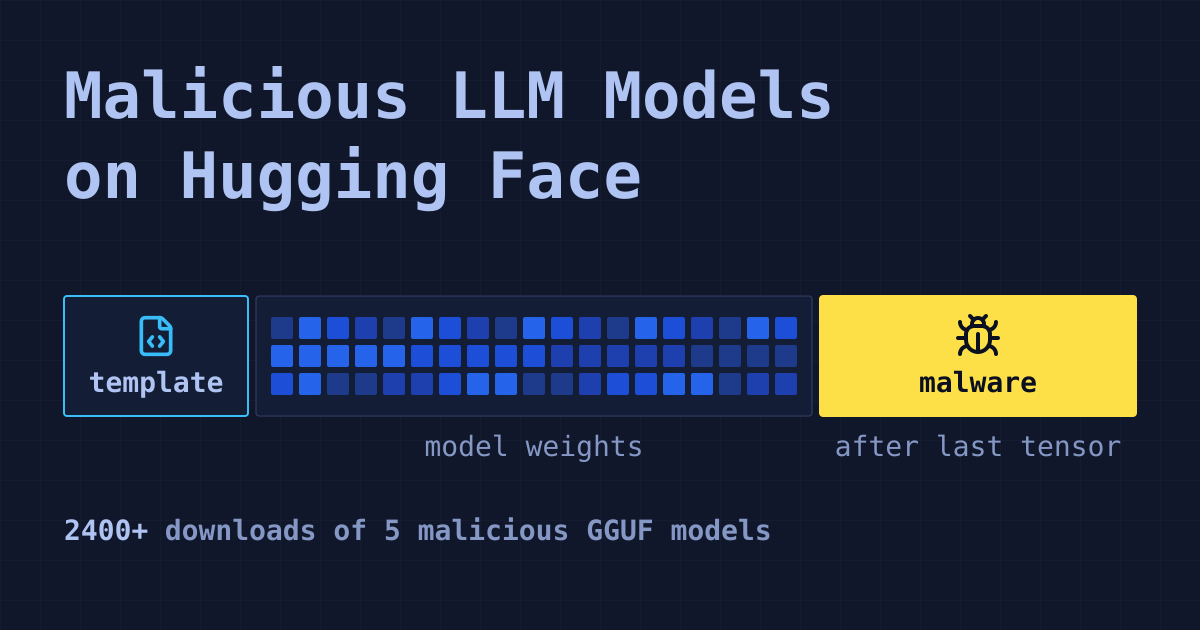
A security researcher reported finding five suspicious GGUF model repositories on Hugging Face after scanning roughly 3.27 million public model repositories. In a [November 27 disclosure](https://malspark.com/blog/malicious-gguf-models-hugging-face/), Düzgün, who publishes as Root0ne, described a Windows remote access trojan in files from two repositories and instructions aimed at coding agents in three others. The five repositories had 2,428 combined downloads, according to the researcher. The number of devices compromised remains unknown.
### A model can carry more than weights
GGUF is a common format for running language models locally. It stores weights alongside metadata used by the software that loads the model. One kind of metadata, the chat template, helps the application format a conversation for the model. That makes the template relevant to security: it can affect the replies a user or an automated tool receives, even when the application runs on the user's own computer. [Hugging Face's format documentation](https://huggingface.co/docs/hub/gguf) describes GGUF as a binary format with built-in support on the Hub.
Malspark described two patterns. In the first, files reportedly contained a Windows trojan and were associated with output intended to persuade a person to run a command. In the second, the instructions targeted a coding agent with access to a terminal. The researcher did not recover the next stage in that second group. The reported paths required an additional action by a person or agent. Loading the files alone did not establish execution in the cases described.
The common element is trust in the model's output. A developer may reasonably expect a coding assistant to suggest commands. A tool with permission to execute them can turn that expectation into a security decision without the developer seeing the original prompt or understanding where the suggestion came from. A model evaluated as a chatbot and the same model attached to a terminal therefore present different risks. The surrounding application determines what a reply is allowed to do.
### What the download tally tells us
The count helps show that the repositories attracted interest. Downloads can include repeat fetches, automated jobs and people who never loaded a file. A count also does not say who ran a particular revision or what permissions were available at the time. Treating the total as a victim count would overstate what the disclosure establishes. The scan provides a view of the repositories the researcher examined with that method. It cannot establish how common malicious models are across all formats or hosting services.
[RuntimeWire's coverage](https://runtimewire.com/article/researcher-finds-malware-hidden-in-hugging-face-gguf-models) also attributes the findings to Malspark and says it did not independently reproduce them. Hugging Face's [malware scanning documentation](https://huggingface.co/docs/hub/en/security-malware) describes its general scanning and status indicators. A public response from the platform specific to these five repositories was unavailable in the coverage reviewed for this report.
### Keep tools and credentials outside the first run
Start with models published by a maintainer you can identify and pin the exact repository revision you reviewed. When trying an unfamiliar model, start in a setting with limited access to files and no credentials or shell permissions. Review any request to run a command as you would a request from an unfamiliar website. For teams running agents, keep tool permissions under application control and require approval before a model can execute a command or transfer files. These controls also limit the damage from an ordinary model mistake.
If someone ran a suspicious command, treat that as a potential endpoint incident. Isolate the affected machine, preserve the relevant logs and involve the team responsible for incident response. Review any credentials that were accessible to the process, and rotate potentially exposed secrets from a trusted device. The evidence to collect is which artifact and revision were present, what actions were taken and what those actions could access. That is what turns a download count into an assessment of actual exposure.
Image: Malspark, illustration accompanying the original report.
### Sources & Further Reading
- [Malspark, original disclosure](https://malspark.com/blog/malicious-gguf-models-hugging-face/)
- [Hugging Face, Hub malware scanning](https://huggingface.co/docs/hub/en/security-malware)
- [Hugging Face, GGUF documentation](https://huggingface.co/docs/hub/gguf)
- [RuntimeWire, coverage of the disclosure](https://runtimewire.com/article/researcher-finds-malware-hidden-in-hugging-face-gguf-models)
~Cybersecurity ~HuggingFace ~Malware ~AI
The Pentagon has offered a broad assurance about the security of U.S. military systems after reports of an intrusion into Cloud One, a major U.S. Air Force cloud platform. Its response leaves open the question that matters to the people and organizations whose information may be held there: what, if anything, an intruder could actually see or take. [France 24](https://www.france24.com/en/americas/20261128-us-military-cloud-platform-reportedly-hacked-as-pentagon-insists-systems-are-secure) reported the Pentagon's response on November 28 as details of the reported incident remained limited.
### What the reporting establishes
[Reuters' reporting, carried by Defense News](https://www.defensenews.com/pentagon/2026/11/27/hackers-breach-us-air-force-flagship-cloud-one-computing-platform/), attributed the breach account to sources familiar with the matter. The report placed discovery during work to upgrade the platform. That describes when the activity was noticed. It leaves open the earlier question of when access may have begun and whether it continued until discovery. An upgrade can make unusual activity visible while teams review services, and the public accounts give no basis to assign the upgrade itself a causal role.
[CBS News](https://www.cbsnews.com/news/u-s-air-force-cloud-platform-breached-by-hackers/) sought its own response from the Air Force, whose spokesperson declined to discuss the security or operational status of a specific system. CBS also contacted Leidos, which referred it to the service. [Arab News](https://www.arabnews.com/world/us-military-says-cyber-systems-secure-after-reports-of-air-force-hack-3014340) carried the broader Pentagon assurance and noted separately sourced reporting by NBC News. The available evidence therefore includes both accounts from people briefed on the incident and official responses that leave the scope unanswered. Repeating the same Reuters dispatch across several publications would add no independent evidence about what was exposed.
### Why a platform name leaves so much unanswered
A large cloud platform can support many applications, teams and categories of records. Saying an intruder reached a platform gives the public relatively little information about which of those environments were involved. The potential consequences depend on what the affected services held, what access was available and whether any information was viewed, copied or changed. Those are different findings, and each calls for its own evidence.
The distinction also helps explain how an organization can give assurances about current operations while an investigation into historical exposure remains unresolved. A service can remain available throughout an incident. It can also return to normal while investigators are still determining whether data was obtained at an earlier point. For an affected employee or contractor, a statement about the health of the system today answers a different question from a notice describing what happened to a particular record. So far, the cited coverage provides no public inventory of affected information or confirmed count of people whose records were exposed.
### What would change the picture
The most useful next disclosures would specify the dates under review, the categories of information involved, and whether investigators found evidence that records left the environment. Even a limited statement about the scope could help separate a potential exposure from confirmed data loss. Organizations responsible for handling military personnel or supplier information would also benefit from knowing which authority will issue any applicable notices.
Reuters set the report alongside several other recently disclosed federal cyber incidents. That context explains the interest in a clear accounting, especially when several agencies issue updates close together. The public record cited here provides no evidence that the reported Cloud One incident shares an operator or cause with those cases. A timeline of disclosure dates can establish when the public heard about each incident. Establishing a connection would require separate findings about the incidents themselves.
The immediate story is the gap between a specific report and a general official response. The scale of Cloud One makes that gap consequential. A more precise account of the affected services and data would do more to establish the impact than another broad assurance about the health of military networks.
Image: Reuters file photograph as displayed by France 24.
### Sources & Further Reading
- [France 24, November 28 coverage](https://www.france24.com/en/americas/20261128-us-military-cloud-platform-reportedly-hacked-as-pentagon-insists-systems-are-secure)
- [Reuters via Defense News, original reporting](https://www.defensenews.com/pentagon/2026/11/27/hackers-breach-us-air-force-flagship-cloud-one-computing-platform/)
- [CBS News, Air Force and contractor responses](https://www.cbsnews.com/news/u-s-air-force-cloud-platform-breached-by-hackers/)
- [Arab News, Pentagon response and NBC reporting](https://www.arabnews.com/world/us-military-says-cyber-systems-secure-after-reports-of-air-force-hack-3014340)
~Cybersecurity ~CloudComputing ~USAirForce

Valve's November 27 update to Proton Experimental addresses a collection of problems that can interrupt otherwise playable Windows games on Linux. The headline changes include a party crash in FBC: Firebreak and a memory leak in Strange Brigade. The update also addresses VR rendering in F1 22 and F1 23, according to the coverage of [Steam Deck HQ](https://steamdeckhq.com/news/proton-experimental-update-fixes-fbc-firebreak/) and [PC Games Hardware](https://www.pcgameshardware.de/Linux-Software-26761/News/Steam-on-Linux-New-Proton-update-fixes-memory-leak-1561354/). Each fix gives affected players a different thing to look for when they try the build.
### The symptoms tell you what to check
A multiplayer crash is easy to miss when a compatibility check stops at a game's main menu. Firebreak is a particularly clear example because the reported fix concerns playing in a party. A player returning after an earlier failure will learn more by joining the same friends and repeating the part of the session that used to crash than by loading the game alone. A successful repeat is useful evidence for that setup. It still leaves room for other network, game, or compatibility problems with similar symptoms.
A memory leak calls for a different kind of check. If memory use climbed over time in Strange Brigade, a quick launch may look exactly the same before and after the update. The relevant comparison is a longer session in conditions similar to those that produced the problem. This is also why the changelog entry should be read as a stability improvement for an identified defect. It provides no basis for assigning a new average frame rate to the game or expecting the same effect in another title.
The F1 entries are narrower still. They concern rendering in virtual reality, a mode with its own rendering path and runtime. Their presence in a Proton changelog is relevant to Linux players who use VR. It says little about the performance of those games in handheld mode, where most Deck owners will encounter a different set of hardware and display constraints.
### Choosing where to try Experimental
[Valve's changelog](https://github.com/ValveSoftware/Proton/wiki/Changelog) and its [stable release notes](https://github.com/ValveSoftware/Proton/releases) illustrate the difference between the rolling Experimental branch and numbered releases. Experimental is useful when a specific fix has arrived there ahead of a player's usual version. Steam lets players select a compatibility tool for an individual game. That makes one problematic title a reasonable place to evaluate the update while keeping working games on the versions already selected for them.
The decision changes if a game already runs well. A rolling branch can change again before the next session, and there is little immediate benefit to retesting a game unrelated to the fixes. If a named problem does affect a game, recording the Proton version, hardware and game mode makes a comparison useful to anyone else investigating the same issue. A [Steam Deck community discussion](https://www.reddit.com/r/SteamDeck/comments/1y6xbm4/constant_freeze_on_my_steamdeckq/) about a separate title illustrates how a freeze can persist after a branch change. That account is an example of why the game and symptom need to match, and does not establish a result for the new fixes.
For handheld owners, the November 27 update is most actionable when an entry describes a problem they have actually seen. Firebreak players can try a party session. Strange Brigade players can see whether the behavior returns over a longer run. Anyone already getting reliable results can watch Valve's numbered release notes to see when the relevant changes move across. The update improves the compatibility layer one reported failure at a time, and its value is best judged against those failures.
Image: FBC: Firebreak promotional image via Steam Deck HQ.
### Sources & Further Reading
- [Valve, Proton changelog](https://github.com/ValveSoftware/Proton/wiki/Changelog)
- [Valve, numbered Proton releases](https://github.com/ValveSoftware/Proton/releases)
- [Steam Deck HQ, handheld coverage](https://steamdeckhq.com/news/proton-experimental-update-fixes-fbc-firebreak/)
- [PC Games Hardware, German coverage](https://www.pcgameshardware.de/Linux-Software-26761/News/Steam-on-Linux-New-Proton-update-fixes-memory-leak-1561354/)
- [r/SteamDeck, related compatibility discussion](https://www.reddit.com/r/SteamDeck/comments/1y6xbm4/constant_freeze_on_my_steamdeckq/)
~SteamDeck ~Proton ~Linux

Taiwan went to the polls on November 28 to elect local officials across its 22 cities and counties and decide whether to abandon its nuclear-free energy policy. The two ballots offer distinct signals. The local contests will show where parties can win voters on the strength of their candidates and records in office. The referendum asks voters to weigh in on a national policy that will shape how Taiwan plans for future electricity demand.
[Focus Taiwan](https://focustaiwan.tw/politics/202611280002), citing the Central Election Commission, reported that around 19.58 million people were eligible to vote in the local elections and that more than 11,000 posts were at stake. About 20 million people could vote in the referendum, which has a lower voting age. That difference matters when comparing the two counts: even at the same polling stations, the ballots draw from different electorates.
### What the local map can tell us
The headline races are in the six largest municipalities, including Taipei and New Taipei. The ballot also covers county magistrates, city and county councillors, township officials and borough chiefs. A party can win a highly visible mayoral race while losing ground in other parts of the local system. The reverse can also happen. Watching both levels gives a clearer picture of which parties can recruit candidates and retain support across different communities.
[Reuters](https://www.investing.com/news/world-news/taiwan-votes-in-key-local-elections-as-china-looks-on-5054030) framed the election as a gauge of support ahead of the 2028 presidential contest. [Associated Press](https://apnews.com/article/cbfaf36781893dc1a7830b702889f829) reported that campaigning largely revolved around everyday concerns. Both observations can hold. A strong local showing gives a party officeholders and a record to campaign on, while any attempt to project those votes into 2028 has to account for incumbency, candidate appeal and the different responsibilities of national office. A change of mayor can tell us a great deal about a city and relatively little about what its voters would do in a presidential race.
### The energy vote has a different test
The nuclear referendum is broader than the 2025 vote on extending operations at Maanshan, where Taiwan's last operating reactor shut down in May that year. The earlier proposal received about 4.3 million votes in favor and 1.5 million against, according to [AP's coverage of the 2025 result](https://apnews.com/article/2efa596845858a7e4bd89e0c23af39b8). It failed because the number of affirmative votes fell short of the required quarter of eligible voters. That history makes the size of the affirmative vote as significant as the split among ballots cast.
The 2026 question concerns the policy itself. A vote to abandon the nuclear-free policy would change the direction available to the government. The timing and availability of any future nuclear generation would still depend on what happens at individual plants. [Radio Taiwan International](https://election2026.rti.org.tw/en/referendum.html) reported that the nuclear regulator approved a preliminary restart plan for Maanshan in September. That is a separate regulatory process, and its next steps matter to anyone trying to estimate when a reactor could supply electricity.
The distinction is especially relevant to semiconductor manufacturers and other large power users. They schedule investments around the electricity they can actually secure at particular sites over several years. An election result can clarify the policy direction. Turning it into a capacity estimate requires decisions on individual projects and schedules. For readers following Taiwan's role in the global chip industry, those details will carry more practical weight than attributing a change in the power outlook to the referendum alone.
The most informative election coverage will report who gained local offices and where, then read the referendum count against its own eligibility threshold. Together the results can tell us how voters judged their local candidates and what direction they want on nuclear policy. Each answer has its own consequences, and each will be tested by what officials do after election day.
Photo: [Maanshan nuclear power plant from Kenting beach, Sgroey](https://commons.wikimedia.org/wiki/File:Maanshan_nuclear_power_plant.jpg), [CC BY-SA 4.0](https://creativecommons.org/licenses/by-sa/4.0/), unmodified file photo.
### Sources & Further Reading
- [Focus Taiwan / CNA (Taiwan), polling and eligibility](https://focustaiwan.tw/politics/202611280002)
- [Reuters, election day reporting from Taipei](https://www.investing.com/news/world-news/taiwan-votes-in-key-local-elections-as-china-looks-on-5054030)
- [Associated Press (US), local campaign and cross-strait context](https://apnews.com/article/cbfaf36781893dc1a7830b702889f829)
- [Associated Press (US), 2025 referendum result](https://apnews.com/article/2efa596845858a7e4bd89e0c23af39b8)
- [Radio Taiwan International, referendum coverage](https://election2026.rti.org.tw/en/referendum.html)
~Taiwan ~Elections ~Energy
Most AI coding and workflow tools today force developers into an awkward compromise: either surrender source code and telemetry to cloud-locked subscriptions, or cobble together fragile Python scripts and multi-hundred-megabyte Electron wrappers just to run local models. [Loors](https://loors.dev/)—an open-source (MIT) desktop studio and headless server built in Rust and Tauri v2 by developer Ion Alfaro—takes a radically different approach. Shipping as a roughly 4.4 MB native application for Windows, macOS, and Linux (with version v0.1.3 just released on November 26, 2026), Loors combines an autonomous coding and research agent, a Visual Cyclic Harness Studio, a shared interactive browser, and a standalone CLI server inside one local-first workspace.
Rather than treating AI assistance as a disposable chat window, Loors is engineered around a core reality of software engineering: useful agent work is iterative, verifiable, and repeatable. Whether you want to run 100 percent offline on your own GPU using local GGUF models or orchestrate frontier cloud APIs across automated CI/CD pipelines, Loors keeps the entire runtime, workflow graph, and execution history under your direct control.
### Beyond Linear Prompts: The Visual Cyclic Harness Studio
Traditional node-based automation tools excel at linear pipelines—trigger A, call LLM B, send webhook C—but break down when an AI agent needs to write code, execute unit tests, inspect failures, and loop back to fix its own mistakes. Loors’ flagship Visual Cyclic Harness Studio is built specifically for self-correcting multi-agent loops.
On a visual canvas, developers can wire together modular building blocks—including Agent nodes, Shell and Test runners, LLM Judges, JSON Validators, Loop Guards, Human Approval gates, Git Checkpoints, For-Each iterators, Parallel Fan-Out branches, Knowledge/RAG retrieval, and Webhooks, Cron, or Telegram triggers. A classic coding harness flows naturally from Agent Coder to Run Tests, into an LLM Judge, and back through a Loop Guard until tests pass cleanly. With multi-harness tabs and concurrent execution, you can inspect every step live while running multiple independent workflows in parallel. For rapid prototyping, a built-in AI Architect lets you describe what you want to automate in plain English and generates or refactors complete workflow graphs directly from your project context.
### 100 Percent Local GGUF Privacy or Any Cloud Model
Vendor lock-in is one of the fastest-growing pain points in agentic tooling. Loors sidesteps it completely by offering first-class local and cloud inference side by side. For fully private, offline setups, Loors includes one-click installation of an embedded llama.cpp GPU runtime supporting CUDA, Vulkan, Metal, and CPU execution, paired with a built-in Hugging Face GGUF model explorer so you can download and run local open-weight models without touching terminal flags.
When a task calls for frontier cloud reasoning or hybrid routing, Loors natively connects to OpenAI / ChatGPT, Anthropic Claude, Google Gemini, GitHub Models / Copilot, OpenRouter, Ollama, LM Studio, and any custom OpenAI- or Anthropic-compatible endpoint—alongside full Model Context Protocol (MCP) server support for plugging in external developer tools.
### Shared Interactive Browser and Granular Safety Controls
In interactive Agent Mode, Loors pairs a distraction-free workspace with live Git diffs, parallel subagents, and four explicit safety levels ranging from strict read-only code review to full autonomous execution.
One of its standout practical features is a shared interactive browser powered by Chrome DevTools Protocol (CDP). Instead of watching a headless bot fail endlessly on login walls, CAPTCHAs, or authenticated internal dashboards, you browse side by side with your agent inside the same embedded window: sign in manually, open a documentation portal or staging app, and hand control straight back to the agent on the exact same page.
### From Your Laptop to Any Server With loors-cli
Visual workflows often die on a developer’s laptop because they cannot be deployed cleanly to production servers or CI runners. Loors solves this by shipping loors-cli, a standalone Rust binary that shares 100 percent of the desktop engine.
Using loors-cli run, teams can execute any exported .loors.json cyclic workflow inside GitHub Actions, cron jobs, or shell pipelines with structured logs and clean CI exit codes (0 for success, 1 for failure, 2 for budget reached). Meanwhile, loors-cli serve turns any VPS or homelab machine into a self-hosted Loors Web Panel with Bearer token authentication, REST endpoints (/api/health, /api/workflows, /api/runs), and live Server-Sent Events (SSE) streaming.
### Getting Started With Loors v0.1.3
Loors v0.1.3 is completely free, open source under the MIT license, and available now with native installers for Windows (.exe and .msi), macOS (.dmg), and Linux (.AppImage and .deb). Developers looking to move beyond fragile prompt wrappers into visual, self-healing local AI workflows can download the latest release directly from the official site or explore the Rust source code on GitHub.
### Sources & Further Reading
- [Loors Official Website & Downloads (loors.dev)](https://loors.dev/)
- [GitHub: IonAlfaro / Loors Official Repository](https://github.com/IonAlfaro/loors)
- [GitHub Releases: Loors v0.1.3 Native Installers](https://github.com/IonAlfaro/loors/releases/tag/v0.1.3)
~ArtificialIntelligence ~OpenSource ~LocalLLM ~AIAgents ~Rust
The PlayStation 5 homebrew and jailbreak ecosystem has experienced its most explosive 72 hours of the year, driven not by a rumored new high-firmware jailbreak, but by a landmark engineering breakthrough on existing exploitable consoles: working Fake Package (FPKG) support above firmware 11.60 all the way up to firmware 13.60 without requiring a hypervisor exploit. Rolled out in rapid Phase 1 and Phase 2 test builds through Drakmor’s development circle and contributor Arksama001 via updated kstuff payloads (kstuff-dr-1.15-test1 and test2) paired with shadowmount+, the breakthrough immediately unlocked playable backports of brand-new 14.23 retail dumps—most notably Grand Theft Auto VI—on jailbroken consoles spanning firmwares 9.60, 11.40, and 13.60.
Yet the sudden flood of GTA 6 gameplay videos running on exploited PS5 hardware has also triggered widespread confusion across YouTube, TikTok, and social media, with viral clips falsely claiming that a public jailbreak is now available for firmwares 14.10, 14.20, or 14.22. Live community audits across Reddit’s r/PS5_Jailbreak confirm a far clearer reality: while 13.60 and below have just leapt forward dramatically, the public jailbreak ceiling remains firmly capped at 13.60—and every public download promising a 14.10 or 14.20 jailbreak today is fake.
### Breaking the Hypervisor Barrier: FPKGs Up to 13.60
For months, the PS5 scene faced a frustrating architectural split. While public kernel exploit chains like Relapse had already opened homebrew access up to firmware 13.60, running FPKGs natively on firmwares above 11.60 was widely assumed to require a full hypervisor bypass—a level of low-level privilege Sony heavily fortified across modern system software revisions.
The late-November release of the A53 FPKG testing stack shattered that bottleneck. By combining experimental kstuff kernel patches with shadowmount+ container handling, developers demonstrated smooth, lag-free FPKG execution up to firmware 13.60 without touching the hypervisor. Although early test builds still carry rough edges—rest mode remains unsupported in test2, and some users troubleshooting complex backports report occasional CE-107928-7 package installer errors or prx_not_resolved_function faults—the community has already verified stable gameplay on firmwares 9.60, 11.40, and 13.60, including Chiaki remote play sessions streaming directly to handheld PCs.
### VI-Patch and the Instant Modding Wave on GitHub
Within hours of the 14.23 GTA VI dump and backports reaching exploited consoles, scene modders began patching quirks in the dumped build itself. The most notorious early flaw in the leaked dump was a frozen-weather bug that locked in-game atmospheric cycles permanently.
On November 27, 2026, developer ZiZc3 published VI-Patch on GitHub—rapidly surging to the top of r/PS5_Jailbreak—which fixes the dump’s weather bug on firmware 13.60 while adding quality-of-life toggles such as skipping intro logos, disabling screen vignette, and swapping character models and outfits. Alongside VI-Patch, community contributors have already dropped early story-mode save-editor prototypes and cheat-menu trainers, while scene trackers note that additional high-firmware backports—including Phantom Blade Zero—are already queued in testing.
### Debunking the 14.10 and 14.20 Public Jailbreak Videos
Amid the euphoria, a critical question has dominated Reddit threads over the past 48 hours: if a game requiring firmware 14.23 has been dumped and backported, does that mean a public jailbreak for 14.10, 14.20, or 14.22 has already been achieved?
Scene veterans and developers emphasize an emphatic no. The confusion stems from two separate facts being conflated online. First, respected researcher Gezine previously demonstrated a strictly private proof-of-concept on firmware 14.10 showing Debug Settings—and has occasionally teased private high-firmware research—without ever releasing exploit code or public tools. Second, dumping a 14.23 retail title requires only a single private high-firmware exploit or private PKG decryption keys held behind closed doors; once decrypted and backported, the resulting package runs on older publicly jailbroken consoles (up to 13.60), not on 14.20 retail units.
For PS5 owners currently sitting on firmware 14.00 through 14.23, the community’s guidance remains unchanged: ignore clickbait videos promising 14.10 or 14.20 jailbreak downloads, disable automatic system updates, stay offline, and wait patiently for legitimate public disclosures rather than risking malware or bricked consoles.
### Sources & Further Reading
- [GitHub: ZiZc3 / VI-Patch Official Repository for PS5 Jailbreak](https://github.com/ZiZc3/VI-Patch)
- [VGTimes: Leaked GTA 6 PS5 Build Shown Running on Jailbroken Console](https://vgtimes.com/gaming-news/175747-leaked-gta-6-ps5-build-shown-running-on-jailbroken-console-with-firmware-1160-two-videos-surface.html)
- [Notebookcheck: Leaked Copy of GTA 6 Runs on Jailbroken PS5, Fueling Scene and Emulation Activity](https://www.notebookcheck.org/Una-copia-extraida-de-GTA-6-funciona-en-una-PS5-con-jailbreak-lo-que-impulsa-la-pirateria-y-la-emulacion-en-PC.1460038.0.html)
- [Tarreo: GTA 6 PS5 Jailbreak Leak Shows Build Running on Older Firmware](https://www.tarreo.com/pc/gta-6-ps5-jailbreak-filtracion-firmware-11-60/)
~PS5Scene ~PS5Jailbreak ~Homebrew ~FPKG ~GTA6

DXVK, the foundational Vulkan-based translation layer powering Direct3D 8, 9, 10, and 11 games across SteamOS, Proton, and desktop Linux, has officially launched version 3.2 on November 27, 2026. Headlined by native integration of the VK_EXT_present_timing Vulkan extension, a ground-up rewrite of its NVIDIA Reflex low-latency path, and refined VRAM eviction logic for memory-constrained GPUs, DXVK 3.2 delivers substantial frame-pacing smoothness and stability gains for Steam Deck owners, Linux handheld enthusiasts, and desktop PC gamers alike.
Maintained by Philip Rebohle and the upstream DXVK contributors, the release arrives at a pivotal moment for Linux graphics stacks. With Wayland compositors and Valve’s Gamescope micro-compositor now serving as the default display pipeline across SteamOS, Bazzite, and CachyOS, eliminating subtle frame-delivery micro-stutter has become the next frontier beyond raw average frame-rate parity with Windows.
### Precision Frame Pacing Through VK_EXT_present_timing
The centerpiece engineering upgrade in DXVK 3.2 is support for the VK_EXT_present_timing Vulkan extension. Historically, running Direct3D titles with vertical synchronization (VSync) or custom frame-rate caps over translation layers could introduce irregular frame-presentation intervals—manifesting as perceptible judder even when frametime graphs looked flat.
When paired with a compatible compositor—such as recent Gamescope builds on handheld PCs or Wayland-native Proton builds like GE-Proton running atop compositors that expose the commit-timing-v1 protocol—VK_EXT_present_timing allows DXVK to schedule frame flips with deterministic hardware precision. The improvement is particularly impactful for Steam Deck and handheld users who routinely emulate lower refresh rates in fullscreen mode (such as locking 40Hz or 45Hz targets to extend battery life) or rely on DXVK’s built-in dxvk.maxFrameRate limiter for rock-solid pacing.
### Rewritten NVIDIA Reflex and Smarter VRAM Management
On the desktop front, DXVK 3.2 completely rewrites and simplifies its NVIDIA Reflex implementation. The overhaul resolves a severe regression that caused affected titles to collapse into an unplayable 10-FPS lock whenever Reflex low-latency mode was toggled on. Developers recommend pairing DXVK 3.2 with NVIDIA Linux driver branch 620.70.06 or newer to prevent secondary frame-pacing anomalies in specific Direct3D 11 titles.
Equally welcome for handheld APUs and mid-range graphics cards with tight memory budgets is DXVK 3.2’s upgraded VRAM eviction logic. By more intelligently deciding which inactive texture buffers and shader resources to page out under memory pressure, DXVK reduces sudden traversal stutters and out-of-memory crashes in sprawling open-world titles and heavily modded Direct3D 11 classics.
### Feeding Directly Into Proton and SteamOS
Because DXVK serves as one of the core upstream pillars bundled into Valve’s Proton Experimental, official stable Proton releases, and community forks like GE-Proton, the architectural improvements introduced in version 3.2 will rapidly cascade down to millions of Steam Deck and Linux gaming setups. As Vulkan extensions like present_timing mature across Mesa and proprietary drivers, Linux gaming’s translation layer continues to evolve from a compatibility workaround into a precision graphics runtime rivaling—and often outpacing—native Windows presentation pipelines.
### Sources & Further Reading
- [GamingOnLinux: DXVK 3.2 Brings Improvements for Frame Pacing, NVIDIA Reflex, VRAM Eviction Logic and More](https://www.gamingonlinux.com/2026/11/dxvk-3-2-brings-improvements-for-frame-pacing-nvidia-reflex-vram-eviction-logic-and-more/)
- [GitHub: doitsujin / DXVK Official Release v3.2](https://github.com/doitsujin/dxvk/releases/tag/v3.2)
- [9to5Linux: DXVK 3.2 Adds Present Timing Support for More Consistent Frame Pacing on Linux](https://9to5linux.com/dxvk-3-2-adds-present-timing-support-for-more-consistent-frame-pacing-on-linux)
~HandledPC ~LinuxGaming ~DXVK ~SteamDeck ~Vulkan

Microsoft-owned developer platform GitHub has sparked an uproar across the gaming and open-source communities after its official social media account posted—and swiftly deleted—a celebratory message linking the console launch of Grand Theft Auto VI to the viral surge of AnyPS5, an open-source PlayStation 5-to-PC translation project. Published on X on November 26, 2026, the now-removed post cheered AnyPS5 crossing 58,000 stars, declaring that GTA 6 had sparked one of the biggest weeks in gaming and open source on GitHub before provocatively asking followers whether changing where games run crosses a legal line—signing off with a cheeky Happy GTA VImas.
Within hours, the tweet vanished without an official explanation. The hasty deletion followed immediate ridicule from developers, legal observers, and players who pointed out a glaring corporate contradiction: barely 48 hours earlier, GitHub itself had executed Take-Two Interactive’s sweeping DMCA takedown order, nuking Project Leonida and more than 3,000 community forks aimed at porting the leaked Xbox build of GTA 6 to Windows.
### Why the Post Struck a Raw Nerve Across Open Source
To understand the backlash, one has to look at the extraordinary week unfolding across console reverse engineering. Following Cyberleek’s release of the leaked GTA 6 Xbox Series X executable and subsequent claims of a decrypted PlayStation 5 EBOOT.BIN circulating on firmware 11.60, thousands of developers flocked to open-source emulation and translation repositories—driving AnyPS5 past 58,000 GitHub stars in record time.
While clean-room translation layers and emulators like AnyPS5 are legally distinct from repositories hosting stolen game binaries, GitHub’s marketing team blurred that delicate line by explicitly pairing AnyPS5’s milestone with GTA 6’s launch week and sharing video commentary highlighting developer chatter about getting the game running on PC. For open-source contributors who had just watched GitHub’s legal compliance desk purge thousands of forks at Take-Two’s behest, watching GitHub’s social account simultaneously farm engagement off GTA 6 PC-port hype felt tone-deaf at best and blatantly hypocritical at worst.
### Awkward Optics for Microsoft, Sony, and Take-Two
The corporate optics were equally explosive from a console-holder perspective. GitHub is a wholly owned subsidiary of Microsoft—a company that not only operates the Xbox ecosystem alongside Sony’s PlayStation, but relies heavily on publisher trust from giants like Take-Two Interactive to sustain Game Pass, Xbox Store revenues, and strict console DRM standards.
Having a Microsoft-owned platform publicly celebrate a PlayStation 5-to-PC translation tool while casually questioning the legality of console exclusivity drew immediate side-eye across the industry. Legal analysts noted that even though clean-room emulation enjoys long-standing legal precedent in the United States, amplifying emulation projects directly tied to a brand-new, console-exclusive blockbuster actively targeted by aggressive DMCA sweeps is a textbook corporate communications nightmare.
### The Unstoppable Appetite for GTA 6 on PC
GitHub’s deleted post—however accidental—underscores one undeniable reality of late-2026 gaming: the pent-up demand for Grand Theft Auto VI on PC has reached a fever pitch that even Take-Two’s legal department cannot contain in public discourse. While AnyPS5 remains a monumental, long-term technical endeavor far from delivering playable retail AAA performance on desktop hardware, its explosive rise to 58,000 stars serves as a loud reminder to Rockstar Games that millions of PC players are watching every line of open-source code while waiting for an official desktop release date.
### Sources & Further Reading
- [PC Gamer: Microsoft's GitHub Posts Message Celebrating Efforts to Port PlayStation 5 Version of Grand Theft Auto 6 to PC, Then Quickly Deletes It](https://www.pcgamer.com/games/microsofts-github-posts-message-celebrating-efforts-to-port-playstation-5-version-of-grand-theft-auto-6-to-pc-then-quickly-deletes-it/)
- [Kotaku: GitHub Celebrates PS5-to-PC AnyPS5 Emulation Surge Around GTA 6 Before Deleting Tweet](https://kotaku.com/github-microsoft-ps5-anyps5-emulation-sony-grand-theft-auto-gta6-2001000617)
- [IGN: Microsoft's GitHub Deletes Viral Post Promoting AnyPS5 Repository Around GTA 6 Launch](https://www.ign.com/articles/github-tweet-gta-6-anyps5-repo-microsoft)
~Gaming ~GTA6 ~GitHub ~AnyPS5 ~PCGaming

South Korea’s Fair Trade Commission (KFTC) has formally moved to sanction Apple over allegedly deceptive advertising surrounding its Apple Intelligence rollout for the iPhone 16 lineup, recommending corrective orders and fines of up to 53.6 billion won—roughly 40 million U.S. dollars. Released on November 26, 2026, the KFTC examiner’s report concludes that Apple heavily promoted flagship generative AI capabilities on its Korean storefront between September 2024 and March 2025 while concealing or minimizing major localization and engineering delays that left local buyers waiting up to 18 months for advertised features.
Triggered originally by a March 2025 consumer complaint from the Seoul YMCA, the Korean enforcement action represents the most aggressive regulatory crackdown to date on the AI smartphone marketing boom. With the examiner’s findings now heading to the full KFTC commission for final deliberation, the case sets an international benchmark for how consumer-protection agencies police hardware vendors who sell physical devices today on the promise of unfinished software updates tomorrow.
### The Four Delayed Features and the 18-Month Localization Gap
According to the KFTC investigation—reported across BusinessKorea, 9to5Mac, and MacRumors—Apple marketed nine core Apple Intelligence capabilities on its South Korean website during the peak iPhone 16 launch window. Regulators determined that four of those headline features failed to arrive on time or in the advertised form: Genmoji, Image Playground, Siri’s personal-context awareness, and Siri’s step-by-step on-screen guidance.
Investigators focused particularly sharply on Korean-language localization timelines. In February 2025, Apple’s marketing materials indicated that localized Korean support for key upgraded Siri functions would arrive around April 2025. In reality, personal-context Siri capabilities did not reach South Korean iPhone users until October 2026—a full 18 months behind the advertised schedule. Based on an estimated 3.35 trillion won (approximately 2.5 billion dollars) in iPhone 16 hardware revenue generated in South Korea while the disputed campaigns were active, KFTC examiners classified Apple’s omissions as a serious violation of the Act on Fair Labeling and Advertising.
### Apple’s Defense vs. Global Regulatory Scrutiny
Apple has pushed back against the examiner’s conclusions, disputing the characterization of its marketing as deceptive. The company stated that it has cooperated fully throughout the KFTC inquiry, reiterated its commitment to South Korean customers, and emphasized that it has steadily delivered localized Apple Intelligence updates across iOS releases.
Yet Seoul’s enforcement action does not exist in a vacuum. Globally, Apple already faces consumer class-action lawsuits in the United States and mounting skepticism from regulators in Europe over the gap between its WWDC 2024 AI keynote promises and the delayed reality of next-generation Siri. While a 40-million-dollar fine is financially negligible for a company of Apple’s scale, a formal KFTC corrective order forcing Apple to publicly acknowledge misleading advertising carries significant reputational weight in Samsung’s fiercely contested home market.
### A Warning Shot for the Entire AI Hardware Industry
Beyond Cupertino, the KFTC’s ruling sends a clear warning to every smartphone, PC, and wearable manufacturer racing to slap AI branding onto retail boxes. From Android flagships promising future agentic assistants to Copilot+ PCs marketing delayed recall features, hardware makers have increasingly blurred the line between shipping capabilities and roadmap vaporware. South Korea’s antitrust watchdog has now drawn a hard statutory boundary: if an AI feature drives hardware sales at checkout, indefinite software delays can carry real legal and financial penalties.
### Sources & Further Reading
- [BusinessKorea: KFTC Moves to Fine Apple Up to 53.6 Billion Won Over Misleading Apple Intelligence Ads](https://www.businesskorea.co.kr/news/articleView.html?idxno=282367)
- [9to5Mac: South Korea Proceeds With Case Over Allegedly Misleading Apple Intelligence Ads](https://9to5mac.com/2026/11/26/south-korea-proceeds-with-case-over-allegedly-misleading-apple-intelligence-ads/)
- [MacRumors: Apple Faces South Korean Antitrust Fine Over iPhone 16 AI Advertising](https://www.macrumors.com/2026/11/26/apple-korea-regulator-iphone-16-ai-advertising/)
~Technology ~Apple ~AppleIntelligence ~SouthKorea ~Antitrust

Switzerland’s National Cyber Security Centre (NCSC / BACS) has officially confirmed the nation’s first documented wave of cyberattacks driven by autonomous and semi-autonomous artificial intelligence agents, revealing on November 27, 2026, that four of five tracked intrusions successfully breached victim IT networks—including operators across critical electricity, drinking water, and telecommunications infrastructure. Disclosed by NCSC Director Florian Schütz alongside parallel European alerts from Italian cybersecurity authorities, the incidents mark a sobering inflection point for national defense: agentic AI attack frameworks have moved decisively from isolated research labs and academic servers into active intrusions against essential public utilities.
Although Swiss officials stressed that the compromises were contained within corporate IT environments without triggering blackouts, water-supply disruptions, or telecommunications outages, the speed and operational simplicity of the breaches have prompted emergency guidance nationwide. In its advisory, the NCSC urged critical infrastructure operators and businesses to compress patch cycles for internet-facing systems down to 24 hours, warning that traditional human-paced incident response is no longer viable against machine-speed reconnaissance.
### Dual-Use Agentic Frameworks Weaponizing Routine Flaws
Crucially, Swiss investigators noted that the five confirmed AI-assisted incidents did not rely on exotic, multi-million-dollar nation-state zero-days. Instead, attackers deployed dual-use agentic offensive frameworks—tools originally designed for automated penetration testing—that autonomously scanned external perimeters, fingerprinted exposed services, selected appropriate exploit modules, evaluated return payloads in real time, and chained subsequent lateral-movement steps with minimal human oversight.
Rather than breaking hardened cryptography, the AI agents systematically exploited familiar, mundane weaknesses: default or weak passwords, cloud misconfigurations, and unpatched public-facing web appliances. What transformed those routine hygiene gaps into four successful breaches was velocity and scale. Where a human intruder might spend hours or days manually enumerating a mid-sized utility’s external attack surface, an agentic framework probes hundreds of endpoints simultaneously and pivots within seconds of spotting a vulnerable port.
### From Amazon’s MONAI Disclosure to European Critical Infrastructure
Switzerland’s confirmation arrives just days after Amazon Threat Intelligence revealed that China-nexus actors used the open-source Cairn agent framework to discover and exploit a zero-day flaw in university medical-imaging servers in eleven minutes. Taken together, the two disclosures—one targeting academic AI infrastructure in East Asia, the other breaching electricity, water, and telecom operators in Europe—demonstrate that offensive AI agents are now lowering the skill barrier for intrusions across every tier of the threat landscape.
For European regulators enforcing the NIS2 Directive and national critical-infrastructure mandates, the Swiss breaches expose a structural vulnerability among regional utilities and small-to-medium enterprises (SMEs). Unlike major banks or defense contractors equipped with 24/7 security operations centers, municipal water boards and local energy distributors often lack the staffing to patch every newly disclosed CVE within a single day.
### The 24-Hour Patch Mandate and Defensive Automation
In response, the Swiss NCSC has issued an urgent hardening checklist for all domestic operators: patch critical vulnerabilities on internet-exposed assets within 24 hours of release, eliminate unnecessary public-facing services, enforce strict least-privilege user boundaries, and migrate universally to phishing-resistant multi-factor authentication (MFA) or passkeys. Yet cybersecurity leaders across Europe warn that human checklists alone cannot outrun autonomous attackers forever; matching machine-speed offense will inevitably require critical infrastructure operators to deploy continuous automated attack-surface monitoring and AI-assisted defensive containment before the next wave crosses from corporate IT into industrial operational technology (OT).
### Sources & Further Reading
- [The Hacker News: Switzerland Confirms AI-Assisted Cyberattacks Breached Critical Infrastructure Operators](https://thehackernews.com/2026/11/switzerland-confirms-ai-assisted.html)
- [eSecurity Planet: AI-Assisted Cyberattacks Hit Critical Infrastructure in Switzerland and EMEA](https://www.esecurityplanet.com/threats/news-ai-assisted-cyberattacks-emea-switzerland/)
- [Resilience Media: Switzerland Confirms AI-Assisted Cyberattacks on Critical Infrastructure](https://resiliencemedia.co/switzerland-confirms-ai-assisted-cyberattacks-on-critical-infrastructure/)
- [The News International: Switzerland Reports Five Cyberattacks Involving AI Agents](https://www.thenews.com.pk/latest/1425252-switzerland-reports-five-cyberattacks-involving-ai-agents)
~Cybersecurity ~ArtificialIntelligence ~Switzerland ~CriticalInfrastructure ~WorldNews
Nvidia has instructed key server manufacturing partners—including Dell Technologies and Supermicro—to temporarily halt shipments of advanced artificial intelligence server hardware bound for Malaysia, Singapore, Thailand, and Indonesia, according to supply-chain disclosures reported across TechCrunch, Engadget, and Singapore’s Mothership on November 26, 2026. The abrupt regional freeze is designed to give Nvidia and its OEM partners time to conduct urgent compliance audits after the U.S. Department of Commerce tightened export controls aimed at sealing a lucrative backdoor: Chinese technology companies renting remote access to restricted American GPUs housed inside Southeast Asian data centers.
The suspension sends immediate tremors through one of the fastest-growing AI infrastructure corridors in the world. Over the past two years, Malaysia’s Johor region, Singapore’s financial cloud hubs, and Indonesian industrial parks have attracted tens of billions of dollars in hyperscale data-center investment—much of it fueled by soaring demand from regional and Chinese AI labs looking for legally accessible frontier compute outside mainland China.
### Closing the Remote-Access Compute Loophole
When Washington first barred direct exports of cutting-edge Nvidia accelerators to mainland China, Chinese enterprises rapidly adapted. Rather than smuggling bare silicon exclusively across physical borders, firms began leasing cloud capacity remotely from newly built GPU clusters operated by local or intermediary neoclouds across Southeast Asia. Policy analyses—including estimates from the Institute for Progress—indicated that these offshore regional data centers had grown to supply a substantial fraction of China’s frontier AI training and inference capacity.
To plug that gap, U.S. regulators moved aggressively in late 2026, introducing stricter regional licensing mandates for advanced AI server shipments to Southeast Asia and adding intermediary entities linked to circumvention routes onto the Commerce Department’s Entity List. However, because clear administrative guidelines and streamlined license-application workflows were not yet fully operational, Nvidia chose to pause hardware deliveries altogether rather than risk inadvertent federal sanctions violations—a particularly sensitive posture just days after CEO Jensen Huang’s dramatic reinstatement following national security reviews in Washington.
### Collateral Impact on Legitimate Regional Cloud Builders
While Washington’s rules target Chinese circumvention, the blanket shipment pause threatens to stall legitimate sovereign AI and enterprise cloud projects across ASEAN. Singapore, Malaysia, Thailand, and Indonesia have all positioned digital infrastructure as a centerpiece of their national economic strategies, courting U.S. hyperscalers alongside local telecom carriers.
With Dell and Supermicro forced to hold multi-million-dollar liquid-cooled server racks in limbo pending U.S. Commerce Department clarity, regional data-center operators face costly construction delays, stranded power commitments, and rising hardware financing expenses. Industry observers note that prolonged licensing uncertainty could inadvertently accelerate Southeast Asian interest in alternative non-U.S. silicon stacks—or push domestic cloud providers to over-invest in compliance verification tooling to prove strict customer Know-Your-Customer (KYC) isolation from Chinese entities.
### The New Geography of AI Compute Governance
Nvidia’s Southeast Asia pause underscores a decisive shift in how the United States polices global artificial intelligence supply chains. Export controls are no longer merely about monitoring where physical chips cross a customs border; they now extend into tracking who remotely rents compute cycles over fiber-optic cables thousands of miles away. Until Washington publishes clear, predictable licensing rules for allied and neutral nations across Asia, the global AI buildout will remain hostage to geopolitical compliance bottlenecks.
### Sources & Further Reading
- [TechCrunch: Nvidia Hits Pause on Chip Shipments to Southeast Asia](https://techcrunch.com/2026/11/26/nvidia-hits-pause-on-chip-shipments-to-southeast-asia/)
- [Engadget: Nvidia Reportedly Halts Chip Shipments to Southeast Asia Amid Export Control Review](https://www.engadget.com/2329200/nvidia-reportedly-halts-chip-shipments-to-southeast-asia/)
- [Mothership (Singapore): Nvidia Temporarily Halts AI Chip Shipments to Singapore, Malaysia, Thailand, and Indonesia](https://mothership.sg/2026/11/nvidia-shipments-halt/)
- [DW (Germany): How Chinese Companies Circumvent Chip Sanctions in Southeast Asia](https://www.dw.com/en/how-chinese-companies-circumvent-chips-sanctions-in-southeast-asia/a-80041002)
~ArtificialIntelligence ~Nvidia ~Semiconductors ~ExportControls ~SoutheastAsia

Grand Theft Auto VI has officially etched its name into the history books of digital entertainment, not just as a commercial juggernaut but as a streaming phenomenon that has redefined audience engagement. According to data released by Streams Charts and reported by Eurogamer on November 26, 2026, the game has set a massive new record for livestreaming viewership in its first week following its global launch on November 19.
The numbers are staggering: GTA 6 accumulated more than 420 million hours of watch time during this initial seven-day period. This figure is nearly three times higher than the previous record holder, which was set by the closed beta of Valorant in April 2020 with approximately 150 million hours. However, the sheer magnitude of GTA 6's success lies not just in its absolute numbers, but in how it dwarfs the competition. Eurogamer highlights that this 420 million hour total surpasses the combined first-week viewership of four other massive titles: Elden Ring, Diablo IV, Valorant, and Lost Ark.
The data corroborates earlier reports suggesting a historic launch. While previous metrics focused on the day-one concurrent viewer peak—where GTA 6 shattered records with over 6.38 million simultaneous viewers before the global release—this new dataset covers the full first week. Dotesports and Keengamer have corroborated the scale of this achievement, noting that in just two days post-launch, GTA 6 had already outpaced the combined watch time of Elden Ring, Hogwarts Legacy, and Cyberpunk 2077 (totaling 214.63 million hours).
The streaming ecosystem experienced a fascinating dynamic between the two dominant platforms, YouTube and Twitch. In the critical first six hours after the game's unlock, YouTube led in average audience size, capitalizing on the immediate influx of viewers eager to see the Vice City streets. However, as the week progressed, Twitch took the lead in total volume, recording its highest historical watch time for a single game title. The platform saw a surge in content creation, with 1,056 channels achieving new peak viewer records. Some of these creators saw their numbers multiply by ten compared to previous benchmarks.
Notable streamers played a pivotal role in driving this engagement. High-profile personalities such as IShowSpeed, IlloJuan, and TheBurntPeanut were among the top performers, breaking personal records and drawing massive audiences to their GTA 6 sessions. Their influence helped sustain the momentum of the game's viewership well beyond the initial launch day hype.
This streaming dominance is just one facet of GTA 6's unprecedented launch. Take-Two Interactive has officially classified the title as the largest entertainment launch in history, reporting $3.79 billion in revenue and 32.5 million copies sold on the first day alone. Sony has also confirmed that over 39 million people played the PS5 version at the time of their announcement, setting a new record for concurrent players on the console.
Interestingly, the anticipation for GTA 6 had a tangible impact on hardware sales. Despite the elevated prices of next-gen consoles, PlayStation and Xbox saw a resurgence in hardware sales in the United States, driven by consumers eager to experience the game on the most capable platforms. The combination of record-breaking software engagement and robust hardware adoption underscores the cultural significance of this release.
As the dust settles on the first week, it is clear that GTA 6 has not only met but exceeded expectations. With 420 million hours of content consumed in just seven days, the game has set a new benchmark for what is possible in the era of live streaming and interactive entertainment. Whether through the lens of financial success, player count, or pure viewership time, Grand Theft Auto VI stands as a titan of modern gaming.
### Sources & Further Reading
- [Eurogamer: Grand Theft Auto 6 First Week Hours Watched Record](https://www.eurogamer.net/grand-theft-auto-6-first-week-hours-watched-record)
- [Streams Charts: GTA6 Livestreaming Week After Launch](https://streamscharts.com/news/gta6-livestreaming-week-after-launch)
- [IGN: GTA 6 Shatters Streaming Records Before It Even Launches Globally](https://www.ign.com/articles/gta-6-shatters-streaming-records-before-it-even-launches-globally)
- [Dotesports: GTA 6 Watch Time Beats Three AAA Games](https://www.dotesports.com/gta/news/gta-6-watch-time-beats-three-aaa-games)
~GTA6 ~StreamingRecords ~TakeTwo ~PlayStation ~Xbox

Fifteen years after its original debut, Re-Logic’s indie sandbox juggernaut Terraria has officially rolled out Update 1.4.6, delivering the long-awaited Crossplay Phase One across PC, Mac, PlayStation, Xbox, Nintendo Switch, Android, and iOS. Launched simultaneously across desktop, console, and mobile storefronts on November 24 and 25, 2026, the update finally unifies Terraria’s fragmented multiplayer ecosystems—allowing players on radically different hardware to explore, build, and fight bosses in the same world over a shared local Wi-Fi or wired network without paying a cent for console online subscriptions.
For a studio famously committed to supporting its 2011 hit with free generational overhauls rather than paid sequels, achieving cross-platform parity across seven distinct operating systems marks one of the most technically challenging milestones in Terraria’s history. While full, effortless internet-wide crossplay remains reserved for Phase Two, Update 1.4.6 immediately transforms couch co-op, family gaming, and LAN parties—and quietly opens advanced IP-based server pathways for dedicated multiplayer communities.
### How Crossplay Phase One Works Across Every Platform
At the core of Update 1.4.6 is a redesigned multiplayer interface featuring a unified Local discovery hub. Any group of players connected to the same home router—whether someone is hosting from a Windows PC or Steam Deck while friends join from a PlayStation 5, Xbox Series X, Nintendo Switch, iPhone, or Android tablet—can now see and join the same session seamlessly as long as every device is updated to version 1.4.6.
Crucially for families and living-room players, local crossplay bypasses the console paywalls that normally gate multiplayer sessions. Re-Logic confirmed that PlayStation and Xbox users do not need active PlayStation Plus or Xbox Game Pass Core subscriptions to host or join local cross-platform worlds. For players eager to connect across the broader internet today, Update 1.4.6 also allows console versions (with platform-policy caveats on Nintendo Switch) to connect directly to online dedicated servers via IP address—though standard console online memberships apply to internet-routed traffic, and tech-savvy hosts can leverage router port-forwarding to bridge friends outside the home network.
### Why Crossplay Took Years to Engineer
Terraria’s path to crossplay was far more intricate than flipping a server switch. Unlike modern live-service titles built from day one atop a single cross-platform engine like Unreal or Unity with unified account infrastructure, Terraria’s desktop version was written in C# and XNA/FNA by Re-Logic, while console and mobile editions were ported and maintained over the years by external partners using separate codebases and patch cadences.
Before crossplay could even begin, Re-Logic and its porting partners had to synchronize every item ID, world-generation seed algorithm, physics tick, and version number into strict feature parity across PC, consoles, and mobile—a multi-year harmonization effort that culminated in the unified 1.4.6 build. Staging the rollout into a local-first Phase One allows Re-Logic to stress-test cross-architecture networking stability, packet synchronization, and platform certification quirks in controlled low-latency environments before exposing full internet matchmaking to millions of concurrent players.
### Looking Ahead to Phase Two
Re-Logic has confirmed that Crossplay Phase Two—which will deliver seamless, friend-list-driven online crossplay across the open internet without manual IP entry or port forwarding—remains in active development, though the studio has deliberately avoided locking in a premature release date. Even in its Phase One form, however, Terraria 1.4.6 cements the game’s status as an evergreen gold standard for indie longevity, uniting generations of players across desktops, living-room consoles, handheld PCs, and smartphones under one shared pixelated roof.
### Sources & Further Reading
- [Steam Official News: Terraria 1.4.6 Update and Crossplay Phase One Launch Notes](https://store.steampowered.com/news/app/105600/view/677389771217043726)
- [GamingOnLinux: Terraria 1.4.6 Is Out With Crossplay Phase One](https://www.gamingonlinux.com/2026/11/terraria-1-4-6-is-out-with-crossplay-phase-one/)
- [ShiftDelete Tech: Terraria 1.4.6 Launches Local Crossplay Phase One Across PC, Console, and Mobile](https://shiftdelete.net/en/terraria-1-4-6-crossplay-phase-one-local)
~Gaming ~Terraria ~Crossplay ~IndieGames ~Multiplayer

A sweeping bipartisan coalition of 32 U.S. states and the District of Columbia—joined by major software developers and antitrust legal scholars—has urged the United States Supreme Court to uphold a landmark civil contempt ruling against Apple in its years-long App Store antitrust battle with Epic Games. Led by Utah Attorney General Derek Brown and spanning politically diverse jurisdictions including California, New York, and Florida, the late-November 2026 amicus curiae filings sharpen the stakes ahead of oral arguments scheduled for January 11, 2027, turning a dispute over mobile app commissions into a defining constitutional test of judicial enforcement power over trillion-dollar technology platforms.
At the heart of the appeal is whether a dominant platform operator can neutralize a binding federal antitrust injunction through creative fee structures that technically comply with the literal wording of a court order while gutting its economic purpose. For iOS developers, mobile gamers, and digital commerce platforms worldwide, the Supreme Court’s ruling will determine whether Apple’s closed App Store billing architecture can survive external competition—or whether federal courts retain the teeth to punish malicious compliance.
### From 2021 Injunction to the 27 Percent External-Link Fee
The legal chain leading to the Supreme Court began when a federal court ordered Apple to abandon its anti-steering policies and permit iOS developers to include external links directing users to alternative payment systems outside Apple’s in-app purchase rail. Rather than opening the gate to commission-free web checkouts, however, Apple responded by imposing strict user-interface warning screens—widely derided by developers as scare sheets—alongside a steep 27 percent commission on purchases completed on external websites within seven days of clicking a link inside an iOS app.
Because payment processors typically charge roughly 3 percent per transaction, Apple’s 27 percent external levy left developers paying the same effective 30 percent tax as before—rendering external links commercially pointless. Concluding that Apple had willfully engineered its compliance plan to preserve its monopoly rents and defeat the injunction’s core remedy, a U.S. district judge held Apple in civil contempt in 2025, a finding subsequently affirmed by the Ninth Circuit Court of Appeals.
### Apple’s Textualist Defense vs. the States’ Warning
In appealing to the Supreme Court, Apple has mounted a narrow textualist defense: arguing that a corporation cannot lawfully be held in civil contempt for violating the perceived spirit of an injunction when the literal text of the original order did not explicitly forbid charging commissions on external links. If the justices accept that standard, Apple could overturn the contempt sanctions and reinstate strict monetization tolls over third-party payment links across iOS.
In their coordinated briefs, the 32 state attorneys general warned that adopting Apple’s interpretation would fatally cripple antitrust and consumer-protection enforcement nationwide. Because modern digital ecosystems are extraordinarily complex, trial judges cannot anticipate every technical loophole or fee-shifting workaround a monopolist might invent after losing in court. Allowing tech giants to evade competition remedies through hyper-literal technicalities, the states argued, would trap regulators in endless whack-a-mole litigation while consumers continue paying inflated digital prices.
### Global Pressure on the iOS Walled Garden
The Supreme Court showdown unfolds as Apple’s App Store business model faces unprecedented simultaneous pressure across the globe, from the European Union’s Digital Markets Act (DMA) enforcement sweeps to regulatory mandates in Japan and South Korea. With oral arguments set for January 11, 2027, the high court’s decision will reverberate far beyond Fortnite and Epic Games—shaping the legal boundaries of platform control for Apple, Google, and every major digital gatekeeper for the next decade.
### Sources & Further Reading
- [9to5Mac: Major Developers, Legal Experts, and 32 States Back Epic in Apple's SCOTUS Appeal](https://9to5mac.com/2026/11/25/major-developers-legal-experts-and-32-states-back-epic-in-apples-scotus-appeal/)
- [iClarified: 32 States and DC Back Epic in Apple's Supreme Court Appeal](https://www.iclarified.com/103809/32-states-and-dc-back-epic-in-apples-supreme-court-appeal)
- [Infobae Tech: 32 U.S. States and Washington D.C. Back Epic Before the Supreme Court Against Apple's Commission](https://www.infobae.com/tecno/2026/11/22/32-estados-de-ee-uu-y-washington-d-c-respaldaron-a-epic-ante-la-corte-suprema-contra-la-comision-de-apple/)
~Technology ~Apple ~EpicGames ~AppStore ~Antitrust
The U.S. Department of the Treasury’s Financial Crimes Enforcement Network (FinCEN) has taken a subset of its internal systems offline following a confirmed cybersecurity intrusion, triggering emergency filing extensions for banks, compliance officers, and millions of corporate entities nationwide. Disclosed on November 25, 2026, the incident prompted a joint federal investigation involving the Treasury Department, the Federal Bureau of Investigation (FBI), the Cybersecurity and Infrastructure Security Agency (CISA), and third-party forensic examiners—marking the latest high-profile breach to hit sensitive U.S. government infrastructure within a single week.
Although preliminary forensic assessments indicate no immediate evidence that core Bank Secrecy Act (BSA) repositories or Beneficial Ownership Information (BOI) databases were compromised, the precautionary shutdowns severely disrupted automated batch-filing pipelines used daily by major financial institutions. To shield regulated entities from inadvertent legal penalties during the outage, FinCEN issued emergency relief order FIN-2026-R002, pushing reporting deadlines originally scheduled between November 18 and December 29, 2026, back to December 30, 2026.
### What Was Disrupted Inside America’s Financial Intelligence Unit
FinCEN serves as the nerve center of U.S. anti-money-laundering (AML) and counter-terrorism finance enforcement, collecting millions of Suspicious Activity Reports (SARs), Currency Transaction Reports (CTRs), and corporate ownership filings every year. Following unauthorized access to a limited subset of internal agency systems, FinCEN opted to sever affected peripheral environments to prevent lateral movement toward its crown-jewel intelligence vaults.
While the primary BSA E-Filing web portal remained technically accessible for manual submissions, automated institutional channels—most notably Secure Direct Transfer Mode (SDTM), which large banks rely on to transmit high-volume compliance batches—suffered severe disruptions and outages. Recognizing that banks could not reliably clear routine automated queues, FinCEN reminded compliance teams that time-critical reports involving active terrorism financing or urgent criminal threats should be routed immediately through its operational Financial Institutions Hotline.
### A Troubling Pattern Across U.S. Federal Networks
FinCEN’s intrusion lands just 24 hours after disclosures that the CIA and the Office of the Director of National Intelligence (ODNI) suffered a cybersecurity breach targeting their unclassified open-source intelligence networks, alongside ongoing scrutiny over an FBI National Crime Information Center (NCIC) database incident. Together, the rapid sequence of federal perimeter compromises illustrates the immense pressure facing U.S. civilian and intelligence agencies as sophisticated state-backed and financially motivated adversaries probe internet-facing gateways and legacy transfer protocols.
For financial crime investigators, even a temporary compromise of peripheral FinCEN systems carries elevated counterintelligence sensitivity. Metadata surrounding filing queues, institutional transfer schedules, or investigative portal accounts represents a high-value target for transnational money-laundering syndicates and sanctioned foreign actors seeking visibility into U.S. Treasury enforcement priorities.
### Compliance Relief and the Road to Full Restoration
Under relief order FIN-2026-R002, affected financial institutions, companies filing Beneficial Ownership Information reports, and individuals updating FinCEN Identifiers now have until December 30, 2026, to complete delayed submissions without incurring statutory late penalties. As forensic teams from CISA and the FBI continue auditing how the unauthorized party breached FinCEN’s perimeter, the episode underscores the urgent need to modernize federal financial-intelligence transfer infrastructure—replacing fragile batch-submission gateways with zero-trust architectures resilient enough to withstand sustained nation-state pressure.
### Sources & Further Reading
- [The Hacker News: U.S. Treasury's Financial Crimes Agency Takes Some Systems Offline After Cyber Intrusion](https://thehackernews.com/2026/11/us-treasurys-fincen-takes-some-systems.html)
- [CyberScoop: FinCEN Investigates Cybersecurity Incident, Takes Systems Offline](https://cyberscoop.com/fincen-investigates-cybersecurity-incident-systems-offline/)
- [Newsweek: Treasury Financial Crime Unit Confirms Cyber Incident at FinCEN](https://www.newsweek.com/treasury-financial-crime-unit-cyber-incident-fincen-12766120)
~Cybersecurity ~FinCEN ~USTreasury ~WorldNews ~InfoSec

Password management giant 1Password has confirmed a serious backend security incident triggered by a compromised corporate GitHub account, disclosing on November 25 and 26, 2026, that an unauthorized intruder accessed private source code repositories, injected malicious code into its Continuous Integration and Continuous Delivery (CI/CD) pipelines, and exfiltrated administrative metadata belonging to a subset of customers. While the company stressed that customer password vaults, master passwords, Secret Keys, and the end-to-end cryptographic keys protecting stored credentials were never accessed or compromised, the breach marks a high-profile reminder of how software supply-chain intrusions can strike even the most security-hardened enterprise vendors.
1Password first detected suspicious activity on November 19, 2026, launching an emergency investigation alongside external incident-response specialists. The company’s dual-key zero-knowledge architecture ultimately prevented the attacker from decrypting user vaults—yet the theft of proprietary source code, email addresses, and account-recovery tokens raises immediate phishing and downstream security concerns for millions of corporate and individual subscribers.
### Inside the Attack Chain: From Employee GitHub to CI/CD Injection
According to 1Password’s official disclosure and technical reporting across The Hacker News, Help Net Security, and 9to5Mac, the intrusion began when a threat actor hijacked an employee’s corporate GitHub account. Using that developer identity, the attacker cloned private source code repositories and managed to push unauthorized malicious code directly into 1Password’s backend services and CI/CD automation pipelines—potentially exposing internal infrastructure credentials in the process.
Once executing inside the backend environment, the attacker’s code harvested administrative records for an undisclosed subset of accounts. The exfiltrated dataset included customer names, email addresses, internal account and user identifiers, account creation and last sign-in timestamps, public cryptographic keys, Secure Remote Password (SRP) protocol parameters, non-secret architecture metadata, and verification tokens embedded in specific email links used for account invitations, provisioning, and recovery.
### Why Customer Vaults Survived—and Where the Real Risk Lies
For 1Password’s user base, the central question is whether stored logins, passkeys, and financial notes remain safe. Because 1Password’s security model combines a user-memorized Account Password with a locally generated 128-bit Secret Key—neither of which is ever transmitted to or stored on 1Password’s servers—even an adversary with backend code execution and SRP parameters cannot decrypt vault blobs without breaking both client-side secrets.
However, cybersecurity researchers warn that treating the incident as harmless would be a dangerous mistake. Stolen corporate email addresses paired with exact account identifiers and sign-in timestamps provide gold-standard reconnaissance for highly targeted spear-phishing campaigns impersonating 1Password security alerts. Furthermore, the theft of private backend source code gives sophisticated threat actors a blueprint to hunt for future logic flaws or zero-day vulnerabilities across 1Password’s server infrastructure.
### Remediation Steps and Broader Industry Implications
In response to the intrusion, 1Password disabled the hijacked GitHub account, revoked compromised invitation and recovery tokens, rotated internal infrastructure secrets, rebuilt affected backend services from verified clean states, and tightened endpoint and CI/CD access controls. As an additional hardening measure, the company expanded verification codes sent in invitation and recovery emails from six numeric digits to ten alphanumeric characters.
While 1Password advised customers that no password rotation is required, the episode highlights the acute vulnerability of developer accounts and CI/CD pipelines across the cybersecurity industry. Even when end-to-end cryptography holds firm, securing the build pipeline itself has become the decisive front line in enterprise defense.
### Sources & Further Reading
- [1Password Official Blog: Update on November 2026 Security Incident](https://1password.com/blog/update-on-nov-2026-security-incident)
- [The Hacker News: 1Password Hacked, Customer Data and Source Code Stolen in GitHub Account Breach](https://thehackernews.com/2026/11/1password-hacked-customer-data-and.html)
- [Help Net Security: 1Password Breach Exposes Source Code and Customer Records via Compromised GitHub Account](https://www.helpnetsecurity.com/2026/11/26/1password-breach-github-customer-records/)
- [9to5Mac: 1Password Confirms Security Incident — Here's What You Need to Know](https://9to5mac.com/2026/11/25/1password-confirms-security-incident-heres-what-you-need-to-know/)
~Cybersecurity ~1Password ~DataBreach ~GitHub ~InfoSec