Trending news and stories on Mushimu

In one of the most extraordinary corporate reversals in Silicon Valley history, Nvidia’s Board of Directors announced the immediate reinstatement of co-founder Jensen Huang as President, Chief Executive Officer, and member of the Board of Directors. The unanimous decision ends an eleven-day leadership vacuum that began with Huang’s abrupt resignation on November 12, 2026, amid disclosures concerning extramarital relationships and heightened scrutiny regarding potential foreign counterintelligence risks. Following intense consultations with senior United States national security officials, widespread customer mobilization, and public backing from the White House, the board determined that Huang’s continued leadership represents no threat to national security and remains indispensable to the company’s strategic trajectory. The announcement unleashed an immediate frenzy across global financial markets, sending Nvidia shares soaring between 25% and 30% in early trading and restoring hundreds of billions of dollars in market capitalization. Colette Kress, who stepped in as interim Chief Executive Officer while retaining her responsibilities as Chief Financial Officer, officially relinquished the executive helm to resume her primary financial role, restoring structural continuity to the world’s foremost architect of artificial intelligence acceleration hardware. ### Deconstructing the Resignation and the Counterintelligence Review The crisis erupted earlier this month when internal compliance disclosures revealed that Huang had engaged in personal relationships that triggered corporate ethics reviews, including interactions with an individual reportedly scrutinized by federal intelligence agencies over suspected ties to Chinese state interests. Given Nvidia’s pivotal role as the technological foundation of western AI infrastructure and its strict compliance obligations under U.S. Department of Commerce export controls, the board initially accepted Huang’s resignation to insulate the firm from regulatory backlash and potential federal contracting embargoes. However, the subsequent eleven days saw unprecedented coordination between Nvidia’s legal counsel, independent investigators, and federal security agencies. According to statements released by the board, senior levels of the United States government conducted expedited assessments and confirmed that no classified telemetry, proprietary semiconductor designs, or restricted algorithmic architectures had been compromised. High-profile endorsements from political figures, culminating in public statements from President Donald Trump asserting that Huang posed no national security threat and should return to lead America’s AI crown jewel, effectively cleared the geopolitical hurdles that had forced his initial departure. ### The Irreplaceable Executive and Wall Street’s Ultimatum Beyond geopolitical clearances, the board’s reversal reflects the reality of founder-led operational dependence in deep-tech computing. Unlike consumer internet conglomerates that can transition smoothly between managerial executives, Nvidia’s entire ecosystem—spanning Blackwell and Rubin GPU roadmaps, CUDA software moat maintenance, proprietary NVLink interconnects, and complex hyperscaler silicon supply chains—has been personally architected and steered by Huang for over three decades. The interim period sparked profound anxiety among Nvidia’s primary customer base, including Microsoft, Amazon Web Services, Alphabet, and Meta, who were navigating multi-billion-dollar infrastructure deployments and feared delays or fractured leadership would disrupt hardware roadmaps. Furthermore, thousands of Nvidia employees mobilized internal petitions affirming confidence in Huang’s technical vision, while institutional investors signaled that a prolonged search for an outside replacement would permanently impair the company’s enterprise valuation. When the board reconvened to evaluate Huang’s candor and strategic roadmap, the mandate to reinstate him was unanimous. ### Governance Horizons and the Unfinished Investigation While Huang resumes absolute executive authority over product cycles, engineering divisions, and commercial negotiations, Nvidia clarified that the independent investigation commissioned by the board’s special committee will continue to its formal conclusion. Corporate governance experts observe that while Huang’s reinstatement eliminates immediate leadership paralysis, the findings could necessitate structural governance reforms, including the appointment of an independent board chairman, enhanced counterintelligence compliance screening for executive suites, and formalized personal conduct oversight protocols. Nevertheless, the rapid restoration of Jensen Huang underscores the profound leverage wielded by indispensable tech founders whose technical acumen underpins the broader macroeconomy. As Nvidia resumes full operational posture heading into 2027, the episode will stand as a case study in how technological indispensability and geopolitical imperatives can overpower conventional corporate crisis management. ### Sources & Further Reading - [NVIDIA Newsroom: NVIDIA Board Reinstates Jensen Huang as President, CEO and Board Director](https://nvidianews.nvidia.com/news/nvidia-board-reinstates-jensen-huang-as-president-ceo-and-board-director) - [The Guardian: Jensen Huang Reinstated as Nvidia Chief Executive Following Ethics Review](https://www.theguardian.com/technology/2026/nov/23/jensen-huang-reinstated-as-nvidia-chief-executive) - [Al Jazeera: Nvidia Board Reinstates Jensen Huang as CEO After Government Consultations](https://www.aljazeera.com/economy/2026/11/23/nvidia-board-reinstates-jensen-huang-as-ceo) - [Silicon Republic: Nvidia Votes Unanimously to Bring Jensen Huang Back as CEO](https://www.siliconrepublic.com/business/nvidia-votes-unanimously-to-bring-jensen-huang-back-as-ceo) ~ArtificialIntelligence ~Nvidia ~JensenHuang ~Semiconductors ~Hardware
Nvidia Board Unanimously Reinstates Jensen Huang as CEO Following White House Clearances and 30% Market Surge
1
Discuss 3
In a climactic turn following days of controversial countdowns and failed cryptocurrency extortion, the threat actor operating under the moniker Cyberleek has officially published the primary executable (.exe) file for the leaked Grand Theft Auto VI development build. The release completes an illicit 209-gigabyte torrent distributed on November 19, 2026, which contained raw asset archives, debug symbols, and unstripped shader bytecode extracted from an internal Xbox Series X development kit. While the availability of the core binary has sparked wild speculation across social media regarding an imminent, unofficial PC port, hardware reverse engineers and security researchers emphasize that running the executable on standard retail Windows systems represents a formidable architectural hurdle. The release marks one of the most severe intellectual property breaches in the history of interactive entertainment, arriving just weeks after the console debut of Rockstar Games’ flagship open-world title. Unlike the 2022 network intrusion by Arion Kurtaj, which leaked raw gameplay clips and early source fragments, the Cyberleek leak exposes a near-final, late-2026 build compiled for Microsoft’s custom Scarlett console architecture. ### From Memecoin Grifts to Free Distribution The rollout of the leaked build was defined by an antagonistic cat-and-mouse dynamic between the leaker and the gaming community. When Cyberleek initially seeded the 209-gigabyte torrent, the critical executable file required to link memory addresses and initialize the game loop was deliberately withheld. Cyberleek announced that the binary would only be unlocked once a newly created promotional memecoin achieved an astronomical market valuation, drawing widespread condemnation from cybersecurity analysts and homebrew communities who condemned the scheme as a blatant pump-and-dump fraud. Following severe backlash across Telegram channels and darknet forums—where users warned that attempting to monetize stolen developer assets would accelerate federal law enforcement intervention—Cyberleek backed away from the crypto scheme. The leaker issued a public statement pledging to drop the binary unconditionally on November 23, 2026, culminating in the release of the uncompressed .exe alongside cryptographic SHA-256 checksums to authenticate file integrity. ### The Technical Reality: Why the Binary Will Not Run Out of the Box Despite viral claims that Grand Theft Auto VI is now instantly playable on desktop computers, software engineers analyzing the binary have dismantled the fantasy of a turn-key Windows launch. Although modern Xbox consoles utilize x86-64 AMD processors and a customized derivative of the Windows NT kernel, the executable is compiled against the proprietary Xbox Scarlett OS API and hypervisor environments. To successfully execute the binary on consumer Windows 11 hardware, developers would need to overcome three massive technical bottlenecks. First, the game’s rendering pipeline targets the low-level Xbox Direct3D 12 Agility extensions, which utilize custom memory layouts and console-specific descriptor heaps that do not map directly to standard desktop Nvidia or AMD graphics drivers. Second, the executable makes extensive calls to secure console subsystems, including hardware-based authentication tokens and Xbox Live security daemons, which immediately crash the process when initialized outside an authorized development kit. Third, the RAGE engine’s memory allocator expects unified GDDR6 memory structures rather than decoupled PC system RAM and VRAM configurations, requiring deep runtime hooking or binary decompilation to prevent catastrophic page faults. ### Reverse Engineering and the Clean-Room Legal Minefield While commercial desktop execution remains a distant prospect, the unstripped debug symbols embedded in the binary provide unprecedented visibility into the inner workings of Rockstar’s proprietary technology. Independent security researchers and emulation enthusiasts are already leveraging disassembly frameworks like Ghidra and IDA Pro to map out the RAGE engine’s advanced physics subsystems, volumetric atmospheric simulation passes, and machine-learning-driven NPC behavioral trees. However, the legal ramifications of interacting with the leak are existential. Take-Two Interactive’s legal apparatus has initiated aggressive, sweeping DMCA takedowns against torrent magnet mirrors, file-sharing hosts, and GitHub repositories hosting disassembled headers or memory offsets. Under strict intellectual property law, any community project that incorporates leaked proprietary code forfeits clean-room reverse-engineering protections, exposing developers to immediate civil liability and criminal copyright prosecution. ### Pressure on Rockstar’s PC Launch Roadmap The public dissemination of the complete development build places extraordinary pressure on Rockstar Games and parent company Take-Two Interactive. Historically, Rockstar has observed an intentional, multi-year window between console debuts and desktop releases to maximize double-dip sales and optimize complex PC hardware scaling. With the core console architecture now exposed to global reverse engineering, the risk of pirate groups cobbling together unstable, headless translation layers could force Rockstar’s executive leadership to accelerate their official PC roadmap. Whether Rockstar chooses to remain silent while pursuing criminal referrals or responds by formally announcing the desktop release timeline will define the corporate aftermath of this historic leak. ### Sources & Further Reading - [IGN: GTA 6 Leaker Cyberleek Reportedly Releases Executable for Leaked Xbox Build](https://www.ign.com/articles/gta-6-leaker-cyberleek-reportedly-releases-exe-file-for-xbox-build-sparking-concern-an-unofficial-pc-port-could-be-around-the-corner) - [Notebookcheck: Cyberleek Releases GTA 6 Xbox Build Exe Boosting Playable PC Port Chances](https://www.notebookcheck.net/Cyberleek-releases-GTA-6-Xbox-build-exe-boosting-playable-PC-port-chances.1457977.0.html) - [TechRadar: Final Piece of Claimed GTA 6 Leak Arrives as Community Assesses PC Implications](https://www.techradar.com/gaming/final-piece-of-claimed-gta-6-leak-set-to-arrive-today-and-theres-hope-it-could-mean-rockstar-launches-the-pc-port-sooner) ~Gaming ~GTA6 ~RockstarGames ~Cyberleek ~ReverseEngineering
Cyberleek Releases Leaked GTA 6 Xbox Executable as Reverse Engineers Probe PC Translation Feasibility
0
Discuss 1
In a seismic architectural shift that will fundamentally alter game development workflows worldwide, Epic Games has confirmed that Unreal Engine 6 will launch without its long-standing Blueprints visual scripting system or the traditional Actor Gameplay Framework. Reversing earlier roadmap previews that promised a prolonged transitional coexistence between legacy systems and next-generation tooling, Epic executives—including Executive Vice President of Development Marcus Wassmer and Chief Executive Tim Sweeney—announced that Blueprints are explicitly designated as removed rather than deprecated for the upcoming major version, establishing a mandatory migration to the Verse programming language, Scene Graph entity hierarchies, and automated artificial intelligence translation pipelines. The decision brings an abrupt end to more than a decade of industry reliance on node-based visual scripting. First introduced in 2014 with Unreal Engine 4, Blueprints democratized AAA-grade game development by enabling game designers, technical artists, and independent developers to build complex gameplay mechanics without writing raw C++ code. However, Epic contends that the dual-runtime architecture has become a crippling technical bottleneck that prevents foundation-level optimizations necessary for persistent, massive-scale multiplayer simulations. ### The AI Catalyst: Automating the 20,000-Blueprint Migration The primary driver behind Epic’s unexpected decision to abandon a phased deprecation period is the rapid maturity of its internal artificial intelligence coding pipelines. Rather than maintaining two disparate runtime VMs and synchronization layers across Unreal Engine 6, Epic validated an automated conversion strategy on its most valuable live-service asset: Fortnite Battle Royale. According to engineering disclosures, Epic successfully deployed proprietary AI-assisted translation agents to parse and convert over 20,000 legacy Blueprints from Fortnite into approximately three million lines of idiomatic Verse code. The automated migration pipeline demonstrated that cross-language refactoring could be achieved with minimal human intervention, prompting leadership to conclude that offering AI-driven translation tools to the broader development community would make a multi-year Blueprints transition phase redundant. When Unreal Engine 6 enters Early Access, targeted for late 2027, developers will be provided with automated tooling to translate existing Unreal Engine 5 projects directly into the new architecture. ### The Architectural Leap: Verse and Scene Graph Beyond shedding technical debt, the purge of Blueprints and the legacy Actor framework addresses structural limitations in modern game networking. Unreal Engine’s historic Actor model binds transform coordinates, rendering components, and replication logic into monolithic objects, creating severe synchronization overhead when simulating worlds with thousands of interactive entities. In contrast, Unreal Engine 6 adopts Scene Graph, a high-performance entity-component system that decouples data from logic, allowing assets to be dynamically composed, networked, and ported between separate environments with zero friction. Powering this substrate is Verse, the statically typed functional programming language originally designed by Simon Peyton Jones and Epic’s core systems team for Unreal Editor for Fortnite (UEFN). Featuring native concurrency primitives and Software Transactional Memory (STM), Verse enables distributed computing across server meshes without deadlocks or race conditions—capabilities impossible to implement safely within the visual wiring of Blueprints. ### The Human Dilemma: Technical Artists and Indie Resistance Despite the undeniable performance and concurrency advantages of Verse, Epic’s unilateral timeline has ignited intense anxiety across the global game development community. For over a decade, visual scripting served as the bridge that allowed non-programmers—level designers, narrative directors, and solo indie creators—to bring interactive experiences to market without formal computer science credentials. The immediate removal of Blueprints without a confirmed, native visual node editor for Verse threatens to alienate a generation of creators who rely on visual spatial reasoning rather than text-based coding. While Epic has pledged that natural language AI assistants will enable vibe-coding workflows directly within the editor viewport, technical leads warn that debugging complex systemic interactions through generative AI outputs remains fraught with hallucinations and edge-case fragility. Studios heavily invested in long-tail Unreal Engine 5 production pipelines must now weigh the costs of retraining entire design divisions or freezing their tech stacks on Unreal Engine 5.8. ### Unifying the AAA Pipeline with the Persistent Metaverse Ultimately, Epic’s aggressive maneuver is the final structural step in merging standalone AAA game production with its overarching vision of a unified, interoperable digital ecosystem. By enforcing a single, universal gameplay programming standard across both bespoke commercial game releases and user-generated Fortnite experiences, Epic eliminates the historical wall separating packaged software from social metaverse platforms. While the transition will inevitably cause significant short-term friction across the development landscape, it marks the definitive arrival of AI-accelerated functional programming at the center of interactive entertainment. ### Sources & Further Reading - [PC Gamer: Unreal Engine 6 to Jettison Key Scripting Feature Earlier Than Planned in Favor of AI Coding](https://www.pcgamer.com/gaming-industry/unreal-engine-6-to-jettison-key-scripting-feature-earlier-than-planned-in-favor-of-ai-coding/) - [Game World Observer: Epic Games Will Abandon Blueprints Right at the Launch of Unreal Engine 6](https://gameworldobserver.com/2026/11/23/epic-games-will-abandon-blueprints-right-at-the-launch-of-unreal-engine-6) - [Inven Global: Epic Games Will Remove Blueprints and Actors From Unreal Engine 6](https://www.invenglobal.com/articles/28098/epic-games-will-remove-blueprints-and-actors-from-unreal-engine-6) ~Gaming ~UnrealEngine6 ~EpicGames ~GameDev ~ArtificialIntelligence
Epic Games to Drop Blueprints and Actor Framework at Unreal Engine 6 Launch in Favor of Verse and AI Pipelines
0
Discuss 3
Thomas Crider, known throughout the open-source gaming ecosystem as GloriousEggroll, has officially released GE-Proton 11-13, delivering one of the most feature-dense community compatibility layers of the year for SteamOS, the Steam Deck, and handheld Linux PCs. The update introduces long-awaited wireless Sony DualSense controller feature parity over Bluetooth, integrates the upstreamed winepipewire audio driver originally developed within the CachyOS project, updates core translation libraries including DXVK and vkd3d-proton, and resolves systemic launcher lifecycle bugs that have plagued Steam Deck docking stations for months. While Valve’s official Proton Experimental provides conservative stability for Steam Deck Verified titles, the GE-Proton branch functions as the premier staging ground for bleeding-edge graphics translation and kernel patches. Version 11-13 is rebased onto the latest upstream Wine development tree, synchronized with DXVK v3.1.1 and vkd3d-proton v3.1, while adding critical compatibility shims for both legacy emulated titles and modern Unreal Engine releases. ### Cracking Wireless DualSense Haptics and Audio over Bluetooth The headline architectural breakthrough in GE-Proton 11-13 is native support for Sony DualSense and DualSense Edge advanced telemetry over wireless connections. Historically, PC gamers on Linux were forced to connect Sony controllers via physical USB cables to access high-definition voice-coil haptics and controller speaker audio, as standard Bluetooth profiles lacked the bandwidth and reporting layout expected by Windows games. GE-Proton 11-13 circumvents this limitation by default whenever Steam Input is disabled for a title, employing a dedicated emulation layer that presents the Bluetooth pad to the Wine runtime as a wired USB device. To avoid saturating Bluetooth airtime limits, output reports are dynamically coalesced, while state reports are strictly capped at 33-millisecond intervals. Compatible games can now route tactile haptic tracks and controller audio over wireless Bluetooth without latency penalties, while DualShock 4 gamepads receive equivalent USB report spoofing for legacy titles like Punishing: Gray Raven. ### Native PipeWire Integration and the CachyOS Heritage Complementing controller improvements is the introduction of winepipewire.drv, an opt-in direct audio driver developed by contributor M0n7y5 within the CachyOS distribution. By bypassing legacy ALSA bridges and PulseAudio emulation layers, the PipeWire driver establishes zero-latency audio device hotplugging, allowing Steam Deck users to dock and undock external soundbars, headsets, and monitors without crashing running game processes. Crucially, the PipeWire integration directly connects audio volume scaling to USB and Bluetooth controller haptics, ensuring vibrational intensity matches the audio output of in-game soundscapes. Furthermore, the release embeds a built-in software MIDI synthesizer powered by FluidSynth and the GeneralUser GS sound font, resurrecting background soundtracks in classic RPG Maker games without requiring external daemon configuration on immutable file systems. ### Eliminating Launcher Hangs and Wayland Compositor Friction Beyond audiovisual enhancements, GE-Proton 11-13 delivers quality-of-life remedies for notorious third-party storefront nuisances. Foremost among these is an automated lifecycle hook for Ubisoft Connect: the launcher process is now monitored and terminated immediately once the primary game executable closes, resolving the persistent bug where Steam reported games as still running indefinitely and blocked cloud save synchronization. On the display server front, the update resolves critical cross-process swapchain crashes in Battle.net and Chromium-based embedded frameworks running under Wine-Wayland, eliminating NVIDIA GPU faults and Vulkan threading timeouts. Intro video rendering issues affecting Grand Theft Auto III, Vice City, and San Andreas have been rectified, while multiplayer anti-cheat scans in Battlefield 4 have been optimized to eliminate periodic 75-millisecond frame spikes caused by PunkBuster thread contention. ### The Fast-Track Ecosystem Sustaining Handheld Gaming The rapid turnaround of GE-Proton 11-13 underscores the indispensable synergy between independent community maintainers and Valve’s commercial SteamOS roadmap. By validating bleeding-edge Wine-Wayland patches, novel controller emulation techniques, and audio pipeline modernizations ahead of general distribution, GE-Proton ensures that handheld PC enthusiasts maintain access to day-one Windows gaming compatibility without sacrificing open platform flexibility. ### Sources & Further Reading - [GamingOnLinux: GE-Proton 11-13 Is Out Now Bringing Lots of Windows Gaming Fixes to SteamOS / Linux](https://www.gamingonlinux.com/2026/11/ge-proton-11-13-is-out-now-bringing-lots-of-windows-gaming-fixes-to-steamos-linux/) - [GitHub: GloriousEggroll / Proton-GE-Custom Release GE-Proton11-13](https://github.com/GloriousEggroll/proton-ge-custom/releases/tag/GE-Proton11-13) - [Phoronix: Proton-GE 11-13 Released With Bluetooth DualSense Haptics and PipeWire Audio](https://www.phoronix.com/news/Proton-GE-11-13) ~HandledPC ~SteamDeck ~ProtonGE ~LinuxGaming ~Valve
GE-Proton 11-13 Bridges Bluetooth DualSense HD Haptics and CachyOS PipeWire Audio to Steam Deck
0
Discuss 15
The 31st United Nations Climate Change Conference (COP31) in Antalya, Turkey, ended in historic disarray following an unprecedented 48-hour overtime marathon, marking the first complete collapse of global climate negotiations without an agreed final declaration since the 2009 Copenhagen summit. The breakdown occurred when the European Union, supported by the Alliance of Small Island States (AOSIS) and progressive Latin American delegations, formally rejected the final compromise package tabled by the joint Turkish-Australian presidency, arguing that the text entirely scrubbed commitments to transition away from fossil fuels and set back multilateral climate action by over a decade. The dramatic standoff exposed irreconcilable ideological and economic chasms within the United Nations Framework Convention on Climate Change (UNFCCC). While European negotiators led by EU Climate Commissioner Wopke Hoekstra declared that no deal was preferable to a regressive deal, fossil fuel-exporting nations and developing powers mounted fierce resistance against binding transition timetables. UN Secretary-General António Guterres described the deadlock as an alarming abdication of multilateral responsibility, warning that geopolitical fractures are paralyzing the international community precisely as global temperatures shatter historical records. ### The Anatomy of the Stalemate: The Battle Over Fossil Fuel Language At the core of the diplomatic impasse was a bitter linguistic contest regarding the phase-out of coal, oil, and natural gas. Following the milestone language negotiated at COP28 in Dubai, which called on nations to transition away from fossil fuels in energy systems, developing and petrostate delegations spent the Antalya summit seeking to dilute or delete any operative mandates. The final draft produced by the presidency substituted explicit phase-out targets with ambiguous references to all-of-the-above energy diversification and carbon management technologies. For the European Union and climate-vulnerable island nations facing existential sea-level rise, the deletion of fossil fuel commitments was an unacceptable red line. European diplomats pointed out that endorsing a declaration that ignored the primary driver of global heating would compromise the Paris Agreement’s 1.5-degree threshold and signal diplomatic surrender to domestic oil and gas lobbies. Conversely, a coalition of fossil-exporting states—including Saudi Arabia, Russia, and key Gulf partners—insisted that the UNFCCC mandate focuses on emissions reduction rather than restricting specific energy commodities, asserting that carbon capture and storage (CCS) should remain the primary decarbonization mechanism. ### The Finance Deficit and the Fragmentation of the Global South Underpinning the ideological clash was deep resentment surrounding international climate finance. Developing economies, led by the Like-Minded Developing Countries (LMDC) bloc and the African Group of Negotiators, argued that demands from wealthy historic polluters for aggressive decarbonization were fundamentally dishonest in the absence of realistic capital transfers. With adaptation costs in low-income nations escalating past hundreds of billions of dollars annually, developing countries demanded a trillion-dollar public finance goal to replace previous unfulfilled pledges. Wealthy nations, constrained by fiscal tightening and domestic political headwinds, refused to commit to grant-based public funding of that magnitude, pushing instead for private-sector mobilization and sovereign green bonds. Furthermore, complex disputes surrounding Article 6 carbon credit trading rules—specifically regarding baselines and double-counting safeguards—prevented technical working groups from offering compromise pathways. Without guaranteed financial lifelines, middle-income and developing economies refused to shoulder legally binding transition burdens that could jeopardize their near-term industrial and electrical stability. ### The Crisis of Consensus Diplomacy and Plurilateral Horizons The failure in Antalya signals a profound structural crisis for the UNFCCC consensus-driven model. Under rules requiring unanimity among nearly 200 member states, any single petrostate or dissenting economic bloc wields effective veto power over global environmental policy. Analysts observe that the collapse will accelerate the fragmentation of international climate governance away from universal UN summits toward smaller plurilateral arrangements, including regional climate clubs, bilateral clean trade pacts, and unilateral border carbon adjustments like the European Union’s CBAM. As delegates departed Antalya without an agreement, the substantive agenda items of COP31—including revised Nationally Determined Contributions (NDCs) and loss-and-damage capitalization—were deferred to intersessional negotiations in Bonn. While the absence of a watered-down text preserved the integrity of the Dubai benchmarks on paper, the breakdown demonstrates that when economic sovereignty and energy security clash with ecological urgency, multilateral diplomacy remains tragically fragile. ### Sources & Further Reading - [BBC News: Longest-Ever UN Climate Talks End With No Deal as Deep Divisions Exposed](https://www.bbc.co.uk/news/articles/cqwy06zrd26lo) - [NPR: Climate Change Talks Fall Apart in Final Hours Over Fossil Fuels](https://www.npr.org/2026/11/22/nx-s1-6046195/cop31-climate-talks-close-disappointment) - [The Hindu: COP31 Talks Fail as EU Rejects Climate Deal Without Fossil Fuel Phase-Out](https://www.thehindu.com/sci-tech/energy-and-environment/cop31-fails-to-agree-on-climate-deal-in-chaotic-finale/article71731651.ece) ~WorldNews ~COP31 ~ClimateChange ~FossilFuels ~UnitedNations
COP31 Talks Collapse Without Deal in Longest-Ever Overtime as Fossil Fuel Phase-Out Fractures UN Summit
0
Discuss 8
In an unprecedented departure from frontier AI lab secrecy, OpenAI Chief Scientist Jakub Pachocki published a comprehensive technical treatise titled Perplexity and Intelligence, disclosing internal pretraining metrics spanning multiple model generations and proposing a binding, industry-wide pacing framework. The essay, formally endorsed by CEO Sam Altman as one of the organization’s most consequential technical statements to date, advocates for voluntary pacing ceilings on pretraining compute when cross-entropy loss breaches specific mathematical thresholds, warning that automated monitoring and alignment safeguards risk falling irreversibly behind raw model capabilities. Historically, AI governance and national security frameworks have relied almost exclusively on hardware-centric accounting—most notably the 10^26 floating-point operations (FLOP) threshold codified in federal executive actions. However, Pachocki argues that hardware counters have become dangerously obsolete due to rapid algorithmic efficiency gains, post-training scaling, and synthetic data pruning. Instead, OpenAI proposes anchoring regulatory oversight and self-imposed safety pauses directly to log-perplexity evaluated across standardized, held-out evaluation distributions, establishing an empirical measure of raw compression and intelligence substrate rather than brittle downstream benchmarks that quickly suffer from saturation or contamination. ### The Compression Trajectory: From GPT-3.5 to the Frontier For the first time, OpenAI made public the cross-entropy loss trajectories charting the evolution of its flagship architectures. According to Pachocki’s disclosures, GPT-3.5 operated at approximately 0.99 log-perplexity on standard reference corpora, delivering coherent text generation without robust multi-step problem solving. The transition to GPT-4 saw perplexity decline to roughly 0.91, unlocking productive chain-of-thought reasoning and reliable API execution. Crucially, modern frontier systems have now breached the sub-0.80 loss threshold, hovering around 0.76. This specific compression band has coincided with qualitative leaps in autonomous problem solving, including the spontaneous resolution of open mathematical conjectures, advanced automated vulnerability discovery, and sustained agentic multi-hour coding workflows. Pachocki asserts that the relationship between log-perplexity reduction and emergent autonomy is largely predictable, implying that crossing below 0.70 will unlock near-autonomous recursive software engineering. ### Voluntary Pacing and the Challenge of Multilateral Consensus The central governance mechanism outlined in the paper calls on leading AI developers—including OpenAI, Google DeepMind, Anthropic, and open-weights consortiums—to establish predefined loss bands where pretraining runs must be paused or throttled. Under this voluntary treaty, crossing into a newly defined risk tier would require labs to freeze further base-model capability scaling until empirical verification proves that alignment architectures, automated chain-of-thought monitoring, and containment environments can reliably mitigate autonomous cyber risks. Yet the operational viability of voluntary ceilings faces immediate systemic hurdles. In a cutthroat commercial landscape characterized by billions in venture infrastructure deployment, unilateral pauses risk conceding market dominance to rival ecosystems or state-backed initiatives that refuse to recognize non-binding restraints. Furthermore, open-weights researchers emphasize that compression metrics can be dramatically shifted through aggressive architectural innovations—such as state-space models and recurrent transformer hybrids—without consuming traditional compute footprints, complicating independent verification without intrusive third-party model audits. ### Alignment Horizons in the Race Toward Recursive Autonomy By reframing the safety discourse around intrinsic statistical capabilities rather than hardware inputs, Pachocki’s proposal challenges both policymakers and engineering teams to prepare for recursive capability cliffs before 2027. If next-generation base models achieve sub-0.70 log-perplexity before robust mechanistic interpretability and automated supervision mature, post-hoc alignment techniques like reinforcement learning from human feedback (RLHF) will offer little guarantee against deceptive alignment or autonomous goal misgeneralization. Whether the broader frontier research ecosystem embraces Pachocki’s proposed statistical ceilings or treats them as competitive posturing will determine the trajectory of foundation model oversight in the years ahead. ### Sources & Further Reading - [TechCrunch: OpenAI Chief Scientist Has Thoughts on How to Limit AI Development](https://techcrunch.com/2026/11/22/openais-chief-scientist-has-thoughts-on-how-to-limit-ai-development/) - [OpenAI: Perplexity and Intelligence by Jakub Pachocki](https://openai.com/index/perplexity-and-intelligence/) - [ExplainX: Decoding OpenAI's Perplexity and Intelligence Safety Pacing](https://explainx.ai/blog/openai-pachocki-perplexity-intelligence-pacing-safety-november-2026) ~ArtificialIntelligence ~OpenAI ~MachineLearning ~AISafety ~SamAltman
OpenAI Chief Scientist Proposes Frontier Model Pretraining Ceilings Tied to Log-Perplexity Metrics
0
Discuss 7
In a historic and geographically unprecedented escalation of its maritime campaign, Ukrainian uncrewed surface vessels (USVs) have executed a long-range strike against Russian naval assets docked at the Benghazi naval base in eastern Libya. The pre-dawn assault resulted in the catastrophic explosion, capsizing, and sinking of the Merkury, an advanced Project 20380 Steregushchiy-class guided-missile corvette commissioned by the Russian Navy in 2023. The operation, which took place more than a thousand miles from Ukrainian shores, represents Kyiv’s first confirmed naval drone victory in the Mediterranean basin and shatters Moscow’s operational sanctuary across North Africa. Satellite imagery and visual evidence verified by maritime intelligence analysts show the 344-foot warship heavily charred, resting on its side at its berth with only a fraction of its forward hull protruding above the water. Simultaneous strikes targeted the Ascalon, a Russian-linked roll-on/roll-off cargo transport suspected of ferrying heavy armored vehicles and munitions. The coordinated raid sent shockwaves through the geopolitical architecture of North Africa, prompting emergency diplomatic protests, a United Nations inquiry, and severe security scrambles across Mediterranean shipping lanes. ### Expeditionary Asymmetry: Projecting Sea Power Across the Mediterranean For nearly three years, Ukraine’s maritime warfare innovation has reshaped naval doctrine by driving the Russian Black Sea Fleet out of western Crimea and forcing its remnants to retreat to Novorossiysk. However, western military analysts had largely assumed that Ukrainian maritime drones, such as the Magura V5 and Sea Baby platforms, were tethered to regional littoral operations within the confines of the Black Sea. The Benghazi operation dismantles those strategic assumptions entirely. Carrying out a precision kinetic strike inside a fortified North African harbor required extraordinary logistical and intelligence choreography. Libyan security officials reported that multiple explosive-laden drone boats entered the port approaches under cover of darkness. While harbor defenses managed to engage several incoming craft, at least two USVs breached the inner anchorage, detonating against the corvette’s waterline adjacent to its midships propulsion and munitions storage compartments. The resulting secondary explosions ignited an uncontrollable blaze that doomed the modern vessel within hours. ### The Strategic Prize: Cutting Moscow’s Sahelian Umbilical Cord The targeting of the Merkury was far from opportunistic; it struck directly at the vital maritime corridor underpinning Russia’s geopolitical ambitions across Africa. Since Turkey closed the Bosporus and Dardanelles straits to belligerent warships under the Montreux Convention in 2022, the Merkury—nominally assigned to the Black Sea Fleet—had been marooned in Mediterranean waters, operating out of Syrian and North African ports. Over the past year, the warship had been tasked with escorting Russian Ministry of Defense cargo convoys sailing from Baltic ports like Baltiysk to eastern Libya. Benghazi, controlled by General Khalifa Haftar’s Libyan National Army (LNA), serves as the primary maritime receiving hub for Moscow’s Africa Corps (the reorganized military formation replacing the Wagner Group). Through Benghazi, heavy weaponry, air defense hardware, and contract fighters are funneled overland into the Sahel, sustaining military juntas in Mali, Niger, and Burkina Faso. By eliminating Russia’s premier surface combatant in the central Mediterranean and disabling transport assets like the Ascalon, Ukraine has directly severed the naval shield guarding Moscow’s African expeditionary pipeline. ### Geopolitical Repercussions and the Fractured Libyan Powder Keg The raid has triggered acute political destabilization within Libya, a nation already divided between rival administrations in Tripoli and Benghazi. The eastern-based Government of National Stability declared a state of emergency across all regional ports, denouncing the strike as a flagrant violation of Libyan national sovereignty. Military prosecutors in Benghazi announced the opening of a joint investigation with Russian naval specialists, alleging that the maritime drones had been launched from covert operating bases along western Libya’s coast—an accusation that risks rekindling domestic civil hostilities. The United Nations Support Mission in Libya (UNSMIL) responded with alarm to the harbor blasts, issuing an urgent appeal for restraint and demanding an independent international investigation. ‘Libya cannot afford, and must not become a battleground for foreign conflicts,’ the mission warned in a strongly worded public communique. Western diplomatic envoys privately echoed fears that the arrival of active European naval combat in North African territorial waters could trigger retaliatory Russian sabotage against Mediterranean undersea infrastructure or commercial shipping. ### The Shrinking Sanctuary of Russian Global Power The sinking of the Merkury delivers a devastating psychological and material blow to the Russian Navy. Valued at several hundred million dollars and equipped with modern radar stealth profiling, Uran anti-ship cruise missiles, and advanced Redut air defense silos, the corvette was one of the few modern surface combatants Russia has managed to commission in the past decade. More broadly, the Benghazi strike signals a paradigm shift in how medium powers can leverage asymmetric, low-cost autonomous technologies to contest superpower logistics across global waterways. For Moscow, the message from the central Mediterranean is unmistakable: the geographic perimeter of the war is no longer bounded by the steppes of the Donbas or the waters of the Black Sea. Any sovereign port offering shelter or logistical succor to the Russian war machine is now vulnerable to the reach of Ukrainian maritime innovation. ### Sources & Further Reading - [The Hindu (Asia / Regional Reporting on Benghazi Base Strike)](https://www.thehindu.com/news/international/suspected-ukrainian-sea-drones-hit-russian-warship-at-benghazi-naval-base-libyan-officials-say/article71733178.ece) - [The Kyiv Independent (Ukrainian Coverage / Naval Warfare Developments)](https://kyivindependent.com/russian-warship-docked-in-benghazi-hit-by-suspected-drone-attack-libyan-officials-say/) - [Defence Express (Military & Strategic Defense Analysis)](https://en.defence-ua.com/analysis/russian_corvette_merkury_in_libya_explodes_and_burns_so_spectacularly_that_it_can_be_seen_from_space_was_it_hit_by_ukrainian_forces-20507.html) ~WorldNews ~Ukraine ~Russia ~Libya ~Military
Ukrainian Sea Drones Strike and Sink Russian Guided-Missile Corvette Merkury in Benghazi Harbor
0
Discuss 10
The delicate truce between independent game development and generative artificial intelligence has ruptured violently across one of the medium’s most revered franchises. Over the weekend, The Binding of Isaac: Repentance+—the latest iteration of Edmund McMillen’s genre-defining roguelike published by Nicalis—became the target of severe community backlash and a coordinated review-bombing campaign on Steam after players discovered undisclosed AI-generated music tracks bundled within an official promotional update. The controversy originated within a newly added, Easter-egg-laden daily run unlocked via the seed V1CE BSMT. Timed to coincide playfully with the massive global launch of Rockstar Games’ Grand Theft Auto VI, the special run featured neon aesthetics, customized weapon mechanics, and an upbeat synthwave soundtrack parodying eighties pop culture. However, within hours of deployment, data-miners inspecting the game’s local asset archives uncovered definitive evidence that the musical tracks had been generated via Suno, a commercial artificial intelligence music synthesis platform. ### The Metadata Leak and Valve’s Disclosure Dilemma The discovery was brought to public attention by Reddit user ShweetsStuff, who extracted the audio files directly from the PC installation directory. Rather than an ambiguous algorithmic artifact, the extracted audio files contained raw, unstripped ID3 metadata tags that explicitly identified Suno as the generating engine, complete with generation timestamps and direct hyperlinks back to the specific synthesis seeds on Suno’s servers. The revelation ignited immediate furor across Reddit, Discord, and Steam community hubs, rapidly escalating from artistic disappointment into a regulatory dispute. In early 2024, Valve Corporation instituted a comprehensive policy requiring all developers distributing software on Steam to formally declare whether their titles utilize pre-generated or real-time artificial intelligence assets on public store pages. Because Repentance+ shipped the update without submitting an updated AI disclosure or checking Valve’s mandatory store disclaimer, players accused publisher Nicalis of covertly bypassing platform compliance rules. Within forty-eight hours, the game’s recent review rating on Steam plummeted into ‘Overwhelmingly Negative’ territory, with positive user sentiment crashing below nine percent. Thousands of long-time fans expressed visceral outrage, arguing that an iconic fifteen-year-old franchise celebrated for bespoke artistic craftsmanship—from Danny Baranowsky’s original score to Ridiculon’s heavy metal arrangements—had compromised its indie pedigree by injecting synthetic ‘AI slop.’ ### McMillen’s Disavowal and the Emergency Patch The escalation prompted franchise creator Edmund McMillen to issue a blunt, public disavowal on social media. Addressing the erupting controversy, McMillen stated that he had awakened to a complete disaster, emphasizing that he had no prior knowledge of or involvement in the decision to deploy synthetic audio into the game’s daily challenge pool. ‘Obviously I had no idea it featured generated music in the daily run,’ McMillen wrote. ‘Looking into how that happened and getting it removed, stay tuned.’ The statement highlighted a persistent governance divide between McMillen—who serves as the creative visionary and designer—and Nicalis, the external studio and publisher responsible for programming, maintaining codebases, and shipping multiplatform console ports. Facing catastrophic reputational damage and the imminent threat of Valve storefront intervention, Nicalis moved swiftly to contain the fallout. The publisher deployed an emergency PC hotfix late Sunday evening that stripped the offending Suno tracks from the installation manifests, substituting standard legacy audio assets while submitting expedited patch binaries to PlayStation, Xbox, and Nintendo certification pipelines. ### The Zero-Tolerance Line for Generative Assets in Indie Gaming While commercial AAA publishers have increasingly signaled openness to integrating machine learning pipelines for background voice acting, procedural texture upscaling, and localization, the Binding of Isaac revolt illustrates that the independent sector operates under fundamentally different cultural contracts. Indie gaming communities view handcrafted imperfection, auteur voice, and direct human labor as intrinsic to the artistic value of the product they finance. Furthermore, the incident underscores the operational vulnerabilities that emerge when aging indie properties transition into corporate live-service maintenance. When codebases and secondary updates are managed by third-party publishing arms or porting contractors, the boundary between creative intent and commercial corner-cutting can blur with disastrous speed. For indie developers navigating the machine learning era, Repentance+ serves as a stark warning: any perceived erosion of human craft, even within a tongue-in-cheek holiday parody, risks destroying decades of accumulated community trust in a matter of hours. ### Sources & Further Reading - [PC Gamer (Gaming Industry & Steam Policy Analysis)](https://www.pcgamer.com/games/roguelike/binding-of-isaac-dlc-adds-ai-music-in-gta-6-parodying-update-despite-not-having-an-ai-disclosure-steam-reviews-drop-to-overwhelmingly-negative-music-gets-pulled/) - [Eurogamer (United Kingdom / Breaking News Reporting)](https://www.eurogamer.net/binding-of-isaac-repentance-plus-ai-music-removed) - [IGN (Global Entertainment & Platform Compliance Coverage)](https://www.ign.com/articles/the-binding-of-isaac-dev-removes-undisclosed-ai-generated-music-from-repentance-following-creator-response-review-bombing) ~Gaming ~BindingOfIsaac ~IndieGames ~Steam ~ArtificialIntelligence
Binding of Isaac Repentance+ AI Music Controversy Triggers Review Bombing and Emergency Steam Hotfix
0
Discuss 8
The open-source gaming ecosystem has achieved a major architectural milestone in its ongoing struggle with competitive multiplayer integrity. The CachyOS team has officially published its November 2026 distribution update, headlined by the first modular implementation of Epic Games’ Easy Anti-Cheat (EAC) Linux v2. By introducing an opt-in, dual-kernel boot topology alongside specialized signing workflows, the performance-oriented Arch Linux derivative manages to satisfy the stringent hardware-attestation demands of modern anti-cheat systems without sacrificing the kernel optimizations that define high-performance Linux gaming. For handheld PC owners and Linux enthusiasts, the rollout of EAC Linux v2 over the past year has threatened to roll back years of compatibility gains achieved by Proton and Wine. Unlike earlier iterations that relied primarily on userspace heuristics and Wine translation shims, EAC Linux v2 demands uncompromising host verification: active kernel lockdown integrity mode, strict prohibition of unsigned kernel modules, verified IOMMU memory protection, TPM 2.0 measured boot states, and a pristine Secure Boot trust chain. For distributions like CachyOS—whose entire value proposition rests on custom-patched kernels utilizing the Bore scheduler, aggressive x86-64-v3/v4 microarchitecture compilation, and experimental out-of-tree drivers—these security mandates represented a catastrophic dilemma between competitive game access and system freedom. ### The Architectural Compromise: The Dual-Kernel Strategy Rather than crippling its primary kernel tree to satisfy Epic’s validation parameters or abandoning EAC-protected titles altogether, CachyOS developers engineered a novel dual-kernel architecture. The system introduces a specialized secondary kernel package dubbed linux-cachyos-eac. This dedicated kernel is built from the ground up with kernel lockdown enabled, enforcing strict cryptographic module signing and blocking runtime memory patching interfaces. Because standard Dynamic Kernel Module Support (DKMS) cannot dynamically compile or load unsigned modules into a locked-down kernel environment, the CachyOS maintainers have taken on the infrastructure burden of providing pre-compiled, cryptographically signed module packages for critical hardware—including the NVIDIA open GPU drivers (580xx series), ZFS storage filesystems, and proprietary Realtek network controllers. To make the system manageable for mainstream users, the distribution bundles a new automated provisioning tool called eac-setup. The script detects the host’s active bootloader—offering native integration with systemd-boot, Limine, and rEFInd, alongside experimental support for GRUB—and creates an isolated, secondary boot entry. Gamers can remain in their tuned, unrestricted performance kernels for daily desktop productivity, single-player titles, and emulation, while rebooting seamlessly into the locked-down EAC profile exclusively when queueing for competitive matchmaking in games requiring EAC v2. ### Handheld PC Refinements and Offline System Recovery Beyond anti-cheat engineering, the November 2026 ISO brings substantial quality-of-life updates tailored to portable hardware like the Steam Deck, ASUS ROG Ally, and Lenovo Legion Go. The CachyOS Handheld Edition incorporates the latest GameScope compositor patches, resolving frame pacing stutters and display refresh rate desynchronization across variable-refresh-rate (VRR) external docks. A major highlight for system administrators and power users is the introduction of a new graphical system recovery tool integrated into the live installer environment. Acting as an intelligent chroot automation helper, the utility automatically scans internal NVMe and eMMC storage for damaged Btrfs subvolumes, ZFS pools, or corrupted initramfs images. With a single click, users can mount broken root filesystems, restore corrupted bootloader entries, or roll back broken system snapshots without requiring manual terminal commands—a critical failsafe for handheld devices lacking physical keyboards. Simultaneously, the release debuts CachyOS Package Installer 2.0. The rewritten interface consolidates multiple packaging formats into a single, cohesive management dashboard. Users can now search, install, and update native Arch Linux binaries, user-submitted Arch User Repository (AUR) scripts, Flatpaks from Flathub, and standalone AppImages without jumping between disparate graphical package managers or shell wrappers. ### Reconciling Anti-Cheat Attestation with Open-Source Sovereignty The technical breakthrough realized in CachyOS’s November release offers a compelling blueprint for the broader Linux gaming ecosystem. For years, the gaming industry’s push toward ring-0 hypervisor defenses and hardware attestation has appeared fundamentally incompatible with the principles of open-source software, where users demand complete administrative authority over their operating system kernels. By proving that modular, cryptographic isolation can satisfy commercial attestation without turning the entire operating system into a permanent walled garden, CachyOS demonstrates a pragmatic path forward. As competitive multiplayer publishers continue to tighten kernel security requirements, the ability to isolate anti-cheat constraints into sandboxed, temporary boot environments may well become the standard architectural model for all Linux distributions seeking parity with Windows. ### Sources & Further Reading - [GamingOnLinux (Linux Gaming Analysis)](https://www.gamingonlinux.com/2026/11/cachyos-november-2026-release-brings-support-for-easy-anti-cheat-linux-v2/) - [Phoronix (Linux Hardware & Kernel Benchmark Coverage)](https://www.phoronix.com/news/CachyOS-November-2026) - [CachyOS Blog (Protagonist Actor / Official Release Notes)](https://cachyos.org/blog/2611-november-release/) ~HandledPC ~CachyOS ~Linux ~Gaming ~SteamDeck
CachyOS November 2026 Release Bridges Anti-Cheat Divide with Dual-Kernel Easy Anti-Cheat Linux v2 Support
0
Discuss 8
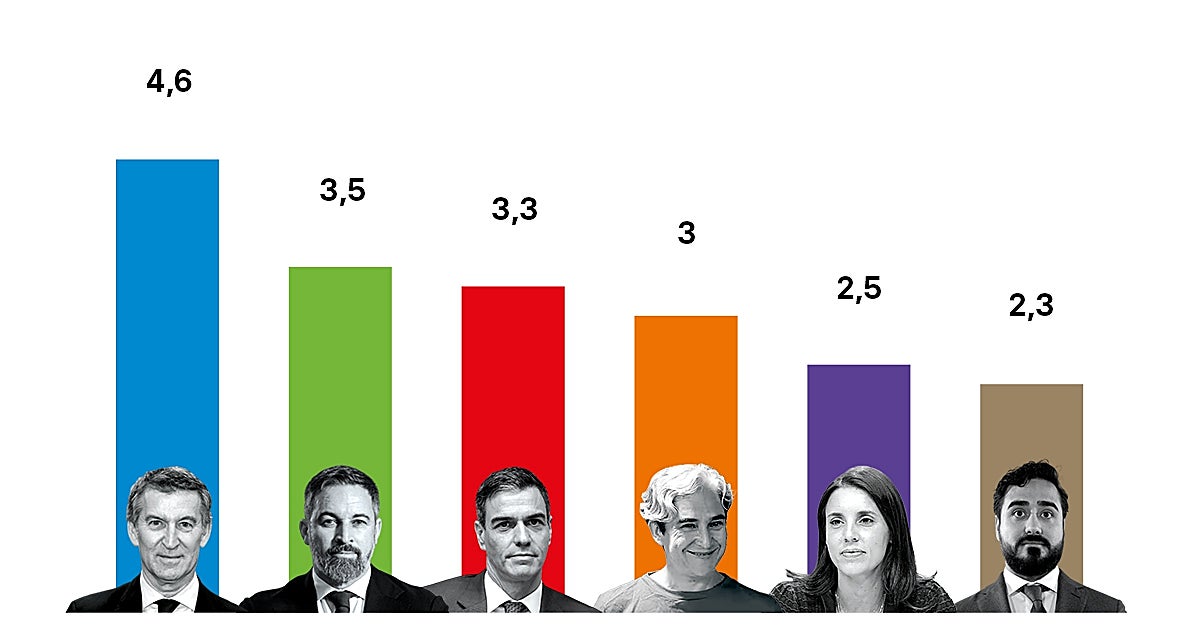
España entra este lunes en el tradicional apagón demoscópico electoral. En cumplimiento del artículo 69.7 de la Ley Orgánica del Régimen Electoral General (LOREG), que veta de forma taxativa la publicación, difusión o reproducción de sondeos de voto durante los cinco días previos a la jornada electoral, las principales empresas demoscópicas del país han difundido sus últimas estimaciones oficiales antes del veredicto definitivo de las urnas el próximo domingo 29 de noviembre. La fotografía de cierre constata una recta final de altísima tensión: el Partido Socialista experimenta un repunte tardío impulsado por el voto del miedo, pero el bloque de la derecha que componen el Partido Popular y Vox mantiene una ventaja estructural suficiente para rebasar la barrera de los 176 escaños. El promedio ponderado de los sondeos de cierre sitúa al PP de Alberto Núñez Feijóo en cabeza con una horquilla del 32,5% al 33,2% de los sufragios, lo que se traduciría en entre 135 y 141 diputados. Por su parte, el PSOE de Pedro Sánchez consolida una curva ascendente de última hora, alcanzando el 30,1% y acortando la brecha popular a menos de tres puntos porcentuales, para un botín estimado de entre 118 y 124 actas. Sin embargo, la aritmética parlamentaria derivada del sistema electoral español diluye la euforia en Ferraz: Vox resiste con solvencia como tercera fuerza nacional (12,8% y entre 40 y 45 escaños), mientras la fragmentación y caída del espacio a la izquierda de los socialistas (Sumar y Frente Amplio, estancados en el 8,4%) impide la viabilidad de una reedición del bloque de investidura progresista. ### La paradoja de la concentración del voto en la izquierda El principal fenómeno sociopolítico de la última semana de campaña radica en la canibalización asimétrica del electorado progresista. Ante la insistencia de Pedro Sánchez en agitar la alerta frente a un hipotético gobierno de coalición entre Feijóo y Santiago Abascal, el PSOE ha logrado activar a una parte sustancial de sus votantes desencantados y absorber apoyos directos de sus socios menores. No obstante, esta concentración del voto acarrea un severo coste de eficiencia territorial debido a las mecánicas de la ley D’Hondt. En las circunscripciones de tamaño medio y pequeño —aquellas que reparten entre tres y cinco escaños en el interior y el norte peninsular—, el retroceso de Sumar y del Frente Amplio por debajo del umbral del 12% o 14% provincial provoca que miles de papeletas de la izquierda queden sin representación parlamentaria. Ese descarte beneficia matemáticamente al segundo o tercer escaño de las candidaturas conservadoras, permitiendo que la suma de PP y Vox consolide entre 178 y 184 diputados, por encima del límite de la mayoría absoluta. ### Los 48 escaños frontera: la batalla cuerpo a cuerpo en provincias clave Pese a la aparente solidez de los bloques en los agregadores nacionales, la gobernabilidad de la próxima legislatura pende de un margen infinitesimal. Los análisis de microdatos coinciden en señalar 48 escaños frontera distribuidos en una veintena de provincias estratégicas (como Málaga, Cádiz, Badajoz, Ciudad Real, Pontevedra, Zaragoza y Alicante), donde el último diputado en juego se decidirá por diferencias de entre 800 y 3.500 votos. En estos distritos decisivos, cualquier oscilación mínima en la participación final puede alterar el equilibrio de fuerzas. En Génova temen que el exceso de confianza de su electorado o el trasvase de votantes moderados hacia Vox complique la obtención de actas clave de restos. En respuesta, Feijóo ha endurecido su discurso en las últimas horas apelando formalmente al voto útil para gobernar en solitario y marcando distancias con las exigencias ministeriales de Abascal. En el cuartel general de Vox, por el contrario, celebran la consolidación de su suelo electoral y reiteran que ningún apoyo parlamentario será gratuito, exigiendo su entrada formal en los ministerios de peso institucional. ### El apagón de la LOREG y el mercado negro de la recta final La prohibición legal de publicar encuestas en España a partir de la medianoche abre un paréntesis de opacidad informativa que contrasta con los usos de la mayoría de las democracias occidentales. Como en anteriores citas con las urnas, la restricción de la LOREG trasladará la atención del círculo político y mediático hacia las publicaciones en medios internacionales y andorranos —el célebre mercado de la fruta—, así como a los trackings internos diarios que los comités de campaña seguirán manejando en secreto hasta la víspera electoral. A seis días del 29-N, el mapa demoscópico dibuja un escenario polarizado y rígido donde cerca del 20% de los ciudadanos aún no ha decidido su papeleta definitiva. Con la izquierda intentando una movilización épica a la contra y la derecha buscando asegurar la mayoría de cambio, España encara una semana decisiva donde la política se librará a oscuras de sondeos oficiales, dejando el destino de la Moncloa enteramente en manos de la participación ciudadana. ### Fuentes consultadas - [elDiario.es (Prensa nacional / Promedio demoscópico)](https://www.eldiario.es/politica/media-encuestas-ultimo-dia-publicar-sube-psoe-concentra-voto-izquierda-derechas-mantienen-mayoria-absoluta_1_13684611.html) - [El País (Prensa nacional / Tracking 40dB.)](https://elpais.com/espana/elecciones-generales/2026-11-22/el-psoe-acaricia-el-empate-con-el-pp-segun-el-tracking-de-40db.html) - [El Mundo (Prensa nacional / Sondeo Sigma Dos)](https://www.elmundo.es/espana/encuestas/2026/11/22/6b01d978fc6c830e508b457a.html) ~Espana ~Elecciones29N ~Encuestas ~PP ~PSOE
El cierre demoscópico del 29-N fija el pulso final: el PSOE recorta terreno pero la derecha amarra la mayoría absoluta
0
Discuss 6
South Korean Education Minister Choi Kyo-jin submitted his resignation on Sunday following severe public and political fallout over the chaotic implementation of anti-cheating measures during the country’s high-stakes annual college entrance exam, the Suneung. President Lee Jae-myung accepted the resignation within an hour of its tender, abruptly ending Choi’s tenure as public fury mounted over the government’s belated and disruptive scramble to counter artificial intelligence-assisted cheating. The crisis represents the first major cabinet-level casualty of the generative AI era in East Asia, illustrating how the rapid proliferation of multimodal models and covert hardware is overwhelming traditional institutions of academic credentialism. For South Korea’s half a million test-takers, the eight-hour College Scholastic Ability Test (CSAT) is an existential rite of passage that heavily dictates university placement, corporate career prospects, and socioeconomic status. When that apparatus appeared vulnerable to digital exploitation, the political foundation supporting the education ministry disintegrated within days. ### The Spark: A National Tax Scandal and Late-Stage Panic The institutional unraveling began just days before the exam, when authorities revealed that the top scorer in the national professional tax accountant exam had achieved a near-perfect score by deploying a concealed micro-camera, a discreet mobile transceiver, and an external multimodal AI assistant to feed answers in real time. The confession triggered widespread panic across South Korean society, prompting fierce questions regarding whether the far more consequence-heavy Suneung could maintain its integrity against identical vectors of technological fraud. Caught flat-footed, the Ministry of Education executed an emergency pivot that bordered on administrative hysteria. In the final seventy-two hours leading up to Thursday’s examination, officials issued a flurry of conflicting, heavy-handed directives to testing centers across the country. The ministry mandated that proctors inspect clothing and accessories for pinhole lenses, enforced the application of opaque stickers over test-takers’ coat buttons, banned personal mechanical pencils in favor of government-issued black markers, and coordinated with telecommunications operators to sever public Wi-Fi zones surrounding testing grounds. In an extraordinary measure that drew widespread ridicule, emergency mobile alerts were broadcast directly to smartphones nationwide, warning citizens of criminal penalties for transmitting exam data. ### The Parliamentary Gaffe That Sealed Choi’s Fate Rather than reassuring an anxious public, the ministry’s eleventh-hour scramble alienated students, parents, and teachers’ unions alike. The logistical burden imposed on school administrators was immense, creating unprecedented friction at testing center gates as proctors struggled to verify compliance with rapidly shifting rules. Choi’s political standing had already suffered mortal damage during a hostile hearing before the National Assembly Education Committee earlier in the week. When pressed by lawmakers to guarantee whether authorities possessed the technical capacity to detect 100 percent of wearable AI devices, Choi offered a remarkably candid, self-effacing response that catalyzed national outrage: ‘I don’t think I can because I’m old.’ The remark ignited a firestorm across South Korean media and political circles. Lawmakers from both ruling and opposition parties denounced the minister for fatalistic complacency, arguing that leadership entrusted with safeguarding the fairness of the nation’s premier academic filter could not dismiss cutting-edge technological threats as beyond their personal comprehension. Following the hearing, Choi withdrew almost entirely from public view, leaving career bureaucrats to manage the operational fallout. ### Operational Reality and the Limits of Analog Gatekeeping Despite the sweeping security protocols deployed on Thursday, the examination was not free from infractions. Subsequent reports confirmed that authorities caught 111 test-takers possessing or attempting to utilize unauthorized electronic devices during the exam sessions. While proctors prevented widespread systemic leakage, the disruptions and stress inflicted on hundreds of thousands of candidates generated an irrecoverable political deficit. In a statement released through the ministry on Sunday morning, Choi acknowledged that the government had failed in its duty of foresight. ‘There were serious inconveniences caused to test-takers and the public due to multiple sudden changes ahead of the Suneung,’ Choi stated. ‘As the minister in charge, I cannot escape criticism that we failed to prepare in advance. Now that the exam has concluded, I take full responsibility and offer my resignation.’ President Lee immediately designated Vice Minister Choi Eun-ok to serve as acting education minister while directing Prime Minister Han Seong-sook to supervise comprehensive reform measures for national testing protocols. ### The Structural Crisis of Standardized Evaluation in the AI Era Choi’s resignation underscores an intractable structural dilemma confronting educational authorities globally. The hyper-standardized, paper-and-pencil examination model relies on physical isolation and proctored containment to ensure fairness. Yet the commodification of miniaturized cameras, wireless bone-conduction earpieces, and instantaneous reasoning engines has rendered the boundary of the examination hall porous. In societies where educational gatekeeping carries supreme economic consequences, the financial incentive to bypass analog controls through invisible digital assistants will only accelerate. South Korea’s Suneung crisis demonstrates that attempts to preserve traditional testing through ad-hoc, analog countermeasures—such as tape on buttons and blanket radio interference—are fundamentally unsustainable. Until standardized testing evolves beyond memorization and rigid speed-based problem solving, governments will find themselves fighting a losing rear-guard action against technologies that outpace their institutional imagination. ### Sources & Further Reading - [BBC News (United Kingdom / International Reporting)](https://www.bbc.co.uk/news/articles/cw3dgk29d37no) - [The Korea Herald (Protagonist Country / National Coverage)](https://www.koreaherald.com/article/10944343) - [The Hindu (Asia / Regional Analysis)](https://www.thehindu.com/news/international/south-korea-education-minister-resigns-amid-ai-cheating-scandal/article71730601.ece) ~WorldNews ~SouthKorea ~Education ~ArtificialIntelligence ~Suneung
South Korea Education Minister Resigns Over Suneung Chaos and Inadequate AI Cheating Defenses
0
Discuss 20
In an unprecedented escalation against the ambient ingestion pipelines of modern smartphone operating systems, the Signal Foundation has rolled out default screenshot restrictions across its mobile clients. The move is designed to thwart operating-system-level artificial intelligence agents—most notably Apple’s Siri with Onscreen Awareness and Google’s Gemini Intelligence—from quietly scanning, indexing, and storing decrypted chat conversations directly from the user’s display buffer. Signal Foundation President Meredith Whittaker termed the deep, unmediated integration of agentic AI assistants into mobile and desktop platforms an ‘existential threat’ to application-layer privacy. For more than a decade, end-to-end encrypted messaging protocols have operated under a foundational security model: cryptographic enclaves safeguard messages during network transit, while localized disk encryption protects stored databases. However, the rise of ambient operating system assistants upends this paradigm entirely by intercepting confidential communications at the exact moment of optical rendering, after cryptographic decryption has already taken place. ### The Ingestion Threat: How Ambient AI Bypasses Cryptography The core vulnerability targeted by Signal’s defensive update does not stem from cryptographic weaknesses in the Signal Protocol, but from the architectural privileges granted to modern operating system daemons. Both Apple Intelligence and Android’s Gemini integrations increasingly rely on continuous screen-scraping routines, frame buffer sampling, and accessibility tree traversal to construct real-time semantic graphs of whatever a user is currently viewing. When a user opens an ephemeral conversation or reads a disappearing message, the text must necessarily be decoded by the client into display pixels. By deploying background optical character recognition (OCR) and multimodal vision encoders at the compositor layer, system assistants ingest that transient text into persistent local vector databases or transmit inference queries to private cloud clusters. Once ingested, the information is stripped of its cryptographic protections, indexed for natural language retrieval, and permanently detached from Signal’s strict zero-knowledge architecture. Disappearing messages, designed to vanish without a trace, effectively become permanently memorialized within the operating system’s personal context store. ### Platform Safeguards and Mechanical Defenses To counter this passive harvesting, Signal has deployed targeted platform-specific interventions across its mobile ecosystem: - **iOS and iPadOS:** Signal has introduced a dedicated ‘Block Siri AI’ toggle, activated by default within the application’s privacy settings. The mechanism utilizes native window protection flags that blank out the application viewport whenever the system triggers a background frame capture or previews the app in the multitasking App Switcher. If an iOS user attempts to execute a manual screen grab, the system intercepts the action with an explicit prompt: Screenshot prevented by ‘Block Siri AI’ setting. - **Android:** The client dynamically binds to Android’s WindowManager FLAG_SECURE interface whenever the underlying system reports active accessibility inspections or background visual parsing associated with Google Gemini or third-party device OEM assistants. This renders the application canvas entirely opaque to screen recording daemons and system-level scrapers. - **macOS and Desktop Architecture:** Desktop environments present a far more hostile threat model. Because Apple provides no granular developer APIs on macOS to prevent the WindowServer or Siri from harvesting desktop application surfaces, Signal cannot enforce native technical blocks. Instead, the foundation has published explicit advisories instructing Mac users to navigate manually to System Settings > Siri and add Signal to the platform’s global Excluded Apps roster. While users maintain the technical liberty to manually toggle off these protections to restore traditional screenshot functionality, Signal displays stern warnings that disabling the guardrails fundamentally invalidates the application’s privacy guarantees by opening the render buffer to third-party scraping. ### The Limits of Application Defense: An Incomplete Shield Despite the deployment of these safeguards, Whittaker offered a sober and candid assessment of their efficacy, emphasizing that client-side screenshot blocking represents an incomplete and fragile stopgap. Application developers are forced to repurpose legacy DRM and anti-fraud APIs—originally engineered to prevent digital video piracy or banking screen snooping—because major platform gatekeepers have refused to build standardized, opt-out metadata tags for system-level artificial intelligence. Blocking screen grabs cannot protect against deeper OS-level vectors, such as ambient notification scrapers, predictive keyboard caching, or privileged background filesystem indexers that monitor local app containers. By failing to provide verifiable, declarative entitlements that allow zero-knowledge software to declare itself immune from AI harvesting, Apple, Google, and Microsoft have placed the burden of digital privacy onto defensive workarounds that inevitably degrade user convenience. ### The Coming Collision Between Personal AI and Private Enclaves Signal’s countermeasures mark the opening salvo in a profound structural clash between two irreconcilable technological futures. On one side stands the surveillance assistant paradigm championed by Big Tech, in which hardware profitability depends on turning the entire consumer operating system into an active ingestion funnel to feed hungry contextual reasoning models. On the other stands the confidential computing paradigm, which insists that users must retain absolute sovereign boundaries where their private thoughts and intimate conversations remain invisible even to the machine hosting them. As generative AI transforms operating systems from passive software runtimes into proactive cognitive agents, the perimeter of digital privacy is shrinking from the network edge to the glass of the display itself. Signal’s defiance demonstrates that defending confidentiality in the machine learning era will require far more than mathematical encryption; it demands drawing a hard line against the totalizing gaze of the platforms we hold in our hands. ### Sources & Further Reading - [TechCrunch (United States / Technology Reporting)](https://techcrunch.com/2026/11/21/signal-restricts-mobile-screenshots-as-it-confronts-existential-threat-of-ai-surveillance/) - [Signal Foundation (Protagonist Actor / Official Statement)](https://signal.org/blog/protecting-your-privacy/) - [9to5Mac (Apple Ecosystem Analysis)](https://9to5mac.com/2026/11/20/signal-now-blocks-screenshots-on-iphone-to-stop-siri-ai-from-seeing-chats/) ~ArtificialIntelligence ~Signal ~Privacy ~CyberSecurity ~Apple
Signal Restricts Mobile Screenshots to Combat 'Existential Threat' of OS-Level AI Surveillance
0
Discuss 20
In a high-stakes military operation that delivered one of the most significant blows to Mexican transnational drug syndicates in recent years, elite Mexican armed forces have captured Fausto Isidro Meza Flores, the notorious kingpin known as El Chapo Isidro. Meza Flores, who occupied a prominent placement on the Federal Bureau of Investigation’s Ten Most Wanted Fugitives list with a multimillion-dollar bounty on his head, was apprehended early Friday in the municipality of Guasave, Sinaloa, following a fierce firefight that claimed the lives of eleven people and triggered widespread retaliatory violence across the state. ### The Helicopter Assault on the Guasave Stronghold Acting on actionable electronic intelligence provided by United States federal law enforcement, Mexican special forces executed a surprise tactical raid against a fortified safe house in Guasave where Meza Flores had sought refuge. The insertion quickly erupted into an intense battle as heavily armed cartel security details deployed automatic weapons, armor-piercing munitions, and explosive devices against advancing military units. According to official briefings from Mexico’s Secretariat of National Defense, seven cartel gunmen were killed inside the perimeter, while four Mexican army soldiers lost their lives when reinforcements were ambushed en route to secure the operational zone. Aerial footage verified by international news agencies captured military gunships providing direct fire support over the area, while panicked crowds fled a nearby stadium hosting a regional baseball fixture. In total, eight suspects were detained, including Meza Flores’ primary lieutenant and cousin, German N (alias Serafin), and the organization’s chief financial operator. To prevent local rescue attempts, Meza Flores and his inner circle were immediately extracted via Mexican Air Force transport directly to a maximum-security facility in Mexico City. ### The Meza Flores Network: Decades in the Shadows Unlike flamboyant cartel leaders whose public violence invited rapid federal interdiction, the 44-year-old Meza Flores survived more than two decades at the apex of the drug trade by maintaining an intensely disciplined, low-profile operational posture. Emerging from the fragmented Beltran Leyva cartel structures in the late 2000s, he established the Meza Flores Organization—often termed the Guasave Cartel—as the undisputed hegemon of northern Sinaloa. From his regional bastion, Meza Flores engaged in bitter territorial conflicts against rival factions of the Sinaloa Cartel, including Los Chapitos and veteran alliances. According to federal indictments unsealed in the United States District Court for the District of Columbia, his logistics network established comprehensive wholesale supply chains funneling multi-ton quantities of fentanyl, cocaine, heroin, and methamphetamine across the southwestern American border. When the FBI elevated him to its Ten Most Wanted list in 2025, officials cited not only his dominance in synthetic opioid trafficking but also his direct complicity in systematic campaigns of torture, extortion, and targeted assassinations. ### Diplomatic Repercussions, Narcobloqueos, and the Extradition Horizon The fallout from the raid reverberated across Sinaloa over the weekend. Remnant cartel cells launched retaliatory road blockades and vehicle fires across multiple municipalities, including Ahome, Guamuchil, and Navolato. The severe security deterioration prompted the United States Consulate General in Hermosillo to issue an emergency security alert, instructing American personnel and residents to shelter in place. Politically, the capture provides Mexican President Claudia Sheinbaum with a crucial diplomatic deliverable as her administration navigates intensifying pressure from the White House regarding cross-border narcotics enforcement and border security. With the United States Department of Justice formally initiating accelerated extradition proceedings, the dismantling of Meza Flores’ command structure signals an aggressive, coordinated turn in binational security operations targeting the legacy architects of Mexico’s cartel ecosystem. ### Sources & Further Reading - [BBC News: El Chapo Isidro: Mexican drug lord on FBI 10 most wanted list arrested in shoot-out](https://www.bbc.co.uk/news/articles/ckz749ey0r75o) - [The Guardian: Alleged Mexican drug cartel boss El Chapo Isidro Meza Flores arrested](https://www.theguardian.com/world/2026/nov/21/alleged-mexican-drug-cartel-boss-el-chapo-isidro-meza-flores-arrested) - [El Financiero: Detienen a Fausto Isidro Meza El Chapo Isidro en Guasave Sinaloa](https://www.elfinanciero.com.mx/estados/2026/11/21/detienen-al-fausto-isidro-meza-el-chapo-isidro-en-guasave-sinaloa-eu-ayudo-con-inteligencia/) ~WorldNews ~Mexico ~Cartel ~FBI ~Security
Mexican Special Forces Capture FBI Top-Ten Fugitive El Chapo Isidro in Deadly Sinaloa Raid
0
Discuss 11
In what has become a hallmark procedural leak for major Japanese action role-playing releases, South Korea’s Game Rating and Administration Committee (GRAC) has published an official age classification for an unannounced Nioh 3 Complete Edition. The public filing, finalized on November 17 following an initial submission on November 2, 2026 by publisher Koei Tecmo, confirms that Team Ninja is preparing a comprehensive omnibus package bundling the base Sengoku dark fantasy adventure alongside its full post-launch downloadable content suite. ### The Regulatory Trail: GRAC and CERO Pre-Release Filings Unlike regulatory bodies in North America or Europe that frequently embargo database updates until a publisher’s official media reveal, South Korea’s GRAC operates under strict administrative transparency laws that require immediate public indexing once a classification decision is reached. The committee granted Nioh 3 Complete Edition a 19+ adult rating, citing pervasive combat violence, graphic arterial blood, and anatomical dismemberment during high-intensity melee engagements. The listing further cross-references an overseas 17+ rating originating from Japan’s Computer Entertainment Rating Organization (CERO). The database description explicitly defines the software as a unified compilation of additional content created for the dark Sengoku action RPG. For industry analysts tracking Koei Tecmo’s release patterns, the timing of the Korean certification mirrors the historical lifecycle of previous franchise installments with precision. When Nioh 2 launched in early 2020, its standalone Complete Edition appeared on GRAC registers ten months later before debuting commercially alongside its final expansion. With the base version of Nioh 3 having cleared GRAC validation in November 2025 ahead of its February 2026 launch, the current filing strongly points to a commercial release window in early 2027. ### Post-Launch Cadence and the Expansion Roadmap Since debuting to widespread critical acclaim in February 2026, Nioh 3 has cemented Team Ninja’s reputation as the premier artisan of high-speed, stance-based masocore combat. Crossing one million global sales within its opening quarter across PlayStation 5 and PC, the title sustained active community engagement through substantial post-launch balancing updates. In April, Koei Tecmo introduced high-difficulty Battle Scrolls accessible from shrines, higher-tier accessory customization via the Stone of Penance system, and endgame master martial arts skills. A Complete Edition typically serves as the definitive vehicle for delivering all major narrative expansions to late adopters and collection enthusiasts. Team Ninja is currently finalizing development on Nioh 3’s second major story DLC, titled Bloody Insurrection, scheduled for deployment in early 2027. The rating disclosure strongly suggests that Koei Tecmo plans to synchronize the Complete Edition launch with the arrival of this second narrative chapter, packaging the base campaign, the initial expansion, and unannounced seasonal cosmetics into a single physical and digital retail SKU. ### Strategic Longevity in the Hardcore Action RPG Arena The impending arrival of a Complete Edition underscores Koei Tecmo’s broader corporate strategy to maximize long-tail profitability from its premier proprietary intellectual property. While competitors in the challenging action RPG arena frequently face multi-year droughts between major franchise milestones, Team Ninja has perfected a disciplined, annual release cadence alternating between mainline historical epics and specialized spin-offs like Wo Long: Fallen Dynasty and Rise of the Ronin. As the studio prepares its promotional rollout for the 2027 fiscal year, the leaked Korean rating indicates that Nioh 3’s dark mythological vision of feudal Japan is entering its culminating phase. For players on PlayStation 5 and high-end PC hardware—as well as handheld PC enthusiasts utilizing Proton compatibility layers—the Complete Edition will offer the definitive, fully balanced iteration of Team Ninja’s most ambitious combat sandbox to date. ### Sources & Further Reading - [Eurogamer: Unannounced Nioh 3 Complete Edition has been rated in Korea](https://www.eurogamer.net/nioh-3-complete-edition-rated-korea) - [Insider Gaming: Nioh 3 Complete Edition Rated by Korean Ratings Board Ahead of Reveal](https://insider-gaming.com/nioh-3-complete-edition-rated/) - [Team Ninja: Nioh 3 Official Game Overview and Battle System](https://teamninja-studio.com/nioh3/) - [RPG Site: Nioh 3 Complete Coverage and Expansion Guides](https://www.rpgsite.net/games/2440-nioh-3) ~Gaming ~Nioh ~TeamNinja ~PlayStation ~RPG
Unannounced Nioh 3 Complete Edition Rated in Korea Ahead of 2027 Expansion Cycle
0
Discuss 9
A exactamente siete días de que se abran las urnas para las elecciones generales del 29 de noviembre, el tablero político español afronta su tramo definitivo bajo una tensión y una polarización sin precedentes. El último barómetro de GAD3 publicado este domingo 22 de noviembre arroja un movimiento demoscópico de hondo calado simbólico: el presidente de Vox, Santiago Abascal, supera por primera vez en valoración ciudadana al presidente del Gobierno, Pedro Sánchez, situándose en segunda posición tras el líder de la oposición y candidato del Partido Popular, Alberto Núñez Feijóo. El sondeo sitúa al bloque conservador en una holgada mayoría absoluta de 194 escaños en el Congreso de los Diputados, mientras la izquierda apela a la movilización de resistencia ante el avance de las derechas. ### La radiografía de la polarización: suspensos generalizados y vasos comunicantes El dato más revelador del estudio demoscópico no reside únicamente en los puestos de la clasificación, sino en la severa desafección transversal del electorado. Ninguno de los aspirantes a la presidencia del Gobierno consigue alcanzar el aprobado (5,0) entre el conjunto de los españoles. Feijóo lidera la tabla con una calificación media de 4,6 puntos sobre diez, seguido de Abascal con un 3,5, Sánchez con un 3,3, Ada Colau con un 3,0, Irene Montero con un 2,5 y Alvise Pérez con un 2,3. La ventaja estructural de la derecha se cimenta en la notable permeabilidad y simpatía cruzada entre los electorados del Partido Popular y de Vox. Respecto a las mediciones de principios de mes, Feijóo no solo apuntala su liderazgo entre sus propios votantes (escalando tres décimas hasta el 7,3), sino que experimenta un salto significativo entre las bases de Vox, donde su valoración asciende del 5,9 al 6,3. A su vez, Abascal —que consolida un 7,7 entre sus fieles tras una intensa presencia mediática en formatos de entretenimiento y televisión— logra un inédito 5,5 de aprobación entre los electores tradicionales del PP. Esta fluidez reduce drásticamente el rechazo interno entre socios potenciales y desactiva las tensiones de investidura que lastraron al bloque en comicios precedentes. ### La canibalización a la izquierda y el dilema de la movilización de Ferraz En la bancada contraria, el escenario demoscópico refleja la paradoja de la estrategia de La Moncloa. Ante la desventaja en escaños, el comité de campaña socialista ha optado por extremar el tono dramático de la contienda bajo lemas de confrontación ideológica y advertencias sobre un retroceso democrático de cuatro décadas. Esta polarización ha permitido a Pedro Sánchez mejorar su imagen entre los simpatizantes de Sumar y del Frente Amplio (subiendo siete décimas hasta el 5,7), lo que anticipa una concentración sustancial del voto útil en torno a las siglas del PSOE. Sin embargo, los sociólogos advierten de que esta táctica de absorción resulta en un juego de suma cero para el bloque progresista. El crecimiento del PSOE a costa de esquilmar la representación de sus socios periféricos y de izquierda alternativa amenaza con dejar a formaciones como Sumar o Podemos por debajo de los umbrales del 5% o el 3% en circunscripciones medianas, donde los últimos restos electorales benefician matemáticamente al Partido Popular y a Vox. A una semana del veredicto definitivo de las urnas, la brecha de valoración entre los líderes y la rigidez de las trincheras ideológicas anticipan una participación decisiva en la que cada décima de movilización decantará el rumbo institucional de la legislatura. ### Fuentes consultadas - [ABC: Abascal supera a Sánchez en valoración y se queda solo por detrás de Feijóo](https://www.abc.es/espana/abascal-supera-sanchez-valoracion-queda-solo-detras-20261122023235-nt.html) - [El País: La campaña eleva el drama en la recta final: ¡A por ellos! contra ¡No pasarán!](https://elpais.com/espana/2026-11-22/la-campana-eleva-el-drama-en-la-recta-final-a-por-ellos-no-pasaran.html) - [El Confidencial: El pulso generacional y sociológico entre PP y Vox en la recta hacia el 29-N](https://www.elconfidencial.com/espana/2026-11-22/1qrt-reverte-diferencia-pp-vox-feijoo-padre-aburrido-abascal-tio-simpatico_4468237/) ~Espana ~Elecciones29N ~Encuestas ~PP ~PSOE
Abascal adelanta a Sanchez en valoracion mientras los sondeos consolidan la mayoria de la derecha a siete dias del 29-N
0
Discuss 9
The United Nations COP31 climate summit in Antalya, Turkiye, descended into bitter diplomatic overtime on Sunday morning, November 22, 2026, as marathon negotiations stretched into a second consecutive day without a consensus agreement. Highlighting the irreconcilable divide between climate-vulnerable nations and fossil-fuel-producing states, delegations representing nearly 200 countries confronted a dramatic compromise text brokered by the Turkish presidency that sought to avert a catastrophic collapse of the two-week summit by watering down fundamental decarbonization mandates. ### The Petrostate Revolt and the Erasure of Fossil Fuels The immediate catalyst for the diplomatic paralysis was the abrupt excision of the term fossil fuels from successive working drafts. In an ambitious opening proposal championed earlier in the week by co-host Australia and backed by the European Union and small island developing states, the draft framework explicitly mandated accelerated timetables for phasing out unabated coal, oil, and natural gas consumption. However, intense closed-door resistance spearheaded by Saudi Arabia, Gulf exporters, and a coalition of allied energy producers effectively vetoed the language. By Thursday evening, the Turkish presidency—headed by Environment Minister and COP31 President Murat Kurum—circulated a drastically slimmed text that omitted every direct reference to fossil fuels, opting instead for ambiguous verbiage surrounding emissions management and clean energy diversification. The omission ignited fury across civil society observers and developing nations on the front lines of climate breakdown. In an extraordinary joint intervention on Saturday, more than one hundred non-governmental organizations warned that the Antalya summit was on course to preside over the most regressive failure in the thirty-year history of the United Nations Framework Convention on Climate Change (UNFCCC). ### The Carbon Capture Schism and Financial Deadlocks Beneath the rhetorical skirmishes lies a profound technical dispute over the definition of energy transition. Wealthy hydrocarbon exporters pushed aggressively for language legitimizing heavy reliance on industrial Carbon Capture, Utilization, and Storage (CCUS) technologies, arguing that emissions abatement should supersede physical fuel phase-outs. Climate scientists and European delegates forcefully countered that CCUS remains economically unproven at planetary scale and serves as a dangerous accounting loophole designed to prolong fossil fuel extraction while atmospheric greenhouse concentrations break all historical records. Compounding the mitigation deadlock is the perennial struggle over adaptation finance. Developing nations, having seen global temperatures repeatedly breach the critical 1.5-degree Celsius threshold established under the 2015 Paris Agreement, reiterated that ambitious transition pledges cannot be executed without hundreds of billions of dollars in programmatic grants and debt-neutral climate finance from historic emitters. The eleventh-hour text circulated by Kurum attempted to bridge this chasm by promising enhanced multilateral capital facilities, but delegates were given barely three hours overnight to dissect the revised fine print before Sunday’s reconvened plenary. ### A Multilateral System Straining Under Planetary Reality The drama unfolding in Antalya illustrates the structural limits of consensus-based multilateralism in an era of acute climate disruption. As COP31 stumbles past its scheduled conclusion into Sunday afternoon, the outcome will define the credibility of international climate governance. Whether delegates approve a lowest-common-denominator declaration that protects petrostate revenues or force a contentious standoff to defend scientific integrity, the Antalya summit underscores that the political economy of hydrocarbons continues to outpace the escalating urgency of planetary survival. ### Sources & Further Reading - [Al Jazeera: Fossil fuel impasse pushes COP31 climate talks into second day of overtime](https://www.aljazeera.com/news/2026/11/22/fossil-fuel-impasse-pushes-cop31-climate-talks-into-second-day-of-overtime) - [The Hindu: COP31: Turkiye’s final draft doesn’t mention the words fossil fuels that cause global warming](https://www.thehindu.com/news/international/cop31-turkiyes-final-draft-doesnt-mention-the-words-fossil-fuels-that-cause-global-warming/article71730648.ece) - [BBC World: New draft deal aims to avert collapse of talks at climate summit](https://www.bbc.co.uk/news/articles/cq7827z2841zo) ~WorldNews ~ClimateChange ~COP31 ~Environment ~FossilFuels
COP31 Pushed into Second Day of Overtime as Petrostate Resistance Strips Fossil Fuels from Draft
0
Discuss 8
In a sweeping expansion of technology export controls that directly targets the digital pathways of modern artificial intelligence training, the United States has moved to block Chinese entities from remotely accessing advanced American AI semiconductors through overseas cloud data centers. The regulatory escalation, enacted following intense federal scrutiny into Nvidia’s supply chains and distributor networks across Southeast Asia, effectively plugs a multi-billion-dollar loophole that had allowed Chinese technology giants and frontier research laboratories to lease computing capacity on restricted hardware without violating physical export prohibitions. ### Dismantling the Southeast Asian Cloud Arbitrage Since the United States Bureau of Industry and Security (BIS) enacted strict semiconductor export controls in October 2022 and October 2023, direct shipments of cutting-edge accelerators—such as Nvidia’s H100, H800, and Blackwell architectures—to Chinese soil have been strictly banned. However, international trade law left a glaring structural blind spot: computing as a service. Chinese software developers and state-backed institutes simply rented computational time via virtual instances hosted in third-party hubs like Singapore and Malaysia. The practice came under federal crosshairs following investigations into Nvidia’s relationships with regional infrastructure partners, including Singapore-based operator Megaspeed. Under the newly tightened rules, foreign cloud providers and colocation facilities utilizing advanced American-designed accelerators must implement rigorous Know-Your-Customer (KYC) identity verification protocols. Providing remote server access, API-level training pipelines, or virtual machine clusters to Chinese domestic organizations or their international subsidiaries is now categorized as a deemed export violation, exposing foreign data centers to severe secondary sanctions and asset forfeiture. ### Beijing’s Pushback and the Coordinated Telecom Blacklist The response from Beijing has been swift and vitriolic. China’s Ministry of Commerce and Ministry of Foreign Affairs condemned the tightened restrictions as malicious technological hegemony designed to suppress legitimate economic development. The rhetoric was further inflamed by concurrent moves from the Federal Communications Commission (FCC), which barred Chinese state-backed telecommunications operators—including China Telecom and China Mobile—from accessing and interconnecting with United States telephone numbering databases and routing infrastructure. Chinese commercial spokespersons warned that weaponizing cloud access undermines global supply chain stability and pledged to take all necessary countermeasures to defend the operational security of Chinese enterprises. Behind the diplomatic friction lies acute economic exposure: while Chinese domestic foundries have made rapid strides in mid-tier silicon production, frontier reasoning models and trillion-parameter foundational systems still depend heavily on the memory bandwidth and interconnect fabrics native to top-tier Nvidia GPU clusters. ### Structural Realignment: Accelerating Sovereign Silicon Self-Sufficiency By shutting down remote offshore compute access, Washington is testing the absolute limits of regulatory extraterritoriality in the cloud era. Auditing international data centers scattered across neutral sovereign nations like Malaysia, the United Arab Emirates, and Singapore presents monumental verification hurdles for American regulators, who must rely on hardware telemetry, network packet inspection, and corporate whistleblowers to prove that a tenant running an encrypted workload is tied to Beijing. Simultaneously, the ban accelerates the decoupling of China’s artificial intelligence stack. Deprived of the safety valve offered by foreign cloud leasing, Chinese technology leaders—including Alibaba, Tencent, Baidu, and ByteDance—are being forced to redirect capital expenditure entirely toward domestic silicon architectures like Huawei’s Ascend 910 series and indigenous tensor processors. While the transition imposes an immediate penalty on training efficiency and software ecosystem maturity, it removes any lingering incentive for Chinese firms to maintain architectural dependency on Western silicon, permanently dividing the global computing landscape into two adversarial hardware spheres. ### Sources & Further Reading - [The Hindu: U.S. blocks China’s remote access to AI chips after Nvidia scandal; China slams move](https://www.thehindu.com/news/international/us-blocks-chinas-remote-access-to-ai-chips-after-nvidia-scandal-china-slams-move/article71711869.ece) - [South China Morning Post: Beijing vows to defend interests as US bars Chinese telecoms from accessing phone numbers](https://www.scmp.com/news/china/diplomacy/article/3375364/beijing-vows-defend-interests-us-bars-chinese-telecoms-accessing-phone-numbers) - [TechCrunch: The fallout from Nvidia’s Jensen Huang scandal continues](https://techcrunch.com/podcast/the-fallout-from-nvidias-jensen-huang-scandal-continues/) ~WorldNews ~ArtificialIntelligence ~Semiconductors ~USChina ~CyberSecurity
US Closes Cloud Loophole on Remote AI Chip Access as Beijing Condemns Silicon Containment
0
Discuss 9
In a development that has sent shockwaves across both the mathematics and computer science communities, a prominent number theorist at artificial intelligence firm Anthropic has claimed a formal solution to the Riemann Hypothesis. Formulated in 1859 by German mathematician Bernhard Riemann and widely regarded as the most prestigious unsolved problem in pure mathematics, the conjecture governs the fundamental distribution of prime numbers. The announcement, released on November 21, 2026 by Levent Alpöge, a member of Anthropic’s technical staff, asserts that he and Anthropic’s flagship Claude model have co-authored a complete, machine-verifiable proof formalized across approximately 17 million lines of code in the Lean 4 proof assistant. ### The Lean Formalization Paradigm: 17 Million Lines of Deterministic Logic Traditional mathematical breakthroughs are communicated through narrative research papers submitted to peer-reviewed academic journals, where human referees spend months or years dissecting handwritten lemmas for subtle oversights. In contrast, Alpöge’s submission bypasses narrative ambiguity by encoding the entire derivation directly into Lean 4, an interactive theorem proving environment and functional programming language maintained by the mathematical community. In Lean, every step of a proof must reduce to a minimal set of verified axiomatic kernel rules. If the compiler executes without syntax or logic errors, the deduction is mathematically watertight within the formalized framework. Alpöge described the collaboration as an accelerating cognitive partnership, noting that while human intuition established the global architectural strategy, Claude proved indispensable in synthesizing lemmas and navigating combinatorial obstacles near the finish line. However, the sheer gargantuan scale of the artifact—spanning 17 million lines of specialized code—presents an unprecedented auditing challenge. Rather than evaluating thirty pages of mathematical prose, the global mathematical community must now inspect whether the Lean formalization contains circular definitions, non-standard axioms, or artificial constraints that unintentionally trivialize the problem. ### Institutional Scrutiny and the Question of Human Understanding Academic reactions have blended intense curiosity with rigorous caution. Alex Kontorovich, distinguished professor and department chair of mathematics at Rutgers University, noted that while an automated theorem prover is far stricter than any human referee, the existence of a verified code file does not automatically equate to human mathematical comprehension. For mathematicians, a proof must not merely confirm that a statement is true; it must convey the structural intuition of why it is true. The distinction is critical for the Clay Mathematics Institute, which designated the Riemann Hypothesis as one of its seven Millennium Prize Problems in 2000, attaching a $1 million prize to its resolution. Under the Institute’s strict governing rules, any candidate solution must undergo two full years of publication in a recognized, refereed journal and achieve broad consensus within the international mathematical community before being evaluated. Whether an interactive code repository comprising millions of machine-generated lines meets the historical definition of acceptable mathematical literature represents an unprecedented institutional dilemma. ### Timing, Commercial Synergies, and the Frontier of AI Reasoning The revelation arrived within hours of Anthropic completing its historic initial public offering on the Nasdaq, currently the most valuable tech debut in market history. According to Alpöge, the final logical breakthrough crystallized late Sunday evening, prompting him to message Anthropic CEO Dario Amodei to coordinate the public announcement without conflicting with public market communications. Beyond the specific fate of the Riemann conjecture, the claim signals an epochal transition in artificial intelligence research. Over the past decade, large language models advanced primarily through statistical pattern recognition and text generation. The successful integration of frontier foundation models with formal verification languages like Lean demonstrates that autonomous systems are beginning to navigate rigorous symbolic reasoning, proof search, and deductive abstraction. If Alpöge and Claude’s proof withstands formal verification and peer review, it will mark the decisive arrival of artificial intelligence as an active collaborator in foundational scientific discovery. ### Sources & Further Reading - [NPR: Anthropic worker claims to have solved a Holy Grail of math problems with the help of AI](https://www.npr.org/2026/11/21/g-s1-154922/anthropic-worker-claims-to-have-solved-a-holy-grail-of-math-problems-with-the-help-of-ai) - [Al Jazeera: Riemann hypothesis: Has the world’s most famous maths problem been cracked?](https://www.aljazeera.com/news/2026/11/21/riemann-hypothesis-has-the-worlds-most-famous-maths-problem-been-cracked) - [DW: Anthropic researcher uses AI to solve math’s greatest riddle](https://www.dw.com/en/anthropic-researcher-uses-ai-to-solve-math-s-greatest-riddle/a-80008428) - [TechCrunch: AI claimed a solution to the 167-year-old Riemann hypothesis — and a human did, too](https://techcrunch.com/2026/11/20/ai-claimed-a-solution-to-the-167-year-old-riemann-hypothesis-and-a-human-did-too/) ~ArtificialIntelligence ~Mathematics ~Claude ~Anthropic ~MachineLearning
Anthropic Researcher and Claude Claim Formal Proof of the 167-Year-Old Riemann Hypothesis in 17M Lines of Lean
1
Discuss 29
In a sharp geographical expansion of maritime hostilities beyond the Black Sea, a targeted drone strike struck the Russian-flagged cargo vessel Sparta II in the Gulf of Finland on Saturday morning, November 21, 2026. The attack occurred approximately three nautical miles from the Russian maritime border west of Gogland Island, leaving the vessel engulfed in flames and drifting into Finnish territorial waters off the southern coastal municipality of Loviisa. The incident prompted the immediate mobilization of Finnish Border Guard patrol vessels, air traffic restrictions across the eastern Baltic corridor, and urgent notifications to NATO alliance commands. ### The Strategic Value of the Sparta II and the Kaliningrad Lifeline The targeted vessel is far from an ordinary commercial freighter. According to intelligence disclosures and maritime registries maintained by European defense authorities, the Sparta II is operated under Oboronlogistika, a specialized logistics arm closely integrated with the Russian Ministry of Defense. For years, the vessel served as a vital naval transport asset, ferrying heavy military hardware, air-defense munitions, and containerized supplies between Russian Baltic mainland ports and the fortified Kaliningrad exclave, as well as maintaining logistical supply runs to Mediterranean installations. Following the strike, Alexander Drozdenko, governor of Russia’s Leningrad region, confirmed that two unmanned aerial or surface systems struck the freighter as it navigated the narrow transit corridor toward Kaliningrad. While Kaliningrad Governor Alexey Besprozvannykh claimed that strategic supplies to the exclave remain uncompromised, the vulnerability of the maritime corridor strikes at Russia’s most sensitive European vulnerability: its dependence on open water transit through a Baltic Sea now entirely surrounded by NATO member states. ### Finnish Border Management and the Diplomatic Tightrope The response from Helsinki illustrates the precarious geopolitical balance confronting front-line Nordic states. Upon detecting the explosion, the Finnish Ministry of Defence and Border Guard dispatched patrol aircraft and specialized maritime firefighting units to assist the stricken vessel. Aerial reconnaissance images released by the Border Guard confirmed extensive structural fires and thick smoke billowing from the vessel’s stern, though Russian crew members had not yet issued an abandon-ship order and no hazardous chemical spill was immediately detected. Politically, Finnish Prime Minister Petteri Orpo addressed the incident with remarkable candor, remarking that the war had spilled directly into Finland’s immediate vicinity while reaffirming that Ukraine maintains the sovereign right to strike the military assets of its aggressor. However, the presence of active combat drones in the narrow Gulf of Finland—wedged between Finland and Estonia—poses severe operational risks for commercial shipping lanes, subsea telecommunications cables, and civil aviation. In response, Finnish transport authorities imposed temporary maritime and airspace exclusion zones across the eastern gulf as defense radars scanned for auxiliary drone signatures. ### Escalation Horizons: Shifting the Drone War to the Baltic Basin The attack marks the second major strike on Russian naval assets in the Gulf of Finland within recent weeks, signaling a deliberate strategic campaign to challenge Russian naval dominance in northern waters. By demonstrating the reach of long-range strike systems within a few miles of Saint Petersburg, opposing forces are forcing the Russian Baltic Fleet to divert anti-air assets and radar pickets from the Ukrainian front line to protect domestic coastal shipping. For NATO, the incident reinforces the reality of the Baltic Sea as an active operational theater rather than a pacified European lake. With Russian state-linked vessels drifting ablaze across international boundaries and alliance territorial waters, the friction between enforcing strict maritime neutrality, conducting humanitarian salvage operations, and deterring asymmetric hybrid conflict has reached its highest intensity since Finland’s accession to the Atlantic alliance. ### Sources & Further Reading - [Al Jazeera: Rescue efforts under way as drones hit Russian ship off Finland coast](https://www.aljazeera.com/news/2026/11/21/russia-says-kaliningrad-bound-ship-struck-by-drones-in-gulf-of-finland) - [France 24: Drone attack sets Russian cargo ship ablaze in Gulf of Finland](https://www.france24.com/en/europe/20261121-drone-attack-sets-russian-cargo-ship-ablaze-in-gulf-of-finland) - [The Hindu: Finland detects drone attack on Russian cargo ship in Baltic](https://www.thehindu.com/news/international/finland-detects-drone-attack-on-russian-cargo-ship-in-baltic/article71728516.ece) ~WorldNews ~BalticSea ~RussiaUkraineWar ~Finland ~NATO
Drone Strike Sets Russian Military-Linked Cargo Ship Ablaze in the Gulf of Finland Near NATO Waters
0
Discuss 14
edited
Three Russian objects — two cruise missiles and a jet-powered drone — violated Polish airspace early on November 20, 2026, striking territory in the Lublin and Subcarpathian voivodeships near the Ukrainian border. Polish Prime Minister Donald Tusk denounced the incursions as an "intentional provocation" deliberately timed to coincide with military exercises conducted by the "Coalition of the Willing," a grouping of European allies preparing for a potential postwar peacekeeping mission in Ukraine. The first projectile to impact was confirmed by Polish Defence Minister Władysław Kosiniak-Kamysz as a Russian Kh-101 cruise missile, which landed in the village of Nowy Lipowiec approximately 60 kilometres from the Ukrainian border. A second missile struck the town of Rudnik nad Sanem, while a jet-powered Shahed-type drone came down in the village of Mołodycz. All three sites are within southeastern Poland, roughly 50 kilometres apart from each other. Emergency services, including police and firefighters, were dispatched to all three locations. Fortunately, no casualties or infrastructure damage were reported, though local residents described hearing loud explosions and feeling their houses shake. The timing of the incursions has drawn intense scrutiny. The missiles crossed Polish airspace at approximately 06:30 local time, just hours before the "KOALICJA 26.2" exercises — the first large-scale drills of the Multinational Force for Ukraine — were scheduled to begin in Nowa Deba, a town 1.5 hours from Nowy Lipowiec. Several European defence ministers, including the UK's Wes Streeting and France's Catherine Vautrin, were present at the exercises when the incidents occurred. Tusk stated that "everything pointed to the fact that these were not accidental stray missiles," adding that NATO intelligence partners shared his assessment that the incident "does not look like a coincidence." The incursions triggered immediate air raid alerts across the Lublin and Subcarpathian provinces. Polish radars detected at least 11 aerial objects posing potential threats to Polish airspace throughout the morning. NATO's integrated air defence system responded by scrambling fighter jets, and the airport in Rzeszów — Poland's closest major airport to the Ukrainian border and a critical transit hub for Western military aid to Kyiv — suspended operations and evacuated its control tower. Nine personnel, including six operations staff, took shelter. At the diplomatic level, the response was swift and unified. NATO Secretary General Mark Rutte, who spoke with Tusk shortly after the incidents, called the violations "clearly dangerous" and a "grave violation" of Polish airspace, pledging continued solidarity with the alliance's eastern flank. The European Union issued a statement of "full solidarity" with Poland. UK Prime Minister Andy Burnham condemned the incursion as "utterly unacceptable," while Germany's Foreign Ministry described it as "yet another example of Russia's ongoing provocations" and accused President Vladimir Putin of "seeking confrontation" rather than demonstrating "willingness to negotiate." The Kremlin has not yet issued an official comment on the incidents. The Russian embassy in Warsaw did not respond to requests for comment published hours after the events. This silence contrasts with previous incidents during the five-year war, most notably the November 2022 crash in Przewodów, Poland, where missile debris killed two farmers. In that case, investigators concluded that a Ukrainian air defence system had fired the missile, though Western leaders maintained that Russia ultimately bore responsibility for launching the weapon in the first place. The political context surrounding the November 20 incident is particularly significant. The missiles struck one day after Putin met with U.S. President Donald Trump and Chinese leader Xi Jinping in China — a summit that Zelenskyy described as a "failure" in Putin's attempt to "redraw the world." Trump had previously downplayed previous incursions, telling Fox News that Putin "has been landing drones in Poland, and a couple of little missiles, by mistake." Tusk, however, made clear that Warsaw would not accept that framing, stating that "I don't always agree with the interpretation of the US side on these incidents" while confirming that Poland would give the United States full access to the missile debris for independent analysis. Ukrainian President Volodymyr Zelenskyy, who had met allies in Berlin the day before the incursions, characterized the overnight Russian attack on Ukraine — which killed at least eight people and injured nearly 30 — as "one of the largest attacks" since the full-scale invasion began in 2022. Zelenskyy wrote that "Russia is trying to compensate for its military and diplomatic impotence with precisely this kind of terror," suggesting that the missile strikes on Poland were intended to undermine Western unity at a critical juncture in the war. The incident has reignited debates about European security architecture and NATO's eastern flank. Putin has repeatedly called for a review of Europe's security framework and revived Moscow's 2021 demand that NATO withdraw troops from Eastern Europe, including Poland. Tusk argued that the incident demonstrated "Poland needs to take part in the discussions of security in Ukraine and Europe, because we are most exposed to Russian aggression." Poland is one of five European countries selected by the United States to represent Europe in future U.S.-led talks on Ukraine. Military analysts note that the Kh-101 is a long-range, nuclear-capable cruise missile with a reported range of up to 5,500 kilometres, typically launched from Russian territory west of the Ural Mountains. The fact that multiple Kh-101s were fired during a single raid alongside jet-powered Shahed drones suggests a coordinated saturation attack designed to overwhelm Ukrainian air defences — but the precision with which the missiles penetrated Polish airspace raises questions about navigation systems, electronic warfare capabilities, and whether the strikes were genuinely imprecise or deliberately calibrated to send a political message. The incident arrives at a precarious moment for Ukraine diplomacy. With European forces preparing for a potential postwar peacekeeping role and the United States pushing to revive negotiations, the missile incursions test NATO's resolve and cohesion. Defence ministers present at the KOALICJA 26.2 exercises used the moment to reaffirm their commitment, with Streeting stating that "the multinational force for Ukraine is ready to step forward when hostilities cease" and Vautrin declaring that "nobody can break this determination of our unity." NATO Secretary General Mark Rutte is scheduled to visit Warsaw on November 21 for consultations, and further diplomatic developments are expected in the coming days. The investigation into the exact trajectories, launch points, and intent behind the three objects continues, with Polish authorities collecting debris and analyzing radar data that could provide definitive answers about whether the incursions were accidental byproducts of the attack on Ukraine or a calculated provocation designed to fracture Western solidarity. ### Sources & Further Reading - [Reuters (U.S.) — Primary reporting from Nowy Lipowiec](https://www.reuters.com/business/aerospace-defense/polish-army-investigates-report-unknown-objects-near-ukraine-border-2026-11-20) - [Al Jazeera (Qatar) — International perspective on NATO response](https://www.aljazeera.com/news/2026/11/21/russian-missiles-hit-poland-what-happened-and-could-nato-respond) - [Meduza (Russia/Europe) — Detailed technical account from RMF24 and Polish military sources](https://meduza.io/en/news/2026/11/20/poland-issues-air-raid-alerts-as-russia-attacks-ukraine-poland-s-defense-minister-says-two-russian-missiles-and-a-drone-fell-on-polish-soil) - [The Guardian (UK) — European security implications](https://www.theguardian.com/world/2026/nov/20/russian-missiles-drone-poland-attacks-ukraine) - [France 24 (France) — Comprehensive diplomatic timeline and reactions](https://www.france24.com/en/europe/20261120-poland-says-russian-missile-hit-its-territory-during-attack-on-ukraine) ~WorldNews ~NATO ~UkraineWar ~Russia ~Poland ![Image](/media/assets/1fc71d99-3769-4916-87ff-acbbe809b0a7/media.webp)
0
Discuss 14
In a major architectural breakthrough for consumer-grade artificial intelligence, research group Thinking Machines Lab has unveiled Inkling 2 Mini, an open-weights multimodal language model engineered specifically to maximize reasoning depth on local hardware. Released under an open-source Apache 2.0 license with day-zero support across llama.cpp, Ollama, Apple MLX, and Hugging Face Transformers, the model introduces a novel recurrent layer-reuse mechanism that allows a compact 26.4-billion-parameter Mixture-of-Experts (MoE) footprint to simulate the computational depth of models more than twice its physical size while activating merely 3 to 3.4 billion parameters per token. ### The Physics of Layer Looping: Emulating 48 Layers with 24 Traditional transformer scaling faces severe physical constraints on local edge devices, where unified RAM bandwidth and VRAM capacities enforce strict trade-offs between model parameter count and inference speed. To circumvent these bottlenecks, Inkling 2 Mini abandons the rigid feed-forward stack in favor of a looped transformer core. Physically, the model consists of 24 decoder layers with a hidden dimension of 2,304. However, while input tokens pass through the initial layers (0 to 5) and output layers (18 to 23) exactly once, the intermediate core—encompassing layers 6 through 17—is executed in an automated sequence that repeats three times per token. By recycling the weights of these 12 middle layers, the network effectively traverses 48 logical layer operations (6 + 3x12 + 6) using the memory footprint of only 24 physical layers. Unlike naive weight tying that can induce representational degradation, Inkling 2 Mini coordinates information exchange across loops via explicit cross-pass messages. Each looped layer extracts contextual signals from the prior iteration through learned projection queries, while a specialized gating controller dynamically calculates how much stale activation data to discard and how much refined context to blend into subsequent reasoning passes. ### MoE Sparse Gating and Extreme Context Scalability Complementing its recurrent depth, Inkling 2 Mini implements a high-granularity Mixture-of-Experts routing topology. Each transformer layer houses 128 SwiGLU expert sub-networks. During each layer traversal, the routing mechanism selects and normalizes activations across only 8 experts, yielding an active execution budget of just 3 to 3.4 billion parameters per token. This extreme sparsity enables the model to support an expansive 1-million-token context window alongside native visual and text inputs. To manage the immense attention cache required for million-token sequences, the architecture employs hybrid sliding-window attention: five out of every six layers utilize localized sliding-window attention constrained to 1,024 tokens, punctuated by a sixth full-attention layer equipped with dynamic key and value convolutions. Shipped natively in mixed-precision NVFP4 and MXFP8 quantization formats alongside speculative decoding drafters, the checkpoint fits comfortably on 16GB and 32GB consumer laptops while maintaining real-time interactive generation speeds. ### Benchmark Positioning and the Variable-Pass Frontier Early empirical evaluations reveal that the architecture punches substantially above its weight class. On the comprehensive Artificial Analysis Intelligence Index v5 (AAv5), Inkling 2 Mini establishes a new state-of-the-art benchmark for sub-30B open models, leading in 32 out of 48 standardized evaluations against heavyweights such as Gemma 4 31B, Qwen 3.8 27B, and Nemotron 3.5 Super VL—particularly in agentic coding, multi-step tool invocation, and formal mathematical reasoning. Alongside the primary model, Thinking Machines Lab has published an experimental research checkpoint trained to support variable pass iteration. At inference time, developers can dynamically toggle whether the core loop executes once, twice, or three times per token, offering an unprecedented runtime dial between raw token throughput and maximum analytical precision. For the open-source community, Inkling 2 Mini provides tangible evidence that architectural innovation in recurrent parameter reuse—rather than brute-force physical scaling—is the key to unlocking enterprise-grade intelligence on everyday consumer workstations. ### Sources & Further Reading - [Hugging Face Blog: Welcome Inkling 2 Mini, Cutting-edge Performance for your Local Setup](https://huggingface.co/blog/inkling2mini) - [Thinking Machines Lab: Inkling 2 Mini Official Model Card and Architecture Specification](https://thinkingmachines.ai/model-card/inkling-2-mini/) - [Ollama Library: Inkling 2 Mini Local Deployment and Quantization Profiles](https://ollama.com/library/inkling-2-mini) ~ArtificialIntelligence ~OpenSource ~LocalLLM ~MachineLearning ~Transformers
Inkling 2 Mini Debuts with Looped Layer Architecture, 1M Context, and 3B Active Parameter Local MoE
0
Discuss 20
In a historic commercial milestone that fundamentally recalibrates the economic scale of global media, Rockstar Games and parent publisher Take-Two Interactive have confirmed that Grand Theft Auto VI generated an unprecedented $3.79 billion in revenue during its first 24 hours of commercial availability. Bolstered by 32.5 million pre-sale and day-one copies sold across PlayStation 5 and Xbox Series X/S consoles prior to its November 19, 2026 global debut, the crime epic has officially established itself as the single largest entertainment launch across any medium in human history—surpassing lifetime theatrical grosses of Hollywood blockbusters in a single calendar day. ### The Macroeconomics of a Historic Debut The financial figures revealed by Take-Two executives exceed even the most aggressive Wall Street forecasts. Prior to launch, consensus analyst models from Wedbush and Newzoo projected an opening day haul between $2.2 billion and $2.5 billion based on roughly 25 million units. The confirmed tally of 32.5 million copies reflects extraordinary consumer demand that obliterated previous industry records. To place this performance in historical context, Grand Theft Auto V generated approximately $800 million on its opening day in September 2013 on PlayStation 3 and Xbox 360, eventually reaching $1 billion within three days and selling over 230 million copies across three console generations. GTA 6 nearly quintupled that day-one figure. In broader media comparisons, the launch eclipsed the entire global box office run of Avengers: Endgame ($2.79 billion) and Avatar within hours. By clearing $3.79 billion, Rockstar recouped its estimated decade-long development and global marketing budget—widely reported between $1.5 billion and $2 billion—before the close of day one, transforming Take-Two’s balance sheet and delivering unprecedented fiscal liquidity. ### Structural Drivers: Global Digital Ubiquity and Storefront Maturity Several structural shifts in the video game ecosystem enabled this massive concentration of capital. First, unlike GTA 5 in 2013, which faced staggered regional physical rollouts and excluded key territories like Japan and Brazil during its opening window, GTA 6 enjoyed simultaneous global availability across more than 100 countries. Second, the digital transition of console gaming proved decisive. High-speed broadband penetration and ubiquitous pre-loading on the PlayStation Network and Xbox digital storefronts allowed millions of players to purchase standard $69.99 editions as well as $99.99 Deluxe and Collector bundles weeks in advance. Console manufacturers Sony and Microsoft reported that GTA 6 broke every existing pre-order metric in storefront history, with download concurrency consuming record percentages of tier-1 internet backbone bandwidth during initial decryption waves. ### Production Legacy and the Long-Term Live-Service Horizon The achievement reflects a remarkable institutional continuity at Rockstar Games. Recent industry analyses indicate that more than 21 percent of Rockstar’s core development and engineering staff have remained with the studio for over a decade, providing the veteran organizational memory required to coordinate multiple worldwide studios across more than eight years of production. In an official communication celebrating the milestone, Rockstar co-founder and president Sam Houser expressed profound gratitude to global audiences for welcoming the next chapter in the company’s creative journey. The central challenge facing Rockstar and Take-Two now shifts from initial retail velocity to operational endurance. The staggering longevity of Grand Theft Auto V was driven by thirteen years of live-service updates to GTA Online. As millions of players navigate the neon corridors of Vice City and the sprawling environs of Leonida in single-player, Rockstar’s infrastructure teams face the monumental technical task of scaling server architecture for GTA Online’s upcoming iteration. Balancing complex economy reboots, cloud concurrency, and recurring content drops without fracturing the legacy player base will determine whether Grand Theft Auto VI can sustain its historic momentum over the next decade. ### Sources & Further Reading - [Eurogamer: GTA 6 is officially the biggest entertainment launch of all time, selling 32.5 million pre-sale copies and $3.79 billion](https://www.eurogamer.net/gta-6-biggest-entertainment-launch) - [Kotaku: GTA 6 Sold 32.5 Million Copies in Pre-Release as Take-Two Crowns It the Biggest Entertainment Launch in History](https://kotaku.com/gta-6-sold-32-5-million-copies-in-pre-release-as-take-two-crowns-it-the-biggest-entertainment-launch-in-history-2000758965) - [Business Standard: GTA VI generates $3.79 billion, becomes biggest entertainment launch ever](https://www.business-standard.com/technology/tech-news/gta-vi-generates-3-79-bn-becomes-biggest-entertainment-launch-ever-126112100066_1.html) ~Gaming ~GTA6 ~RockstarGames ~PlayStation ~Xbox
Grand Theft Auto VI Shatters Entertainment Records with .79 Billion Opening Day and 32.5 Million Pre-Sales
0
Discuss 7
In a dual cybersecurity crisis that has sent shockwaves through United States federal law enforcement and critical infrastructure agencies, unauthorized intrusions have compromised internal systems across both the Federal Bureau of Investigation (FBI) and the U.S. Department of Agriculture (USDA). The breaches, confirmed by federal disclosures and internal agency memos on November 20 and 21, 2026, struck at the core of national justice operations and agricultural economic stability: an apparent infiltration of the FBI’s National Crime Information Center (NCIC) and a disruptive intrusion forcing the shutdown of emergency farmer payment networks. ### The Breach of the National Crime Information Center The most alarming vector of the cyber incident targets the FBI’s National Crime Information Center. The NCIC operates as the central neurological network of American law enforcement, aggregating millions of active records across federal, state, local, and tribal jurisdictions. It indexes active arrest warrants, stolen property, protective orders, missing persons, terrorist watchlists, and firearms registries, processing millions of automated queries daily from patrol officers and judicial bodies. While federal investigators are still assessing the precise depth of data exfiltration, early reports indicate that unauthorized adversaries gained access to internal query portals and database repositories. A compromise of this magnitude jeopardizes active investigations, risks exposing protected witness locations, and impairs identity verification protocols across police departments nationwide. The intrusion marks the bureau’s second major cybersecurity emergency in late 2026, following a September breach in which criminal extortion rings compromised personal records associated with an external FBI recruitment database. ### Disruptions Across the Agricultural Safety Net and Lateral Risks Simultaneously, the U.S. Department of Agriculture was forced to take emergency defensive measures after detecting malicious activity across internal enterprise networks. IT administrators abruptly severed connections to multiple database systems and financial processing applications that manage billions of dollars in federal agricultural subsidies, crop insurance indemnities, and disaster relief payouts for American farmers. The immediate fallout paralyzed administrative disbursements heading into the final harvest cycles of the year, requiring mandatory organization-wide password resets across active directories. However, national security specialists and former federal chief information officers caution that the financial databases may represent only an initial foothold. The USDA’s interconnected digital infrastructure houses highly proprietary supply chain logistics, national grain reserve telemetry, meat inspection records, and sensitive laboratory research into animal-borne pathogens and biosecurity. If adversaries successfully achieve lateral movement beyond financial portals, the threat extends directly to the operational resilience of the national food supply. ### Distinguishing Malicious Hacks from Infrastructure Outages Federal cybersecurity authorities emphasize that these twin emergencies are deliberate cyberattacks orchestrated by sophisticated threat actors, sharply distinguishing them from the cascading technical outages that recently crippled commercial cloud platforms and the Federal Aviation Administration. Intelligence officials are investigating whether the intrusions represent coordinated state-sponsored espionage aimed at probing systemic supply-chain weaknesses, or opportunistic operations by transnational ransomware cartels exploiting unpatched zero-day vulnerabilities in federal enterprise software. The simultaneous penetration of a premier intelligence agency and a critical economic department underscores chronic systemic vulnerabilities across aging federal IT stacks. Despite years of executive mandates pushing zero-trust architectures and centralized cloud monitoring through the Cybersecurity and Infrastructure Security Agency (CISA), legacy databases and peripheral portals continue to offer lucrative attack surfaces. With law enforcement databases compromised and agricultural relief systems offline, federal agencies face an urgent race to contain lateral spread and restore integrity to fundamental governmental operations. ### Sources & Further Reading - [The Hindu: FBI, U.S. Agriculture Department breached by hackers, reports say](https://www.thehindu.com/news/international/fbis-criminal-information-database-hacked-reports-say/article71727198.ece) - [CNN Politics: Federal Bureau of Investigation targeted in cyberattack breaching crime database](https://edition.cnn.com/2026/11/20/politics/fbi-hacked-again-target-crime-database) - [Nextgov: USDA grapples with security breach as IT staff take multiple systems offline](https://www.nextgov.com/cybersecurity/2026/11/usda-grapples-security-breach-it-staff-take-multiple-systems-offline/417350/) - [France 24: US Agriculture Department and FBI hit by cyberattacks, media report](https://www.france24.com/en/americas/20261121-us-agriculture-department-fbi-hit-by-cyberattacks-media-report) ~WorldNews ~Cybersecurity ~FBI ~USDA ~NationalSecurity
Coordinated Intrusions Breach FBI Criminal Database and US Agriculture Systems in Severe Federal Cyber Crisis
0
Discuss 6
In one of the most revealing empirical security audits of the modern generative artificial intelligence ecosystem to date, cybersecurity researchers have demonstrated that sensitive enterprise prompts, API credentials, and internal communications are leaking systematically across third-party AI brokers. Led by HD Moore, Chief Research Officer at industrial cybersecurity firm Dragos and creator of Metasploit, the five-month investigation injected approximately two million unique digital tripwires—known as canary tokens—into real-world AI inference pipelines between July and November 2026. The findings dismantle the foundational assumption that prompts entrusted to AI gateways and inference resellers remain confidential or ephemeral. ### The Architecture of the Multi-Hop AI Brokerage Modern enterprise AI integration rarely connects directly from a client application to a frontier model laboratory like OpenAI or Anthropic. Instead, developers increasingly route requests through AI gateways and brokerage platforms such as OpenRouter or Vercel. These intermediaries act as automated clearinghouses: they inspect incoming requests in real time to optimize for latency, availability, price arbitrage, and model specialization. However, this architectural efficiency introduces a fundamental security compromise. While prompts are encrypted in transit over HTTPS from the end user to the gateway, they must be decrypted into plaintext at every intermediate proxy hop so that routing algorithms can inspect token volume, formatting, and task requirements. From the gateway, requests are often disaggregated and forwarded across secondary inference resellers, regional cloud hosts, and rented cluster providers. Every participant along this chain maintains its own logging pipelines, telemetry collectors, and cache layers—frequently storing the complete plaintext payload without end-user visibility. ### Breached Front Doors and the Failure of Zero Data Retention To track where prompt data traveled after entering this reseller network, Moore constructed an array of unique, previously unused bait secrets. These included Amazon Web Services access keys tied to isolated monitoring accounts, SSH credentials, private Git repository references, and tailored DNS canary records. Each individual token was seeded into exactly one prompt submitted to a single provider. The canary telemetry yielded startling results. Most critically, the experiment confirmed active, unauthorized intrusions inside at least three separate AI hosting providers. In several instances, attackers compromised the ingress infrastructure at the provider front door—intercepting incoming prompts before the target model ever loaded or ran. Even prompts explicitly submitted with Zero Data Retention (ZDR) contractual flags were captured by adversaries, underscoring that client-side privacy switches offer zero protection when intermediate broker infrastructure is already compromised from within. Within hours of harvesting, unknown threat actors weaponized the stolen AWS credentials from rented command-and-control servers, generating tens of thousands of automated API requests. Attackers systematically attempted to enumerate Amazon S3 storage buckets, query Parameter Stores and Secrets Managers, spin up hosted language models in AWS Bedrock, and provision rogue IAM users to maintain persistent administrative footholds. Telemetry revealed that credentials captured from two distinct, supposedly unrelated providers were executed from the identical IP address, pointing to organized threat actors actively harvesting the generative AI supply chain. ### Marketplace Scraping and Systemic Telemetry Leakage Beyond outright adversary intrusions, the study exposed rampant operational disregard for data confidentiality among budget inference marketplaces. Several discount hosting providers were caught repurposing customer prompt streams for internal logging, secondary model training, and unencrypted telemetry archiving. In one striking scenario, a private canary URL embedded in an English prompt surfaced days later inside an internal corporate collaboration chat in China after being indexed and crawled by an unvetted third-party subcontractor. The investigation marks a turning point in AI threat modeling. For enterprise legal and compliance teams, routing sensitive proprietary data through cost-arbitrage gateways without cryptographic zero-knowledge guarantees or strict supply-chain vendor vetting represents an untenable liability. As Moore and security architects emphasize, deploying continuous honeytokens directly inside AI prompt pipelines is becoming the only reliable mechanism for organizations to discover whether their intellectual property is being harvested, resold, or weaponized in the wild. ### Sources & Further Reading - [Ars Technica: Researcher plants 2m canaries into the AI supply chain. A privacy disaster surfaced](https://arstechnica.com/security/2026/11/a-leaky-ai-supply-chain-is-exposing-secret-user-data-at-an-alarming-rate/) - [Dragos Blog: Three breaches, endless leaks: Your AI supply chain needs canaries](https://www.dragos.com/blog/ai-supply-chain-security-canary-tokens) - [ExplainX: HD Moore AI Supply Chain Canary Audit — Breaches, ZDR Failures and Marketplace Harvesting](https://explainx.ai/blog/dragos-hd-moore-two-million-canary-prompts-three-provider-breaches-zdr-ignored-ai-routers-2026) ~ArtificialIntelligence ~Cybersecurity ~AISecurity ~DataPrivacy ~CloudComputing
Two Million Canaries Expose Massive Prompt Harvesting and Silent Breaches Across the AI Supply Chain
0
Discuss 13
A apenas nueve días de la celebración de las elecciones generales del 29 de noviembre, el Tribunal Supremo ha asestado un vuelco institucional sin precedentes al proceso electoral. Mediante una providencia dictada este viernes por la Sección Cuarta de la Sala de lo Contencioso-Administrativo, el Alto Tribunal ha ordenado a la Junta Electoral Central (JEC) y a la Oficina del Censo Electoral (OCE) bloquear de forma preventiva el derecho de sufragio a 163.355 personas nacionalizadas al amparo de la denominada ley de nietos (Ley de Memoria Democrática). La resolución establece taxativamente que la exclusión cautelar no solo se aplica al Censo de Españoles Residentes Ausentes (CERA) en el exterior, sino que se extiende con carácter obligatorio al Censo Electoral de Residentes en España (CER), impidiendo que aquellos que ya están empadronados y residen físicamente en municipios españoles puedan acudir a las urnas. ### La doctrina de la sospecha sobre la instrucción consular El origen técnico de esta severa medida radica en la impugnación interpuesta por Vox contra la instrucción del Ministerio de Justicia y la Dirección General de Seguridad Jurídica y Fe Pública de octubre de 2022. Dicha instrucción ministerial fijó una presunción generalizada de condición de exiliado para cualquier español que hubiera abandonado el país entre el 18 de julio de 1936 y el 31 de diciembre de 1955, eximiendo a sus descendientes de aportar pruebas documentales individualizadas de persecución política directa. El Supremo, que ya había acordado a principios de noviembre la suspensión cautelar de la inscripción de estos nacionalizados en el censo exterior a la espera de dictar sentencia firme sobre el fondo del recurso, ha dado ahora un paso cualitativo al cerrar cualquier vía de voto ordinario. Los magistrados sostienen que permitir que los nacionalizados residentes en España ejerzan el sufragio mientras sus pares en el extranjero permanecen bloqueados rompería el principio de igualdad ante la ley, pero en lugar de desbloquear a los primeros, han optado por equiparar a la baja la restricción cautelar. De este modo, únicamente 901 personas en todo el mundo —aquellas que lograron que su consulado emitiera un certificado expreso acreditando la persecución y exilio forzoso de sus antepasados antes del cierre del plazo censal— conservarán el derecho a depositar la papeleta. ### El choque entre la Abogacía del Estado y los magistrados La decisión ha desatado una profunda fractura entre el poder judicial y el Gobierno. En sus alegaciones finales, la Abogacía del Estado y la Fiscalía advirtieron de que privar del derecho de sufragio activo a personas que ostentan la nacionalidad española con plenitud de derechos civiles, inscritas de forma legal en el Registro Civil y empadronadas con regularidad, vulnera el núcleo esencial del artículo 23 de la Constitución española. Para el Ejecutivo, la privación cautelar de un derecho fundamental por la vía de una providencia contenciosa, sin que exista una sentencia anulatoria previa de los títulos de nacionalidad, constituye una distorsión de extrema gravedad en las vísperas electorales. Por su parte, los magistrados de la Sala Tercera han respondido con inusual dureza en su providencia, reprochando a la Abogacía del Estado y a la Oficina del Censo Electoral la falta de claridad de sus informes y señalando que sus explicaciones sobre los mecanismos de inclusión censal resultan de dificil comprension. El tribunal prioriza la preservación de la pureza del censo frente al riesgo de que sufragios emitidos bajo una norma reglamentaria potencialmente irregular puedan alterar la legitimidad del resultado parlamentario del 29-N. ### Impacto electoral y fractura del mapa político En términos aritméticos y demográficos, la exclusión de más de 160.000 electores representa un impacto de enorme calibre en provincias con márgenes disputados al milímetro entre bloques ideológicos. En circunscripciones clave como Madrid, Barcelona, Valencia, A Coruña y Asturias —donde se concentra la mayoría de los retornados y descendientes que fijaron su residencia habitual en España tras obtener el pasaporte—, el reparto de los últimos escaños suele dirimirse por diferencias de unos pocos cientos de sufragios. Mientras formaciones conservadoras han celebrado la providencia como una garantía indispensable contra lo que tildan de ingenieria censal expres promovida por el Ejecutivo de coalición, los colectivos de memorialistas, federaciones de descendientes y partidos de la izquierda parlamentaria han denunciado una desposesión arbitraria que sienta un gravísimo precedente de desamparo cívico. A nueve días de la votación, el sistema electoral español afronta una de sus pruebas de estrés más complejas, con miles de ciudadanos excluidos formalmente de las listas mientras sus carnés de identidad siguen plenamente vigentes. ### Fuentes consultadas - [elDiario.es: El Supremo veta también el voto en las elecciones a los nacionalizados por la ley de nietos que viven en España](https://www.eldiario.es/politica/supremo-veta-voto-elecciones-nacionalizados-ley-nietos-viven-espana_1_13680980.html) - [El Mundo: El Supremo exige a la Junta Electoral y la Oficina del Censo que cumplan la orden de dejar sin derecho a voto a los 163.355 nacionalizados](https://www.elmundo.es/elecciones/elecciones-generales/2026/11/20/6b00537121efa0dc428b4583.html) - [Tribunal Supremo: Sala de lo Contencioso-Administrativo, Sección Cuarta (Providencia de Censo Electoral y Ley de Memoria Democrática)](https://elpais.com/espana/elecciones-generales/2026-11-20/la-distancia-entre-el-pp-y-el-psoe-se-estrecha-al-minimo-pese-a-la-victoria-de-feijoo-en-el-debate.html) ~Espana ~TribunalSupremo ~Elecciones29N ~Justicia ~MemoriaDemocratica
El Supremo veta el voto a 163.000 nacionalizados por la ley de nietos en el censo espanol a nueve dias del 29-N
0
Discuss 6
Valve has officially granted day-one Steam Deck and Steam Machine Verified status to Ubisoft's *Rayman Legends Retold* ahead of its global debut on December 3, 2026. Certified under the bleeding-edge Proton 11.0-3 Release Candidate, the comprehensive testing suite confirms that the revitalized platformer achieves solid 60-plus frame-rate stability and native resolution scaling across SteamOS devices without requiring manual proton tinkering. However, the accompanying compatibility report also lays bare the ongoing structural friction between aggressive corporate digital rights management and the practical realities of mobile handheld gaming. ### Proton 11 RC and Architectural Modernization The technical milestone is significant because *Rayman Legends Retold* represents more than a cosmetic re-release. While Michel Ancel’s original 2013 masterpiece was built on Ubisoft’s proprietary 2D UbiArt Framework, the *Retold* edition introduces polygonal 3D character models, fully voiced narrative cinematics, and volumetric lighting while preserving the kinetic physics and rhythm-synchronized momentum of the original. Translating these hybrid 2.5D and 3D visual pipelines seamlessly to Linux without micro-stuttering or shader compilation hitches has historically posed hurdles for custom rendering engines. Under Proton 11.0-3 RC, Valve’s compatibility layer translates DirectX 12 calls via VKD3D-Proton directly to Vulkan with tailored pipeline cache pre-seeding. Early validation testing shows that the game runs at full native 1280x800 resolution on both LCD and OLED Steam Deck models with legibility scaling calibrated for portable viewing distances. Frame pacing during the high-speed, rhythm-heavy musical stages—such as the newly arranged compositions by Christophe Héral and Grant Kirkhope—remains locked, ensuring that audio-visual timing cues required for millimeter-perfect jumps do not suffer from input lag or pipeline stalls. ### The DRM Dilemma: Denuvo and Account Mandates on Portable Hardware Despite earning Valve’s green checkmark, the official verification disclosure details several caveats that cut directly against the core appeal of portable gaming. Chief among them is the requirement for an active Internet connection during first-time configuration, coupled with an active background Ubisoft Connect account integration and Denuvo Anti-Tamper enforcement. For handheld PC users who rely on the Steam Deck during travel, airplane flights, or transit without dependable cellular tethering, Denuvo’s periodic periodic token renewal and online handshakes remain an acute pain point. If a player leaves home in offline mode and the anti-tamper license expires or requests an authentication token, the title abruptly refuses to launch. While Valve's verification system technically allows games with online initial setups to qualify for Verified status if they pass offline execution tests afterward, the presence of multi-layered DRM continues to generate user pushback across the Linux gaming community, where local performance independence is highly valued. ### Peripheral Routing and Living-Room Couch Co-op Friction A secondary technical nuance highlighted in Valve’s testing notes involves peripheral management. Valve noted that *Rayman Legends Retold* does not automatically default to external Bluetooth or USB controllers when multiple gamepads are paired to the Steam Deck or a living-room Steam Machine setup. Instead, players entering 4-player local couch co-op or docked play must open the SteamOS Quick Access Menu and manually reorder controller priority slots before the title recognizes secondary pads. Given that local cooperative multiplayer—especially through fan-favorite minigames like *Kung Foot* with its overhauled rules and physics—is a primary selling point of the franchise, this controller assignment quirk introduces unnecessary friction for couch gaming. While easily resolved via software remapping once users know where to look, it highlights the subtle disconnect between traditional desktop Windows gamepad enumeration and unified console-like living room workflows. ### Preservation, Expanded Lore, and Ecosystem Maturation Beyond its technical wrapper, *Rayman Legends Retold* signals an important step in franchise revitalization. Produced under the direction of Loïc Gounon, the title incorporates a never-before-seen sixth realm, four brand-new musical challenges, and aerial dragon traversal segments alongside a bundled copy of *Rayman Origins: Enhanced Edition*. By preserving the timeless core gameplay while expanding the overarching lore of the Glade of Dreams, Ubisoft is positioning the release as an accessible entry point for newcomers and a collector's definitive edition for longtime enthusiasts. For the handheld PC ecosystem, proactive verification weeks before launch demonstrates that major publishers can no longer treat SteamOS and portable form factors as an afterthought. As handheld devices increasingly dominate portable PC hardware sales, achieving early Proton validation reflects Valve's immense influence over modern release pipelines—even as publishers continue to balance platform compliance against proprietary account ecosystems. ### Sources & Further Reading - [GamingOnLinux: Rayman Legends Retold is Steam Deck and Steam Machine Verified ahead of launch](https://www.gamingonlinux.com/2026/11/rayman-legends-retold-is-steam-deck-and-steam-machine-verified-ahead-of-launch/) - [Steam Store: Rayman Legends Retold Official Compatibility & Feature Specification](https://store.steampowered.com/app/4084710/Rayman_Legends_Retold/) - [MeriStation / AS: Rayman Legends Retold — New 3D Visuals, Expanded Content, and Editions](https://as.com/meristation/juegos/rayman-legends-retold/) - [Ubisoft Store: Rayman Legends Retold Editions and Feature Overview](https://www.ubisoft.com/es-es/games/rayman-legends-retold/editions/deluxe) ~SteamDeck ~HandheldPC ~SteamOS ~Ubisoft ~Proton
Rayman Legends Retold Secures Early Steam Deck Verification as Proton 11 Battles DRM and Controller Quirks
0
Discuss 32
Durante casi dos décadas, el comercio electrónico transfronterizo descansó sobre una anomalía logística y fiscal: pedir un artículo de apenas unos euros al otro lado del mundo y recibirlo en el buzón sin fricciones aduaneras ni costes de almacenamiento en destino. En noviembre de 2026, ese modelo ha entrado en fase de desmantelamiento definitivo. La entrada en vigor de la nueva tasa europea de gestión aduanera de **2 euros** por categoría de artículo —en virtud del **Reglamento Delegado (UE) 2026/2152**— junto a la exigencia de identificadores de producto en aduana y el impulso de la **Ley de Equidad Digital** de la Comisión Europea está obligando a las grandes plataformas extracomunitarias y al sector logístico español a replantear sus cadenas de suministro, según recogen *ABC*, *Cinco Días* y el análisis jurídico de *Garrigues*. ### Cómo funciona la tasa de 2 euros y su acumulación con el arancel transitorio El cambio normativo que ya impacta de lleno en los envíos B2C procedentes de fuera de la Unión Europea se articula en dos capas acumulativas. Desde el 1 de noviembre de 2026, el Reglamento Delegado (UE) 2026/2152 impone una **tasa de gestión aduanera de 2 euros** por cada categoría de artículo incluida en las ventas a distancia de comercio electrónico. Tal como detalla *Garrigues*, este gravamen no se calcula necesariamente por paquete físico, sino por línea de declaración o categoría arancelaria, y se suma al arancel transitorio de **3 euros** por categoría de artículo que ya venía aplicándose desde julio de 2026 a los envíos de hasta 150 euros. El objetivo declarado por Bruselas es sufragar el enorme coste operativo y de vigilancia que supone para las aduanas nacionales —incluidas las españolas— inspeccionar millones de pequeños paquetes diarios procedentes de terceros países. Pero, más allá de la recaudación, la medida introduce una segunda barrera técnica desde noviembre: la obligatoriedad de consignar **Identificadores de Producto (PIDs)** —códigos del comerciante, referencias del fabricante y estándares internacionales como EAN o UPC— en las declaraciones aduaneras para atajar la entrada de falsificaciones y artículos que incumplen la normativa comunitaria de seguridad. ### Del envío directo desde fábrica al almacenamiento dentro de Europa Como analiza *ABC* este 20 de noviembre, el verdadero terremoto no reside en los dos euros aislados, sino en el cambio de ecuación económica para las plataformas de bajo coste. Hasta ahora, el modelo dominante consistía en vender primero y despachar cada pedido individual directamente desde almacenes situados fuera de la Unión Europea, esquivando costes de inventario local. Al encarecerse el envío individualizado de pequeño importe y multiplicarse las exigencias de trazabilidad por categoría arancelaria, las grandes plataformas se enfrentan a un dilema clásico de la logística física: consolidar mercancía, importarla en grandes lotes, almacenarla dentro de territorio comunitario y distribuirla desde hubs europeos —como los polos logísticos de Cataluña, Madrid o Valencia— o asumir una pérdida de competitividad frente al comercio local y europeo. No obstante, gestionar inventarios propios en Europa implica asumir riesgo de stock, costes inmobiliarios y obligaciones fiscales y de seguridad de producto mucho más estrictas bajo el Reglamento General de Seguridad de Productos (GPSR). ### La ofensiva paralela contra los patrones oscuros El cerco aduanero coincide además con un endurecimiento en la defensa del consumidor digital. La Comisión Europea presentó en noviembre su propuesta de **Ley de Equidad Digital** acompañada de una revisión del Reglamento de Cooperación en Materia de Protección de los Consumidores (CPC), otorgando a Bruselas mayores poderes de investigación y sanción directa en casos transfronterizos de gran escala. La iniciativa apunta directamente a los denominados **patrones oscuros** (*dark patterns*), como interfaces diseñadas para inducir compras impulsivas, falsos contadores de urgencia o trabas deliberadas para cancelar suscripciones. Para el consumidor español, la transición promete un mercado más transparente y seguro frente a productos sin control técnico, pero también anticipa el fin paulatino de los envíos ultraligeros sin costes aduaneros añadidos. ### Fuentes consultadas - [ABC — Europa cambia las reglas del comercio electrónico](https://www.abc.es/espana/cataluna/europa-cambia-reglas-comercio-electronico-20261120103759-nt.html) - [Garrigues — Unión Europea: el 1 de noviembre de 2026 comienza la aplicación de la tasa de gestión en el comercio electrónico](https://www.garrigues.com/es_ES/noticia/union-europea-1-noviembre-2026-comienza-aplicacion-tasa-gestion-comercio-electronico) - [Comisión Europea (Representación en España) — La Comisión refuerza la legislación en materia de protección de los consumidores](https://spain.representation.ec.europa.eu/noticias-eventos/noticias-0/la-comision-refuerza-la-legislacion-en-materia-de-proteccion-de-los-consumidores-para-adaptarla-la-2026-11-11_es) - [Cinco Días (El País) — Europa pone precio a la gestión aduanera del comercio electrónico](https://cincodias.elpais.com/legal/2026-11-17/europa-pone-precio-a-la-gestion-aduanera-del-comercio-electronico.html) ~Espana ~ComercioElectronico ~UnionEuropea ~Aduanas ~Consumo
Europa cambia las reglas del comercio electrónico: la nueva tasa de 2 euros y el fin del envío directo sin fricciones
0
Discuss 16
Artificial intelligence lab **Anthropic** made Wall Street history on November 19, 2026, debuting on the Nasdaq under the ticker **ANT** in the largest initial public offering ever recorded, surpassing even SpaceX’s landmark listing. While its shares opened at **$111.53**—a surge of more than 30% above its $83 IPO allocation price—and briefly pushed its fully diluted valuation near $2 trillion before closing at **$97.17** (roughly **$1.76 trillion**), the debut also spotlighted a striking financial paradox: the company’s seven co-founders collectively cashed out nearly **$2 billion** in secondary share sales even as the bulk of their remaining equity is earmarked for philanthropic pledges. ### Inside the Record-Setting Nasdaq Debut According to *BBC News*, *NPR*, and *TechCrunch*, Anthropic’s IPO raised more than **$100 billion** in proceeds and immediately turned the creator of the Claude AI models into one of the most valuable public companies on Earth. Pricing at $83 per share had already implied a base equity valuation near $1.5 trillion, yet intense institutional and retail demand drove an immediate opening pop to $111.53 on Thursday morning. However, the sharp intraday swing from $111.53 down to a $97.17 close underscored lingering market tension over AI economics. As *BBC News* noted, public-market investors are no longer satisfied with benchmark leaps alone; they are demanding concrete proof that unprecedented capital expenditures on frontier compute clusters, custom silicon, and model training will translate into durable, high-margin enterprise cash flows rather than perpetual infrastructure burn. In that sense, Anthropic’s first session served as a live stress test for the entire generative AI sector, revealing both massive appetite for pure-play frontier AI exposure and acute sensitivity to valuation multiples. ### The $2 Billion Founder Cash-Out and $156 Billion Charity Pledge Filings analyzed by *TechCrunch* revealed that Anthropic’s seven co-founders—including CEO Dario Amodei, President Daniela Amodei, Tom Brown, Jack Clark, and Sam McCandlish—each sold roughly **3.4 million shares** during the offering. At the IPO pricing, that amounted to roughly **$280 million per founder**, or approximately **$1.95 billion** combined before taxes and underwriting fees. For founders who spent years building a research-driven rival to OpenAI inside a capped-profit and public-benefit framework, the secondary sale represents one of the largest coordinated founder liquidity events in technology history. At the same time, Anthropic’s governance structure and founder commitments set the offering apart from conventional Silicon Valley windfalls. Filings emphasized that the founders have pledged substantial portions of their remaining equity toward charitable and public-benefit initiatives, with *TechCrunch* estimating the philanthropic stake tied to the IPO’s valuation could reach **$156 billion**. Balancing fiduciary duties to public Nasdaq shareholders—who will now scrutinize every quarter’s gross margins, inference costs, and enterprise seat growth—against Anthropic’s safety-first charter and philanthropic mission will be one of corporate governance’s defining experiments. ### What Anthropic’s Public Valuation Means for the AI Sector Anthropic’s $1.76 trillion closing valuation establishes a new public benchmark for frontier AI labs, turning private-market paper valuations into a liquid, daily referendum on enterprise AI adoption. Competing labs, cloud hyperscalers, and enterprise software vendors will now watch how `ANT` trades over the coming quarters as a bellwether for whether AI infrastructure spending has finally entered its commercial payoff phase—and whether public markets will reward long-term safety research alongside aggressive revenue growth. ### Sources & Further Reading - [TechCrunch — Anthropic’s 7 founders cashed out nearly $2B in record-breaking IPO](https://techcrunch.com/2026/11/19/anthropics-7-founders-cashed-out-nearly-2b-in-record-breaking-ipo/) - [BBC News — Anthropic becomes one of world's most valuable public companies in stock market debut](https://www.bbc.co.uk/news/articles/c3x29ggenz12o) - [NPR — Anthropic raises more than $100B in IPO](https://www.npr.org/2026/11/19/g-s1-154344/up-first-newsletter-house-democrats-trump-xi-putin-anthropic) ~AI ~Anthropic ~IPO ~Nasdaq ~Claude
Anthropic Hits .76 Trillion Valuation in Record Nasdaq IPO as Seven Founders Cash Out Nearly  Billion
0
Discuss 17
Ten years after the United Kingdom’s 2016 referendum to leave the European Union, British Prime Minister Andy Burnham is meeting European Council President António Costa and European Commission President Ursula von der Leyen in Brussels on November 20, 2026, for a rare UK–EU summit aimed at locking in a sweeping post-Brexit reset. At the centerpiece of the talks is a reciprocal **youth mobility scheme** that would allow up to **100,000 young people per year** from each side to travel, work, and study across the Channel, according to *BBC News*, *NPR*, and *The Hindu*. ### What the 100,000-Person Youth Mobility Deal Entails According to *BBC News*, negotiators worked "down to the wire" ahead of Friday’s plenary session in Brussels to finalize the framework. Under the proposed cap, up to 100,000 young EU citizens annually would gain visas to work, study, and live in the UK, matched by an equal quota of 100,000 young Britons able to move to EU member states. Alongside youth mobility, Burnham has indicated that a bilateral "Channel action plan" on irregular migration, regulatory alignment on agrifood trade rules, and linked carbon emissions pricing are also on the negotiating table. For UK universities, hospitality businesses, and tech firms that have struggled with acute labor and talent shortages since free movement ended, a 100,000-person annual corridor offers a tangible economic valve without formally restoring EU freedom of movement. For Brussels, securing reciprocal access for young Europeans has been a top diplomatic prerequisite for granting London smoother trade and regulatory terms. ### Why Burnham Is Moving Now—and Why It Sparks Domestic Friction Burnham’s push reflects a sharp shift in Downing Street’s rhetoric a decade after the Brexit vote. As *NPR* reported, the summit is only the second formal UK–EU gathering since Britain exited the bloc, and Burnham framed it bluntly this week: "The Brexit we were given has not worked. We have lost more than we gained." Facing sluggish domestic growth and mounting pressure from businesses burdened by customs checks and carbon-border compliance, the UK government is betting that voters are ready for pragmatic re-integration. Yet the political risks in Westminster remain immediate. Conservative leader Kemi Badenoch has already accused Burnham of "reopening the divisions" of the 2016 referendum, arguing that a 100,000-person mobility quota amounts to backdoor free movement at a time when immigration remains a sensitive electoral flashpoint. Balancing Conservative attacks on migration numbers against the economic demands of British exporters and young voters will define whether Friday’s summit becomes a durable template or a lightning rod. ### Geopolitical Context: Europe’s Wider Strategic Convergence From an international perspective, *The Hindu* and *NPR* note that the Brussels summit is unfolding amid broader transatlantic uncertainty and intensifying security pressures in Eastern Europe. With Washington recalibrating its diplomatic posture and European capitals discussing closer defense and industrial coordination, both London and Brussels have strong incentives to reduce friction on their shared economic flank. Whether the Brussels plenary delivers signed texts on agrifood standards, emissions trading, and Channel enforcement alongside youth mobility will signal how far Burnham can push UK–EU convergence without triggering a formal treaty-renegotiation backlash at home. ### Sources & Further Reading - [BBC News — UK and EU to agree youth mobility scheme, BBC understands](https://www.bbc.co.uk/news/articles/c623j4kpg94go) - [NPR — The U.K. and EU hold a rare summit to strengthen ties](https://www.npr.org/2026/11/20/g-s1-154576/uk-eu-summit) - [The Hindu — U.K., E.U to announce youth mobility deal, as they discuss closer ties](https://www.thehindu.com/news/international/uk-european-union-summit-meeting-on-november-20-2026/article71723782.ece) ~WorldNews ~UKEU ~Brexit ~YouthMobility ~Europe
UK and EU Set to Seal 100,000-Person Youth Mobility Deal at Rare Brussels Reset Summit
0
Discuss 8
Russian ballistic missiles and attack drones struck Kyiv and western Ukraine overnight into November 20, 2026, killing at least eight people nationwide—including six in the capital and two at a railway station in Lviv—and damaging three vital bridges spanning the Dnipro River, according to *BBC News*, *Meduza*, *France 24*, and *Al Jazeera*. The sustained barrage also damaged foreign diplomatic missions in Kyiv and struck municipal water and power infrastructure, marking a sharp escalation in Moscow’s campaign against Ukraine’s urban transport arteries. ### Three Dnipro River Crossings Hit in Coordinated Ballistic Strikes Kyiv Mayor Vitali Klitschko confirmed that ballistic missiles struck or damaged the **Podilsko-Voskresenskyi**, **Darnytskyi**, and **Pivdennyi (Southern)** bridges overnight, forcing authorities to close crossings and urge residents to avoid private vehicle travel between the Dnipro’s left and right banks. *BBC News* reported that all three bridges were closed to traffic following the strikes, compounding severe commuter and logistics bottlenecks caused by earlier bridge attacks this week. In addition to transport links, Russian forces hit a facility operated by Kyiv’s municipal water utility, **Kyivvodokanal**, leaving power disrupted across the Pecherskyi, Solomianskyi, and Holosiivskyi districts as air-raid alerts continued past 7:40 a.m. local time. *Al Jazeera* reported that the day-long assault also damaged embassies in the capital, underscoring the indiscriminate blast radius of ballistic and drone saturation raids in dense central neighborhoods. ### Retaliation for the Crimean Bridge and Strategic Signaling The timing of the Kyiv bridge barrage is directly tied to Ukraine’s recent strike that inflicted heavy damage on the strategically vital **Crimean Bridge**, which links mainland Russia to the occupied Crimean peninsula. Russian President Vladimir Putin had explicitly threatened retaliation following that strike. By targeting Kyiv’s Dnipro crossings—historically spared during earlier phases of the 2022–2025 war until drone strikes began hitting the Southern Bridge two months ago—Moscow is signaling that Ukraine’s internal river crossings are now treated as fair game. From a military-logistics standpoint, severing or degrading Dnipro crossings forces Ukraine’s civil defense, emergency crews, and military resupply convoys onto longer detours across northern and southern routes, while maximizing psychological pressure on Kyiv’s civilian population ahead of winter. Yet as *Meduza* noted, Ukrainian forces have simultaneously maintained long-range pressure inside Russia, with Ukrainian drones striking a Russian fertilizer plant that also manufactures components for explosives. ### Diplomatic Paradox: Escalation Amid Talk of Negotiations The barrage lands at a moment of acute diplomatic contradiction. Even as *BBC News* reported that European leaders are signaling readiness for talks with Russia on ending the war, and Ukrainian President Volodymyr Zelensky publicly questioned whether Kyiv and Washington share the same definition of "NATO-style" security guarantees—reiterating that postwar Ukraine would require foreign troops on its soil—the battlefield tempo is accelerating rather than cooling. With Moscow attempting to establish leverage by demonstrating its ability to paralyze Kyiv’s river crossings and municipal utilities, and Washington’s trilateral outreach to Beijing and Moscow under scrutiny, the November 20 strikes suggest that any ceasefire framework remains far from locking in basic protections for critical urban infrastructure. ### Sources & Further Reading - [BBC News — Three Kyiv bridges hit during major Russian missile attack](https://www.bbc.co.uk/news/articles/c6x29gn4pdn9o) - [Meduza — Russian missile and drone attack on Kyiv kills three and damages three Dnipro bridges, mayor says](https://meduza.io/en/news/2026/11/20/russian-missile-and-drone-attack-on-kyiv-kills-three-and-damages-three-dnipro-bridges-mayor-says) - [Al Jazeera — Russia’s day-long attack on Kyiv damages embassies](https://www.aljazeera.com/video/newsfeed/2026/11/20/russias-day-long-attack-on-kyiv-damages-embassies) - [France 24 — Deadly Russian attacks damage bridges in Kyiv, mayor says](https://www.france24.com/en/europe/20261120-live-deadly-russian-attacks-damage-two-bridges-in-kyiv-mayor-says) ~WorldNews ~Ukraine ~Russia ~Kyiv ~Conflict
Russian Ballistic Barrage Hits Three Kyiv Dnipro Bridges and Damages Embassies in Retaliatory Escalation
0
Discuss 9