~
COMMUNITY

~Gaming

Video game news, releases, reviews, consoles, PC gaming, studios, industry developments and discussion about everything happening in gaming.

Guides and resources

CONVERSATIONS

In a watershed legal resolution to one of the most brazen corporate breaches in video game history, 21-year-old Arion Kurtaj has formally pleaded guilty at Woolwich Crown Court in London to a comprehensive indictment of cybercrime offenses, including the catastrophic September 2022 network intrusion and data extortion of Rockstar Games. Confirmed on November 16, 2026, by the Crown Prosecution Service (CPS) and corroborated by proceedings monitored by British and international media, the plea marks a dramatic shift in a high-profile legal saga that had previously stalled under psychiatric orders. Kurtaj, an autistic hacker formerly of Oxfordshire and a key operative in the international cybercrime collective known as Lapsus$, admitted to carrying out unauthorized computer access, blackmail, and fraud targeting not only the creators of *Grand Theft Auto*, but also multinational telecom giant BT/EE, ride-hailing titan Uber, and digital banking platform Revolut. From Secure Hospital Orders to Legal Fitness The timing of Kurtaj’s guilty plea resolves years of procedural complexity within the British judicial system. Following an initial trial of the facts in late 2023, Kurtaj was assessed by medical experts as unfit to stand conventional trial due to severe autism spectrum disorder, leading Southwark Crown Court to impose an indefinite hospital order under Section 37 of the Mental Health Act. Under British criminal law, such an order confined him to a secure medical facility until mental health tribunals deemed him no longer a danger to the public or himself. However, subsequent psychiatric evaluations conducted during his prolonged stay determined that his cognitive capacity and understanding of criminal proceedings had stabilized sufficiently to render him fit to plead. Returned to the jurisdiction of the criminal courts, Kurtaj chose to formally enter guilty pleas across all primary counts rather than endure a prolonged contested trial. Woolwich Crown Court has scheduled his sentencing hearing for November 23, 2026, where prosecutors and defense counsel will clash over whether his custodial sentence should be served within a psychiatric setting or Her Majesty’s Prison estate. The Attack Chain: From a Travelodge to Rockstar's Slack The factual disclosures reaffirmed by the CPS illustrate how an adolescent armed with basic consumer electronics exposed structural vulnerabilities across corporate digital fortresses. In September 2022, while residing under police bail and round-the-clock protective supervision at a Travelodge hotel in Hertfordshire following an earlier arrest for hacking BT/EE, Kurtaj bypassed restrictions using an Amazon Fire TV Stick, a smart television, and a newly acquired mobile phone. Employing social engineering tactics, credential stuffing, and session token theft, Kurtaj breached Rockstar Games’ internal communication infrastructure. He infiltrated the studio’s enterprise Slack channels, compromised confidential repositories, and exfiltrated approximately 90 videos totaling nearly an hour of raw, in-development footage from *Grand Theft Auto VI*. Operating under the pseudonym "TeaPotTrooper," Kurtaj posted the clips to GTAForums and attempted to extort Rockstar management, threatening to release the game's core proprietary source code unless a multi-million-dollar ransom was paid in cryptocurrency. The Economic and Cultural Toll on Game Development While Kurtaj was apprehended by the City of London Police within days of the breach, the damage to Rockstar Games and parent company Take-Two Interactive was substantial. Court filings submitted by the prosecution detailed that the studio incurred over million in direct incident response costs, forensic investigations, and emergency infrastructure overhauls, alongside thousands of hours of lost developer productivity as remote-access privileges were temporarily revoked globally. Beyond the balance sheet, the leaks dealt a profound psychological blow to hundreds of artists, animators, and engineers who had spent years secretly developing the sun-drenched fictional state of Leonida and its dual protagonists, Jason and Lucia. The premature release of unfinished development builds—featuring debug wireframes, placeholder audio, and raw physics assets—triggered intense public scrutiny long before Rockstar intended to debut its polished marketing rollout. Despite the trauma of the breach, Rockstar rebounded with record-breaking official trailers, yet the procedural scar prompted sweeping reforms in how AAA gaming studios safeguard pre-release IP against decentralized adolescent threat actors. Deterrence vs. Rehabilitation Ahead of Sentencing Specialist Prosecutor Robert Hutchinson of the CPS London South complex casework unit highlighted the broader implications of the conviction, noting that Kurtaj’s technical sophistication and callous disregard for corporate integrity caused tens of millions of dollars in cumulative economic harm across the UK and the United States. Hutchinson reiterated that while threat actors often operate under an illusion of anonymity within darknet chatrooms and Telegram channels, international law enforcement task forces possess the digital forensics necessary to trace intrusion footprints back to physical hardware. As the court prepares for the November 23 sentencing, legal scholars and cybersecurity analysts view the Kurtaj case as an essential test case for modern digital jurisprudence. The verdict must balance the imperative of judicial deterrence against corporate extortion against the complex psychiatric realities of neurodivergent youth recruited into shadowy cyber syndicates. For the video game industry, Kurtaj's guilty plea closes the definitive legal chapter on the most damaging leak in interactive entertainment history, arriving just as the countdown to *Grand Theft Auto VI*'s commercial debut enters its final stretch. ### Sources & Further Reading - [The Crown Prosecution Service (Official Press Release)](https://www.cps.gov.uk/london-south/news/lapsus-hacker-who-leaked-gta-vi-gameplay-videos-convicted) - [Eurogamer (Specialist Gaming Industry Coverage)](https://www.eurogamer.net/gta-6-leaker-pleads-guilty) - [BBC News (British National & Legal Reporting)](https://www.bbc.co.uk/news/articles/cq99exy89dngo) ~Gaming ~GTA6 ~Cybersecurity ~RockstarGames ~Law
Original GTA 6 Hacker Pleads Guilty at Woolwich Crown Court: Inside the Lapsus$ Extortion Net, Slack Social Engineering, and the Road to Sentencing
1
Discuss 3
The Academy of Interactive Arts & Sciences (AIAS) has officially announced that Shigeru Miyamoto, Nintendo's legendary designer and Creative Fellow, will be honored with the inaugural Legend Award at the milestone 30th Annual D.I.C.E. Awards. Scheduled to take place on Thursday, February 18, 2027, at The Cosmopolitan of Las Vegas, the presentation will mark the establishment of a rare, generational accolade. According to the AIAS, the newly created honor is designed to recognize an industry icon whose enduring vision continues to actively redefine interactive entertainment on a global scale. In a notable institutional stipulation that underscores its exclusivity, the Academy confirmed that the Legend Award will be bestowed no more than once per decade. The announcement positions Miyamoto at the center of the games industry's premier peer-voted gathering, celebrating an incomparable career that spans nearly half a century. While the AIAS has regularly inducted celebrated creators into its prestigious Hall of Fame—including recent inductees Evan Wells in 2026, Ted Price in 2025, and Nintendo's own master composer Koji Kondo in 2024—the inaugural Legend Award carves out an entirely new tier within the organization's special honors. As AIAS President Meggan Scavio emphasized in the official announcement, Miyamoto was chosen because he embodies the rare creative figure whose reach extends far beyond traditional gaming circles, setting standards that have transformed popular culture worldwide. ### Transcending the Hall of Fame: The Genesis of a Generational Honor To appreciate the institutional gravity of the Legend Award, one must revisit the origins of the AIAS itself. Nearly three decades ago, in 1998, Shigeru Miyamoto was chosen as the very first inductee into the inaugural AIAS Hall of Fame. At the time, the induction recognized his revolutionary leap from 2D pixel art into 3D polygon space with Super Mario 64 and the impending arrival of The Legend of Zelda: Ocarina of Time. Yet, while Hall of Fame and Lifetime Achievement honors are typically awarded as capstones to mark the twilight of an individual's career, the AIAS designed the Legend Award with a distinctly forward-looking premise: honoring living icons whose foundational philosophies remain actively generative, vibrant, and capable of expanding the medium decades after their initial breakthroughs. By limiting the conferral of the Legend Award to once every ten years, the Academy has established what is effectively gaming's highest secular distinction. It formalizes an acknowledgment that certain foundational creators cannot be categorized merely alongside their contemporaries. In an industry often criticized for institutional amnesia and rapid trend-chasing, the once-a-decade mandate demands that any recipient must have exerted a gravitational pull across multiple hardware generations, industrial shifts, and cultural transformations. ### Codifying the Grammar of Modern Interactive Entertainment Miyamoto's trajectory from industrial design graduate to the primary creative architect of Nintendo is the central pillar upon which modern interactive entertainment was constructed. Joining Nintendo in 1977 under the legendary leadership of Hiroshi Yamauchi, Miyamoto was initially tasked with styling arcade cabinets. When Nintendo of America found itself on the brink of financial collapse in 1981 with thousands of unsold Radar Scope arcade units, Miyamoto was handed the desperate task of converting the surplus hardware into a viable game. The result was Donkey Kong—a work that introduced Jumpman (later Mario), revolutionized platforming physics, and established character-driven storytelling within arcade machines. Over the ensuing fifteen years, Miyamoto authored the foundational grammar of digital play. Super Mario Bros. (1985) single-handedly rescued the North American home console market following the 1983 crash, pioneering smooth lateral scrolling, inertia-driven movement curves, and subconscious environmental level design. One year later, The Legend of Zelda (1986) discarded arcade linearity entirely, inventing non-linear open exploration, secret-filled topography, and internal battery-backup saves that allowed players to live inside a digital world across dozens of hours. When the medium transitioned to real-time 3D graphics in the mid-1990s, it was Miyamoto who solved the existential riddle of three-dimensional spatial navigation. Super Mario 64 (1996) codified the 360-degree analog stick movement paradigm and dynamic camera positioning, while Ocarina of Time (1998) introduced contextual action buttons and Z-targeting—mechanisms that remain the structural bedrock of modern third-person action games. ### From Software Auteur to Transmedia Architect: The Creative Fellow Era The announcement of the Legend Award arrives at a fascinating juncture in Miyamoto's career. Following the tragic passing of Nintendo President Satoru Iwata in 2015, Nintendo established the executive title of 'Creative Fellow' specifically for Miyamoto. The mandate allowed him to step away from micro-managing individual software development cycles—entrusting flagship franchises to trusted longtime proteges such as Eiji Aonuma, Takashi Tezuka, and Koichi Hayashida—in order to guide Nintendo's overarching intellectual property into the broader cultural landscape. Now 74 years old and among a select handful of personnel permitted to remain actively employed at Nintendo beyond Japan's statutory corporate retirement age, Miyamoto has spent the past decade executing Nintendo's ambitious transmedia expansion. He personally co-produced The Super Mario Bros. Movie with Illumination's Chris Meledandri, turning it into a box-office phenomenon that grossed over .36 billion and dismantled decades of cinematic video game adaptation skepticism. Concurrently, Miyamoto served as the chief creative visionary overseeing the physical design, architectural layout, and kinetic interactivity of Super Nintendo World within Universal Studios theme parks across Osaka, Hollywood, Orlando, and Singapore. With Nintendo and Sony Pictures currently partnering on a live-action cinematic adaptation of The Legend of Zelda directed by Wes Ball, Miyamoto continues to serve as the chief custodian of the company's mythos, ensuring that the tactile soul of its interactive universes survives translation into linear cinema. ### An Anchor of Tactile Play in an Era of Industry Turmoil Miyamoto's recognition by the AIAS also serves as an unspoken critique and grounding anchor for an interactive entertainment sector currently experiencing severe structural turbulence. The contemporary games industry is navigating intense volatility: triple-A studio consolidations, ballooning production budgets exceeding hundreds of millions of dollars, tens of thousands of developer layoffs, and speculative corporate rushes into generative AI. In contrast to prevailing industry headwinds that prioritize hyper-realistic asset fidelity or live-service monetization loops, Miyamoto's enduring creative philosophy has remained relentlessly focused on tactile responsiveness, accessibility, and the pure, physical joy of play. Throughout his career, Miyamoto has championed iterative physical prototyping—often famously crafting physical mockups out of cardboard, wood, and clay to test whether a mechanical concept produces spontaneous smiles before writing a line of code. His insistence that interactive hardware must serve intuitive human interaction rather than raw computational muscle birthed the Nintendo DS, the Wii, and ultimately the Nintendo Switch. As Nintendo prepares to guide its player base toward the next hardware generation, the AIAS Legend Award honors an artist who proved that technology is fleeting, but an elegant, empathetic understanding of human play is immortal. ### Sources & Further Reading - [Video Games Chronicle (UK)](https://www.videogameschronicle.com/news/shigeru-miyamoto-to-be-honored-with-first-aias-legend-award-in-las-vegas/) - [Nintendo Life (UK/Global)](https://www.nintendolife.com/news/2026/11/shigeru-miyamoto-to-receive-the-inaugural-legend-award-at-the-30th-d-i-c-e-awards) - [Shacknews (United States)](https://www.shacknews.com/article/151368/dice-awards-2027-legend-award-shigeru-miyamoto) ~Gaming ~Nintendo ~ShigeruMiyamoto ~DICEAwards ~Industry
Shigeru Miyamoto to Receive Inaugural AIAS Legend Award at 30th D.I.C.E. Awards: A Generational Honor for Gaming's Defining Architect
0
Discuss 4
In a pivotal legal blow to the global semiconductor cartel, a United States federal court has refused to dismiss a nationwide antitrust class-action lawsuit accusing the world’s three largest memory manufacturers of orchestrating an illegal conspiracy to restrict memory supply and artificially inflate component prices. Presiding over the Northern District of California in *Garciaguirre v. Samsung Electronics* (Case No. 5:26-cv-06345), U.S. District Judge Noël Wise ruled that allegations of anticompetitive coordination against Samsung Electronics, SK Hynix, and Micron Technology are plausible enough to proceed directly into discovery. The decision forces the triumvirate—which controls virtually 100% of global dynamic random-access memory (DRAM) production—to open internal executive communications, wafer allocation logs, and capacity planning records to judicial scrutiny. The consumer lawsuit, filed on behalf of individual hardware buyers and enterprise consumers, targets the economic phenomenon widely termed “RAMageddon.” Over the past two years, retail prices for consumer memory modules—spanning DDR4 and current-generation DDR5—have experienced unprecedented, volatile escalations, surging between 500% and nearly 700% in specific retail categories. The complaint alleges that rather than competing vigorously to meet global demand, the three semiconductor titans engaged in synchronized, parallel output cuts, systematically winding down consumer DRAM production lines while reallocating silicon fab capacity toward lucrative High Bandwidth Memory (HBM) tailored for artificial intelligence datacenters. ### The Myth of Natural Competition: “Hawks Flying in Formation” In their joint motions to dismiss, Samsung, SK Hynix, and Micron argued that the lawsuit was an unfounded rehash of a previously dismissed 2018 antitrust complaint. The defendants maintained that in an intensely concentrated commodity market, individual suppliers naturally observe market conditions and adjust output unilaterally. Their defense centered on the economic doctrine of conscious parallelism, asserting that the companies were merely “watching each other like hawks” in a fiercely competitive environment. Judge Wise dismantled this defense in an unusually sharp judicial rebuke. Pointing to the plaintiffs’ detailed economic modeling, the court emphasized that in a functioning, competitive market, soaring prices naturally act as a price signal, incentivizing at least one competitor to expand production and capture lucrative market share. Instead, all three manufacturers enacted parallel production cutbacks that starved the consumer channel while reporting record operating margins. Rejecting the manufacturers’ characterization, Judge Wise wrote: “Plaintiffs’ allegations go beyond hawks watching each other; their contentions are more akin to hawks flying in formation — an activity that hawks ordinarily do not do.” The ruling stresses that while the decision does not constitute a final finding of guilt under Section 1 of the Sherman Act, the plaintiffs have crossed the high procedural bar established by antitrust precedent. By demonstrating that the defendants’ concurrent supply throttles defied independent economic rationality absent an underlying understanding, the case clears the way for plaintiffs’ attorneys to subpoena internal emails, text messages, and high-level corporate planning documents spanning 2024 through 2026. ### The Collateral Damage on Gaming Consoles and PC Builders The consequences of DRAM price manipulation extend far beyond desktop PC enthusiasts, directly shaping the economic architecture of the modern video game industry. Memory constitutes one of the largest single bills of materials (BOM) in video game consoles, handheld gaming PCs, and high-performance graphics cards. Historically, console platform holders could rely on the natural deflationary curve of semiconductor fabrication: four to five years into a console cycle, DRAM and silicon yields mature, allowing manufacturers to slash hardware prices or release lower-cost “slim” revisions. During the current generation, that traditional deflationary curve was completely obliterated. Driven by the surging cost of system memory, Sony Interactive Entertainment, Microsoft Gaming, and Nintendo broke decades of historical precedent by raising console MSRPs or holding hardware prices static years after launch. Mid-tier PC gamers and handheld PC adopters have felt the brunt of this squeeze, with system builders forced to cut memory allocations or delay platform upgrades as 32GB DDR5 kits reached price points unseen since the supply chain disruptions of the early pandemic era. The complaint highlights how the structural barriers shielding the DRAM oligopoly prevent market forces from self-correcting. Constructing a competitive leading-edge semiconductor fabrication facility today requires an investment exceeding $20 billion and four to six years of complex construction, cleanroom certification, and supply chain integration. Furthermore, reliable high-yield DRAM fabrication relies on decades of tightly guarded proprietary trade secrets. Geopolitical headwinds further reinforce the cartel’s moat: United States export controls strictly prohibit alternative foundries in China, such as ChangXin Memory Technologies (CXMT), from procuring advanced Extreme Ultraviolet (EUV) and Deep Ultraviolet (DUV) lithography equipment from ASML, effectively eliminating any external threat to the Big Three’s market dominance. ### The Road to Discovery and Market Ramifications As *Garciaguirre v. Samsung Electronics* transitions into the contentious discovery phase, the memory industry confronts an uncomfortable reckoning. Historical precedent looms large over the proceedings: in the mid-2000s, an international Department of Justice antitrust probe into DRAM price-fixing resulted in felony guilty pleas and hundreds of millions of dollars in criminal fines against several memory executives from the very same corporate entities. Should discovery uncover evidence of backchannel coordination, shared production quotas, or artificial wafer throttling, the legal consequences could trigger billions of dollars in treble damages under U.S. antitrust law, as well as regulatory scrutiny across the European Union and Asia-Pacific competition authorities. For millions of PC gamers, console owners, and hardware manufacturers grappling with the enduring cost-of-living crisis in tech, Judge Wise’s ruling represents the first significant judicial breach in the wall of silence surrounding the memory market. ### Sources & Further Reading - [Video Games Chronicle (VGC)](https://www.videogameschronicle.com/news/judge-throws-out-ram-makers-attempt-to-dismiss-lawsuit-accusing-them-of-fixing-prices-and-supply/) - [Tom’s Hardware](https://www.tomshardware.com/tech-industry/big-tech/judge-denies-motion-to-dismiss-dram-price-fixing-lawsuit-against-micron-samsung-and-sk-hynix-says-chipmakers-acted-like-hawks-flying-in-formation-finds-evidence-of-dram-collusion-plausible-after-500-percent-price-surge) - [Fudzilla](https://fudzilla.com/memory-giants-accused-of-flying-in-price-fixing-formation/) ~Gaming ~Hardware ~PCGaming ~Antitrust ~Technology
Federal Judge Rejects DRAM Makers’ Bid to Dismiss Price-Fixing Lawsuit: Samsung, SK Hynix, and Micron Face Antitrust Scrutiny Over ‘RAMageddon’
0
Discuss 8
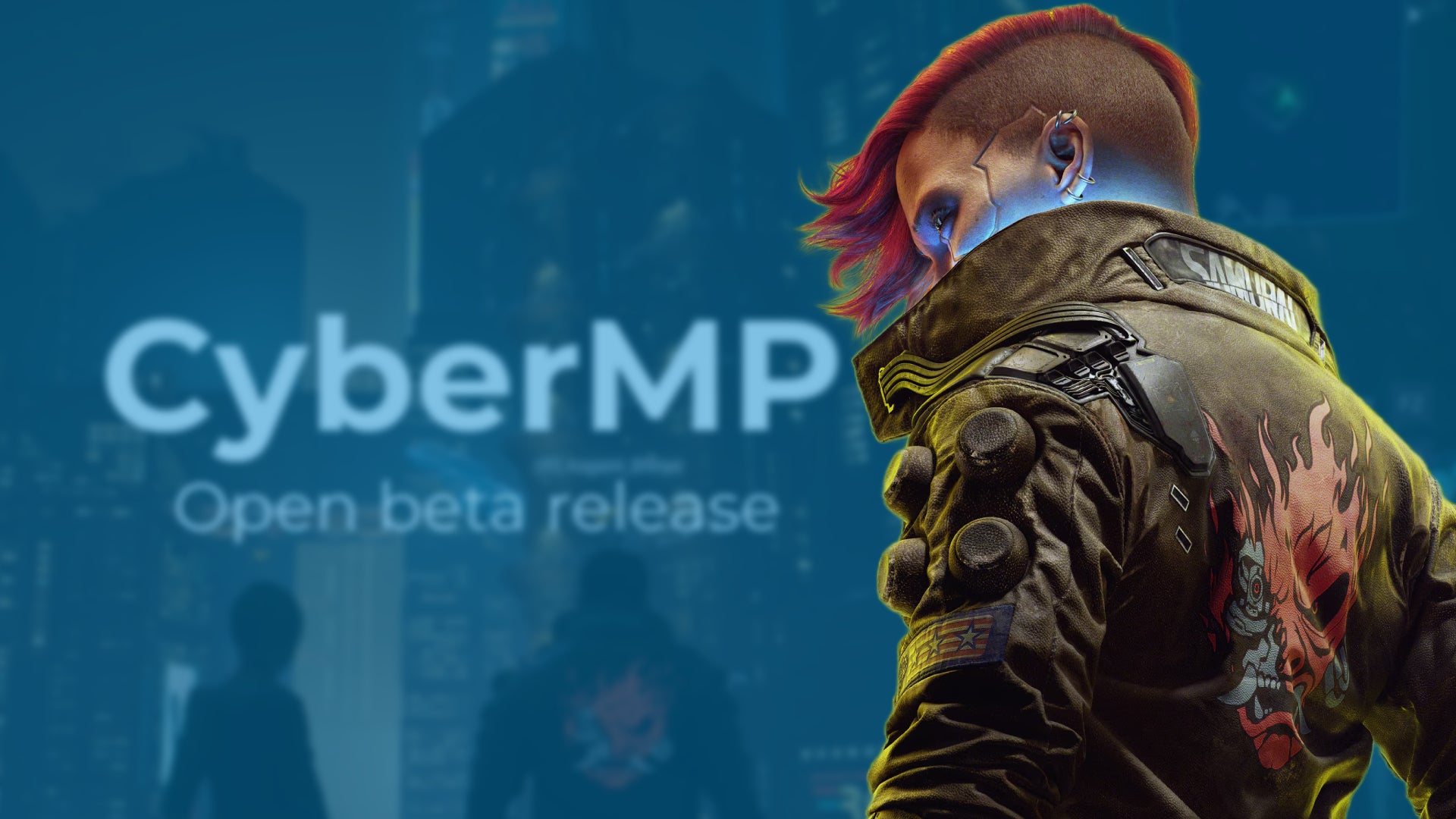
After nearly six years of secretive development, exhaustive reverse engineering, and multiple complete code overhauls, the ambitious community project to bring persistent online multiplayer to Cyberpunk 2077 has officially reached the public. On Monday, November 16, 2026, the modding team behind CyberMP launched its first public open beta, allowing any player with a legitimate copy of CD Projekt Red’s flagship dystopian RPG on PC to enter Night City alongside friends and strangers without requiring closed testing invites or whitelisted application keys. The release marks a historic milestone for the game’s modding ecosystem, fulfilling a long-abandoned promise that dates back to Cyberpunk 2077’s initial promotional campaign. Before the game’s tumultuous December 2020 launch, CD Projekt Red had formally announced that an official standalone AAA multiplayer experience set in the Cyberpunk universe was in active pre-production. However, the catastrophic technical state of the base game on last-generation consoles forced the Polish studio into immediate crisis remediation. The standalone multiplayer title was quietly shelved—and ultimately cancelled—as developers redirected all engineering resources toward engine stabilization, the transformative Update 2.0 overhaul, and the critically acclaimed Phantom Liberty expansion. While CD Projekt Red has recently reaffirmed that it intends to introduce online architecture to its upcoming Unreal Engine 5 sequel, Project Orion, CyberMP represents a community-built realization of that multiplayer ambition within the proprietary REDengine 4 runtime. ### Dedicated Server Architecture and the FiveM Paradigm Unlike lightweight peer-to-peer (P2P) co-op scripts that struggle with clock drift and latency spikes, CyberMP is architected from the ground up around high-tick dedicated server infrastructure. The modification hooks directly into the REDengine 4 memory space, decoupling local player state machines to synchronize player movement, vehicle interpolation, projectile physics, and combat animations across network packets. Rather than attempting to force multiple players into Cyberpunk 2077’s heavily scripted single-player narrative campaign—where diverging quest choices, dialogue trees, Braindance sequences, and Johnny Silverhand Relic malfunctions would trigger fatal desynchronizations—CyberMP embraces the massively successful sandbox paradigm pioneered by GTA Online, San Andreas Multiplayer (SAMP), and FiveM. Players spawn directly into an open-world Night City, where dedicated server hosts can configure custom game modes, organized street races across the Badlands, deathmatches in Watson backalleys, and persistent roleplay (RP) servers featuring functional economies, faction hierarchies, and customized police response loops. Vehicle handling and high-speed road synchronization—traditionally among the most challenging hurdles in game engine reverse engineering—have received dedicated interpolation passes. Players can cruise down the neon-drenched highways of Westbrook or engage in drive-by vehicular combat with peer-accurate positioning. Custom animations, custom weapon attachments, and localized sound effects replicate across clients, delivering an authentic shared atmosphere that feels native to the sprawling urban sandbox. ### Navigating the "True Beta" Frontier: Stability, Antivirus, and Netcode Stress The CyberMP development team has been deliberately transparent about the raw, experimental nature of this public release, emphasizing that the milestone represents an authentic "true beta" intended to stress-test netcode under heavy concurrent player traffic rather than a finished consumer product. Testers are advised to expect occasional server desynchronization, client crashes during heavy volumetric physics events, and packet drops when dozens of customized cyberware builds collide in dense district hubs. A notable friction point during initial client setup involves heuristic antivirus alerts. Because the CyberMP launcher and network injection dynamic-link libraries (DLLs) interact directly with game memory and currently lack a commercial Microsoft Authenticode digital certificate, Windows Defender and third-party security suites frequently trigger false-positive warnings. The developers have published extensive technical documentation and checksum verifications on the project’s dedicated portal, guiding players through firewall exclusions and clean directory deployments alongside essential modding prerequisites like Cyber Engine Tweaks and RED4ext. The primary engineering focus for the open beta is stabilizing the core transport layer. By gathering telemetry and automated crash dumps from thousands of real-world hardware configurations across varying network latencies, the developers aim to eliminate thread deadlocks and optimize server bandwidth consumption before introducing advanced synchronization layers for ambient pedestrian crowds and dynamic cyberware abilities. ### The Lasting Impact on REDengine 4 and Project Orion The arrival of CyberMP underscores the extraordinary technical resilience of CD Projekt Red’s proprietary REDengine 4. Although the studio has officially retired the engine in favor of Epic Games’ Unreal Engine 5 for all future pipeline developments—including Project Orion and the next Witcher trilogy—the ability of independent programmers to retrofit a robust client-server networking layer onto an engine designed strictly for solitary roleplaying stands as a monumental technical achievement. For players who have spent hundreds of hours mastering Night City’s dark alleys and sprawling corporate plazas, CyberMP transforms a static playground into a living, unpredictable shared stage. It proves that the demand for collaborative urban sci-fi roleplaying remains immense, offering a vibrant multiplayer stopgap that will likely sustain the Cyberpunk PC community until the next generation of games arrives. ### Sources & Further Reading - [Eurogamer (UK Video Game Journalism)](https://www.eurogamer.net/cyberpunk-2077-multiplayer-mod-open-beta) - [Rock Paper Shotgun (PC Gaming Press)](https://www.rockpapershotgun.com/weve-finally-reached-this-milestone-cyberpunk-2077-multiplayer-mod-cybermp-kicks-off-open-beta-after-around-six-years-preparing-for-cybermayhem) - [Tech4Gamers (Gaming Hardware & Modding Analysis)](https://tech4gamers.com/cyberpunk-2077-multiplayer-mod-beta/) ~Gaming ~Cyberpunk2077 ~Modding ~PCGaming ~CDProjektRed
Cyberpunk 2077 Multiplayer Mod CyberMP Launches Public Open Beta: Inside the Dedicated Servers, Reverse-Engineered Netcode, and Sandbox Night City
0
Discuss 6
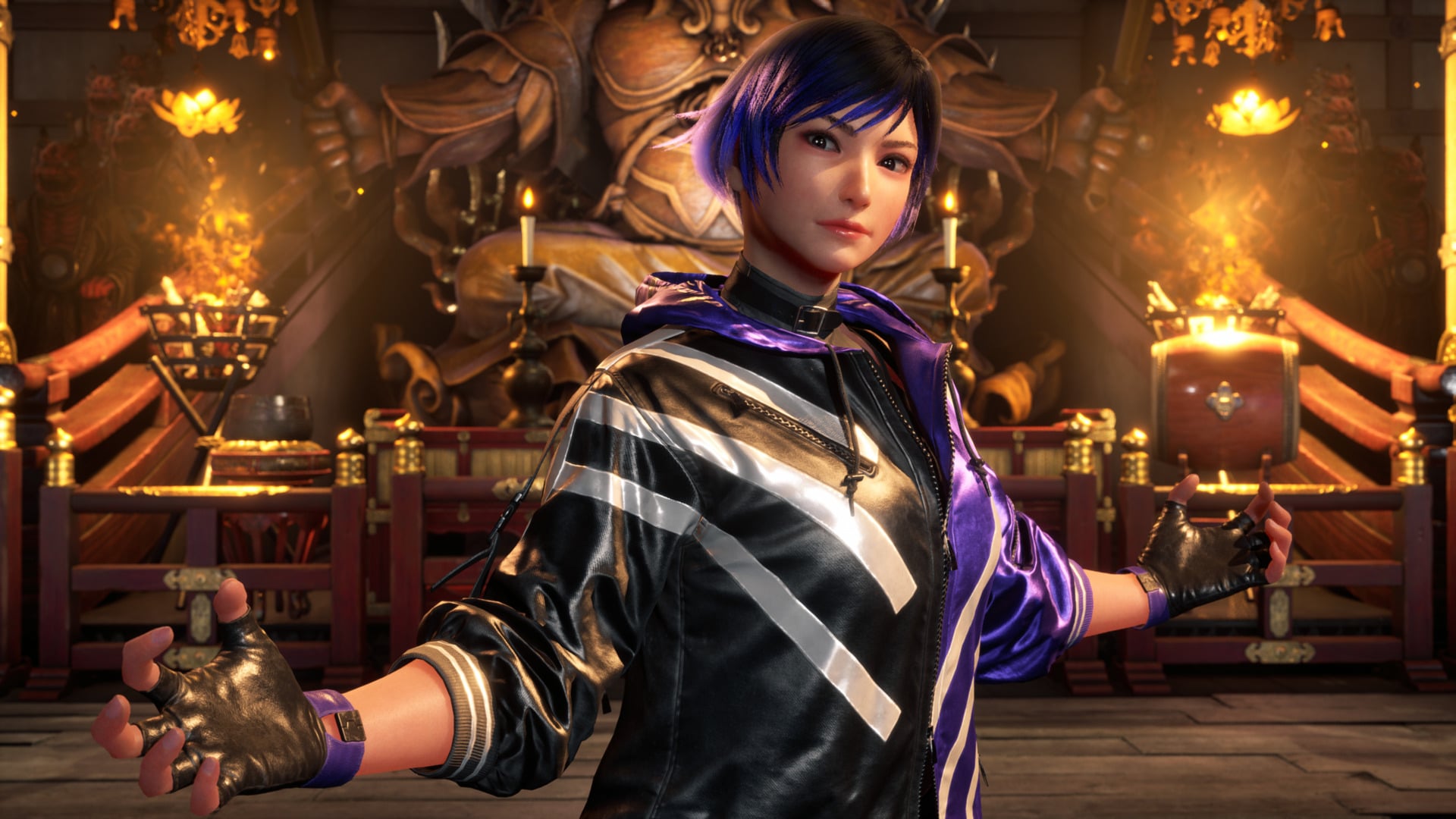
During its official shareholders' briefing for the first half of the fiscal year ending March 2027, Japanese publishing titan Bandai Namco Holdings formally detailed the strategic architecture and technical philosophy behind SOL-AVES, its brand-new proprietary game engine. First conceived in 2019 and kept largely confidential during early development, SOL-AVES represents Bandai Namco Studios' most ambitious internal technology initiative in decades. Built under the direction of former Ubisoft and Square Enix technical lead Julien Mercenon, the engine consolidates decades of fragmented internal tools into a unified production pipeline designed to power AAA releases—ranging from open-world role-playing games to competitive fighting titles—while systematically breaking the studio's dependency on commercial middleware like Epic Games' Unreal Engine and Unity. Addressing investors and analysts, Bandai Namco leadership specifically singled out raw execution speed and low-latency throughput as the primary engineering breakthroughs of the engine. 'SOL-AVES consolidates the know-how we have accumulated through many years of game development,' the company's executive representative stated during the briefing. 'It is designed to support a wide range of genres, including fighting action games and RPGs, which are among the genres Bandai Namco aims to expand within its game portfolio. In particular, one of SOL-AVES's key strengths is its high processing speed, which is essential for fighting action games.' The disclosure provides critical clarity on how Bandai Namco plans to future-proof core fighting franchises like *Tekken* while insulating its production budgets from escalating third-party licensing fees. ### The Low-Latency Imperative: Engineering for Competitive Fighting Games The technical demands of modern competitive fighting games represent one of the most unforgiving challenges in software engineering. While narrative-driven action games can tolerate minor frame pacing fluctuations or frame generation buffers, fighting titles require absolute frame-deterministic execution locked at a minimum of 60 frames per second. Every attack, block, and parry operates on discrete frame data, where a single dropped frame or delayed input can fundamentally compromise competitive integrity. Furthermore, the universal adoption of rollback netcode has multiplied this computational burden. Under rollback architectures, an engine must be capable of executing multiple speculative game state simulations, rewinding logic, and resynchronizing client physics within milliseconds when network desynchronization occurs between players across different regions. Commercial general-purpose engines like Unreal Engine 5, while visually stunning, often introduce heavy garbage-collection overhead, non-deterministic physics scheduling, and input pipeline layers that can introduce sub-frame latency spikes. By developing SOL-AVES with a stripped-down, bespoke execution pipeline tailored to immediate thread dispatch and deterministic state machines, Bandai Namco Studios can ensure rock-solid rollback reconciliation without sacrificing modern graphical fidelity or complex skeletal animation. ### Kirby Air Riders: The Switch 2 Proving Ground and Asset Velocity Although officially detailed to investors this week, SOL-AVES has already undergone trial by fire in live commercial production. Industry analysts and tech enthusiasts noted that the engine quietly served as the underlying runtime for Nintendo's *Kirby Air Riders*, co-developed by Bandai Namco Studios alongside legendary director Masahiro Sakurai for Nintendo Switch 2 hardware. During its early production phases, technical presentations revealed that the development team initially grappled with severe rendering bottlenecks on mobile silicon, languishing at 15 frames per second at native 720p. Through customized memory allocation passes, temporal antialiasing refinements, and lightweight dynamic lighting shaders integrated directly into SOL-AVES, the engineering teams successfully scaled *Kirby Air Riders* to a locked 60 frames per second at an upscaled 1440p presentation. This optimization milestone demonstrated the engine's versatility: it proved capable of delivering high-velocity vehicular physics and dense visual particle effects on portable hardware architectures while maintaining uncompromising responsiveness. As Bandai Namco explained to shareholders, a central tenet of the engine's development philosophy is 'implementing creative assets into games as quickly as possible,' bridging the historical divide between level designers, animators, and core gameplay programmers through real-time asset hot-reloading. ### Technological Sovereignty: The Industry Divide Over In-House Engines Bandai Namco's multi-year investment in SOL-AVES highlights a deepening strategic divergence within AAA game development. Over the past five years, prominent Western and European studios—most notably CD Projekt Red transitioning from REDengine to Unreal Engine 5—have abandoned proprietary engines due to soaring maintenance costs, recruitment friction with junior developers unfamiliar with custom codebases, and the sheer velocity of Epic Games' R&D. However, Asian powerhouses have largely pushed in the opposite direction. Capcom's remarkable critical and commercial renaissance has been propelled by its proprietary RE Engine, which powers everything from *Resident Evil Requiem* and *Monster Hunter Wilds* to *Street Fighter 6*. Similarly, South Korean developer Pearl Abyss has built its production pipeline around its proprietary BlackSpace Engine for *Crimson Desert* and *DokeV* (examined in [Mushimu post #9400](https://www.mushimu.com/post/9400)), maintaining total control over its graphics stack and avoiding commercial royalty cuts. For Bandai Namco, developing SOL-AVES ensures complete ownership over its software IP, eliminates recurring royalty fees on multi-million selling hits, and allows bespoke hardware optimizations across dedicated consoles and handheld PCs (such as those analyzed in [Mushimu post #9390](https://www.mushimu.com/post/9390)). By mastering its own silicon toolchain, Bandai Namco positions itself to navigate the next console hardware generation with custom rendering efficiency, ensuring that its flagship fighting and role-playing franchises maintain their technical edge without external dependencies. ### Sources & Further Reading - [Kotaku (United States — Video Game Journalism & Industry Analysis)](https://kotaku.com/bandai-namco-game-engine-sol-aves-tekken-fighting-games-2000757390) - [Automaton Media (Japan — Video Game Industry News & Corporate Analysis)](https://automaton-media.com/en/news/bandai-namco-says-new-in-house-engine-sol-avess-key-strength-is-the-high-processing-speed-fighting-games-require/) - [iXBT Games (International — European Technology & Gaming Press)](https://ixbt.games/es/news/2026/11/16/sozdateli-tekken-delaiut-stavku-na-skorost-bandai-namco-rasskazala-o-dvizke-sol-aves.html) ~Gaming ~BandaiNamco ~GameDev ~Tekken ~Nintendo
Bandai Namco Unveils In-House Engine SOL-AVES: Fighting Game Latency Priorities, Kirby Air Riders R&D, and Divergence from Unreal Engine
0
Discuss 11
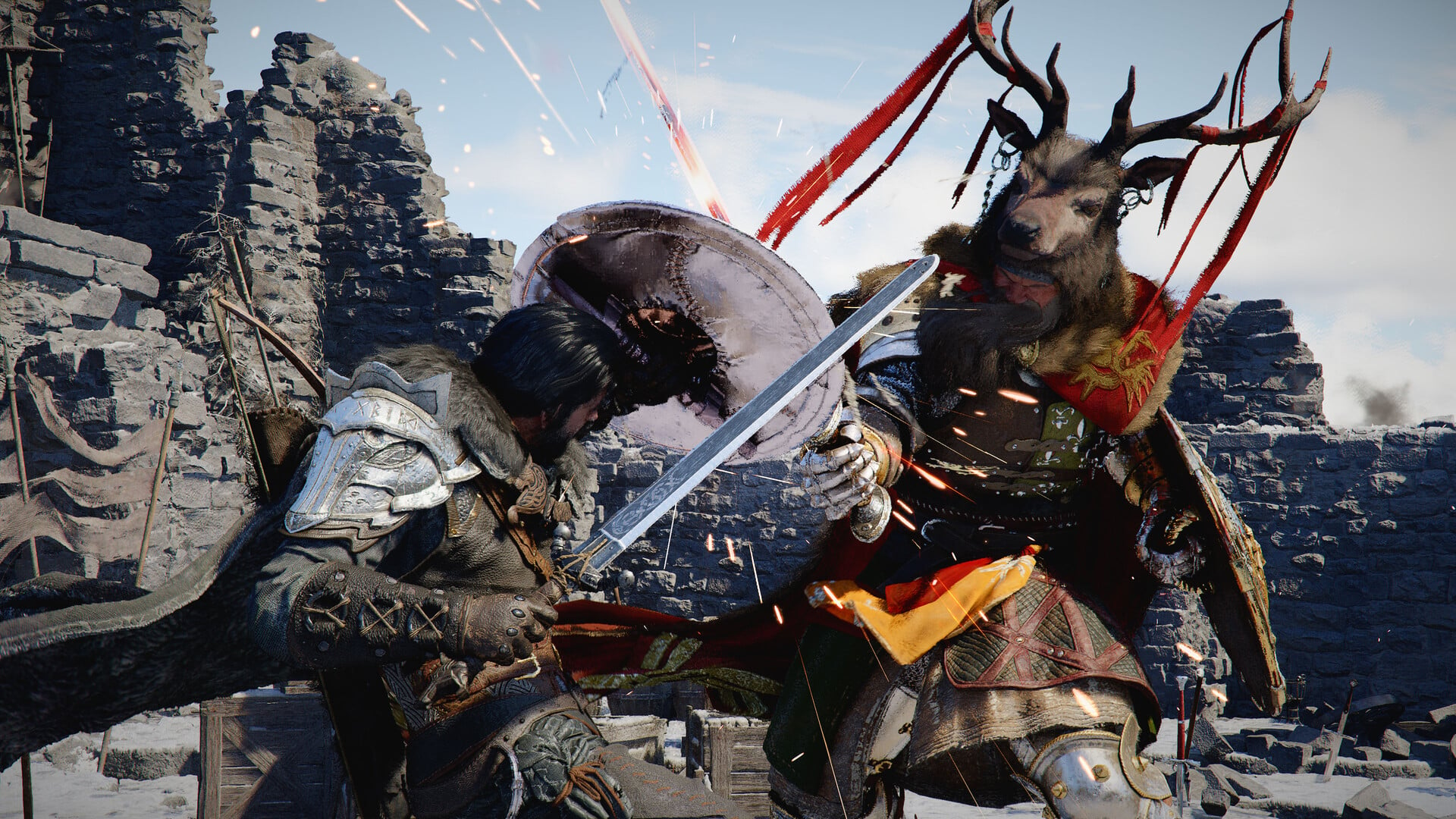
In its third-quarter 2026 financial report and shareholder letter, South Korean game developer Pearl Abyss delivered a remarkably candid breakdown of how artificial intelligence has been systematically integrated into its production pipelines for the high-profile open-world action title *Crimson Desert* and its long-anticipated follow-up, *DokeV*. The announcement arrives at a pivotal juncture for the studio. Following years of meticulous engineering on its proprietary next-generation BlackSpace Engine, Pearl Abyss confirmed that the technical architecture built for *Crimson Desert*—including its Enhanced Edition and post-launch expansions—is now being actively repurposed to accelerate *DokeV*, targeting a commercial release in the second half of 2028. However, it was the studio's transparent defense of AI deployment that captured the attention of game developers and industry observers worldwide. Pearl Abyss explicitly stated that machine learning and algorithmic systems are now actively deployed across "various stages of development." Crucially, studio leadership sought to delineate a strict operational boundary: AI is being utilized aggressively as an internal productivity multiplier and concept validation engine, while core creative direction, world-building, and artistic assets remain entirely driven by human developers without headcount reductions. ### Shifting the Prototyping Paradigm: Pre-Implementation Validation The central architectural innovation highlighted by Pearl Abyss revolves around what the studio terms pre-implementation design validation. In conventional AAA game development pipelines, testing a new gameplay mechanism, dynamic quest system, or combat interaction historically required manual whitebox prototyping. Designers and gameplay engineers spent weeks writing temporary code, constructing rudimentary greybox levels, and hand-crafting behavioral scripts simply to evaluate whether a design hypothesis felt compelling in execution. If the mechanic proved disjointed, those engineering hours were discarded. Under Pearl Abyss's overhauled workflow, AI models are tasked with rapidly generating and stress-testing diverse parametric variations of design concepts prior to manual implementation. By simulating interaction dynamics, mechanical edge cases, and systemic combat variables computationally, development leads can discard unworkable concepts in hours rather than months. According to the studio, this algorithmic filtering enables vastly more efficient resource allocation across the engineering team, ensuring that programmers and animators only invest manual production hours into concepts whose mechanical viability has already been mathematically validated. Beyond conceptual prototyping, the studio confirmed that AI tools are systematically deployed for repetitive development overhead: automated regression testing across sprawling open-world geometries, terrain collision verification, procedural 3D prop placement, and machine-learning-assisted motion matching to smooth transitions between hand-keyed combat animations. ### The Shadow of Generative Art Backlash and the Line in the Sand The defensive, nuanced tone of Pearl Abyss's shareholder communication cannot be divorced from the community controversies that shadowed *Crimson Desert* earlier in its production cycle. Like several major publishers exploring automated pipelines, the studio faced fierce community backlash when players and digital artists discovered uncredited 2D generative AI artwork embedded within in-game decorative assets and environmental background props. That incident forced an official public apology and the immediate replacement of the offending assets with bespoke, human-illustrated artwork. Having weathered that reputational storm, Pearl Abyss's Q3 letter reads as a deliberate attempt to establish a clear philosophical and commercial demarcation. "AI serves strictly as a tool to support concept validation and pipeline productivity, while the core gameplay experience and actual content creation remain fully driven by our development team," the company stressed. The studio reiterated that the technology is not being leveraged as a pretext for studio downsizing or creative outsourcing, directly contradicting prevailing industry anxiety that generative tools will permanently displace junior narrative designers, concept artists, and QA testers. ### The DokeV Horizon: Engine Tooling and AAA Production Velocity The immediate beneficiary of this technical restructuring is *DokeV*, the creature-collecting open-world adventure originally revealed in 2019 that has endured extensive production delays. Pearl Abyss confirmed that with *Crimson Desert*'s core engine systems finalized, engineering personnel are being transitioned directly into the *DokeV* production team. The accumulated research and development capabilities, combined with automated pipeline validation, are reportedly providing a "tangible acceleration" in development velocity. The studio plans to unveil substantive gameplay footage before the end of 2026, setting the stage for its 2028 debut. Pearl Abyss's disclosure highlights a broader structural divergence within global AAA development. While Western conglomerates continue to grapple with massive post-acquisition consolidation and severe labor cuts—exemplified by Microsoft's structural layoffs across Activision Blizzard (post #9389) and EA's reorganization around mechanized live-service pipelines (post #9394)—South Korean studios with proprietary engines are attempting to navigate a more sustainable equilibrium. By openly demarcating where automated code testing ends and human artistic integrity begins, Pearl Abyss is offering a closely watched case study: whether AI can be integrated into the brutal economics of AAA production to compress crippling five-year development cycles without compromising the creative soul that defines exceptional games. ### Sources & Further Reading - [Video Games Chronicle (VGC)](https://www.videogameschronicle.com/news/crimson-desert-studio-pearl-abyss-says-it-now-uses-ai-across-various-stages-of-development/) - [Eurogamer](https://www.eurogamer.net/crimson-desert-ai-pipeline-dokev-2028) - [TechPowerUp](https://www.techpowerup.com/354798/crimson-desert-developer-goes-all-in-on-ai-for-game-development-but-not-art) ~Gaming ~CrimsonDesert ~DokeV ~ArtificialIntelligence ~GameDev
Pearl Abyss Details AI Pipeline Integration Across Crimson Desert and DokeV: Concept Prototyping, Asset Iteration, and the Line Against Generative Art
0
Discuss 5
The convergence between the video game industry's two premier military shooter juggernauts took another decisive step on November 16, 2026. Electronic Arts formally confirmed a sweeping leadership restructuring across its studios group, appointing Sam Cooper as the new General Manager of the Battlefield franchise, while elevating previous franchise head Byron Beede to Group General Manager overseeing EA's broader shooter and action-RPG portfolio. The executive reshuffle cements a multi-year corporate strategy: the systematic replication of Activision's Call of Duty production, operational, and monetization architecture within Electronic Arts. The appointment of Cooper marks the latest in a deliberate sequence of high-profile executive migrations from Activision Blizzard to EA. Prior to a recent tenure within EA Sports, Cooper spent approximately five years at Activision serving as global product management and live-service lead for the Call of Duty franchise. Cooper now inherits day-to-day operational control of Battlefield from Byron Beede, who himself was recruited by EA in 2021 after serving as the overarching executive Vice President and General Manager of Call of Duty during its most lucrative expansion phases. Under Beede's expanded remit as Group General Manager, he now commands EA's marquee shooter and action-RPG studios—including DICE, Respawn Entertainment, Ripple Effect, Motive, and Criterion—stepping into the executive oversight capacity previously held by industry veteran Vince Zampella. ### The Battlefield Studios Machine: Replicating the Call of Duty Conveyor Belt The elevation of Call of Duty veterans into EA's topmost shooter hierarchy is neither coincidental nor cosmetic; it reflects an overarching industrial pivot towards monolithic studio consolidation. Over the past five years, Activision transformed its studio network—enlisting Treyarch, Infinity Ward, Sledgehammer Games, Raven Software, High Moon, and Beenox—into a continuous, interconnected production pipeline dedicated to feeding the annualized Call of Duty machine and its free-to-play battle royale anchor, Warzone. EA has methodically constructed an identical apparatus under the "Battlefield Studios" banner. Rather than allowing DICE to operate as an isolated creative auteur, EA restructured its global studio network so that Sweden's DICE, Los Angeles-based Ripple Effect, Montreal's Motive, and the UK's Criterion collaborate on a synchronized schedule. This coordinated ecosystem yielded the commercial resurgence of Battlefield 6 alongside its standalone, free-to-play battle royale component, Redsec. With Cooper now at the helm, EA aims to industrialize this pipeline further, ensuring seasonal content drops, weapon balancing passes, and Battle Pass progressions execute with the unbroken clockwork regularity that made Call of Duty an untouchable multi-billion-dollar juggernaut. ### The Homogenization Dilemma: Live-Service Uniformity versus Franchise Soul While executive continuity and predictable content schedules satisfy corporate stakeholders, the transition has intensified a fierce, ongoing debate within the core player community regarding franchise identity. For over two decades, Battlefield distinguished itself through expansive combined-arms warfare, complex vehicle physics, rigid four-pillar class archetypes, and emergent tactical destruction. In contrast, modern entries under the Beede era have increasingly mirrored Call of Duty's live-service hallmarks: aggressive algorithmic matchmaking, heavily customized weapon progression paths, cosmetic microtransactions featuring eccentric character skins, and modular Battle Pass tiers complete with premium skip accelerators. This philosophical tension was examined recently in our coverage of [AAA Studio Consolidation and Narrative Layoffs](https://www.mushimu.com/post/9389), which highlighted how publisher cost discipline often displaces veteran creative leads in favor of live-service optimization. For longtime Battlefield purists, the appointment of an executive whose formative pedigree lies in Call of Duty's live-service product management stokes fears that future entries will double down on user engagement telemetry and microtransaction friction at the expense of authentic sandbox experimentation. Conversely, industry analysts point out that modern development budgets exceeding $300 million necessitate guaranteed retention curves, making Cooper's expertise in live-service retention models indispensable for fiscal stability. ### Private Equity Pressures and the Horizon of Battlefield The restructuring arrives at a pivotal juncture for Electronic Arts following its massive $55 billion private equity buyout backed by Saudi Arabia's Public Investment Fund (PIF). In a leveraged corporate environment with heightened debt servicing obligations, tolerance for erratic launch disasters—such as the tumultuous debut of Battlefield 2042 in 2021—has vanished entirely. Byron Beede's mandate as Group General Manager is to ensure systemic risk management across Apex Legends, Titanfall derivatives, and Battlefield, while Sam Cooper is charged with turning Battlefield into a dependable, evergreen cash-generation pillar that never suffers content drought. As pre-production on the next mainline Battlefield instalment ramps up alongside Redsec's continuous seasonal roadmap, EA's message is unmistakable: the future of the military shooter belongs not to isolated studio experiments, but to industrialized live-service empires built on the proven blueprints of their fiercest rivals. ### Sources & Further Reading - [Eurogamer (United Kingdom)](https://www.eurogamer.net/battlefield-call-of-duty-sam-cooper-byron-beede-live-service) - [PlayStation Universe (United States)](https://www.psu.com/news/ea-appoints-ex-call-of-duty-live-service-boss-as-its-new-battlefield-head-honcho/) - [Critical Hits (Brazil)](https://criticalhits.com.br/games/ea-coloca-ex-chefe-de-call-of-duty-no-comando-de-battlefield/) ~Gaming ~Battlefield ~CallOfDuty ~ElectronicArts ~GameDev
EA Appoints Ex-Call of Duty Live-Service Boss Sam Cooper as Battlefield GM as Byron Beede Expands to Group Leadership
0
Discuss 5
In an extensive design briefing published to commemorate twenty-five years of the Xbox brand, Microsoft has formally articulated the foundational architecture and market philosophy guiding its next-generation hardware platform, codenamed Project Helix. Speaking in an in-depth retrospective and forward-looking interview, Jason Ronald, Xbox’s Vice President of Next Generation, addressed the persistent industry speculation regarding whether Microsoft’s future living-room flagship would effectively become a pre-built Windows personal computer. Ronald’s clarification was unequivocal: Project Helix is conceived, architected, and optimized as a dedicated game console that possesses the capability to execute PC games, rather than a personal computer tasked with running backward-compatible console software. The distinction represents far more than rhetorical semantics; it establishes the core boundary between the frictionless ergonomics of dedicated home consoles and the operational overhead historically associated with PC gaming. For decades, home consoles have sustained their consumer appeal through instantaneous accessibility: a dedicated operating system, zero manual driver maintenance, background system updates that do not interrupt play, predictable power states, and an interface entirely governed by a controller. Ronald emphasized that preserving this turnkey experience remains non-negotiable for the next generation. At the same time, the hardware platform aims to dismantle the artificial walled gardens that have traditionally forced players to maintain duplicate libraries across desktop computers and television screens, providing advanced enthusiasts with the granular graphics toggles, framerate targets, and performance tuning they expect from high-end rigs. ### Eliminating Platform Silos and Unifying Multi-Generational Libraries At the center of the Project Helix vision is an aggressive push toward comprehensive library unification. The platform is designed to aggregate four generations of existing Xbox software—spanning the 2001 original Xbox, Xbox 360, Xbox One, and Xbox Series X|S—alongside native PC titles into a unified launch environment. Under this framework, player progression, cloud saves, achievements, and entitlements transition seamlessly across environments without requiring separate platform-specific versions or redundant purchases. This design philosophy reflects a profound demographic transformation in player habits. Industry telemetry across the current cycle indicates that younger generations of players, particularly Generation Alpha, do not compartmentalize their gaming identity into rigid 'console' or 'PC' factions. Instead, they expect persistent access to social ecosystems, live-service progression, and purchased content regardless of the physical form factor they occupy at any given moment. This behavioral shift has already catalyzed the explosive rise of portable gaming platforms, as explored in [Mushimu’s comprehensive handheld PC hardware guide](https://www.mushimu.com/post/8731), where flexible operating environments and unified storefront access have redefined consumer baseline expectations. By integrating PC game execution directly into the console operating environment, Project Helix intends to eliminate the friction of fragmented ecosystems while retaining the low-latency predictability of a living-room machine. ### The Silicon Plateau and the Strategic Pivot to Neural Rendering Beyond user experience, the technical architecture of Project Helix reflects the harsh economic and physical realities facing semiconductor manufacturing. The historical benefits of Dennard scaling and traditional Moore’s Law cadences have effectively stalled; transitioning to sub-3-nanometer fabrication nodes at foundries such as TSMC now entails astronomical wafer costs, diminishing thermal returns, and escalating power delivery challenges. Delivering a multi-fold generational leap in raw rasterization compute through larger monolithic silicon dies is no longer economically viable for a consumer device intended for mainstream adoption. In response to this hardware impasse, Ronald confirmed that Microsoft is anchoring the graphical ambition of Project Helix in neural rendering and artificial intelligence-driven frame reconstruction. Developed in close engineering collaboration with AMD, the custom system-on-chip powering Helix leverages specialized machine learning accelerators designed to generate high-fidelity lighting, ray tracing calculations, and intermediate frames without requiring exponential leaps in raw hardware horsepower or unmanageable memory bandwidth. Rather than relying on brute-force polygon processing to achieve native 4K or 8K render targets, the console relies on neural reconstruction pipelines—expanding upon the industry’s trajectory with DirectSR, AMD FSR Next, and neural post-processing—to deliver transformative visual fidelity while maintaining manageable manufacturing costs and power budgets. Ronald noted that platform designers expect to witness greater algorithmic innovation in real-time graphics over the next three to five years than occurred across the entire preceding decade. ### Divergent Paths: How Microsoft, Sony, and Valve Frame the Next Generation The strategic positioning of Project Helix highlights increasingly divergent philosophies among the major platform holders. Sony has largely adhered to a disciplined, iterative console model, utilizing proprietary machine-learning upscaling in the PlayStation 5 Pro via PlayStation Spectral Super Resolution (PSSR) to reinforce a closed, curated hardware ecosystem. Valve, conversely, has spearheaded open-platform portable computing with SteamOS and the Proton translation layer, demonstrating that Linux-based software abstraction can successfully bridge desktop PC catalogs into streamlined appliance-like hardware. Microsoft’s hybrid approach with Project Helix seeks to occupy the convergence point of both paradigms. By maintaining a locked-down, television-first console interface while natively opening execution paths to PC storefronts and titles, Microsoft is betting that future hardware success will depend on platform agnosticism rather than exclusive hardware lock-in. For developers, the proposition promises a unified DirectX development target that scales effortlessly between bespoke console silicon and diverse PC configurations. For consumers, the ultimate test will reside in the execution: whether Microsoft can seamlessly bridge complex anti-cheat software, third-party launchers, and diverse input schemes into an interface that remains as frictionless as inserting a cartridge or clicking a controller home button. ### Sources & Further Reading - [Video Games Chronicle (United Kingdom)](https://www.videogameschronicle.com/news/xbox-says-project-helix-is-a-console-that-can-play-pc-games-not-a-pc-that-can-play-console-games/) - [TechPowerUp (United States / Hardware)](https://www.techpowerup.com/354878/neural-rendering-could-keep-xbox-project-helix-affordable) - [Pure Xbox (United Kingdom / Specialist Media)](https://www.purexbox.com/news/2026/11/the-ultimate-gaming-machine-xbox-reveals-tons-of-new-project-helix-information) - [ElOtroLado (Spain / European Tech & Console News)](https://www.elotrolado.net/noticias/consolas/project-helix-consola-pc-neuronal) ~Gaming ~Xbox ~Hardware ~Tech ~ProjectHelix
Xbox Outlines Project Helix as a Dedicated Console Capable of PC Play: Inside the Vision, Neural Rendering Pivot, and Library Unification
0
Discuss 4
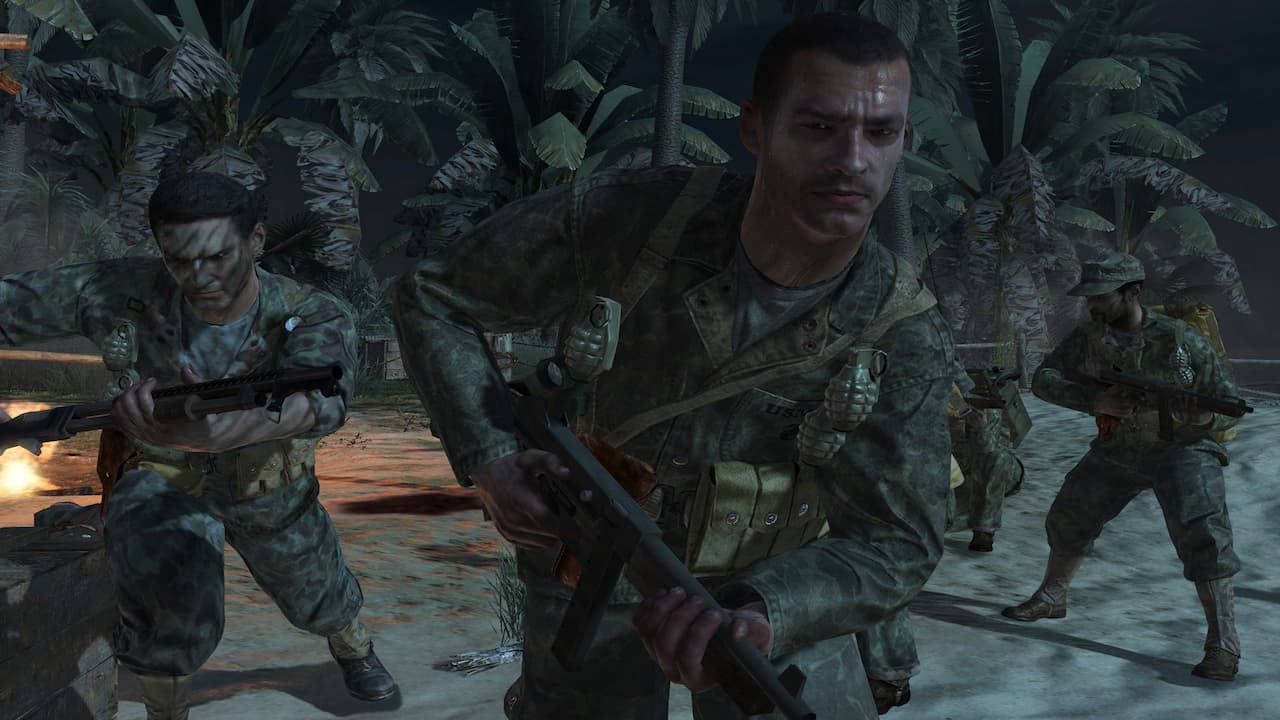
In mid-November 2026, just days after Treyarch commemorated its 30th anniversary as one of the cornerstone development houses of modern interactive entertainment, the studio confirmed the departure of one of its longest-serving creative leaders. Craig Houston, Treyarch’s Senior Lead Writer and the principal narrative architect behind the iconic Call of Duty Zombies franchise, was laid off after approximately two decades of continuous service. The announcement, delivered by Houston himself across his professional networks on LinkedIn and X, sent shockwaves through the first-person shooter community and reignited intense scrutiny over Microsoft Gaming’s sweeping, post-acquisition restructuring of Activision Blizzard. Houston’s abrupt exit underscores the accelerating loss of institutional creative memory within annualized AAA franchises as parent publishers navigate corporate consolidation and cost-cutting mandates. ### Two Decades at the Frontline: From World at War to Black Ops Craig Houston’s trajectory at Treyarch mirrors the evolution of Call of Duty from a World War II historical shooter into the most lucrative entertainment property in video game history. Joining Treyarch around 2006 during the development of Call of Duty 3, Houston initially worked as a video editor before quickly transitioning into core writing and systems design. His creative breakthrough arrived in 2008 with Call of Duty: World at War. Following the completion of the main Pacific and Eastern Front campaigns, a small, clandestine team within Treyarch experimented with an unapproved easter egg prototype originally titled *Nacht der Untoten* (Night of the Undead). Houston immediately recognized the narrative potential of this wave-based survival mode, establishing the gritty, occult-infused worldbuilding that transformed an end-credits mini-game into a multi-billion-dollar cultural phenomenon. Over the subsequent 16 years, Houston served as the definitive pen behind the Zombies mythos. Alongside creative directors and design pillars like Jimmy Zielinski, Jason Blundell, and Kevin Drew, Houston authored the sprawling Aether storyline spanning Black Ops 1 through 4, introducing legendary characters—Tank Dempsey, Nikolai Belinski, Takeo Masaki, and Edward Richtofen—whose multi-dimensional odysseys captivated millions of players worldwide. Houston possessed a rare talent for weaving cryptic radio transmissions, environmental storytelling, cipher puzzles, and deeply emotional character arcs into fast-paced cooperative gameplay. When the franchise transitioned into the Dark Aether saga across Black Ops Cold War, Vanguard, and Black Ops 6, Houston remained at the helm of creative development, ensuring tonal continuity while mentoring a newer generation of narrative designers. ### The Corporate Context: Xbox's Lingering Post-Acquisition Squeeze Houston’s termination cannot be viewed in creative isolation; it represents the direct fallout of corporate realignments dictated from Redmond. Following Microsoft’s $69 billion acquisition of Activision Blizzard, the gaming division under Phil Spencer embarked on aggressive workforce contractions, eliminating more than 3,200 positions across Xbox Game Studios, ZeniMax/Bethesda, and Activision divisions throughout 2024 and 2026. While initial redundancies targeted administrative, marketing, and redundant support roles, the secondary waves of restructuring have increasingly carved into core studio production teams and senior creative tier personnel. Industry observers note that annualized blockbusters like Call of Duty face a structural dilemma. Despite Black Ops 6 generating massive engagement and record day-one subscriptions on Xbox Game Pass, the economics of modern AAA development have shifted toward live-service seasonal content cadence over long-arc narrative ambition. Under pressure to optimize operating margins, publisher leadership has increasingly decentralized narrative departments, relying on contracted writing rooms, external consultants, and automated tooling for seasonal battle passes and warzone cinematic drops. For a veteran lead writer with 20 years of seniority, equity, and institutional authority, such corporate realignments frequently transform veteran craftspeople into balance-sheet targets. ### The Loss of Institutional Memory and the AAA Creative Dilemma The departure of Craig Houston highlights a growing crisis within AAA studio culture: the rapid erosion of institutional memory. In an industry where the average developer tenure at a single studio rarely exceeds four years, Houston’s 20-year run at Treyarch provided critical continuity across technical engine shifts, publisher leadership transitions, and turbulent development cycles. The intricate, decade-spanning lore of Call of Duty Zombies was not maintained through corporate documentation alone, but through the personal passion and creative stewardship of veterans who understood every narrative Easter egg and tonal subtlety. Tributes from industry colleagues poured in immediately following the announcement. Tony Flame, a prominent former Treyarch design director, praised Houston’s extraordinary impact, stating: *"You're a legend Craig, it was an honor to work with you. You created a truly special experience that will live on in the minds of millions of fans."* Similar sentiments reverberated across dedicated community forums on Reddit and Discord, where players expressed dismay that the studio would discard the primary custodian of its most beloved cooperative mode immediately after marking its 30th anniversary milestone. ### What Houston's Departure Means for the Future of Treyarch As Treyarch shifts focus toward post-launch support and future iterations of the Black Ops sub-franchise, Houston’s absence leaves a profound vacuum at the heart of the Zombies development pipeline. While veteran design directors remain to oversee gameplay mechanics and systems engineering, the narrative coherence and emotional resonance that defined the Golden Age of Treyarch Zombies now faces an uncertain future. For Activision and Microsoft, the financial savings realized by cutting veteran creative heads may satisfy quarterly balance sheets, but for the millions of players who invested decades deciphering Houston's hidden radios and character tragedies, the move feels like the unceremonious closing of an era. ### Sources & Further Reading - [Eurogamer (UK / Specialist Coverage)](https://www.eurogamer.net/craig-houston-layoff-treyarch-call-of-duty-layoffs) - [DualShockers (US / Industry Journalism)](https://www.dualshockers.com/treyarch-lays-off-call-of-duty-zombies-mastermind-craig-houston-after-20-years/) - [Destructoid (US / Gaming Culture & News)](https://www.destructoid.com/cod-veteran-fired-after-20-years/) ~Gaming ~CallOfDuty ~Treyarch ~Xbox ~GameDev
Treyarch Lays Off Senior Lead Writer Craig Houston After 20 Years: The Architect of Call of Duty Zombies and the Cost of Xbox's Post-Acquisition Squeeze
0
Discuss 5
During the closing moments of the 2026 League of Legends World Championship Grand Final on November 14, Riot Games unveiled the most consequential strategic overhaul in the title’s seventeen-year history. Head of League Studio Andrei “Meddler” van Roon and Executive Producer Paul “Pabro” Bellezza revealed “League of Legends: New Dawn”—a comprehensive modernization of the world’s leading MOBA slated for rollout in 2027, with an in-depth technical reveal scheduled for January 2027. Previously tracked across the community under the developmental codename “League Next,” the initiative tackles the accumulated architectural and graphical debt of a live-service titan operating continuously since 2009. Rather than launching a separate sequel or resetting the franchise’s massive ecosystem, Riot is executing an in-place technological transition. New Dawn focuses on four foundational pillars: replacing the volatile standalone client runtime, delivering the first full aesthetic and topographical overhaul of Summoner’s Rift since 2014, modernizing champion kits through dynamic in-match tactical branching, and streamlining onboarding for new players. Coming alongside Riot’s decision to permanently sunset its retro “League Classic” mode in January 2027 due to waning player retention, New Dawn signals that the studio’s longevity strategy rests on structural evolution rather than retro comfort. ### The Sequel Trap and Preserving the Live Economy The decision to brand the overhaul “New Dawn” while explicitly rejecting the label of “League of Legends 2” represents a calculated strategy informed by industry cautionary tales. Over the past four years, live-service sequels—notably Blizzard’s troubled rollout of *Overwatch 2* and Valve’s transition to *Counter-Strike 2*—exposed the perils of hard sequels in mature competitive ecosystems. Splitting player populations across generational boundaries, resetting cosmetic economies, or abruptly discarding legacy matchmaking pipelines introduces severe community backlash and business risk. For Riot Games, the operational stakes are immense. League of Legends supports over 150 champions and more than 1,500 premium skins representing billions of dollars in accumulated player investment. Simultaneously, tier-one franchised esports circuits—including South Korea’s LCK, China’s LPL, Europe’s LEC, and the Americas’ LCS—demand absolute competitive continuity. By executing an in-place overhaul, Riot protects player equity while modernizing the game’s core underpinnings. As Meddler emphasized, ensuring that League “stands the test of time and remains a game for many years to come” requires modernizing the operational foundation without breaking community trust. ### Retiring the Chromium Shell: Rebuilding Client Architecture At the forefront of New Dawn’s technical agenda is replacing the legacy League client. For nearly a decade, the existing client has remained the game’s primary operational vulnerability. Built upon a decoupled Chromium Embedded Framework (CEF) and web-stack wrapper, the launcher runs as an independent application communicating with the native C++ game client through local inter-process communication (IPC) protocols and RESTful endpoints. This decoupled structure has generated persistent technical debt: memory bloat during prolonged sessions, desynchronization between pre-game champion select lobbies and match instantiation, and UI stutter on mid-tier hardware. Inven Global’s report highlighted Paul Bellezza’s frank appraisal: “The client, for one, has to be better; next year, we are releasing a modernized client.” While lower-level specifications remain reserved for January 2027, engineering indications point toward an integrated native shell. By bridging the launch environment directly into the engine pipeline, New Dawn aims to eliminate fragile IPC boundaries, lower RAM footprints, and deliver seamless transitions from matchmaking onto the Rift. ### Transforming Summoner’s Rift: High-Fidelity Rendering on Accessible Hardware Summoner’s Rift last received a comprehensive visual rework in November 2014, when Riot refreshed the map’s painterly aesthetic for clarity. Twelve years later, that visual language shows clear signs of aging compared to modern rendering standards. Worlds teaser footage showcased a luminous environment with dynamic volumetric water rendering, enhanced ground parallax shaders, physically inspired foliage lighting, and modernized skeletal models for epic monsters, including Baron Nashor and the Elder Dragon. Crucially, the visual evolution adapts techniques developed for *League of Legends: Wild Rift*, Riot’s mobile adaptation built in Unity. While Wild Rift showcased sharper silhouettes and dynamic lighting, porting those standards to PC without compromising hardware accessibility has historically posed a massive dilemma. League’s global reach—especially across Asian and Latin American PC cafes—relies on running smoothly on integrated GPUs and budget laptops. Technical coverage from PC Gamer and Blitz.gg confirms that the engine modernization leverages modern low-overhead graphics APIs (Vulkan and DirectX 12) to execute multi-threaded draw calls, enabling rich environmental effects without raising minimum specifications. Furthermore, subtle topographical adjustments hinted in the teaser—such as newly accessible cutouts around jungle corridors—suggest that the visual overhaul will be accompanied by tactical spatial changes designed to disrupt established sightlines. ### Dynamic Champion Loadouts and Re-engineering Competitive Rigidity Beyond technical and visual modernization, New Dawn introduces what could become the most radical shift in core MOBA mechanics since elemental Drakes. In the teaser, Riot offered brief glimpses of “new ways to play and experience your favorite champions.” Notably, gameplay footage depicted a Blitzcrank player selecting a champion-specific specialization tree designated as “God Hand,” dynamically altering the champion’s combat profile toward aggressive melee brawling. Additional clips showcased mechanical rule-breaking previously unseen in standard kits, including Vayne executing her Tumble roll through solid terrain barriers. This paradigm shift directly challenges the static build-meta that has increasingly constrained League’s competitive dynamism. Over consecutive seasons, algorithmic optimization and third-party data platforms have largely solved optimal item builds and rune configurations before a match begins. By introducing branching in-game mastery specializations—drawing conceptual inspiration from *Dota 2*’s talent trees as well as Riot’s experimental Arena and Swarm modes—New Dawn seeks to inject situational adaptation directly into combat. However, this flexibility presents a colossal undertaking for Riot’s game balance teams. Preserving the delicate equilibrium of professional play while preventing hyper-optimized specialization branches from breaking champion identity will define whether New Dawn elevates the MOBA genre or triggers competitive volatility. ### The Road to 2027 and the Rejection of Retro Stagnation The timing of the New Dawn announcement underscores Riot’s long-term corporate positioning. The simultaneous revelation that the retro “League Classic” mode will be permanently decommissioned in January 2027 serves as a decisive referendum on nostalgia-driven live-service strategies. While retrospective modes generated brief spikes of curiosity, player retention collapsed rapidly once players confronted the archaic pathfinding, limited champion pools, and missing quality-of-life systems of the early 2010s. New Dawn rejects retro nostalgia in favor of aggressive technical renewal. As the esports world looks toward the January 2027 full reveal, Riot Games is staking the future of its flagship property on an ambitious premise: that a seventeen-year-old MOBA can shed its foundational technical debt, modernize its visual identity, and reconstruct its core client without alienating the millions of players who define its daily life. ### Sources & Further Reading - [PC Gamer (US/UK) — League of Legends will get an overhaul called New Dawn with new visuals, build options, and an updated client](https://www.pcgamer.com/games/moba/league-of-legends-will-get-an-overhaul-called-new-dawn-with-new-visuals-build-options-and-an-updated-client/) - [Inven Global (South Korea / Global Esports) — Riot Games Unveils New League of Legends Client 'New Dawn'](https://www.invenglobal.com/articles/28592/riot-games-unveils-new-league-of-legends-client-new-dawn) - [League of Legends / Riot Games (Official Video Teaser) — League of Legends: New Dawn Teaser at Worlds 2026 Finals](https://www.youtube.com/watch?v=vs3p3mNhRXo) - [Blitz.gg (US / Competitive Gaming) — League of Legends New Dawn Teaser and What to Expect](https://blitz.gg/lol/articles/league-of-legends-new-dawn-teaser) - [Movistar eSports (Spain / European Esports) — Así es New Dawn, el 'League of Legends 2.0'](https://movistaresports.com/asi-es-new-dawn-el-league-of-legends-2-0/) ~Gaming ~LeagueOfLegends ~RiotGames ~Esports ~PCGaming
0
Discuss 10
The brutal paradox of the modern PC gaming market was on full display in Copenhagen this autumn. On October 30, 2026, Raw Power Games—the Danish independent studio behind the highly anticipated historical sandbox strategy RPG *Chronicles: Medieval*—shocked the industry by announcing that its flagship project faced imminent cancellation due to an abrupt collapse in core financial backing. Within hours of that grim public disclosure, the studio officially filed for bankruptcy in the Copenhagen Maritime and Commercial Court, putting one of the top 30 most wishlisted titles on Steam in direct peril of being discarded. Despite accumulating over two million views on its cinematic trailer narrated by Tom Hardy and commanding intense critical buzz since its Summer Game Fest 2025 debut, the studio found itself stranded in a severe liquidity drought just as its ambitious medieval world was nearing its inaugural Early Access milestone. The sudden liquidation of Raw Power Games highlighted the unforgiving structural dynamics confronting independent mid-tier studios in 2026. While commercial hype and digital wishlist volume are vital indicators of consumer appetite, they generate zero interim cash flow during active production. When private equity commitments or external publisher advances evaporate mid-cycle, even studios on the threshold of commercial breakout can face immediate payroll insolvency within a single billing cycle. For the passionate team in Copenhagen, years of engineering large-scale tactical combat and systemic sandbox simulations appeared lost to judicial administration. ### A Multimillion-Dollar Lifeline from Skövde The vacuum left by Raw Power’s collapse did not linger. In a formal regulatory disclosure filed under the EU Market Abuse Regulation on November 14, 2026, Swedish gaming titan Coffee Stain Group AB (publ) announced that it had submitted the winning cash bid in the Danish bankruptcy estate’s expedited asset auction. Paying 36.75 million Danish Krone (approximately $5.42 million USD or €5.0 million EUR) in cash, Coffee Stain acquired the complete intellectual property rights, code repositories, art assets, and underlying production technology for *Chronicles: Medieval*. Rather than executing a standard corporate asset absorption—where a troubled IP is stripped of its creators and handed to an outsourced contract shop—Coffee Stain engineered a novel 75/25 corporate restructuring. Under the binding investment agreement, the acquired assets have been transferred into a newly incorporated Danish operating company. Coffee Stain holds a 75 percent controlling stake, while the remaining 25 percent equity is owned directly by a select consortium of key members and department leads from the original development team. Coffee Stain is funding 100 percent of the upfront asset purchase price from the bankruptcy trustee, alongside fully underwriting the ongoing development expenditures required to finish the game. ### Aligning Creative Ownership with Corporate Discipline This hybrid ownership structure reflects a sophisticated evolution in games industry distressed-asset restructuring. Traditional studio acquisitions often suffer from post-buyout disillusionment: creative founders are reduced to salaried employees, leading to attrition, institutional memory drain, and creative compromise. By establishing a separate operating entity where the core developers retain significant direct equity, Coffee Stain ensures that the architects of *Chronicles: Medieval* maintain genuine skin in the game and direct upside from its commercial success. At the same time, Coffee Stain’s 75 percent majority stake provides the necessary corporate governance and financial guardrails that Raw Power previously lacked. Anton Westbergh, CEO of Coffee Stain, emphasized that the new company will initially operate with a disciplined, limited cost base that will expand gradually as the production rhythm is re-established. Legal advisory teams from Plesner Advokatpartnerselskab, Rosengrens law firm in Sweden, and Moalem Weitemeyer in Denmark facilitated the transaction, structuring an airtight framework that shields the new operating entity from the legacy liabilities of the bankrupt predecessor while securing clear title to all code and creative trademarks. ### Systemic Synergy and the Sandbox Pedigree For Coffee Stain—recently spun out as an independent publicly traded entity listed on Nasdaq First North following Embracer Group’s broader corporate demerger—the rescue represents a natural extension of its core publishing philosophy. Over the past decade, the Skövde-based group has established itself as the preeminent global champion of emergent, player-driven PC sandboxes. From the staggering industrial automation of *Satisfactory* to the procedural Viking survival phenomenon of *Valheim* and the procedural subterranean extraction of *Deep Rock Galactic*, Coffee Stain’s commercial track record is built on systemic titles that emphasize deep player agency and thriving community ecosystems. *Chronicles: Medieval* fits seamlessly into this portfolio. The game distinguishes itself in the crowded strategy landscape by marrying grand tactical army command with boots-on-the-ground third-person action combat. Players do not simply maneuver tactical divisions from an isometric overview; they physically ride into the fray as battlefield commanders, fighting alongside their levies with directional melee mechanics while managing real-time formations and morale. It is precisely the sort of complex, community-facing systemic sandbox that thrives under Coffee Stain’s proven Early Access incubation model. ### The Road to 2027 and the Power of Wishlists While the financial rescue averts catastrophic cancellation, considerable challenges lie ahead for the revitalized Copenhagen studio. Rebuilding an engineering pipeline from the ashes of bankruptcy requires rigorous technical audits to address code debt accumulated during Raw Power’s final survival crunch. Furthermore, managing expectations across a community eager for news will demand transparent communication regarding the game’s official 2027 release target and whether initial Early Access milestones will require recalibration under Coffee Stain’s quality benchmarks. Nevertheless, the transaction stands as a powerful testament to the tangible economic value of player enthusiasm. With *Chronicles: Medieval* currently ranking among the top 30 most wishlisted titles on Steam—outpacing high-profile AAA sequels like *Guild Wars 3* and *Atomic Heart 2*—it was the unwavering visibility of its community that convinced Coffee Stain to deploy over $5 million in rescue capital. In an industry climate all too frequently dominated by studio closures and project cancellations, the resurrection of *Chronicles: Medieval* demonstrates that authentic developer ambition and demonstrable player demand can still overcome the harshest corporate storms. ### Sources & Further Reading - [PC Gamer (United States / United Kingdom)](https://www.pcgamer.com/games/strategy/chronicles-medieval-developer-declared-bankruptcy-on-the-day-it-announced-it-was-in-trouble-but-development-will-continue-after-a-usd5-million-reprieve-from-coffee-stain/) - [Coffee Stain Group AB (Sweden / Primary Regulatory Disclosure)](https://coffeestain.com/release/coffee-stain-enters-into-agreement-to-acquire-chronicles-medieval-ip/) - [TechRaptor (United States / Independent Gaming Press)](https://techraptor.net/gaming/news/coffee-stain-rescues-chronicles-medieval-from-bankruptcy) - [IGN (United States / Background & Gameplay Preview)](https://www.ign.com/articles/chronicles-medieval-developer-at-real-risk-of-closing-before-release-as-funding-no-longer-in-place) ~Gaming ~CoffeeStain ~PCGaming ~IndieGames ~GameIndustry
Coffee Stain Rescues Chronicles: Medieval in $5.4M Bankruptcy Deal: Behind the 75/25 Restructuring and Sandbox Renaissance
0
Discuss 13
The annual State of the Game Industry survey conducted by the Game Developers Conference (GDC) has delivered its most revealing and consequential verdict yet on the role of artificial intelligence in interactive entertainment. Drawing from over 2,600 verified game developers, technical leads, and studio executives worldwide, the November 2026 report reveals that 40 percent of developers now utilize generative AI tools in their professional workflows—a notable four-point increase over previous cycles. Yet, behind this steady uptick in adoption lies an unprecedented ideological and operational rift: more than 55 percent of industry professionals believe generative AI is exerting an actively negative influence on video games, while only 8 percent view its overall trajectory as positive. Coming on the heels of more than 20,000 studio layoffs across 2024 through 2026, the findings expose an escalating struggle between executive mandates for cost reduction and frontline creators fighting to defend the craftsmanship, legal integrity, and labor stability of their medium. ### Granular Adoption: Back-Office Acceleration Versus Frontline Creative Resistance The headline 40 percent adoption figure conceals a profound divergence across technical and creative disciplines. Generative AI is not penetrating game studios evenly; instead, it has found its strongest footing in operational, analytical, and administrative roles while encountering stiff resistance in expressive crafts. According to the GDC dataset, business operations and studio services lead all categories with a 63 percent adoption rate, followed closely by marketing, community management, and public relations at 51 percent. In software engineering, 48 percent of programmers report using generative tools—primarily leveraging specialized code-generation models for boilerplate syntax scaffolding, regular expression generation, unit test creation, and debugging. In stark contrast, visual artists, narrative designers, and audio engineers demonstrate the lowest adoption and the fiercest opposition. Visual art adoption sits at just 21 percent, while narrative design hovers around 38 percent—with the vast majority of those users restricting the technology to preliminary research, divergent brainstorming, and internal pitch decks rather than commercial in-game assets. For frontline creatives, generative models represent an acute existential and moral threat: systems trained on scraping uncompensated human artistry without consent, repurposed to generate derivative content that devalues original creative vision. The disparity underscores a central reality of the modern games industry: generative AI is widely embraced where it speeds up administrative drudgery, but deeply resented where it threatens to displace human expression. ### The AAA Dilemma: Management Pressure Collides with Copyright and IP Embargoes The report highlights a widening operational divide between major commercial publishers and independent studios. Workers at AAA enterprises report facing executive pressure or explicit managerial encouragement to integrate generative AI at three times the rate of their independent peers—27 percent versus 9 percent. With ballooning production budgets routinely exceeding $200 million and development cycles stretching past six years, corporate leadership at publicly traded giants faces intense pressure from institutional investors to demonstrate margin expansion and labor productivity windfalls through automation. Yet, this top-down push has generated a paradoxical backlash inside the very studios attempting to implement it. A staggering 23 percent of surveyed game developers report that generative AI is strictly and categorically banned inside their workplaces. Another 11 percent state that its use is actively discouraged, while only 1 percent operate under mandatory company-wide policies. This high rate of workplace prohibition is not merely an ideological protest; it is driven by hard legal and technical barriers. Corporate legal counsels at top-tier publishers increasingly recognize that utilizing third-party commercial models introduces severe copyright vulnerabilities. Under established legal precedents across North America and the European Union, purely machine-generated assets cannot be copyrighted, leaving core game content vulnerable to unauthorized duplication. Furthermore, concerns regarding proprietary codebase leakage into public model weights and ongoing union protections—such as SAG-AFTRA interactive agreements safeguarding voice and motion-capture talent—have forced many tier-one studios to erect strict firewalls preventing generative tools from touching production code. ### Structural Divergence: Mobile Iteration Versus the Premium Craft Moat The GDC survey reveals that a studio’s monetization model dictates its embrace of automated tooling far more than its geographical location. Mobile-only studios (58 percent adoption) and free-to-play live-service operators (52 percent adoption) exhibit the highest saturation of generative workflows. The mobile games economy is structurally reliant on relentless asset iteration, dynamic advertising variations, and aggressive user-acquisition testing, environments where rapid throughput and algorithmic tuning supersede authorial nuance. Conversely, premium PC and console developers remain exceptionally cautious, with independent PC developers reporting adoption rates under 25 percent. For premium titles, where commercial success relies heavily on cohesive world-building, distinct artistic identity, and community goodwill, automated shortcuts carry severe reputational risk. With platform holders like Valve implementing mandatory AI disclosures on Steam—where AI-flagged submissions recently surged past 50 percent (as documented in post #9343)—and players increasingly organizing review boycotts against perceived low-effort automated releases (post #9333), premium studios view unvetted AI generation as an existential liability. In the premium space, handcrafted authenticity is rapidly transitioning from a traditional production method into a vital commercial selling point and brand differentiator. ### The Broken Ladder: How Automating Junior Labor Jeopardizes Industry Succession Beyond immediate debates over art and code quality, the GDC findings bring into focus a critical long-term structural risk: the collapse of the industry’s junior talent pipeline. Historically, entry-level programmers, junior technical artists, and quality assurance specialists acquired foundational domain knowledge by performing the exact routine tasks that studios are now offloading to language models—writing rudimentary scripts, rigging minor background props, cleaning up data tables, and triaging crash logs. By automating early-career responsibilities to trim balance sheets, game studios risk eliminating the traditional apprenticeship path that transforms enthusiastic graduates into seasoned systems architects, engine programmers, and creative directors. Survey commentary from senior leads reflects growing alarm that junior roles are disappearing at the exact moment production complexity is reaching historic highs. If studios sever the entry-level rungs of the development ladder, the industry faces an acute shortage of senior technical leadership within the next decade, compounding the destabilization wrought by recent mass layoffs. ### The Road Ahead: Human Craft as the Definitive Competitive Advantage The 2026 GDC State of the Game Industry report demonstrates that while generative artificial intelligence has secured an undeniable technical foothold across the business, its integration is generating more friction than harmony. Rather than ushering in an era of frictionless game creation, generative AI has illuminated the irreconcilable differences between industrial efficiency and artistic creation. As the industry navigates an oversaturated market crowded with algorithmic content, the studios finding enduring commercial and critical resonance are not those attempting to automate the human spirit out of development, but those leveraging technology to empower human authors. In an entertainment landscape inundated with synthetic ubiquity, original vision, nuanced storytelling, and authentic mechanical craft remain the only true moats. ### Sources & Further Reading - [Game Developer / GDC (US/Global — Official State of the Game Industry Survey Report)](https://www.gamedeveloper.com/business/layoffs-ai-and-next-gen-what-2-600-game-professionals-told-gdc-this-year) - [PC Gamer (US/UK — Video Game Industry & Labor Analysis)](https://www.pcgamer.com/software/ai/40-percent-of-game-developers-use-generative-ai-according-to-a-new-report-but-more-than-half-reckon-the-technology-has-a-negative-impact-on-the-games-industry/) - [GamingOnLinux (UK — Independent Linux & Gaming Outlet)](https://www.gamingonlinux.com/2026/11/gdc-november-2026-survey-shows-40-percent-of-developers-using-generative-ai/) ~Gaming ~GenerativeAI ~GDC ~GameDev ~TechIndustry
GDC 2026 State of the Game Industry: 40% of Developers Adopt Generative AI as Deepening Skepticism and Studio Bans Expose Industry Rift
0
Discuss 9
Nearly two decades after Logan Keller’s counter-terrorist squad breached the neon-lit casino floor of the Calypso, Ubisoft is preparing to return to the high-stakes tactical corridors of the Nevada desert. Industry reports confirmed on November 13–14, 2026, that Ubisoft Montreal has officially greenlit a new mainline installment in the *Tom Clancy’s Rainbow Six: Vegas* lineage under the internal codename “Spades.” Developed as one of three unannounced projects currently spinning up inside the Canadian flagship studio—alongside a second project also set within the *Rainbow Six* universe—the initiative marks a profound strategic pivot: re-centering the franchise around cinematic, squad-based tactical combat after more than a decade dominated by the competitive hero-shooter mechanics of *Rainbow Six Siege*. ### The Corporate Architecture of Vantage Studios The emergence of Project Spades cannot be evaluated in a vacuum; it directly reflects the strategic restructuring unfolding across Ubisoft following the formal establishment of Vantage Studios. Formed last year with Chinese technology conglomerate Tencent holding a 26.32% minority stake, Vantage was erected to insulate and aggressively steer Ubisoft’s three core commercial crown jewels: *Assassin’s Creed*, *Far Cry*, and *Tom Clancy’s Rainbow Six*. Over the past 24 months, Ubisoft has undergone an agonizing portfolio rationalization, shuttering peripheral multiplayer experiments and canceling bloated live-service projects—culminating most recently in the abrupt termination of *Rainbow Six Mobile* only seven months post-launch. Under Vantage’s mandate, capital allocation is retreating from speculative free-to-play saturation and refocusing on proven, premium franchise pillars with deeply rooted player nostalgia. French industry analysts at *Pro-Gamer.fr* note that while *Siege* continues to command a formidable esports audience, the broader *Tom Clancy* catalog suffered from severe brand dilution when it abandoned narrative campaigns and cooperative tactical tension. With rumors also circulating regarding two newly greenlit *Assassin’s Creed* titles, the greenlight for Spades indicates that Ubisoft’s leadership is looking back to the mid-2000s golden era of single-player and cooperative tactical experiences to stabilize long-term brand equity. ### The Mechanical Legacy of the Strip When *Rainbow Six: Vegas* debuted on the Xbox 360 and PC in November 2006, followed by *Vegas 2* in March 2008, it fundamentally redefined mid-2000s console tactical shooters. Prior entries in the franchise had demanded meticulous pre-mission spatial mapping and unforgiving, hyper-lethal realism. *Vegas* elegantly streamlined that friction without sacrificing tactical gravity. It pioneered an intuitive dynamic cover system that snapped smoothly from an immersive first-person viewpoint to a third-person tactical perspective, giving players spatial awareness while preserving the claustrophobic dread of close-quarters room clearing. Coordinated squad mechanics—sliding fiber-optic snake cameras beneath reinforced double doors, designating priority targets with silenced weapons for recon specialist Jung Park and heavy demolitions expert Michael Walters, and executing synchronized inverted-rappel window breaches—offered a sublime balance between commando authenticity and high-stakes Hollywood blockbuster pacing. According to sources close to development reported by *Insider Gaming*, the creative leadership at Ubisoft Montreal envisions Project Spades as a direct spiritual and mechanical continuation—effectively *Rainbow Six: Vegas 3*—rather than a graphical remake, aiming to modernize that tactile squad-command loop within modern rendering and physics pipelines. ### Reclaiming the Mid-Tier Tactical Vacuum The decision to resurrect *Vegas* also addresses an undeniable structural shift in player sentiment and industry saturation. For the past decade, tactical shooters largely bifurcated into two extreme poles: twitch-heavy competitive hero shooters reliant on individual operator abilities and continuous cosmetic monetization (exemplified by *Siege* and *Valorant*), or unforgiving military simulation extraction gauntlets (such as *Escape from Tarkov* or *Gray Zone Warfare*). The mid-tier space that *Vegas* once dominated—a grounded, accessible, story-driven tactical experience where cooperative communication, intelligent AI teammates, and deliberate room clearing trumped twitch reflexes—was left virtually abandoned. Moreover, the broader *Tom Clancy* catalog underwent several creative missteps over recent cycles, including the muted reception of 2022’s alien-themed *Rainbow Six Extraction* and the long-delayed, turn-based spin-off *Rainbow Six Tactics* scheduled from Ubisoft Paris for 2027. Reviving *Vegas* allows Ubisoft Montreal to reclaim a distinct identity that does not cannibalize *Siege*, offering a dedicated haven for players seeking mature, cinematic squad combat without live-service fatigue or seasonal battle passes. ### Production Realities and the Ghost of Patriots Despite the enthusiasm surrounding Project Spades, significant production hurdles remain on the horizon. The project is currently situated in early pre-production, meaning a full public unveil is likely several years away as Ubisoft Montreal establishes the core technical and mechanical foundations. For veteran industry observers, any mention of a narrative-heavy *Rainbow Six* in Montreal inevitably invokes the cautionary tale of *Rainbow 6: Patriots*. Announced in 2011 with ambitious moral dilemmas and dynamic branching narratives, *Patriots* was famously canceled in late 2013 after severe technical drift and leadership turnover, with its surviving assets repurposed to construct the multiplayer foundations of *Siege*. Today, the economics of AAA development present even harsher constraints, where high-fidelity single-player and co-op campaigns demand massive multi-year capital commitments. Whether Ubisoft Montreal can deliver an authentic modern successor that honors the tension of the Calypso Casino without succumbing to modern open-world bloat will define the next chapter of the *Tom Clancy* franchise. ### Sources & Further Reading - [Eurogamer (UK)](https://www.eurogamer.net/rainbow-six-vegas-new-game-ubisoft-spades-report) - [Pro-Gamer.fr (France)](https://pro-gamer.fr/rainbow-six-vegas-3-spades-ubisoft-montreal-developpement/) - [Insider Gaming (Investigative Scoop)](https://insider-gaming.com/rainbow-six-vegas-3/) - [IGN Nordic](https://nordic.ign.com/tom-clancys-rainbow-six-vegas/115639/rainbow-six-vegas-reportedly-returning-with-new-installment) ~Gaming ~Ubisoft ~RainbowSix ~RainbowSixVegas ~TacticalShooter
Project Spades: Ubisoft Montreal Greenlights New Rainbow Six Vegas Tactical Shooter After 18-Year Hiatus
0
Discuss 11
Six years into the lifecycle of the PlayStation 5, Sony Interactive Entertainment has initiated a substantial technological expansion that challenges traditional assumptions regarding fixed-hardware console lifespans. Following its initial, limited deployment last month in Marvel's Wolverine and Ghost of Yōtei, Sony has officially announced that Quick Spectral Super Resolution (QSSR)—its proprietary machine-learning upscaling technology engineered specifically for the standard PlayStation 5—is expanding across a diverse slate of six major titles: Marvel's Spider-Man 2, Control Resonant, ARC Raiders, THE FINALS, No Man's Sky, and Hell Let Loose: Vietnam. The rollout, confirmed across official PlayStation channels and major international outlets including Japan's Gematsu and the UK's Video Games Chronicle (VGC), marks a pivotal shift in console graphics engineering, retrofitting an install base of over 65 million standard PS5 units with neural image reconstruction previously assumed to be the exclusive preserve of premium hardware. ### Bridging the Architectural Divide: Neural Reconstruction on Base RDNA 2 Silicon The emergence of QSSR answers a fundamental question that has shadowed modern game development: how can platform holders elevate image quality on base hardware when internal rendering resolutions are increasingly forced down to 720p or 1080p to accommodate heavy ray tracing and complex geometry? When Sony launched the PlayStation 5 Pro alongside PlayStation Spectral Super Resolution (PSSR), the technology was anchored to custom machine learning tensor hardware integrated within an upgraded RDNA 3/3.5 hybrid graphics architecture. That dedicated silicon handled matrix-heavy convolution passes with sub-millisecond overhead, creating a sharp fidelity gap that left owners of the standard console reliant on conventional spatial or temporal upscalers such as AMD FidelityFX Super Resolution (FSR 2 and 3). On standard hardware, conventional temporal anti-aliasing upsampling (TAAU) often struggles with rapid camera transitions, fine disocclusions, and sub-pixel details, manifesting as distracting edge shimmer, ghosting trails, and image softening. Developed under the umbrella of 'Project Amethyst' in close technical collaboration with AMD, QSSR circumvents these hardware limitations through an aggressively pruned and mathematically restructured convolutional neural network. Rather than relying on specialized tensor acceleration units absent from the base PS5's standard RDNA 2 compute units, QSSR executes as a hand-optimized compute shader pass running on standard FP16 and INT8 vector arithmetic. By constraining the reconstruction network's depth and focusing computational budgets strictly on high-frequency edge stabilization and contrast-adaptive temporal weighting, Sony's graphics engineers achieved an inference pass that completes within an austere 1.0 to 1.5 millisecond per-frame window, avoiding any regression in the GPU rasterization headroom required to maintain target 60 FPS framerates. ### Unified Integration Pipeline: Why Developers Are Embracing the Shared PSSR-QSSR Architecture A persistent barrier facing bespoke console technologies is the friction of developer adoption. Historically, studios forced to implement separate reconstruction pipelines for different tiers of hardware frequently chose the path of least resistance, standardizing on cross-platform, non-machine-learning solutions. Sony avoided this pitfall by engineering QSSR to share identical input buffers, exposure telemetry, motion vector passes, and jitter offsets with PS5 Pro's PSSR. Because QSSR and PSSR share an identical developer-facing application programming interface (API), any engineering team that integrates support for the Pro model automatically unlocks base-console neural reconstruction with negligible additional code maintenance. As Remedy Entertainment senior graphics programmer Erik Jansson noted ahead of Control Resonant's scheduled December update, this unified interface allows multiplatform engines like Northlight to supply standard temporal buffers directly to Sony's runtime, yielding vastly superior image stability and fine surface detail over baseline temporal scalers without bifurcating post-processing code paths. ### Cross-Genre Benchmarks: From Dense Jungle Warfare to Urban Ray Tracing The graphical dividends of this architectural parity are immediately evident across the six newly supported titles, which span radically divergent rendering engines and visual demands. In Insomniac Games' Marvel's Spider-Man 2, which already served as a showcase for real-time ray-traced reflections across high-density urban environments, QSSR introduces enhanced stability across both Fidelity (30 FPS) and Performance (60 FPS) modes. The rapid lateral camera velocity inherent to swinging through Manhattan traditionally stressed temporal accumulators, causing fine structural wires, window mullions, and distant traffic to disintegrate into noise. QSSR resolves these thin geometric features with cleaner edge contrast, reducing the aggressive post-sharpening halos previously necessary to mask lower internal buffers. In competitive multiplayer environments like Embark Studios' ARC Raiders and THE FINALS, where dynamic volumetric destruction generates cascades of chaotic sub-pixel debris, QSSR significantly dampens temporal flickering while maintaining crucial environmental clarity during fast-paced firefights. Hello Games has similarly harnessed the library for No Man's Sky, bringing sharper planetary horizons, procedural foliage density, and cleaner celestial rings without sacrificing performance stability across complex solar systems. Perhaps most strikingly, Expression Games director Paul Rustchynsky confirmed that QSSR in Hell Let Loose: Vietnam directly resolves one of tactical shooters' most persistent hurdles: rendering dense, organic jungle canopy and distant foliage without the pixelated swimming artifacts that routinely compromise target identification at range. ### The Software-Defined Mid-Gen: Rewriting the Console Longevity Playbook Beyond the immediate visual enhancements delivered to individual games, Sony's broader rollout of QSSR establishes a critical precedent for how console generations are sustained. In prior console cycles, the graphical ceiling of baseline launch hardware was largely cast in bronze, subject only to incremental engine optimizations and shader compiler refinements. By contrast, the deployment of QSSR proves that algorithmic machine learning updates can fundamentally elevate a platform's visual foundation six years into its commercial life. This software-defined approach fundamentally alters the economic and operational calculus for console ecosystems. Rather than abandoning base PS5 hardware to widening performance deficits as modern titles push engine complexity, Sony has established a continuous technological continuum that bridges standard hardware, mid-generation enthusiast consoles, and the eventual architecture of next-generation platforms like PlayStation 6. For developers and players alike, QSSR demonstrates that the frontiers of visual fidelity are no longer determined solely by raw silicon footprint, but by the sophistication of the intelligent reconstruction models driving them. ### Sources & Further Reading - [PlayStation Blog (Official Announcement)](https://blog.es.playstation.com/2026/11/13/qssr-llega-a-marvels-spider-man-2-control-resonant-the-finals-arc-raiders-y-hell-let-loose-vietnam/) - [Gematsu (Technical Details & Studio Confirmation)](https://www.gematsu.com/2026/11/ps5-qssr-support-added-to-marvels-spider-man-2-control-resonant-arc-raiders-the-finals-no-mans-sky-and-hell-let-loose-vietnam) - [Video Games Chronicle (Analysis & Developer Reactions)](https://www.videogameschronicle.com/news/6-more-games-receive-ps5-performance-updates-via-qssr-including-arc-raiders-and-control-resonant/) ~Gaming ~PlayStation ~PS5 ~Graphics ~Upscaling
PlayStation 5 Expands Quick Spectral Super Resolution (QSSR) AI Upscaling Across Six Major First- and Third-Party Titles
0
Discuss 8
Eight months after capturing the PC gaming landscape with a record-setting early access launch, Mega Crit Games has deployed its most consequential update yet for Slay the Spire 2. The landmark v0.113.0 beta patch introduces "The Fool"—the deckbuilding sequel's first brand-new playable character since its March debut—alongside two divergent gameplay modes designed to fundamentally alter run pacing, structural floor pathing adjustments, and sweeping systemic balance across both solo climbing and four-player cooperative runs. When Slay the Spire 2 entered Steam Early Access in March 2026, it did so under the weight of immense expectation. The sequel not only met that burden but exceeded commercial and critical benchmarks, moving over 5 million units within its initial thirty days on Steam. Rather than rushing content into production, Seattle-based independent developer Mega Crit adopted a methodical, feedback-driven development cycle. Over the spring and summer, the studio proved willing to make radical surgical cuts—most notably jettisoning the Act 3 boss Doormaker when internal metrics and player telemetry revealed the encounter suffered from intractable complexity and visual clutter—while iteratively refining its transformative cooperative multiplayer mode. The arrival of v0.113.0 marks the transition from structural consolidation to aggressive roster and mechanical expansion. At the epicenter of the update stands The Fool. Characterized by Mega Crit as an eccentric, whimsical musician who wields a bow as both an instrument and an offensive weapon, the archetype represents a sharp departure from the mechanical pillars established by the existing cast. While the Ironclad emphasizes exhaust mechanics and physical brute-force scaling, the Silent manipulates velocity through poison and shiv cascades, and the Defect orchestrates elemental orb passive loops, The Fool introduces rhythm-based deck sequencing. Combat revolves around acoustic tempo thresholds, where chaining discordant and harmonic melodies alters incoming damage, draws out specialized arrow synergies, and infuses defensive stances with lingering resonance. Mega Crit has cautioned players that The Fool arrives in a deliberately experimental state. In their public disclosure to the community, the developers noted that the musician has been deployed into early access specifically to undergo stress testing against the Spire's complex web of enemy scaling, status afflictions, and relic interactions. Players should anticipate extensive mechanical revisions, numerical rebalances, and potential card redesigns across subsequent hotfixes before The Fool is deemed stable enough to transition into the game’s main production branch. Equally transformative is the introduction of two completely new game modes, Blitz and Dread, which cater to opposing philosophies of rogue-lite design. Blitz Mode provides an accelerated, high-volatility alternative to standard Spire ascents. Unlocked after completing a single Ascension run on any character, Blitz condenses the traditional three-act journey into a high-speed draft gauntlet featuring five dedicated Ascension tiers shared across the entire roster. The traditional node map is discarded in favor of immediate combat encounters, the standard Gold economy is subverted, and the Merchant’s inventory operates on volatile, unpredictable logic. The mode is engineered for players seeking immediate tactical improvisation without the 45-minute commitment of a standard run. At the opposite extreme lies Dread Mode, a punishing endgame crucible tailored for elite players who have conquered Ascension 10 across all characters, including The Fool. Dread activates every baseline Ascension modifier simultaneously while elevating enemy encounter difficulty to unprecedented thresholds. Act bosses in Dread Mode not only possess inflated health pools and aggressive attack patterns but also project continuous combat auras that buff every standard and elite monster encountered throughout their entire Act. Compounding the challenge, debilitating curses accumulate automatically as players ascend floors, severely testing deck consistency, thinning efficiency, and long-term relic management. Beyond the headlining character and game modes, v0.113.0 implements significant structural balance changes that alter the rhythm of every run. Most notably, rest sites have been adjusted to appear one floor earlier in every Act. In high-ascension play, this subtle recalibration drastically alters pathing decisions: players gain the opportunity to upgrade key cards or heal damage before tackling dangerous early elite clusters, shifting the risk-reward calculus of aggressive route planning. The update also delivers critical hardening to Slay the Spire 2's netcode and multiplayer synchronization. Mega Crit has resolved severe concurrency issues that previously plagued cooperative runs, including softlocks triggered when the Tutor card was played simultaneously across client connections, desynchronization during mid-combat potion usage between chamber transitions, and interface bugs where hovering over an ally's enchanted energy cards incorrectly mirrored local UI states. Furthermore, the studio has tackled performance bottlenecks, significantly reducing frame hitches when entering the Waterfall Giant encounter and compressing background assets, relic textures, and timeline interfaces to lower VRAM overhead across desktop PCs and handheld Linux devices like the Steam Deck. Access to v0.113.0 is currently restricted to Steam’s public beta channel, which players can opt into via their Steam library properties under the Game Versions & Betas tab. By isolating high-impact experimental additions within a dedicated beta environment, Mega Crit reinforces an exemplary standard of Early Access stewardship: balancing daring creative expansion with the competitive integrity of one of the industry's premier deckbuilding systems. ~Gaming ~SlayTheSpire ~Deckbuilder ~Steam ~MegaCrit
eurogamer.net Slay the Spire 2 Deploys First New Character 'The Fool' and Dual Game Modes in Massive Early Access Beta
0
Discuss 5