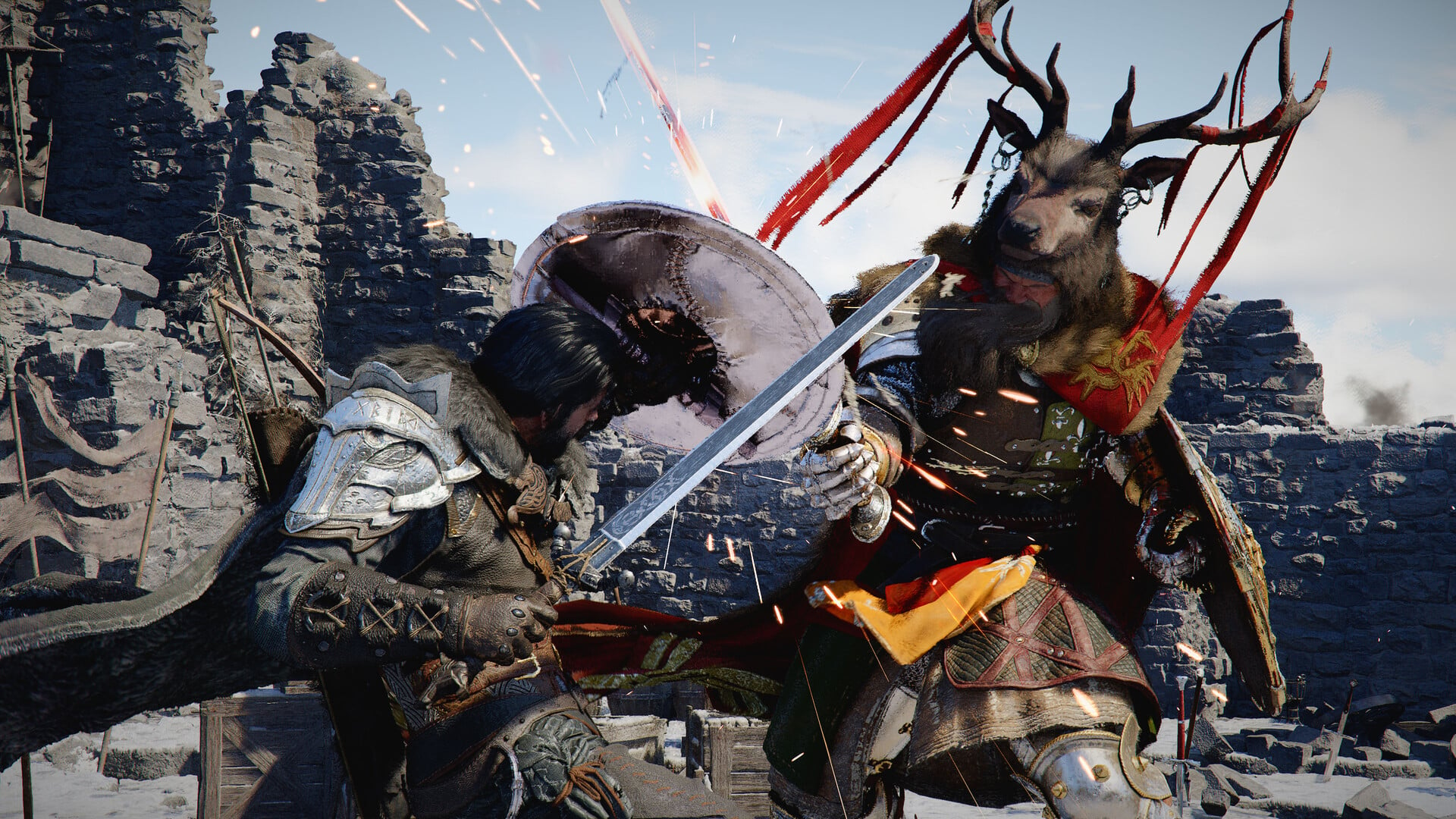
In its third-quarter 2026 financial report and shareholder letter, South Korean game developer Pearl Abyss delivered a remarkably candid breakdown of how artificial intelligence has been systematically integrated into its production pipelines for the high-profile open-world action title *Crimson Desert* and its long-anticipated follow-up, *DokeV*. The announcement arrives at a pivotal juncture for the studio. Following years of meticulous engineering on its proprietary next-generation BlackSpace Engine, Pearl Abyss confirmed that the technical architecture built for *Crimson Desert*—including its Enhanced Edition and post-launch expansions—is now being actively repurposed to accelerate *DokeV*, targeting a commercial release in the second half of 2028. However, it was the studio's transparent defense of AI deployment that captured the attention of game developers and industry observers worldwide.
Pearl Abyss explicitly stated that machine learning and algorithmic systems are now actively deployed across "various stages of development." Crucially, studio leadership sought to delineate a strict operational boundary: AI is being utilized aggressively as an internal productivity multiplier and concept validation engine, while core creative direction, world-building, and artistic assets remain entirely driven by human developers without headcount reductions.
### Shifting the Prototyping Paradigm: Pre-Implementation Validation
The central architectural innovation highlighted by Pearl Abyss revolves around what the studio terms pre-implementation design validation. In conventional AAA game development pipelines, testing a new gameplay mechanism, dynamic quest system, or combat interaction historically required manual whitebox prototyping. Designers and gameplay engineers spent weeks writing temporary code, constructing rudimentary greybox levels, and hand-crafting behavioral scripts simply to evaluate whether a design hypothesis felt compelling in execution. If the mechanic proved disjointed, those engineering hours were discarded.
Under Pearl Abyss's overhauled workflow, AI models are tasked with rapidly generating and stress-testing diverse parametric variations of design concepts prior to manual implementation. By simulating interaction dynamics, mechanical edge cases, and systemic combat variables computationally, development leads can discard unworkable concepts in hours rather than months. According to the studio, this algorithmic filtering enables vastly more efficient resource allocation across the engineering team, ensuring that programmers and animators only invest manual production hours into concepts whose mechanical viability has already been mathematically validated.
Beyond conceptual prototyping, the studio confirmed that AI tools are systematically deployed for repetitive development overhead: automated regression testing across sprawling open-world geometries, terrain collision verification, procedural 3D prop placement, and machine-learning-assisted motion matching to smooth transitions between hand-keyed combat animations.
### The Shadow of Generative Art Backlash and the Line in the Sand
The defensive, nuanced tone of Pearl Abyss's shareholder communication cannot be divorced from the community controversies that shadowed *Crimson Desert* earlier in its production cycle. Like several major publishers exploring automated pipelines, the studio faced fierce community backlash when players and digital artists discovered uncredited 2D generative AI artwork embedded within in-game decorative assets and environmental background props. That incident forced an official public apology and the immediate replacement of the offending assets with bespoke, human-illustrated artwork.
Having weathered that reputational storm, Pearl Abyss's Q3 letter reads as a deliberate attempt to establish a clear philosophical and commercial demarcation. "AI serves strictly as a tool to support concept validation and pipeline productivity, while the core gameplay experience and actual content creation remain fully driven by our development team," the company stressed. The studio reiterated that the technology is not being leveraged as a pretext for studio downsizing or creative outsourcing, directly contradicting prevailing industry anxiety that generative tools will permanently displace junior narrative designers, concept artists, and QA testers.
### The DokeV Horizon: Engine Tooling and AAA Production Velocity
The immediate beneficiary of this technical restructuring is *DokeV*, the creature-collecting open-world adventure originally revealed in 2019 that has endured extensive production delays. Pearl Abyss confirmed that with *Crimson Desert*'s core engine systems finalized, engineering personnel are being transitioned directly into the *DokeV* production team. The accumulated research and development capabilities, combined with automated pipeline validation, are reportedly providing a "tangible acceleration" in development velocity. The studio plans to unveil substantive gameplay footage before the end of 2026, setting the stage for its 2028 debut.
Pearl Abyss's disclosure highlights a broader structural divergence within global AAA development. While Western conglomerates continue to grapple with massive post-acquisition consolidation and severe labor cuts—exemplified by Microsoft's structural layoffs across Activision Blizzard (post #9389) and EA's reorganization around mechanized live-service pipelines (post #9394)—South Korean studios with proprietary engines are attempting to navigate a more sustainable equilibrium. By openly demarcating where automated code testing ends and human artistic integrity begins, Pearl Abyss is offering a closely watched case study: whether AI can be integrated into the brutal economics of AAA production to compress crippling five-year development cycles without compromising the creative soul that defines exceptional games.
### Sources & Further Reading
- [Video Games Chronicle (VGC)](https://www.videogameschronicle.com/news/crimson-desert-studio-pearl-abyss-says-it-now-uses-ai-across-various-stages-of-development/)
- [Eurogamer](https://www.eurogamer.net/crimson-desert-ai-pipeline-dokev-2028)
- [TechPowerUp](https://www.techpowerup.com/354798/crimson-desert-developer-goes-all-in-on-ai-for-game-development-but-not-art)
~Gaming ~CrimsonDesert ~DokeV ~ArtificialIntelligence ~GameDev