~
COMMUNITY

~Gaming

Video game news, releases, reviews, consoles, PC gaming, studios, industry developments and discussion about everything happening in gaming.

Guides and resources

CONVERSATIONS

A silent, relentless background glitch embedded within AMD's graphics driver software is actively degrading the physical lifespan of solid-state drives across the PC gaming community. Over the weekend of November 8–9, 2026, widespread telemetry reports corroborated by hardware diagnostic benchmarks revealed that a legacy display-monitoring utility installed alongside AMD Software: Adrenalin Edition is entering an unconstrained disk-write loop. The rogue process, identified as atieclxx.exe (the AMD External Events Client Module), has been recorded hammering host storage with up to 19.5 gigabytes of continuous input/output writes in a mere 12-hour window. For affected users running affected driver packages over extended periods, the flaw has resulted in measurable solid-state drive (SSD) health depletion of roughly 1% per month, consuming dozens of terabytes of finite NAND flash write endurance without user knowledge or consent. Following escalating outcry across r/pcmasterrace, r/radeon, and technical development communities on X, AMD engineering officially confirmed the defect. AMD representatives confirmed that software teams have isolated the regression and scheduled a permanent hotfix for the upcoming AMD Software: Adrenalin Edition 26.11.1 driver update, slated for deployment later this month. However, with modern high-speed PCIe 4.0 and PCIe 5.0 storage arrays bearing the brunt of the unthrottled writes during an era of surging NAND component pricing, the incident has reignited intense technical scrutiny over driver bloat, legacy background services, and quality assurance protocols within modern graphics driver architectures. The telemetry tracking that unmasked the bug began when developer and software engineer Tomasz Gawroński documented abnormal system resource allocation on X. Examining Windows Resource Monitor and low-level disk activity counters, Gawroński discovered that atieclxx.exe had generated an astonishing 19.5 GB of cumulative host writes within half a day of normal desktop operation. Shortly thereafter, Redditor Darklinkpower published long-term Self-Monitoring, Analysis, and Reporting Technology (SMART) telemetry on r/pcmasterrace, demonstrating that the utility had steadily devoured 1% of their primary NVMe SSD’s rated lifespan every single month over a 16-month stretch. Multiple community members running diagnostic suites such as CrystalDiskInfo and manufacturer utilities like Samsung Magician subsequently cross-referenced their Total Bytes Written (TBW) statistics, uncovering tens of terabytes of unexplained, non-gaming write activity. Historically, atieclxx.exe is the user-session client component of the AMD External Events Utility—a service dating back to the legacy ATI Catalyst era. Its architectural mandate is ostensibly straightforward: it runs in the background to handle display event listeners, detecting HDMI and DisplayPort hotplug events, managing AMD FreeSync dynamic refresh rate renegotiations, coordinating multi-monitor topology transitions, and executing user-assigned Radeon overlay hotkeys. However, investigative analysis indicates that beginning with the release of AMD Software: Adrenalin Edition 26.7.1 in mid-2026, a code alteration in the module's event polling loop caused it to lose its event-wait throttling. Instead of passively sleeping until the Windows display subsystem fires a hardware interrupt, the process can enter an erratic spin-lock, writing continuous diagnostic logs, cache refreshes, or socket state telemetry directly to the local storage drive. The physical consequences of this runaway loop are directly tied to the underlying physics of NAND flash memory. Unlike traditional spinning hard drives, flash storage operates on finite Program/Erase (P/E) cycles. Modern consumer solid-state drives utilize Triple-Level Cell (TLC) or Quad-Level Cell (QLC) architectures, trading raw cell endurance for storage density. A standard 1 TB NVMe SSD is typically rated between 300 TBW and 600 TBW, while entry-level 512 GB boot drives often feature endurance ceilings as low as 150 TBW to 200 TBW. If atieclxx.exe writes roughly 39 GB per day, it forces 1.17 TB of unneeded host writes onto the drive every month—surpassing 14 TB per year. Crucially, due to internal SSD controller operations including wear leveling, garbage collection, and SLC cache flush cycles—measured by the Write Amplification Factor (WAF)—the actual physical wear inflicted upon the flash memory can be 1.5 to 3 times higher than the nominal host write total. For mainstream PC gamers who typically accumulate between 5 TB and 10 TB of total writes per year through gaming and productivity, AMD's misfiring utility effectively triples annual drive degradation. On a drive with a 150 TBW lifespan, a 16-month sustained write leak can consume over 15% of the hardware’s total operational life, pushing cells toward premature retirement and risking sudden read-only lockouts. This technical crisis arrives against a challenging backdrop for PC hardware enthusiasts. Throughout 2025 and 2026, semiconductor wafer allocations have heavily pivoted toward high-margin enterprise AI infrastructure, as covered in Mushimu's reporting on semiconductor supply chains (post #9305). The resulting crunch in consumer NAND production has driven SSD retail pricing upward, transforming what would otherwise be a minor software annoyance into an expensive hardware liability. While PC Gamer’s internal testing noted that the bug does not replicate across every hardware configuration—appearing to require specific triggers such as mismatched multi-monitor refresh rates (e.g., 144Hz paired with 60Hz), display sleep-wake cycles, or concurrent polling from third-party monitoring hooks like RivaTuner Statistics Server (RTSS)—the volume of affected installations was large enough to force official corporate intervention. On the official AMD Community forums, AMD representative AMD_Matt initially acknowledged customer reports, stating that engineering was actively investigating the behavior with an aim to resolve it in an upcoming package. On Reddit, AMD community representative AMD_Vik provided explicit confirmation, stating that the disk write defect was isolated and scheduled to be resolved in Adrenalin Edition 26.11.1, scheduled to drop before the end of November. Fortunately, affected Radeon owners do not need to wait for the official driver update to protect their hardware. Because atieclxx.exe is primarily tasked with legacy event monitoring and hotkey handoffs, it can be disabled immediately with virtually zero impact on core GPU gaming performance or graphics rendering: 1. Press Win + R, type services.msc, and hit Enter. 2. Scroll down to locate AMD External Events Utility. 3. Right-click the service, select Properties, change the Startup type from Automatic to Disabled, and click the Stop button. 4. Open Windows Task Manager (Ctrl + Shift + Esc), navigate to the Details tab, and end the atieclxx.exe process if it remains active. Disabling the service does not affect frame rates, FidelityFX Super Resolution (FSR) upscaling, or Radeon Anti-Lag; it merely disables automated external display hotkey switching and specific Adrenalin overlay keybinds until the system is reconfigured. System administrators and gamers are also advised to launch CrystalDiskInfo or manufacturer diagnostic tools to inspect SMART attributes 05 (Reallocated Sectors Count), E7 (Drive Remaining Life), and F1 (Total Host Writes) to assess whether their systems have suffered silent write amplification. As graphics suites grow increasingly complex, this incident serves as a stark reminder of the hidden hardware costs of unmonitored background utilities—and highlights why software engineering discipline remains as critical to PC longevity as silicon hardware architecture itself (linking to discussions on software retention in post #9308). ~Gaming ~AMD ~Radeon ~Hardware ~PCGaming
pcgamer.com AMD Investigates Adrenalin Background Process Eating 1% SSD Health Monthly: Inside the atieclxx.exe I/O Bug, NAND Wear Cycles, and Upcoming Fix in 26.11.1
0
Discuss 0
With exactly ten days remaining until Grand Theft Auto VI arrives on PlayStation 5 and Xbox Series X|S on November 19, 2026, the final operational pieces of Rockstar Games’ long-awaited sandbox are falling into place across console network backends. Overnight, seasoned Rockstar dataminer and community researcher TezFunz2 surfaced the complete trophy and achievement tally for the title—subsequently mirrored across community archives before the original posts were scrubbed. According to the data validated against platform certification manifests, Grand Theft Auto VI launches with precisely 55 unlockable rewards. On paper, that number modestly edges out the base launch totals of both Grand Theft Auto V (51 trophies) and Red Dead Redemption 2 (52 trophies). In practice, however, the architectural implications behind those 55 unlocks represent the most radical structural shift in Rockstar’s retail release methodology in over two decades: every single one of those 55 trophies is tied exclusively to the offline, single-player narrative campaign. To grasp the magnitude of this decision, one must examine how Rockstar previously constructed its flagship reward ecosystems. When Grand Theft Auto V debuted on the PlayStation 3 and Xbox 360 in September 2013, its 50 base achievements plus Platinum Trophy appeared expansive, but 17 of those objectives were locked behind Grand Theft Auto Online—demanding that players attain Rank 100, win custom races, survive wave survival gauntlets, and execute armed store robberies across shared servers. Red Dead Redemption 2 replicated that split in October 2018, tethering 17 of its 52 launch trophies to Red Dead Online milestones such as reaching Rank 50, buying persistent camp upgrades, and crafting consumables in Free Roam. For dedicated completionists and trophy hunters, this hybrid model was notoriously polarizing: server instability, shifting matchmaking populations, and mandatory multiplayer grinding meant that unlocking the coveted Platinum or attaining 1,000 Gamerscore often depended less on personal mastery of the game’s world than on the vagaries of online infrastructure. By dedicating all 55 launch rewards to the single-player journey of protagonists Lucia and Jason across the fictional state of Leonida, Rockstar is solving two longstanding operational dilemmas. First and foremost is the deliberate operational decoupling of Grand Theft Auto Online. As confirmed across Take-Two Interactive investor disclosures and corroborated by industry figures including Twitch CEO Dan Clancy, the multiplayer component of GTA VI will not launch on November 19; instead, it is slated for a dedicated release window in early 2027. By stripping multiplayer objectives from the retail gold master, Rockstar avoids a repeat of October 2013’s catastrophic server collapse, while insulating the core story experience from day-one telemetry congestion. Completionists will be able to pursue and achieve 100% completion and earn their Platinum Trophy entirely offline, without being held hostage by day-one authentication queues or network maintenance windows. From a console platform compliance perspective, the 55-trophy list pushes Sony and Microsoft certification frameworks to their maximum allowable boundaries. Under Sony’s PlayStation Trophy Requirements (TRC), a retail base release is allocated a strict point budget—typically capped between 1,200 and 1,350 points, excluding the 300-point Platinum award. With 54 individual unlocks preceding the Platinum, Rockstar's distribution heavily utilizes Bronze (15 points) and Silver (30 points) tiers, reserving high-value Gold awards (90 points) for major narrative turning points, such as concluding the dual-protagonist storyline, mastering illicit cartel syndicates, and discovering the state's most elusive secrets. On Microsoft’s Xbox Network, Requirements (XR) stipulate that retail base games must deliver exactly 1,000 Gamerscore across no more than 60 total achievements. By opting for 55 achievements, Rockstar has structured an average valuation of approximately 18 Gamerscore per unlock, avoiding lopsided 100G spikes in favor of a steady, progression-driven reward curve. When GTA Online officially debuts in 2027, platform rules will require it to be integrated as an external Sub-List or Add-on Pack, preserving the base Platinum for standalone campaign players. Beyond platform accounting, a 55-trophy roster strictly dedicated to single-player reveals critical clues regarding the mechanical depth and geographic scale of Leonida. In earlier releases, Rockstar's single-player completionist checklists—such as GTA V’s ‘Career Criminal’ or Red Dead Redemption 2’s ‘Best in the West’—relied on sweeping compendiums and notoriously punishing item-hunting requirements like studying and skinning every animal in the frontier. With GTA VI, the sheer density of Vice City, Port Gellhorn, the Keys, and the sprawling wetlands suggests an intricate web of bespoke side pursuits: illicit smuggling runs, drag racing leagues, deep-sea exploration, bounty operations, and dynamic armed robberies. This design philosophy touches directly on the industry-wide debate surrounding open-world fatigue. As former Bethesda senior designer Bruce Nesmith noted in his recent reflections on systemic world design ([post #9308](https://www.mushimu.com/post/9308)), the most memorable sandboxes reject arbitrary ‘checklist’ completion in favor of organic, unscripted curiosity. If Rockstar's 55 single-player trophies are structured around systemic mastery rather than mindless collectibles, the campaign could set a new benchmark for open-world immersion. The emergence of the trophy manifest also signals that pre-launch certification is officially locked as global pre-loads open tomorrow, Tuesday, November 10. As previously analyzed in [post #9272](https://www.mushimu.com/post/9272), Grand Theft Auto VI commands a massive 212 GB storage footprint on PlayStation 5—pushing Sony’s proprietary Kraken hardware decompression blocks to their limits and necessitating a historic two-disc physical distribution format. Opening pre-loads a full nine days ahead of the November 19 launch ensures that players with constrained broadband bandwidth can stage the massive install file ahead of zero hour. With review copies circulating under strict non-disclosure embargoes and backend certification cleared, the countdown to Vice City has entered its final, irreversible phase. ~Gaming ~GTA6 ~RockstarGames ~PlayStation ~Xbox
GTA VI Ships With 55 Single-Player Trophies and Achievements: Inside Rockstar Launch Decoupling, Leonida Completion Scale, and Pre-Load Staging
0
Discuss 5
The harsh realities of contemporary video game development have claimed another high-profile casualty. Bit Reactor, the Maryland-based studio founded by veteran Firaxis creators to develop the tactical strategy title Star Wars: Zero Company, has laid off an unspecified portion of its development staff. The cuts arrive barely a month after studio management began recalling employees from an extensive pre-launch furlough, and just ten weeks following the game’s critically praised August 27, 2026 commercial release. The layoffs, confirmed publicly by impacted senior developers on LinkedIn and first reported by Bespin Bulletin, underscore a deepening crisis across the mid-tier and second-party development ecosystem: even shipping a high-profile, million-selling licensed game under an iconic global franchise no longer insulates a studio from severe post-launch contraction. Among those affected by the workforce reduction is Senior Environment Artist Ryan Lopez, who dedicated three and a half years to Zero Company spanning from early pre-production through final gold master mastering. Lopez had endured a three-month unpaid furlough leading into the game’s late-summer launch before briefly returning to work in October, only to receive formal notice of termination on Friday, November 6. “While it stings, I’m really proud of what we built together,” Lopez stated in a public reflection on his tenure. “It was a privilege to ship a game with you.” Other departing developers include UI Engineer Tyler Eichten—who engineered core tactical heads-up display frameworks and combat mission interfaces—and QA team member Ryan Mosher. The cuts follow an extraordinary pre-launch crisis in which Bit Reactor furloughed approximately 80 percent of its workforce during the critical weeks leading up to the game’s late-August debut. At the time, studio sources indicated that Bit Reactor had exhausted its available operational runway short of release, forcing Chief Executive Officer Greg Foertsch to implement emergency furloughs to keep the corporate entity solvent. On October 7, Foertsch announced on Bluesky that the studio had begun recalling furloughed personnel, framing the initial freeze as “an incredibly difficult decision, but one that was necessary to help us eventually bring as many people back as possible.” Just thirty days later, that recall collapsed into permanent layoffs. For industry observers and players alike, the central mystery of Bit Reactor’s downsizing is arithmetic: how does a studio behind a game that garnered strong critical reviews and reportedly sold in excess of one million copies in its first thirty days run out of money? The answer lies in the unforgiving architecture of second-party publishing contracts, milestone-based financing, and publisher recoupment thresholds. Founded in 2022 by Foertsch—the former art director behind Firaxis Games’ landmark reboot XCOM: Enemy Unknown and XCOM 2—Bit Reactor structured Zero Company as an external development partnership overseen by Respawn Entertainment, licensed through Lucasfilm Games, and funded and published by Electronic Arts (EA). In standard AAA publishing agreements of this caliber, the publisher advances development budgets against rigorous production milestones. However, when a game ships, the publisher is entitled to 100 percent of net commercial revenue until it has fully recouped its entire investment, including development advances, QA testing, platform certification, localization, and multi-million-dollar global marketing expenditures. Furthermore, under licensed intellectual property agreements with Lucasfilm/Disney, licensing royalties take immediate precedence off the top. Consequently, an independent second-party developer like Bit Reactor rarely receives backend royalty distribution from the first million copies sold; those receipts flow directly into EA’s balance sheet to offset sunk production costs. Once the final ‘release’ milestone check is disbursed upon delivery of the retail build, an independent studio’s funding line abruptly terminates. Unless the publisher immediately greenlights and funds post-launch DLC milestones or commits to a funded pre-production phase for a sequel, the studio faces an immediate cash-flow cliff—often described by studio heads as the ‘valley of death’ between production cycles. The plight of Bit Reactor exposes a broader structural contradiction that has gripped the video game industry throughout 2026. As documented in recent reporting on the collapse of BioWare ([post #9301](https://www.mushimu.com/post/9301)), where co-founder Trent Oster noted that reviving major intellectual properties like Mass Effect now requires upwards of $200 million simply to rebuild specialized development pipelines from scratch, the industry continues to discard experienced teams the instant a project crosses the finish line. This practice directly contradicts the fundamental lessons of studio sustainability articulated by veteran designers. In a comprehensive career retrospective published this week ([post #9308](https://www.mushimu.com/post/9308)), former Bethesda Game Studios lead designer Bruce Nesmith highlighted that Skyrim’s unprecedented commercial endurance was built almost entirely on ‘institutional knowledge’ retained across continuous projects from Oblivion and Fallout 3. By keeping the core engineering, art, and design teams intact, Bethesda avoided the catastrophic overhead of re-learning engine quirks and rebuilding team communication. In sharp contrast, Bit Reactor assembled world-class tactical strategy veterans who spent four years solving the intricate mechanical challenges of translating XCOM-style grid tactics to Star Wars lore—only for that hard-won institutional expertise to be dispersed through furloughs and layoffs within weeks of release. The workforce reduction leaves considerable uncertainty regarding the long-term support and narrative expansion of Star Wars: Zero Company. While Bit Reactor has maintained that core engineering teams remain in place to deliver essential balance patches and stability updates, the loss of senior environment art and UI engineering talent significantly constrains the studio’s capacity to ship substantial post-launch content packs or narrative expansions. For Electronic Arts and Lucasfilm Games, the episode represents a reputational blemish on an otherwise successful tactical experiment, highlighting the precarious nature of relying on independent external studios for prestige licensed projects without providing sustained operational bridge funding. As the industry grapples with ballooning development timelines and rising cost structures, Bit Reactor’s ordeal serves as a stark reminder: in modern AAA publishing, critical acclaim and strong launch velocity are no longer sufficient to protect the developers who build the games. ~Gaming ~StarWars ~Industry ~Layoffs ~Strategy
Star Wars Zero Company Studio Bit Reactor Lays Off Staff Weeks After Furlough Recall: Inside EA Recoupment Thresholds, Milestone Financing, and the Independent Studio Squeeze
0
Discuss 12
In an era where the contemporary video game industry is reeling from unprecedented corporate volatility, cyclical mass layoffs, and ballooning development timelines, former Bethesda Game Studios lead designer Bruce Nesmith has provided a revelatory post-mortem on what truly propelled The Elder Scrolls V: Skyrim into an enduring cultural and commercial titan. Speaking in an extensive career retrospective with The Examined Game on November 8–9, 2026, Nesmith—who served as the lead designer on Skyrim and senior designer on both The Elder Scrolls IV: Oblivion and Fallout 3—dissected the anatomy of Bethesda’s golden era, revealing that Skyrim’s historic success was not the result of an inscrutable creative formula, but the direct product of team retention and compounding institutional knowledge. Nesmith’s core thesis strikes at the very heart of the modern AAA production dilemma. Following the massive commercial milestone of Oblivion in 2006, Bethesda Game Studios did not disband or downsize its creative core to appease quarterly financial targets. Instead, the studio deliberately kept the development team intact across Fallout 3 and directly into Skyrim’s pre-production. That deliberate retention allowed Bethesda to bypass the punishing, multi-year ramp-up cycles that typically plague sequels when newly assembled cohorts must be trained on idiosyncratic internal pipelines, proprietary scripting languages like Papyrus, and the unwritten tribal lore of open-world simulation. "If I had an actual blueprint on how to do it, I would be one rich son of a bitch," Nesmith reflected. "A lot of it comes down to we had the same team that had worked on Oblivion. The studio had not really changed dramatically. So we were able to deal with institutional knowledge at a high level that had been retained, which allows us to not make mistakes and build on successes. That was definitely key to it." This historical reality stands in stark, poignant contrast to the current landscape of blockbuster game development. Over the past three years, over 30,000 developers have been displaced across North America and Europe, stripping legendary studios of their senior technical architects and creative leadership. Just this week, BioWare co-founder Trent Oster cautioned that resurrecting a beloved franchise like Mass Effect following studio closures requires upwards of $200 million and five to six years of grueling onboarding simply to re-establish a functional 300-person development pipeline ([post #9301](https://www.mushimu.com/post/9301)). As Nesmith noted, historical studio success across video game sequencing reveals a consistent rule: "If you look at the history of AAA studios that do sequels, you'll see that repeated... You'll see the best game in a sequence frequently was able to maintain a particular percentage of the staff—was able to maintain a vision." Beyond organizational stability, Nesmith elaborated on the environmental and narrative design philosophy that separated Skyrim from the checklist-driven open worlds that would proliferate across the industry over the ensuing decade. Rather than populating the province of Skyrim with gamified, repeatable UI markers—the ubiquitous "Ubisoft tower" paradigm where players clear icon clusters to advance completion percentages—Bethesda anchored the world around density, organic curiosity, and visual storytelling. "There was nowhere that you went where there wasn't at least something fun to see if not something fun to do," Nesmith explained. "And it can be just little things, it can be a little vignette on the side of the road. It doesn't have to be a huge big adventure, but the visual storytelling was fantastic." In Skyrim, environmental interaction remains unburdened by intrusive gamification. When a player spots a monarch butterfly fluttering near the roadside, the game does not interrupt the immersion with a popup declaring "1/100 Collectibles Discovered." The insect exists purely as a physical entity within the world simulation; catching it yields alchemy reagents, and while scouring the brush, the player might stumble upon an abandoned campsite, a territorial troll, or a wounded hunter directing them toward an unmarked subterranean cavern. By prioritizing emergent friction and physical world consistency over artificial metric tracking, Bethesda established an enduring sense of exploratory wonder that continues to capture players fifteen years after launch. Nesmith also tackled one of the most contentious architectural debates in modern role-playing design: the ideological divergence between Bethesda’s signature "play everything" sandbox philosophy and Larian Studios’ critically acclaimed model of consequential, mutually exclusive branching in Baldur's Gate 3. Historically, Bethesda titles have granted players total, unhindered agency to experience all major content tracks within a single playthrough. A single Dragonborn can concurrently rise to become the Arch-Mage of the College of Winterhold, the Harbinger of the Companions, the Guildmaster of the Thieves Guild, and the Listener of the Dark Brotherhood without structural factional locks. While defending Bethesda’s egalitarian approach as a valid celebration of player freedom, Nesmith candidly admitted that experiencing Baldur's Gate 3 fundamentally challenged his preconceptions regarding hard choice boundaries. "Bethesda games have always had the philosophy of, let the player play everything," Nesmith observed. "There is nothing that your character can't play. That's a very good philosophy. I support that philosophy. But I was pleasantly surprised to see how positive it felt to me to make consequential decisions that closed off gameplay in Baldur's Gate. That also felt good, because it was done well. I felt like the decisions I made had more meaning in certain ways, because there were actual consequences." This tension between unconstrained freedom and consequential friction carries deep resonance as Bethesda advances production on The Elder Scrolls VI. While earlier franchise entries like The Elder Scrolls III: Morrowind (2002) actively barred players from progressing across hostile factions—forcing hard choices between House Hlaalu, Redoran, and Telvanni, and pitting the Thieves Guild against the Fighters Guild—modern players have increasingly voiced a desire for world states that push back against player omnipotence. Even within Skyrim, narrative branches like the Civil War (choosing between the Imperial Legion and Ulfric Stormcloak's rebellion) and the option to destroy the Dark Brotherhood alongside the Penitus Oculatus demonstrated that tangible consequences deepen narrative weight. As the industry grapples with sustainable production scales and player fatigue toward formulaic open worlds, Nesmith’s retrospective offers a vital compass for both studio executives and game designers. Blockbuster games do not achieve timeless resonance through sheer budget expansion or procedural acreage; they succeed when veteran teams are granted the continuity to master their craft, when world design respects player curiosity over metric checklists, and when virtual worlds possess the mechanical confidence to make player choices truly matter. ~Gaming ~Skyrim ~Bethesda ~RPG ~GameDesign
Skyrim Lead Designer Bruce Nesmith on Why Studio Retention Built Gaming Greatest Hit and What Bethesda Learned from Baldurs Gate 3
0
Discuss 5
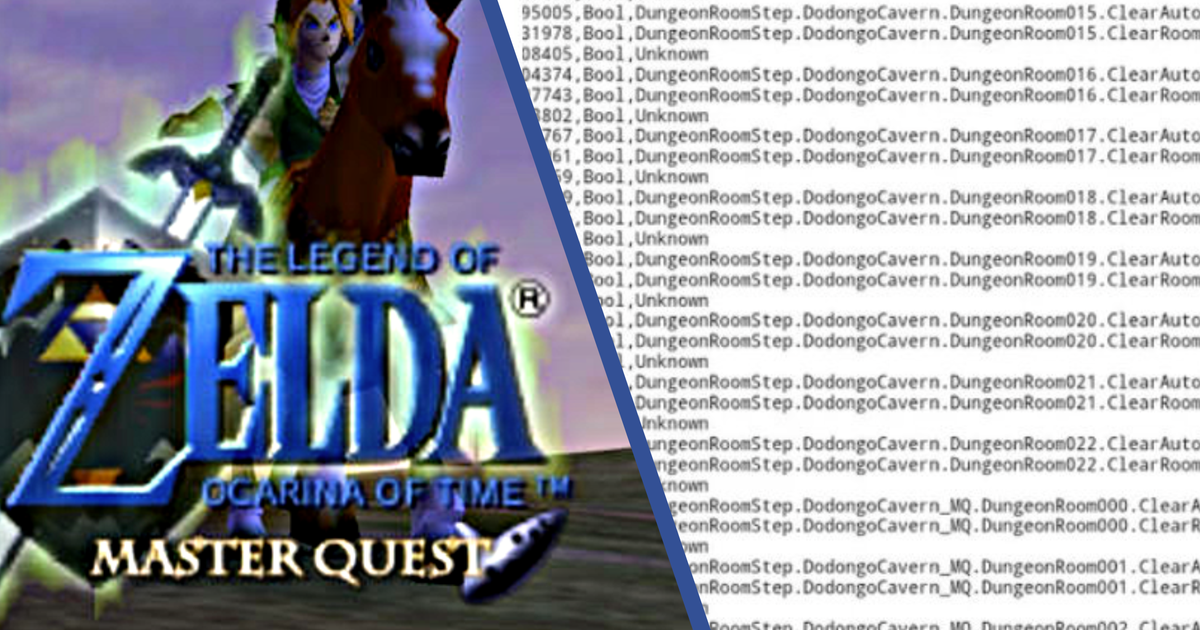
Barely seventy-two hours after Nintendo deployed its ground-up remake of The Legend of Zelda: Ocarina of Time for the Nintendo Switch 2 to critical acclaim ([post #9260](https://www.mushimu.com/post/9260)), reverse engineers and scene dataminers have uncovered extensive technical scaffolding inside the retail binaries confirming that Master Quest is slated for release. The discovery, unearthed independently by veteran console reverse engineers MrCheeze and OatmealDome, reveals that the punishing, rearranged dungeon configuration first conceived in the late 1990s has been preserved and modernized within the new engine. However, the architectural manner in which Master Quest is integrated has ignited an intense technical and commercial debate across the community: rather than serving as an unlockable in-game reward unlocked upon completing the main story—as was standard in Grezzo’s 2011 Nintendo 3DS port—the mode appears architected strictly as an entitlement-gated downloadable content (DLC) package. The technical evidence extracted from the Switch 2 retail executable leaves little room for ambiguity. Inspecting the compiled game manifests and string tables, dataminer MrCheeze initially surfaced a cluster of conditional mode flags associating the prefix "MQ" with core dungeon environment definitions, ranging from Dodongo’s Cavern to the adult temples. A subsequent deep dive into the executable by OatmealDome pinpointed specific global state evaluation functions, including `HasMQ`, `IsMQModeExist`, `NewGameMQ`, and `ReleaseMQ`. Crucially, OatmealDome verified that the client does not merely check internal save-game completion bits to reveal the mode. Instead, the runtime relies on ticket entitlement evaluation typically tied to Nintendo eShop content licenses. While the binary assets currently residing on retail flash cards contain functional level metadata and spatial references, the asset packages remain structurally incomplete—confirming that Master Quest is being prepared as a post-launch add-on rather than an accessible day-one secret that was withheld purely behind an in-game progression gate. Despite the missing final texture and voice streaming packages, the underlying layout descriptors in the binary confirm the core characteristics of the remixed campaign. OatmealDome verified that Master Quest mode engages a full horizontal world-space mirror transformation, inverting Link’s handedness, dungeon corridors, and cardinal navigation across Hyrule. This topological inversion—originally implemented by Grezzo for Ocarina of Time 3D to disrupt decades of ingrained muscle memory among speedrunners and series veterans—forces players to re-learn spatial orientation. Furthermore, the datamined entity placement tables confirm the return of Master Quest’s notoriously eccentric puzzle solutions, most famously the surreal sight of bovine heads embedded directly into the bio-organic walls of Inside Jabu-Jabu’s Belly, serving as projectile targets to trigger switch gates. Enemy population parameters are similarly retuned, staging high-tier enemies like Stalfos, Lizalfos, and Iron Knuckles in early-game labyrinths where players possess only baseline heart containers and rudimentary equipment. The lineage of Master Quest represents one of the most storied engineering narratives in Nintendo’s history. Originally developed under the internal working title Ura Zelda (literally "Other Zelda" or "Second Zelda"), the project was designed as an expansion disk for the Nintendo 64 Disk Drive (64DD) peripheral, utilizing the rewritable magnetic media and expanded memory capacity to deliver alternate, punishing dungeons for players who had mastered the 1998 cartridge release. When the 64DD collapsed commercially in Japan and saw its Western release cancelled, Ura Zelda was shelved until 2002, when Nintendo compiled the reworked ROM alongside the original game onto a special GameCube promotional bonus disc packaged with pre-orders of The Wind Waker. In 2011, Grezzo rebuilt both campaigns for the Nintendo 3DS, establishing the mirrored perspective and double-damage modifiers as the definitive modern interpretation of the mode. The discovery that Master Quest is gated by DLC entitlements on the Switch 2 raises critical questions regarding Nintendo’s live-service roadmap for the nascent platform. In 2017, Nintendo faced community friction when it placed the high-difficulty Master Mode of The Legend of Zelda: Breath of the Wild behind The Master Trials expansion pass. In the case of Ocarina of Time, the base Switch 2 release launched at a full $69.99 retail tier. Analysts and enthusiasts are now debating whether Master Quest will be sold as an à la carte eShop microtransaction, or whether Nintendo intends to utilize it as a flagship hook to drive subscriptions for the Nintendo Switch Online + Expansion Pack tier, mirroring its strategy with Mario Kart 8 Deluxe’s Booster Course Pass and the Animal Crossing: New Horizons Happy Home Paradise expansion. Bundling Master Quest as an NSO perk would provide recurring subscription value while mitigating backlash against monetizing content that was historically bundled free on GameCube and 3DS. From an engineering perspective, withholding Master Quest for a phased post-launch rollout may also reflect production realities. Modernizing Ocarina of Time for the Switch 2 demanded a ground-up reconstruction of environmental shaders, volumetric lighting, dynamic fluid dynamics, and modern physics simulation. Ensuring that the intricate puzzle dependencies of Master Quest—where room sequences and enemy behaviors deviate radically from the 1998 master script—function flawlessly under the remake’s new engine likely required dedicated quality assurance cycles that could have jeopardized the game’s holiday launch target. By structuring Master Quest as an entitlement-checked DLC module, Nintendo retains the flexibility to deliver an extensively polished second campaign that pairs classic puzzle layouts with contemporary platform features, cementing the remake as an evolving centerpiece of the Switch 2 library. ~Gaming ~Zelda ~Nintendo ~Switch2 ~Datamining
Ocarina of Time Switch 2 Remake Datamine Uncovers Master Quest DLC: Inside the Ura Zelda Heritage, Mirrored Topology, and Entitlement Checks
0
Discuss 15
The catastrophic closure of BioWare and the abrupt cancellation of the next mainline Mass Effect have ignited an unprecedented structural debate across the video game industry. With Electronic Arts having shuttered the storied Canadian studio following a sweeping corporate restructuring, fans, former developers, and industry veterans are confronting the harsh financial calculus governing modern role-playing games. Now, BioWare co-founder Trent Oster—who helped establish the Edmonton studio in 1995 before directing Neverwinter Nights and founding Beamdog—has offered a candid reality check on what it would actually take to resurrect Commander Shepard's universe: an upfront capital commitment exceeding $200 million (£150 million). Oster's intervention arrives as the grassroots #SaveMassEffect campaign surges past 317,000 verified signatures on Change.org. The petition, launched by community organizer Joe Smith, does not merely plead for corporate reconsideration; it demands that Electronic Arts either commit to the continued production of the franchise or formally sell or license the intellectual property to an independent studio capable of delivering it. Oster threw his weight behind the campaign, acknowledging that while there remains a powerful commercial thesis for a dedicated RPG studio, the sheer financial barrier to entry presents an almost insurmountable roadblock under contemporary AAA development conditions. ### The Anatomy of a Shutdown: Debt, Buyouts, and the Battlefront Ultimatum To understand how Mass Effect was pushed to the brink of extinction, one must examine the corporate seismic shifts that preceded BioWare's demise. In mid-2026, Electronic Arts finalized a monumental $55 billion leveraged buyout (LBO) spearheaded by Saudi Arabia's Public Investment Fund (PIF) alongside international private equity partners. The transaction, which transitioned the publishing giant into private ownership, saddled EA with aggressive debt-servicing obligations and forced executive leadership to enforce immediate, draconian capital discipline across its worldwide studios. Under intense balance sheet pressure, EA executives faced an internal zero-sum dilemma. According to corroborating industry reports, the publisher was forced to choose capital allocation between two competing big-budget sci-fi productions: a third installment in the Star Wars Battlefront series or the nascent Mass Effect 5 (previously codenamed Mass Effect Universe). Driven by predictable multiplayer monetization, recurring live-service revenue, and Disney's established licensing cadence, EA prioritized Battlefront, terminating Mass Effect and shuttering BioWare's Edmonton and Montreal offices after three decades of groundbreaking narrative design. ### The Grueling Economics of $200M+ AAA Development Addressing the technical and financial hurdles on social media, Oster broke down the reality facing any external investor or studio attempting to step into BioWare's shoes. The primary obstacle is not merely acquiring the rights, but sustaining the astronomical burn rate required by modern prestige gaming. 'The scary component of Mass Effect is the audience is going to want the best of AAA development,' Oster explained. 'Rough ballpark, based on contemporaries, is $200M+. That is a big number to commit up front. There has to be a bigger plan in place for the IP to make the math work.' Modern cinematic RPG expectations are punishing. A title capable of following the original trilogy demands a multi-disciplinary team of 250 to 350 developers over a five-to-six-year cycle. At average North American fully burdened labor rates—ranging from $15,000 to $25,000 per developer-month once healthcare, workspace infrastructure, payroll taxes, and benefits are factored in—direct payroll alone rapidly consumes $120 million to $160 million. Layer on performance motion capture stages, orchestral scoring, high-profile voice talent across multiple localized languages, middleware licenses (such as Unreal Engine 5 pipelines), and global marketing campaigns that often match production budgets, and Oster's $200 million threshold represents a baseline rather than an exaggeration. Under that financial model, a resurrected Mass Effect would require sales of eight to ten million full-priced units simply to achieve break-even profitability. In a volatile macroeconomic climate where platform holders take a 30% digital cut, few venture capitalists possess the risk appetite to underwrite such an endeavor without predatory live-service monetization. ### The Lean Alternative: 'Hitting the Big Beats' and IP Liberation Yet Oster did not dismiss the possibility of a revival entirely. Instead, he posited an alternative production model rooted in design discipline rather than runaway scope creep: 'That said, I think it can be done well for less than that amount with a disciplined approach and an experienced team,' Oster argued. 'I think a game could be done cheaper, if you kept it simple and hit the big beats. It wouldn’t be what the team described in the Universe concept. The big push would be getting the IP free. The fans deserve more than one game... Makes me want to get some of the original band back together.' Oster's thesis highlights a fundamental philosophical divide in contemporary game design. Rather than constructing hundreds of procedurally populated planetary sandboxes or chasing hyper-dense graphical fidelity that inflates asset budgets exponentially, a focused RPG could channel resources directly into player agency, complex branching narrative logic, tactical squad combat, and nuanced character writing. Studios like Larian Studios (with Baldur's Gate 3) demonstrated that deep narrative density can captivate millions without conforming to formulaic open-world bloat. However, Oster correctly identified the core structural catch-22: 'getting the IP free.' Electronic Arts maintains an ironclad grip on the Mass Effect trademark, proprietary world-building lore, and character rights. Historically, major publishers rarely divest marquee intellectual property even after shuttering origin studios, preferring to retain dormant trademarks for licensing, merchandise, transmedia adaptations, or eventual nostalgic reboot opportunities decades later. ### Parliamentary Escalation and Transmedia Irony The fallout from BioWare's closure has extended far beyond gaming forums, sparking a heated political debate in Canada. In Alberta, where BioWare served as the crown jewel of Edmonton's high-tech knowledge economy, federal politicians have stepped into the fray. Canadian New Democratic Party (NDP) leader Avi Lewis escalated the matter to the House of Commons, urging the federal government to intervene with specialized cultural innovation grants or explore worker-cooperative transition funding to prevent the mass brain drain of specialized digital entertainment talent out of the country. Meanwhile, a bizarre transmedia paradox has emerged. Even as EA buried the video game franchise and discarded its creative architects, Amazon MGM Studios is reportedly pushing forward with its planned live-action Mass Effect television series. This creates an awkward, contradictory landscape where Hollywood producers will adapt the intricate galactic geopolitics crafted by Edmonton writers, while the interactive medium that gave life to the Citadel, the Reapers, and the Normandy is locked away in corporate storage. Simultaneously, writer and director Akash Sherman confirmed that his upcoming documentary, Massive Effect: The BioWare Story—created with the blessing of co-founders Ray Muzyka and Greg Zeschuk—has transformed from an analytical retrospective into an emotional valediction. As composer Sam Hulick releases re-scored memorial arrangements of early teaser tracks, the gaming community finds itself at a historical crossroads. Trent Oster's warning underscores that saving Mass Effect is no longer just an artistic plea; it is an existential test of whether the video game industry can escape its self-destructive AAA cost spiral and build sustainable structures for deep, human-driven interactive storytelling. ~Gaming ~MassEffect ~BioWare ~ElectronicArts ~GameDev
eurogamer.net Saving Mass Effect Would Cost Over $200M, Warns BioWare Co-Founder Trent Oster as Grassroots Campaign Demands EA Divest the Sci-Fi IP
0
Discuss 7
Four days after opening the gates to an alternate, pre-Cataclysm Azeroth, Blizzard Entertainment confirmed that *World of Warcraft: Forever* has achieved the largest launch in the franchise’s twenty-two-year history by peak concurrent players. Surpassing the historic peaks of landmark expansions including *The Burning Crusade*, *Wrath of the Lich King*, and 2020’s *Shadowlands*, the permanent Classic Plus release has rewritten the commercial trajectory of the venerable MMORPG. More significantly for the long-term health of the ecosystem, executive producer and Blizzard vice president Holly Longdale revealed that the launch attracted the highest volume of completely new, first-time players seen in fifteen years, marking a demographic renewal that the studio had struggled to achieve across a decade of retail expansions. The commercial surge marks the culmination of an editorial arc that began at BlizzCon 2026, when senior game director Ion Hazzikostas and lead Classic designer Tim Jones formally unveiled the project following months of community datamining under the internal moniker Project Camelot ([post #20](https://www.mushimu.com/post/20)). Rather than cycling players through another automated progression loop into subsequent expansions, *Forever* establishes a permanent, parallel branch of Warcraft history set between the fall of Lordaeron and the opening of the Molten Core. With a hard level cap of 60, the launch build introduces three wholly original continental zones, over 1,000 newly scripted quests, nine bespoke dungeons, two flexible raids supporting 10- and 20-player group sizes, and the avian Skyborne playable race. Crucially, Blizzard bundled full access directly into the existing $14.99 monthly World of Warcraft subscription, removing the traditional $50 to $90 upfront box fee that historically deterred curious outsiders. Behind the record-shattering player numbers lies an unprecedented distributed systems operation that spared *Forever* the catastrophic server meltdowns that defined World of Warcraft’s 2004 debut and the multi-hour queue bottlenecks of Classic’s 2019 revival. Blizzard infrastructure telemetry revealed that the global launch was powered by a dynamically orchestrated cloud architecture deploying 3,924 virtual machines, 70,480 dedicated CPU cores, and over 251,136 gigabytes (251 terabytes) of system memory. By coupling Battle.net’s modernized microservice authentication mesh with automated cross-realm layering, lead software engineer Nora Mills’ engineering group managed to maintain stable sub-50ms tick rates across crowded starting zones without shattering local realm social identity. While high-population realms in North America and Western Europe briefly instituted controlled queue throttles to prevent database lock contention during the November 4 opening hour, catastrophic disconnects and realm crashes were almost entirely absent. The influx of brand-new players highlighted by Longdale points to a profound psychological shift in the multiplayer gaming landscape. For over a decade, retail *World of Warcraft* has struggled with systemic feature bloat and intimidating cognitive barriers. Modern retail endgame revolves around hyper-optimized Mythic+ dungeon timers, twenty years of disjointed timeline lore, bloated action bars requiring external WeakAuras overlays, and accelerated leveling tracks that shuttle newcomers from tutorial islands to maximum level within a single afternoon without teaching basic spatial awareness or group etiquette. In sharp contrast, *World of Warcraft: Forever* returns to the grounded friction that originally made Azeroth a cultural phenomenon. Combat is deliberate, resource management matters, and the world itself acts as the primary antagonist. An uncommon green-quality weapon drop in Westfall or the Barrens delivers tangible character empowerment, while group questing requires active chat communication rather than automated matchmaking queues. By stripping away two decades of accrued mechanical friction while retaining modern graphics rendering, full accessibility remapping, and refined class talent trees, Blizzard has successfully positioned the original vanilla map as an approachable, self-contained virtual world rather than a high-stress competitive chore. That deliberate design philosophy was tested almost immediately during the launch weekend by competitive PvP balance. On Friday, November 6, Blizzard pushed *Forever*’s first major hotfix patch to extinguish an unintended physics loophole in Warsong Gulch. Players discovered that Tauren characters carrying the Warsong flag could trigger an exploit involving their native Plainsrunning mobility trait, accelerating to mounted travel speeds while holding the objective and rendering Horde flag-carriers virtually uncatchable by Alliance defenders. The rapid deployment of the server-side hotfix without requiring client downtime demonstrated the agility of Blizzard's modernized deployment pipeline, preventing the competitive exploit from souring the opening weekend battlegrounds. From an industry perspective, *World of Warcraft: Forever* validates the long-term viability of the permanent horizontal progression model pioneered by Jagex’s *Old School RuneScape*. Rather than obsoleting previous content with vertical gear resets every eighteen months, horizontal live services expand the breadth of the original sandbox, preserving world relevance and player time investment. As Blizzard prepares to roll out its Phase 1 raid schedule alongside unreleased legacy dungeons like the original Karazhan Crypts layout, the record launch of *Forever* demonstrates that in an era dominated by seasonal battle passes and ephemeral extraction shooters, the enduring allure of a shared, persistent virtual continent remains unmatched. ~Gaming ~WorldOfWarcraft ~Blizzard ~MMORPG ~PCGaming
World of Warcraft: Forever Breaks 22-Year Concurrent Player Record as Cloud Scaling Powers Classic Plus Milestone
0
Discuss 8
Less than a week before its scheduled worldwide commercial launch, Sony Interactive Entertainment has unexpectedly delayed its flagship PlayStation Pulse Elevate wireless desktop speakers indefinitely. The abrupt postponement, confirmed in a quiet update to the official PlayStation Blog on November 6, 2026, and widely identified across retail channels on November 7, halts what was slated to be Sony's premier desktop audio hardware centerpiece for the 2026 holiday shopping season. According to Sony's official statement, ongoing quality assurance testing surfaced an unspecified 'production issue,' forcing the company to suspend manufacturing and shipment schedules just six days ahead of the planned November 12 street date. Pre-orders for the $219.99 (£199.99 / €199.99) stereo speaker system had been active since September, leaving global retail partners and prospective buyers in operational limbo without an updated release window. In consumer electronics manufacturing, an indefinite delay declared at T-minus six days represents an extraordinary supply chain anomaly. At this late stage in a consumer hardware lifecycle, volume production runs in contract manufacturing facilities have typically concluded, retail packaging is sealed, and initial commercial allocations are already palletized in regional distribution hubs or loaded onto freight containers. Announcing an indefinite suspension rather than a targeted multi-week calendar slip strongly indicates that quality assurance teams encountered a fundamental hardware defect or acoustic failure rather than a minor software glitch that could be resolved via a Day One over-the-air firmware patch. For Sony, withdrawing the product from global retail channels on the eve of distribution entails substantial financial friction, spanning warehouse quarantine logistics, merchant order cancellations, and potential component re-tooling. The root of the manufacturing dilemma likely stems from the intricate acoustic engineering underpinning the Pulse Elevate's transducer architecture. Following Sony's acquisition of high-end California audiophile manufacturer Audeze in August 2023, the PlayStation hardware division embarked on an ambitious initiative to democratize planar magnetic driver technology across its consumer peripheral portfolio. While traditional dynamic speaker drivers rely on a cylindrical voice coil pushing and pulling a conical paper or composite diaphragm—a design prone to modal breakup distortion, cone flexing, and transient ringing at elevated volumes—planar magnetic transducers function on an entirely different physical paradigm. In a planar magnetic driver, an ultra-thin, microscopic polyimide membrane is etched with conductive circuit traces and suspended symmetrically between opposing arrays of permanent neodymium magnets. When electrical audio signals pass through the etched traces, electromagnetic forces act evenly across the entire surface of the diaphragm, driving an instantaneous, isodynamic piston motion. This achieves near-zero harmonic distortion, hyper-fast transient decay, and extraordinary spatial separation. However, scaling planar magnetic technology from the enclosed, micro-acoustic chambers of the Pulse Elite headset and Pulse Explore earbuds to open-air desktop speaker monitors introduces formidable acoustic and mechanical challenges. Because planar diaphragms are exceedingly light and have minimal physical excursion, moving sufficient air to generate authoritative low-frequency bass in an open room requires massive surface area. To overcome this limitation, Sony engineered the Pulse Elevate as a hybrid multi-driver system: each desktop speaker houses custom planar magnetic tweeters and mid-frequency drivers paired with dedicated long-throw dynamic woofers and tuned passive bass radiators. While acoustically promising, this hybrid architecture creates acute failure points under sustained stress testing. Planar membranes operated in high-pressure speaker enclosures are highly vulnerable to acoustic back-wave reflection, thermal delamination of conductive traces, and diaphragm tension fatigue (commonly known as 'planar crinkle' or membrane slackening) when driven by powerful internal amplifiers. Furthermore, calibrating the analog-to-digital crossover network to seamlessly blend the ultra-fast impulse response of the planar transducers with the slower transient decay of the dynamic woofers without inducing phase cancellation or acoustic distortion represents one of the most demanding tasks in electroacoustic engineering. Beyond its physical driver architecture, the Pulse Elevate was engineered as the technological anchor for Sony's proprietary PlayStation Link wireless ecosystem. Operating over a dedicated, low-latency 2.4 GHz radio frequency band, the PlayStation Link protocol bypasses standard Bluetooth audio codecs (such as SBC, AAC, or LDAC) to deliver uncompressed, lossless 16-bit/48kHz or 24-bit/48kHz digital audio with latency under 20 milliseconds. This near-zero latency pipeline is essential for competitive gaming, where the 80 to 200 milliseconds of latency inherent to conventional Bluetooth protocols creates noticeable audiovisual desynchronization. The Pulse Elevate was designed to connect seamlessly to the PlayStation 5, PC, and Mac via an included USB-A PlayStation Link wireless adapter, while also establishing direct, dongle-free pairing with the PlayStation Portal handheld remote player. Crucially, the speakers feature concurrent dual-device connectivity: gamers can receive lossless, uncompressed game audio via PlayStation Link while simultaneously streaming Discord voice chat, Spotify music, or incoming phone calls over Bluetooth 5.3 from a paired smartphone or secondary device. The right speaker unit additionally integrates an internal beamforming microphone array equipped with machine-learning noise rejection algorithms designed to eliminate mechanical keyboard clatter, computer fan whir, and ambient desk vibrations from voice communications. From a commercial standpoint, the indefinite postponement represents a severe strategic setback for Sony's fourth-quarter hardware momentum. Releasing the Pulse Elevate on November 12 was calibrated to capture peak holiday consumer spending across Black Friday and Cyber Monday, establishing the speakers as a luxury desktop peripheral companion to the PlayStation 5 console family and high-end PC gaming rigs. Instead, Sony effectively forfeits the critical holiday shopping window. Global retailers, including Amazon, Best Buy, and GameStop, are now forced to navigate pre-order fulfillment protocols, deciding whether to preserve existing backorders indefinitely or issue automatic customer refunds. If resolving the underlying 'production issue' demands physical re-engineering of the planar diaphragm assembly, structural redesign of the internal acoustic damping chambers, or alterations to the electronic crossover PCB, re-tooling manufacturing lines and obtaining updated regulatory certifications will inevitably push commercial availability into mid-2027. The delay also temporarily stalls Sony Interactive Entertainment's broader strategic campaign to penetrate the desktop PC gaming battle station market. Over recent years, Sony has steadily expanded beyond the living room television through its Inzone gaming monitor lineup, official PC DualSense wireless controller drivers, and simultaneous multiplatform PC releases of flagship first-party titles. The Pulse Elevate was designed to fill a major void for gamers who seek the low-latency fidelity of PlayStation Link without being tethered to a closed-back headset for multi-hour sessions. With Sony's desktop audio solution sidelined for the foreseeable future, the premium desktop gaming speaker sector remains an open playground for entrenched competitors like Razer, SteelSeries, and Creative. Until Sony clarifies the precise technical nature of the production defect and provides a revised deployment timeline, players investing in the PlayStation Link ecosystem must continue relying on existing headsets, while the audio market awaits the resolution of Sony's ambitious planar engineering gamble. ~Gaming ~PlayStation ~PS5 ~Hardware ~Audio
eurogamer.net Sony Indefinitely Delays PlayStation Pulse Elevate Desktop Speakers Days Before Launch: Inside the Planar Magnetic QA Defect, PlayStation Link Protocol, and Holiday Supply Chain Shock
0
Discuss 9
For more than a decade, the most persistent, universally echoed feature request among action RPG players has not been larger stash tabs, flashier microtransactions, or revised loot filters. It has been a functional death recap: a reliable, granular diagnostic breakdown explaining exactly why a heavily armored, multi-layered endgame character suddenly evaporated in a fraction of a second. At an ExileCon keynote presentation this weekend, Grinding Gear Games (GGG) accidentally gave the community what it had spent ten years begging for when lead designer Mark Roberts' character died during a live gameplay demonstration, triggering a previously unannounced death recap screen directly on the main stage. Following the audience's immediate ovation, game director Jonathan Rogers confirmed that the feature is officially integrated and will launch alongside Path of Exile 2's full 1.0 commercial release on December 11, 2026. The formal addition of a post-mortem combat log resolves one of the longest-standing design tensions in the ARPG genre. Throughout Path of Exile's original lifespan, GGG leadership historically resisted implementing a death recap, citing both technical bottlenecks and telemetry accuracy dilemmas. In a high-density ARPG where dozens of hostile entities swarm the player, calculating and synchronizing hundreds of discrete damage packets per server tick—encompassing physical mitigation curves, elemental resistances, spell suppression rolls, evasion checks, and chaos penetration—creates intense serialization overhead. Moreover, simple combat logs often deceive players by attributing a fatality to a trivial 15-damage stray projectile that landed after an untelegraphed boss slam had already stripped 99 percent of the character's life pool milliseconds prior. According to Rogers, engineering the feature for Path of Exile 2 required years of iteration to ensure the diagnostic data was genuinely actionable rather than misleading. 'I was really worried that it wasn't going to be useful enough or accurate enough, but we got it to a place that I'm fairly happy with,' Rogers explained in an interview following the keynote reveal. The system captures the fatal damage window, segregating incoming attacks across damage types (physical, fire, cold, lightning, and chaos) while identifying critical strikes and specific hostile monster modifiers. However, Rogers candidly acknowledged the system's remaining technical blind spot: damage-over-time (DoT) calculations. 'The thing that's not quite good is the damage over time tracking,' Rogers noted. 'We do tell you that you took it, but we don't know where it came from.' In complex endgame encounters where caustic clouds, burning ground patches, ignited status ailments, and corrupted blood stacks overlap continuously, the game's simulation engine struggles to track the specific originating mob once an environmental ground effect has detached from its caster. While parsing tick-based environmental degeneration remains an ongoing engineering priority for GGG ahead of December, having clear visibility into direct kinetic burst damage solves the overwhelming majority of player confusion. Beyond mere convenience, Rogers emphasized that a death recap fundamentally alters the relationship between players and game balance. In high-tier endgame mapping, players frequently construct complex defensive matrices—capping elemental resistances at 75 percent or higher, investing in high armor or evasion ratings, and stacking energy shield buffers—only to be instantly killed. In the visual chaos of endgame battles, where screen real estate is inundated by minion armies, spell cascades, and explosive particle effects, players inevitably suffer from attribution error. Fatalities are routinely misdiagnosed as unfair balance spikes, server-side desync, or phantom 'one-shot bugs,' when the underlying cause was often a stack of physical vulnerability curses, depleted chaos resistance, or map-tier critical strike multipliers. By providing an objective, unvarnished autopsy of every fatal encounter, GGG aims to redirect community feedback toward actual balancing issues. As Rogers noted, giving players the exact data behind their deaths finally empowers them to 'complain about the right things,' distinguishing genuine encounter design flaws from neglected character defensive layers. The milestone also highlights Path of Exile 2's technological maturation relative to its genre contemporaries. While Blizzard Entertainment's Diablo IV maintains a notoriously rudimentary death notification that displays little more than the killer's name, and Eleventh Hour Games has wrestled with prototype telemetry in Last Epoch, GGG's implementation bridges the gap between hardcore complexity and modern quality-of-life standards. For players on portable hardware like the Steam Deck and handheld gaming PCs, where smaller screens exacerbate visual clutter, an on-demand death recap provides essential legibility that makes high-stakes progression far more transparent. With the full 1.0 launch locked for December 11, Path of Exile 2 is proving that even the most stubborn decades-old genre hurdles can be conquered with thoughtful systems engineering. ~Gaming ~PathOfExile ~ARPG ~PCGaming ~GameDev
pcgamer.com Path of Exile 2 Unveils Native Death Recap for 1.0 Launch to Solve ARPGs Greatest Telemetry Dilemma
0
Discuss 13
For more than a decade, action RPG veterans have endured the quintessential Path of Exile demise: a meticulously geared, heavily shielded character obliterating high-tier maps at breakneck speed, only to instantly evaporate into a sudden resurrect screen with zero comprehensible feedback. In a genre increasingly defined by dense visual clutter, overlapping elemental ground effects, and compounding debuffs, the lack of post-mortem combat telemetry has long stood as Grinding Gear Games’ most stubborn design blind spot. That opacity is finally coming to an end. During a live keynote demonstration at ExileCon ahead of the weekend, game director Jonathan Rogers and game designer Mark Roberts confirmed that a native, granular death recap screen will officially arrive in Path of Exile 2 for its full 1.0 commercial launch on December 11, 2026. The feature made an unplanned public debut when Roberts’ character died live on stage during a demonstration of new endgame content, instantly rendering a diagnostic summary screen before a cheering auditorium. Rogers confirmed that while the studio had kept the system under wraps out of concern over accuracy and performance overhead, the internal engine has reached a level of stability and fidelity ready for production deployment. From an architectural perspective, the death recap centers on parsing two distinct operational layers: incoming raw gross damage and active defense mitigation. Rather than merely presenting an arbitrary total hit number, the interface itemizes recent lethal damage packets by damage category—physical, fire, cold, lightning, and chaos—alongside the exact proportion intercepted or absorbed by the player’s defensive layers, including armour ratings, evasion checks, elemental resistance thresholds, and energy shield pools. This directly addresses the classic endgame wall where players with capped 75% elemental resistances and solid health pools find themselves unexpectedly one-shot, allowing them to determine whether their demise stemmed from an unmitigated physical slam, an overlooked resistance penalty, or an uncurbed crit multiplier. One notable engineering compromise involves damage-over-time (DoT) tracking. Rogers acknowledged that while direct kinetic impacts, projectile salvos, and spell hits carry clear entity identifiers, distributed environmental degens and complex ailment stacks have traditionally stressed server-side event logging. In its initial launch configuration, the death recap will indicate the precise volume of damage over time suffered prior to death, but attributing that damage to specific environmental sources or secondary ground hazards remains an ongoing development objective that Grinding Gear Games plans to refine throughout the 1.0 lifecycle. Beyond personal character optimization—such as guiding an exile to equip jewels granting +2% to maximum cold resistance or reinvest passive points into spell suppression—Rogers emphasized that the feature serves a critical diagnostic purpose for the studio itself. In procedural ARPGs featuring complex monster mod combinations, balance anomalies are inevitable. Rogers highlighted the infamous community episode where an unintentional database typo on a basic crab enemy resulted in hundreds of thousands of unexplained player deaths before developers could isolate the rogue values. With verifiable combat recaps, player feedback shifts from subjective frustration to hard empirical reporting, enabling the player base to flag specific outlier mobs whose damage curves deviate from intended design baselines. The announcement carries significant implications across Grinding Gear Games’ dual-game ecosystem. Mark Roberts noted that if the legacy Path of Exile 1 player base requests the feature en masse—an outcome the studio views as virtually guaranteed—the development team intends to backport the death recap architecture to the original title as soon as engineering schedules permit. Furthermore, for the rapidly growing cohort of handheld PC players enjoying Path of Exile 2 on platforms like the Steam Deck, ROG Ally, and Legion Go, where compact 7-inch displays make visual reading of micro-telegraphs even more challenging, post-death telemetry represents a major leap in accessibility and fairness. As the December 11 release date draws near, the death recap marks a vital philosophical shift, transforming senseless endgame deaths into clear, actionable lessons in survival. ~Gaming ~PathOfExile ~ARPG ~PCGaming ~SteamDeck
pcgamer.com Path of Exile 2 Unveils Death Recap Engine Ahead of 1.0 to Solve ARPG Endgame Opacity and Balances Outlier Tuning
0
Discuss 6
edited
Advanced Micro Devices CEO Dr. Lisa Su has formally defined the semiconductor giant's corporate identity around hyperscale artificial intelligence infrastructure, declaring that "we are a data center-first company, that is our profile" while simultaneously warning hardware partners and investors to brace for a "double-digit" percentage contraction in global consumer PC sales across 2027. Speaking during AMD's third-quarter 2026 financial disclosures and a subsequent November 5 interview with Yahoo Finance highlighted by PC Gamer on November 7, Su outlined an aggressive trajectory in which AMD's enterprise data center division will expand by 50% sequentially from the third quarter to the fourth quarter of 2026 before more than doubling its total revenue footprint next year. For PC builders, discrete Radeon graphics buyers, and console players whose hardware relies on AMD silicon, the remarks crystallize a profound structural realignment across the semiconductor industry: consumer gaming hardware is no longer the primary growth engine driving wafer allocation or architecture roadmaps. The financial mathematics underpinning Su's pivot explain why both AMD and rival Nvidia have increasingly prioritized server racks over retail graphics card shelves. Driven by insatiable hyperscaler orders for Instinct MI-series AI accelerators and EPYC server processors, AMD's data center segment now commands gross margins and multi-billion-dollar quarterly commitments that dwarf the cyclical, price-sensitive consumer desktop market. Addressing the post-midterm volatility in technology stock valuations during the first week of November 2026, Su dismissed market anxieties over a potential AI capital expenditure bubble as "a little bit short-sighted." In her assessment, enterprise compute capacity directly dictates corporate competitiveness over a three-to-five-year horizon: "What I look at is in the long term, if you believe—which I do, deeply—that computing in many ways equates to intelligence. So the more compute you have, the more intelligent you are, the more intelligent your company is, the more problems you're going to be able to solve." Yet for the PC gaming ecosystem, that multi-year hyperscale buildout carries an immediate, tangible cost. Su's forecast of a double-digit slump in 2027 PC unit shipments is directly intertwined with what hardware analysts and enthusiasts have dubbed the ongoing "RAMpocalypse"—a severe supply-chain squeeze across DRAM, GDDR7, and high-bandwidth memory (HBM). Because AI accelerators require massive stacks of high-margin HBM alongside advanced TSMC 3nm and 2nm foundry wafers and CoWoS (Chip-on-Wafer-on-Substrate) packaging capacity, memory manufacturers and silicon foundries have systematically reallocated cleanroom output away from commodity DDR5 system RAM, consumer NVMe flash controllers, and mid-range gaming GPUs. The resulting component inflation has pushed the baseline cost of building or upgrading a gaming PC sharply upward, pricing budget and mid-tier consumers out of the 2027 upgrade cycle and creating the very demand contraction that semiconductor executives are now projecting. This corporate reorientation raises critical strategic questions for the wider gaming hardware landscape, where AMD holds a near-monopoly on semi-custom console and handheld processors. Beyond desktop Ryzen CPUs and Radeon RX graphics cards, AMD's semi-custom division designs and supplies the Accelerated Processing Units (APUs) powering Sony's PlayStation 5 family, Microsoft's Xbox Series X/S hardware, Valve's Steam Deck and standalone Steam Frame ecosystem ([see our coverage of SteamOS 3.9's architectural updates](https://www.mushimu.com/post/9277)), and Windows/Linux portable handhelds such as the ASUS ROG Ally and Lenovo Legion Go. While semi-custom contracts provide predictable, high-volume revenue that helps amortize R&D across Zen CPU cores and RDNA/UDNA graphics architectures, those console and handheld contracts operate on considerably thinner margins than enterprise AI clusters. Industry observers note that AMD's "data center-first" mandate is already shaping how architectural innovations trickle down to gamers. Rather than designing graphics microarchitectures primarily around traditional rasterization cost-per-frame for $300 to $500 desktop GPUs, silicon engineering teams are prioritizing matrix-multiplication density, FP4/FP8 quantization throughput, and chiplet interconnect bandwidth tailored for large language model training and inference. While some of those tensor capabilities eventually benefit consumer features—such as machine-learning frame generation and neural upscaling—gamers increasingly find themselves competing with hyperscale data centers for the same constrained pool of leading-edge TSMC wafers and memory modules. Among PC gaming communities and hardware analysts, reaction to Su's declaration has been sharply divided. Enterprise investors have welcomed AMD's ability to challenge Nvidia's dominance in data center compute, viewing the projected 50% sequential Q4 surge as proof that open ecosystems like ROCm are gaining traction in production clusters. Conversely, PC enthusiasts and independent analysts point out the irony of hardware executives treating a projected double-digit 2027 PC sales slump as an inevitable macroeconomic weather event when the industry's own prioritization of data center margins and memory allocation has made consumer PC upgrades prohibitively expensive. As 2027 approaches, the central dilemma for PC and handheld gaming will be whether AMD can fulfill its data center doubling target without starving the Ryzen and Radeon product lines that built its brand loyalty over the past decade. ~Gaming ~AMD ~PCGaming ~Hardware ~Industry
AMD CEO Lisa Su Declares AMD a 'Data Center-First Company' While Forecasting a Double-Digit PC Sales Slump for 2027
0
Discuss 6
edited
The digital PC gaming distribution ecosystem has reached an unprecedented inflection point as Valve Corporation confronts the operational aftermath of the generative AI boom. According to platform release analytics and developer telemetry, nearly 50% of all newly submitted titles on Steam now publicly disclose the use of generative artificial intelligence during development. What initially began as Valve's cautious regulatory framework—formalized through an AI Content Survey requiring developers to delineate between pre-generated offline assets and dynamic live-generated runtime content—has evolved into a colossal wave of software submissions. However, the sheer democratization of automated asset pipelines has triggered severe platform friction: Valve's manual human review queues have become choked by an influx of low-effort submissions, blowing out approval timelines for legitimate independent developers, while storefront curation faces an escalating battle against digital catalog dilution. Under Valve's published disclosure framework, developers must certify whether generative AI was employed across art, narrative, audio, or codebase generation. These disclosures are surfaced directly on consumer-facing store pages, detailing whether models generated 2D character sprites, translated dialogue, ambient environmental textures, or interactive conversational agents bounded by runtime safety guardrails. In late 2026, the volume of releases bearing these disclosure badges crossed the 50% milestone, driven by the collapse in marginal production costs for solo hobbyists and small studios leveraging multimodal generation suites. Yet this abundance has created a severe logistical bottleneck: Valve's dedicated human curation teams—mandated to inspect every commercial build for severe code vulnerabilities, malicious scripts, intellectual property infringements, and basic technical execution—found themselves overwhelmed. Turnaround times for standard build verification surged from the traditional three-to-five business days to more than two weeks, leaving independent teams stranded on the eve of targeted launch dates. In response to review-queue paralysis, Valve has quietly deployed hardened pre-submission automated technical gates designed to filter out non-functional builds before a human tester ever touches the code. Under the revised pipeline, developers can no longer queue a title for manual review simply by uploading a compiled binary. Instead, the Steam backend enforces automated telemetry validation: the submission must successfully initialize and launch through the native Steam client, maintain an active crash-free session for a minimum test threshold (at least five minutes of sustained runtime execution), and demonstrate verified integration with core Steamworks SDK APIs, including Steam Cloud save hooks and overlay initialization. By converting the first layer of submission into an automated stress test, Valve has successfully deflected hundreds of broken, automated "asset-flip" prototypes that previously wasted critical human review hours. This operational crackdown has also reignited an ideological divide between the world's largest PC storefront and grassroots indie alternatives, most notably Itch.io. While Steam mandates clear consumer transparency on product detail pages, Valve has steadfastly refused to introduce a global storefront filter allowing players to toggle off or exclude AI-generated titles from algorithmic discovery, search queries, or the Steam Discovery Queue. Valve's philosophy remains strictly informational: furnish the player with verified disclosures, but allow algorithmic engagement metrics to determine storefront visibility. In sharp contrast, Itch.io has taken an aggressive stance centered on active curation and creator protection. Itch.io integrated creator AI declarations directly into its core browsing taxonomy, introducing a prominent "No AI" search filter that empowers consumers, curators, and anti-AI purists to completely excise generative-AI projects from their browsing feeds. Furthermore, Itch.io executed widespread purges against automated bot accounts and mass-generated spam templates, emphasizing human-crafted artistry over unconstrained catalog growth. For developers, this divergence has drawn stark philosophical lines: Steam remains the indispensable commercial juggernaut where volume and algorithmic sorting prevail, while Itch.io positions itself as a sanctuary for handmade creative design. The influx of AI-assisted releases also carries profound implications for handheld gaming and platform hardware integrity. On portable devices like the Steam Deck running SteamOS, low-budget AI shovelware frequently exposes glaring technical deficiencies: poorly optimized uncompressed VRAM footprints, erratic power consumption spikes that decimate battery life, and total neglect of gamepad glyph mappings and Proton compatibility. As Valve invests heavily in platform-level stability—from deep operating system refinements in SteamOS ([post #9277](/post/9277)) to zero-overhead capture tools like the newly released Steam Game Recording ([post #9286](/post/9286))—protecting the consumer experience from unvetted technical debt is a paramount priority. Ultimately, the surge of AI-generated content on Steam marks the permanent transition of game development into an era of synthetic abundance. The central challenge for storefront operators is no longer policing the theoretical ethics of machine learning, but engineering robust technical filters capable of distinguishing genuine creative amplification from automated noise. By erecting rigorous automated pre-flight testing while preserving developer access, Valve is attempting a delicate balancing act: preventing digital storefronts from collapsing under the weight of automated spam without closing the door on the next evolution of independent game creation. ~Gaming ~Steam ~Valve ~PCGaming ~ArtificialIntelligence
Valve Tightens Steam Submission Gates as AI Disclosures Surge Past 50%: Inside the Review Backlog, Itch.io's No-AI Filter, and Developer Friction
0
Discuss 15
Arkane Lyon, the celebrated French development studio behind Dishonored, Prey, and Deathloop, finds itself at the center of an escalating corporate and labor crisis inside Microsoft's gaming division. As the team works to complete its highly anticipated third-person action-adventure title Marvel's Blade, reporting confirms that Microsoft has actively solicited and received acquisition bids from external publishers seeking to buy the studio outright. The revelation, broken by Bloomberg's Jason Schreier, comes just as French labor regulations forced Microsoft to extend its mandatory statutory consultation period to December 13, 2026, temporarily stalling potential closure procedures for over 200 developers. Yet far from being an isolated divestment, the situation has ignited fierce allegations of corporate sabotage from French game workers' unions and exposed unprecedented open warfare among current and former Xbox executives over the cultural and strategic direction of Microsoft Gaming. According to industry disclosures, multiple gaming companies have submitted formal proposals to acquire Arkane Lyon, with French publishing giant Ubisoft Entertainment SA emerging as one of the leading suitors alongside at least two other international publishers. Concurrently, senior studio leadership has explored the possibility of an independent management buyout, mirroring recent moves by studios like Toys for Bob to escape corporate restructuring. The timing of the bids is intricately tied to France's rigorous labor protections: under French law, a multinational corporation cannot summarily dissolve a domestic subsidiary without an exhaustive consultation process known as a Plan de Sauvegarde de l'Emploi (PSE). By extending the legal consultation deadline to mid-December, Microsoft has effectively granted prospective buyers and studio representatives a narrow window to negotiate terms that would transfer the studio's talent, proprietary tech, and ongoing production pipeline out from under Microsoft's balance sheet. The prospect of Arkane Lyon's closure or fire-sale has provoked an incendiary response from the Syndicat des Travailleureuses du Jeu Video (STJV), the primary union representing French video game workers. In an exhaustive public statement, the STJV formally accused Microsoft of engineering the studio's distress through calculated neglect. The union revealed that Microsoft imposed an unyielding 19-month hiring freeze on Arkane Lyon, blocking the recruitment of critical engineering, design, and animation staff necessary to scale production on Marvel's Blade. According to union representatives, this deliberate starvation of resources directly manufactured the scheduling bottlenecks and budget overruns that Microsoft management is now utilizing to justify shutting down or offloading the studio. STJV argued that closing Arkane Lyon is driven purely by short-term financial engineering, noting the perverse irony that liquidating a unionized studio in France -- with statutory severance packages, prolonged legal battles, and massive social indemnity liabilities -- could ultimately inflict higher financial costs on Microsoft than simply funding the team through to release. A central unknown hanging over any prospective sale is the state of Marvel's Blade and its underlying intellectual property agreements. Unlike proprietary Bethesda franchises such as Dishonored or Wolfenstein, Blade was greenlit under an exclusive licensing partnership between Bethesda Softworks and Marvel Games, a division of The Walt Disney Company. Sources close to the project indicate that the game is relatively far along in development, boasting substantial playable combat vertical slices, bespoke motion-capture systems, and a fully realized alternate-history Parisian setting. However, transferring the project to an external publisher like Ubisoft would require Disney's explicit re-authorization of the licensing pact. If Microsoft attempts to retain the IP rights while selling the physical studio, or if Disney balks at renegotiating terms with a third party, the game risks being mothballed entirely -- echoing the abrupt cancellation of Arkane Austin's post-launch roadmaps when Microsoft shuttered the Texas sister studio earlier in the year. The crisis at Arkane Lyon unfolds against a backdrop of deep ideological fracturing within Xbox's executive leadership. Just weeks prior, Microsoft abruptly ousted Xbox Chief Operating Officer Helen Chiang, a sixteen-year company veteran celebrated for orchestrating Minecraft's historic commercial dominance and modern franchise stewardship. Following anonymous whispers that she had been dismissed for policy violations, Chiang published an extraordinary open letter on LinkedIn titled 'Clarity is Kindness' -- a pointed reference to the personal managerial slogan of current Xbox CEO Asha Sharma. In the letter, Chiang vehemently denied any misconduct, contract violations, harassment, or leaks, criticizing the toxic lack of transparency surrounding her departure. The incident triggered a public revolt from Shannon Loftis, a 29-year Xbox luminary and former head of World's Edge, who publicly rallied to Chiang's defense. Loftis unleashed an unprecedented public critique of Sharma's regime, characterizing current Xbox management as a 'circus' and a 'clown show' that had systematically eroded the brand's ethical compass, alienated first-party creatives, and traded long-term studio health for ruthless balance-sheet austerity. The turmoil surrounding Arkane Lyon and Xbox leadership highlights the structural trap into which Microsoft Gaming has stepped following its $69 billion mega-acquisition of Activision Blizzard. Under intense scrutiny from Microsoft's corporate board to deliver immediate margin expansion and justify the capital outlay, Xbox leadership has embarked on an aggressive campaign of contraction. Over the past twelve months, the publisher has eliminated thousands of positions, shuttered beloved mid-tier studios like Tango Gameworks (later rescued by South Korean publisher Krafton) and Arkane Austin, and imposed hiring freezes across its European hubs. The strategic mandate has visibly pivoted away from author-driven prestige single-player games toward live-service monetization, subscription churn defense on Xbox Game Pass, and safe cross-platform franchise consolidation. For studios like Arkane Lyon -- whose global reputation was forged on complex, uncompromised immersive simulation design -- the corporate environment has grown increasingly inhospitable. As the December 13 consultation deadline approaches, Arkane Lyon stands at a defining threshold for the broader European gaming industry. If an acquisition by Ubisoft or a consortium of independent backers succeeds, the studio may preserve its creative autonomy and shepherd Marvel's Blade to completion, albeit outside the Xbox first-party tentpole ecosystem where it was originally announced. If talks collapse and Microsoft proceeds with liquidation, it will mark one of the most stark admissions of corporate mismanagement in modern gaming history: the complete dismantling of one of the medium's most artistically distinguished development groups just three years after acquiring its parent company. For players and developers alike, the outcome will serve as a definitive bellwether for whether prestige, single-player craft can survive inside today's hyper-consolidated tech conglomerates. ~Gaming ~Xbox ~Arkane ~Microsoft ~Industry
bloomberg.com Microsoft Weighed Selling Arkane Lyon as Bids Emerge for Marvel's Blade Amid Xbox Leadership Turmoil
0
Discuss 11
With anticipation for Grand Theft Auto VI reaching fever pitch across the global gaming community, technical data extracted from PlayStation Network backend manifest databases and digital distribution pipelines has revealed the staggering physical footprint of Rockstar Games’ next-generation open-world epic. The base digital installation footprint for GTA VI on the PlayStation 5 is confirmed to require approximately 212 GB of available solid-state storage. While modern blockbuster titles like Call of Duty: Warzone and Ark: Survival Ascended have breached the 150 GB threshold through cumulative seasonal updates, GTA VI represents the first commercial console title to launch with a day-one base footprint exceeding 200 GB prior to subsequent live-service expansions. For millions of console owners preparing for their return to Vice City and the sprawling state of Leonida, this massive installation requirement presents an immediate storage reckoning that fundamentally tests the limits of current console architectures. The immediate operational impact on PlayStation 5 owners varies significantly depending on their hardware revision, turning internal storage management into an unavoidable pre-launch preparation. For launch-model PS5 owners with the original 825 GB SSD—which leaves only roughly 667.2 GB of usable storage space after factoring in the operating system, firmware cache, and system reservation partitions—a 212 GB installation will instantly swallow nearly 32% of the console’s entire available drive space. On the revised PS5 Slim, which expanded the internal drive to a full 1 TB yielding roughly 848 GB of usable space, the game will still occupy approximately a quarter of the SSD. Only owners of the premium 2 TB PlayStation 5 Pro, offering 1.89 TB of usable real estate, will comfortably absorb the title without being forced to uninstall multiple contemporary titles from their active rotation. To understand why the game’s footprint has ballooned to this scale despite Sony’s advanced hardware decompressor, one must examine the sheer density of Rockstar’s technical ambitions. The PlayStation 5 incorporates custom integrated hardware for the Oodle Kraken compression algorithm, which typically reduces modern game packages by 30% to 50% compared to legacy architectures. However, GTA VI’s asset pipeline relies on immense, uncompressed raw data arrays that defy traditional compression ratios. The state of Leonida features uncompromised 4K and 8K photogrammetry texture atlases, high-density volumetric weather systems, and seamless architectural interior-exterior transitions that entirely discard loading corridors. Furthermore, Rockstar’s overhauled physics engine, extensive dynamic ray tracing Bounding Volume Hierarchy (BVH) spatial data structures, and hundreds of hours of uncompressed multi-channel spatial 3D audio—paired with tens of thousands of bespoke motion-capture animation state machines for simulated NPC pedestrian routines—collectively generate a data payload unprecedented in consumer software. The sheer size of GTA VI also carries severe ramifications for physical collectors and optical disc logistics. Standard consumer Ultra HD Blu-ray discs utilized by the PS5 top out at a maximum capacity of 100 GB using triple-layer manufacturing. Mathematically, this confirms that the retail physical edition of Grand Theft Auto VI must ship on at least two Ultra HD Blu-ray discs—a dedicated installation Data Disc and a secondary Play Disc—mirroring the two-disc physical distribution model Rockstar famously utilized for Red Dead Redemption 2 on the PlayStation 4 and Square Enix adopted for Final Fantasy VII Rebirth. For players seeking to future-proof their setups without perpetually cycling game installs, upgrading with a compliant M.2 NVMe SSD has shifted from a luxury to an essential prerequisite. Sony mandates PCIe Gen4 x4 drives delivering sequential read speeds of at least 5,500 MB/s paired with dedicated low-profile heatsinks (such as the Samsung 990 Pro, WD Black SN850X, or Crucial T500), ensuring that streaming bandwidth keeps pace with Vice City’s data deluge without inducing texture pop-in or asset streaming stutters. ~Gaming ~GTA6 ~PlayStation ~PS5 ~Hardware
techpowerup.com GTA VI Demands 212 GB of PS5 Storage: Inside the Two-Disc Dilemma, Kraken Limits, and M.2 SSD Upgrades
0
Discuss 14
Viral footage circulating across social media platforms like X (formerly Twitter) and enthusiast reverse-engineering channels has stunned the gaming industry, showcasing Nintendo’s flagship next-generation title, Mario Kart World, booting and running interactively on Apple hardware, including the iPhone 18 Pro and Apple Silicon Macs. The sight of a brand-new, premier Nintendo Switch 2 release running on mobile consumer smartphones has ignited sensationalist claims that universal Switch 2 emulators have arrived within months of the console’s launch. However, a deep architectural analysis of the software powering these demonstrations reveals something far more sophisticated than traditional hardware emulation: developers have achieved direct, near-native execution of Switch 2 game binaries by leveraging a radical translation layer known as nxnative. To understand why Mario Kart World can run on an iPhone when traditional emulators like Yuzu or Ryujinx spent years achieving playable performance on high-end PCs, one must look at the underlying silicon. Unlike desktop x86 architectures that require complex Just-In-Time (JIT) recompilation to emulate console microcode, both the Nintendo Switch 2 (powered by Nvidia’s custom ARM-based T239 processor) and modern Apple devices share the common foundation of the 64-bit ARM architecture (ARM64). Originally created by developer seedds and subsequently adapted into a private next-generation fork by reverse-engineer Will Faust, nxnative does not emulate the Switch 2’s central processing unit. Instead, it operates similarly to Wine or Valve’s Proton on Linux: the game’s compiled ARM64 machine code executes directly and natively on Apple’s high-performance CPU cores, with nxnative acting strictly as a high-level operating system translation bridge between Nintendo’s proprietary Horizon OS (HLS) microkernel syscalls and the Darwin/POSIX interfaces of iOS. The primary engineering triumph demonstrated by Faust lies in translating Nintendo’s proprietary graphics pipeline, known as NVN2, into Apple’s low-level Metal API. The Switch 2 relies on an upgraded, Nvidia-specific NVN2 framework to orchestrate shading, geometric primitives, and hardware-accelerated rendering. Faust’s experimental harness intercepts these NVN2 draw calls and dynamically maps them to corresponding Metal render commands and unified memory buffers. However, shoehorning a console experience engineered for unified high-bandwidth memory into a smartphone presented severe operational hurdles. To prevent iOS’s aggressive Out-Of-Memory (OOM) watchdog daemon from abruptly terminating the application due to excessive RAM allocation, Faust implemented a custom userspace file-backed memory paging manager. This custom swap algorithm throttles active physical memory usage to just under 6.5 GB, allowing the game to stream track geometry and textures without crashing the mobile operating system. Despite the technical marvel of running Mario Kart World on an iPhone screen, enthusiasts hoping for a widespread public release face an insurmountable legal iron curtain. Faust publicly confirmed that he will not distribute the compiled iOS application package (.ipa) or release the source code for his private NVN2 fork, explicitly citing Nintendo’s aggressive global legal campaign against unauthorized circumvention and reverse engineering. Following the multi-million-dollar legal dismantling of Tropic Haze (the creators of Yuzu) and the subsequent forced shutdown of Ryujinx, developers working on next-generation Nintendo platforms operate under extreme caution. While public builds of nxnative continue to mature for legacy Switch 1 titles within open-source communities, this private Switch 2 demonstration serves as a monumental proof-of-concept: the convergence of standardized ARM silicon across mobile devices and home consoles has fundamentally shattered the hardware moat that historically shielded dedicated gaming systems from consumer mobile hardware. ~Gaming ~Nintendo ~Switch2 ~Apple ~Emulation
videocardz.com Mario Kart World Running on iPhone: Inside the nxnative Translation Layer, ARM64 Synergy, and NVN2-to-Metal API Mapping
0
Discuss 15