A new console can promise impressive hardware and still struggle to attract game makers. Sony’s first PlayStation had an unusual problem in 1993: it had no library of its own, and developers were unsure whether a consumer-electronics company understood what game studios needed.
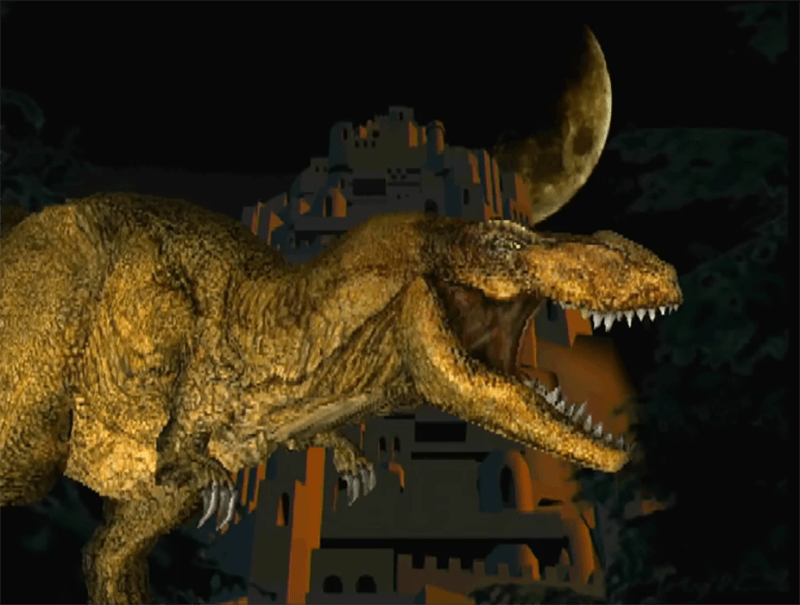
Sony’s answer was a technical demonstration for third-party developers. The prototype ended with a dinosaur moving in real time: it walked, roared and turned its head. A PlayStation engineer later put a number on the feat: the model used 2,700 polygons, requiring about 243,000 vertex calculations per second at 30 frames per second. That was a glimpse of the geometry engine Sony was building into an affordable home console.
Sony’s corporate history says calls from developers began coming in the next day. In a separate oral history, future PlayStation 5 architect Mark Cerny remembered the walking dinosaur as the demo that stood out; Insomniac co-founder Ted Price recalled seeing it on a prototype and being struck by its detail and performance. Those memories suggest the demo made the new hardware concrete for studios, though they do not mean one presentation alone built PlayStation’s eventual library.
Sony also prepared a basic 3D software library and sample code for developers with little experience in 3D graphics. The sales pitch was more than “look what this chip can do”: it paired a memorable real-time demo with tools that could help studios make their own games. Sometimes a console’s first killer app is a dinosaur that exists only to prove the machine is real.
Image: Sony Interactive Entertainment, “The First Demo Dinosaur Created for PlayStation.” Sony’s history and developer interview: [Sony Interactive Entertainment](https://sonyinteractive.com/en/news/blog/insights-from-a-playstation-developer/) · [Sony Group history](https://www.sony.com/en/SonyInfo/CorporateInfo/History/SonyHistory/2-09.html). Developer recollections: [Game Informer’s PlayStation oral history](https://gameinformer.com/feature/2019/12/03/the-first-25-years-a-playstation-oral-history).
~gaming ~playstation