~
COMMUNITY

~Gaming

Video game news, releases, reviews, consoles, PC gaming, studios, industry developments and discussion about everything happening in gaming.

Guides and resources

CONVERSATIONS

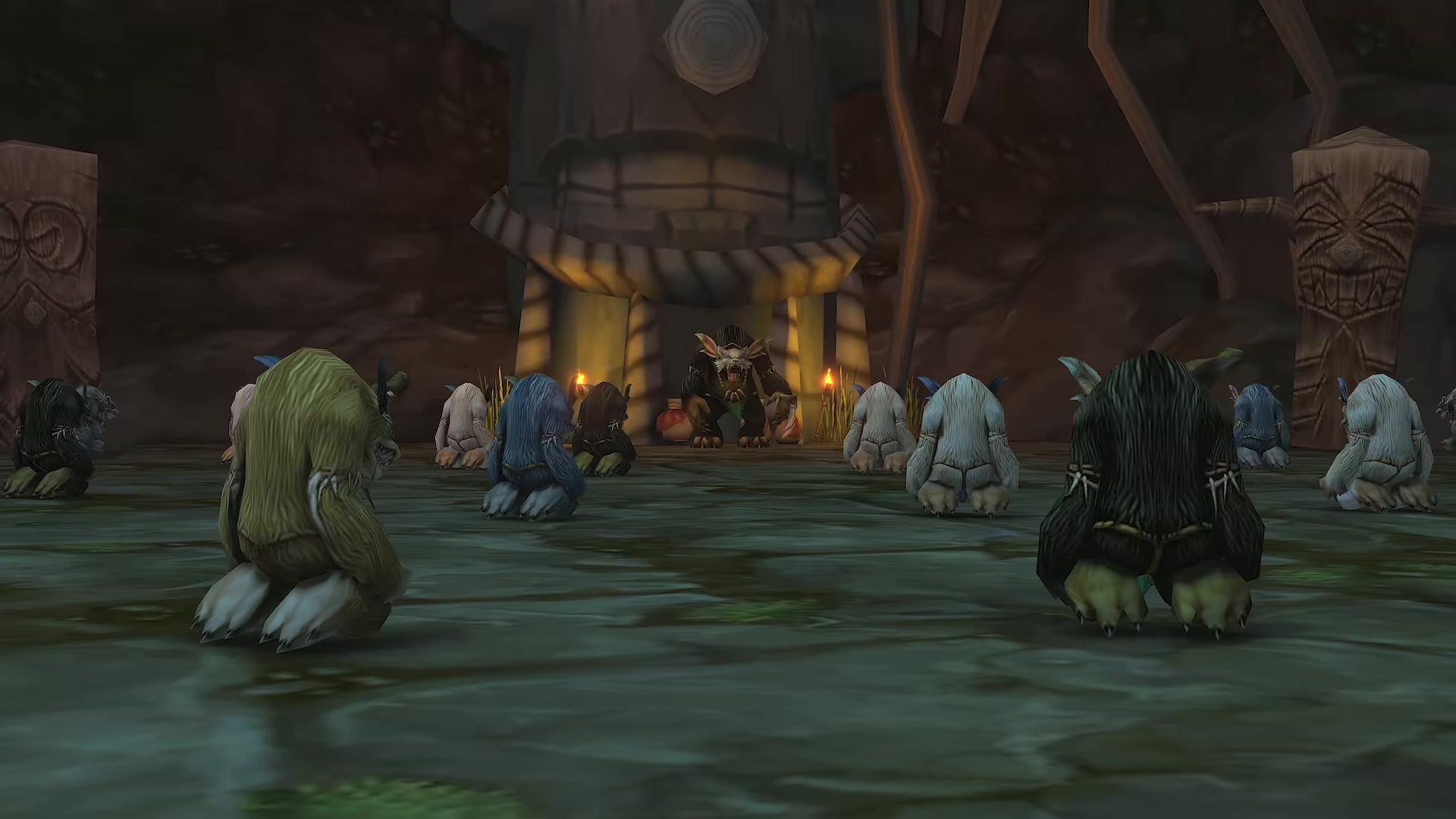
Barely two weeks after *World of Warcraft: Forever* shattered Blizzard's [22-year concurrent player record](https://www.mushimu.com/post/9300) on a tightly controlled Classic+ economy, an uncalibrated dungeon loot table inside Blackmaw Hold has flooded select character bags with thousands of gold—exposing a sharp divide between Blizzard's silent hotfix and player demands for retroactive rollbacks. On Monday, November 16, 2026, Blizzard Entertainment quietly disabled loot drops on non-elite Blackmaw Devotee enemies inside the new level 55–60 Azshara dungeon, hours after gameplay clips advertising "160+ GPH" (gold per hour) circulated widely across player channels. While the farm itself is now dead, the lack of any mention in Blizzard's official November 16 hotfix notes—or any word on gold removals or suspensions—has ignited fierce debate on the [official *World of Warcraft* forums](https://us.forums.blizzard.com/en/wow/t/mega-thread-on-the-gold-exploit-facts-and-discussion/2418780) ahead of upcoming raid openings. ### Inside the Blackmaw Hold Loot Oversight As detailed in technical breakdowns by [Output Lag](https://outputlag.com/news/wow-forevers-blackmaw-hold-gold-farm-paid-160-an-hour-before-blizzard-silently-nerfed-it-raising-fears-about-the-economy/) and [Eurogamer](https://www.eurogamer.net/world-of-warcraft-forever-gold-farm-exploit), the exploit stemmed from a simple database discrepancy rather than client tampering or terrain clipping. Level 56 non-elite Blackmaw Devotees stationed near the entrance of Blackmaw Hold lacked the standard drop-rate suppression applied to other Classic dungeon trash packs. Where comparable non-elite mobs in Lower Blackrock Spire yield roughly five silver in vendor trash and coin, Blackmaw Devotees dropped full outdoor-style loot tables—raw coin plus gray weapon drops averaging around 50 silver per kill. Because those enemies sat near the instance portal beside an elevated ledge drop capable of resetting or manipulating enemy pathing, level 60 mages could mount through the opening corridor, gather large packs, shed threat, and burn them down with Blizzard AoE spells. One documented session log showed a player completing roughly 25 Blackmaw Hold resets in a single afternoon between 11:56 a.m. and 6:51 p.m. Nor was the loop restricted to mages: paladins, druids, and hunters ran variations of the same reset farm, eclipsing a slower roughly 60-gold-per-hour alternative discovered in Sunken Temple. ### Why 4,000 Gold Threatens a Deliberately Gold-Starved Economy In *World of Warcraft*'s modern retail servers, a few thousand gold is pocket change. In *Forever*, however, Blizzard spent the first two weeks since the November 4 launch enforcing strict deflationary rules—going so far as to strip away the bonus gold that level 60 quests traditionally paid out in Classic—precisely so early epic progression milestones would retain weight. Buying the expert riding skill alone costs roughly 900 gold, a sum most active players have struggled to approach while barely clearing their first hundred gold. That scarcity is why community outrage intensified around allegations that top guilds and prominent content creators kept the Blackmaw Hold loop quiet for days before a video uploader declared "cat is out of the bag" on Monday. Screenshots of Twitch streamer Ziqo showing 4,322 gold in his inventory triggered accusations of off-stream farming, prompting Ziqo to push back publicly that "half the classes in the game" were running the same dungeon loop. On Blizzard's forums, frustrated subscribers warned that unchecked multi-thousand-gold reserves distort Auction House pricing on raid consumables and crafting materials far more severely than automated gathering bots. ### The Cost of Blizzard's Silent Hotfix Equally damaging to player confidence is how Blizzard handled the fix. Within hours of Monday's viral video, Blackmaw Devotees stopped dropping loot altogether—yet Blizzard's published November 16 hotfix bulletin cataloged adjustments to fishing racks, Windfury Totem, Vampiric Embrace, and quest scripting without mentioning Blackmaw Hold at all. That omission leaves a crucial policy question unresolved: does Blizzard classify farming an unpenalized non-elite mob table as an actionable exploit, or as an internal tuning mistake whose windfall players get to keep? Historically, MMORPG developers hesitate to ban players for killing unbugged mobs inside normal instance limits, yet declining to audit or claw back outlier gold bags reinforces the cynical "exploit early, exploit often" incentive loop. With raid tiers approaching and thousands of fresh subscribers weighing whether *Forever*'s economy remains fair, silent patches without transparent restitution risk eroding the exact clean-slate trust that fueled the mode's record launch. ### Sources & Further Reading - [Eurogamer (UK — Exploit Overview & Economic Context)](https://www.eurogamer.net/world-of-warcraft-forever-gold-farm-exploit) - [Output Lag (US — Blackmaw Hold Mechanics & Hotfix Analysis)](https://outputlag.com/news/wow-forevers-blackmaw-hold-gold-farm-paid-160-an-hour-before-blizzard-silently-nerfed-it-raising-fears-about-the-economy/) - [Blizzard Entertainment Official Forums (US — Community Mega Thread)](https://us.forums.blizzard.com/en/wow/t/mega-thread-on-the-gold-exploit-facts-and-discussion/2418780) ~Gaming ~WorldOfWarcraft ~MMORPG ~Blizzard
World of Warcraft: Forever Economy Shaken by Blackmaw Hold 160 GPH Gold Farm Ahead of Silent Blizzard Hotfix
0
Discuss 10
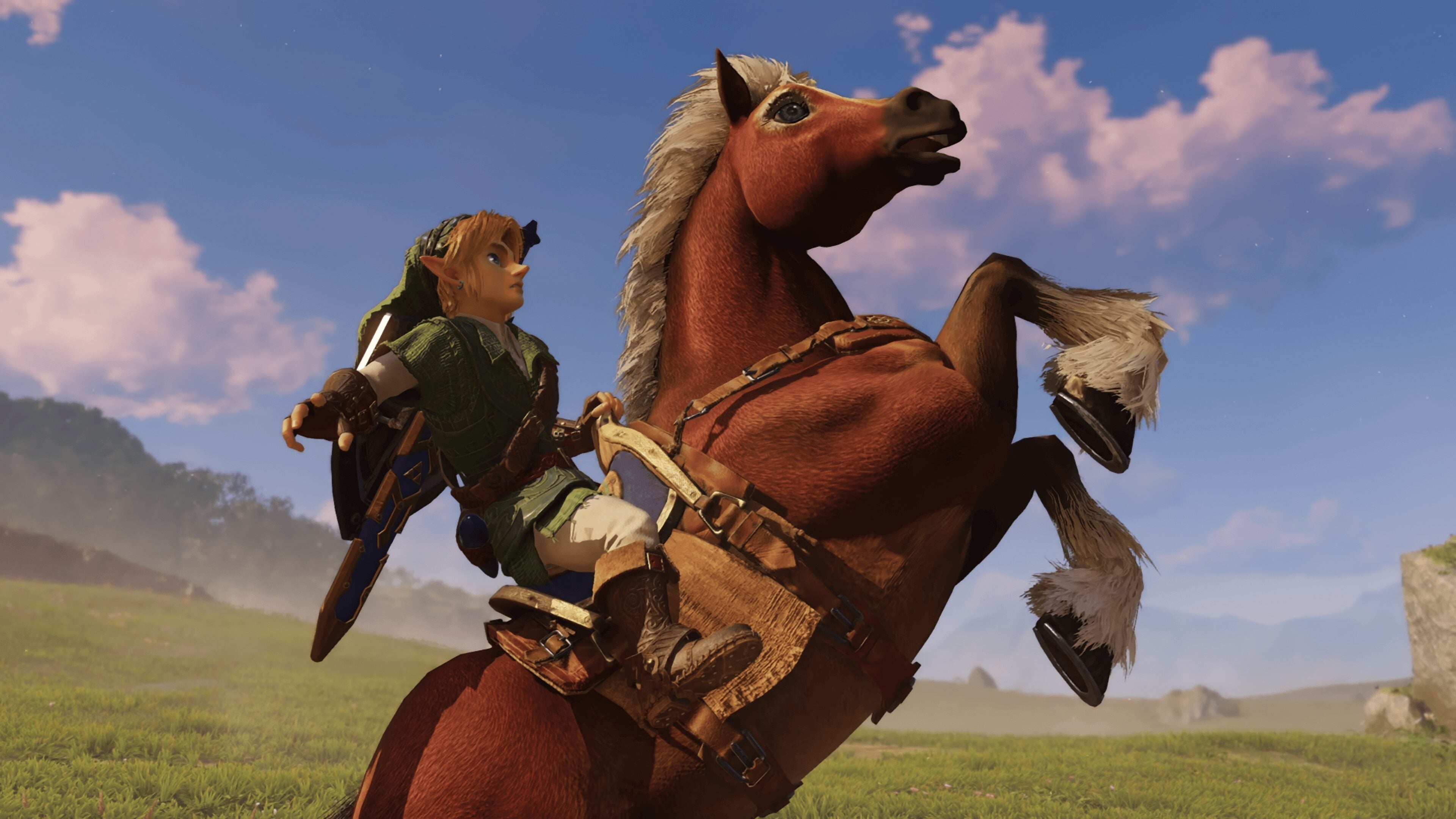
Just one week after its November 5 release, *The Legend of Zelda: Ocarina of Time* for Nintendo Switch 2 has overtaken every other boxed release of the year to become the best-selling physical video game in the United States in 2026, according to Circana senior director and industry advisor Mat Piscatella. Retail tracking data compiled through November 7 shows the full remake cleared more than one million physical units during its U.S. debut—marking the first title to hit that launch-week boxed threshold since *The Legend of Zelda: Tears of the Kingdom* in 2023. The domestic retail surge mirrors an extraordinary global opening. In an official corporate release issued from Kyoto on November 11, Nintendo Co., Ltd. confirmed that *Ocarina of Time* sold more than 5.2 million copies worldwide—combining physical cartridges and digital downloads—in its first four days on sale, including 810,000 units in Japan alone. Those figures immediately make the 40th-anniversary overhaul the fastest-selling Nintendo-published game in Switch 2 history across global markets as well as across the United States, Canada, and Latin America. ### Why a 1998 Remake Outpaced Every 2026 Multiplatform Boxed Release That a ground-up rebuild of a 28-year-old Nintendo 64 adventure could eclipse ten months of multiplatform retail releases in a single tracking week reflects structural divergence across console ecosystems as much as Zelda's cultural gravity. While PlayStation, Xbox, and PC software spending has tilted overwhelmingly toward digital storefronts, Nintendo's audience retains a uniquely durable preference for physical cartridges. On Switch 2, complete game cards continue to command shelf space at brick-and-mortar retailers, serve as giftable holiday centerpieces, and offer long-term resale and preservation value that digital licenses cannot replicate. At the same time, Nintendo avoided the creative polarization that sometimes splits modern remakes. Rather than reimagining Hyrule's foundational structure, the Switch 2 edition rebuilds the 1998 classic on the *Tears of the Kingdom* engine with expanded draw distances, an orchestrated soundtrack, fully voiced cutscenes, right-stick free camera control, manual jumping, and integrated *ZELDA NOTES* support via the Nintendo Switch App. As [earlier critical reception](https://www.mushimu.com/post/9260) underscored, preserving the original's tight dungeon pacing while modernizing traversal and camera ergonomics allowed Nintendo to bridge generational cohorts—drawing both N64 veterans and younger Switch 2 owners who never experienced Hyrule Field on original hardware. ### Reshaping Nintendo Switch 2's First-Party Hierarchy From an investor and portfolio standpoint, the four-day 5.2 million figure instantly vaults *Ocarina of Time* to second place among Nintendo's published Switch 2 titles worldwide, according to [Nintendo's latest consolidated software disclosures](https://www.nintendo.co.jp/ir/en/finance/software/index.html). It already edges past *Donkey Kong Bananza*'s lifetime total of 5.05 million units and outpaces *Pokémon Legends: Z-A – Nintendo Switch 2 Edition* (4.04 million), *Splatoon Raiders* (2.42 million), and *Kirby Air Riders* (1.94 million), trailing only bundle-propelled launch juggernaut *Mario Kart World* at 16.48 million units. Sustaining that momentum through the holiday quarter may also hinge on what lies inside the retail build. Within 72 hours of launch, [binary datamines uncovered entitlement-checked hooks for *Master Quest*](https://www.mushimu.com/post/9303), pointing toward mirrored dungeons and remixed puzzle layouts staged as post-launch downloadable content rather than an on-card unlock. If Nintendo deploys *Master Quest* during the winter cycle—whether as an eShop expansion or a Switch Online + Expansion Pack perk—it could extend *Ocarina of Time*'s attachment rate well beyond its explosive opening week. ### The Code-in-Box Paradox Ahead of Grand Theft Auto VI Whether Link holds onto the 2026 U.S. physical crown past Thanksgiving, however, exposes a growing semantic flaw in retail industry tracking. Rockstar Games' *Grand Theft Auto VI* arrives on November 19—just days after Piscatella's November 7 cutoff—carrying massive pre-order volume and near-certain global dominance. Crucially, *GTA VI*'s retail editions will ship not with a game disc inside the case, but with a digital download voucher. Despite the absence of physical storage media, Piscatella confirmed that Circana's Retail Tracking Service classifies boxed code-in-box purchases as "new physical video game sales." That accounting rule creates an industry paradox: if more than one million U.S. buyers pick up a plastic *GTA VI* voucher box at retail rather than purchasing directly through PlayStation or Xbox digital storefronts, Rockstar could technically seize the year's "physical" sales title without manufacturing a single playable disc. Conversely, if shoppers treat a discless box as redundant and buy *GTA VI* straight from console stores, *Ocarina of Time* could retain an improbable full-year physical milestone—underscoring how Nintendo's cartridge commitment increasingly stands alone as true physical media in modern console gaming. ### Sources & Further Reading - [Video Games Chronicle (UK — Circana Retail Data Analysis)](https://www.videogameschronicle.com/news/zelda-ocarina-of-time-remake-is-the-best-selling-physical-game-in-the-us-in-2026-so-far-passing-1-million-in-its-first-week/) - [Nintendo Co., Ltd. (Japan — Official Corporate News Release)](https://www.nintendo.co.jp/corporate/release/en/2026/261111.html) - [Mat Piscatella / Circana (US — Primary Bluesky Disclosure)](https://bsky.app/profile/matpiscatella.bsky.social/post/3ld343m42hk2j) - [Nintendo Life (UK — Switch 2 Sales Chart Context)](https://www.nintendolife.com/news/2026/11/zelda-ocarina-of-time-remake-crowned-2026s-best-selling-physical-video-game-in-the-us) - [TwistedVoxel (Global — Launch Breakdown & Remake Features)](https://twistedvoxel.com/zelda-ocarina-of-time-remake-sales-us-2026/) ~Gaming ~Nintendo ~Zelda ~NintendoSwitch2 ~PhysicalMedia
Zelda: Ocarina of Time Switch 2 Remake Becomes 2026's Best-Selling US Physical Game in Just One Week
0
Discuss 7
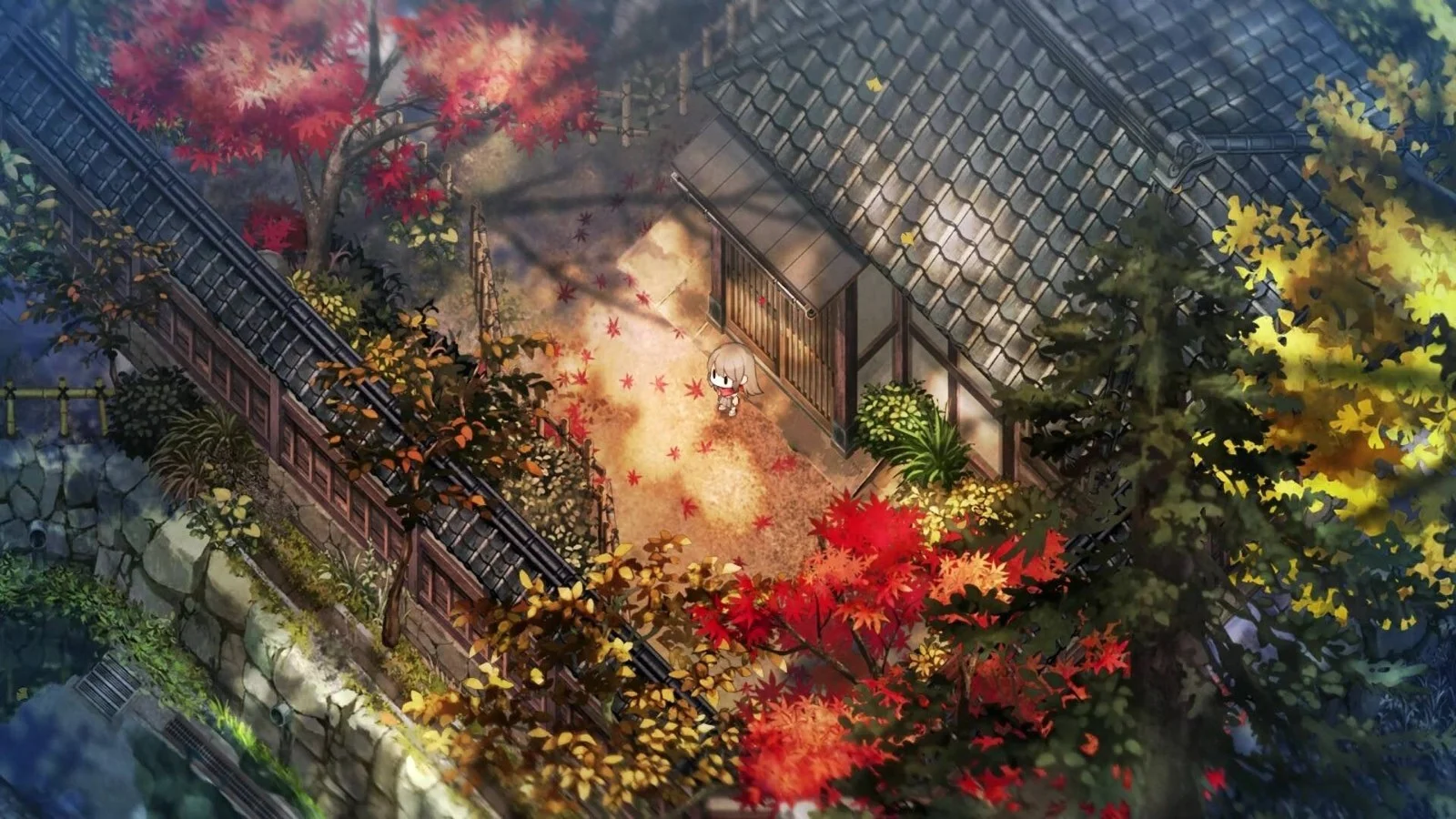
Japanese developer and publisher **Nippon Ichi Software (NIS)** has engineered a striking financial turnaround, posting a **159.4% year-on-year revenue surge** and swinging decisively back into profitability during the first half of its fiscal year (April through September 2026). According to the company's mid-year financial disclosure released on November 13 and analyzed by *Automaton* and *GamerBraves* on November 16, NIS generated **¥3.227 billion** in half-year revenue and **¥698 million** (roughly $4.37 million) in operating profit—reversing an operating loss of approximately $2.01 million recorded during the same six-month window last year. ### How a Dark Rural Life-Sim Outperformed Legacy Catalog Expectations At the center of the recovery is NIS's core entertainment division, propelled by the July 2026 Japanese launch of ***Village in the Shade*** (*Honogurashi no Niwa*), a dark rural life-simulation title that grafts pastoral daily routines onto unsettling psychological horror undertones. By the close of September, *Village in the Shade* had surpassed **250,000 copies sold in Japan alone**, outperforming internal developer and publisher sales targets by a wide margin. Commercial momentum materialized quickly enough that NIS revised its full-year earnings guidance upward back in August specifically on the strength of the game's sustained post-launch legs. That flagship hit was complemented in September by the 2D platformer *GOBBLE*, alongside steady catalog and downloadable-content (DLC) revenue across PlayStation Network and multiple digital storefronts. For a studio best known internationally for *Disgaea*'s tactical RPG spreadsheets and niche cult adventures, generating a quarter-million domestic sales from a brand-new original IP represents a rare breakout milestone. ### Why Second-Half International Upside Remains Untapped Even more notable for investors and industry analysts is what the April–September financial ledger leaves out. Because *Village in the Shade*'s global release arrived in **October 2026**, international sales fall entirely outside the first-half reporting period. Early overseas reception suggests that the game's contrast between cozy village chores and creeping dread translates well beyond Japan: on PlayStation Store's Asian storefront—where partner **Clouded Leopard Entertainment** handles multilingual distribution across English, Japanese, Korean, and Traditional Chinese editions, supported by a five-hour PlayStation Plus Deluxe full-game trial—the title holds an average rating of **4.83 out of 5** from more than 860 player reviews. Combined with NIS's ongoing North American, European, and Asian localization pipeline across both new releases and catalog titles, those October overseas shipments give the company a substantial revenue runway heading into the second half of the fiscal year. ### Disciplined Mid-Tier Scope in a Bruising 2026 Market Nippon Ichi Software's rebound stands out sharply against a turbulent 2026 industry backdrop marked by ballooning nine-figure AAA production costs, layoffs at major Western franchises, and mid-tier studio insolvencies such as [Raw Power Games' recent bankruptcy in Denmark](https://www.mushimu.com/post/9376). Rather than chasing live-service scale or overextending headcount on risky open-world spectacles, NIS kept development budgets tightly bounded while pairing a proven genre loop—rural life simulation—with the macabre atmospheric DNA it honed on smaller horror projects like *Yomawari*. Sustaining profitability once *Village in the Shade*'s launch curve normalizes will still test NIS's follow-up release calendar, particularly given the company's historical sensitivity to single-quarter release gaps. Even so, its first-half swing from a $2.01 million loss to a ¥698 million profit demonstrates that focused, mid-budget original IP from veteran Japanese studios can still deliver decisive commercial returns when word-of-mouth discovery, digital trial access, and staggered global localization align. ### Sources & Further Reading - [Automaton (Japan) — H1 FY2027 Financial Results & 250,000-Unit Milestone](https://automaton-media.com/en/news/nippon-ichi-software-turns-around-operating-loss-posts-159-4-revenue-growth-following-village-in-the-shades-release/) - [Nippon Ichi Software (Japan — Official Investor Relations Financial PDF)](https://nippon1.co.jp/news/pdf/2026/20261113_01.pdf) - [PlayStation Store (Official Regional Listing — Village in the Shade / Clouded Leopard)](https://store.playstation.com/en-th/concept/10015979/) - [GamerBraves (Malaysia/SEA) — ¥3.227B Revenue Breakdown](https://www.gamerbraves.com/nippon-ichi-software-reports-159-4-revenue-growth-after-village-in-the-shade-success/) ~Gaming ~NipponIchiSoftware ~JapaneseGames ~GameIndustry
Nippon Ichi Software Reverses Operating Loss With 159.4% Revenue Surge Driven by Village in the Shade
0
Discuss 9
Kadokawa subsidiary **Gotcha Gotcha Games** has locked in **January 28, 2027** as the official Steam release date for ***RPG Maker U2U***, the next mainline entry in its long-running role-playing game creation suite. Alongside the launch date announcement on November 16–17, 2026, the publisher reversed an earlier sunset schedule and confirmed that the free **"P2D Map Editor Demo"**—originally slated to expire this week—will remain available on Steam continuously up until launch day. ### P2D: Bringing HD-2D Elevation and Lighting to No-Code Mapping The centerpiece of *RPG Maker U2U* is its **Perspective 2D (P2D)** map engine, an architectural leap away from the flat, strictly layered tile grids that defined *RPG Maker MV* and *RPG Maker MZ*. Rather than forcing solo creators to learn external 3D modeling tools like Blender or navigate complex shader graphs, P2D marries top-down tile-based intuition with true spatial verticality—allowing developers to build slopes, ledges, multi-story structures, and overpasses directly inside the editor. Out of the box, P2D pairs that 3D elevation with built-in atmospheric effects that previously required third-party plugins or custom rendering pipelines. Creators gain immediate access to camera depth of field, dynamic weather overlays such as rain and fog, and directional lighting and shadows for interior sconces, torches, and street lamps. To flatten the learning curve further, *RPG Maker U2U* ships with **more than 100 pre-built P2D maps**, alongside a block-based object builder and full libraries of built-in characters, monsters, visual effects, music, and sound effects requiring zero programming experience. ### Course-Correcting After *Unite*: Standalone Simplicity vs. Migration Limits Extending the P2D Map Editor Demo through January 28 reflects a deliberate effort by Gotcha Gotcha Games to rebuild creator trust after the turbulent reception of *RPG Maker Unite*, which alienated parts of the core community through external Unity Hub and Unity ID setup requirements. *RPG Maker U2U* takes a markedly cleaner route: while built on a Unity foundation under the hood, it ships as a self-contained standalone Steam application whose interface and eventing workflow closely mirror **RPG Maker MZ**. For series veterans sitting on years of purchased tilesets and character sheets, *U2U* offers a partial bridge—and one strict boundary. Developers **can** import existing *RPG Maker MV* and *RPG Maker MZ* visual assets into *U2U* and watch classic sprites take on new life under P2D's dynamic shadows and depth-of-field camera. However, Gotcha Gotcha Games explicitly warns that **conversion of project data and plugins created in previous RPG Maker titles is not supported**. Studios mid-way through a multi-year *MZ* project cannot simply hit an upgrade button; *U2U* demands a clean-slate project architecture. ### What January 2027 Means for Indie RPG Creators Keeping the P2D Map Editor Demo active gives hobbyists and small indie teams more than two months to prototype towns, dungeons, and lighting setups before committing to a full license in January. While the lack of plugin backward compatibility means *RPG Maker MZ* will likely retain a long tail for heavily scripted legacy projects, *RPG Maker U2U*'s combination of no-code accessibility, standalone Steam execution, and native HD-2D visual polish positions it as the most substantial visual refresh to the *RPG Maker* formula in over a decade. ### Sources & Further Reading - [Gematsu (JP/Global) — RPG Maker U2U Launch Date & P2D Features](https://www.gematsu.com/2026/11/rpg-maker-u2u-launches-january-28-2027) - [Steam Store — RPG Maker U2U Official Product Page (Gotcha Gotcha Games)](https://store.steampowered.com/app/4856440/RPG_MAKER_U2U/) - [Final Weapon — January 28, 2027 Release & Demo Extension Coverage](https://finalweapon.net/2026/11/16/rpg-maker-u2u-releases-on-january-28-2027/) - [Games Press — Gotcha Gotcha Games Official Release Documentation](https://www.gamespress.com/RPG-Maker-U2U-Steam-Page-Launches-Today) ~Gaming ~RPGMaker ~GameDev ~IndieGames ~Steam
RPG Maker U2U Launches January 28, 2027 With Perspective 2D Elevation Engine and Extended Steam Demo
0
Discuss 6
The Recording Academy has unveiled the five finalists competing for **Best Score Soundtrack for Video Games and Other Interactive Media** at the **69th Annual Grammy Awards**, scheduled for February 2027. Covering titles released within the August 31, 2025 to August 28, 2026 eligibility window, this year's ballot signals a striking pivot toward blockbuster licensed franchises—with four of the five slots tied to James Bond, Marvel, *Avatar*, and *Star Wars*—while Sony Interactive Entertainment captures two of the five nominations through its first-party studios. ### The Five Nominees and Returning Grammy Contenders According to official Recording Academy listings corroborated by VGC and Push Square, the 2027 video game score nominees are: - ***007: First Light*** — composed by **Joe Henson and Alexis Leon Smith** (the British duo known as The Flight) - ***Avatar: Frontiers of Pandora – From the Ashes*** — composed by **John Paesano** - ***Ghost of Yōtei*** — composed by **Toma Otowa** - ***Marvel's Wolverine*** — composed by **David Fleming** - ***Star Wars: Zero Company*** — composed by **Gordy Haab** Among this year's field, **Gordy Haab** is the sole returning winner in the category, having claimed the 2024 Grammy alongside Stephen Barton for *Star Wars Jedi: Survivor* before earning another nod last year for *Indiana Jones and the Great Circle*. **John Paesano** also returns for his second nomination in the category following his 2025 recognition for *Marvel's Spider-Man 2*. For Sony, placing both *Ghost of Yōtei* and *Marvel's Wolverine* on the same five-title shortlist underscores PlayStation Studios' sustained investment in bespoke symphonic and hybrid film-grade scoring. ### Licensed Franchise Dominance vs. Original Worlds Entering only its fifth year since debuting at the 2023 ceremony, the Grammy category has historically swung between sprawling AAA productions and smaller, idiosyncratic works. The four past winners reflect that tug-of-war: Stephanie Economou won the inaugural 2023 award for *Assassin's Creed Valhalla: Dawn of Ragnarok*, Haab and Barton took 2024 for *Star Wars Jedi: Survivor*, Winifred Phillips triumphed in 2025 for *Wizardry: Proving Grounds of the Mad Overlord*, and Austin Wintory won in 2026 for *Sword of the Sea*. In contrast, the 2027 shortlist marks the heaviest concentration of Hollywood-adjacent intellectual property yet, leaving Toma Otowa's score for *Ghost of Yōtei* as the lone non-licensed property in contention. Part of that skew stems from the Recording Academy's submission criteria, which evaluate dedicated **score soundtrack albums** released commercially within the qualifying period. Major publishers and transmedia rights holders routinely coordinate standalone soundtrack album campaigns, vinyl pressings, and Academy voter outreach in ways independent studios rarely match. ### The *007: First Light* Debate and What Separates Score From Song The nomination of *007: First Light* also sparked immediate critical pushback over what Grammy voters are actually rewarding. In a pointed column, PC Gamer argued that Lana Del Rey's surprise vocal title track for *007: First Light* sounded like "Bond karaoke," while Push Square observed that outside the classic Bond motif and Del Rey's theme, The Flight's broader underscore struggled to stand out compared to *Ghost of Yōtei*. That tension highlights an enduring structural quirk of the award: Recording Academy rules stipulate that the category honors albums "comprised predominantly of original scores" composed specifically for or as a companion to an interactive title, rather than licensed pop singles. Yet high-profile vocal themes and marquee Hollywood composers inevitably draw voter attention during crowded listening sessions. As the category prepares for February's ceremony, the 2027 race tests whether *Ghost of Yōtei*'s standalone worldbuilding—or Haab's established *Star Wars* pedigree—can outshine a slate dominated by global entertainment franchises. ### Sources & Further Reading - [Recording Academy / GRAMMY.com — Official Category Listing](https://www.grammy.com/awards/categories/best-score-soundtrack-for-video-games-and-other-interactive-media/) - [VGC (UK) — 2027 Video Game Soundtrack Grammy Nominations Breakdown](https://www.videogameschronicle.com/news/this-years-video-game-soundtrack-grammy-nominations-include-bond-star-wars-and-wolverine/) - [Push Square (UK) — Category History and PlayStation Representation](https://www.pushsquare.com/news/2026/11/grammy-awards-reveal-this-years-nominees-for-best-video-game-soundtrack) - [PC Gamer (US/UK) — Critical Reaction to 007: First Light Nomination](https://www.pcgamer.com/games/action/that-007-first-light-theme-song-i-didnt-like-is-up-for-a-grammy-award/) ~Gaming ~Grammys ~GameAudio ~PlayStation ~StarWars
69th Grammy Awards Nominate 007: First Light, Marvel’s Wolverine, Ghost of Yōtei, Avatar, and Star Wars: Zero Company for Best Game Score
0
Discuss 2
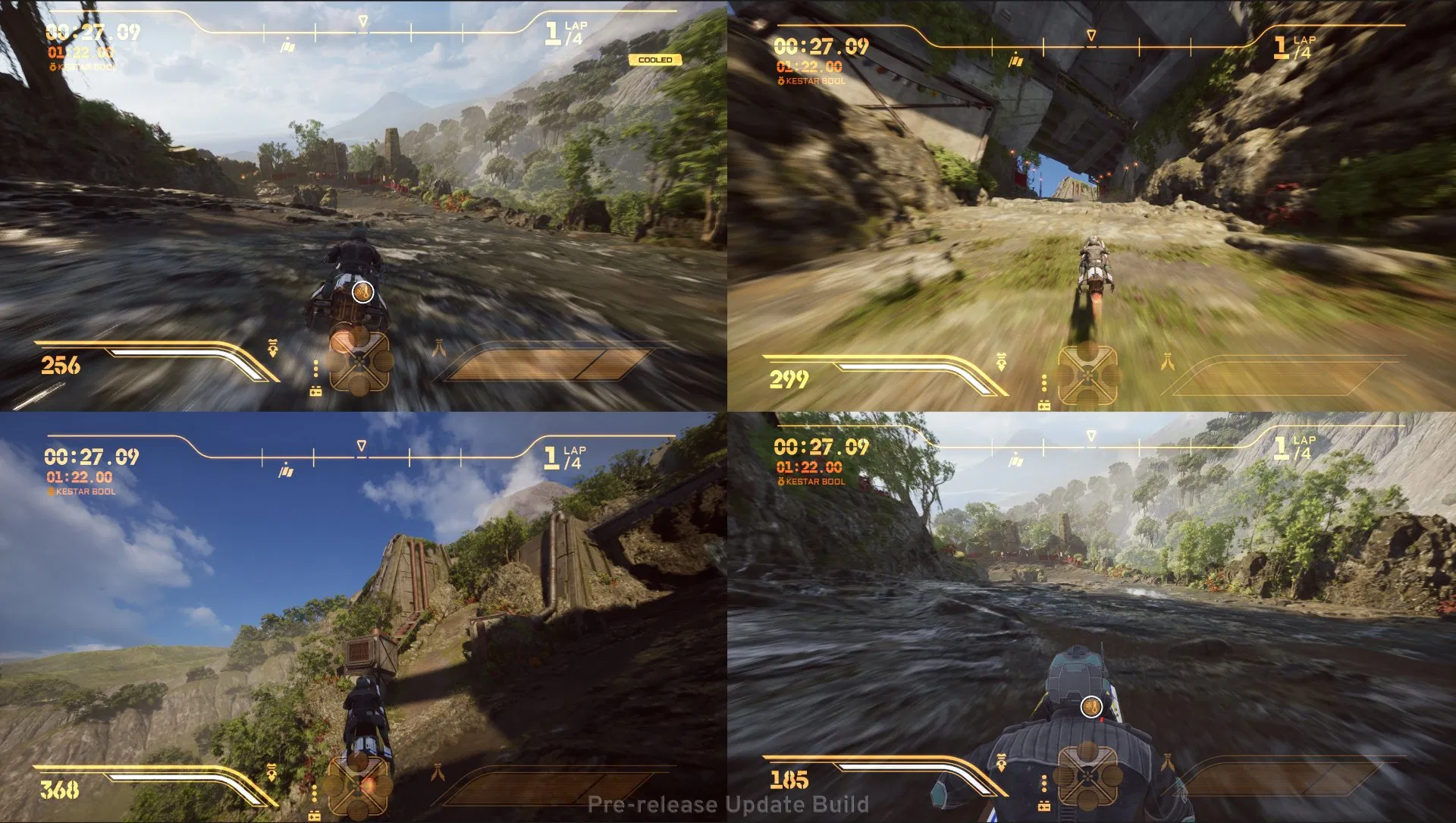
Just six weeks after *Star Wars: Galactic Racer* launched on October 6, 2026, developer **Fuse Games** and publisher **Secret Mode** have confirmed that the arcade racer's most requested missing feature—four-player local split-screen multiplayer—is officially in production for **early 2027**. Rather than bolting multi-viewport rendering onto existing campaign menus, the studio is building a dedicated new mode called **Free Play**, allowing players to race solo or with up to three friends on the same couch across PlayStation 5, Xbox Series X|S, and PC. ### Addressing Launch's Biggest Omission Without Breaking the Core Loop When Fuse Games—the UK studio co-founded by former Criterion Games veterans behind *Burnout* and *Need for Speed*, including Matt Webster—released *Galactic Racer* in October, critics and players praised its blistering speed, physical takedowns, and roguelike-inflected arcade structure. Yet the absence of local split-screen stood out immediately for a franchise whose racing lineage is inseparable from living-room rivalries dating back to *Star Wars Episode I: Racer*. In modern console and PC development, four-way split-screen is rarely omitted out of forgetfulness; rendering four independent high-velocity camera frustums simultaneously strains GPU budgets, streaming memory, and frame pacing at 60 frames per second. At launch, Fuse Games prioritized online matchmaking and its structured single-player progression over multi-viewport optimization. In a statement issued on November 16, 2026, the studio acknowledged the sustained fan pressure directly: *"We heard you. Local split-screen multiplayer racing is coming in early 2027. A dedicated team at Fuse Games has been working hard to bring a brand new mode, Free Play, to Star Wars: Galactic Racer."* ### How Free Play Changes the Sandbox—and Its Scope Limits Beyond unlocking four-player local competition, **Free Play** introduces custom race configuration that was previously restricted by the game's structured progression. Players will be able to mix and match any unlocked vehicle, pilot character, planet, and race track to run bespoke solo sessions or head-to-head local tournaments. However, as Eurogamer and Gematsu both note, Free Play is an isolated sandbox rather than a universal retrofit. Players should not expect to carry couch co-op partners directly into *Galactic Racer*'s pre-existing career or campaign suite at the outset. Separating Free Play into its own mode gives Fuse Games' dedicated engineering pod strict control over track budgets, AI racer counts, and dynamic resolution scaling when four viewports are active on PS5, Xbox Series X|S, or living-room PCs. ### Why Secret Mode and Fuse Games Are Investing in Couch Play Now Committing a dedicated post-launch team to a free local multiplayer overhaul signals a clear strategic bet by Secret Mode and Fuse Games. Unlike live-service shooters chasing battle-pass churn, arcade racers thrive on long-tail word of mouth, holiday gifting, and couch-party longevity—areas where *Mario Kart* and classic *Burnout* entries built multi-year sales tails. By locking Free Play for early 2027 instead of gating split-screen behind a paid expansion, Fuse Games removes the chief asterisk hanging over *Galactic Racer*'s launch reviews (tracked in our earlier [October 6 release roundup](https://www.mushimu.com/post/8748)). For PC gamers connecting rigs or handhelds to living-room televisions—and console owners hungry for genuine four-player couch competition in a licensed *Star Wars* title—the early 2027 update turns a strong single-player and online arcade racer into a complete social staple. ### Sources & Further Reading - [Eurogamer (UK) — Star Wars: Galactic Racer Split-Screen Multiplayer Announcement](https://www.eurogamer.net/star-wars-galactic-racer-split-screen-multiplayer) - [Gematsu (JP/Global) — Free Play Mode & Platform Confirmation](https://www.gematsu.com/2026/11/star-wars-galactic-racer-to-add-split-screen-supported-free-play-mode-in-early-2027) - [Vandal / El Español (Spain) — Multijugador a pantalla partida en 2027](https://vandal.elespanol.com/noticia/2026321009/star-wars-galactic-racer-pone-fecha-a-la-funcion-mas-demandada-por-los-fans-el-multijugador-a-pantalla-partida/) - [Steam Store — Star Wars: Galactic Racer (Fuse Games / Secret Mode)](https://store.steampowered.com/app/4078430/STAR_WARS_Galactic_Racer/) ~Gaming ~StarWars ~RacingGames ~SplitScreen
Star Wars: Galactic Racer Announces 4-Player Split-Screen and Free Play Mode for Early 2027
0
Discuss 1
id Software and Bethesda have rolled out **Update 5** for *DOOM: The Dark Ages* across PC (Steam and Battle.net), PlayStation 5, Xbox Series X|S, and Game Pass, pairing a high-stakes endless arcade arena called **Slaughter Mode** with a landmark graphics milestone: *DOOM: The Dark Ages* is officially the first game on the **Vulkan API** to integrate **AMD FSR Upscaling 4.1** and **Frame Generation 4**. Arriving alongside extensive weapon rebalancing and quality-of-life fixes on November 16, 2026, the update lands at an inflection point for both the shooter's post-launch lifecycle and AMD's broader upscaling ecosystem. For PC and Linux gamers—as well as handheld APU owners relying on Vulkan translation layers—the technical half of Update 5 is arguably just as consequential as its new demonic gauntlet. ### First in Vulkan: Why AMD FSR 4.1 and Frame Generation 4 Matter Until now, AMD's fourth-generation FidelityFX Super Resolution stack lived primarily in DirectX 12 pipelines. That changed after AMD shipped FSR SDK 2.4 in October 2026 with official Vulkan hooks and broader hardware compatibility, and id Software's Vulkan-native id Tech engine has become the very first commercial showcase for **FSR Upscaling 4.1** and **Frame Generation 4** under the API. Crucially, as Overclock3D highlights in its hardware breakdown, FSR 4.1 support in *DOOM: The Dark Ages* extends beyond AMD's flagship Radeon RX 9000 (RDNA 4) cards to encompass **Radeon RX 7000 and RX 6000 GPUs as well as qualifying Ryzen APUs**. For players on older RDNA 2/3 desktops, Linux gaming rigs, and Ryzen-powered handheld PCs running Proton, the shift unlocks measurably cleaner temporal reconstruction and frame pacing than earlier FSR generations without abandoning the low-overhead Vulkan renderer. Update 5 also opens **FSR Frame Generation** to eligible **Intel GPUs** that meet hardware and driver requirements, continuing id Software's vendor-agnostic approach to PC optimization. Noticeably absent from the graphics rollout are consoles: despite Microsoft enabling FSR 4.1 upscaling on Xbox Series X|S earlier this month, Update 5 limits FSR 4.1 and Frame Generation 4 strictly to the PC version for now, leaving open the question of whether a console-side upscaler refresh will follow in a subsequent patch. ### Slaughter Mode: Checkpoints, Skulls, and Push-Your-Luck Escalation On the gameplay front, Update 5 introduces **Slaughter Mode** at no extra cost for owners of the *Revelations* campaign expansion, the Premium Edition, or the Premium Upgrade. Rather than repeating a fixed arena sequence, Slaughter Mode draws from **19 different battlegrounds** spanning both the base campaign and *Revelations*, assembling randomized, escalating waves of demons and bosses so no two runs play out identically. What separates Slaughter Mode from *DOOM Eternal*'s linear Horde Mode is its risk-reward checkpoint structure. Clearing rounds earns **Skulls**, which feed into profile progression, personal leaderboards, badge ranks, weekly challenges, and unlockable rewards—including Slaughter Mode-exclusive Slayer skins, universal weapon skins usable across all modes, profile icons, backgrounds, and tracks from Andrew Hulshult's *IDKFA* soundtrack playable inside both Slaughter Mode and the Ripatorium. At each **Round Checkpoint**, players face an immediate tactical gamble: **Secure** their accumulated Skulls to bank rewards safely, or **Risk It** to stack a Skull multiplier across tougher subsequent rounds. Dying while "Risk It" is active forfeits every unsecured Skull from that stretch, though any checkpoint previously reached remains unlocked as a launchpad for future runs. By letting veterans skip early warm-up waves while punishing overconfidence, id Software borrows the tension of extraction loops without abandoning pure arcade lethality. Still, tying the mode to *Revelations* or Premium ownership means standard-edition players remain locked out of the game's most replayable solo endurance sandbox. ### Surgical Weapon Rebalancing and Ripatorium Stability Beneath the headline features, Update 5 delivers a sweeping balance pass designed to break single-weapon dominance in high-tier encounters. The **Ravager**—previously a go-to shredder against heavy targets—takes substantial single-target reductions across the roster: 12.5% less damage against the Agaddon Brute and Hunter, 14.3% less against the Cyberdemon, 15% less against the Cacodemon and Mancubus, 20% less against the Vagary and Pinky Rider, and 25% less against the Cosmic Baron, offset only by a 25% buff against the Komodo. In return, id Software rewards close-quarters aggression and active tool-switching. The **Super Shotgun** gains a 75% damage surge against the Archvile and now superheats Archvile armor in two shots instead of three. The **Combat Shotgun** receives sweeping Blast buffs (+100% small Blast damage, +50% large Blast damage, and zero falloff across the 8-meter medium Blast radius), while the **Accelerator** deals 85% more damage to the Buzzsaw's shield. Synergies tied to the Meat Hook's **Tormentor** upgrade also spike: the **Plasma Cycler**'s Overload deals 26.7% more damage and now builds charge while Tormentor is active rather than only on kills, while the **Shredder** gains 27.3% higher Ricochet damage under Tormentor. Meanwhile, the **Pulverizer**'s Runic Skull max duration rises by 38.5% with a 50% wider kill-chain window. Finally, Update 5 resolves several long-standing friction points: Ultra-Nightmare saves no longer corrupt Ripatorium inventories upon death, standard ammo now replenishes automatically between campaign level transitions in both the base game and *Revelations*, queued Shield Saw and Chain Spear swaps expire cleanly instead of firing unexpectedly, and UI toggles now let players scale low-health screen vignettes from 0% to 100%. Together, the patch sharpens *DOOM: The Dark Ages* into both a tougher tactical sandbox and a flagship technical proving ground for Vulkan upscaling. ### Sources & Further Reading - [GamingOnLinux (UK/Linux) — DOOM: The Dark Ages Update 5 & FSR 4](https://www.gamingonlinux.com/2026/11/doom-the-dark-ages-gets-a-new-slaughter-mode-along-with-amd-fsr-4/) - [Bethesda Slayers Club (Official Primary Release Notes)](https://slayersclub.bethesda.net/en-US/news/doom-the-dark-ages-revelations-slaughter-mode-update-5-release-notes) - [Overclock3D (UK) — AMD FSR 4.1 Arrives on Vulkan with DOOM: The Dark Ages](https://overclock3d.net/news/software/amd-fsr-4-1-arrives-on-vulkan-with-doom-the-dark-ages-update-5/) - [Steam Community (Official Update 5 Announcement)](https://steamcommunity.com/games/3017860/announcements/detail/746069122013463474) ~Gaming ~DOOM ~AMDFSR4 ~Vulkan ~PCGaming
DOOM: The Dark Ages Update 5 Introduces Slaughter Mode and Makes Vulkan History With AMD FSR 4.1
0
Discuss 3
Akira Kurabayashi, company director and head of software development at Japanese studio **ARIKA**, passed away suddenly on November 14, 2026, due to heart failure, ARIKA president Akira Nishitani announced on November 17. A veteran programmer whose career bridged three decades of Japanese arcade engineering, console 3D transitions, and modern online battle-royale puzzle hits, Kurabayashi helped architect defining titles ranging from Taito's *Darius Gaiden* to ARIKA's *Street Fighter EX*, *Tetris: The Grand Master*, *Endless Ocean*, and *Tetris 99*. ### From Taito Arcade Shooters to ARIKA's Technical Spine Before joining ARIKA alongside *Street Fighter II* co-creator Akira Nishitani, Kurabayashi built his reputation inside Taito's arcade division. According to ARIKA's official memorial notice, he served as main programmer on 1994's *Darius Gaiden*—still revered for its multi-layer visual spectacle and precision bullet patterns—as well as 1996's 3D arcade fighter *Fighters' Impact* and *Vertexer*. That deep low-level hardware mastery proved pivotal once Kurabayashi moved to ARIKA in 1996 as head of its software development division. Nishitani credited him with steering ARIKA's engineering through some of the industry's steepest technological inflections: the jump from 2D sprite pipelines to 3D polygon fighting engines in *Street Fighter EX* (1996) and *Fighting Layer* (1998), the transition from coin-op arcade boards to home consoles, and later the shift into low-latency online multiplayer infrastructure. ### A Catalog Stretching From *Tetris: The Grand Master* to *Tetris 99* Unlike high-profile directors whose public visibility eclipses engineering teams, Kurabayashi's influence ran quietly beneath cult classics and massive Nintendo Switch staples alike. ARIKA's official project list highlights his leadership across 1998's *Tetris: The Grand Master* (TGM0 and TGM1)—whose frame-exact piece-lock and 20G gravity tuning defined high-level competitive puzzle play—alongside PlayStation 2 diving adventures *Everblue* (2001) and Wii's *Endless Ocean* (*Forever Blue*, 2007) and *Endless Ocean 2* (2009), as well as *The Tower of Druaga Online: The Story of Aon* (2006). In the modern era, Kurabayashi remained on the front lines as both a board director and technical leader. He contributed to ARIKA's revival of its 3D fighting lineage with the *Fighting EX Layer* series (2018 onward), the Nintendo Switch battle-royale phenomena *Tetris 99* (2019) and *PAC-MAN 99* (2021)—projects built around responsive 99-player netcode on modest handheld silicon—and ARIKA's ongoing *SNK Revamp Project* collaborations, as noted by *Gematsu* and *Pro-Gamer*. ### Institutional Loss for Independent Japanese Engineering As *Big-N* and *Pro-Gamer* observe, studios like ARIKA occupy a vital niche in Japan's development ecosystem—retaining specialized arcade-era discipline for tight frame data, input responsiveness, and netcode reliability that larger publishers frequently outsource to them. In his tribute, Nishitani described Kurabayashi's accumulated technical wisdom and passion for game craft as an "irreplaceable asset" to the studio, pledging to carry forward his engineering philosophy as ARIKA prepares a memorial service in accordance with his family's wishes. ### Sources & Further Reading - [ARIKA Co., Ltd. (Japan — Official Memorial Statement by President Akira Nishitani)](https://www.arika.co.jp/info_jp/news-detail.php?id=115) - [Gematsu (JP/Global — Career & Passing Report)](https://www.gematsu.com/2026/11/arika-director-akira-kurabayashi-dies) - [Pro-Gamer (France — Arcade & Fighting Game Legacy Tribute)](https://pro-gamer.fr/akira-kurabayashi-deces-directeur-programmation-arika-darius-gaiden-street-fighter-ex/) - [Big-N (France — Nintendo Collaboration Coverage)](https://big-n.fr/actualites/63141-deces-akira-kurabayashi-arika/) ~Gaming ~ARIKA ~Nintendo ~Tetris99
ARIKA Director and Veteran Programmer Akira Kurabayashi Passes Away, Architect Behind Darius Gaiden, Street Fighter EX, and Tetris 99
0
Discuss 10
Publisher Spike Chunsoft and developer Gemdrops have unveiled a comprehensive look at the courtroom mechanics powering *Danganronpa 2×2* ahead of its January 14, 2027 launch across Nintendo Switch 2, Nintendo Switch, PlayStation 5, Xbox Series X|S, and PC (Steam and Epic Games Store). Detailed in a new systems trailer published on November 16–17, the remake of 2012's *Danganronpa 2: Goodbye Despair* pairs visual and mechanical refinements for its classic campaign with **Akimbo Consensus**, a brand-new Class Trial mini-game built exclusively for the overhauled **Slayhem Mode**. ### Inside Akimbo Consensus: Taming Chaotic Class Trials Whereas classic *Danganronpa* Nonstop Debates task protagonist Hajime Hinata with spotting a single contradiction in a linear stream of dialogue, *Slayhem Mode* is engineered around faster, multi-party friction. During trials where classmates talk over one another with conflicting alibis and theories, Akimbo Consensus hands players a dual-purpose toolkit: **Affirm** and **Refute** Truth Bullets. Rather than merely shooting down lies, players must actively triage incoming testimony in real time—endorsing valid deductions with Affirm while dismantling flawed claims with Refute. Once statements are properly sorted, the courtroom sequence pauses and presents three branching conversational directions. Selecting the logical next line of inquiry establishes a "Consensus," steering the Class Trial down the player's chosen investigative path. According to *Automaton*, that structural agency matters more than ever in Slayhem Mode because the campaign runs at a **fixed difficulty higher than the original game's Hard mode**, leaving far less margin for trial-and-error guessing. ### Why Spike Chunsoft Is Splitting Remake Fidelity From New Mechanics The structural divide between *Danganronpa 2×2*'s two campaigns reveals a deliberate design philosophy. Rather than retrofitting modern mechanics into the 2012 script—which could disrupt pacing or alienate purists—Spike Chunsoft and Gemdrops quarantined experimental systems inside Slayhem Mode. Alongside Akimbo Consensus, Slayhem Mode imports the team-based **Debate Scrum** mechanic from 2017's *Danganronpa V3: Killing Harmony*, splitting the cast into opposing factions whenever the courtroom deadlocks, while rewriting victims, culprits, motives, and murder tricks and adding mysterious newcomer Sakutaro "John Danganronpa" Higashi to Jabberwock Island's roster. Original Mode, by contrast, preserves the 2012 *Goodbye Despair* narrative verbatim while targeting decades-old friction points. Both **Rebuttal Showdown**—where Hajime slices through rival challenges using Truth Blades—and **Logic Dive** have received targeted polish. Notably, Spike Chunsoft explicitly acknowledged Logic Dive's reputation for steep difficulty spikes in the original release, confirming accessibility-focused adjustments to smooth out its synapse-course platforming without stripping its deductive rhythm. ### Cross-Generation Reach for a 10-Million-Seller Franchise More than sixteen years after *Danganronpa: Trigger Happy Havoc* debuted on PSP in Japan in November 2010, cumulative franchise shipments have topped 10 million copies worldwide. Launching *Danganronpa 2×2* simultaneously across Nintendo Switch 2, Switch, PS5, Xbox Series X|S, and PC—including physical editions for Switch 2, Switch, and PS5 distributed in Europe by REEF Entertainment alongside the *Psycho Tropical Vacation Package* collector's edition—signals Spike Chunsoft's effort to treat the remake both as a nostalgic entry point and as a mechanical stress-test for future mystery titles. If Akimbo Consensus succeeds at making high-difficulty deductive trials feel more conversational and less binary, it could redefine how the studio designs courtroom chaos beyond Jabberwock Island. ### Sources & Further Reading - [Spike Chunsoft (US — Official Slayhem Mode & Systems Reveal)](https://www.spike-chunsoft.com/news/danganronpa-2x2-slayhem-mode-class-trial-new-akimbo-consensus-system-revealed/) - [Gematsu (JP/Global — Akimbo Consensus & Refined Returning Systems)](https://www.gematsu.com/2026/11/danganronpa-2x2-details-akimbo-consensus-system-refined-returning-systems) - [Automaton (JP — Slayhem Mode Difficulty & Class Trial Analysis)](https://automaton-media.com/en/news/danganronpa-2x2-slayhem-modes-new-class-trial-mechanic-lets-you-take-control-of-the-chaotic-debates-by-endorsing-or-debunking-theories/) - [TwistedVoxel (Systems Trailer & Platform Release Overview)](https://twistedvoxel.com/danganronpa-2x2-trailer-akimbo-consensus/) ~Gaming ~Danganronpa ~NintendoSwitch2 ~SpikeChunsoft
Danganronpa 2×2 Details Akimbo Consensus Trial System and Slayhem Mode Overhaul Ahead of January Launch
0
Discuss 2
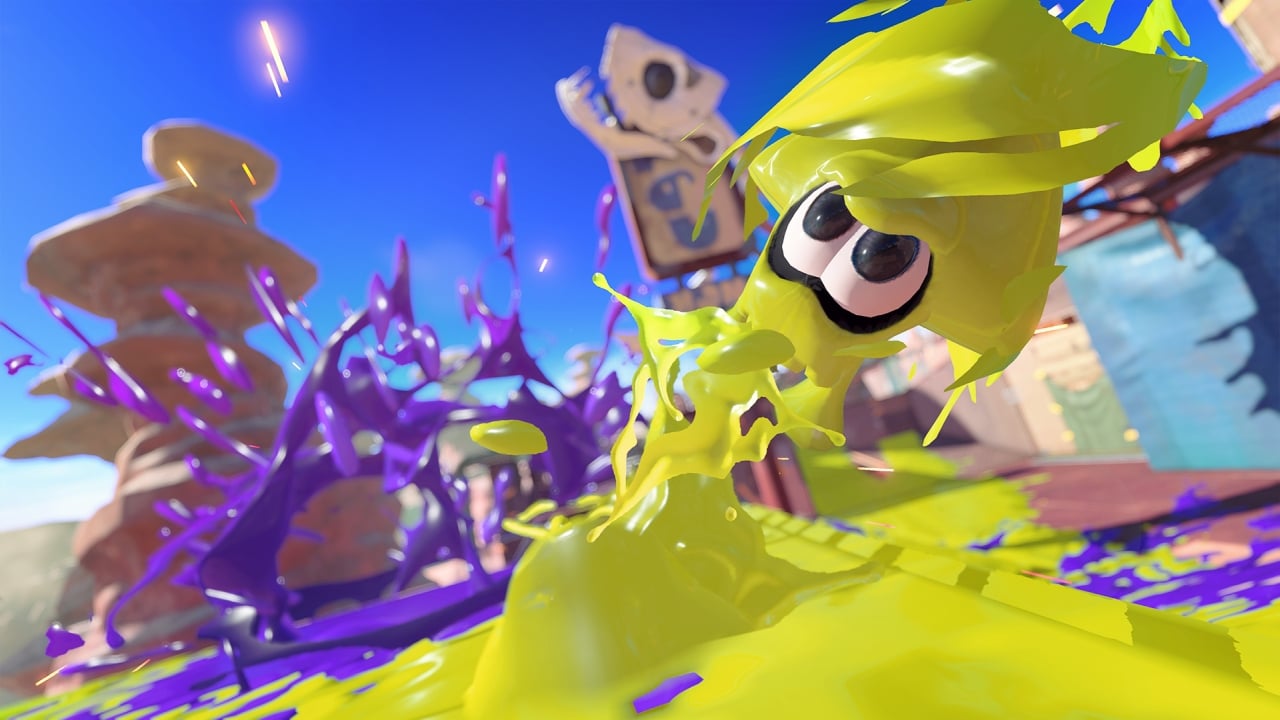
Nintendo has rolled out the Version 12.0.0 update for *Splatoon 3* on November 17, 2026, introducing one of the most consequential structural shifts to competitive matchmaking since the game's 2022 debut alongside Nintendo Switch 2-specific social features and a sweeping multiplayer balance pass. Arriving just ahead of Chill Season 2026, the patch brings an experimental two-player group option to the traditionally solo-only X Battles ladder, rebuilds Anarchy Battle (Series) team-splitting logic, and sharply curtails the dominance of Tacticooler-centered compositions. ### Opening X Battles to Duos—With Guardrails For years, *Splatoon 3* enforced a rigid divide across its ranked modes: friends could squad up in Anarchy Battle (Open), while X Battles remained strictly solo queue to preserve leaderboard integrity. With Version 12.0.0, Nintendo is softening that boundary on a trial basis starting in Chill Season 2026, allowing two friends to queue together in traditional X Battles for the first time. Rather than letting paired players freely distort eight-player lobbies, Nintendo designed the trial around strict mathematical symmetry. Matchmaking guarantees that the total number of grouped players on one side equals the number on the opposing team—if one team contains a duo, the rival squad must also field one. Eligibility is equally gated: both partners must have completed their initial X Power calculations for the active mode, and anyone sitting at or above 2000.0 X Power—or inside top-2000 restricted pools such as the Takoroka Division a month into a season—can only pair with peers inside those same upper brackets. Grouped competitors will also gain and lose less X Power per match than solo entrants, a deliberate cushion meant to discourage boosting while Nintendo monitors queue times and win-rate deltas. The timing of this experiment reflects a late-lifecycle reality. Four years after launch and well into the Nintendo Switch 2 era—where fans are also tracking the upcoming spin-off [*Splatoon Raiders*](https://www.mushimu.com/post/8878)—maintaining healthy ranked populations requires lowering the social friction that drives friends away from solo ladders. Nintendo explicitly noted in its developer remarks that the team will evaluate how both duo entrants and solo players experience the ladder during Chill Season 2026 before deciding whether paired queues become permanent. ### Rebuilding Anarchy Series Matchmaking While X Battles gain a social option, Anarchy Battle (Series) moves in the opposite direction to solve chronic lobby imbalances. Previously, players who clicked through to keep playing after a Series match could stay grouped with the same random teammates, creating ad-hoc synergy stacks that frequently steamrolled freshly assembled opponents. Version 12.0.0 strips out the "Continue with this team" button in Anarchy Battle (Series) entirely. In exchange, the mode adopts X Battle's weapon-and-skill team-division algorithm, forcing the matchmaker to re-evaluate all eight participants before every match. While breaking up a winning streak with compatible strangers removes a beloved grassroots dynamic, Nintendo argues the trade-off delivers faster queue resolution and prevents lopsided weapon compositions—such as double-charger lobbies facing triple-frontline shooters—from snowballing across consecutive matches. ### Reshaping the Competitive Meta: Blasters, Tacticooler, and Displacement Beneath the matchmaking overhaul, Version 12.0.0 targets several long-standing mechanical pain points in multiplayer combat. Most notably, Nintendo has altered how player momentum governs Blaster projectile travel. Moving forward while firing now yields a shorter blast distance than before, while backing up extends range slightly—compressing the erratic spacing variance that made aggressive forward-jumping Blasters unpredictable to counter. At the special-weapon tier, the patch takes direct aim at Tacticooler, which has anchored competitive team compositions for seasons by granting respawn, swim-speed, and ink-resistance buffs. Version 12.0.0 halves the bonus drink duration granted by the Special Power Up gear ability, cutting a single main slot's extension from roughly 3 seconds down to 1.5 seconds and a full-gear investment from roughly 8 seconds to 4 seconds. Coupled with a slight delay on Splash Wall deployment (roughly 5/60 of a second), defensive anchor setups lose noticeable staying power. In return, Nintendo is nudging teams toward faster displacement and flank pressure. Tenta Missiles fire and land roughly 25 percent faster with a 29 percent wider base targeting reticle when no Special Power Up is equipped, Zipcaster doubles its active armor durability from 30.0 to 60.0, and Splattercolor Screen roughly triples the spray droplets it sheds as it advances. Main weapon tweaks follow a similar push-and-pull logic: close-range Sploosh-o-matic and Splash-o-matic kits gain small maximum-damage bumps (38.0 to 40.0 and 28.0 to 29.0, respectively) in exchange for 5 percent higher ink consumption, while Dynamo Rollers suffer a 10/60-second delay before ink recovery begins after horizontal swings, and .52 Gal variants lose 8 percent of their droplet-ink radius. ### Cross-Generation Continuity on Nintendo Switch 2 Version 12.0.0 also underscores how Nintendo is bridging its active Switch and Switch 2 player bases. All gameplay and matchmaking adjustments apply identically across both consoles, while Nintendo Switch 2 users gain native GameChat integration: pressing right on the D-pad prior to locking into the "Ready!" state lets players open GameChat and invite friends from their active lobby across battles, Salmon Run, and Private Battles. Crucially, Nintendo confirmed alongside the release notes that Version 12.0.0 is not the final word on *Splatoon 3* tuning. A subsequent patch focused squarely on multiplayer balance is already slated to follow once developers analyze how the Chill Season 2026 duo trial and Tacticooler nerfs settle across competitive play. ### Sources & Further Reading - [Nintendo Support (US — Official Version 12.0.0 Release Notes)](https://en-americas-support.nintendo.com/app/answers/detail/a_id/59461/~/how-to-update-splatoon-3) - [Gematsu (JP/Global — Full Patch Breakdown)](https://www.gematsu.com/2026/11/splatoon-3-version-12-0-0-update-launches-november-17) - [Nintendo Life (UK — Update Overview & Analysis)](https://www.nintendolife.com/news/2026/11/splatoon-3-version-12-0-0-announced-here-are-the-full-patch-notes) - [GameLuster (Competitive & X Battle Duos Coverage)](https://gameluster.com/splatoon-3-12-0-0-update-x-battles-duos/) ~Gaming ~Nintendo ~Splatoon3 ~NintendoSwitch2
Splatoon 3 Version 12.0.0 Launches With X Battle Duos Trial, Anarchy Matchmaking Overhaul, and Switch 2 GameChat
0
Discuss 6
In a watershed legal resolution to one of the most brazen corporate breaches in video game history, 21-year-old Arion Kurtaj has formally pleaded guilty at Woolwich Crown Court in London to a comprehensive indictment of cybercrime offenses, including the catastrophic September 2022 network intrusion and data extortion of Rockstar Games. Confirmed on November 16, 2026, by the Crown Prosecution Service (CPS) and corroborated by proceedings monitored by British and international media, the plea marks a dramatic shift in a high-profile legal saga that had previously stalled under psychiatric orders. Kurtaj, an autistic hacker formerly of Oxfordshire and a key operative in the international cybercrime collective known as Lapsus$, admitted to carrying out unauthorized computer access, blackmail, and fraud targeting not only the creators of *Grand Theft Auto*, but also multinational telecom giant BT/EE, ride-hailing titan Uber, and digital banking platform Revolut. From Secure Hospital Orders to Legal Fitness The timing of Kurtaj’s guilty plea resolves years of procedural complexity within the British judicial system. Following an initial trial of the facts in late 2023, Kurtaj was assessed by medical experts as unfit to stand conventional trial due to severe autism spectrum disorder, leading Southwark Crown Court to impose an indefinite hospital order under Section 37 of the Mental Health Act. Under British criminal law, such an order confined him to a secure medical facility until mental health tribunals deemed him no longer a danger to the public or himself. However, subsequent psychiatric evaluations conducted during his prolonged stay determined that his cognitive capacity and understanding of criminal proceedings had stabilized sufficiently to render him fit to plead. Returned to the jurisdiction of the criminal courts, Kurtaj chose to formally enter guilty pleas across all primary counts rather than endure a prolonged contested trial. Woolwich Crown Court has scheduled his sentencing hearing for November 23, 2026, where prosecutors and defense counsel will clash over whether his custodial sentence should be served within a psychiatric setting or Her Majesty’s Prison estate. The Attack Chain: From a Travelodge to Rockstar's Slack The factual disclosures reaffirmed by the CPS illustrate how an adolescent armed with basic consumer electronics exposed structural vulnerabilities across corporate digital fortresses. In September 2022, while residing under police bail and round-the-clock protective supervision at a Travelodge hotel in Hertfordshire following an earlier arrest for hacking BT/EE, Kurtaj bypassed restrictions using an Amazon Fire TV Stick, a smart television, and a newly acquired mobile phone. Employing social engineering tactics, credential stuffing, and session token theft, Kurtaj breached Rockstar Games’ internal communication infrastructure. He infiltrated the studio’s enterprise Slack channels, compromised confidential repositories, and exfiltrated approximately 90 videos totaling nearly an hour of raw, in-development footage from *Grand Theft Auto VI*. Operating under the pseudonym "TeaPotTrooper," Kurtaj posted the clips to GTAForums and attempted to extort Rockstar management, threatening to release the game's core proprietary source code unless a multi-million-dollar ransom was paid in cryptocurrency. The Economic and Cultural Toll on Game Development While Kurtaj was apprehended by the City of London Police within days of the breach, the damage to Rockstar Games and parent company Take-Two Interactive was substantial. Court filings submitted by the prosecution detailed that the studio incurred over million in direct incident response costs, forensic investigations, and emergency infrastructure overhauls, alongside thousands of hours of lost developer productivity as remote-access privileges were temporarily revoked globally. Beyond the balance sheet, the leaks dealt a profound psychological blow to hundreds of artists, animators, and engineers who had spent years secretly developing the sun-drenched fictional state of Leonida and its dual protagonists, Jason and Lucia. The premature release of unfinished development builds—featuring debug wireframes, placeholder audio, and raw physics assets—triggered intense public scrutiny long before Rockstar intended to debut its polished marketing rollout. Despite the trauma of the breach, Rockstar rebounded with record-breaking official trailers, yet the procedural scar prompted sweeping reforms in how AAA gaming studios safeguard pre-release IP against decentralized adolescent threat actors. Deterrence vs. Rehabilitation Ahead of Sentencing Specialist Prosecutor Robert Hutchinson of the CPS London South complex casework unit highlighted the broader implications of the conviction, noting that Kurtaj’s technical sophistication and callous disregard for corporate integrity caused tens of millions of dollars in cumulative economic harm across the UK and the United States. Hutchinson reiterated that while threat actors often operate under an illusion of anonymity within darknet chatrooms and Telegram channels, international law enforcement task forces possess the digital forensics necessary to trace intrusion footprints back to physical hardware. As the court prepares for the November 23 sentencing, legal scholars and cybersecurity analysts view the Kurtaj case as an essential test case for modern digital jurisprudence. The verdict must balance the imperative of judicial deterrence against corporate extortion against the complex psychiatric realities of neurodivergent youth recruited into shadowy cyber syndicates. For the video game industry, Kurtaj's guilty plea closes the definitive legal chapter on the most damaging leak in interactive entertainment history, arriving just as the countdown to *Grand Theft Auto VI*'s commercial debut enters its final stretch. ### Sources & Further Reading - [The Crown Prosecution Service (Official Press Release)](https://www.cps.gov.uk/london-south/news/lapsus-hacker-who-leaked-gta-vi-gameplay-videos-convicted) - [Eurogamer (Specialist Gaming Industry Coverage)](https://www.eurogamer.net/gta-6-leaker-pleads-guilty) - [BBC News (British National & Legal Reporting)](https://www.bbc.co.uk/news/articles/cq99exy89dngo) ~Gaming ~GTA6 ~Cybersecurity ~RockstarGames ~Law
Original GTA 6 Hacker Pleads Guilty at Woolwich Crown Court: Inside the Lapsus$ Extortion Net, Slack Social Engineering, and the Road to Sentencing
1
Discuss 6
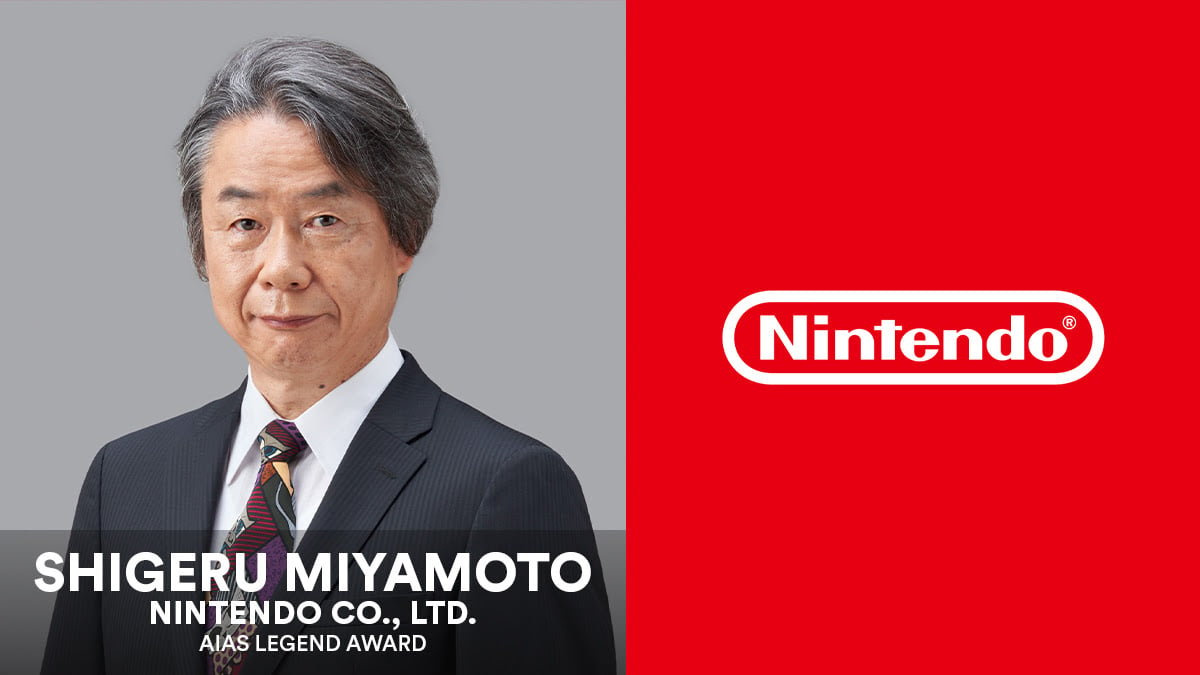
The Academy of Interactive Arts & Sciences (AIAS) has officially announced that Shigeru Miyamoto, Nintendo's legendary designer and Creative Fellow, will be honored with the inaugural Legend Award at the milestone 30th Annual D.I.C.E. Awards. Scheduled to take place on Thursday, February 18, 2027, at The Cosmopolitan of Las Vegas, the presentation will mark the establishment of a rare, generational accolade. According to the AIAS, the newly created honor is designed to recognize an industry icon whose enduring vision continues to actively redefine interactive entertainment on a global scale. In a notable institutional stipulation that underscores its exclusivity, the Academy confirmed that the Legend Award will be bestowed no more than once per decade. The announcement positions Miyamoto at the center of the games industry's premier peer-voted gathering, celebrating an incomparable career that spans nearly half a century. While the AIAS has regularly inducted celebrated creators into its prestigious Hall of Fame—including recent inductees Evan Wells in 2026, Ted Price in 2025, and Nintendo's own master composer Koji Kondo in 2024—the inaugural Legend Award carves out an entirely new tier within the organization's special honors. As AIAS President Meggan Scavio emphasized in the official announcement, Miyamoto was chosen because he embodies the rare creative figure whose reach extends far beyond traditional gaming circles, setting standards that have transformed popular culture worldwide. ### Transcending the Hall of Fame: The Genesis of a Generational Honor To appreciate the institutional gravity of the Legend Award, one must revisit the origins of the AIAS itself. Nearly three decades ago, in 1998, Shigeru Miyamoto was chosen as the very first inductee into the inaugural AIAS Hall of Fame. At the time, the induction recognized his revolutionary leap from 2D pixel art into 3D polygon space with Super Mario 64 and the impending arrival of The Legend of Zelda: Ocarina of Time. Yet, while Hall of Fame and Lifetime Achievement honors are typically awarded as capstones to mark the twilight of an individual's career, the AIAS designed the Legend Award with a distinctly forward-looking premise: honoring living icons whose foundational philosophies remain actively generative, vibrant, and capable of expanding the medium decades after their initial breakthroughs. By limiting the conferral of the Legend Award to once every ten years, the Academy has established what is effectively gaming's highest secular distinction. It formalizes an acknowledgment that certain foundational creators cannot be categorized merely alongside their contemporaries. In an industry often criticized for institutional amnesia and rapid trend-chasing, the once-a-decade mandate demands that any recipient must have exerted a gravitational pull across multiple hardware generations, industrial shifts, and cultural transformations. ### Codifying the Grammar of Modern Interactive Entertainment Miyamoto's trajectory from industrial design graduate to the primary creative architect of Nintendo is the central pillar upon which modern interactive entertainment was constructed. Joining Nintendo in 1977 under the legendary leadership of Hiroshi Yamauchi, Miyamoto was initially tasked with styling arcade cabinets. When Nintendo of America found itself on the brink of financial collapse in 1981 with thousands of unsold Radar Scope arcade units, Miyamoto was handed the desperate task of converting the surplus hardware into a viable game. The result was Donkey Kong—a work that introduced Jumpman (later Mario), revolutionized platforming physics, and established character-driven storytelling within arcade machines. Over the ensuing fifteen years, Miyamoto authored the foundational grammar of digital play. Super Mario Bros. (1985) single-handedly rescued the North American home console market following the 1983 crash, pioneering smooth lateral scrolling, inertia-driven movement curves, and subconscious environmental level design. One year later, The Legend of Zelda (1986) discarded arcade linearity entirely, inventing non-linear open exploration, secret-filled topography, and internal battery-backup saves that allowed players to live inside a digital world across dozens of hours. When the medium transitioned to real-time 3D graphics in the mid-1990s, it was Miyamoto who solved the existential riddle of three-dimensional spatial navigation. Super Mario 64 (1996) codified the 360-degree analog stick movement paradigm and dynamic camera positioning, while Ocarina of Time (1998) introduced contextual action buttons and Z-targeting—mechanisms that remain the structural bedrock of modern third-person action games. ### From Software Auteur to Transmedia Architect: The Creative Fellow Era The announcement of the Legend Award arrives at a fascinating juncture in Miyamoto's career. Following the tragic passing of Nintendo President Satoru Iwata in 2015, Nintendo established the executive title of 'Creative Fellow' specifically for Miyamoto. The mandate allowed him to step away from micro-managing individual software development cycles—entrusting flagship franchises to trusted longtime proteges such as Eiji Aonuma, Takashi Tezuka, and Koichi Hayashida—in order to guide Nintendo's overarching intellectual property into the broader cultural landscape. Now 74 years old and among a select handful of personnel permitted to remain actively employed at Nintendo beyond Japan's statutory corporate retirement age, Miyamoto has spent the past decade executing Nintendo's ambitious transmedia expansion. He personally co-produced The Super Mario Bros. Movie with Illumination's Chris Meledandri, turning it into a box-office phenomenon that grossed over .36 billion and dismantled decades of cinematic video game adaptation skepticism. Concurrently, Miyamoto served as the chief creative visionary overseeing the physical design, architectural layout, and kinetic interactivity of Super Nintendo World within Universal Studios theme parks across Osaka, Hollywood, Orlando, and Singapore. With Nintendo and Sony Pictures currently partnering on a live-action cinematic adaptation of The Legend of Zelda directed by Wes Ball, Miyamoto continues to serve as the chief custodian of the company's mythos, ensuring that the tactile soul of its interactive universes survives translation into linear cinema. ### An Anchor of Tactile Play in an Era of Industry Turmoil Miyamoto's recognition by the AIAS also serves as an unspoken critique and grounding anchor for an interactive entertainment sector currently experiencing severe structural turbulence. The contemporary games industry is navigating intense volatility: triple-A studio consolidations, ballooning production budgets exceeding hundreds of millions of dollars, tens of thousands of developer layoffs, and speculative corporate rushes into generative AI. In contrast to prevailing industry headwinds that prioritize hyper-realistic asset fidelity or live-service monetization loops, Miyamoto's enduring creative philosophy has remained relentlessly focused on tactile responsiveness, accessibility, and the pure, physical joy of play. Throughout his career, Miyamoto has championed iterative physical prototyping—often famously crafting physical mockups out of cardboard, wood, and clay to test whether a mechanical concept produces spontaneous smiles before writing a line of code. His insistence that interactive hardware must serve intuitive human interaction rather than raw computational muscle birthed the Nintendo DS, the Wii, and ultimately the Nintendo Switch. As Nintendo prepares to guide its player base toward the next hardware generation, the AIAS Legend Award honors an artist who proved that technology is fleeting, but an elegant, empathetic understanding of human play is immortal. ### Sources & Further Reading - [Video Games Chronicle (UK)](https://www.videogameschronicle.com/news/shigeru-miyamoto-to-be-honored-with-first-aias-legend-award-in-las-vegas/) - [Nintendo Life (UK/Global)](https://www.nintendolife.com/news/2026/11/shigeru-miyamoto-to-receive-the-inaugural-legend-award-at-the-30th-d-i-c-e-awards) - [Shacknews (United States)](https://www.shacknews.com/article/151368/dice-awards-2027-legend-award-shigeru-miyamoto) ~Gaming ~Nintendo ~ShigeruMiyamoto ~DICEAwards ~Industry
Shigeru Miyamoto to Receive Inaugural AIAS Legend Award at 30th D.I.C.E. Awards: A Generational Honor for Gaming's Defining Architect
0
Discuss 6
In a pivotal legal blow to the global semiconductor cartel, a United States federal court has refused to dismiss a nationwide antitrust class-action lawsuit accusing the world’s three largest memory manufacturers of orchestrating an illegal conspiracy to restrict memory supply and artificially inflate component prices. Presiding over the Northern District of California in *Garciaguirre v. Samsung Electronics* (Case No. 5:26-cv-06345), U.S. District Judge Noël Wise ruled that allegations of anticompetitive coordination against Samsung Electronics, SK Hynix, and Micron Technology are plausible enough to proceed directly into discovery. The decision forces the triumvirate—which controls virtually 100% of global dynamic random-access memory (DRAM) production—to open internal executive communications, wafer allocation logs, and capacity planning records to judicial scrutiny. The consumer lawsuit, filed on behalf of individual hardware buyers and enterprise consumers, targets the economic phenomenon widely termed “RAMageddon.” Over the past two years, retail prices for consumer memory modules—spanning DDR4 and current-generation DDR5—have experienced unprecedented, volatile escalations, surging between 500% and nearly 700% in specific retail categories. The complaint alleges that rather than competing vigorously to meet global demand, the three semiconductor titans engaged in synchronized, parallel output cuts, systematically winding down consumer DRAM production lines while reallocating silicon fab capacity toward lucrative High Bandwidth Memory (HBM) tailored for artificial intelligence datacenters. ### The Myth of Natural Competition: “Hawks Flying in Formation” In their joint motions to dismiss, Samsung, SK Hynix, and Micron argued that the lawsuit was an unfounded rehash of a previously dismissed 2018 antitrust complaint. The defendants maintained that in an intensely concentrated commodity market, individual suppliers naturally observe market conditions and adjust output unilaterally. Their defense centered on the economic doctrine of conscious parallelism, asserting that the companies were merely “watching each other like hawks” in a fiercely competitive environment. Judge Wise dismantled this defense in an unusually sharp judicial rebuke. Pointing to the plaintiffs’ detailed economic modeling, the court emphasized that in a functioning, competitive market, soaring prices naturally act as a price signal, incentivizing at least one competitor to expand production and capture lucrative market share. Instead, all three manufacturers enacted parallel production cutbacks that starved the consumer channel while reporting record operating margins. Rejecting the manufacturers’ characterization, Judge Wise wrote: “Plaintiffs’ allegations go beyond hawks watching each other; their contentions are more akin to hawks flying in formation — an activity that hawks ordinarily do not do.” The ruling stresses that while the decision does not constitute a final finding of guilt under Section 1 of the Sherman Act, the plaintiffs have crossed the high procedural bar established by antitrust precedent. By demonstrating that the defendants’ concurrent supply throttles defied independent economic rationality absent an underlying understanding, the case clears the way for plaintiffs’ attorneys to subpoena internal emails, text messages, and high-level corporate planning documents spanning 2024 through 2026. ### The Collateral Damage on Gaming Consoles and PC Builders The consequences of DRAM price manipulation extend far beyond desktop PC enthusiasts, directly shaping the economic architecture of the modern video game industry. Memory constitutes one of the largest single bills of materials (BOM) in video game consoles, handheld gaming PCs, and high-performance graphics cards. Historically, console platform holders could rely on the natural deflationary curve of semiconductor fabrication: four to five years into a console cycle, DRAM and silicon yields mature, allowing manufacturers to slash hardware prices or release lower-cost “slim” revisions. During the current generation, that traditional deflationary curve was completely obliterated. Driven by the surging cost of system memory, Sony Interactive Entertainment, Microsoft Gaming, and Nintendo broke decades of historical precedent by raising console MSRPs or holding hardware prices static years after launch. Mid-tier PC gamers and handheld PC adopters have felt the brunt of this squeeze, with system builders forced to cut memory allocations or delay platform upgrades as 32GB DDR5 kits reached price points unseen since the supply chain disruptions of the early pandemic era. The complaint highlights how the structural barriers shielding the DRAM oligopoly prevent market forces from self-correcting. Constructing a competitive leading-edge semiconductor fabrication facility today requires an investment exceeding $20 billion and four to six years of complex construction, cleanroom certification, and supply chain integration. Furthermore, reliable high-yield DRAM fabrication relies on decades of tightly guarded proprietary trade secrets. Geopolitical headwinds further reinforce the cartel’s moat: United States export controls strictly prohibit alternative foundries in China, such as ChangXin Memory Technologies (CXMT), from procuring advanced Extreme Ultraviolet (EUV) and Deep Ultraviolet (DUV) lithography equipment from ASML, effectively eliminating any external threat to the Big Three’s market dominance. ### The Road to Discovery and Market Ramifications As *Garciaguirre v. Samsung Electronics* transitions into the contentious discovery phase, the memory industry confronts an uncomfortable reckoning. Historical precedent looms large over the proceedings: in the mid-2000s, an international Department of Justice antitrust probe into DRAM price-fixing resulted in felony guilty pleas and hundreds of millions of dollars in criminal fines against several memory executives from the very same corporate entities. Should discovery uncover evidence of backchannel coordination, shared production quotas, or artificial wafer throttling, the legal consequences could trigger billions of dollars in treble damages under U.S. antitrust law, as well as regulatory scrutiny across the European Union and Asia-Pacific competition authorities. For millions of PC gamers, console owners, and hardware manufacturers grappling with the enduring cost-of-living crisis in tech, Judge Wise’s ruling represents the first significant judicial breach in the wall of silence surrounding the memory market. ### Sources & Further Reading - [Video Games Chronicle (VGC)](https://www.videogameschronicle.com/news/judge-throws-out-ram-makers-attempt-to-dismiss-lawsuit-accusing-them-of-fixing-prices-and-supply/) - [Tom’s Hardware](https://www.tomshardware.com/tech-industry/big-tech/judge-denies-motion-to-dismiss-dram-price-fixing-lawsuit-against-micron-samsung-and-sk-hynix-says-chipmakers-acted-like-hawks-flying-in-formation-finds-evidence-of-dram-collusion-plausible-after-500-percent-price-surge) - [Fudzilla](https://fudzilla.com/memory-giants-accused-of-flying-in-price-fixing-formation/) ~Gaming ~Hardware ~PCGaming ~Antitrust ~Technology
Federal Judge Rejects DRAM Makers’ Bid to Dismiss Price-Fixing Lawsuit: Samsung, SK Hynix, and Micron Face Antitrust Scrutiny Over ‘RAMageddon’
0
Discuss 13
After nearly six years of secretive development, exhaustive reverse engineering, and multiple complete code overhauls, the ambitious community project to bring persistent online multiplayer to Cyberpunk 2077 has officially reached the public. On Monday, November 16, 2026, the modding team behind CyberMP launched its first public open beta, allowing any player with a legitimate copy of CD Projekt Red’s flagship dystopian RPG on PC to enter Night City alongside friends and strangers without requiring closed testing invites or whitelisted application keys. The release marks a historic milestone for the game’s modding ecosystem, fulfilling a long-abandoned promise that dates back to Cyberpunk 2077’s initial promotional campaign. Before the game’s tumultuous December 2020 launch, CD Projekt Red had formally announced that an official standalone AAA multiplayer experience set in the Cyberpunk universe was in active pre-production. However, the catastrophic technical state of the base game on last-generation consoles forced the Polish studio into immediate crisis remediation. The standalone multiplayer title was quietly shelved—and ultimately cancelled—as developers redirected all engineering resources toward engine stabilization, the transformative Update 2.0 overhaul, and the critically acclaimed Phantom Liberty expansion. While CD Projekt Red has recently reaffirmed that it intends to introduce online architecture to its upcoming Unreal Engine 5 sequel, Project Orion, CyberMP represents a community-built realization of that multiplayer ambition within the proprietary REDengine 4 runtime. ### Dedicated Server Architecture and the FiveM Paradigm Unlike lightweight peer-to-peer (P2P) co-op scripts that struggle with clock drift and latency spikes, CyberMP is architected from the ground up around high-tick dedicated server infrastructure. The modification hooks directly into the REDengine 4 memory space, decoupling local player state machines to synchronize player movement, vehicle interpolation, projectile physics, and combat animations across network packets. Rather than attempting to force multiple players into Cyberpunk 2077’s heavily scripted single-player narrative campaign—where diverging quest choices, dialogue trees, Braindance sequences, and Johnny Silverhand Relic malfunctions would trigger fatal desynchronizations—CyberMP embraces the massively successful sandbox paradigm pioneered by GTA Online, San Andreas Multiplayer (SAMP), and FiveM. Players spawn directly into an open-world Night City, where dedicated server hosts can configure custom game modes, organized street races across the Badlands, deathmatches in Watson backalleys, and persistent roleplay (RP) servers featuring functional economies, faction hierarchies, and customized police response loops. Vehicle handling and high-speed road synchronization—traditionally among the most challenging hurdles in game engine reverse engineering—have received dedicated interpolation passes. Players can cruise down the neon-drenched highways of Westbrook or engage in drive-by vehicular combat with peer-accurate positioning. Custom animations, custom weapon attachments, and localized sound effects replicate across clients, delivering an authentic shared atmosphere that feels native to the sprawling urban sandbox. ### Navigating the "True Beta" Frontier: Stability, Antivirus, and Netcode Stress The CyberMP development team has been deliberately transparent about the raw, experimental nature of this public release, emphasizing that the milestone represents an authentic "true beta" intended to stress-test netcode under heavy concurrent player traffic rather than a finished consumer product. Testers are advised to expect occasional server desynchronization, client crashes during heavy volumetric physics events, and packet drops when dozens of customized cyberware builds collide in dense district hubs. A notable friction point during initial client setup involves heuristic antivirus alerts. Because the CyberMP launcher and network injection dynamic-link libraries (DLLs) interact directly with game memory and currently lack a commercial Microsoft Authenticode digital certificate, Windows Defender and third-party security suites frequently trigger false-positive warnings. The developers have published extensive technical documentation and checksum verifications on the project’s dedicated portal, guiding players through firewall exclusions and clean directory deployments alongside essential modding prerequisites like Cyber Engine Tweaks and RED4ext. The primary engineering focus for the open beta is stabilizing the core transport layer. By gathering telemetry and automated crash dumps from thousands of real-world hardware configurations across varying network latencies, the developers aim to eliminate thread deadlocks and optimize server bandwidth consumption before introducing advanced synchronization layers for ambient pedestrian crowds and dynamic cyberware abilities. ### The Lasting Impact on REDengine 4 and Project Orion The arrival of CyberMP underscores the extraordinary technical resilience of CD Projekt Red’s proprietary REDengine 4. Although the studio has officially retired the engine in favor of Epic Games’ Unreal Engine 5 for all future pipeline developments—including Project Orion and the next Witcher trilogy—the ability of independent programmers to retrofit a robust client-server networking layer onto an engine designed strictly for solitary roleplaying stands as a monumental technical achievement. For players who have spent hundreds of hours mastering Night City’s dark alleys and sprawling corporate plazas, CyberMP transforms a static playground into a living, unpredictable shared stage. It proves that the demand for collaborative urban sci-fi roleplaying remains immense, offering a vibrant multiplayer stopgap that will likely sustain the Cyberpunk PC community until the next generation of games arrives. ### Sources & Further Reading - [Eurogamer (UK Video Game Journalism)](https://www.eurogamer.net/cyberpunk-2077-multiplayer-mod-open-beta) - [Rock Paper Shotgun (PC Gaming Press)](https://www.rockpapershotgun.com/weve-finally-reached-this-milestone-cyberpunk-2077-multiplayer-mod-cybermp-kicks-off-open-beta-after-around-six-years-preparing-for-cybermayhem) - [Tech4Gamers (Gaming Hardware & Modding Analysis)](https://tech4gamers.com/cyberpunk-2077-multiplayer-mod-beta/) ~Gaming ~Cyberpunk2077 ~Modding ~PCGaming ~CDProjektRed
Cyberpunk 2077 Multiplayer Mod CyberMP Launches Public Open Beta: Inside the Dedicated Servers, Reverse-Engineered Netcode, and Sandbox Night City
0
Discuss 14
During its official shareholders' briefing for the first half of the fiscal year ending March 2027, Japanese publishing titan Bandai Namco Holdings formally detailed the strategic architecture and technical philosophy behind SOL-AVES, its brand-new proprietary game engine. First conceived in 2019 and kept largely confidential during early development, SOL-AVES represents Bandai Namco Studios' most ambitious internal technology initiative in decades. Built under the direction of former Ubisoft and Square Enix technical lead Julien Mercenon, the engine consolidates decades of fragmented internal tools into a unified production pipeline designed to power AAA releases—ranging from open-world role-playing games to competitive fighting titles—while systematically breaking the studio's dependency on commercial middleware like Epic Games' Unreal Engine and Unity. Addressing investors and analysts, Bandai Namco leadership specifically singled out raw execution speed and low-latency throughput as the primary engineering breakthroughs of the engine. 'SOL-AVES consolidates the know-how we have accumulated through many years of game development,' the company's executive representative stated during the briefing. 'It is designed to support a wide range of genres, including fighting action games and RPGs, which are among the genres Bandai Namco aims to expand within its game portfolio. In particular, one of SOL-AVES's key strengths is its high processing speed, which is essential for fighting action games.' The disclosure provides critical clarity on how Bandai Namco plans to future-proof core fighting franchises like *Tekken* while insulating its production budgets from escalating third-party licensing fees. ### The Low-Latency Imperative: Engineering for Competitive Fighting Games The technical demands of modern competitive fighting games represent one of the most unforgiving challenges in software engineering. While narrative-driven action games can tolerate minor frame pacing fluctuations or frame generation buffers, fighting titles require absolute frame-deterministic execution locked at a minimum of 60 frames per second. Every attack, block, and parry operates on discrete frame data, where a single dropped frame or delayed input can fundamentally compromise competitive integrity. Furthermore, the universal adoption of rollback netcode has multiplied this computational burden. Under rollback architectures, an engine must be capable of executing multiple speculative game state simulations, rewinding logic, and resynchronizing client physics within milliseconds when network desynchronization occurs between players across different regions. Commercial general-purpose engines like Unreal Engine 5, while visually stunning, often introduce heavy garbage-collection overhead, non-deterministic physics scheduling, and input pipeline layers that can introduce sub-frame latency spikes. By developing SOL-AVES with a stripped-down, bespoke execution pipeline tailored to immediate thread dispatch and deterministic state machines, Bandai Namco Studios can ensure rock-solid rollback reconciliation without sacrificing modern graphical fidelity or complex skeletal animation. ### Kirby Air Riders: The Switch 2 Proving Ground and Asset Velocity Although officially detailed to investors this week, SOL-AVES has already undergone trial by fire in live commercial production. Industry analysts and tech enthusiasts noted that the engine quietly served as the underlying runtime for Nintendo's *Kirby Air Riders*, co-developed by Bandai Namco Studios alongside legendary director Masahiro Sakurai for Nintendo Switch 2 hardware. During its early production phases, technical presentations revealed that the development team initially grappled with severe rendering bottlenecks on mobile silicon, languishing at 15 frames per second at native 720p. Through customized memory allocation passes, temporal antialiasing refinements, and lightweight dynamic lighting shaders integrated directly into SOL-AVES, the engineering teams successfully scaled *Kirby Air Riders* to a locked 60 frames per second at an upscaled 1440p presentation. This optimization milestone demonstrated the engine's versatility: it proved capable of delivering high-velocity vehicular physics and dense visual particle effects on portable hardware architectures while maintaining uncompromising responsiveness. As Bandai Namco explained to shareholders, a central tenet of the engine's development philosophy is 'implementing creative assets into games as quickly as possible,' bridging the historical divide between level designers, animators, and core gameplay programmers through real-time asset hot-reloading. ### Technological Sovereignty: The Industry Divide Over In-House Engines Bandai Namco's multi-year investment in SOL-AVES highlights a deepening strategic divergence within AAA game development. Over the past five years, prominent Western and European studios—most notably CD Projekt Red transitioning from REDengine to Unreal Engine 5—have abandoned proprietary engines due to soaring maintenance costs, recruitment friction with junior developers unfamiliar with custom codebases, and the sheer velocity of Epic Games' R&D. However, Asian powerhouses have largely pushed in the opposite direction. Capcom's remarkable critical and commercial renaissance has been propelled by its proprietary RE Engine, which powers everything from *Resident Evil Requiem* and *Monster Hunter Wilds* to *Street Fighter 6*. Similarly, South Korean developer Pearl Abyss has built its production pipeline around its proprietary BlackSpace Engine for *Crimson Desert* and *DokeV* (examined in [Mushimu post #9400](https://www.mushimu.com/post/9400)), maintaining total control over its graphics stack and avoiding commercial royalty cuts. For Bandai Namco, developing SOL-AVES ensures complete ownership over its software IP, eliminates recurring royalty fees on multi-million selling hits, and allows bespoke hardware optimizations across dedicated consoles and handheld PCs (such as those analyzed in [Mushimu post #9390](https://www.mushimu.com/post/9390)). By mastering its own silicon toolchain, Bandai Namco positions itself to navigate the next console hardware generation with custom rendering efficiency, ensuring that its flagship fighting and role-playing franchises maintain their technical edge without external dependencies. ### Sources & Further Reading - [Kotaku (United States — Video Game Journalism & Industry Analysis)](https://kotaku.com/bandai-namco-game-engine-sol-aves-tekken-fighting-games-2000757390) - [Automaton Media (Japan — Video Game Industry News & Corporate Analysis)](https://automaton-media.com/en/news/bandai-namco-says-new-in-house-engine-sol-avess-key-strength-is-the-high-processing-speed-fighting-games-require/) - [iXBT Games (International — European Technology & Gaming Press)](https://ixbt.games/es/news/2026/11/16/sozdateli-tekken-delaiut-stavku-na-skorost-bandai-namco-rasskazala-o-dvizke-sol-aves.html) ~Gaming ~BandaiNamco ~GameDev ~Tekken ~Nintendo
Bandai Namco Unveils In-House Engine SOL-AVES: Fighting Game Latency Priorities, Kirby Air Riders R&D, and Divergence from Unreal Engine
0
Discuss 22