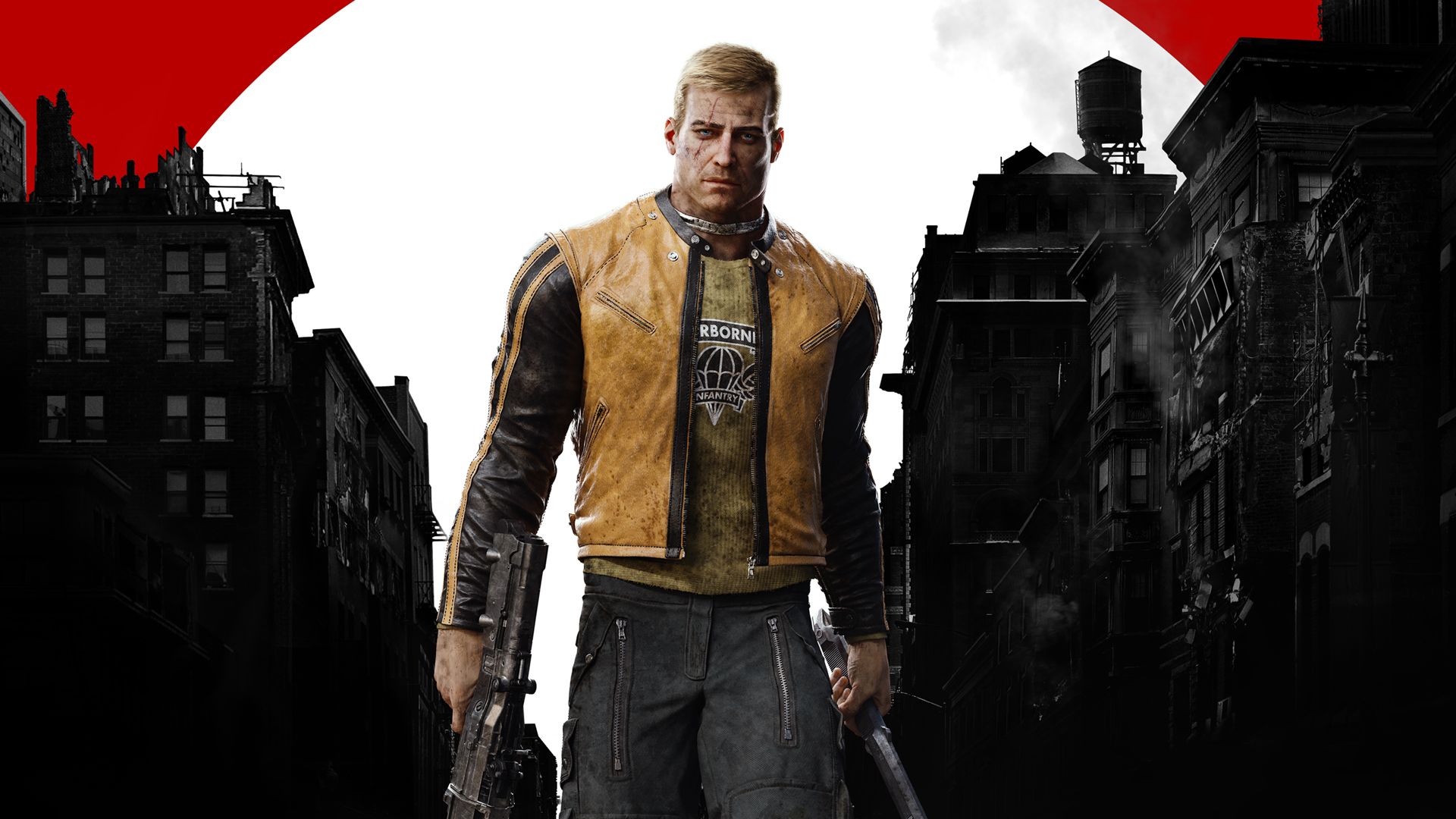
Seven years after the explosive climax of *Wolfenstein II: The New Colossus* ignited the Second American Revolution, MachineGames and Microsoft Gaming have officially confirmed that *Wolfenstein 3* is in active production. The announcement arrived through an unconventional disclosure channel: rather than orchestrating a lavish cinematic reveal at an upcoming industry showcase, Microsoft Gaming CEO Asha Sharma published a photograph of the physical production script on social media, accompanied by a declaration that MachineGames was returning to “one of gaming's most important franchises.” Minutes later, MachineGames reinforced the confirmation with an evocative studio dispatch—“His reputation precedes him. Wolfenstein 3 is in production”—alongside behind-the-scenes photography of veteran actor Debra Wilson reprising her role as American resistance cell leader Grace Walker in full motion-capture regalia.
The formal greenlight resolves nearly a decade of narrative ambiguity and studio speculation. While MachineGames spent recent years directing its creative energies into the acclaimed archaeological adventure *Indiana Jones and the Great Circle* (2024) and crafting a bespoke 30th-anniversary campaign expansion for *Quake*, the fate of B.J. Blazkowicz remained the defining unfinished business in contemporary first-person shooters. By re-engaging the core timeline immediately following *The New Colossus*, MachineGames is poised to deliver the long-promised capstone to its alternate-history narrative arc, answering long-standing questions regarding the liberation of Nazi-occupied Europe and the ultimate confrontation with the totalitarian regime.
### Resolving the Chronological Fracture: From The New Colossus to Youngblood
When MachineGames rebooted the storied id Software franchise with *Wolfenstein: The New Order* in 2014, creative director Jens Matthies and lead designer Jerk Gustafsson established an ambitious narrative architecture envisioned explicitly as a trilogy. Grounded in alternate-history worldbuilding where the Axis powers conquered the globe using stolen, hyper-advanced ancient Da'at Yichud technology, the series distinguished itself from contemporary military shooters by pairing unapologetically violent gunplay with deeply melancholic, character-driven storytelling.
That trajectory reached a dramatic crescendo in 2017's *The New Colossus*. Set in a subjugated 1961 United States, the campaign culminated with Blazkowicz surviving decapitation via an experimental bio-synthetic body transplant, assassinating Nazi commander Irene Engel on live network television, and seizing the Ausmerzer airborne super-fortress to broadcast a nationwide call to arms. Yet while the American liberation was sparked, the broader geopolitical apparatus of the Nazi Reich remained fortified across Europe and its capital in Berlin, leaving Blazkowicz's personal crusade unresolved.
The studio's 2019 spin-off, *Wolfenstein: Youngblood*—co-developed with Arkane Lyon—complicated that continuity by jarringly leaping two decades into the future to an alternate 1980s Paris. Centered on Blazkowicz's twin daughters, Jess and Soph, *Youngblood* revealed that B.J. had vanished into hiding after encountering interdimensional Da'at Yichud artifacts, while referencing historical events—such as the eventual demise of an aged, senile Adolf Hitler—entirely off-screen. For franchise purists, this temporal leap created a jarring narrative vacuum.
The inclusion of Debra Wilson in current performance-capture sessions confirms that *Wolfenstein 3* will not bypass the climactic global conflict. Wilson's character, Grace Walker, was introduced in *The New Colossus* as the fiercely strategic leader of the Manhattan Black Revolutionary resistance before assuming command of the Kreisau Circle aboard the stolen U-boat Eva's Hammer. Her presence at the center of production indicates that the third installment will directly chronicle the continental counter-offensive, uniting the American insurgency with European resistance networks to strike at the heart of the Reich.
### Studio Trajectory and Deepened id Tech Synergy
The commencement of principal production on *Wolfenstein 3* follows a pivotal operational phase for MachineGames. The Uppsala, Sweden-based studio spent the better part of five years engineering *Indiana Jones and the Great Circle*, a project that demonstrated the team's capacity for intricate environmental interaction, hand-to-hand puzzle ergonomics, and cinematic pacing within a first-person perspective. The lessons learned from rendering dense archaeological ruins and nuanced tactile mechanics are anticipated to feed directly into the physical gunplay and environmental destruction of *Wolfenstein 3*.
Crucially, the production arrives amid structural realignments within ZeniMax Media. Studio directors at id Software recently confirmed that the *Doom* creators are collaborating far more intimately with MachineGames than at any point in their shared history. Following painful workforce contractions across Microsoft's gaming division throughout 2024 and 2025, the corporate mandate within ZeniMax has pivoted toward technical consolidation.
MachineGames has historically engineered its titles on customized iterations of id Software's proprietary id Tech game engine, transitioning from id Tech 5 in *The New Order* to the Vulkan-accelerated id Tech 6 in *The New Colossus*. For *Wolfenstein 3*, the development pipeline is anchored to the cutting-edge architectural advances forged for *Doom: The Dark Ages*. This unified technical framework brings advanced GPU-driven geometry pipelines, real-time procedural dismemberment systems, and decoupled neural audio spatialization to MachineGames' sandbox. The enhanced rendering pipeline is particularly vital for depicting the colossal, dieselpunk brutalist architecture that defines the Nazi regime's European strongholds without succumbing to the asset streaming bottlenecks that challenged previous console generations.
### The Transmedia Flywheel: Kilter Films and the Wolfenstein TV Series
The timing of Microsoft's production confirmation is intricately tethered to a broader corporate transmedia strategy. Following the extraordinary commercial and critical triumph of Amazon Prime Video's *Fallout* television adaptation—which catalyzed millions of concurrent players across the video game catalog—Amazon MGM Studios and Kilter Films confirmed active development on a live-action *Wolfenstein* series. Helmed by executive producers Jonathan Nolan and Lisa Joy, the televised adaptation is designed to explore the nightmarish sociopolitical realities of an Axis-occupied America during the mid-20th century.
Microsoft Gaming has increasingly aligned its internal production schedules to capitalize on transmedia momentum. While the *Fallout* resurgence demonstrated how television audiences could be converted into active catalog players, *Wolfenstein* presents an opportunity for synchronized brand revitalization. By establishing that *Wolfenstein 3* is in active production, Microsoft signals to corporate partners and prospective viewers that the video game franchise is an enduring, Tier-1 pillar of the Xbox ecosystem rather than a dormant legacy IP.
### Editorial Analysis: Handcrafted Narrative Craft in an Era of Algorithmic Uncertainty
The informal nature of Asha Sharma's disclosure—delivering one of Xbox's most anticipated first-party confirmations via a snapshot of a script rather than a multimillion-dollar CGI teaser—reflects an evolving communications philosophy under new executive stewardship. Yet the thematic undercurrents of the announcement carry deeper resonance.
Barely twenty-four hours prior to posting the script excerpt, Sharma published an expansive 25th-anniversary Xbox memorandum that ignited vigorous industry debate by championing generative AI and algorithmic automation, suggesting that “a single person will soon be able to wield capabilities that once required entire nations.” That MachineGames immediately anchored its confirmation with physical motion-capture photography featuring veteran human actors provides a compelling counter-narrative.
In a modern gaming landscape inundated by homogenized live-service frameworks and automated content queues, MachineGames remains one of the few global development houses dedicated to the uncompromising discipline of prestige, linear single-player storytelling. The journey of B.J. Blazkowicz has endured not merely because of visceral shotgun mechanics or mechanical hound combat, but because of its deeply human core: a brutalized soldier grappling with generational trauma, fatherhood, racism, and the moral burden of violent resistance against fascism. Bringing Debra Wilson back into the mocap volume to conclude that journey reaffirms that no algorithmic shortcut can replicate the collaborative alchemy of handcrafted narrative design.
~Gaming ~Wolfenstein ~MachineGames ~Xbox ~Bethesda