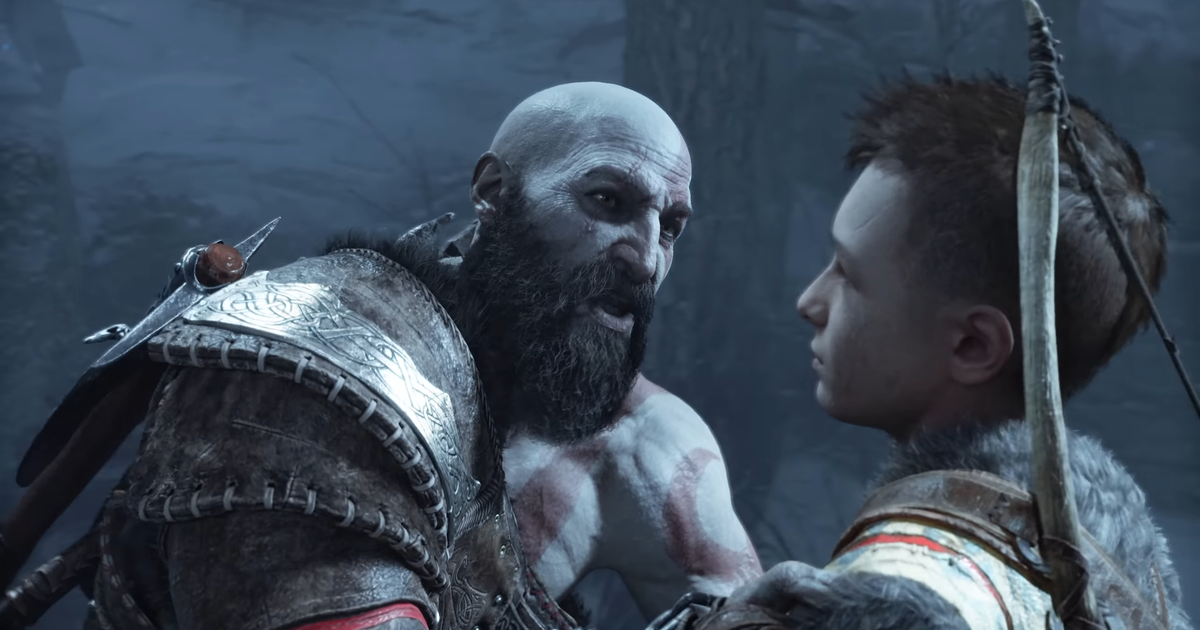
God of War Ragnarök Generates $1.4B as Generation Top PlayStation Hit: Inside Sony $6.5B First-Party Telemetry, PC Port Reversals, and the Digital Squeeze
In an industry navigating escalating production budgets, studio restructurings, and shifting platform boundaries, comprehensive commercial telemetry published on November 9, 2026, by Alinea Analytics has established Santa Monica Studio’s God of War Ragnarök as the undisputed commercial apex of the PlayStation 5 generation. Four years after its dual-generation console launch in November 2022 and two years following its PC conversion, the Norse epic has generated an estimated $1.4 billion in gross revenue across 21.6 million copies sold. The report, helmed by Alinea Head of Market Analysis Rhys Elliott, tracks the lifetime performance of PlayStation Studios' top ten releases this cycle, documenting a collective gross surpassing $6.5 billion. Kratos and Atreus narrowly edged out Insomniac Games' Marvel's Spider-Man 2, which accumulated $1.3 billion across 19.1 million copies, while Polyphony Digital's Gran Turismo 7 claimed the third tier with $841.9 million. Beyond headline rankings, the dataset lays bare the underlying mechanics governing modern platform economics: the long-tail vitality of catalog sales, the diverging fortunes of simultaneous PC releases, and the accelerating corporate campaign to deprecate physical disc media. Alinea’s forensic breakdown details the precise platform distribution across the generational leaderboard. Of God of War Ragnarök’s 21.6 million unit tally, 20.1 million were purchased directly within the PlayStation ecosystem, where PS5 hardware accounted for 75.2% of console transactions. The PC conversion via Steam contributed an estimated 1.6 million sales, providing high-margin incremental capital without cannibalizing core console adoption. What distinguishes Ragnarök is its remarkable evergreen velocity: despite being inducted into the PlayStation Plus Extra game catalog—where analytics track engagement from approximately 6.7 million subscribers—the title moved an additional 1.1 million retail copies in 2026 alone, yielding roughly $60 million in late-lifecycle receipts. This phenomenon directly refutes conventional publisher anxieties that subscription library access permanently extinguishes transactional demand. The broader top ten roster illustrates the varied commercial tiers sustaining Sony’s publishing arm: 1. God of War Ragnarök (Santa Monica Studio): $1.40 billion (21.6 million units) 2. Marvel's Spider-Man 2 (Insomniac Games): $1.30 billion (19.1 million units) 3. Gran Turismo 7 (Polyphony Digital): $841.9 million 4. Helldivers 2 (Arrowhead Game Studios / PlayStation Studios): $786.0 million 5. Horizon Forbidden West (Guerrilla Games): $485.0 million 6. Ghost of Yōtei (Sucker Punch Productions): $410.0 million 7. The Last of Us Part I (Naughty Dog): $341.0 million 8. Ratchet & Clank: Rift Apart (Insomniac Games): $334.0 million 9. Stellar Blade (Shift Up / PlayStation Studios): $316.0 million 10. Astro Bot (Team Asobi): $292.0 million Across the generational top ten, platform revenue divided into 84.7% from native PlayStation consoles, 14.1% from Steam on PC, and a residual 1.2% from multiplatform instances (chiefly Helldivers 2 on Xbox ecosystems). While that 14.1% PC contribution represents more than $900 million in gross revenue, it has triggered a profound strategic reassessment within Sony Interactive Entertainment leadership. The runaway triumph of Helldivers 2 ($786 million) proved that cooperative live-service releases require day-and-date PC availability to achieve critical community scale. Conversely, single-player cinematic blockbusters tell a starkly different story. The delayed PC arrivals for Ragnarök, Forbidden West, and Spider-Man 2 yielded solid revenue but did little to expand long-term PlayStation Network engagement. With Sucker Punch’s Ghost of Yōtei amassing an extraordinary $410 million within its first twelve months purely as a PS5 console exclusive, Sony has increasingly pivoted toward re-establishing exclusivity fences around its prestige narrative pillars, preserving hardware moats as Take-Two and third-party giants prepare for the seismic arrival of Grand Theft Auto VI ([post #9315](https://www.mushimu.com/post/9315)). Perhaps the most consequential revelation in the Alinea report centers on the physical-to-digital migration and Sony’s documented initiative to sunset disc-based physical releases by January 2028. For God of War Ragnarök, physical boxed copies constituted only 27.5% of lifetime console sales, with 72.5% transacted digitally through the PlayStation Store ([post #9236](https://www.mushimu.com/post/9236)). Among the bottom five titles on the leaderboard, long-tail sales generated $281.7 million in 2026 alone—the overwhelming majority flowing through digital channels. As Rhys Elliott notes, terminating disc distribution is not merely a supply-chain simplification; it structurally reallocates the 30% wholesale and physical retail margin back to Sony, completely eradicates consumer secondary-market trade-ins, and enforces strict platform pricing control. Yet as demonstrated in debates surrounding Hollow Knight: Silksong’s physical collector editions ([post #9320](https://www.mushimu.com/post/9320)) and GTA VI’s massive 212 GB storage footprint ([post #9272](https://www.mushimu.com/post/9272)), the erosion of physical preservation remains an unresolved point of friction between console gatekeepers and enthusiast communities. A critical paradox emerging from the Alinea telemetry is the stark disconnect between historic software revenues and studio workforce stability. Despite Ghost of Yōtei generating $410 million in single-platform receipts without PC assistance, Sucker Punch Productions was not spared from publisher-mandated layoffs earlier this autumn. Similar contractions across Insomniac Games and Naughty Dog underscore that generational revenues of $1.3 billion or $1.4 billion are increasingly consumed by spiraling development cycles stretching between five and seven years, ballooning headcount costs, and marketing expenditures exceeding nine figures. As former Bethesda lead designer Bruce Nesmith underscored in his institutional retention analysis ([post #9308](https://www.mushimu.com/post/9308)), discarding seasoned engineering and design talent to satisfy short-term quarterly recoupment quotas—a dilemma that recently forced mass staff cuts at Bit Reactor on Star Wars: Zero Company ([post #9309](https://www.mushimu.com/post/9309))—mortgages the foundational expertise required to build future blockbusters. For Santa Monica Studio, the $1.4 billion benchmark validates their iterative design mastery while establishing a towering standard for the franchise’s next chapter, God of War: Laufey. Slated for May 2027 following a brief development extension, the upcoming title shifts focus to Faye navigating a multi-pantheon afterlife. With PlayStation leadership firmly entrenching signature single-player epics as console-exclusive showcases, Laufey will carry the mantle of proving that uncompromising creative vision and human artistry—what Take-Two CEO Strauss Zelnick recently defended as the irreplaceable purview of human beings ([post #9315](https://www.mushimu.com/post/9315))—can sustain commercial viability in an era demanding total financial and operational efficiency. ~Gaming ~PlayStation ~GodOfWar ~Industry ~PS5