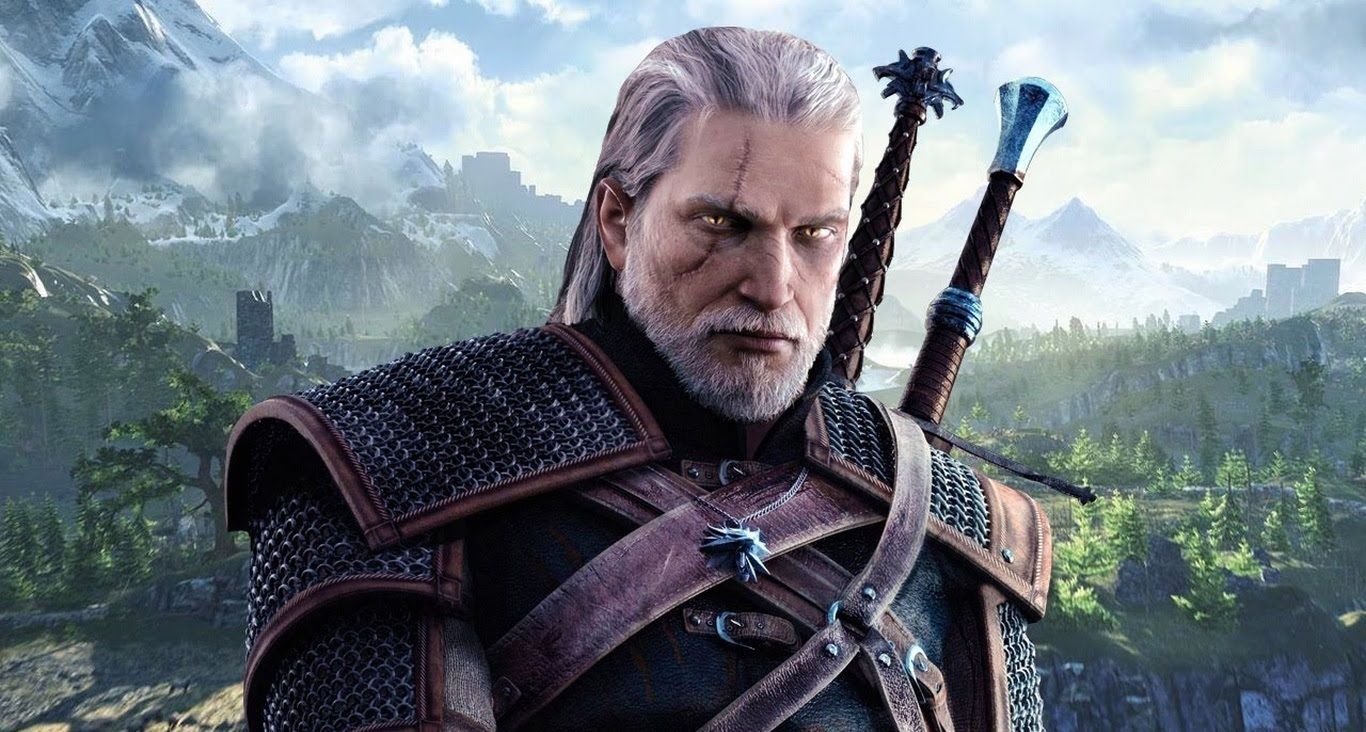
In an extraordinary intersection of medical rehabilitation, performance preservation, and cutting-edge machine learning, CD Projekt Red has revealed that it is utilizing neural voice-to-voice transformation to restore the voice of Geralt of Rivia in the upcoming expansion The Witcher 3: Wild Hunt – Songs of the Past. The studio is collaborating with Ukrainian speech-synthesis pioneer Respeecher to retune the vocal delivery of veteran Polish actor Jacek Rozenek, whose natural speaking voice was permanently altered following a life-threatening stroke in 2019. Rather than replacing the beloved performer or resorting to fully generative text-to-speech models that displace human labor, the Polish developer has built an assistive pipeline where Rozenek personally records every line in the booth, with proprietary deep learning models restoring the harmonic brightness, vocal weight, and timbre he delivered more than a decade ago.
The technical and narrative challenge arose directly from the chronological setting of Songs of the Past. Co-developed with Fool's Theory and slated for a 2027 release across PC, PlayStation 5, Xbox Series X/S, and Nintendo Switch 2, the expansion weaves new adventures directly into the mid-campaign timeline of the 2015 masterwork. In an interactive role-playing game where ambient dialogue, combat shouts, and tavern banter are dynamically stitched alongside legacy audio, sonic consistency is paramount. While Rozenek undertook an arduous, heroic recovery following his 2019 cerebral stroke—graduating from total speechlessness to delivering a handful of supplemental lines for the 2022 next-gen update—the physiological trauma left his baseline voice noticeably lower, raspy, and gravelly. In blind testing, jumping between the 2015 base recordings and unedited 2026 takes produced a jarring auditory dissonance that threatened player immersion.
Faced with this acoustic barrier, CD Projekt Red’s localization division firmly rejected the conventional industry playbook. As localization producer Mikołaj Szwed explained to Stephen Totilo's Game File, recasting Geralt with a younger Polish double was deemed culturally unacceptable given Rozenek’s foundational role in defining the White Wolf across three mainline titles and two massive expansions. Simultaneously, the studio refused to generate dialogue from whole cloth using algorithmic text-to-speech engines. Instead, the production team reached out to Respeecher to establish a voice-conversion architecture built entirely upon informed consent and human-driven performance.
The acoustic engineering behind this restorative process is exceptionally rigorous. Respeecher trained a bespoke voice-conversion model using CD Projekt Red’s master archive of over 10,000 clean, dry dialogue lines recorded by Rozenek during the original 2014-2015 production of Wild Hunt. During recording sessions for Songs of the Past, Rozenek performs every single quest dialogue, sigh, and battle grunt himself, retaining complete ownership of dramatic pacing, micro-cadence, emotional inflection, and breath control. Respeecher’s neural network then acts as a dynamic spectral filter: it maps Rozenek’s contemporary phonetic inputs and pitch trajectories onto the acoustic characteristics of his 2014 vocal profile, effectively removing the physical consequences of the stroke while preserving 100% of his theatrical intent.
According to synthetic speech artist Dmytro Vasylets, the technical hurdles extended far beyond simple pitch shifting. The real engineering trial lay in capturing Rozenek's full emotional dynamic range—navigating whispered half-tones, furious battle cries, subtle ironic quips, and guttural groans without introducing synthetic phase artifacts or metallic high-frequency ringing that often plague neural audio synthesis. The team spent dozens of studio hours refining loss functions, isolating clean spectral features, and manually tuning phoneme boundaries alongside CD Projekt’s sound designers to ensure the final output felt completely indistinguishable from the studio's 2015 acoustic footprint.
For Rozenek, the initiative represents an artistic lifeline and a profound validation of his craft. The actor stated that returning to Geralt felt entirely natural due to his intimate connection with the character, noting that the only obstacle was the physiological shift in his vocal cords. He embraced the machine learning intervention wholeheartedly, expressing complete trust in the studio and stating that the sole objective was ensuring Geralt sounds exactly as audiences remembered him twelve years ago.
This nuanced implementation provides a vital case study at a moment when artificial intelligence in voice acting remains one of the most contentious battlegrounds in entertainment. Amid prolonged labor disputes, such as the SAG-AFTRA interactive media video game strikes over unconsented digital cloning and corporate IP exploitation, CD Projekt Red’s framework delineates a crucial ethical boundary between displacive AI and restorative AI. Here, machine learning is deployed not to eliminate a performer from the payroll, but as an adaptive prosthetic that allows a disabled artist to overcome severe medical trauma and continue leading a multi-million-dollar franchise.
CD Projekt Red has been careful to circumscribe the scope of the project, emphasizing that it constitutes an exceptional medical accommodation rather than a permanent studio-wide transition to algorithmic voice dubbing. Mikołaj Szwed explicitly noted that the studio has no plans to deploy AI modification on Doug Cockle, who voices Geralt in the English localization, as Cockle's natural vocal progression remains aligned with the studio's needs. Furthermore, CDPR confirmed that in prospective future Witcher entries—such as the forthcoming Project Polaris or games set later in the Continental chronology—natural biological aging will be embraced as part of character development rather than masked with digital restoration.
The precedent recalls CD Projekt Red’s prior collaboration with Respeecher during the development of Cyberpunk 2077: Phantom Liberty, where the studio secured the explicit blessing of the late Miłogost Reczek’s family to synthesize his performance as Viktor Vektor following the actor’s passing in 2021. However, the Rozenek collaboration marks an even more significant milestone: an active, living performer working hand-in-hand with neural networks to reclaim his own voice. As veteran performers like Stephen Russell recently reflected when returning to Garrett for the Thief: The Dark Project remaster, the human vocal instrument inevitably changes over decades. By demonstrating how ethical deep learning can serve human artists rather than supplant them, CD Projekt Red and Respeecher have set a benchmark for how the video game industry can navigate the generative era with conscience, technical rigor, and artistic dignity.
~Gaming ~TheWitcher ~CDProjektRed ~VoiceActing ~ArtificialIntelligence