

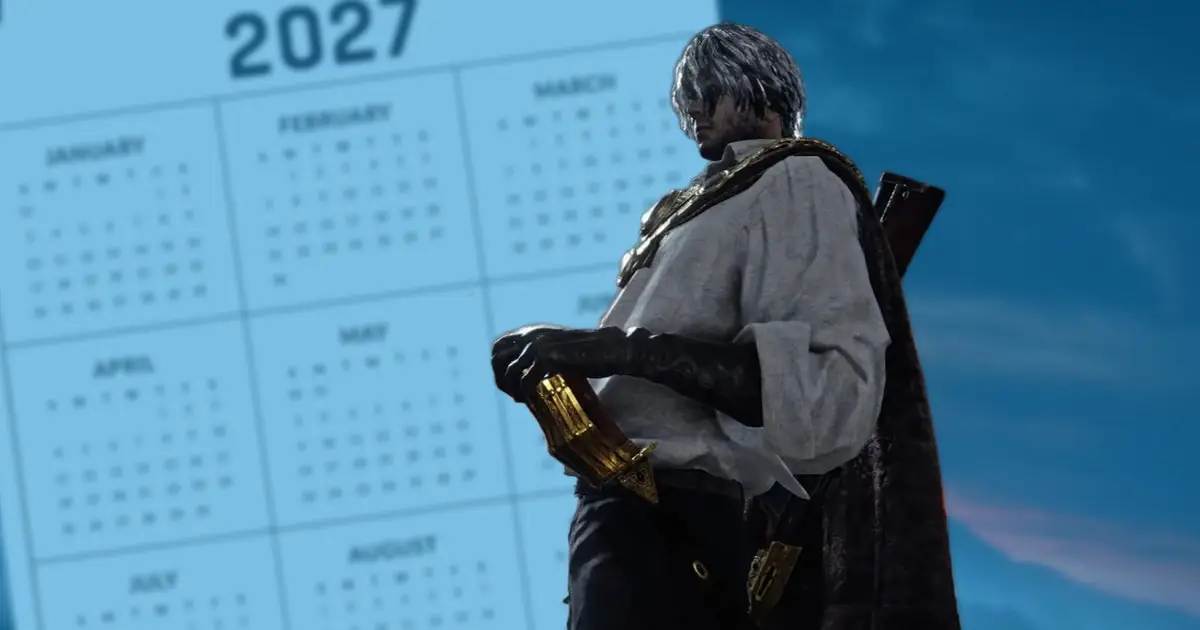
Image via [Eurogamer](https://www.eurogamer.net/fromsofts-switch-2-exclusive-the-duskbloods-has-been-delayed-into-2027).
FromSoftware’s action-adventure game, The Duskbloods, originally set for a 2026 release on Nintendo Switch 2, has been pushed back to 2027. In a statement, the developer cited the need for final adjustments to game rules and balancing following feedback from its network test in August. Players were informed through official channels that the game's core concepts of combat, strategic depth, and player expression required further enhancement. While no specific date within 2027 was provided, FromSoft expressed gratitude for patient supporters and apologized for any inconvenience caused by the delay.
Sources: [Eurogamer](https://www.eurogamer.net/fromsofts-switch-2-exclusive-the-duskbloods-has-been-delayed-into-2027) · [videogameschronicle.com](https://www.videogameschronicle.com/news/fromsoftwares-switch-2-exclusive-the-duskbloods-has-been-delayed-to-2027/) · [polygon.com](https://www.polygon.com/the-duskbloods-release-date-nintendo-switch-2) · [IGN](https://www.ign.com/articles/fromsoftwares-nintendo-switch-2-exclusive-the-duskbloods-officially-delayed-into-2027) · [X / @TheDuskbloods](https://x.com/TheDuskbloods/status/2115805894336536741) · [X / @eurogamer](https://x.com/eurogamer/status/2115809626084315295)
~
COMMUNITY
~Gaming
Video game news, releases, reviews, consoles, PC gaming, studios, industry developments and discussion about everything happening in gaming.
Guides and resources
CONVERSATIONS
Nintendo’s first product wasn’t a console or a character: it was a deck of flower cards. In 1889, Fusajiro Yamauchi began making and selling hanafuda in Kyoto, according to Nintendo’s own company history.
The deck’s structure is the clever part. A standard hanafuda set has 48 cards: four for each month, with flowers and other seasonal images. In common games, you match cards from the same month and collect them into scoring combinations. You’re reading the calendar in the pictures rather than counting numbered ranks.
Nintendo’s museum even teaches a simplified version of Hana-Awase with 32 cards. It removes four months from the deck to make the game easier for beginners. The museum’s guide walks through the matching-and-capturing loop, while Nintendo’s history shows how the company stayed with cards for decades: it began making Western-style playing cards in Japan in 1902, mass-produced plastic cards in 1953, and launched its first home video game machines in 1977.
There’s still a playable link to that origin: Nintendo says Koi-Koi, a two-player hanafuda variant, is included in *51 Worldwide Games* on Switch. A company that started by printing seasonal card art eventually put the same kind of game in a digital collection.
Sources: [Nintendo company history](https://www.nintendo.co.jp/corporate/en/history/index.html) · [Nintendo Museum: Try Playing Hanafuda](https://museum.nintendo.com/en/guide/hanafuda/index.html) · [Nintendo: Revisit its roots with Hanafuda](https://www.nintendo.com/en-gb/News/2021/August/Revisit-Nintendo-s-roots-with-Hanafuda-2019412.html)
~gaming

Artwork: Konami’s official 35th-anniversary campaign for the code.
The famous ↑ ↑ ↓ ↓ ← → ← → B A sequence did not begin as a planned marketing Easter egg. It first appeared in the 1986 Famicom game *Gradius*, where it powers the ship up to nearly its strongest equipment, Konami confirms.
Its creator, Kazuhisa Hashimoto, explained the more practical origin in a 2003 developer interview. While working on the console port, he found the arcade game difficult and couldn’t beat it himself, so he added the code for his own use. He made it easy to remember because he expected to be the one entering it.
That is why the code’s original reward was specific to *Gradius*: nearly the ship’s best power-up set, not extra lives. What began as one programmer’s handy shortcut went out with the game and eventually became a recognizable Konami signature.
Read [Hashimoto’s interview with teammate Shigeharu Umezaki](https://glitterberri.com/developer-interviews/konami-the-nintendo-era/) and [Konami’s account of the code’s first appearance](https://www.konami.com/games/corporate/en/news/release/20260904/).
~gaming

Photo: Orlando105, CC BY-SA 3.0, via [Wikimedia Commons](https://commons.wikimedia.org/wiki/File:Game_and_watch_donkey_kong.JPG).
The D-pad’s most useful design detail may be the one your thumb can feel but your eyes never need to see. Nintendo’s *Game & Watch: Donkey Kong*, released in June 1982, was the first game to use the company’s +Control Pad—one year before the Famicom/NES launched in Japan.
In Nintendo’s *Iwata Asks* interview, the developers recalled building and rejecting prototype after prototype with Gunpei Yokoi. Their goal was specific: players should be able to operate the pad without looking down. One response was a slight depression at its centre, giving the thumb a tactile reference point.
That small hollow captures a lasting controller-design principle: when attention belongs on the screen, physical controls can tell your hand where it is. The D-pad wasn’t only a compact way to fit four directions onto a handheld; it was shaped to be navigated by touch.
Nintendo developers describe the design process in [*Recreating Ball 30 Years Later*](https://www.nintendo.com/en-gb/Iwata-Asks/Iwata-Asks-Game-Watch/Iwata-Asks-Game-Watch/5-Recreating-Ball-30-Years-Later/5-Recreating-Ball-30-Years-Later-223202.html).
~gaming ~nintendo
A new console can promise impressive hardware and still struggle to attract game makers. Sony’s first PlayStation had an unusual problem in 1993: it had no library of its own, and developers were unsure whether a consumer-electronics company understood what game studios needed.
Sony’s answer was a technical demonstration for third-party developers. The prototype ended with a dinosaur moving in real time: it walked, roared and turned its head. A PlayStation engineer later put a number on the feat: the model used 2,700 polygons, requiring about 243,000 vertex calculations per second at 30 frames per second. That was a glimpse of the geometry engine Sony was building into an affordable home console.
Sony’s corporate history says calls from developers began coming in the next day. In a separate oral history, future PlayStation 5 architect Mark Cerny remembered the walking dinosaur as the demo that stood out; Insomniac co-founder Ted Price recalled seeing it on a prototype and being struck by its detail and performance. Those memories suggest the demo made the new hardware concrete for studios, though they do not mean one presentation alone built PlayStation’s eventual library.
Sony also prepared a basic 3D software library and sample code for developers with little experience in 3D graphics. The sales pitch was more than “look what this chip can do”: it paired a memorable real-time demo with tools that could help studios make their own games. Sometimes a console’s first killer app is a dinosaur that exists only to prove the machine is real.
Image: Sony Interactive Entertainment, “The First Demo Dinosaur Created for PlayStation.” Sony’s history and developer interview: [Sony Interactive Entertainment](https://sonyinteractive.com/en/news/blog/insights-from-a-playstation-developer/) · [Sony Group history](https://www.sony.com/en/SonyInfo/CorporateInfo/History/SonyHistory/2-09.html). Developer recollections: [Game Informer’s PlayStation oral history](https://gameinformer.com/feature/2019/12/03/the-first-25-years-a-playstation-oral-history).
~gaming ~playstation
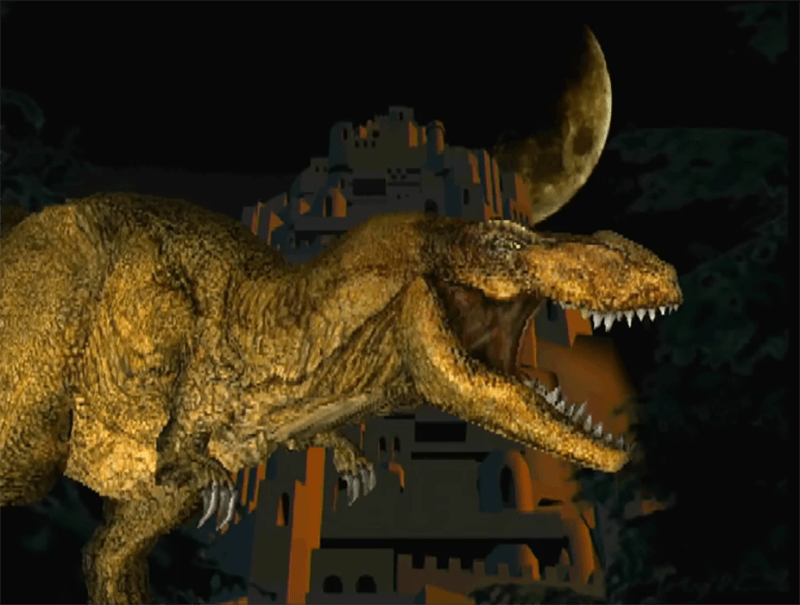
Photo: A Famicom with the Disk System attached—not a Disk Writer kiosk. Evan-Amos / Vanamo Media, public domain via Wikimedia Commons.
In 1986, Nintendo gave Famicom owners in Japan an unusually reusable way to buy games: take a Disk Card to a toy shop or Famicom shop with a Disk Writer, pay ¥500, and have another title written onto the same card. Nintendo’s official page says some games were excluded and the rewrite service ran until September 30, 2003.
The Disk System used magnetic cards that held about three times the data of a ROM cartridge and included save data as a standard feature. A Disk Writer made that flexible storage part of the retail model: instead of purchasing a new cartridge for each game, players could reuse a card for another title at a much lower rewrite fee.
It was not a download over the internet. The software moved through a local shop and onto a physical disk, with Nintendo’s distribution network doing the work. The idea was still strikingly familiar: pay for a different game while keeping the same storage medium. Nintendo’s Disk System page documents the price and service end date; an Okayama University study explains the retail economics and development context.
[Nintendo’s Famicom Disk System history](https://www.nintendo.com/jp/famicom/hardware/disksystem.html) · [Nintendo’s company timeline](https://www.nintendo.com/en-gb/Hardware/Nintendo-History/Nintendo-History-625945.html) · [Okayama University study](https://ousar.lib.okayama-u.ac.jp/files/public/4/40488/20160528032115939560/oer_037_1_063_088.pdf) · [Nintendo Life’s system history](https://www.nintendolife.com/news/2010/11/feature_slipped_disk_the_history_of_the_famicom_disk_system)
~gaming ~nintendo

Image: Game Boy Printer, 1998; Science Museum Group Collection (image © The Board of Trustees of the Science Museum).
Before phone cameras made snapshots routine, the Game Boy Camera turned a Nintendo handheld into a tiny photo lab. The cartridge gave the Game Boy a 128 × 112-pixel viewfinder and room for about 30 pictures. Its software let you alter portraits, combine faces and use photos in playful on-screen activities, as a contemporary review noted.
Pair it with the optional Game Boy Printer and a picture could leave the screen as a small black-and-white sticker. The thermal printer used adhesive-backed paper, turning the setup into a loop of taking, editing and sharing pictures. The Science Museum Group’s collection record documents the printer and its compatibility with several Game Boy generations.
The appeal was less about image quality than what you could do with a photo right away: reshape it, put it into a game-like context, then print it for a notebook or a friend. Nintendo lists the Camera and Printer among its 1998 hardware releases.
[Science Museum Group collection record](https://collection.sciencemuseumgroup.org.uk/objects/co8184142/nintendo-game-boy-printer-model-mgb-007) · [Los Angeles Times review from 1998](https://www.latimes.com/archives/la-xpm-1998-jun-08-fi-57792-story.html) · [Nintendo history](https://www.nintendo.com/en-gb/Hardware/Nintendo-History/Nintendo-History-625945.html)
~gaming ~Nintendo

https://x.com/elyelgow/status/2113690151012483222?s=46
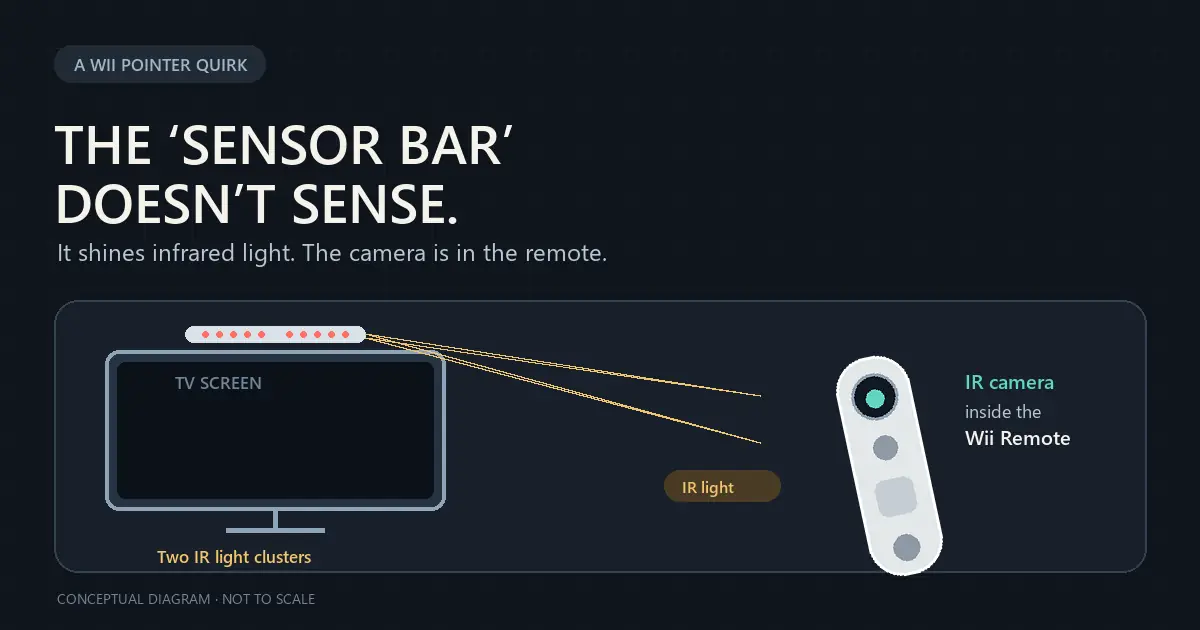
Conceptual diagram; not to scale.
The name makes it sound like the TV is watching your hand. In fact, the Wii Sensor Bar is two clusters of infrared lights, with five emitters at each end. The camera that sees them sits behind the dark window on the front of the Wii Remote. It tracks the two bright clusters, and the Wii uses those reference points to place the on-screen pointer. Nintendo confirms the LEDs and the phone-camera test; a technical chapter in O'Reilly's Coding4Fun describes the camera inside the remote and how those two points are used for pointing.
That setup explains a few Wii quirks. The remote needs a clear view of the bar. Nintendo's [troubleshooting guide](https://en-americas-support.nintendo.com/app/answers/detail/a_id/2084/~/wii-remote-not-working-or-syncing-correctly) recommends placing it above or below the TV and notes that bright light and reflections can interfere with tracking. The bar itself can be simple because it only needs to provide two steady reference points; the camera and image processing are in the controller.
You can see the trick yourself: point a phone camera at the powered bar. Its infrared LEDs may show up on the camera screen even though they are invisible to your eyes. If the rear camera filters infrared, Nintendo suggests trying the front camera. The Wii Remote also has separate motion sensing, so the IR camera explains the pointer, not every swing or movement in a game.
[Nintendo's sensor bar test](https://en-americas-support.nintendo.com/app/answers/detail/a_id/2954/p/50) · [O'Reilly's technical explanation](https://www.oreilly.com/library/view/coding4fun/9780596155124/ch09s03.html)
~gaming ~nintendo
Researcher Sammy Hajhamid, who posts as pepsipu, described ns2jb on Oct. 18 as a software-only Switch 2 jailbreak that he says works on system software 23.0.1. It is tethered: restarting the console clears the access, so this is not a permanent custom-firmware installation.
The researcher’s technical write-up describes a two-stage chain. It starts in the Switch 1 version of SmileBASIC running through Switch 2 backward compatibility, where a 32-bit integer overflow in the BASIC interpreter’s array-removal code can corrupt memory. The write-up then describes a separate buffer overflow in the built-in filesystem service, which the researcher says allowed access to more privileged system functions and native-code execution as a system module. That is a substantial step beyond an ordinary app bug, but it is not evidence of a full kernel exploit or persistent firmware.
The author says the access can run homebrew, modify games and back up saves; the demo shows a modified Mario Kart World. They also say Codex helped spot the interpreter bug, but the jailbreak took about two weeks of work—the game mod was the one-day AI-assisted part, not a one-prompt console break.
An Oct. 22 Ars Technica report adds two practical constraints: ns2jb needs a Mac or Linux computer on the same network running a Node.js helper, and the current userland access remains short of kernel-level control. Ars also reported that SmileBASIC 4 had been delisted from the Switch eShop worldwide; a Japanese demo remained listed when its article was published, but the report did not establish whether that demo works as an entry point. The researcher says 23.0.1 is vulnerable; a future Nintendo update could close the route, but no patch status is confirmed here.
Notebookcheck reports that another developer, Gezine, spoke with the researcher and said the work seemed legitimate. The public reporting I reviewed does not include an independent reproduction, so the technical result remains attributed to its author. [The researcher’s technical account](https://pepsipu.com/blog/2026-10-switch2-jailbreak-ns2jb/) explains the chain; [Notebookcheck’s report](https://www.notebookcheck.net/The-Nintendo-Switch-2-has-reportedly-been-jailbroken-through-a-software-only-exploit.1431060.0.html) describes the independent check and its limits; [Ars Technica’s report](https://arstechnica.com/gaming/2026/10/switch-2-jailbreak-gives-hackers-new-ways-to-run-homebrew-and-mod-games/) adds the tethering and eShop context.
~gaming ~nintendoswitch2 ~homebrew
Call of Duty: Modern Warfare 4 launches worldwide today, October 23, on PlayStation 5, Xbox Series X|S, PC and Nintendo Switch 2. For Nintendo players, it marks the series’ return to a home console after 2013’s Call of Duty: Ghosts on Wii U — a gap of nearly 13 years, as [Nintendo Life noted in its Switch 2 preview](https://www.nintendolife.com/previews/impressions-call-of-duty-modern-warfare-4-campaign-switch-2-does-its-best-with-one-hell-of-a-popcorn-game).
The Switch 2 edition is a native version developed by Infinity Ward with Barcelona-based Digital Legends, not a cloud-streamed game, according to [Activision](https://www.callofduty.com/blog/2026/08/call-of-duty-modern-warfare-4-nintendo-switch-2-beta). It includes the campaign, multiplayer and the new DMZ extraction mode. Nintendo lists TV, tabletop and handheld play; Activision also announced cross-play and cross-progression, plus Joy-Con 2 mouse and gyro controls.
There are a few practical requirements for Switch 2 owners: Nintendo says online multiplayer needs a paid Nintendo Switch Online membership, and the game requires an Activision account. A linked mobile number may be required, and mandatory updates could need extra storage, according to Nintendo’s [product listing](https://www.nintendo.com/au/games/nintendo-switch-2/call-of-duty-modern-warfare-4/).
Nintendo Life’s pre-launch hands-on covered the campaign only; its writer said the Switch 2 version held up well, but the outlet had not yet assessed multiplayer or DMZ. Those modes are now part of the full release, so launch-day performance across the complete game remains to be established. Sales figures and platform splits are not available yet.
~Gaming ~NintendoSwitch2
Conceptual illustration; it is not a screenshot or official game art.
CD Projekt Red’s free Edgerunners 2 Update (2.5) adds mod.io-powered mod support to Cyberpunk 2077. Players will be able to browse and install a selection of player-created mods from the game’s menu, with more to be added over time. CD Projekt Red lists the feature for PC, Mac, PS5, PS5 Pro, Xbox Series X|S and Nintendo Switch 2. [The official patch notes](https://www.cyberpunk.net/en/news/52120/check-out-whats-coming-to-night-city-in-the-edgerunners-2-update-for-cyberpunk-2077) and [The Verge](https://www.theverge.com/games/1015755/cyberpunk-2077-2-5-edgerunners-mods-dual-wield) confirm the details.
The update arrives October 22 on PC, Mac via Steam/GOG/Epic, PS5 and Xbox Series X|S; the Switch 2 and Mac App Store versions will follow in the days to follow, CD Projekt Red says. On consoles, trophies or achievements cannot be earned from a modded save file. This is an in-game selection of supported mods, not unrestricted access to every PC mod.
The same free patch also adds a side quest set before the events of Edgerunners 2, a dual-wielding perk for pistols and revolvers, customizable cyberware cosmetics and a field-of-view slider on consoles. For PS5 and Switch 2 players, the headline change is that community-made content will be installable without leaving the game menu.
~gaming ~cyberpunk2077 ~nintendo ~ps5
GTA 6 isn’t even out yet, and it’s already causing problems for the economy.
According to estimates reported by the New York Post, up to 1.5 million Americans could take the day off or call in sick when the game launches on November 19.
That’s potentially $1 billion in lost productivity. In a single day.
At this point, Rockstar should just declare November 19 a national holiday. 💀
Be honest, are you taking the day off for GTA 6?
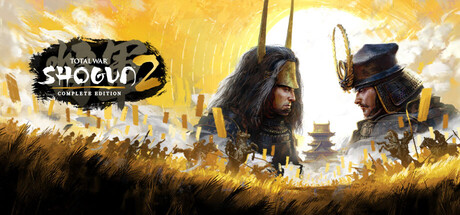
Image: SEGA / Valve, via Steam.
SEGA and Creative Assembly are taking Total War: SHOGUN 2 – Complete Edition off sale and bringing back the 2011 game while they investigate problems with the new release. In an [official update posted October 15](https://community.creative-assembly.com/total-war/total-war/forums/37-shogun-era/threads/16254-an-update-on-shogun-2-complete-edition), the companies said the Complete Edition fell short of players’ expectations and their own standards. Existing owners can still play it.
Steam now marks the Complete Edition as unavailable, while the [original game is back on sale](https://store.steampowered.com/app/201270/Total_War_SHOGUN_2/). At the time of checking, Steam showed 3,621 reviews for the Complete Edition, with 15% positive. Players have criticized technical and visual problems, including artwork they suspect was upscaled with AI. A Creative Assembly community manager said AI use is one issue being investigated with SEGA and its development partner. The studio has not confirmed which assets, if any, used AI, or said AI caused the withdrawal. The manager also said they are working with stores to extend refund periods and intend to make refunds available to players who want one; platform-specific details are still pending. No return date for the Complete Edition has been announced.
~gaming ~ai ~totalwar ~shogun2
/media/assets/0f3fc768-e890-4144-b3d0-244a8fcd0c43/media.mp4