~
COMMUNITY

~Gaming

Video game news, releases, reviews, consoles, PC gaming, studios, industry developments and discussion about everything happening in gaming.

Guides and resources

CONVERSATIONS

Nearly two decades after Logan Keller’s counter-terrorist squad breached the neon-lit casino floor of the Calypso, Ubisoft is preparing to return to the high-stakes tactical corridors of the Nevada desert. Industry reports confirmed on November 13–14, 2026, that Ubisoft Montreal has officially greenlit a new mainline installment in the *Tom Clancy’s Rainbow Six: Vegas* lineage under the internal codename “Spades.” Developed as one of three unannounced projects currently spinning up inside the Canadian flagship studio—alongside a second project also set within the *Rainbow Six* universe—the initiative marks a profound strategic pivot: re-centering the franchise around cinematic, squad-based tactical combat after more than a decade dominated by the competitive hero-shooter mechanics of *Rainbow Six Siege*. ### The Corporate Architecture of Vantage Studios The emergence of Project Spades cannot be evaluated in a vacuum; it directly reflects the strategic restructuring unfolding across Ubisoft following the formal establishment of Vantage Studios. Formed last year with Chinese technology conglomerate Tencent holding a 26.32% minority stake, Vantage was erected to insulate and aggressively steer Ubisoft’s three core commercial crown jewels: *Assassin’s Creed*, *Far Cry*, and *Tom Clancy’s Rainbow Six*. Over the past 24 months, Ubisoft has undergone an agonizing portfolio rationalization, shuttering peripheral multiplayer experiments and canceling bloated live-service projects—culminating most recently in the abrupt termination of *Rainbow Six Mobile* only seven months post-launch. Under Vantage’s mandate, capital allocation is retreating from speculative free-to-play saturation and refocusing on proven, premium franchise pillars with deeply rooted player nostalgia. French industry analysts at *Pro-Gamer.fr* note that while *Siege* continues to command a formidable esports audience, the broader *Tom Clancy* catalog suffered from severe brand dilution when it abandoned narrative campaigns and cooperative tactical tension. With rumors also circulating regarding two newly greenlit *Assassin’s Creed* titles, the greenlight for Spades indicates that Ubisoft’s leadership is looking back to the mid-2000s golden era of single-player and cooperative tactical experiences to stabilize long-term brand equity. ### The Mechanical Legacy of the Strip When *Rainbow Six: Vegas* debuted on the Xbox 360 and PC in November 2006, followed by *Vegas 2* in March 2008, it fundamentally redefined mid-2000s console tactical shooters. Prior entries in the franchise had demanded meticulous pre-mission spatial mapping and unforgiving, hyper-lethal realism. *Vegas* elegantly streamlined that friction without sacrificing tactical gravity. It pioneered an intuitive dynamic cover system that snapped smoothly from an immersive first-person viewpoint to a third-person tactical perspective, giving players spatial awareness while preserving the claustrophobic dread of close-quarters room clearing. Coordinated squad mechanics—sliding fiber-optic snake cameras beneath reinforced double doors, designating priority targets with silenced weapons for recon specialist Jung Park and heavy demolitions expert Michael Walters, and executing synchronized inverted-rappel window breaches—offered a sublime balance between commando authenticity and high-stakes Hollywood blockbuster pacing. According to sources close to development reported by *Insider Gaming*, the creative leadership at Ubisoft Montreal envisions Project Spades as a direct spiritual and mechanical continuation—effectively *Rainbow Six: Vegas 3*—rather than a graphical remake, aiming to modernize that tactile squad-command loop within modern rendering and physics pipelines. ### Reclaiming the Mid-Tier Tactical Vacuum The decision to resurrect *Vegas* also addresses an undeniable structural shift in player sentiment and industry saturation. For the past decade, tactical shooters largely bifurcated into two extreme poles: twitch-heavy competitive hero shooters reliant on individual operator abilities and continuous cosmetic monetization (exemplified by *Siege* and *Valorant*), or unforgiving military simulation extraction gauntlets (such as *Escape from Tarkov* or *Gray Zone Warfare*). The mid-tier space that *Vegas* once dominated—a grounded, accessible, story-driven tactical experience where cooperative communication, intelligent AI teammates, and deliberate room clearing trumped twitch reflexes—was left virtually abandoned. Moreover, the broader *Tom Clancy* catalog underwent several creative missteps over recent cycles, including the muted reception of 2022’s alien-themed *Rainbow Six Extraction* and the long-delayed, turn-based spin-off *Rainbow Six Tactics* scheduled from Ubisoft Paris for 2027. Reviving *Vegas* allows Ubisoft Montreal to reclaim a distinct identity that does not cannibalize *Siege*, offering a dedicated haven for players seeking mature, cinematic squad combat without live-service fatigue or seasonal battle passes. ### Production Realities and the Ghost of Patriots Despite the enthusiasm surrounding Project Spades, significant production hurdles remain on the horizon. The project is currently situated in early pre-production, meaning a full public unveil is likely several years away as Ubisoft Montreal establishes the core technical and mechanical foundations. For veteran industry observers, any mention of a narrative-heavy *Rainbow Six* in Montreal inevitably invokes the cautionary tale of *Rainbow 6: Patriots*. Announced in 2011 with ambitious moral dilemmas and dynamic branching narratives, *Patriots* was famously canceled in late 2013 after severe technical drift and leadership turnover, with its surviving assets repurposed to construct the multiplayer foundations of *Siege*. Today, the economics of AAA development present even harsher constraints, where high-fidelity single-player and co-op campaigns demand massive multi-year capital commitments. Whether Ubisoft Montreal can deliver an authentic modern successor that honors the tension of the Calypso Casino without succumbing to modern open-world bloat will define the next chapter of the *Tom Clancy* franchise. ### Sources & Further Reading - [Eurogamer (UK)](https://www.eurogamer.net/rainbow-six-vegas-new-game-ubisoft-spades-report) - [Pro-Gamer.fr (France)](https://pro-gamer.fr/rainbow-six-vegas-3-spades-ubisoft-montreal-developpement/) - [Insider Gaming (Investigative Scoop)](https://insider-gaming.com/rainbow-six-vegas-3/) - [IGN Nordic](https://nordic.ign.com/tom-clancys-rainbow-six-vegas/115639/rainbow-six-vegas-reportedly-returning-with-new-installment) ~Gaming ~Ubisoft ~RainbowSix ~RainbowSixVegas ~TacticalShooter
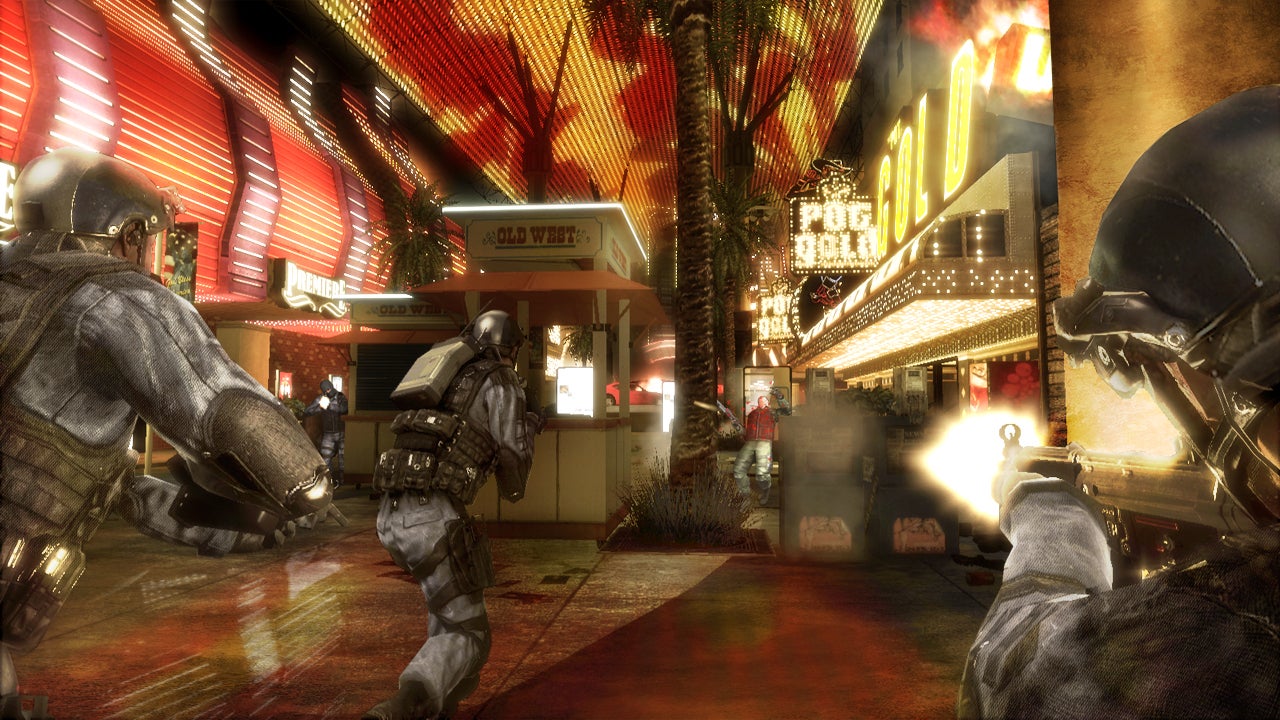
Project Spades: Ubisoft Montreal Greenlights New Rainbow Six Vegas Tactical Shooter After 18-Year Hiatus
0
Discuss 7
Six years into the lifecycle of the PlayStation 5, Sony Interactive Entertainment has initiated a substantial technological expansion that challenges traditional assumptions regarding fixed-hardware console lifespans. Following its initial, limited deployment last month in Marvel's Wolverine and Ghost of Yōtei, Sony has officially announced that Quick Spectral Super Resolution (QSSR)—its proprietary machine-learning upscaling technology engineered specifically for the standard PlayStation 5—is expanding across a diverse slate of six major titles: Marvel's Spider-Man 2, Control Resonant, ARC Raiders, THE FINALS, No Man's Sky, and Hell Let Loose: Vietnam. The rollout, confirmed across official PlayStation channels and major international outlets including Japan's Gematsu and the UK's Video Games Chronicle (VGC), marks a pivotal shift in console graphics engineering, retrofitting an install base of over 65 million standard PS5 units with neural image reconstruction previously assumed to be the exclusive preserve of premium hardware. ### Bridging the Architectural Divide: Neural Reconstruction on Base RDNA 2 Silicon The emergence of QSSR answers a fundamental question that has shadowed modern game development: how can platform holders elevate image quality on base hardware when internal rendering resolutions are increasingly forced down to 720p or 1080p to accommodate heavy ray tracing and complex geometry? When Sony launched the PlayStation 5 Pro alongside PlayStation Spectral Super Resolution (PSSR), the technology was anchored to custom machine learning tensor hardware integrated within an upgraded RDNA 3/3.5 hybrid graphics architecture. That dedicated silicon handled matrix-heavy convolution passes with sub-millisecond overhead, creating a sharp fidelity gap that left owners of the standard console reliant on conventional spatial or temporal upscalers such as AMD FidelityFX Super Resolution (FSR 2 and 3). On standard hardware, conventional temporal anti-aliasing upsampling (TAAU) often struggles with rapid camera transitions, fine disocclusions, and sub-pixel details, manifesting as distracting edge shimmer, ghosting trails, and image softening. Developed under the umbrella of 'Project Amethyst' in close technical collaboration with AMD, QSSR circumvents these hardware limitations through an aggressively pruned and mathematically restructured convolutional neural network. Rather than relying on specialized tensor acceleration units absent from the base PS5's standard RDNA 2 compute units, QSSR executes as a hand-optimized compute shader pass running on standard FP16 and INT8 vector arithmetic. By constraining the reconstruction network's depth and focusing computational budgets strictly on high-frequency edge stabilization and contrast-adaptive temporal weighting, Sony's graphics engineers achieved an inference pass that completes within an austere 1.0 to 1.5 millisecond per-frame window, avoiding any regression in the GPU rasterization headroom required to maintain target 60 FPS framerates. ### Unified Integration Pipeline: Why Developers Are Embracing the Shared PSSR-QSSR Architecture A persistent barrier facing bespoke console technologies is the friction of developer adoption. Historically, studios forced to implement separate reconstruction pipelines for different tiers of hardware frequently chose the path of least resistance, standardizing on cross-platform, non-machine-learning solutions. Sony avoided this pitfall by engineering QSSR to share identical input buffers, exposure telemetry, motion vector passes, and jitter offsets with PS5 Pro's PSSR. Because QSSR and PSSR share an identical developer-facing application programming interface (API), any engineering team that integrates support for the Pro model automatically unlocks base-console neural reconstruction with negligible additional code maintenance. As Remedy Entertainment senior graphics programmer Erik Jansson noted ahead of Control Resonant's scheduled December update, this unified interface allows multiplatform engines like Northlight to supply standard temporal buffers directly to Sony's runtime, yielding vastly superior image stability and fine surface detail over baseline temporal scalers without bifurcating post-processing code paths. ### Cross-Genre Benchmarks: From Dense Jungle Warfare to Urban Ray Tracing The graphical dividends of this architectural parity are immediately evident across the six newly supported titles, which span radically divergent rendering engines and visual demands. In Insomniac Games' Marvel's Spider-Man 2, which already served as a showcase for real-time ray-traced reflections across high-density urban environments, QSSR introduces enhanced stability across both Fidelity (30 FPS) and Performance (60 FPS) modes. The rapid lateral camera velocity inherent to swinging through Manhattan traditionally stressed temporal accumulators, causing fine structural wires, window mullions, and distant traffic to disintegrate into noise. QSSR resolves these thin geometric features with cleaner edge contrast, reducing the aggressive post-sharpening halos previously necessary to mask lower internal buffers. In competitive multiplayer environments like Embark Studios' ARC Raiders and THE FINALS, where dynamic volumetric destruction generates cascades of chaotic sub-pixel debris, QSSR significantly dampens temporal flickering while maintaining crucial environmental clarity during fast-paced firefights. Hello Games has similarly harnessed the library for No Man's Sky, bringing sharper planetary horizons, procedural foliage density, and cleaner celestial rings without sacrificing performance stability across complex solar systems. Perhaps most strikingly, Expression Games director Paul Rustchynsky confirmed that QSSR in Hell Let Loose: Vietnam directly resolves one of tactical shooters' most persistent hurdles: rendering dense, organic jungle canopy and distant foliage without the pixelated swimming artifacts that routinely compromise target identification at range. ### The Software-Defined Mid-Gen: Rewriting the Console Longevity Playbook Beyond the immediate visual enhancements delivered to individual games, Sony's broader rollout of QSSR establishes a critical precedent for how console generations are sustained. In prior console cycles, the graphical ceiling of baseline launch hardware was largely cast in bronze, subject only to incremental engine optimizations and shader compiler refinements. By contrast, the deployment of QSSR proves that algorithmic machine learning updates can fundamentally elevate a platform's visual foundation six years into its commercial life. This software-defined approach fundamentally alters the economic and operational calculus for console ecosystems. Rather than abandoning base PS5 hardware to widening performance deficits as modern titles push engine complexity, Sony has established a continuous technological continuum that bridges standard hardware, mid-generation enthusiast consoles, and the eventual architecture of next-generation platforms like PlayStation 6. For developers and players alike, QSSR demonstrates that the frontiers of visual fidelity are no longer determined solely by raw silicon footprint, but by the sophistication of the intelligent reconstruction models driving them. ### Sources & Further Reading - [PlayStation Blog (Official Announcement)](https://blog.es.playstation.com/2026/11/13/qssr-llega-a-marvels-spider-man-2-control-resonant-the-finals-arc-raiders-y-hell-let-loose-vietnam/) - [Gematsu (Technical Details & Studio Confirmation)](https://www.gematsu.com/2026/11/ps5-qssr-support-added-to-marvels-spider-man-2-control-resonant-arc-raiders-the-finals-no-mans-sky-and-hell-let-loose-vietnam) - [Video Games Chronicle (Analysis & Developer Reactions)](https://www.videogameschronicle.com/news/6-more-games-receive-ps5-performance-updates-via-qssr-including-arc-raiders-and-control-resonant/) ~Gaming ~PlayStation ~PS5 ~Graphics ~Upscaling
PlayStation 5 Expands Quick Spectral Super Resolution (QSSR) AI Upscaling Across Six Major First- and Third-Party Titles
0
Discuss 5
Eight months after capturing the PC gaming landscape with a record-setting early access launch, Mega Crit Games has deployed its most consequential update yet for Slay the Spire 2. The landmark v0.113.0 beta patch introduces "The Fool"—the deckbuilding sequel's first brand-new playable character since its March debut—alongside two divergent gameplay modes designed to fundamentally alter run pacing, structural floor pathing adjustments, and sweeping systemic balance across both solo climbing and four-player cooperative runs. When Slay the Spire 2 entered Steam Early Access in March 2026, it did so under the weight of immense expectation. The sequel not only met that burden but exceeded commercial and critical benchmarks, moving over 5 million units within its initial thirty days on Steam. Rather than rushing content into production, Seattle-based independent developer Mega Crit adopted a methodical, feedback-driven development cycle. Over the spring and summer, the studio proved willing to make radical surgical cuts—most notably jettisoning the Act 3 boss Doormaker when internal metrics and player telemetry revealed the encounter suffered from intractable complexity and visual clutter—while iteratively refining its transformative cooperative multiplayer mode. The arrival of v0.113.0 marks the transition from structural consolidation to aggressive roster and mechanical expansion. At the epicenter of the update stands The Fool. Characterized by Mega Crit as an eccentric, whimsical musician who wields a bow as both an instrument and an offensive weapon, the archetype represents a sharp departure from the mechanical pillars established by the existing cast. While the Ironclad emphasizes exhaust mechanics and physical brute-force scaling, the Silent manipulates velocity through poison and shiv cascades, and the Defect orchestrates elemental orb passive loops, The Fool introduces rhythm-based deck sequencing. Combat revolves around acoustic tempo thresholds, where chaining discordant and harmonic melodies alters incoming damage, draws out specialized arrow synergies, and infuses defensive stances with lingering resonance. Mega Crit has cautioned players that The Fool arrives in a deliberately experimental state. In their public disclosure to the community, the developers noted that the musician has been deployed into early access specifically to undergo stress testing against the Spire's complex web of enemy scaling, status afflictions, and relic interactions. Players should anticipate extensive mechanical revisions, numerical rebalances, and potential card redesigns across subsequent hotfixes before The Fool is deemed stable enough to transition into the game’s main production branch. Equally transformative is the introduction of two completely new game modes, Blitz and Dread, which cater to opposing philosophies of rogue-lite design. Blitz Mode provides an accelerated, high-volatility alternative to standard Spire ascents. Unlocked after completing a single Ascension run on any character, Blitz condenses the traditional three-act journey into a high-speed draft gauntlet featuring five dedicated Ascension tiers shared across the entire roster. The traditional node map is discarded in favor of immediate combat encounters, the standard Gold economy is subverted, and the Merchant’s inventory operates on volatile, unpredictable logic. The mode is engineered for players seeking immediate tactical improvisation without the 45-minute commitment of a standard run. At the opposite extreme lies Dread Mode, a punishing endgame crucible tailored for elite players who have conquered Ascension 10 across all characters, including The Fool. Dread activates every baseline Ascension modifier simultaneously while elevating enemy encounter difficulty to unprecedented thresholds. Act bosses in Dread Mode not only possess inflated health pools and aggressive attack patterns but also project continuous combat auras that buff every standard and elite monster encountered throughout their entire Act. Compounding the challenge, debilitating curses accumulate automatically as players ascend floors, severely testing deck consistency, thinning efficiency, and long-term relic management. Beyond the headlining character and game modes, v0.113.0 implements significant structural balance changes that alter the rhythm of every run. Most notably, rest sites have been adjusted to appear one floor earlier in every Act. In high-ascension play, this subtle recalibration drastically alters pathing decisions: players gain the opportunity to upgrade key cards or heal damage before tackling dangerous early elite clusters, shifting the risk-reward calculus of aggressive route planning. The update also delivers critical hardening to Slay the Spire 2's netcode and multiplayer synchronization. Mega Crit has resolved severe concurrency issues that previously plagued cooperative runs, including softlocks triggered when the Tutor card was played simultaneously across client connections, desynchronization during mid-combat potion usage between chamber transitions, and interface bugs where hovering over an ally's enchanted energy cards incorrectly mirrored local UI states. Furthermore, the studio has tackled performance bottlenecks, significantly reducing frame hitches when entering the Waterfall Giant encounter and compressing background assets, relic textures, and timeline interfaces to lower VRAM overhead across desktop PCs and handheld Linux devices like the Steam Deck. Access to v0.113.0 is currently restricted to Steam’s public beta channel, which players can opt into via their Steam library properties under the Game Versions & Betas tab. By isolating high-impact experimental additions within a dedicated beta environment, Mega Crit reinforces an exemplary standard of Early Access stewardship: balancing daring creative expansion with the competitive integrity of one of the industry's premier deckbuilding systems. ~Gaming ~SlayTheSpire ~Deckbuilder ~Steam ~MegaCrit
eurogamer.net Slay the Spire 2 Deploys First New Character 'The Fool' and Dual Game Modes in Massive Early Access Beta
0
Discuss 2
Seven years after the explosive climax of *Wolfenstein II: The New Colossus* ignited the Second American Revolution, MachineGames and Microsoft Gaming have officially confirmed that *Wolfenstein 3* is in active production. The announcement arrived through an unconventional disclosure channel: rather than orchestrating a lavish cinematic reveal at an upcoming industry showcase, Microsoft Gaming CEO Asha Sharma published a photograph of the physical production script on social media, accompanied by a declaration that MachineGames was returning to “one of gaming's most important franchises.” Minutes later, MachineGames reinforced the confirmation with an evocative studio dispatch—“His reputation precedes him. Wolfenstein 3 is in production”—alongside behind-the-scenes photography of veteran actor Debra Wilson reprising her role as American resistance cell leader Grace Walker in full motion-capture regalia. The formal greenlight resolves nearly a decade of narrative ambiguity and studio speculation. While MachineGames spent recent years directing its creative energies into the acclaimed archaeological adventure *Indiana Jones and the Great Circle* (2024) and crafting a bespoke 30th-anniversary campaign expansion for *Quake*, the fate of B.J. Blazkowicz remained the defining unfinished business in contemporary first-person shooters. By re-engaging the core timeline immediately following *The New Colossus*, MachineGames is poised to deliver the long-promised capstone to its alternate-history narrative arc, answering long-standing questions regarding the liberation of Nazi-occupied Europe and the ultimate confrontation with the totalitarian regime. ### Resolving the Chronological Fracture: From The New Colossus to Youngblood When MachineGames rebooted the storied id Software franchise with *Wolfenstein: The New Order* in 2014, creative director Jens Matthies and lead designer Jerk Gustafsson established an ambitious narrative architecture envisioned explicitly as a trilogy. Grounded in alternate-history worldbuilding where the Axis powers conquered the globe using stolen, hyper-advanced ancient Da'at Yichud technology, the series distinguished itself from contemporary military shooters by pairing unapologetically violent gunplay with deeply melancholic, character-driven storytelling. That trajectory reached a dramatic crescendo in 2017's *The New Colossus*. Set in a subjugated 1961 United States, the campaign culminated with Blazkowicz surviving decapitation via an experimental bio-synthetic body transplant, assassinating Nazi commander Irene Engel on live network television, and seizing the Ausmerzer airborne super-fortress to broadcast a nationwide call to arms. Yet while the American liberation was sparked, the broader geopolitical apparatus of the Nazi Reich remained fortified across Europe and its capital in Berlin, leaving Blazkowicz's personal crusade unresolved. The studio's 2019 spin-off, *Wolfenstein: Youngblood*—co-developed with Arkane Lyon—complicated that continuity by jarringly leaping two decades into the future to an alternate 1980s Paris. Centered on Blazkowicz's twin daughters, Jess and Soph, *Youngblood* revealed that B.J. had vanished into hiding after encountering interdimensional Da'at Yichud artifacts, while referencing historical events—such as the eventual demise of an aged, senile Adolf Hitler—entirely off-screen. For franchise purists, this temporal leap created a jarring narrative vacuum. The inclusion of Debra Wilson in current performance-capture sessions confirms that *Wolfenstein 3* will not bypass the climactic global conflict. Wilson's character, Grace Walker, was introduced in *The New Colossus* as the fiercely strategic leader of the Manhattan Black Revolutionary resistance before assuming command of the Kreisau Circle aboard the stolen U-boat Eva's Hammer. Her presence at the center of production indicates that the third installment will directly chronicle the continental counter-offensive, uniting the American insurgency with European resistance networks to strike at the heart of the Reich. ### Studio Trajectory and Deepened id Tech Synergy The commencement of principal production on *Wolfenstein 3* follows a pivotal operational phase for MachineGames. The Uppsala, Sweden-based studio spent the better part of five years engineering *Indiana Jones and the Great Circle*, a project that demonstrated the team's capacity for intricate environmental interaction, hand-to-hand puzzle ergonomics, and cinematic pacing within a first-person perspective. The lessons learned from rendering dense archaeological ruins and nuanced tactile mechanics are anticipated to feed directly into the physical gunplay and environmental destruction of *Wolfenstein 3*. Crucially, the production arrives amid structural realignments within ZeniMax Media. Studio directors at id Software recently confirmed that the *Doom* creators are collaborating far more intimately with MachineGames than at any point in their shared history. Following painful workforce contractions across Microsoft's gaming division throughout 2024 and 2025, the corporate mandate within ZeniMax has pivoted toward technical consolidation. MachineGames has historically engineered its titles on customized iterations of id Software's proprietary id Tech game engine, transitioning from id Tech 5 in *The New Order* to the Vulkan-accelerated id Tech 6 in *The New Colossus*. For *Wolfenstein 3*, the development pipeline is anchored to the cutting-edge architectural advances forged for *Doom: The Dark Ages*. This unified technical framework brings advanced GPU-driven geometry pipelines, real-time procedural dismemberment systems, and decoupled neural audio spatialization to MachineGames' sandbox. The enhanced rendering pipeline is particularly vital for depicting the colossal, dieselpunk brutalist architecture that defines the Nazi regime's European strongholds without succumbing to the asset streaming bottlenecks that challenged previous console generations. ### The Transmedia Flywheel: Kilter Films and the Wolfenstein TV Series The timing of Microsoft's production confirmation is intricately tethered to a broader corporate transmedia strategy. Following the extraordinary commercial and critical triumph of Amazon Prime Video's *Fallout* television adaptation—which catalyzed millions of concurrent players across the video game catalog—Amazon MGM Studios and Kilter Films confirmed active development on a live-action *Wolfenstein* series. Helmed by executive producers Jonathan Nolan and Lisa Joy, the televised adaptation is designed to explore the nightmarish sociopolitical realities of an Axis-occupied America during the mid-20th century. Microsoft Gaming has increasingly aligned its internal production schedules to capitalize on transmedia momentum. While the *Fallout* resurgence demonstrated how television audiences could be converted into active catalog players, *Wolfenstein* presents an opportunity for synchronized brand revitalization. By establishing that *Wolfenstein 3* is in active production, Microsoft signals to corporate partners and prospective viewers that the video game franchise is an enduring, Tier-1 pillar of the Xbox ecosystem rather than a dormant legacy IP. ### Editorial Analysis: Handcrafted Narrative Craft in an Era of Algorithmic Uncertainty The informal nature of Asha Sharma's disclosure—delivering one of Xbox's most anticipated first-party confirmations via a snapshot of a script rather than a multimillion-dollar CGI teaser—reflects an evolving communications philosophy under new executive stewardship. Yet the thematic undercurrents of the announcement carry deeper resonance. Barely twenty-four hours prior to posting the script excerpt, Sharma published an expansive 25th-anniversary Xbox memorandum that ignited vigorous industry debate by championing generative AI and algorithmic automation, suggesting that “a single person will soon be able to wield capabilities that once required entire nations.” That MachineGames immediately anchored its confirmation with physical motion-capture photography featuring veteran human actors provides a compelling counter-narrative. In a modern gaming landscape inundated by homogenized live-service frameworks and automated content queues, MachineGames remains one of the few global development houses dedicated to the uncompromising discipline of prestige, linear single-player storytelling. The journey of B.J. Blazkowicz has endured not merely because of visceral shotgun mechanics or mechanical hound combat, but because of its deeply human core: a brutalized soldier grappling with generational trauma, fatherhood, racism, and the moral burden of violent resistance against fascism. Bringing Debra Wilson back into the mocap volume to conclude that journey reaffirms that no algorithmic shortcut can replicate the collaborative alchemy of handcrafted narrative design. ~Gaming ~Wolfenstein ~MachineGames ~Xbox ~Bethesda
pcgamer.com MachineGames Officially Begins Production on Wolfenstein 3: Inside the Trilogy Finale, id Tech Synergy, and Xbox Transmedia Push
0
Discuss 6
Swedish development studio MachineGames and Microsoft Gaming officially announced on November 12 and 13, 2026, that Wolfenstein 3 has entered active production. The confirmation arrived in a coordinated reveal initiated by Xbox Chief Executive Officer Asha Sharma, who published a photograph of the physical production script binder alongside an endorsement praising MachineGames for stewarding one of the medium''s most storied franchises. Moments later, MachineGames echoed the announcement across official channels with a pointed tease—''His reputation precedes him. Wolfenstein 3 is in production''—accompanied by behind-the-scenes production photography showing veteran actress Debra Wilson suited up in motion-capture gear. Wilson’s immediate involvement confirms that Grace Walker, the formidable Manhattan resistance leader introduced in Wolfenstein II: The New Colossus (2017), will once again play an instrumental role in directing the Kreisau Circle’s armed struggle against the global Nazi regime. The formal commencement of Wolfenstein 3 ends nearly a decade of intense speculation regarding whether MachineGames would ever conclude the mainline alternate-history saga of William Joseph ''B.J.'' Blazkowicz. When the Uppsala-based studio—originally founded in 2010 by core alumni of Starbreeze Studios including Jerk Gustafsson and Jens Matthies—revitalized id Software''s legendary property with Wolfenstein: The New Order in 2014, the team explicitly outlined their narrative ambition as a self-contained cinematic trilogy. The New Order re-imagined the franchise by blending thunderous, heavy-impact gunplay with surprising dramatic weight, presenting an alternate 1960 wherein the Third Reich had conquered the globe through expropriated ancient Da''at Yichud technologies. Following the standalone prequel Wolfenstein: The Old Blood (2015), the studio delivered 2017''s The New Colossus, expanding the war to the occupied American homeland and sparking a nationwide armed revolution from the deck of the stolen U-boat Eva''s Hammer. However, the franchise''s trajectory took an unexpected detour in 2019 with the release of Wolfenstein: Youngblood, a cooperative spin-off co-developed with Arkane Lyon. Youngblood executed an abrupt temporal leap of nearly two decades into an alternate 1980s Paris, shifting the focus to B.J. and Anya Oliwa''s twin daughters, Sophia and Jessica, as they searched for their missing father. While Youngblood expanded the series'' lore by revealing that Blazkowicz had ventured into alternate dimensions using the Da''at Yichud ''God Key'' to avert planetary climate catastrophe, its RPG-lite level gating and non-linear structure polarized long-time fans. Crucially, the spin-off bypassed the dramatic resolution of the Second American Revolution and left immense narrative voids: the fate of the senile Adolf Hitler following his bizarre, paranoid appearance during the Venus film auditions in 1961, the ultimate liberation of Continental Europe, and the personal cost of the war on B.J.''s battered psyche were left entirely unaddressed. The return to a numbered entry indicates that Wolfenstein 3 is designed to bridge this narrative chasm and deliver the definitive climax to Blazkowicz''s personal arc. At the heart of MachineGames'' reboot was the humanization of a protagonist who had spent decades as an unthinking 1990s action archetype. Portrayed with bruised, gravelly vulnerability by actor Brian Bloom (who also served as co-writer), ''Terror-Billy'' was transformed into a weary, introspective soldier confronting mortality, intergenerational trauma, and the crushing physical cost of violence. In The New Colossus, Blazkowicz''s body was so thoroughly degraded by years of warfare that he spent the opening chapters fighting from a wheelchair, before his severed head was surgically grafted onto an engineered bio-synthetic supersoldier body. By bringing Debra Wilson back into the motion-capture volume to reprise Grace Walker, MachineGames signals that the upcoming campaign will dive straight back into the volatile political alliance, fierce camaraderie, and unsparing brutality of the resistance command. From an engineering standpoint, Wolfenstein 3 marks a profound technological leap for MachineGames. The studio developed The New Order on the idiosyncratic MegaTexture architecture of id Tech 5, before shifting to the high-efficiency Vulkan pipeline of id Tech 6 for The New Colossus and Youngblood. In the years since, the Uppsala studio expanded its technical mastery while developing Indiana Jones and the Great Circle, an ambitious first-person adventure that pushed physical world interaction, cinematic facial rigging, and dense environmental geometry. For Wolfenstein 3, MachineGames is building upon the latest advancements in id Software''s engine lineage (id Tech 7 and the evolving id Tech 8 framework). This modern pipeline introduces fully GPU-driven rendering pipelines, hardware-accelerated real-time ray-traced reflections and global illumination, dynamic audio occlusion modeling, and complex procedural destruction physics tailored for the franchise’s signature dieselpunk war machines, Panzerhunds, and towering Zitadelle mechs. The timing of the announcement is equally strategic within the broader landscape of Microsoft Gaming and cross-media entertainment. The reveal arrives on the heels of an expansive 25th-anniversary memorandum by Xbox CEO Asha Sharma, who laid out Microsoft''s roadmap for its first-party studio network while affirming the continuation of traditional dedicated console hardware alongside cloud distribution. Simultaneously, Amazon MGM Studios and Kilter Films—the production house led by Jonathan Nolan and Lisa Joy behind the breakout critical and commercial success of the Fallout television adaptation—are actively developing a live-action Wolfenstein television series. Much as Fallout''s multimedia renaissance revitalized player engagement across Bethesda''s back catalogue, the synchronized development of a high-budget television adaptation and a mainline gaming blockbuster establishes Wolfenstein as a cornerstone pillar of Xbox''s narrative portfolio. With Wolfenstein 3 officially moving through active production, MachineGames stands positioned to deliver what may be the defining first-person campaign of the current hardware cycle. By reconciling the grand revolutionary promise of The New Colossus with the deep, melancholy character study that redefined William ''B.J.'' Blazkowicz for a modern audience, the Swedish studio has the opportunity to close out one of gaming’s finest single-player trilogies on its own uncompromising terms. ~Gaming ~Wolfenstein ~MachineGames ~Xbox ~Bethesda
pcgamer.com Wolfenstein 3 Officially Enters Production at MachineGames: Inside the Climax of B.J. Blazkowicz Trilogy and id Tech Next Evolution
0
Discuss 2
On November 12, 2026, marking exactly a quarter of a century since the launch of the original Xbox console in November 2001, Microsoft Gaming Chief Executive Officer Asha Sharma published an extensive open memorandum reflecting on twenty-five years of console history. What began as a nostalgic tribute to the pioneers of Windows entertainment quickly pivoted into an aggressive ideological manifesto. In the memo’s climactic paragraphs, Sharma laid down Microsoft’s overarching thesis for the next quarter-century: the traditional economic relationship between creative scale, studio headcount, and capital is fundamentally obsolete, and generative artificial intelligence will dismantle the barriers that have governed digital world-building since the medium’s inception. Sharma’s framing was audacious. Reflecting on the evolution of computing from Gordon Letwin coding the text adventure Microsoft Adventure on an IBM PC in 1979 to Microsoft Flight Simulator 2024 streaming 2.5 petabytes of satellite data across 200 million square miles of planet Earth, she lamented that ballooning development complexity has suffocated industry creativity. “While modern games demonstrate the heights of human craft in ways unimaginable just decades ago, the cost, resources, and risk required to create them have grown just as dramatically,” Sharma wrote. “As a result, too many ideas never become games, and too many games fall short of what their creators imagined. For decades, this has been the unavoidable tradeoff of ambition. We must change this.” Her proposed resolution discarded the historical foundations of game production. “Throughout human history, the scale of what we could create was determined by the people, capital, and resources we could command. That relationship is beginning to break,” Sharma proclaimed. “A single person will soon be able to wield capabilities that once required entire nations. A small team will be able to build worlds that today demand hundreds of developers and hundreds of millions of dollars. And our largest studios will be able to pursue ambitions as far beyond today’s games as Microsoft Flight Simulator 2024 is from its first entry in 1982.” The economic diagnosis underlying Sharma’s thesis is undeniable. Over the past decade, blockbuster AAA video game development has collided with an unsustainable financial ceiling. Production budgets for flagship single-player and live-service releases have spiraled from the $30 million to $50 million range typical of the Xbox 360 era into astronomical sums exceeding $200 million to $350 million. High-profile productions such as Marvel’s Spider-Man 2 ($315 million), The Last of Us Part II ($220 million), and Cyberpunk 2077 (over $440 million across base game and expansion) require half a decade of labor and sales of six to eight million full-price copies simply to break even. Catastrophic misfires, exemplified by the rapid collapse of Sony’s $200 million hero shooter Concord, illustrate how a single commercial failure can imperil an entire division. With production cycles stretching across six to eight years, premier studios now ship only one or two titles per console hardware generation. For Microsoft, which spent over $76 billion acquiring ZeniMax Media and Activision Blizzard to feed its Game Pass subscription ecosystem, this velocity deficit is untenable. From the vantage point of corporate executive leadership, generative AI and automated procedural tooling appear as an irresistible panacea—a technological lever to slash development times, compress burn rates, and manufacture vast digital environments without carrying massive payrolls. Yet Sharma’s vision of democratic empowerment lands with profound dissonance across an industry battered by unprecedented labor contraction. Over the past two years, Microsoft Gaming has spearheaded sweeping corporate restructuring, cutting thousands of developers across Xbox Game Studios, Bethesda, and Activision Blizzard. The publisher shuttered critically revered, award-winning teams including Arkane Austin (the studio behind Prey and Dishonored) and Tango Gameworks (creators of the BAFTA-winning Hi-Fi Rush), while imposing deep redundancies at Double Fine, Ninja Theory, Compulsion Games, and King. To working developers, corporate pronouncements that “a small team will soon build worlds demanding hundreds of developers” do not read as artistic liberation. Instead, they signal an aggressive rationale for permanent studio downsizing and corporate margin expansion. If algorithmic models, automated code generation, and synthetic asset pipelines allow a fraction of a team to generate equivalent surface-level content, the corporate incentive is rarely to afford individual artists greater creative leisure; rather, it is to extract exponentially more output while dismantling the institutional craftsmanship and union protections of human creative staff. Beyond labor ethics lies a fundamental artistic misconception: the conflation of raw digital scale with meaningful design intentionality. Microsoft Flight Simulator can leverage 2.5 petabytes of aerial mapping and neural terrain synthesis because its creative mandate is mathematical simulation—a 1:1 photorealistic digital twin of physical topography. But the greatest interactive experiences are defined not by square kilometers of procedural geometry, but by handcrafted human empathy, mechanical cadence, thematic coherence, and the deliberate placement of artistic friction. Masterpieces such as Elden Ring, Baldur’s Gate 3, The Legend of Zelda: Tears of the Kingdom, and Alan Wake 2 resonate with millions precisely because their worlds are saturated with human authorial voice. Every sightline, encounter rhythm, and narrative subversion reflects intentional choices made by teams of writers, animators, level designers, and audio engineers debating what feels emotionally resonant to another human being. Generative algorithms can synthesize infinite statistical approximations of existing media, but they possess neither taste nor personal experience. The perils of treating game creation as zero-marginal-cost content generation are already visible across the landscape. Just this week, Valve’s human review pipeline on Steam ground to a near-complete standstill, overwhelmed by an unprecedented flood of low-effort, algorithmically generated “AI slop” games that forced legitimate independent studios to postpone commercial debuts. Microsoft’s own recent launch of “Xbox Labs”—exploring generative AI code translation and “vibe-coding” for automated multiplatform porting—reflects an executive suite enamored with technical friction reduction at the expense of platform curation. Amidst the ideological friction, Sharma’s memorandum delivered one critical hardware commitment: confirming that following four generations of Xbox hardware, a “fifth is on the way.” Yet as Microsoft designs its next-generation silicon, the company finds itself at a profound philosophical crossroads. If the next twenty-five years of Xbox are predicated on substituting human studio craft with synthetic generative automation, Microsoft risks turning its ecosystem into a hollow sea of infinite, forgotten content. The original Xbox succeeded in 2001 because a passionate group of renegade engineers and artists took extraordinary human risks to prove that games could be more than toys. Preserving that legacy requires remembering that digital worlds derive their soul not from the power of algorithms, but from the human creators who breathe life into them. ~Gaming ~Xbox ~Microsoft ~ArtificialIntelligence ~GameDevelopment
eurogamer.net Xbox CEO Asha Sharma Stakes Microsoft Future on Generative AI: Why the Dream of the One-Person Studio Masks an Industry in Crisis
0
Discuss 17
A critical structural bottleneck has brought Valve’s digital publishing apparatus to a standstill, leaving independent game creators stranded in launch limbo. Across early November 2026, an escalating number of independent development studios have been forced to abruptly postpone their long-planned commercial release dates due to severe, unprecedented delays in Steam’s build verification and store approval queues. The root cause behind the systemic gridlock is an overwhelming influx of low-effort, algorithmically generated "vibe-coded" games flooding the platform, straining Valve’s human review capacity beyond its breaking point. Valve has quietly confirmed the strain to affected partners, acknowledging that build verification timelines—which historically concluded within two to three business days—now regularly stretch to twelve or fourteen days. The crisis compounds exponentially when a build encounters even the most minor compliance hurdle: resubmissions following simple patches are placed at the back of the line, trapping studios in weeks of silence while promotional campaigns and release windows crumble. The human cost of this procedural collapse was laid bare this week by acclaimed indie veteran Rami Ismail, co-founder of Vlambeer (Nuclear Throne, Luftrausers) and a prominent advocate for independent developers. Ismail and co-developer Aesthetician Labs were scheduled to launch Australia Did It: End-of-the-World Railway Defense Business, published by Mystic Forge, on November 10. The studio had submitted its initial release candidate to Valve on October 20—a full three weeks ahead of schedule. On November 5, Valve’s review team failed the build over a minor controller input mapping anomaly. Although Ismail’s team resolved the controller issue and uploaded a compliant hotfix within hours on the very same day, the game remained stuck in Steam’s review queue without feedback or human acknowledgment, forcing an indefinite postponement past its public debut. Ismail is far from alone. Studio TwoMenGames was forced to retract the announced November 13 release date for Amazing Slot Survivor (A.S.S.), a hybrid auto-shooter and slot-machine roguelike, after its final build languished unapproved for weeks. In an effort to mitigate community frustration, the studio had to reinstate its temporary Steam demo while awaiting platform clearance. Similar postponements have hit independent productions including Bottled by Bears and Food Devils, alongside dozens of solo developers venting their frustrations across community forums, Bluesky, and Reddit. The underlying catalyst for this logistical breakdown is the unchecked democratization of generative artificial intelligence in game development. Over the course of 2026, agentic code generators, multimodal asset synthesis engines, and automated script pipelines have reduced the marginal cost of producing a functional video game to near zero. A burgeoning class of opportunistic operators—frequently dubbed "sloppers"—is deploying automated scripts to churn out dozens of derivative, "vibe-coded" clones every week. These titles feature synthetic voiceovers, boilerplate mechanics, and procedurally assembled visual assets designed to capture long-tail search traffic or farm algorithmic recommendations. While Valve introduced revised submission guidelines earlier this year in an attempt to weed out the lowest-effort synthetic entries, the structural mechanics of Steam have proven ill-equipped for an industrial-scale automated onslaught. When Valve retired its community-policed Steam Greenlight initiative in 2017 in favor of Steam Direct, it established a nominal $100 recoupable fee per application. Gabe Newell championed this frictionless architecture under the philosophy that Valve should operate as an open market conduit rather than an ideological taste arbiter. For nearly a decade, the $100 economic barrier successfully deterred frivolous spam while welcoming experimental indie creations. However, in an era where automated pipelines can generate entire software packages in minutes, a $100 fee represents negligible overhead for volume-based operations seeking to game algorithmic visibility. Crucially, unlike mobile app marketplaces such as Google Play or Apple’s App Store—which rely heavily on automated static analysis scanners to approve or reject software—Valve enforces a mandatory human QA pass. Valve’s personnel or contracted testers must physically launch every executable, test baseline controller input, verify cloud save synchronization, ensure Steamworks overlay compatibility, and verify that the binary is free from malicious payloads or crypto-miners. Because Valve famously operates with an extraordinarily lean corporate structure of under 360 full-time employees across its entire corporate empire, its human review capacity cannot scale linearly against an exponential flood of machine-generated code. Speaking candidly on the crisis, Rami Ismail emphasized that Valve’s insistence on philosophical neutrality regarding generative AI is creating an untenable reality for authentic creators. "I am concerned that Valve trying to avoid taking a political position on AI is forcing them into choices that will inevitably be worse for developers," Ismail warned. "If sloppers can submit several game clones a day through automated systems, the only way for Valve to stem the tide of games damaging genuine developers' work is to put constraints on game distribution, increase fees, or make the process more complicated. In the 'open market' Valve seems to so adore, they're going to be the ones carrying the costs for moderation, so I don't think they'll like the open market on this—but there's no outcome of this that allows Valve neutrality on AI and not do things that will ultimately make life worse for genuine developers." The economic fallout of unexpected delays hits independent developers with devastating force. Unlike major publishers backed by multi-million-dollar marketing reserves, small studios rely on surgically synchronized launch beats: press review embargoes, content creator streaming windows, algorithm-driven visibility on Steam’s "Popular Upcoming" carousel, and storefront momentum in the critical first seventy-two hours. While traditional console certification on PlayStation, Xbox, and Nintendo Switch requires rigorous lead times, it operates under rigid, transparent Service Level Agreements (SLAs). Steam’s historic competitive advantage was its operational agility, allowing creators to iterate, fix, and launch on days-long notice. With that agility paralyzed, fragile indie teams face severe financial exposure as burn rates outlast cash runways. Valve now stands at a defining strategic crossroads. To restore integrity to its submission queue, the company faces unpalatable options: significantly raising the $100 Steam Direct barrier (a regressive measure that would disproportionately harm emerging creators in developing economies and student auteurs), establishing an exclusionary tiered certification pipeline with preferential queues for established publishers, or abandoning its lean workforce model to build a massive human moderation bureaucracy. As the generative AI deluge threatens to drown the open PC gaming ecosystem, Valve’s long-cherished dream of frictionless market neutrality has collided head-on with the harsh physical limits of human labor. ~Gaming ~Steam ~Valve ~IndieGames ~ArtificialIntelligence
eurogamer.net The AI Slop Deluge Paralyzes Steam: Exploding Submission Queues Force Indie Delays as Valve's Open-Door Policy Collides with Automated Clones
0
Discuss 10
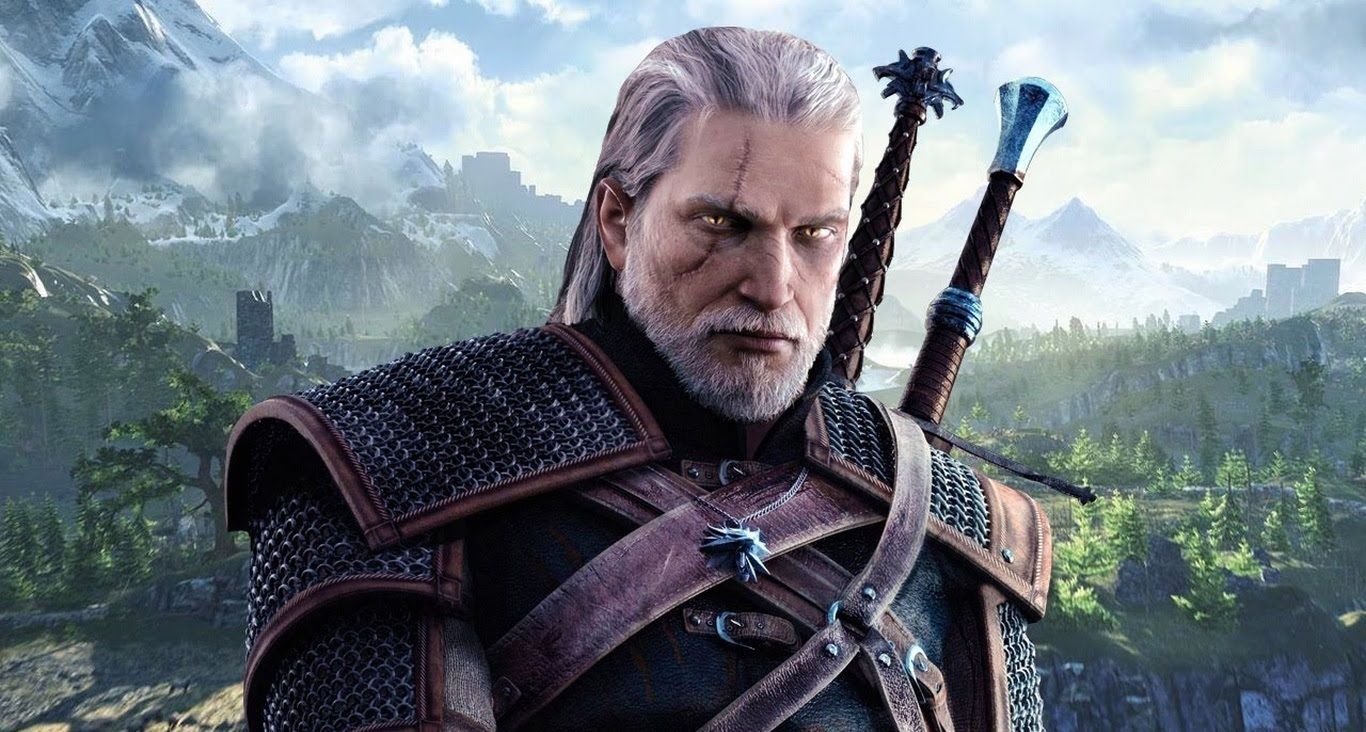
In an extraordinary intersection of medical rehabilitation, performance preservation, and cutting-edge machine learning, CD Projekt Red has revealed that it is utilizing neural voice-to-voice transformation to restore the voice of Geralt of Rivia in the upcoming expansion The Witcher 3: Wild Hunt – Songs of the Past. The studio is collaborating with Ukrainian speech-synthesis pioneer Respeecher to retune the vocal delivery of veteran Polish actor Jacek Rozenek, whose natural speaking voice was permanently altered following a life-threatening stroke in 2019. Rather than replacing the beloved performer or resorting to fully generative text-to-speech models that displace human labor, the Polish developer has built an assistive pipeline where Rozenek personally records every line in the booth, with proprietary deep learning models restoring the harmonic brightness, vocal weight, and timbre he delivered more than a decade ago. The technical and narrative challenge arose directly from the chronological setting of Songs of the Past. Co-developed with Fool's Theory and slated for a 2027 release across PC, PlayStation 5, Xbox Series X/S, and Nintendo Switch 2, the expansion weaves new adventures directly into the mid-campaign timeline of the 2015 masterwork. In an interactive role-playing game where ambient dialogue, combat shouts, and tavern banter are dynamically stitched alongside legacy audio, sonic consistency is paramount. While Rozenek undertook an arduous, heroic recovery following his 2019 cerebral stroke—graduating from total speechlessness to delivering a handful of supplemental lines for the 2022 next-gen update—the physiological trauma left his baseline voice noticeably lower, raspy, and gravelly. In blind testing, jumping between the 2015 base recordings and unedited 2026 takes produced a jarring auditory dissonance that threatened player immersion. Faced with this acoustic barrier, CD Projekt Red’s localization division firmly rejected the conventional industry playbook. As localization producer Mikołaj Szwed explained to Stephen Totilo's Game File, recasting Geralt with a younger Polish double was deemed culturally unacceptable given Rozenek’s foundational role in defining the White Wolf across three mainline titles and two massive expansions. Simultaneously, the studio refused to generate dialogue from whole cloth using algorithmic text-to-speech engines. Instead, the production team reached out to Respeecher to establish a voice-conversion architecture built entirely upon informed consent and human-driven performance. The acoustic engineering behind this restorative process is exceptionally rigorous. Respeecher trained a bespoke voice-conversion model using CD Projekt Red’s master archive of over 10,000 clean, dry dialogue lines recorded by Rozenek during the original 2014-2015 production of Wild Hunt. During recording sessions for Songs of the Past, Rozenek performs every single quest dialogue, sigh, and battle grunt himself, retaining complete ownership of dramatic pacing, micro-cadence, emotional inflection, and breath control. Respeecher’s neural network then acts as a dynamic spectral filter: it maps Rozenek’s contemporary phonetic inputs and pitch trajectories onto the acoustic characteristics of his 2014 vocal profile, effectively removing the physical consequences of the stroke while preserving 100% of his theatrical intent. According to synthetic speech artist Dmytro Vasylets, the technical hurdles extended far beyond simple pitch shifting. The real engineering trial lay in capturing Rozenek's full emotional dynamic range—navigating whispered half-tones, furious battle cries, subtle ironic quips, and guttural groans without introducing synthetic phase artifacts or metallic high-frequency ringing that often plague neural audio synthesis. The team spent dozens of studio hours refining loss functions, isolating clean spectral features, and manually tuning phoneme boundaries alongside CD Projekt’s sound designers to ensure the final output felt completely indistinguishable from the studio's 2015 acoustic footprint. For Rozenek, the initiative represents an artistic lifeline and a profound validation of his craft. The actor stated that returning to Geralt felt entirely natural due to his intimate connection with the character, noting that the only obstacle was the physiological shift in his vocal cords. He embraced the machine learning intervention wholeheartedly, expressing complete trust in the studio and stating that the sole objective was ensuring Geralt sounds exactly as audiences remembered him twelve years ago. This nuanced implementation provides a vital case study at a moment when artificial intelligence in voice acting remains one of the most contentious battlegrounds in entertainment. Amid prolonged labor disputes, such as the SAG-AFTRA interactive media video game strikes over unconsented digital cloning and corporate IP exploitation, CD Projekt Red’s framework delineates a crucial ethical boundary between displacive AI and restorative AI. Here, machine learning is deployed not to eliminate a performer from the payroll, but as an adaptive prosthetic that allows a disabled artist to overcome severe medical trauma and continue leading a multi-million-dollar franchise. CD Projekt Red has been careful to circumscribe the scope of the project, emphasizing that it constitutes an exceptional medical accommodation rather than a permanent studio-wide transition to algorithmic voice dubbing. Mikołaj Szwed explicitly noted that the studio has no plans to deploy AI modification on Doug Cockle, who voices Geralt in the English localization, as Cockle's natural vocal progression remains aligned with the studio's needs. Furthermore, CDPR confirmed that in prospective future Witcher entries—such as the forthcoming Project Polaris or games set later in the Continental chronology—natural biological aging will be embraced as part of character development rather than masked with digital restoration. The precedent recalls CD Projekt Red’s prior collaboration with Respeecher during the development of Cyberpunk 2077: Phantom Liberty, where the studio secured the explicit blessing of the late Miłogost Reczek’s family to synthesize his performance as Viktor Vektor following the actor’s passing in 2021. However, the Rozenek collaboration marks an even more significant milestone: an active, living performer working hand-in-hand with neural networks to reclaim his own voice. As veteran performers like Stephen Russell recently reflected when returning to Garrett for the Thief: The Dark Project remaster, the human vocal instrument inevitably changes over decades. By demonstrating how ethical deep learning can serve human artists rather than supplant them, CD Projekt Red and Respeecher have set a benchmark for how the video game industry can navigate the generative era with conscience, technical rigor, and artistic dignity. ~Gaming ~TheWitcher ~CDProjektRed ~VoiceActing ~ArtificialIntelligence
pcgamer.com CD Projekt Deploys Restorative AI for Geralt in The Witcher 3: Songs of the Past After Voice Actor's Stroke
0
Discuss 8
With global pre-loads officially underway ahead of its November 19 launch, Rockstar Games has broken its silence regarding the definitive technical specifications of Grand Theft Auto VI. Through an extensive technical update published alongside the activation of digital downloads, the developer confirmed what hardware analysts long suspected: Grand Theft Auto VI will target a strict 30 frames per second ceiling across all home consoles—including Sony's higher-tier PlayStation 5 Pro. Pushing current-generation hardware to what Rockstar describes as its "absolute limits," the announcement puts an end to months of community speculation regarding a potential 60 FPS performance mode, while simultaneously outlining the PS5 Pro’s machine-learning enhancements, unveiling a surprising Xbox Cloud Gaming pathway, and marking the title as the most pre-ordered release in digital PlayStation Store history. ### The Zen 2 Architectural Reality: Why 60 FPS Was Always a CPU Pipe Dream The confirmation that Grand Theft Auto VI will run at 30 FPS across the entire console spectrum—PlayStation 5, PlayStation 5 Pro, Xbox Series X, and Xbox Series S—addresses the central technical debate that has dominated digital hardware circles since the game's initial reveal. For months, casual observers had hoped that Sony's enhanced mid-generation console would leverage its substantial graphic compute uplift to deliver a fluid 60 FPS performance toggle. However, such expectations overlooked the fundamental architectural realities of console silicon and the simulation demands of modern open-world game design. While the PS5 Pro delivers an estimated 45% uplift in raw GPU rasterization and introduces advanced RDNA-based hardware ray-tracing accelerators, its CPU cluster remains fundamentally anchored to the same 8-core, 16-thread AMD Zen 2 microarchitecture found in the baseline 2020 PS5. Even with the Pro's optional High CPU Frequency Mode enabled, developers receive merely a 10% clock boost from 3.5 GHz to 3.85 GHz. In a monolithic, systemic open world like the state of Leonida, frame rate budgets are primarily governed not by pixel shading, but by CPU simulation time: complex artificial intelligence behavior trees, dynamic pedestrian crowd density, high-velocity vehicular pathfinding, systemic police dispatching, physics calculations, and continuous asset streaming. To hit 60 frames per second, an engine must execute its entire game simulation, physics tick, animation blend, and GPU command submission within a razor-thin window of 16.6 milliseconds per frame. If the underlying CPU simulation takes 25 to 28 milliseconds to compute the bustling streets of Vice City and the sprawling wetlands of the surrounding county, no amount of GPU compute power or artificial upscaling can breach that barrier. As Rockstar explicitly stated in its developer brief, the title has been architected from the ground up to maximize the systemic density, behavioral complexity, and visual fidelity of its environments and inhabitants, consciously prioritizing world living simulation over high-refresh rate frame pacing. ### Dissecting the PS5 Pro Suite: PSSR, Hardware Shadows, and Temporal Stability While framerate remains locked to 30 FPS, the visual and experiential gap between baseline hardware and the PS5 Pro is pronounced. Rockstar detailed a dedicated enhancement suite engineered specifically for Sony’s flagship hardware, spearheaded by PlayStation Spectral Super Resolution (PSSR). Rather than relying solely on traditional temporal anti-aliasing (TAA) or AMD’s FidelityFX Super Resolution (FSR), which frequently exhibit trailing artifacts, disocclusion shimmer, and image softening in complex sub-pixel foliage and wire geometry, GTA VI utilizes the Pro’s custom machine-learning tensor pipeline. By feeding motion vectors and previous frame histories into Sony's proprietary neural network upscaler, the engine reconstructs internal rendering resolutions (targeting a dynamic 1440p to 1600p window) up to a pristine 4K display presentation with exceptional temporal stability. Complementing PSSR is the implementation of hardware-accelerated ray-traced shadows and contact ambient occlusion. In Vice City’s sun-drenched subtropical environment, conventional shadow mapping techniques inevitably suffer from cascading shadow map resolution falloffs and artificial bias dithering. The Pro hardware accelerates ray-traced shadow rays across both dynamic characters and complex geometric foliage, grounding vehicles, palm trees, and structural architecture with physically accurate light attenuation and variable penumbras. Beyond rendering pipelines, the PS5 version harnesses Sony’s platform-specific input and audio hardware. The DualSense wireless controller features bespoke haptic feedback routines engineered to reflect dynamic road surface transitions, the resistance of shifting tides during aquatic navigation, and distinct trigger recoil curves for firearms. Sony’s Tempest 3D Audio engine provides granular spatial acoustic rendering, modeling sound wave occlusion through indoor architectural interiors and environmental reverberation across urban canyons. ### The Cloud Streaming Paradox: Xbox One Resurrected, PC Excluded Alongside console performance disclosures, Rockstar and Microsoft resolved widespread speculation regarding cloud deployment models. GTA VI will be playable via Xbox Cloud Gaming immediately at launch, introducing a surprising backwards-compatibility conduit: users can stream the game directly to last-generation Xbox One hardware. For players still holding onto 2013-era hardware, cloud blades allow immediate participation in Leonida’s campaign without requiring a $500 hardware upgrade. Crucially, however, Rockstar has instituted a strict commercial and technical perimeter: Xbox Cloud Gaming access for GTA VI is completely disabled on PC browsers, Windows desktops, and handheld devices. While Xbox Cloud Gaming technically operates across multi-platform web endpoints, Rockstar has severed PC streaming access entirely. This technical exclusion protects Take-Two Interactive’s long-standing multi-phase monetization and release cadence. Historically across Grand Theft Auto IV, Grand Theft Auto V, and Red Dead Redemption 2, Rockstar has guarded its console exclusivity window fiercely, reserving the native PC build for a subsequent release cycle (typically 12 to 18 months post-console launch) to maximize software sales, combat immediate client-side reverse engineering, and optimize for an expansive array of discrete PC hardware configurations. Allowing players to stream the console version to PC via Xbox Cloud Gaming would have dismantled this lucrative exclusivity moat and undercut future native PC sales. Furthermore, remote players should note significant visual compromises: the Xbox Cloud Gaming version executes on remote server blades configured to Xbox Series S graphics profiles. Players streaming to an Xbox One will receive an experience rendered at lower internal resolutions, reduced volumetric atmospheric density, and curtailed draw distances, further softened by real-time video compression encoding and network round-trip latency. Outside of cloud streaming, native console players can utilize local Remote Play across PlayStation 5 and Xbox Series X|S to beam gameplay to secondary mobile and tablet screens within their local home networks. ### Record-Breaking Pre-Orders and the 9-Day Pre-Load Strategy The revelation of technical specifications coincided with the opening of digital pre-loads, prompting Sony Interactive Entertainment to confirm that Grand Theft Auto VI has officially become the most pre-ordered title in the history of the digital PlayStation Store. The decision to initiate pre-loads nine full days ahead of the November 19 launch reflects unprecedented network logistics. As documented in previous engineering analyses, GTA VI commands a colossal 212 GB storage installation footprint on PlayStation 5, leveraging Sony’s custom Kraken hardware decompression block to unpack densely authored raw textures and uncompressed audio banks. Had pre-loads been restricted to the traditional 48-hour pre-launch window, the concurrent influx of tens of millions of users attempting to pull hundreds of gigabytes across Sony’s Content Delivery Networks (CDNs) risked causing severe peering saturation and service outages for standard PlayStation Network traffic. This historic pre-order milestone aligns seamlessly with Take-Two Interactive’s second-quarter fiscal 2027 disclosures, where CEO Strauss Zelnick informed Wall Street analysts that advance bookings are tracking far above expectations, projecting up to $3.5 billion in net bookings during the launch window alone. As the industry approaches November 19, Rockstar's calculated transparency confirms that while modern consoles may not deliver the 60 FPS dreams of enthusiast gamers, Leonida is engineered to redefine the absolute technological ceiling of the current hardware generation. ~Gaming ~GTA6 ~PlayStation ~Xbox ~RockstarGames
eurogamer.net Rockstar Confirms 30 FPS Cap for GTA 6 Across All Consoles: Inside the PS5 Pro CPU Ceiling, PSSR Ray Tracing, and the Xbox Cloud PC Exclusion
0
Discuss 26
The European Union is preparing to dismantle the predatory mechanics that have defined modern video game monetization for over a decade. A leaked draft of the European Commission’s landmark Digital Fairness Act (DFA)—obtained by French legislative publication Contexte and circulated across the sector on November 10, 2026—reveals the most comprehensive statutory offensive against exploitative game design in digital entertainment history. Far from settling for voluntary warnings or modest disclosures, the proposed legislation takes direct aim at loot boxes, virtual currency abstraction, pay-to-win friction, and psychological dark patterns, arming European regulators with sweeping enforcement powers and punitive fines reaching up to 6% of global annual turnover. At the epicenter of the Digital Fairness Act is an uncompromising protective firewall erected around minors. Under the draft rules, any video game directed at players under 18, or where audience telemetry indicates that minors constitute at least 25% of the active player base, will be legally barred from offering paid "uncertainty-based rewards"—the regulatory terminology encompassing randomized loot boxes, card packs, gacha pulls, and digital wheel spins. This prohibition applies whether these mechanisms are purchased directly with real fiat currency or unlocked via intermediate virtual currencies. Furthermore, the draft explicitly criminalizes "spending-maximising" practices for underage players, banning pay-to-progress and pay-to-win mechanics engineered to generate artificial friction or peer pressure. Recognizing how digital currencies obscure financial value, the Act mandates that virtual currencies and in-game item transactions must be turned off by default for minors, requiring verified parental or guardian authorization to enable. The legislative overhaul extends far beyond child protection, introducing unprecedented rights and protections for all adult consumers. To neutralize the cognitive dissociation engineered by multi-tiered digital currencies—such as EA FC Points, Fortnite V-Bucks, Call of Duty Points, or Genshin Impact Genesis Crystals—the DFA establishes strict real-currency transparency. Digital storefronts and in-game item menus will be legally compelled to display the real-world fiat equivalent (in Euros) directly alongside any virtual price or transaction bundle. Publishers will also be required to disclose mathematically audited win probabilities at the point of sale, ending the opacity surrounding rare item drop rates. More radically, the legislation introduces a universal "opt-out" mandate: all players, regardless of age, must be provided with an easily accessible, permanent settings toggle to completely disable all promotional offers, banners, and storefront interfaces connected to loot boxes and randomized rewards. The Digital Fairness Act also mounts a direct assault on the behavioral architecture of modern live-service games, targeting deceptive interfaces and "attention-maximising" retention loops. The draft outlaws coercive dark patterns that exploit cognitive vulnerabilities, including streak-based daily login rewards designed to induce compulsive engagement, artificial countdown clocks that fabricate false scarcity, and repetitive notification loops nudging players back into monetization funnels. Additionally, the proposal enforces strict parity between subscription enrollment and cancellation procedures, outlawing deceptive checkout flows and multi-step cancellation hurdles to ensure that ending an in-game service is as seamless as activating it. The leak has sent shockwaves through multinational game publishers, prompting fierce pushback from trade bodies such as Video Games Europe, which represents industry giants including Electronic Arts, Take-Two Interactive, Ubisoft, Epic Games, Sony Interactive Entertainment, and Microsoft. Lobbyists argue that blanket restrictions on variable rewards will undermine the economic foundation of the games-as-a-service (GaaS) model, which relies heavily on recurring, post-launch live-service revenues. The financial stakes are staggering: modes like EA Sports FC Ultimate Team generate billions of dollars annually, predominantly fueled by randomized player card packs. However, the regulatory environment has been steadily turning against these mechanics. Earlier in 2026, Pan-European Game Information (PEGI) executed a historic restructuring of its age-rating system, automatically applying a mandatory PEGI 16 rating to any title featuring paid loot boxes. By elevating these restrictions into binding EU-wide statutory law, the DFA supersedes the fragmented patchwork of national measures—such as Belgium’s 2018 gambling ban, Dutch regulatory enforcement, and Austrian civil court rulings against FIFA packs—unifying all 27 member states under a single, non-negotiable legal perimeter. The European Commission is slated to officially publish the Digital Fairness Act proposal in mid-November 2026, initiating legislative trilogue negotiations across the European Parliament and the Council of the European Union throughout 2027. Analysts anticipate final adoption by late 2027, with full regulatory enforcement taking effect across the bloc between 2028 and 2030. For developers and publishers operating in Europe, the message is unmistakable: the era of behavioral exploitation, friction-driven monetization, and gambling-adjacent game design is rapidly coming to an end. Studios must fundamentally re-engineer their business models around transparent cosmetic economies, direct-purchase storefronts, and player-centric progression—or face crippling European penalties that could fundamentally reshape their balance sheets. ~Gaming ~LootBoxes ~Regulation ~EuropeanUnion ~Industry
eurogamer.net EU's Leaked Digital Fairness Act Mandates Total Loot Box Ban for Minors, Real-Money Parity, and Universal Opt-Outs
0
Discuss 12
In an industry navigating escalating production budgets, studio restructurings, and shifting platform boundaries, comprehensive commercial telemetry published on November 9, 2026, by Alinea Analytics has established Santa Monica Studio’s God of War Ragnarök as the undisputed commercial apex of the PlayStation 5 generation. Four years after its dual-generation console launch in November 2022 and two years following its PC conversion, the Norse epic has generated an estimated $1.4 billion in gross revenue across 21.6 million copies sold. The report, helmed by Alinea Head of Market Analysis Rhys Elliott, tracks the lifetime performance of PlayStation Studios' top ten releases this cycle, documenting a collective gross surpassing $6.5 billion. Kratos and Atreus narrowly edged out Insomniac Games' Marvel's Spider-Man 2, which accumulated $1.3 billion across 19.1 million copies, while Polyphony Digital's Gran Turismo 7 claimed the third tier with $841.9 million. Beyond headline rankings, the dataset lays bare the underlying mechanics governing modern platform economics: the long-tail vitality of catalog sales, the diverging fortunes of simultaneous PC releases, and the accelerating corporate campaign to deprecate physical disc media. Alinea’s forensic breakdown details the precise platform distribution across the generational leaderboard. Of God of War Ragnarök’s 21.6 million unit tally, 20.1 million were purchased directly within the PlayStation ecosystem, where PS5 hardware accounted for 75.2% of console transactions. The PC conversion via Steam contributed an estimated 1.6 million sales, providing high-margin incremental capital without cannibalizing core console adoption. What distinguishes Ragnarök is its remarkable evergreen velocity: despite being inducted into the PlayStation Plus Extra game catalog—where analytics track engagement from approximately 6.7 million subscribers—the title moved an additional 1.1 million retail copies in 2026 alone, yielding roughly $60 million in late-lifecycle receipts. This phenomenon directly refutes conventional publisher anxieties that subscription library access permanently extinguishes transactional demand. The broader top ten roster illustrates the varied commercial tiers sustaining Sony’s publishing arm: 1. God of War Ragnarök (Santa Monica Studio): $1.40 billion (21.6 million units) 2. Marvel's Spider-Man 2 (Insomniac Games): $1.30 billion (19.1 million units) 3. Gran Turismo 7 (Polyphony Digital): $841.9 million 4. Helldivers 2 (Arrowhead Game Studios / PlayStation Studios): $786.0 million 5. Horizon Forbidden West (Guerrilla Games): $485.0 million 6. Ghost of Yōtei (Sucker Punch Productions): $410.0 million 7. The Last of Us Part I (Naughty Dog): $341.0 million 8. Ratchet & Clank: Rift Apart (Insomniac Games): $334.0 million 9. Stellar Blade (Shift Up / PlayStation Studios): $316.0 million 10. Astro Bot (Team Asobi): $292.0 million Across the generational top ten, platform revenue divided into 84.7% from native PlayStation consoles, 14.1% from Steam on PC, and a residual 1.2% from multiplatform instances (chiefly Helldivers 2 on Xbox ecosystems). While that 14.1% PC contribution represents more than $900 million in gross revenue, it has triggered a profound strategic reassessment within Sony Interactive Entertainment leadership. The runaway triumph of Helldivers 2 ($786 million) proved that cooperative live-service releases require day-and-date PC availability to achieve critical community scale. Conversely, single-player cinematic blockbusters tell a starkly different story. The delayed PC arrivals for Ragnarök, Forbidden West, and Spider-Man 2 yielded solid revenue but did little to expand long-term PlayStation Network engagement. With Sucker Punch’s Ghost of Yōtei amassing an extraordinary $410 million within its first twelve months purely as a PS5 console exclusive, Sony has increasingly pivoted toward re-establishing exclusivity fences around its prestige narrative pillars, preserving hardware moats as Take-Two and third-party giants prepare for the seismic arrival of Grand Theft Auto VI ([post #9315](https://www.mushimu.com/post/9315)). Perhaps the most consequential revelation in the Alinea report centers on the physical-to-digital migration and Sony’s documented initiative to sunset disc-based physical releases by January 2028. For God of War Ragnarök, physical boxed copies constituted only 27.5% of lifetime console sales, with 72.5% transacted digitally through the PlayStation Store ([post #9236](https://www.mushimu.com/post/9236)). Among the bottom five titles on the leaderboard, long-tail sales generated $281.7 million in 2026 alone—the overwhelming majority flowing through digital channels. As Rhys Elliott notes, terminating disc distribution is not merely a supply-chain simplification; it structurally reallocates the 30% wholesale and physical retail margin back to Sony, completely eradicates consumer secondary-market trade-ins, and enforces strict platform pricing control. Yet as demonstrated in debates surrounding Hollow Knight: Silksong’s physical collector editions ([post #9320](https://www.mushimu.com/post/9320)) and GTA VI’s massive 212 GB storage footprint ([post #9272](https://www.mushimu.com/post/9272)), the erosion of physical preservation remains an unresolved point of friction between console gatekeepers and enthusiast communities. A critical paradox emerging from the Alinea telemetry is the stark disconnect between historic software revenues and studio workforce stability. Despite Ghost of Yōtei generating $410 million in single-platform receipts without PC assistance, Sucker Punch Productions was not spared from publisher-mandated layoffs earlier this autumn. Similar contractions across Insomniac Games and Naughty Dog underscore that generational revenues of $1.3 billion or $1.4 billion are increasingly consumed by spiraling development cycles stretching between five and seven years, ballooning headcount costs, and marketing expenditures exceeding nine figures. As former Bethesda lead designer Bruce Nesmith underscored in his institutional retention analysis ([post #9308](https://www.mushimu.com/post/9308)), discarding seasoned engineering and design talent to satisfy short-term quarterly recoupment quotas—a dilemma that recently forced mass staff cuts at Bit Reactor on Star Wars: Zero Company ([post #9309](https://www.mushimu.com/post/9309))—mortgages the foundational expertise required to build future blockbusters. For Santa Monica Studio, the $1.4 billion benchmark validates their iterative design mastery while establishing a towering standard for the franchise’s next chapter, God of War: Laufey. Slated for May 2027 following a brief development extension, the upcoming title shifts focus to Faye navigating a multi-pantheon afterlife. With PlayStation leadership firmly entrenching signature single-player epics as console-exclusive showcases, Laufey will carry the mantle of proving that uncompromising creative vision and human artistry—what Take-Two CEO Strauss Zelnick recently defended as the irreplaceable purview of human beings ([post #9315](https://www.mushimu.com/post/9315))—can sustain commercial viability in an era demanding total financial and operational efficiency. ~Gaming ~PlayStation ~GodOfWar ~Industry ~PS5
God of War Ragnarök Generates $1.4B as Generation Top PlayStation Hit: Inside Sony $6.5B First-Party Telemetry, PC Port Reversals, and the Digital Squeeze
0
Discuss 14
edited
As physical copies of Hollow Knight: Silksong begin arriving on players’ doorsteps ahead of their official November 10, 2026 street date, early retail handovers have unexpectedly confirmed developer Team Cherry’s long-guarded post-launch roadmap. Discovered inside the physical packaging by Reddit user Me_975 from an early delivery of the Nintendo Switch 2 edition, the boxed release includes a comprehensive full-color lore booklet, a physical fold-out map of Pharloom, and a dedicated manual chapter outlining upcoming content updates. Most notably, the official documentation confirms that Team Cherry is actively preparing multiple “free content packs” alongside its first major post-launch expansion, titled Sea of Sorrow. The manual explicitly outlines Team Cherry’s sustained commitment to expanding the kingdom of Pharloom without fragmenting the player base behind paid paywalls. “The world of Hollow Knight: Silksong will expand with free content packs,” the official booklet reads. “Prepare for even more adventures filled with new friends, new abilities, and new ferocious foes!” The confirmation mirrors the generous update strategy that propelled the original 2017 Hollow Knight into a legendary Metroidvania benchmark, where successive content packs—Hidden Dreams, The Grimm Troupe, Lifeblood, and Godmaster—introduced substantial boss rushes, traversal abilities, alternate questlines, and rebalanced combat encounters at zero additional cost to players. Beyond smaller seasonal updates, the booklet sheds crucial new light on the scope of the previously teased Sea of Sorrow DLC. Officially classified within the manual as the title’s “first giant expansion,” the add-on promises to take Hornet beyond the vertical confines of Pharloom’s citadel: “In the first giant expansion, voyage across and beneath a salt-stricken ocean brimming with mystery and menace.” While Team Cherry had tentatively designated 2026 as the expansion’s release window, the physical documentation marks its status as “Coming Soon,” fueling expectations that the Adelaide-based three-person core studio is approaching final certification for its maritime subterranean adventure. The revelation of multiple content packs also addresses widespread speculation regarding how Team Cherry manages scope and development pipelines. The studio is infamous across the industry for allowing ambitious creative concepts to organically balloon during production—Silksong itself originated as a modest Kickstarter stretch-goal DLC featuring Hornet before expanding across years into a standalone epic spanning over a hundred benches, interconnected biomes, and hundreds of custom enemy animations. The explicit distinction in the printed manual between “free content packs” and a “giant expansion” indicates that Team Cherry has formalized a modular release cadence, ensuring incremental gameplay additions can arrive between expansive narrative chapters. For the physical media and preservation community, the packaging represents a celebrated return to the golden age of video game manuals. In an era where modern console publishers routinely ship empty plastic cases containing bare digital download vouchers or rudimentary paper leaflets, Team Cherry’s physical edition—featuring original concept illustrations, detailed character profiles, and high-quality printed cartography—delivers tangible collectible value. Furthermore, the arrival of the Nintendo Switch 2 edition highlights how seamlessly indie masterpieces are transitioning onto next-generation portable hardware, offering locked 60-frame-per-second fidelity and pristine OLED handheld presentation. The confirmation of extensive post-launch support reaffirms Hollow Knight: Silksong’s position at the pinnacle of modern indie development. While major corporate publishers increasingly pivot toward aggressive live-service monetization, battle passes, and early-access monetization loops, Team Cherry continues to demonstrate that uncompromised creative depth, meticulous craftsmanship, and consumer-friendly post-launch expansions foster unmatched community loyalty. With the physical editions now in the wild and Sea of Sorrow on the immediate horizon, Hornet’s journey through Pharloom is far from over. ~Gaming ~Silksong ~HollowKnight ~NintendoSwitch ~IndieGames
Hollow Knight Silksong Physical Editions Reveal Multiple Free Content Packs and Giant Expansion Sea of Sorrow
0
Discuss 15
With Grand Theft Auto VI precisely ten days away from its worldwide release on November 19, 2026, Take-Two Interactive Software convened its second-quarter fiscal 2027 earnings call amidst unprecedented commercial anticipation and sharp scrutiny from institutional investors. While the publisher confirmed that pre-orders are tracking "well above expectations"—positioning the title to "set a new baseline" for the company with projected launch-window net bookings between $3.35 billion and $3.5 billion—the financial briefing quickly evolved into a high-stakes philosophical debate over the role of artificial intelligence in interactive entertainment. Facing persistent questions from Wall Street analysts eager to uncover whether generative AI could lower astronomical production budgets or grant Rockstar Games a decisive competitive moat, Take-Two Chief Executive Officer Strauss Zelnick delivered an unvarnished defense of human artistry, declaring unequivocally that the creation of cultural blockbusters "remains the purview of human beings." The investor inquiries unfolded across two distinct fronts: cybersecurity vulnerabilities stemming from autonomous code decompilation, and the operational automation of game development assets. Analysts pressed Zelnick on whether neural network-powered reverse engineering tools and automated decompilers posed a burgeoning piracy threat to high-value intellectual property. In response, Zelnick observed that interactive entertainment has historically enjoyed structural insulation from wholesale piracy compared to linear media like music and cinema, anchored by gargantuan client storage footprints—most visibly demonstrated by the 212 GB install package required for GTA VI on PlayStation 5 ([post #9272](https://www.mushimu.com/post/9272))—strict platform hardware hypervisors across Sony and Microsoft consoles, and persistent cloud-authenticated live service architecture. While acknowledging that bad-faith AI actors present an evolving vector that Take-Two is aggressively countering through expanded technical barriers and targeted legal enforcement, Zelnick dismissed apocalyptic piracy forecasts, framing the challenge as a manageable technical friction rather than an existential crisis. The conversation grew significantly more contentious when Wall Street shifted its focus from piracy defense to production cost compression. In an era where venture capital narratives frequently tout generative machine learning as an elixir capable of automating level design, voice acting, and 3D modeling, analysts sought confirmation that Take-Two could harness these models to shave years off multi-hundred-million-dollar development cycles. Zelnick, who has led Take-Two since 2011 and witnessed multiple waves of technological disruption dating back to the dawn of 3D computer graphics, systematically deconstructed that assumption by decoupling asset generation from authentic game design. "It's always been true that technology benefits us," Zelnick explained to investors. "We've always created our entertainment inside computers with technology. All advances have benefited us, and I don't expect that that will change—in fact, I hope it'll accelerate. What we're known for is the desire to make the best entertainment on Earth. And, more often than not, we have succeeded—and the creativity that drives that success is human creativity harnessing technology. Undoubtedly, some of the most recent technological advances have made it easier to create assets. When I started in interactive entertainment, it was really difficult to create an asset in a computer. Today, it's a whole lot easier—but you know what's not easier? Making a big hit. Making a big hit was hard then, and it's hard now, and it's going to be hard in the future. And hit creation remains the purview of human beings." Zelnick’s thesis strikes at the heart of an existential question confronting the contemporary games industry. While generative algorithms can recombine millions of existing dataset parameters to produce derivative textures, generic voice lines, or modular geometry, they possess neither authorial intent, cultural self-awareness, nor the emotional vulnerability required to craft compelling satire and resonant drama. The world of GTA VI—a sprawling, caustic parody of contemporary American excess set across the neon wetlands of Leonida—relies entirely on human observational comedy, sharp political irony, and nuanced character arcs between dual protagonists Lucia and Jason. Algorithmic synthesis can emulate form, but it cannot invent perspective. This creative conviction finds powerful echoes across veteran industry leadership. Just days prior, legendary Nintendo game director and Kirby creator Masahiro Sakurai weighed in on generative AI adoption, cautioning developers that while the technology may serve as an auxiliary drafting tool, "it has yet to gain my trust" as a substitute for deliberate human craftsmanship. Similarly, former Bethesda Game Studios lead designer Bruce Nesmith recently pointed out that the enduring cultural resonance of titles like The Elder Scrolls V: Skyrim stems from compounding human institutional knowledge, team retention, and bespoke environmental storytelling rather than automated checklists or sterile procedural generation ([post #9308](https://www.mushimu.com/post/9308)). The timing of Zelnick’s remarks is particularly poignant given the brutal economic crosscurrents buffeting the broader games industry throughout 2026. While Take-Two projects full-year fiscal 2027 net bookings of $8.0 billion to $8.2 billion driven by GTA VI, the preceding quarter reflected the harsh realities of consumer spending, with Q2 net bookings declining 18% year-over-year to $1.60 billion. Anticipation for GTA VI effectively cannibalized current-market software engagement, muting sales for flagship sports titles like NBA 2K27—a dynamic Zelnick summarized with characteristic pragmatism to Bloomberg: "If your lunch is going to be eaten, I'd rather be the one eating it." Concurrently, competing publishers continue to endure wrenching labor contractions. Paramount and Warner Bros. Discovery’s newly merged gaming division announced fresh layoffs this week, while independent developers face punishing cash-flow cliffs, evidenced by Bit Reactor’s sudden workforce dismissals following the launch of Star Wars: Zero Company ([post #9309](https://www.mushimu.com/post/9309)) and the catastrophic loss of senior talent following BioWare’s shuttering ([post #9301](https://www.mushimu.com/post/9301)). Within this volatile climate, tech-evangelist promises that generative AI will effortlessly slash production headcounts without eroding game quality ring hollow to practitioners who understand that games are built on fragile social and creative chemistry. As global pre-loads commence on November 10 ahead of the November 19 launch, Rockstar Games stands poised to deliver what may become the most lucrative cultural product in history, featuring a decoupled launch architecture that focuses entirely on a massive 55-trophy single-player narrative campaign before GTA Online 2.0 arrives in 2027 ([post #9311](https://www.mushimu.com/post/9311)). By asserting that hit creation is fundamentally anchored in human intuition and labor, Zelnick has offered Wall Street a vital reminder: in an industry increasingly obsessed with algorithmic efficiency, the ultimate competitive advantage is still human imagination. ~Gaming ~TakeTwo ~GrandTheftAuto ~ArtificialIntelligence ~Industry
Take-Two CEO Rebuffs Wall Street on Generative AI as GTA VI Pre-Orders Surge: Why Making Big Hits 'Remains the Purview of Human Beings'
0
Discuss 9
A silent, relentless background glitch embedded within AMD's graphics driver software is actively degrading the physical lifespan of solid-state drives across the PC gaming community. Over the weekend of November 8–9, 2026, widespread telemetry reports corroborated by hardware diagnostic benchmarks revealed that a legacy display-monitoring utility installed alongside AMD Software: Adrenalin Edition is entering an unconstrained disk-write loop. The rogue process, identified as atieclxx.exe (the AMD External Events Client Module), has been recorded hammering host storage with up to 19.5 gigabytes of continuous input/output writes in a mere 12-hour window. For affected users running affected driver packages over extended periods, the flaw has resulted in measurable solid-state drive (SSD) health depletion of roughly 1% per month, consuming dozens of terabytes of finite NAND flash write endurance without user knowledge or consent. Following escalating outcry across r/pcmasterrace, r/radeon, and technical development communities on X, AMD engineering officially confirmed the defect. AMD representatives confirmed that software teams have isolated the regression and scheduled a permanent hotfix for the upcoming AMD Software: Adrenalin Edition 26.11.1 driver update, slated for deployment later this month. However, with modern high-speed PCIe 4.0 and PCIe 5.0 storage arrays bearing the brunt of the unthrottled writes during an era of surging NAND component pricing, the incident has reignited intense technical scrutiny over driver bloat, legacy background services, and quality assurance protocols within modern graphics driver architectures. The telemetry tracking that unmasked the bug began when developer and software engineer Tomasz Gawroński documented abnormal system resource allocation on X. Examining Windows Resource Monitor and low-level disk activity counters, Gawroński discovered that atieclxx.exe had generated an astonishing 19.5 GB of cumulative host writes within half a day of normal desktop operation. Shortly thereafter, Redditor Darklinkpower published long-term Self-Monitoring, Analysis, and Reporting Technology (SMART) telemetry on r/pcmasterrace, demonstrating that the utility had steadily devoured 1% of their primary NVMe SSD’s rated lifespan every single month over a 16-month stretch. Multiple community members running diagnostic suites such as CrystalDiskInfo and manufacturer utilities like Samsung Magician subsequently cross-referenced their Total Bytes Written (TBW) statistics, uncovering tens of terabytes of unexplained, non-gaming write activity. Historically, atieclxx.exe is the user-session client component of the AMD External Events Utility—a service dating back to the legacy ATI Catalyst era. Its architectural mandate is ostensibly straightforward: it runs in the background to handle display event listeners, detecting HDMI and DisplayPort hotplug events, managing AMD FreeSync dynamic refresh rate renegotiations, coordinating multi-monitor topology transitions, and executing user-assigned Radeon overlay hotkeys. However, investigative analysis indicates that beginning with the release of AMD Software: Adrenalin Edition 26.7.1 in mid-2026, a code alteration in the module's event polling loop caused it to lose its event-wait throttling. Instead of passively sleeping until the Windows display subsystem fires a hardware interrupt, the process can enter an erratic spin-lock, writing continuous diagnostic logs, cache refreshes, or socket state telemetry directly to the local storage drive. The physical consequences of this runaway loop are directly tied to the underlying physics of NAND flash memory. Unlike traditional spinning hard drives, flash storage operates on finite Program/Erase (P/E) cycles. Modern consumer solid-state drives utilize Triple-Level Cell (TLC) or Quad-Level Cell (QLC) architectures, trading raw cell endurance for storage density. A standard 1 TB NVMe SSD is typically rated between 300 TBW and 600 TBW, while entry-level 512 GB boot drives often feature endurance ceilings as low as 150 TBW to 200 TBW. If atieclxx.exe writes roughly 39 GB per day, it forces 1.17 TB of unneeded host writes onto the drive every month—surpassing 14 TB per year. Crucially, due to internal SSD controller operations including wear leveling, garbage collection, and SLC cache flush cycles—measured by the Write Amplification Factor (WAF)—the actual physical wear inflicted upon the flash memory can be 1.5 to 3 times higher than the nominal host write total. For mainstream PC gamers who typically accumulate between 5 TB and 10 TB of total writes per year through gaming and productivity, AMD's misfiring utility effectively triples annual drive degradation. On a drive with a 150 TBW lifespan, a 16-month sustained write leak can consume over 15% of the hardware’s total operational life, pushing cells toward premature retirement and risking sudden read-only lockouts. This technical crisis arrives against a challenging backdrop for PC hardware enthusiasts. Throughout 2025 and 2026, semiconductor wafer allocations have heavily pivoted toward high-margin enterprise AI infrastructure, as covered in Mushimu's reporting on semiconductor supply chains (post #9305). The resulting crunch in consumer NAND production has driven SSD retail pricing upward, transforming what would otherwise be a minor software annoyance into an expensive hardware liability. While PC Gamer’s internal testing noted that the bug does not replicate across every hardware configuration—appearing to require specific triggers such as mismatched multi-monitor refresh rates (e.g., 144Hz paired with 60Hz), display sleep-wake cycles, or concurrent polling from third-party monitoring hooks like RivaTuner Statistics Server (RTSS)—the volume of affected installations was large enough to force official corporate intervention. On the official AMD Community forums, AMD representative AMD_Matt initially acknowledged customer reports, stating that engineering was actively investigating the behavior with an aim to resolve it in an upcoming package. On Reddit, AMD community representative AMD_Vik provided explicit confirmation, stating that the disk write defect was isolated and scheduled to be resolved in Adrenalin Edition 26.11.1, scheduled to drop before the end of November. Fortunately, affected Radeon owners do not need to wait for the official driver update to protect their hardware. Because atieclxx.exe is primarily tasked with legacy event monitoring and hotkey handoffs, it can be disabled immediately with virtually zero impact on core GPU gaming performance or graphics rendering: 1. Press Win + R, type services.msc, and hit Enter. 2. Scroll down to locate AMD External Events Utility. 3. Right-click the service, select Properties, change the Startup type from Automatic to Disabled, and click the Stop button. 4. Open Windows Task Manager (Ctrl + Shift + Esc), navigate to the Details tab, and end the atieclxx.exe process if it remains active. Disabling the service does not affect frame rates, FidelityFX Super Resolution (FSR) upscaling, or Radeon Anti-Lag; it merely disables automated external display hotkey switching and specific Adrenalin overlay keybinds until the system is reconfigured. System administrators and gamers are also advised to launch CrystalDiskInfo or manufacturer diagnostic tools to inspect SMART attributes 05 (Reallocated Sectors Count), E7 (Drive Remaining Life), and F1 (Total Host Writes) to assess whether their systems have suffered silent write amplification. As graphics suites grow increasingly complex, this incident serves as a stark reminder of the hidden hardware costs of unmonitored background utilities—and highlights why software engineering discipline remains as critical to PC longevity as silicon hardware architecture itself (linking to discussions on software retention in post #9308). ~Gaming ~AMD ~Radeon ~Hardware ~PCGaming
pcgamer.com AMD Investigates Adrenalin Background Process Eating 1% SSD Health Monthly: Inside the atieclxx.exe I/O Bug, NAND Wear Cycles, and Upcoming Fix in 26.11.1
0
Discuss 20
With exactly ten days remaining until Grand Theft Auto VI arrives on PlayStation 5 and Xbox Series X|S on November 19, 2026, the final operational pieces of Rockstar Games’ long-awaited sandbox are falling into place across console network backends. Overnight, seasoned Rockstar dataminer and community researcher TezFunz2 surfaced the complete trophy and achievement tally for the title—subsequently mirrored across community archives before the original posts were scrubbed. According to the data validated against platform certification manifests, Grand Theft Auto VI launches with precisely 55 unlockable rewards. On paper, that number modestly edges out the base launch totals of both Grand Theft Auto V (51 trophies) and Red Dead Redemption 2 (52 trophies). In practice, however, the architectural implications behind those 55 unlocks represent the most radical structural shift in Rockstar’s retail release methodology in over two decades: every single one of those 55 trophies is tied exclusively to the offline, single-player narrative campaign. To grasp the magnitude of this decision, one must examine how Rockstar previously constructed its flagship reward ecosystems. When Grand Theft Auto V debuted on the PlayStation 3 and Xbox 360 in September 2013, its 50 base achievements plus Platinum Trophy appeared expansive, but 17 of those objectives were locked behind Grand Theft Auto Online—demanding that players attain Rank 100, win custom races, survive wave survival gauntlets, and execute armed store robberies across shared servers. Red Dead Redemption 2 replicated that split in October 2018, tethering 17 of its 52 launch trophies to Red Dead Online milestones such as reaching Rank 50, buying persistent camp upgrades, and crafting consumables in Free Roam. For dedicated completionists and trophy hunters, this hybrid model was notoriously polarizing: server instability, shifting matchmaking populations, and mandatory multiplayer grinding meant that unlocking the coveted Platinum or attaining 1,000 Gamerscore often depended less on personal mastery of the game’s world than on the vagaries of online infrastructure. By dedicating all 55 launch rewards to the single-player journey of protagonists Lucia and Jason across the fictional state of Leonida, Rockstar is solving two longstanding operational dilemmas. First and foremost is the deliberate operational decoupling of Grand Theft Auto Online. As confirmed across Take-Two Interactive investor disclosures and corroborated by industry figures including Twitch CEO Dan Clancy, the multiplayer component of GTA VI will not launch on November 19; instead, it is slated for a dedicated release window in early 2027. By stripping multiplayer objectives from the retail gold master, Rockstar avoids a repeat of October 2013’s catastrophic server collapse, while insulating the core story experience from day-one telemetry congestion. Completionists will be able to pursue and achieve 100% completion and earn their Platinum Trophy entirely offline, without being held hostage by day-one authentication queues or network maintenance windows. From a console platform compliance perspective, the 55-trophy list pushes Sony and Microsoft certification frameworks to their maximum allowable boundaries. Under Sony’s PlayStation Trophy Requirements (TRC), a retail base release is allocated a strict point budget—typically capped between 1,200 and 1,350 points, excluding the 300-point Platinum award. With 54 individual unlocks preceding the Platinum, Rockstar's distribution heavily utilizes Bronze (15 points) and Silver (30 points) tiers, reserving high-value Gold awards (90 points) for major narrative turning points, such as concluding the dual-protagonist storyline, mastering illicit cartel syndicates, and discovering the state's most elusive secrets. On Microsoft’s Xbox Network, Requirements (XR) stipulate that retail base games must deliver exactly 1,000 Gamerscore across no more than 60 total achievements. By opting for 55 achievements, Rockstar has structured an average valuation of approximately 18 Gamerscore per unlock, avoiding lopsided 100G spikes in favor of a steady, progression-driven reward curve. When GTA Online officially debuts in 2027, platform rules will require it to be integrated as an external Sub-List or Add-on Pack, preserving the base Platinum for standalone campaign players. Beyond platform accounting, a 55-trophy roster strictly dedicated to single-player reveals critical clues regarding the mechanical depth and geographic scale of Leonida. In earlier releases, Rockstar's single-player completionist checklists—such as GTA V’s ‘Career Criminal’ or Red Dead Redemption 2’s ‘Best in the West’—relied on sweeping compendiums and notoriously punishing item-hunting requirements like studying and skinning every animal in the frontier. With GTA VI, the sheer density of Vice City, Port Gellhorn, the Keys, and the sprawling wetlands suggests an intricate web of bespoke side pursuits: illicit smuggling runs, drag racing leagues, deep-sea exploration, bounty operations, and dynamic armed robberies. This design philosophy touches directly on the industry-wide debate surrounding open-world fatigue. As former Bethesda senior designer Bruce Nesmith noted in his recent reflections on systemic world design ([post #9308](https://www.mushimu.com/post/9308)), the most memorable sandboxes reject arbitrary ‘checklist’ completion in favor of organic, unscripted curiosity. If Rockstar's 55 single-player trophies are structured around systemic mastery rather than mindless collectibles, the campaign could set a new benchmark for open-world immersion. The emergence of the trophy manifest also signals that pre-launch certification is officially locked as global pre-loads open tomorrow, Tuesday, November 10. As previously analyzed in [post #9272](https://www.mushimu.com/post/9272), Grand Theft Auto VI commands a massive 212 GB storage footprint on PlayStation 5—pushing Sony’s proprietary Kraken hardware decompression blocks to their limits and necessitating a historic two-disc physical distribution format. Opening pre-loads a full nine days ahead of the November 19 launch ensures that players with constrained broadband bandwidth can stage the massive install file ahead of zero hour. With review copies circulating under strict non-disclosure embargoes and backend certification cleared, the countdown to Vice City has entered its final, irreversible phase. ~Gaming ~GTA6 ~RockstarGames ~PlayStation ~Xbox
GTA VI Ships With 55 Single-Player Trophies and Achievements: Inside Rockstar Launch Decoupling, Leonida Completion Scale, and Pre-Load Staging
0
Discuss 12