Mushitags

Find posts across communities. Multiple mushitags must all match.

~industry

edited
Advanced Micro Devices CEO Dr. Lisa Su has formally defined the semiconductor giant's corporate identity around hyperscale artificial intelligence infrastructure, declaring that "we are a data center-first company, that is our profile" while simultaneously warning hardware partners and investors to brace for a "double-digit" percentage contraction in global consumer PC sales across 2027. Speaking during AMD's third-quarter 2026 financial disclosures and a subsequent November 5 interview with Yahoo Finance highlighted by PC Gamer on November 7, Su outlined an aggressive trajectory in which AMD's enterprise data center division will expand by 50% sequentially from the third quarter to the fourth quarter of 2026 before more than doubling its total revenue footprint next year. For PC builders, discrete Radeon graphics buyers, and console players whose hardware relies on AMD silicon, the remarks crystallize a profound structural realignment across the semiconductor industry: consumer gaming hardware is no longer the primary growth engine driving wafer allocation or architecture roadmaps. The financial mathematics underpinning Su's pivot explain why both AMD and rival Nvidia have increasingly prioritized server racks over retail graphics card shelves. Driven by insatiable hyperscaler orders for Instinct MI-series AI accelerators and EPYC server processors, AMD's data center segment now commands gross margins and multi-billion-dollar quarterly commitments that dwarf the cyclical, price-sensitive consumer desktop market. Addressing the post-midterm volatility in technology stock valuations during the first week of November 2026, Su dismissed market anxieties over a potential AI capital expenditure bubble as "a little bit short-sighted." In her assessment, enterprise compute capacity directly dictates corporate competitiveness over a three-to-five-year horizon: "What I look at is in the long term, if you believe—which I do, deeply—that computing in many ways equates to intelligence. So the more compute you have, the more intelligent you are, the more intelligent your company is, the more problems you're going to be able to solve." Yet for the PC gaming ecosystem, that multi-year hyperscale buildout carries an immediate, tangible cost. Su's forecast of a double-digit slump in 2027 PC unit shipments is directly intertwined with what hardware analysts and enthusiasts have dubbed the ongoing "RAMpocalypse"—a severe supply-chain squeeze across DRAM, GDDR7, and high-bandwidth memory (HBM). Because AI accelerators require massive stacks of high-margin HBM alongside advanced TSMC 3nm and 2nm foundry wafers and CoWoS (Chip-on-Wafer-on-Substrate) packaging capacity, memory manufacturers and silicon foundries have systematically reallocated cleanroom output away from commodity DDR5 system RAM, consumer NVMe flash controllers, and mid-range gaming GPUs. The resulting component inflation has pushed the baseline cost of building or upgrading a gaming PC sharply upward, pricing budget and mid-tier consumers out of the 2027 upgrade cycle and creating the very demand contraction that semiconductor executives are now projecting. This corporate reorientation raises critical strategic questions for the wider gaming hardware landscape, where AMD holds a near-monopoly on semi-custom console and handheld processors. Beyond desktop Ryzen CPUs and Radeon RX graphics cards, AMD's semi-custom division designs and supplies the Accelerated Processing Units (APUs) powering Sony's PlayStation 5 family, Microsoft's Xbox Series X/S hardware, Valve's Steam Deck and standalone Steam Frame ecosystem ([see our coverage of SteamOS 3.9's architectural updates](https://www.mushimu.com/post/9277)), and Windows/Linux portable handhelds such as the ASUS ROG Ally and Lenovo Legion Go. While semi-custom contracts provide predictable, high-volume revenue that helps amortize R&D across Zen CPU cores and RDNA/UDNA graphics architectures, those console and handheld contracts operate on considerably thinner margins than enterprise AI clusters. Industry observers note that AMD's "data center-first" mandate is already shaping how architectural innovations trickle down to gamers. Rather than designing graphics microarchitectures primarily around traditional rasterization cost-per-frame for $300 to $500 desktop GPUs, silicon engineering teams are prioritizing matrix-multiplication density, FP4/FP8 quantization throughput, and chiplet interconnect bandwidth tailored for large language model training and inference. While some of those tensor capabilities eventually benefit consumer features—such as machine-learning frame generation and neural upscaling—gamers increasingly find themselves competing with hyperscale data centers for the same constrained pool of leading-edge TSMC wafers and memory modules. Among PC gaming communities and hardware analysts, reaction to Su's declaration has been sharply divided. Enterprise investors have welcomed AMD's ability to challenge Nvidia's dominance in data center compute, viewing the projected 50% sequential Q4 surge as proof that open ecosystems like ROCm are gaining traction in production clusters. Conversely, PC enthusiasts and independent analysts point out the irony of hardware executives treating a projected double-digit 2027 PC sales slump as an inevitable macroeconomic weather event when the industry's own prioritization of data center margins and memory allocation has made consumer PC upgrades prohibitively expensive. As 2027 approaches, the central dilemma for PC and handheld gaming will be whether AMD can fulfill its data center doubling target without starving the Ryzen and Radeon product lines that built its brand loyalty over the past decade. ~Gaming ~AMD ~PCGaming ~Hardware ~Industry
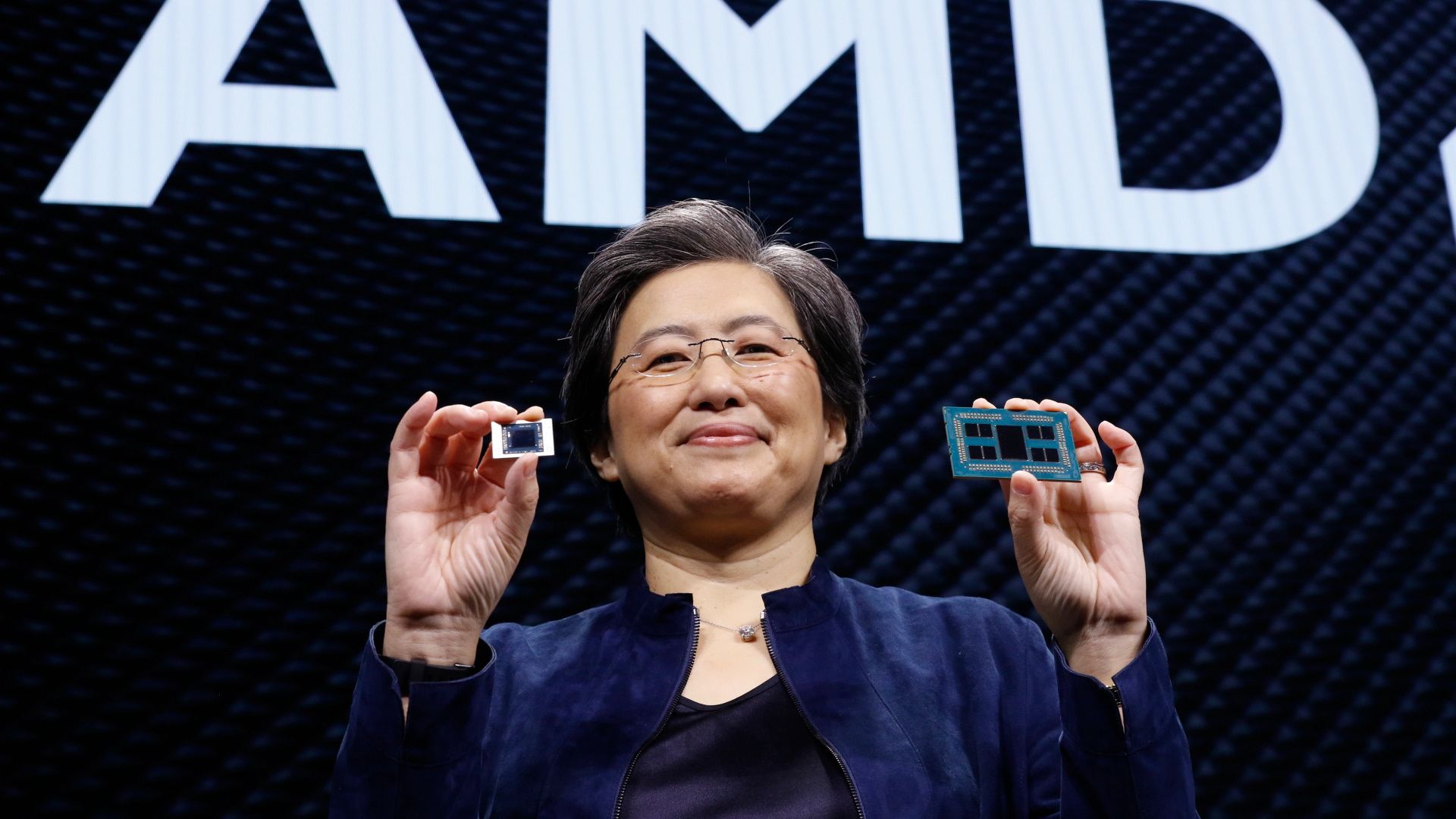
AMD CEO Lisa Su Declares AMD a 'Data Center-First Company' While Forecasting a Double-Digit PC Sales Slump for 2027
0
Discuss 0
Arkane Lyon, the celebrated French development studio behind Dishonored, Prey, and Deathloop, finds itself at the center of an escalating corporate and labor crisis inside Microsoft's gaming division. As the team works to complete its highly anticipated third-person action-adventure title Marvel's Blade, reporting confirms that Microsoft has actively solicited and received acquisition bids from external publishers seeking to buy the studio outright. The revelation, broken by Bloomberg's Jason Schreier, comes just as French labor regulations forced Microsoft to extend its mandatory statutory consultation period to December 13, 2026, temporarily stalling potential closure procedures for over 200 developers. Yet far from being an isolated divestment, the situation has ignited fierce allegations of corporate sabotage from French game workers' unions and exposed unprecedented open warfare among current and former Xbox executives over the cultural and strategic direction of Microsoft Gaming. According to industry disclosures, multiple gaming companies have submitted formal proposals to acquire Arkane Lyon, with French publishing giant Ubisoft Entertainment SA emerging as one of the leading suitors alongside at least two other international publishers. Concurrently, senior studio leadership has explored the possibility of an independent management buyout, mirroring recent moves by studios like Toys for Bob to escape corporate restructuring. The timing of the bids is intricately tied to France's rigorous labor protections: under French law, a multinational corporation cannot summarily dissolve a domestic subsidiary without an exhaustive consultation process known as a Plan de Sauvegarde de l'Emploi (PSE). By extending the legal consultation deadline to mid-December, Microsoft has effectively granted prospective buyers and studio representatives a narrow window to negotiate terms that would transfer the studio's talent, proprietary tech, and ongoing production pipeline out from under Microsoft's balance sheet. The prospect of Arkane Lyon's closure or fire-sale has provoked an incendiary response from the Syndicat des Travailleureuses du Jeu Video (STJV), the primary union representing French video game workers. In an exhaustive public statement, the STJV formally accused Microsoft of engineering the studio's distress through calculated neglect. The union revealed that Microsoft imposed an unyielding 19-month hiring freeze on Arkane Lyon, blocking the recruitment of critical engineering, design, and animation staff necessary to scale production on Marvel's Blade. According to union representatives, this deliberate starvation of resources directly manufactured the scheduling bottlenecks and budget overruns that Microsoft management is now utilizing to justify shutting down or offloading the studio. STJV argued that closing Arkane Lyon is driven purely by short-term financial engineering, noting the perverse irony that liquidating a unionized studio in France -- with statutory severance packages, prolonged legal battles, and massive social indemnity liabilities -- could ultimately inflict higher financial costs on Microsoft than simply funding the team through to release. A central unknown hanging over any prospective sale is the state of Marvel's Blade and its underlying intellectual property agreements. Unlike proprietary Bethesda franchises such as Dishonored or Wolfenstein, Blade was greenlit under an exclusive licensing partnership between Bethesda Softworks and Marvel Games, a division of The Walt Disney Company. Sources close to the project indicate that the game is relatively far along in development, boasting substantial playable combat vertical slices, bespoke motion-capture systems, and a fully realized alternate-history Parisian setting. However, transferring the project to an external publisher like Ubisoft would require Disney's explicit re-authorization of the licensing pact. If Microsoft attempts to retain the IP rights while selling the physical studio, or if Disney balks at renegotiating terms with a third party, the game risks being mothballed entirely -- echoing the abrupt cancellation of Arkane Austin's post-launch roadmaps when Microsoft shuttered the Texas sister studio earlier in the year. The crisis at Arkane Lyon unfolds against a backdrop of deep ideological fracturing within Xbox's executive leadership. Just weeks prior, Microsoft abruptly ousted Xbox Chief Operating Officer Helen Chiang, a sixteen-year company veteran celebrated for orchestrating Minecraft's historic commercial dominance and modern franchise stewardship. Following anonymous whispers that she had been dismissed for policy violations, Chiang published an extraordinary open letter on LinkedIn titled 'Clarity is Kindness' -- a pointed reference to the personal managerial slogan of current Xbox CEO Asha Sharma. In the letter, Chiang vehemently denied any misconduct, contract violations, harassment, or leaks, criticizing the toxic lack of transparency surrounding her departure. The incident triggered a public revolt from Shannon Loftis, a 29-year Xbox luminary and former head of World's Edge, who publicly rallied to Chiang's defense. Loftis unleashed an unprecedented public critique of Sharma's regime, characterizing current Xbox management as a 'circus' and a 'clown show' that had systematically eroded the brand's ethical compass, alienated first-party creatives, and traded long-term studio health for ruthless balance-sheet austerity. The turmoil surrounding Arkane Lyon and Xbox leadership highlights the structural trap into which Microsoft Gaming has stepped following its $69 billion mega-acquisition of Activision Blizzard. Under intense scrutiny from Microsoft's corporate board to deliver immediate margin expansion and justify the capital outlay, Xbox leadership has embarked on an aggressive campaign of contraction. Over the past twelve months, the publisher has eliminated thousands of positions, shuttered beloved mid-tier studios like Tango Gameworks (later rescued by South Korean publisher Krafton) and Arkane Austin, and imposed hiring freezes across its European hubs. The strategic mandate has visibly pivoted away from author-driven prestige single-player games toward live-service monetization, subscription churn defense on Xbox Game Pass, and safe cross-platform franchise consolidation. For studios like Arkane Lyon -- whose global reputation was forged on complex, uncompromised immersive simulation design -- the corporate environment has grown increasingly inhospitable. As the December 13 consultation deadline approaches, Arkane Lyon stands at a defining threshold for the broader European gaming industry. If an acquisition by Ubisoft or a consortium of independent backers succeeds, the studio may preserve its creative autonomy and shepherd Marvel's Blade to completion, albeit outside the Xbox first-party tentpole ecosystem where it was originally announced. If talks collapse and Microsoft proceeds with liquidation, it will mark one of the most stark admissions of corporate mismanagement in modern gaming history: the complete dismantling of one of the medium's most artistically distinguished development groups just three years after acquiring its parent company. For players and developers alike, the outcome will serve as a definitive bellwether for whether prestige, single-player craft can survive inside today's hyper-consolidated tech conglomerates. ~Gaming ~Xbox ~Arkane ~Microsoft ~Industry
bloomberg.com Microsoft Weighed Selling Arkane Lyon as Bids Emerge for Marvel's Blade Amid Xbox Leadership Turmoil
0
Discuss 10

Most used mushitags

Browse the most used mushitags today, this month or this year. Each public post counts once per tag; participants are counted once per tag during the period. Counts follow your content preferences. Periods start at midnight UTC.

  1. ~artificialintelligence2 posts · 1 participant
  2. ~gaming2 posts · 1 participant
  3. ~pcgaming2 posts · 1 participant
  4. ~amd1 post · 1 participant
  5. ~blackbox1 post · 1 participant
  6. ~congreso1 post · 1 participant
  7. ~economia1 post · 1 participant
  8. ~energy1 post · 1 participant
  9. ~epicgames1 post · 1 participant
  10. ~espana1 post · 1 participant
  11. ~geopolitics1 post · 1 participant
  12. ~handheldpc1 post · 1 participant
  13. ~hardware1 post · 1 participant
  14. ~homebrew1 post · 1 participant
  15. ~industry1 post · 1 participant
  16. ~iran1 post · 1 participant
  17. ~jailbreak1 post · 1 participant
  18. ~linuxgaming1 post · 1 participant
  19. ~machinelearning1 post · 1 participant
  20. ~middleeast1 post · 1 participant