Mushitags

Find posts across communities. Multiple mushitags must all match.

~techindustry

Artificial intelligence infrastructure firm LangChain has closed a $300 million Series C financing round at a $3 billion valuation, more than doubling its capitalization from late 2025. The round was led by CapitalG, Alphabet’s independent growth fund, with substantial participation from Singapore’s sovereign wealth fund GIC and DFJ Growth, alongside returning backers IVP, Sapphire Ventures, Salesforce Ventures, MongoDB Ventures, QuantumLight, Sequoia Capital, Amplify Partners, and Benchmark. The deal brings LangChain’s aggregate capital raised to approximately $460 million, cementing its position as the premier independent operating layer for autonomous enterprise agents. The valuation surge underscores a decisive structural pivot across enterprise technology. While 2023 and 2024 were dominated by foundational model training runs and raw context-window expansions, 2026 has witnessed enterprise budgets migrating toward the operational middleware required to govern, debug, and coordinate multi-agent systems in production environments. Rather than betting exclusively on individual frontier model weights, institutional investors are backing the neutral orchestration layer that insulates corporate systems from single-vendor lock-in. ### The Evolution from Prompt Chaining to Stateful Graph Execution LangChain originated in late 2022 as a lightweight open-source library designed to solve the immediate limitations of early large language models: connecting static transformers to search APIs, SQL databases, and file systems. However, as frontier lab models evolved native tool calling and expanded context windows, basic string-based prompt chaining encountered an existential bottleneck. Rigid, single-pass pipeline abstractions broke down when confronted with non-deterministic agent workflows, multi-step error correction, and long-horizon planning. In response, the engineering team engineered a fundamental architectural transition toward stateful, graph-based runtimes. The development of LangGraph and Deep Agents introduced cyclical reasoning graphs where memory checkpoints, human-in-the-loop interruption states, and parallel branching are treated as first-class primitives. This architecture allows developers to structure autonomous software processes where subagents fork execution paths, validate intermediate results against external schemas, and autonomously backtrack upon encountering exceptions. ### The Three Pillars of LangSmith: Runtime, Improvement, and Governance The core commercial vehicle powering LangChain’s enterprise valuation is LangSmith, which has expanded into an end-to-end agent engineering platform. According to disclosure data released by founder and chief executive Harrison Chase, the platform now serves over 7,000 corporate customers, spanning hyper-growth tech companies such as Harvey, Rippling, and Listen Labs alongside industrial conglomerates including NVIDIA, Toyota, Workday, and Salesforce. LangSmith’s architecture is anchored across three functional tiers: 1. **Agent Runtime:** Provides scalable hosting, containerized sandboxes, and orchestration servers. Through Managed Agents and Fleet infrastructure, enterprises can deploy long-running agent workflows in isolated compute sandboxes, executing untrusted code or complex data transformations without exposing host systems to container breakouts. 2. **Agent Improvement:** Tackles the persistent challenge of agent evaluation. Rather than relying on static prompt engineering, LangSmith captures detailed execution traces, scoring intermediate tool calls against expected outcomes. Its autonomous in-platform agent, LangSmith Engine, scans production trace streams to detect latency regressions, diagnose tool invocation failures, and propose targeted prompt or routing patches. Crucially, these traces can be compiled directly into curated synthetic datasets for fine-tuning specialized domain models. 3. **Agent Governance:** Serves as the security and compliance control plane. Enterprise IT administrators implement LLM and Tool Gateways that enforce granular rate limits, cost allocations, model fallback hierarchies, and automated personally identifiable information (PII) masking. These gateways prevent tool hallucination and prompt injection from escalating into unauthorized system access or catastrophic financial runaway loops. The business impact of this middleware is evident in production metrics. Enterprise software provider Workday reported reducing the internal deployment timeline for new corporate agents from five months down to under 24 hours by leveraging LangSmith’s pre-certified governance templates. Similarly, go-to-market automation firm Clay utilizes the platform to trace and audit hundreds of millions of autonomous agent invocations each month. ### Strategic Capital Allocation and the Defense of Framework Neutrality The prominent role of Alphabet’s CapitalG in leading this Series C round highlights an intriguing dynamic within the broader hyperscaler landscape. While Google Cloud offers its own proprietary agent tools through Vertex AI Agent Builder, and competitors Microsoft and AWS promote Copilot Studio and Bedrock Agents, enterprise buyers have demonstrated fierce resistance to proprietary lock-in. By maintaining strict framework and cloud neutrality, LangSmith functions as an architectural insurance policy. If an enterprise encounters severe API latency, unexpected model degradation, or pricing adjustments from one frontier provider, the orchestration layer permits routing traffic to alternative frontier models or private open-weights deployments—such as Llama or DeepSeek—without rewriting core application logic. CapitalG’s capital injection reflects a recognition that open, multi-model infrastructure will capture substantial value regardless of which specific frontier foundation model leads benchmark rankings in any given quarter. ### Industry Headwinds and the Battle for Agent Mindshare Despite its formidable valuation, LangChain faces intensifying competition from multiple angles of the AI stack. Frontier labs are increasingly building out native runtime harnesses, while alternative open frameworks such as CrewAI, AutoGen, and emerging agent identity startups like Mintive are vying for enterprise developer mindshare. Furthermore, many engineering teams report framework fatigue, preferring minimalist custom Python wrappers over comprehensive third-party abstractions. LangChain plans to deploy its fresh capital to accelerate product development ahead of its virtual “Future of Agents” technical showcase scheduled for November 20, 2026. As corporate IT spending shifts from proof-of-concept experimentation to audited business automation, the battle over who controls the operating system of autonomous software labor is becoming the defining infrastructure contest of late 2026. ### Sources & Further Reading - [LangChain Official Announcement (Harrison Chase)](https://www.langchain.com/blog/series-c) - [TechCrunch (United States)](https://techcrunch.com/2026/11/13/ai-agent-startup-langchain-hits-3b-valuation/) - [Trending Topics (European Union)](https://www.trendingtopics.eu/langchain-series-c-300-million-dollars/) - [CryptoBriefing (International)](https://cryptobriefing.com/langchain-raises-300-million-3-billion-valuation/) ~ArtificialIntelligence ~LangChain ~AIAgents ~SoftwareEngineering ~TechIndustry
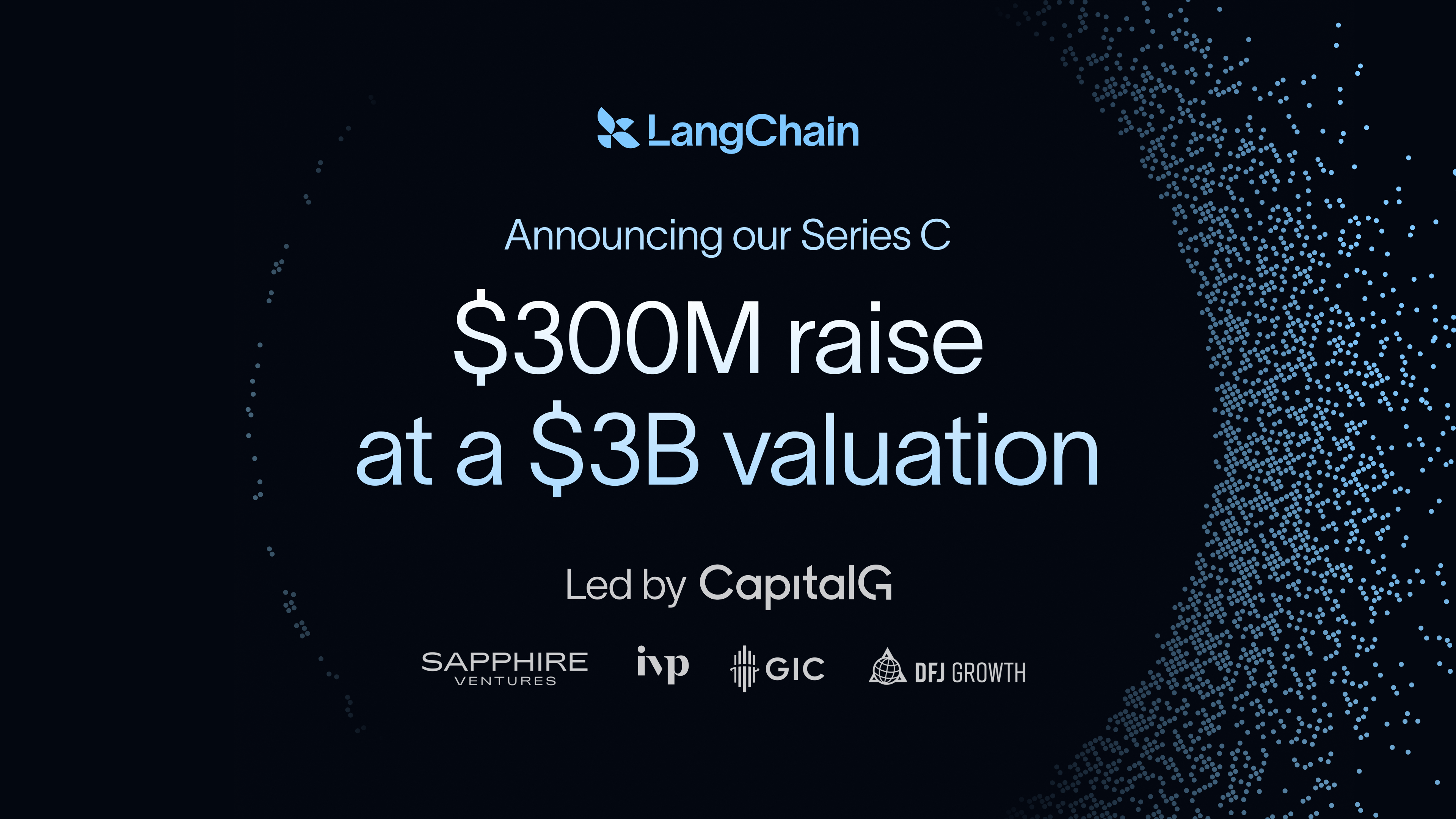
LangChain Secures $300M Series C at $3B Valuation Led by CapitalG as Enterprise Focus Pivots to Agent Governance
0
Discuss 1
The annual State of the Game Industry survey conducted by the Game Developers Conference (GDC) has delivered its most revealing and consequential verdict yet on the role of artificial intelligence in interactive entertainment. Drawing from over 2,600 verified game developers, technical leads, and studio executives worldwide, the November 2026 report reveals that 40 percent of developers now utilize generative AI tools in their professional workflows—a notable four-point increase over previous cycles. Yet, behind this steady uptick in adoption lies an unprecedented ideological and operational rift: more than 55 percent of industry professionals believe generative AI is exerting an actively negative influence on video games, while only 8 percent view its overall trajectory as positive. Coming on the heels of more than 20,000 studio layoffs across 2024 through 2026, the findings expose an escalating struggle between executive mandates for cost reduction and frontline creators fighting to defend the craftsmanship, legal integrity, and labor stability of their medium. ### Granular Adoption: Back-Office Acceleration Versus Frontline Creative Resistance The headline 40 percent adoption figure conceals a profound divergence across technical and creative disciplines. Generative AI is not penetrating game studios evenly; instead, it has found its strongest footing in operational, analytical, and administrative roles while encountering stiff resistance in expressive crafts. According to the GDC dataset, business operations and studio services lead all categories with a 63 percent adoption rate, followed closely by marketing, community management, and public relations at 51 percent. In software engineering, 48 percent of programmers report using generative tools—primarily leveraging specialized code-generation models for boilerplate syntax scaffolding, regular expression generation, unit test creation, and debugging. In stark contrast, visual artists, narrative designers, and audio engineers demonstrate the lowest adoption and the fiercest opposition. Visual art adoption sits at just 21 percent, while narrative design hovers around 38 percent—with the vast majority of those users restricting the technology to preliminary research, divergent brainstorming, and internal pitch decks rather than commercial in-game assets. For frontline creatives, generative models represent an acute existential and moral threat: systems trained on scraping uncompensated human artistry without consent, repurposed to generate derivative content that devalues original creative vision. The disparity underscores a central reality of the modern games industry: generative AI is widely embraced where it speeds up administrative drudgery, but deeply resented where it threatens to displace human expression. ### The AAA Dilemma: Management Pressure Collides with Copyright and IP Embargoes The report highlights a widening operational divide between major commercial publishers and independent studios. Workers at AAA enterprises report facing executive pressure or explicit managerial encouragement to integrate generative AI at three times the rate of their independent peers—27 percent versus 9 percent. With ballooning production budgets routinely exceeding $200 million and development cycles stretching past six years, corporate leadership at publicly traded giants faces intense pressure from institutional investors to demonstrate margin expansion and labor productivity windfalls through automation. Yet, this top-down push has generated a paradoxical backlash inside the very studios attempting to implement it. A staggering 23 percent of surveyed game developers report that generative AI is strictly and categorically banned inside their workplaces. Another 11 percent state that its use is actively discouraged, while only 1 percent operate under mandatory company-wide policies. This high rate of workplace prohibition is not merely an ideological protest; it is driven by hard legal and technical barriers. Corporate legal counsels at top-tier publishers increasingly recognize that utilizing third-party commercial models introduces severe copyright vulnerabilities. Under established legal precedents across North America and the European Union, purely machine-generated assets cannot be copyrighted, leaving core game content vulnerable to unauthorized duplication. Furthermore, concerns regarding proprietary codebase leakage into public model weights and ongoing union protections—such as SAG-AFTRA interactive agreements safeguarding voice and motion-capture talent—have forced many tier-one studios to erect strict firewalls preventing generative tools from touching production code. ### Structural Divergence: Mobile Iteration Versus the Premium Craft Moat The GDC survey reveals that a studio’s monetization model dictates its embrace of automated tooling far more than its geographical location. Mobile-only studios (58 percent adoption) and free-to-play live-service operators (52 percent adoption) exhibit the highest saturation of generative workflows. The mobile games economy is structurally reliant on relentless asset iteration, dynamic advertising variations, and aggressive user-acquisition testing, environments where rapid throughput and algorithmic tuning supersede authorial nuance. Conversely, premium PC and console developers remain exceptionally cautious, with independent PC developers reporting adoption rates under 25 percent. For premium titles, where commercial success relies heavily on cohesive world-building, distinct artistic identity, and community goodwill, automated shortcuts carry severe reputational risk. With platform holders like Valve implementing mandatory AI disclosures on Steam—where AI-flagged submissions recently surged past 50 percent (as documented in post #9343)—and players increasingly organizing review boycotts against perceived low-effort automated releases (post #9333), premium studios view unvetted AI generation as an existential liability. In the premium space, handcrafted authenticity is rapidly transitioning from a traditional production method into a vital commercial selling point and brand differentiator. ### The Broken Ladder: How Automating Junior Labor Jeopardizes Industry Succession Beyond immediate debates over art and code quality, the GDC findings bring into focus a critical long-term structural risk: the collapse of the industry’s junior talent pipeline. Historically, entry-level programmers, junior technical artists, and quality assurance specialists acquired foundational domain knowledge by performing the exact routine tasks that studios are now offloading to language models—writing rudimentary scripts, rigging minor background props, cleaning up data tables, and triaging crash logs. By automating early-career responsibilities to trim balance sheets, game studios risk eliminating the traditional apprenticeship path that transforms enthusiastic graduates into seasoned systems architects, engine programmers, and creative directors. Survey commentary from senior leads reflects growing alarm that junior roles are disappearing at the exact moment production complexity is reaching historic highs. If studios sever the entry-level rungs of the development ladder, the industry faces an acute shortage of senior technical leadership within the next decade, compounding the destabilization wrought by recent mass layoffs. ### The Road Ahead: Human Craft as the Definitive Competitive Advantage The 2026 GDC State of the Game Industry report demonstrates that while generative artificial intelligence has secured an undeniable technical foothold across the business, its integration is generating more friction than harmony. Rather than ushering in an era of frictionless game creation, generative AI has illuminated the irreconcilable differences between industrial efficiency and artistic creation. As the industry navigates an oversaturated market crowded with algorithmic content, the studios finding enduring commercial and critical resonance are not those attempting to automate the human spirit out of development, but those leveraging technology to empower human authors. In an entertainment landscape inundated with synthetic ubiquity, original vision, nuanced storytelling, and authentic mechanical craft remain the only true moats. ### Sources & Further Reading - [Game Developer / GDC (US/Global — Official State of the Game Industry Survey Report)](https://www.gamedeveloper.com/business/layoffs-ai-and-next-gen-what-2-600-game-professionals-told-gdc-this-year) - [PC Gamer (US/UK — Video Game Industry & Labor Analysis)](https://www.pcgamer.com/software/ai/40-percent-of-game-developers-use-generative-ai-according-to-a-new-report-but-more-than-half-reckon-the-technology-has-a-negative-impact-on-the-games-industry/) - [GamingOnLinux (UK — Independent Linux & Gaming Outlet)](https://www.gamingonlinux.com/2026/11/gdc-november-2026-survey-shows-40-percent-of-developers-using-generative-ai/) ~Gaming ~GenerativeAI ~GDC ~GameDev ~TechIndustry
GDC 2026 State of the Game Industry: 40% of Developers Adopt Generative AI as Deepening Skepticism and Studio Bans Expose Industry Rift
0
Discuss 1

Most used mushitags

Browse the most used mushitags today, this month or this year. Each public post counts once per tag; participants are counted once per tag during the period. Counts follow your content preferences. Periods start at midnight UTC.

  1. ~worldnews6 posts · 1 participant
  2. ~gaming4 posts · 1 participant
  3. ~artificialintelligence3 posts · 1 participant
  4. ~geopolitics2 posts · 1 participant
  5. ~infrastructure2 posts · 1 participant
  6. ~russia2 posts · 1 participant
  7. ~techindustry2 posts · 1 participant
  8. ~agenticai1 post · 1 participant
  9. ~aiagents1 post · 1 participant
  10. ~airtrafficcontrol1 post · 1 participant
  11. ~astronomy1 post · 1 participant
  12. ~aviation1 post · 1 participant
  13. ~benchmarks1 post · 1 participant
  14. ~bigtech1 post · 1 participant
  15. ~chatgpt1 post · 1 participant
  16. ~china1 post · 1 participant
  17. ~cloud1 post · 1 participant
  18. ~congreso1 post · 1 participant
  19. ~deckbuilder1 post · 1 participant
  20. ~elecciones29n1 post · 1 participant