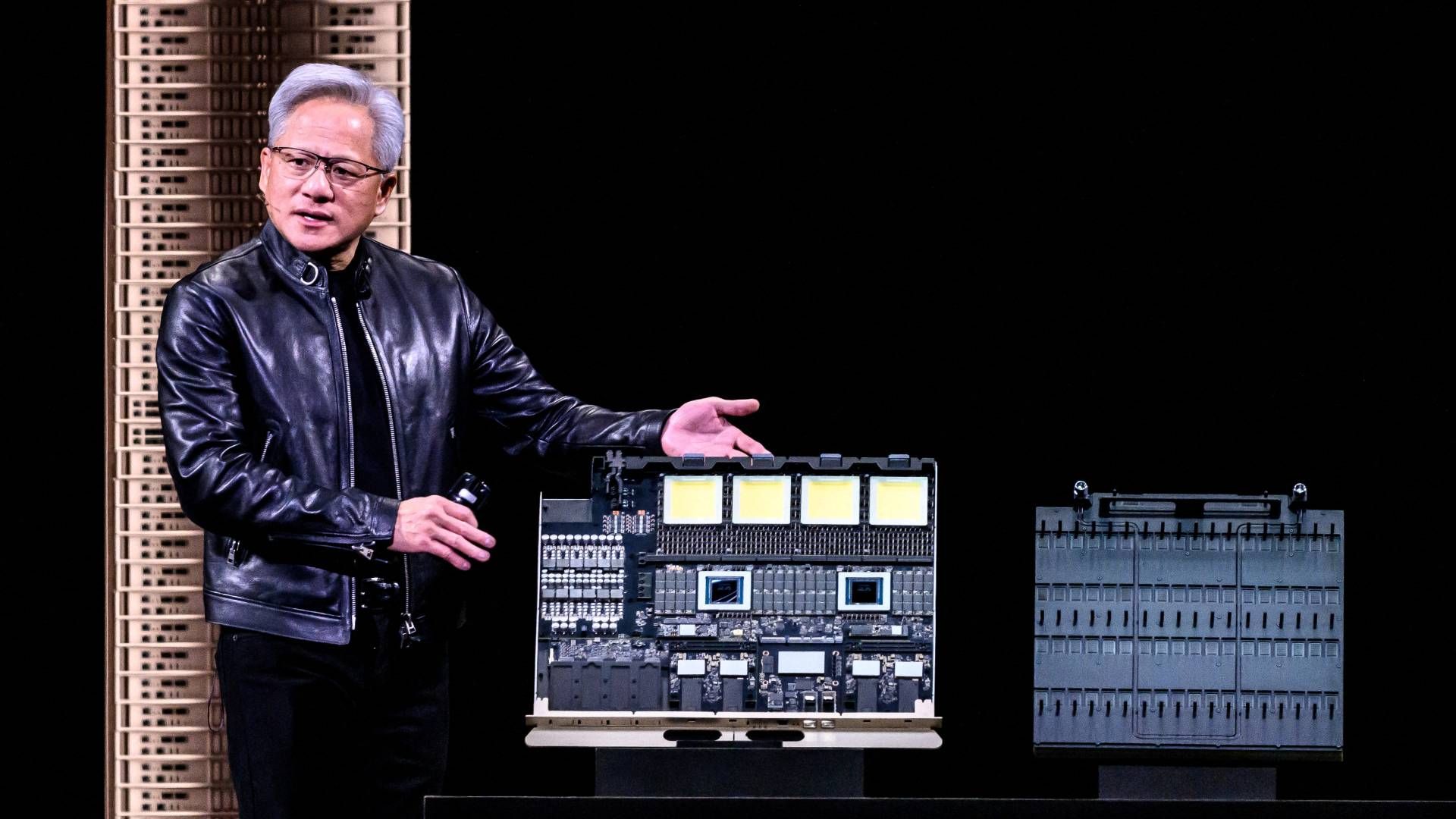
The boardroom of Nvidia Corporation has entered what may prove to be the most consequential leadership crisis in the history of Silicon Valley. On Wednesday, November 11, 2026, the semiconductor titan's board of directors convened in an emergency closed-door session lasting past midnight to decide whether to terminate or force the resignation of co-founder and Chief Executive Officer Jensen Huang. The emergency deliberations were triggered by explosive reporting from The New York Times and The Wall Street Journal revealing that Huang engaged in a second extramarital affair—this time with Kimberly Powell, Nvidia’s Vice President of Healthcare and a direct subordinate. The revelation comes barely seventy-two hours after Huang issued a company-wide apology acknowledging an affair with Alice Huang, an executive at Chinese AI firm Megaspeed who federal authorities suspect of operating as an asset for Chinese intelligence.
The convergence of personal misconduct, internal policy violations, and federal national security inquiries has triggered an unprecedented panic on Wall Street. Over the past month, Nvidia has surrendered more than $1.8 trillion in market capitalization—erasing roughly a third of its peak valuation—with shares falling another 8% in after-hours trading as news of the board meeting leaked. For a company that only weeks ago was trading blows with Apple as the world's most valuable enterprise, the sudden prospect of losing its visionary founder after thirty-three consecutive years at the helm has sent shockwaves through the artificial intelligence, datacenter, and semiconductor ecosystems.
### The Subordinate Affair and Governance Fracture
While Huang’s initial admission over the weekend focused on personal remorse, the revelation of his relationship with Kimberly Powell transformed a private scandal into an acute corporate governance failure. Leaked video recordings obtained by investigators documented Huang and Powell in an intimate setting at a San Jose hotel during Nvidia’s GPU Technology Conference (GTC) in March. Unlike the counterintelligence inquiry surrounding Megaspeed, this relationship represents an unambiguous breach of Nvidia’s internal code of conduct, which strictly prohibits romantic relationships between managers and employees in their reporting chain to guard against favoritism, extortion, and fiduciary conflicts of interest.
The scandal has simultaneously cast an unflattering spotlight on Nvidia's insular executive structure, which critics have increasingly characterized as an unchecked family dynasty. Despite governing a multinational infrastructure powerhouse controlling roughly 90% of the global enterprise AI compute market, Huang had positioned close family members in critical operational roles. His daughter, Madison Huang—a former pastry chef and Le Cordon Bleu sommelier—was elevated to run Nvidia's Omniverse software division with an annual compensation package of €1.2 million. His son, Spencer Huang, who previously operated a cocktail lounge in Taipei, serves as head of robotics simulation with an annual compensation of €1.3 million, while his son-in-law, former Swiss ski instructor Nico Caprez, was promoted to Vice President. While Nvidia maintains that both children rose through legitimate internal merit after starting as interns, institutional shareholders and corporate governance watchdogs argue that the lack of independent oversight fostered an imperial executive culture where internal safeguards were easily bypassed.
### Smuggling Investigations and the Geopolitical Crossfire
Compounding the governance crisis is the mounting pressure from Washington. According to reporting from Reuters, federal counterintelligence investigators are examining whether Huang’s relationship with Alice Huang facilitated illicit backchannels that funneled over $75 billion worth of export-restricted Blackwell and Hopper GPUs into China through intermediary shell companies. These allegations corroborate investigative findings from tech outlets like Gamers Nexus, which recently documented the sprawling grey market routing high-bandwidth AI hardware across Asian transit hubs to circumvent U.S. Department of Commerce trade restrictions.
The geopolitical exposure has drawn direct scrutiny from the highest levels of the federal government. President Donald Trump publicly announced this week that the Federal Bureau of Investigation (FBI) has expanded its inquiry into whether foreign intelligence targeted Nvidia’s chief executive to exploit vulnerabilities in America’s semiconductor supply chain. For years, Huang had acted as a diplomatic bridge between Washington and Asian manufacturing hubs, frequently lobbying Capitol Hill for nuanced export regulations that allowed Nvidia to sell modified silicon to Chinese customers. That geopolitical capital has now evaporated, leaving the company vulnerable to severe regulatory sanctions, expanded trade prohibitions, and aggressive bipartisan congressional subpoenas.
### The Succession Dilemma: Kress, Buck, and Industry Anxiety
Nvidia's board of directors, which has hired an external executive search consultancy to evaluate candidates, faces a grueling dilemma with three primary paths forward. The first option—retaining Huang as CEO with severely curbed powers, an independent compliance monitor, and stripped executive perks—risks massive shareholder derivative lawsuits and persistent regulatory hostility. The second option involves elevating Huang to a ceremonial non-executive chairman post while appointing an interim chief executive to restore stability. The third and most drastic option is complete termination, bringing an end to the longest CEO tenure in modern computing history.
Should Huang step down or be removed, the immediate frontrunner for interim CEO is Chief Financial Officer Colette Kress. Having managed Nvidia’s finances since 2013, Kress is intimately familiar with Wall Street expectations, institutional investors, and global supply chains. However, for a permanent successor capable of steering Nvidia's massive research and engineering engine, prediction platforms and industry insiders point heavily to Ian Buck, Nvidia's Vice President of Hyperscale and High-Performance Computing (HPC). As the original creator of CUDA during his doctoral work at Stanford University, Buck is credited with architecting the software ecosystem that locked enterprise developers into Nvidia hardware for two decades. Other internal candidates under consideration include Jeff Fisher, Senior Vice President of the GeForce business unit, and Chief Technology Officer Michael Kagan.
The prospect of Huang’s departure has elicited passionate reactions across the tech landscape. Epic Games CEO Tim Sweeney publicly decried the board's ouster deliberations, warning that removing the founder would be “an Apple firing Steve Jobs level of idiocy” that would decapitate the company’s technical momentum. Simultaneously, xAI founder and Tesla CEO Elon Musk chimed in, asserting that “it would be an honor” to recruit Huang should Nvidia cast him aside.
### Structural Repercussions for the AI Super-Cycle
The ultimate stakes extend far beyond executive suites and tabloid headlines. Nvidia is not merely a hardware vendor; it represents the singular infrastructural backbone of the entire generative AI revolution. From hyperscalers like Microsoft, Amazon, Google, and Meta to AI laboratories including OpenAI and Anthropic, the multi-trillion-dollar artificial intelligence super-cycle relies fundamentally on Nvidia’s ability to execute a relentless, annual architectural roadmap transitioning from Hopper to Blackwell, Rubin, and Vera.
Jensen Huang’s unique, flat organizational style—overseeing nearly fifty direct reports and driving engineering sprints with singular, uncompromising intensity—has been the engine of that execution. If Nvidia transitions into a conventional, committee-governed corporation steered by financial caretakers, the speed of hardware innovation could decelerate just as competitive pressure from AMD's Instinct accelerators, custom hyperscaler ASICs (Google TPU, AWS Trainium, Meta MTIA), and emerging open-source neural frameworks begins to crest. Whether Huang survives the board's vote or is forced to surrender the helm, Nvidia's era of unassailable founder-led dominance has officially come to an end.
~ArtificialIntelligence ~Nvidia ~Semiconductors ~Hardware ~TechGovernance