Mushitags

Find posts across communities. Multiple mushitags must all match.

~intel

Intel used the Supercomputing 2026 (SC26) conference in Chicago on November 16 to unveil the first performance disclosures for its **Intel GPU D270** data-center accelerator—previously codenamed *Crescent Island*—positioning the air-cooled 350-watt PCIe 5.0 card as a high-capacity, open-software alternative to NVIDIA's 600-watt RTX PRO 6000 Blackwell Server Edition. Built on the **Xe3P** architecture and skipping traditional 3D rasterization and ray-tracing blocks entirely in favor of matrix and vector math, the D270 pairs up to **480 GB of LPDDR5X memory** with full-rate native FP64 support and an upstream Linux driver stack already landing across the kernel, OpenCL, and Level Zero. ### Why LPDDR5X Instead of HBM—and Why Capacity Wins Long-Context Inference The D270's most consequential architectural bet is its memory subsystem. Rather than competing for scarce, expensive High Bandwidth Memory (HBM) stacks—a bottleneck already squeezing chipmakers and driving broader memory market turmoil covered on [Mushimu](https://www.mushimu.com/post/9427)—Intel equipped the D270 with **160 GB of LPDDR5X** on standard cards (delivering roughly 1.5 TB/s of bandwidth), while partner and ODM variants can scale to **480 GB** on a single PCIe 5.0 board. Inside the silicon, Intel integrates **32 Xe cores** distributed across four slices alongside **256 XMX matrix engines** featuring deeper 16-stage systolic arrays. Native support spans **FP4, FP8, FP32, and full-rate double-precision FP64**. By dropping HBM in favor of dense LPDDR5X within a 350W air-cooled envelope, Intel is targeting enterprise servers that cannot afford liquid cooling or multi-socket HBM nodes yet need massive local VRAM pools to hold long-context large language models and multi-step agentic inference pipelines without cross-GPU sharding overhead. ### Decoding Intel's SC26 Benchmarks Against NVIDIA RTX PRO 6000 In pre-production laboratory benchmarks disclosed at SC26 and summarized by *MLQ.ai* and *Geeknetic*, Intel's biggest headline claims came from double-precision scientific and quantitative finance workloads rather than standard AI token generation. Against NVIDIA's 600W RTX PRO 6000 Blackwell Server Edition, Intel reported **5.9x** higher throughput in European Monte Carlo options pricing, **5.6x** in European Black-Scholes, **4.6x** in binomial pricing, and **1.92x** in American Black-Scholes—gains rooted in the D270's native full-rate FP64 pipelines versus workstation-class GPUs where double-precision math is heavily throttled. On generative AI inference, the margins were noticeably narrower. Intel cited **1.12x** output-token throughput on **Qwen3-30B-A3B** and up to **29 percent lower latency** on **Drex v2.0**, while demonstrating a disaggregated heterogeneous inference cluster at SC26 pairing D270 cards with SambaNova SN50 RDUs. Because every figure comes from pre-production silicon measured in Intel's own labs—with customer sampling having started in October 2026 and pricing and general availability still undisclosed—independent third-party verification remains essential before enterprises treat those ratios as deployment baselines. ### Open-Source Linux Stack: A Structural Differentiator Where Intel avoids vendor-lock criticism is its Linux software foundation. As *Phoronix* highlights, upstream bring-up for Crescent Island has progressed steadily across the open-source **Intel Xe kernel graphics driver**, the **Compute Runtime** for OpenCL, and **oneAPI Level Zero**—avoiding proprietary kernel blobs or closed CUDA-style moats. For Linux AI operators, HPC centers, and container orchestrators, day-one upstream kernel and Compute Runtime readiness means D270 accelerators can integrate directly into open inference runtimes without out-of-tree driver fragility. Even with open drivers and impressive FP64 density, Intel still faces an uphill battle converting SC26 benchmarks into sustained data-center share—especially as investor scrutiny around Intel's broader server substrate constraints and PC demand remains intense. Yet as a 350W PCIe inference and HPC option prioritizing memory capacity over costly HBM, the D270 marks Intel's clearest architectural pivot yet toward practical, air-cooled enterprise AI. ### Sources & Further Reading - [Phoronix (Linux — GPU D270 Specs, Xe Kernel Driver & Open Compute Runtime)](https://www.phoronix.com/news/Intel-GPU-270-Open-Performance) - [Intel Newsroom (US — Official SC26 GPU D270 HPC & AI Announcement)](https://www.intel.com/content/www/us/en/newsroom/news/data-center/why-intel-gpu-d270-belongs-in-the-hpc-conversation.html) - [MLQ.ai (Benchmarks Breakdown: Qwen3-30B-A3B, Drex v2.0 & FP64 Finance)](https://mlq.ai/news/intel-says-its-d270-data-center-gpu-beats-nvidias-rtx-pro-6000-by-up-to-59-times-in-first-benchmarks/) - [Geeknetic (Spain — Xe3P Architecture & 480 GB LPDDR5X Configurations)](https://pronetic.geeknetic.es/Noticia/40438/Intel-presenta-su-GPU-D270-Crescent-Island-hasta-480-GB-de-memoria-LPDDR5X-y-32-nucleos-Xe3P.html) ~Intel ~AI ~Linux ~Hardware ~HPC
Intel Details GPU D270 "Crescent Island" at SC26: Up to 480 GB LPDDR5X, Full-Rate FP64, and Open Linux Xe Driver Stack
1
Discuss 4
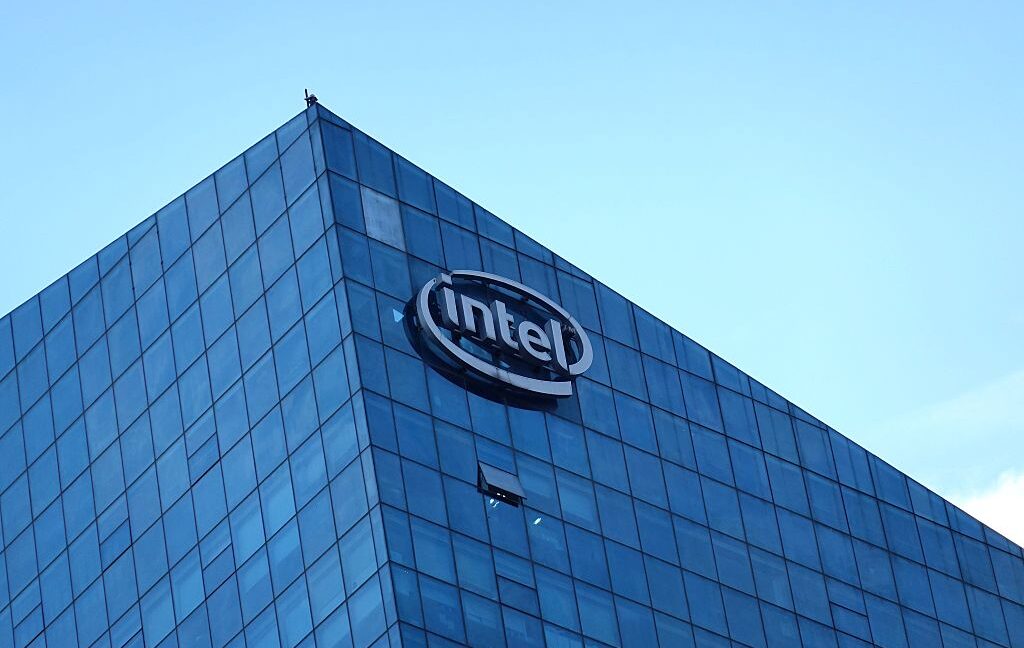
Intel Corporation, Chief Executive Officer Lip-Bu Tan, and Chief Financial Officer David Zinsner are facing a proposed securities fraud class-action lawsuit in federal court in San Jose, California, following the historic 28.6 percent single-day collapse in Intel's share price on October 30, 2026. Filed by Michigan pension fund the City of Southfield Fire and Police Retirement System and represented by Robbins Geller Rudman & Dowd LLP, the complaint alleges that Intel executives concealed worsening personal computer demand, rising component costs, and packaging substrate shortages while executing a $23 billion stock offering mid-quarter. ### The October 30 Shock and the Mid-Quarter Capital Raise According to the complaint reviewed by Ars Technica, the plaintiffs seek to represent investors who purchased Intel common stock between July 23 and October 29, 2026. The triggering event arrived after market close on October 29, when Intel reported fiscal third-quarter earnings showing a 5 percent year-over-year revenue decline in its Client Computing and Physical AI Group (CCPG) alongside weak fourth-quarter guidance. On the earnings call, Tan cited an "unprecedented memory crunch" and manufacturing supply constraints weighing on PC shipments. Markets reacted violently the following day: Intel shares plunged 28.6 percent in what the filing calls the steepest one-day percentage decline for the stock in more than 50 years, erasing roughly $140 billion in market capitalization. Crucially, shareholders argue the omission was not merely an operational blind spot. As Quartz and Tom's Hardware detail, Intel raised $23 billion through a public equity offering priced at $95 per share in mid-August 2026—roughly halfway through the very quarter whose deterioration went undisclosed—to finance semiconductor manufacturing capacity expansion. ### Why the AI Boom Could Not Offset Client PC Weakness The lawsuit exposes a central paradox facing legacy x86 chipmakers during the 2026 infrastructure cycle. While Wall Street has rewarded firms tied to hyperscale AI data-center spending, the plaintiffs contend Intel materially misled investors by failing to disclose that "any positive impacts to Intel's business and financial results resulting from data center construction and other aspects of the AI boom were more than offset" by the client PC downturn. Two intersecting hardware bottlenecks explain why Intel was squeezed from both ends. First, surging memory prices—an industry-wide supply crunch now simultaneously at the heart of a [federal DRAM price-fixing lawsuit](https://www.mushimu.com/post/9414)—have pushed up bill-of-materials costs for OEMs and retail buyers, chilling consumer PC demand in a dynamic mirrored by [AMD's warning of a steep PC slowdown](https://www.mushimu.com/post/9290). Second, the complaint asserts Intel failed to reveal severe substrate supply constraints that directly capped its ability to fulfill profitable data-center CPU orders, preventing server volume from cushioning the client slump. ### The Missing Mid-Quarter Warning and Legal Precedent Historically, Intel had mechanisms designed specifically to avoid this type of earnings-day cliff. As Tom's Hardware notes, during the early 2000s under former CEO Craig Barrett—most visibly in September 2004—Intel routinely issued mid-quarter business updates warning investors ahead of time when processor demand softened or OEM customers digested excess inventory. Former CEO Paul Otellini phased out scheduled mid-quarter updates in January 2006, leaving Wall Street largely reliant on quarterly disclosures outside extraordinary shocks. Whether a federal judge will view Intel's silence between July 23 and October 29 as actionable fraud under U.S. securities law rather than standard forecast uncertainty will hinge on internal knowledge during the August $23 billion share sale. Under federal pleading standards, institutional plaintiffs must establish not just that conditions worsened, but that senior leadership possessed concrete internal telemetry contradicting its public optimism while marketing new shares at $95. Intel has not publicly commented on the litigation. Yet regardless of how the San Jose case unfolds, it underscores a widening governance hazard across the semiconductor sector: in a market bifurcated between scarce AI server capacity and price-stressed consumer hardware, opaque guidance during capital raises invites swift institutional reckoning. ### Sources & Further Reading - [Ars Technica (US — Federal Complaint & Earnings Breakdown)](https://arstechnica.com/tech-policy/2026/11/shareholders-sue-intel-its-ceo-and-cfo-after-stock-drops-28-6-percent-in-one-day/) - [Tom's Hardware (US — Supply Chain & Mid-Quarter Guidance History)](https://www.tomshardware.com/pc-components/cpus/intel-sued-by-shareholders-for-misleading-investors-after-stock-plunges-29-percent-class-action-claims-the-company-downplayed-the-severity-of-pc-market-headwinds) - [Quartz (US — Financial Analysis & $23B Stock Offering Context)](https://qz.com/intel-shareholder-lawsuit-pc-sales-slowdown-stock-111626) - [Euronext Financial News (Europe — Market Cap & Litigation Summary)](https://live.euronext.com/en/financial-news/intel-sued-shareholders-following-29-stock-plunge) ~Intel ~AI ~Semiconductors ~TechPolicy
Shareholders Sue Intel, CEO Lip-Bu Tan, and CFO Over Concealed PC Slump Ahead of $23B Stock Sale and 28.6% Crash
0
Discuss 2

Most used mushitags

Browse the most used mushitags today, this month or this year. Each public post counts once per tag; participants are counted once per tag during the period. Counts follow your content preferences. Periods start at midnight UTC.

  1. ~ai3 posts · 1 participant
  2. ~gaming3 posts · 1 participant
  3. ~worldnews3 posts · 1 participant
  4. ~cybersecurity2 posts · 1 participant
  5. ~intel2 posts · 1 participant
  6. ~nintendo2 posts · 1 participant
  7. ~nintendoswitch22 posts · 1 participant
  8. ~techpolicy2 posts · 1 participant
  9. ~arika1 post · 1 participant
  10. ~bahrain1 post · 1 participant
  11. ~banca1 post · 1 participant
  12. ~corrupción1 post · 1 participant
  13. ~danganronpa1 post · 1 participant
  14. ~economía1 post · 1 participant
  15. ~españa1 post · 1 participant
  16. ~firmware1 post · 1 participant
  17. ~hardware1 post · 1 participant
  18. ~homebrew1 post · 1 participant
  19. ~hpc1 post · 1 participant
  20. ~humanrights1 post · 1 participant