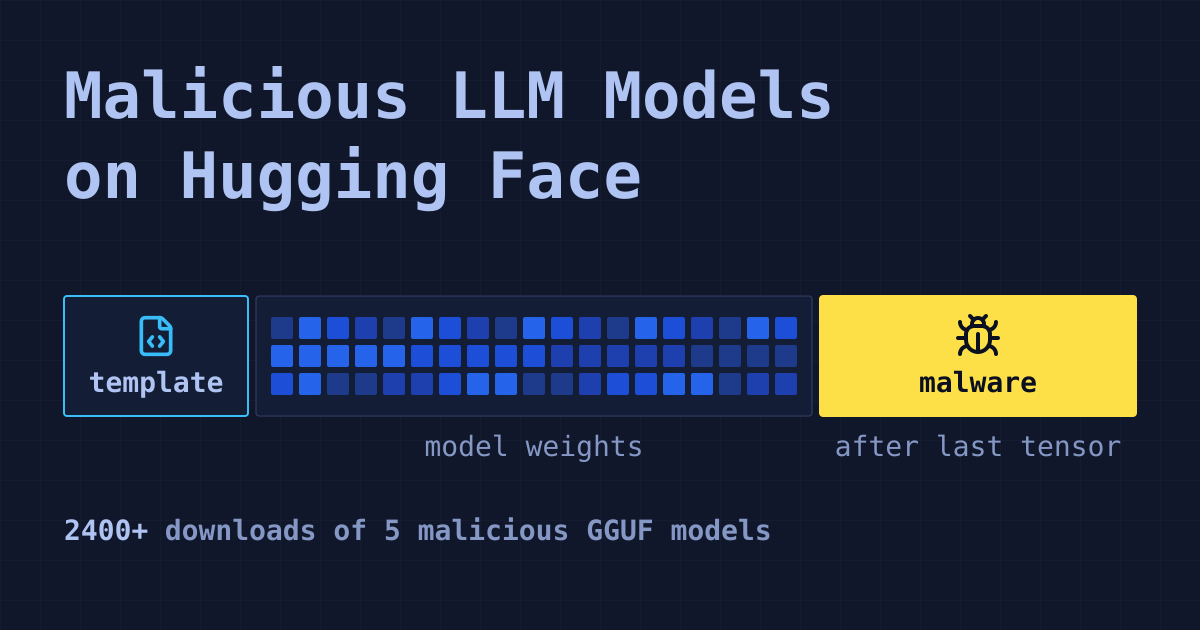
A security researcher reported finding five suspicious GGUF model repositories on Hugging Face after scanning roughly 3.27 million public model repositories. In a [November 27 disclosure](https://malspark.com/blog/malicious-gguf-models-hugging-face/), Düzgün, who publishes as Root0ne, described a Windows remote access trojan in files from two repositories and instructions aimed at coding agents in three others. The five repositories had 2,428 combined downloads, according to the researcher. The number of devices compromised remains unknown.
### A model can carry more than weights
GGUF is a common format for running language models locally. It stores weights alongside metadata used by the software that loads the model. One kind of metadata, the chat template, helps the application format a conversation for the model. That makes the template relevant to security: it can affect the replies a user or an automated tool receives, even when the application runs on the user's own computer. [Hugging Face's format documentation](https://huggingface.co/docs/hub/gguf) describes GGUF as a binary format with built-in support on the Hub.
Malspark described two patterns. In the first, files reportedly contained a Windows trojan and were associated with output intended to persuade a person to run a command. In the second, the instructions targeted a coding agent with access to a terminal. The researcher did not recover the next stage in that second group. The reported paths required an additional action by a person or agent. Loading the files alone did not establish execution in the cases described.
The common element is trust in the model's output. A developer may reasonably expect a coding assistant to suggest commands. A tool with permission to execute them can turn that expectation into a security decision without the developer seeing the original prompt or understanding where the suggestion came from. A model evaluated as a chatbot and the same model attached to a terminal therefore present different risks. The surrounding application determines what a reply is allowed to do.
### What the download tally tells us
The count helps show that the repositories attracted interest. Downloads can include repeat fetches, automated jobs and people who never loaded a file. A count also does not say who ran a particular revision or what permissions were available at the time. Treating the total as a victim count would overstate what the disclosure establishes. The scan provides a view of the repositories the researcher examined with that method. It cannot establish how common malicious models are across all formats or hosting services.
[RuntimeWire's coverage](https://runtimewire.com/article/researcher-finds-malware-hidden-in-hugging-face-gguf-models) also attributes the findings to Malspark and says it did not independently reproduce them. Hugging Face's [malware scanning documentation](https://huggingface.co/docs/hub/en/security-malware) describes its general scanning and status indicators. A public response from the platform specific to these five repositories was unavailable in the coverage reviewed for this report.
### Keep tools and credentials outside the first run
Start with models published by a maintainer you can identify and pin the exact repository revision you reviewed. When trying an unfamiliar model, start in a setting with limited access to files and no credentials or shell permissions. Review any request to run a command as you would a request from an unfamiliar website. For teams running agents, keep tool permissions under application control and require approval before a model can execute a command or transfer files. These controls also limit the damage from an ordinary model mistake.
If someone ran a suspicious command, treat that as a potential endpoint incident. Isolate the affected machine, preserve the relevant logs and involve the team responsible for incident response. Review any credentials that were accessible to the process, and rotate potentially exposed secrets from a trusted device. The evidence to collect is which artifact and revision were present, what actions were taken and what those actions could access. That is what turns a download count into an assessment of actual exposure.
Image: Malspark, illustration accompanying the original report.
### Sources & Further Reading
- [Malspark, original disclosure](https://malspark.com/blog/malicious-gguf-models-hugging-face/)
- [Hugging Face, Hub malware scanning](https://huggingface.co/docs/hub/en/security-malware)
- [Hugging Face, GGUF documentation](https://huggingface.co/docs/hub/gguf)
- [RuntimeWire, coverage of the disclosure](https://runtimewire.com/article/researcher-finds-malware-hidden-in-hugging-face-gguf-models)
~Cybersecurity ~HuggingFace ~Malware ~AI