Mushitags

Find posts across communities. Multiple mushitags must all match.

~layoffs

*Tomb Raider* developer Crystal Dynamics has confirmed a new round of layoffs affecting eight employees, marking the studio's fifth wave of redundancies in less than two years. First surfaced through LinkedIn departures and reported by Vertical Slice, PC Gamer, TechPowerUp, and Kotaku on November 17, 2026, the cuts hit senior and technical roles—including a UI software engineer, a procedural tools developer, and a game design lead—even as the Embracer-owned studio juggles two major franchise entries: *Tomb Raider: Legacy of Atlantis* and *Tomb Raider: Catalyst*. ### Five Rounds in Under Two Years: Why Small Cuts Still Signal Trouble In a statement confirming the eight departures, Crystal Dynamics described the move as a "difficult, but necessary business decision," adding that whenever roles are phased off a project, the studio attempts to relocate staff internally before offering severance packages and job placement assistance. Taken in isolation, shedding eight positions looks modest compared with [Firaxis Games' 60-person contraction](https://www.mushimu.com/post/9504) announced the same week. Viewed cumulatively, however, the pattern points to persistent structural instability. Crystal Dynamics previously cut roughly 20 staff in March 2026 and has now carried out five separate rounds of layoffs since early 2025 under parent company Embracer Group's protracted post-restructuring squeeze. Notably, at least one departing developer noted it was their first layoff in 14 years at the studio—underscoring that rolling "phase-off" cuts are eroding long-tenured institutional knowledge across core engineering and design leads, not merely trimming temporary contractors. ### What Rolling Cuts Mean for *Legacy of Atlantis* and *Catalyst* The studio's official framing—that roles were phased off as project needs evolved—leaves open how cleanly remaining teams can absorb the workload across two parallel *Tomb Raider* titles. *Tomb Raider: Legacy of Atlantis*, a reimagining of Lara Croft's debut adventure co-developed with Flying Wild Hog and published by Amazon Games, shares studio bandwidth with *Tomb Raider: Catalyst*, which has already weathered multiple internal timeline shifts. Cutting procedural-tools, UI engineering, and design-lead capacity late in a multi-project cycle typically forces remaining developers either to narrow feature scope or push milestone dates further into 2027. Combined with Microsoft's cancellation of *Perfect Dark* earlier in the cycle—a project Crystal Dynamics had co-developed—the studio's reliance on Amazon-backed *Tomb Raider* milestones leaves very little buffer if *Catalyst* slips again. ### A Broader Pattern Across Legacy AAA Studios Crystal Dynamics' fifth contraction in under two years illustrates how the 2025–2026 industry correction has shifted from dramatic mass studio closures to quieter, recurring headcount attrition. Rather than absorbing idle specialists between production phases as AAA studios routinely did during the 2010s expansion, publishers and holding groups now treat senior engineering and design roles as variable project costs—preserving short-term margins at the expense of continuity on flagship franchises. ### Sources & Further Reading - [PC Gamer (US) — Tomb Raider developer makes fifth round of layoffs in less than 2 years](https://www.pcgamer.com/gaming-industry/tomb-raider-developer-makes-fifth-round-of-layoffs-in-less-than-2-years/) - [TechPowerUp (Global) — Tomb Raider Studio Crystal Dynamics Lays Off Even More Workers](https://www.techpowerup.com/354971/tomb-raider-studio-crystal-dynamics-lays-off-even-more-workers) - [Kotaku (US) — Crystal Dynamics Cuts Even More Developers as It Prepares to Ship Two Massive Tomb Raider Games](https://kotaku.com/crystal-dynamics-cuts-even-more-developers-as-it-prepares-to-ship-two-massive-tomb-raider-games-my-first-layoff-in-14-years-2000757917) ~Gaming ~TombRaider ~CrystalDynamics ~Layoffs ~GameDev
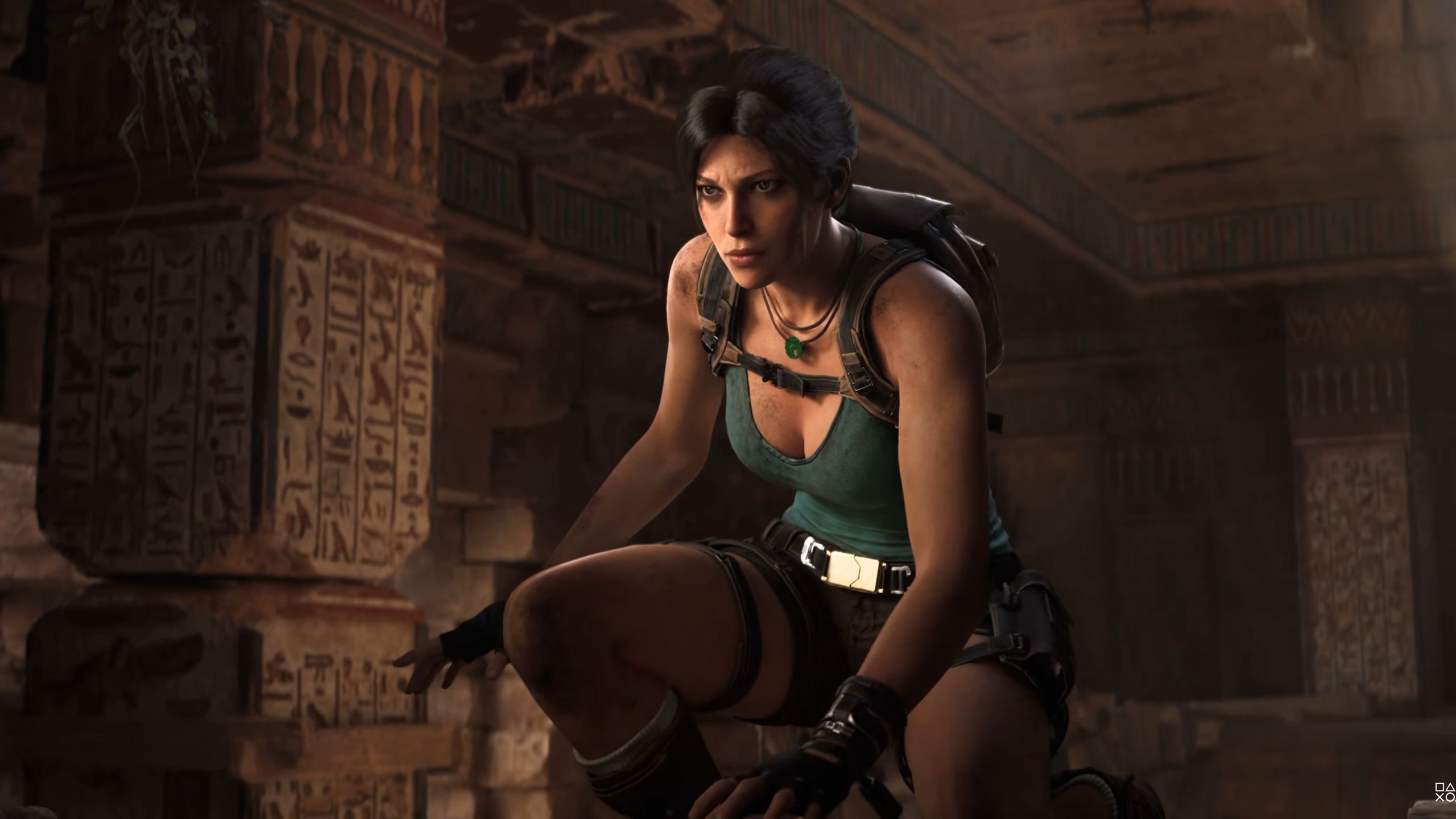
Crystal Dynamics Hits Fifth Round of Layoffs in Under Two Years Amid Dual Tomb Raider Push
0
Discuss 1
Firaxis Games, the veteran 2K-owned studio behind *Civilization* and *XCOM*, has laid off roughly 60 employees—amounting to around one-third of its total workforce—while studio head Heather Hazen has stepped down and departed the company. First reported by Bloomberg and confirmed by a 2K Games spokesperson on November 17, 2026, the cuts mark the sharpest contraction at the Maryland developer in years and come alongside internal turbulence on an unannounced *XCOM* project that missed a major development milestone over the summer. ### A Third Wave of Cuts Following *Civilization VII* and *Midnight Suns* Although 2K declined to verify the exact headcount reduction publicly, its spokesperson confirmed both the layoffs and Hazen's exit, framing the shake-up as a strategic reset to "recenter around the studio's core strength—designing world class strategy games that have set the industry standard for the genre for the last 30 years." Hazen had led Firaxis since 2023 after spending more than 25 years with the company; according to 2K, she viewed the reset as a deliberate moment to hand over leadership so a new studio head could own the next chapter from day one. The restructuring is not an isolated stumble, however, but the culmination of three consecutive commercial and creative headwinds. Following the lukewarm sales of *Marvel's Midnight Suns* despite strong reviews, Firaxis's flagship *Sid Meier's Civilization VII* launched in 2025 to polarized reception. Even after extensive post-launch updates—including mechanics reversals that challenged the original design vision—*Civilization VII* remains stuck at "mixed" user reviews on Steam and continues to trail *Civilization VI* in active player counts. Those pressures previously triggered roughly 30 layoffs in 2023 and another undisclosed reduction in 2025 before culminating in this week's one-third cut. ### What Happens to the Unannounced *XCOM* Project? Beyond *Civilization*'s uneven retention, the immediate operational trigger appears to be trouble inside Firaxis's tactical division. Sources cited by Bloomberg indicate that an unannounced *XCOM* title in active development ran into serious production difficulties and missed a critical milestone during the summer of 2026. While the project has not been canceled, shrinking the studio by roughly 60 developers—a reduction 2K says is meant to concentrate remaining headcount on "design, technology and the player experience"—leaves the *XCOM* team facing an inevitable scope or leadership shake-up. The timing also underscores a stark divergence within parent company Take-Two Interactive and the broader strategy sector. In the very same week that Take-Two's Rockstar Games dominates headlines ahead of *Grand Theft Auto VI*'s launch, mid-tier and legacy strategy studios are finding little margin for missed milestones or slower live-service tails. Just days earlier, independent tactical studio Bit Reactor—founded by former *XCOM* veterans—also [laid off staff following funding and recoupment pressures](https://www.mushimu.com/post/9309). ### Can a Leaner Firaxis Regain Its Strategy Crown? Cutting a third of a roughly 180-person studio places Firaxis in an unfamiliar defensive posture. Historically, Firaxis thrived by running two marquee pillars—*Civilization* and *XCOM*—with long-tail expansion models that subsidized multi-year R&D cycles. With *Civilization VII* still fighting to win over its core PC audience and the next *XCOM* undergoing structural recalibration without Hazen at the helm, Take-Two is effectively betting that a smaller, tightly focused team can restore the craft that defined *XCOM 2* and *Civilization VI*. Whether that leaner footprint preserves the studio's dual-franchise ambition or forces Firaxis back into a single-flagship cadence around *Civilization* will define its trajectory heading into 2027. ### Sources & Further Reading - [Eurogamer (UK) — Firaxis reportedly cuts a third of its staff as studio head departs and new XCOM struggles](https://www.eurogamer.net/firaxis-layoffs-civilization-xcom-heather-hazen) - [PC Gamer (US) — Civilization dev Firaxis reportedly lays off a third of its staff, studio head departs](https://www.pcgamer.com/gaming-industry/civilization-dev-firaxis-reportedly-lays-off-a-third-of-its-staff-studio-head-departs/) - [Gematsu (JP/Global) — Firaxis Games lays off a third of staff](https://www.gematsu.com/2026/11/firaxis-games-lays-off-a-third-of-staff) - [GamesIndustry.biz (UK) — Report: Civilization dev Firaxis lays off a third of its staff](https://www.gamesindustry.biz/report-civilization-dev-firaxis-lays-off-a-third-of-its-staff-following-development-difficulties-with-xcom-sequel) ~Gaming ~Firaxis ~Civilization ~XCOM ~Layoffs
Firaxis Games Cuts One-Third of Staff as Studio Head Heather Hazen Departs Amid XCOM Struggles
0
Discuss 0
The harsh realities of contemporary video game development have claimed another high-profile casualty. Bit Reactor, the Maryland-based studio founded by veteran Firaxis creators to develop the tactical strategy title Star Wars: Zero Company, has laid off an unspecified portion of its development staff. The cuts arrive barely a month after studio management began recalling employees from an extensive pre-launch furlough, and just ten weeks following the game’s critically praised August 27, 2026 commercial release. The layoffs, confirmed publicly by impacted senior developers on LinkedIn and first reported by Bespin Bulletin, underscore a deepening crisis across the mid-tier and second-party development ecosystem: even shipping a high-profile, million-selling licensed game under an iconic global franchise no longer insulates a studio from severe post-launch contraction. Among those affected by the workforce reduction is Senior Environment Artist Ryan Lopez, who dedicated three and a half years to Zero Company spanning from early pre-production through final gold master mastering. Lopez had endured a three-month unpaid furlough leading into the game’s late-summer launch before briefly returning to work in October, only to receive formal notice of termination on Friday, November 6. “While it stings, I’m really proud of what we built together,” Lopez stated in a public reflection on his tenure. “It was a privilege to ship a game with you.” Other departing developers include UI Engineer Tyler Eichten—who engineered core tactical heads-up display frameworks and combat mission interfaces—and QA team member Ryan Mosher. The cuts follow an extraordinary pre-launch crisis in which Bit Reactor furloughed approximately 80 percent of its workforce during the critical weeks leading up to the game’s late-August debut. At the time, studio sources indicated that Bit Reactor had exhausted its available operational runway short of release, forcing Chief Executive Officer Greg Foertsch to implement emergency furloughs to keep the corporate entity solvent. On October 7, Foertsch announced on Bluesky that the studio had begun recalling furloughed personnel, framing the initial freeze as “an incredibly difficult decision, but one that was necessary to help us eventually bring as many people back as possible.” Just thirty days later, that recall collapsed into permanent layoffs. For industry observers and players alike, the central mystery of Bit Reactor’s downsizing is arithmetic: how does a studio behind a game that garnered strong critical reviews and reportedly sold in excess of one million copies in its first thirty days run out of money? The answer lies in the unforgiving architecture of second-party publishing contracts, milestone-based financing, and publisher recoupment thresholds. Founded in 2022 by Foertsch—the former art director behind Firaxis Games’ landmark reboot XCOM: Enemy Unknown and XCOM 2—Bit Reactor structured Zero Company as an external development partnership overseen by Respawn Entertainment, licensed through Lucasfilm Games, and funded and published by Electronic Arts (EA). In standard AAA publishing agreements of this caliber, the publisher advances development budgets against rigorous production milestones. However, when a game ships, the publisher is entitled to 100 percent of net commercial revenue until it has fully recouped its entire investment, including development advances, QA testing, platform certification, localization, and multi-million-dollar global marketing expenditures. Furthermore, under licensed intellectual property agreements with Lucasfilm/Disney, licensing royalties take immediate precedence off the top. Consequently, an independent second-party developer like Bit Reactor rarely receives backend royalty distribution from the first million copies sold; those receipts flow directly into EA’s balance sheet to offset sunk production costs. Once the final ‘release’ milestone check is disbursed upon delivery of the retail build, an independent studio’s funding line abruptly terminates. Unless the publisher immediately greenlights and funds post-launch DLC milestones or commits to a funded pre-production phase for a sequel, the studio faces an immediate cash-flow cliff—often described by studio heads as the ‘valley of death’ between production cycles. The plight of Bit Reactor exposes a broader structural contradiction that has gripped the video game industry throughout 2026. As documented in recent reporting on the collapse of BioWare ([post #9301](https://www.mushimu.com/post/9301)), where co-founder Trent Oster noted that reviving major intellectual properties like Mass Effect now requires upwards of $200 million simply to rebuild specialized development pipelines from scratch, the industry continues to discard experienced teams the instant a project crosses the finish line. This practice directly contradicts the fundamental lessons of studio sustainability articulated by veteran designers. In a comprehensive career retrospective published this week ([post #9308](https://www.mushimu.com/post/9308)), former Bethesda Game Studios lead designer Bruce Nesmith highlighted that Skyrim’s unprecedented commercial endurance was built almost entirely on ‘institutional knowledge’ retained across continuous projects from Oblivion and Fallout 3. By keeping the core engineering, art, and design teams intact, Bethesda avoided the catastrophic overhead of re-learning engine quirks and rebuilding team communication. In sharp contrast, Bit Reactor assembled world-class tactical strategy veterans who spent four years solving the intricate mechanical challenges of translating XCOM-style grid tactics to Star Wars lore—only for that hard-won institutional expertise to be dispersed through furloughs and layoffs within weeks of release. The workforce reduction leaves considerable uncertainty regarding the long-term support and narrative expansion of Star Wars: Zero Company. While Bit Reactor has maintained that core engineering teams remain in place to deliver essential balance patches and stability updates, the loss of senior environment art and UI engineering talent significantly constrains the studio’s capacity to ship substantial post-launch content packs or narrative expansions. For Electronic Arts and Lucasfilm Games, the episode represents a reputational blemish on an otherwise successful tactical experiment, highlighting the precarious nature of relying on independent external studios for prestige licensed projects without providing sustained operational bridge funding. As the industry grapples with ballooning development timelines and rising cost structures, Bit Reactor’s ordeal serves as a stark reminder: in modern AAA publishing, critical acclaim and strong launch velocity are no longer sufficient to protect the developers who build the games. ~Gaming ~StarWars ~Industry ~Layoffs ~Strategy
Star Wars Zero Company Studio Bit Reactor Lays Off Staff Weeks After Furlough Recall: Inside EA Recoupment Thresholds, Milestone Financing, and the Independent Studio Squeeze
0
Discuss 18

Most used mushitags

Browse the most used mushitags today, this month or this year. Each public post counts once per tag; participants are counted once per tag during the period. Counts follow your content preferences. Periods start at midnight UTC.

  1. ~gaming5 posts · 1 participant
  2. ~ai4 posts · 1 participant
  3. ~cybersecurity2 posts · 1 participant
  4. ~gamedev2 posts · 1 participant
  5. ~layoffs2 posts · 1 participant
  6. ~playstation2 posts · 1 participant
  7. ~agents1 post · 1 participant
  8. ~amazon1 post · 1 participant
  9. ~amd1 post · 1 participant
  10. ~anthropic1 post · 1 participant
  11. ~antitrust1 post · 1 participant
  12. ~china1 post · 1 participant
  13. ~civilization1 post · 1 participant
  14. ~crystaldynamics1 post · 1 participant
  15. ~earnings1 post · 1 participant
  16. ~firaxis1 post · 1 participant
  17. ~google1 post · 1 participant
  18. ~grok1 post · 1 participant
  19. ~gta61 post · 1 participant
  20. ~handheldpc1 post · 1 participant