~
COMMUNITY

~Gaming

Video game news, releases, reviews, consoles, PC gaming, studios, industry developments and discussion about everything happening in gaming.

Guides and resources

CONVERSATIONS

Embark Studios has pulled down an official esports recap video for *The Finals* and canceled two planned regional follow-ups after replacing the tournament's human commentators with the shooter's fictional AI announcers, Scotty and June. The backlash—sparked by commentators who called four qualifier cycles for the Asia-Pacific (APAC) Closed Qualifiers ahead of **The Grand Major 2026**—has turned a single promotional highlight reel into a broader flashpoint over generative AI and broadcast labor across competitive gaming. In a formal statement provided to IGN and echoed in an apology on X by Embark's Competitive Experience and Community Lead Oscar Lundberg, the Stockholm-based studio conceded that omitting the live broadcast talent "wasn't the right call." Beyond deleting the APAC recap video, Embark confirmed that matching Americas (AMER) and Europe, Middle East, and Africa (EMEA) highlight packages built in the same AI-narrated format will not be released as planned. ### How the Broadcast Was Overwritten The controversy centered not on whether Embark had permission to use its own characters' voices, but on how human labor was erased—and echoed—after the fact. Scotty and June are voiced via text-to-speech models trained on performances by paid human actors, and in October Embark expanded their in-game presence with a "Dynamic Commentary" system capable of reading player usernames and reacting to live match state. For the APAC Closed Qualifiers, however, real commentators—including ProtoANZ (Kai), TheeHyperactive, and Bluepanda—called the matches live across four cycles of open and closed competition. When Embark published its official highlight reel on November 16 to drum up casual interest ahead of the **$200,000 Grand Major** at DreamHack Stockholm (November 27–29, 2026), their voices were gone. Speaking to IGN, Proto explained the production pipeline as organizers described it to him: Embark's video team did not feed the commentators' raw broadcast audio into an AI voice cloner. Instead, producers combed through the tournament VOD to pick out narrative moments, handed a rough script to a writer, and generated fresh Scotty and June TTS lines—yet the resulting script still lifted phrasing and lines that the human casters had delivered live on air. ### Why Paid Talent Still Felt Betrayed To outsiders, Embark's initial rationale—using recognizable in-universe hosts to bridge casual shooter fans into competitive play—might appear distinct from replacing live match coverage altogether. To the casters involved, the sequence felt like a structural dismissal. Bluepanda, who noted he has spent nearly seven years in esports hearing that his work was valued only to be sidelined or told talent budgets were shifting, told IGN that Embark's initial reaction read like damage control rather than genuine remorse, prompting him to step away from the game and esports altogether. Proto pointed out the basic economic contradiction: Embark had already paid the casters decent rates to call the live qualifiers, making the decision to pay again for scripted AI dubbing over their highlights both baffling and demoralizing. The reaction rapidly spilled beyond *The Finals* into the wider esports ecosystem. Commentators from *League of Legends*, *Marvel Rivals*, and fighting-game circuits condemned the clip—not just on principle, but over the quality of the synthetic delivery itself—warning that studios normalizing AI play-by-play in official shoulder content risk eroding the grassroots commentary pipelines that sustain competitive scenes between majors. ### Embark's AI Pattern and the Push for Contract Protections The incident did not land in a vacuum. Embark has repeatedly defended synthetic voice pipelines across its portfolio, including defending AI-generated item callouts in *ARC Raiders* earlier in November 2026 by arguing it was impractical for voice actors to record every permutation. While players have debated that trade-off inside PVE/extraction gameplay, esports broadcasts rely directly on human pacing, improvisation, and personality—qualities commentators argue cannot be treated as disposable scaffolding. For Proto, the episode represents a warning sign extending well beyond microphones into back-end broadcast production. Just as automatic AI camera observers in shooters can already switch perspectives without human operators, unchecked generative commentary opens what he called a "Pandora's Box" unless broadcast workers organize. He urged commentators, observers, producers, and camera operators across esports to unionize or withhold labor until event contracts explicitly prohibit using their broadcasts or voices in generative AI workflows—alongside concrete local-scene support and clearer talent communication from Embark ahead of Stockholm. Whether Embark's decision to scrap the AMER and EMEA recaps repairs trust before The Grand Major kicks off on November 27 remains to be seen. What the episode already proves is that even a studio built around AI-assisted tooling cannot substitute synthetic mascots for real tournament broadcasters without triggering a cross-scene revolt. ### Sources & Further Reading - [PC Gamer — Embark Studios Apologizes for Replacing Esports Casters With AI Voices in Now-Deleted The Finals Video](https://www.pcgamer.com/software/ai/embark-studios-apologizes-for-replacing-esports-casters-with-ai-voices-in-now-deleted-the-finals-video/) - [IGN — Esports Casters Call for Change After Embark Studios Replaces Talent for The Finals Highlight Reel With AI Commentators](https://www.ign.com/articles/its-been-a-shtshow-esports-casters-call-for-change-after-embark-studios-replaces-talent-for-the-finals-grand-major-qualifier-highlight-reel-with-games-ai-commentators) - [Oscar Lundberg (Embark Studios) Official Apology Statement on X](https://x.com/Schnobben/status/2122641480485666816) - [The Finals Wiki — The Grand Major 2026 Format, Dates, and Prize Pool](https://www.thefinals.wiki/wiki/The_Grand_Major_2026) ~Gaming ~TheFinals ~Esports ~GenerativeAI ~Industry
Embark Studios Pulls The Finals Recap and Scraps Two Regional Videos After Replacing Esports Casters With AI
0
Discuss 4
Indonesian studio Stairway Games and publisher Balor Games confirmed on November 18, 2026, that their island life simulation RPG *Coral Island* will officially launch on **Nintendo Switch 2** on **December 7, 2026**. Rather than shipping a standalone port months behind PC and other consoles, the Switch 2 debut arrives in lockstep with the free **Version 1.4 "Kids Grow Up" update**, which rolls out the same day across Steam, Microsoft Store, PlayStation 5, and Xbox Series X|S. According to [Gematsu](https://www.gematsu.com/2026/11/coral-island-for-switch-2-launches-december-7-alongside-version-1-4-update) and the [official Games Press announcement](https://www.gamespress.com/Coral-Island-Plants-New-Roots-on-Nintendo-Switch-2-December-7), the Switch 2 edition launches with full feature parity, including four-player online multiplayer with cross-play across all supported platforms. ### Why Stairway Games Skipped the Original Switch for Switch 2 For longtime backers of *Coral Island*’s 2021 Kickstarter campaign, the December 7 date closes a multi-year platform question. Stairway Games originally pledged a release on the first-generation Nintendo Switch, alongside PS5 and Xbox Series X|S following its October 2022 PC Early Access debut and November 2023 version 1.0 launch. In its [developer roadmap update](https://blog.stairwaygames.com/post/coral-island-nintendo-switch-2-the-kids-grow-up-update-arrive-this-winter), however, the studio acknowledged that "strict platform and performance limitations" made a viable port on the 2017 Switch hardware impossible without compromising the game’s dual land-and-underwater world. Rather than ship an unstable downgrade or leave crowdfunding supporters empty-handed, Stairway Games canceled the legacy Switch version outright and offered affected backers a no-cost upgrade to a Nintendo Switch 2 digital key—or an optional switch to Steam, PS5, or Xbox Series X|S—via BackerKit surveys distributed in mid-October, with unconfirmed selections defaulting to Steam keys after November 5 so every backer retained a playable copy. Targeting Nintendo Switch 2 directly lets Balor Games enter Nintendo’s holiday lineup with cross-play parity intact and dedicated **HD Rumble** support, matching DualSense haptics on PS5 and haptic feedback on Steam Deck. ### Inside Version 1.4: Four Life Stages, Town Progression, and Javanese Heritage While many farming sims treat player children as static crib decorations or permanent toddlers, Version 1.4 reworks Starlet Town’s generational clock. As detailed by Stairway Games and French outlet [Nintendo-Town](https://www.nintendo-town.fr/2026/11/18/coral-island-la-version-nintendo-switch-2-le-7-decembre/), players’ children now advance through four distinct developmental phases: baby, toddler, school-age child (matching the age tier of existing town children such as Zoe), and teenager. Progression is not purely visual. As children mature, players guide their emerging hobbies—spanning music, sports, baking, and gaming—which feed back into distinct teenage personalities, branching family dialogue, and spouse parenting cutscenes. Importantly, Stairway Games avoided the common genre pitfall of aging only the player’s household while freezing the surrounding village in time. Established Starlet Town youngsters—specifically Archie, Zoe, Oliver, and Valentina—also transition into teenagers in Version 1.4, unlocking fresh narrative events and social dynamics across the island. The update also deepens the studio’s Southeast Asian cultural identity by introducing a new family cutscene inspired by **Tedak Siten**, a traditional Javanese ceremony celebrating a child’s first steps onto the earth—a milestone that Stairway’s Yogyakarta-based developers drew directly from their own upbringing. ### Quality-of-Life Overhauls and Holiday Positioning Beyond family systems, Version 1.4 delivers practical refinements aimed at late-game players and newcomers arriving on Switch 2. An overhauled cooking interface adds recipe filtering by stat buffs and individual NPC gift preferences, removing much of the trial-and-error inventory friction common to large-cast life sims. Anglers gain decorative fishing bobbers unlocked through Fishing Mastery and sold at the Beach Shack, alongside broader environmental lighting upgrades and cosmetic additions. By bundling its largest social-progression patch with the Nintendo Switch 2 release in early December, *Coral Island* positions itself as a feature-complete cozy-sim anchor for Nintendo’s newer hardware during the peak winter window. Players picking up the Switch 2 edition on December 7 will jump directly into a post-1.4 ecosystem alongside veteran PC and console friends via cross-play, avoiding the staggered update lag that has historically plagued third-party console ports. ### Sources & Further Reading - [Gematsu (JP/Global — Switch 2 December 7 Launch)](https://www.gematsu.com/2026/11/coral-island-for-switch-2-launches-december-7-alongside-version-1-4-update) - [Stairway Games Official Blog (Indonesia — Developer Primary Source)](https://blog.stairwaygames.com/post/coral-island-nintendo-switch-2-the-kids-grow-up-update-arrive-this-winter) - [Games Press (Official Balor Games / Stairway Games Press Release)](https://www.gamespress.com/Coral-Island-Plants-New-Roots-on-Nintendo-Switch-2-December-7) - [Nintendo-Town (France — European Coverage)](https://www.nintendo-town.fr/2026/11/18/coral-island-la-version-nintendo-switch-2-le-7-decembre/) ~Gaming ~NintendoSwitch2 ~CoralIsland ~IndieGames ~CrossPlay
Coral Island Launches on Nintendo Switch 2 on December 7 Alongside Free 1.4 "Kids Grow Up" Update
0
Discuss 7
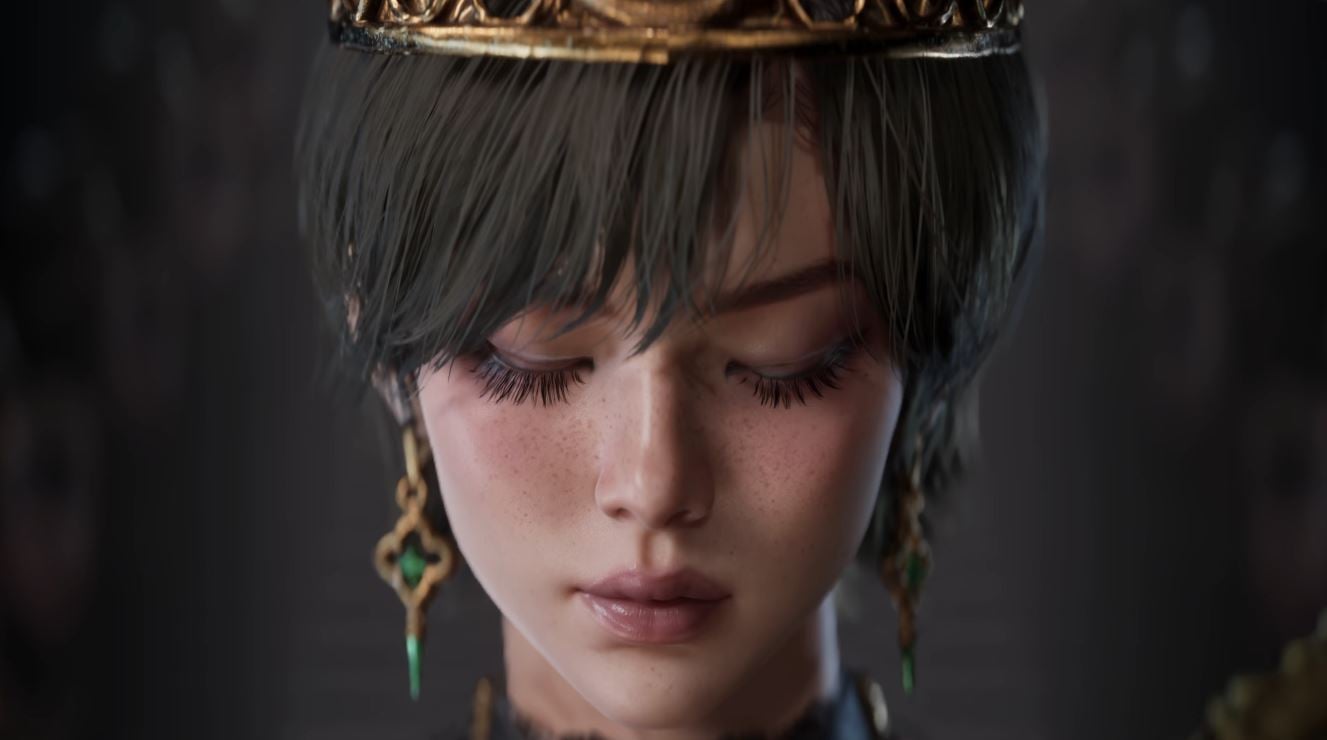
South Korean developer Novaflare has offered its clearest look yet at **Project Rabbit**, releasing a new one-minute combat and lore trailer for its dark-fantasy *Alice in Wonderland* action RPG. First unveiled in May alongside a domestic playable demo at PlayX4, the game is positioning itself in an intriguing middle ground within Korea’s surging single-player-adjacent action wave: combining methodical, stamina-punishing Soulslike combat with high-stakes extraction loops and cross-platform multiplayer. As detailed by [Automaton](https://automaton-media.com/en/news/alice-in-wonderland-style-dark-fantasy-soulslike-project-rabbit-gets-new-trailer-showcasing-combat/) and South Korean outlet [Inven Global](https://www.invenglobal.com/articles/28725/alice-inspired-soulslike-project-rabbit-reveals-new-trailer), the new footage opens with a cinematic glimpse of the **Blood Queen**, ruler of a fractured realm called the Abyss of Time, before pivoting into cooperative boss combat against a towering **Jabberwocky**. Two allied fighters trade parries, dodges, and chained weapon skills against the creature—illustrating how Novaflare intends to translate Carrollian folklore into a punishing multiplayer gauntlet. ### Following Alice Rather Than Playing Her Narrative framing sets *Project Rabbit* apart from earlier dark *Alice* adaptations such as *American McGee’s Alice*. Rather than stepping into Alice’s shoes, players inhabit third-party survivors entering the Abyss of Time in her footsteps—investigating both how Wonderland collapsed into madness and what became of Alice herself. According to [Gematsu](https://www.gematsu.com/games/project-rabbit), the universe also draws on an established webtoon intellectual property while deliberately fusing Eastern and Western visual motifs. That cultural hybrid is already visible across its first two showcases. While May’s reveal spotlighted traditional Korean tiled roofs and *jangseung* village guardian totems, November’s combat trailer shifts toward European-style gothic castles and vintage automobiles near its closing frames. Rather than treating *Alice in Wonderland* as a purely Victorian fever dream, Novaflare is stitching cross-cultural architecture into a single fractured realm—an aesthetic direction echoed in Spanish coverage by [HobbyConsolas](https://www.hobbyconsolas.com/videojuegos/nuevo-vistazo-combate-project-rabbit-soulslike-coreano-fantasia-oscura-estilo-alice-in-wonderland_7062510_0.html). ### Why Soulslike Combat Takes Priority Over Extraction Loops Blending Soulslike combat with extraction mechanics has burned more than one ambitious studio, because extraction loops often encourage risk-averse kiting or gear hoarding that clashes with the deliberate duel rhythm of boss-driven action RPGs. Novaflare CEO Hwang Seok-yoon addressed that tension directly in an earlier interview cited by Inven Global, insisting that roughly **80 to 90 percent of *Project Rabbit*’s core experience is pure Soulslike action**, with extraction acting as a supporting structural layer comprising only about 10 percent of play. In practice, as outlined on the game’s [official Steam store page](https://store.steampowered.com/app/4683260/Project_Rabbit/), runs let players enter the Abyss solo or alongside co-op partners to defeat corrupted creatures, build custom weapon-and-skill loadouts, and carry loot out alive. At the same time, unpredictable encounters with rival survivors introduce PvPvE tension alongside cooperative PvE synergies such as tactical duo-skills and partner revivals. Keeping extraction subordinate to melee mastery—blocking, parrying, and learning boss tells—is a calculated bet to attract fans of *Lies of P* or *Elden Ring Nightreign* who might otherwise bounce off pure extraction shooters. ### Cross-Play Ambitions and Unanswered Questions Novaflare is developing *Project Rabbit* simultaneously for **PlayStation 5, Xbox Series X|S, and PC** (via both Steam and the Epic Games Store) with **cross-play support** confirmed from the outset. Supporting shared lobbies across console and PC ecosystems will be critical for sustaining matchmaking once the game moves from Steam wishlist campaigns into live operation. Still, major questions remain unresolved ahead of launch. Neither Novaflare nor its publishing partners have announced a firm release window, pricing model, or whether an open global playtest will follow May’s South Korea-only PlayX4 build. Just as crucially, balancing solo viability against coordinated duo teams in PvPvE zones—without letting high-tier extracted gear trivialize Soulslike boss encounters—will determine whether *Project Rabbit*’s hybrid formula holds together when global players finally step down the rabbit hole. ### Sources & Further Reading - [Automaton (Japan)](https://automaton-media.com/en/news/alice-in-wonderland-style-dark-fantasy-soulslike-project-rabbit-gets-new-trailer-showcasing-combat/) - [Inven Global (South Korea)](https://www.invenglobal.com/articles/28725/alice-inspired-soulslike-project-rabbit-reveals-new-trailer) - [Gematsu (Global / US)](https://www.gematsu.com/games/project-rabbit) - [HobbyConsolas (Spain)](https://www.hobbyconsolas.com/videojuegos/nuevo-vistazo-combate-project-rabbit-soulslike-coreano-fantasia-oscura-estilo-alice-in-wonderland_7062510_0.html) - [Steam Store Page (Official Primary Listing)](https://store.steampowered.com/app/4683260/Project_Rabbit/) ~Gaming ~ProjectRabbit ~Soulslike ~ActionRPG ~PS5
Project Rabbit Combat Trailer Showcases Dark-Fantasy Alice Soulslike and Jabberwocky Co-Op Boss
0
Discuss 5
Hours before *Grand Theft Auto VI* unlocks globally on November 19, 2026—with pre-order sales already surpassing $1.6 billion and players in New Zealand already inside Vice City—roughly 1,600 Rockstar Games employees across the United Kingdom are voting on whether to establish formal union recognition. If a majority votes in favor before the ballot closes on November 26, the Rockstar Games Workers Union, backed by the Independent Workers' Union of Great Britain (IWGB), will become the largest recognized trade union in the UK video game industry. The recognition vote opened on November 12 following four months of talks between management and staff, as reported by the *Evening Standard* and *PC Gamer*. Yet the timing is more than symbolic coincidence. In an op-ed published in *The Guardian* on November 18, Rockstar animation programmer and union representative Nestor Uriarte framed the ballot as the culmination of a decade-long shift away from studio-era silence, arguing that developers across every department deserve transparent pay, predictable bonuses, and job security commensurate with a release poised to shatter entertainment records. ### From "Death March" Crunch to AI and Layoff Anxiety At first glance, workers shipping the most lucrative software launch of the decade might seem insulated from the turbulence hitting the rest of the games sector. Uriarte explicitly rejected that assumption, noting that roughly one-third of the wider industry's workforce has been laid off over the past two years. That insecurity hit close to home just days before *GTA VI*'s debut, when Rockstar's sister label 2K—also under parent company Take-Two Interactive—reportedly cut a third of the staff at *Civilization* and *XCOM* studio Firaxis Games. According to Uriarte and union organizers, recognizing the IWGB chapter is meant to replace informal management discretion with binding collective bargaining over three concrete pressure points: overtime and crunch safeguards following Rockstar's widely scrutinized past "death march" cycles, clearer rules around end-of-project bonuses and gender pay gaps, and formal guardrails governing how generative AI tools are deployed in production pipelines. Addressing colleagues wary that unionization might slow down or antagonize the studio, Uriarte stressed that the campaign is led internally by longtime developers invested in Rockstar's games rather than outside agitators. ### The Glasgow Tribunal Shadow Over the Ballot The recognition vote is unfolding alongside a high-stakes employment tribunal in Glasgow that has exposed sharp disagreements over Rockstar's internal culture and disciplinary practices. As *BBC Scotland* reported on November 17–18 during closing submissions, 23 former workers—part of a group of 34 staff dismissed across the UK and Canada in October 2025—are suing Rockstar for unfair dismissal, alleging they were targeted for trade union organizing. Representing the claimants, counsel Richard O'Keeffe argued before the tribunal that management had known about the employees' Discord server for roughly three years and only moved against it in October 2025 when IWGB membership inside the studio approached 10 percent. Lord John Hendy KC characterized the firings as "shock and awe" tactics executed without prior notice of specific charges, disciplinary hearings, or appeals. Rockstar Games has forcefully disputed that narrative in written closing submissions and public statements. The studio maintains that the dismissals were driven strictly by gross misconduct, asserting that staff shared confidential company information—including details of specific game features—and engaged in "widespread disparagement" on an unsecure Discord channel that violated Rockstar's famously strict information-security rules. Responding to the recognition ballot itself, a Rockstar spokesperson told PA Media that the company is proud of its team, its culture, and the game it built, declining further comment ahead of launch day while reiterating confidence in a favorable tribunal ruling. ### What Recognition Would Change for UK Game Development Whether the Glasgow tribunal ultimately sides with management's security defense or the claimants' union-busting allegations, the outcome of the November 26 recognition ballot carries immediate structural weight. Formal recognition under UK labor rules would compel Rockstar to negotiate with the IWGB on pay, hours, and workplace policies across its British hubs, including flagship studio Rockstar North in Edinburgh. For an industry that has historically struggled to sustain collective bargaining across blockbuster studios—often because massive contractor turnover and project-end layoffs fracture organizing drives—a unionized *Grand Theft Auto* workforce would reset expectations across both British and North American AAA development. Even as *GTA VI* dominates storefronts and livestreams this week, the vote inside its UK studios will determine whether blockbuster success translates into shared institutional power for the developers behind it. ### Sources & Further Reading - [PC Gamer: On the eve of GTA 6, 1,600 Rockstar workers are voting on unionization](https://www.pcgamer.com/gaming-industry/we-need-to-come-together-on-the-eve-of-gta-6-1-600-rockstar-workers-are-voting-on-unionization/) - [BBC Scotland: Grand Theft Auto staff sacked as 'shock tactic' to punish trade union activity, tribunal hears](https://www.bbc.com/news/articles/c5dj1gjlk3jyo) - [Evening Standard / PA Wire: Staff at Grand Theft Auto developer Rockstar begin union recognition vote](https://www.standard.co.uk/news/tech/rockstar-iwgb-glasgow-b1304595.html) - [The Guardian: Nestor Uriarte on Rockstar employees' union recognition vote](https://www.theguardian.com/commentisfree/2026/nov/18/gta-6-grand-theft-auto-vi-rockstar-employees-union-recognition) ~Gaming ~GTA6 ~RockstarGames ~GameDev ~Industry
1,600 Rockstar UK Staff Vote on Union Recognition as GTA 6 Launches Amid Glasgow Tribunal Showdown
0
Discuss 4
Just as *Grand Theft Auto 6* dominates global launch week coverage, insolvency filings published in Edinburgh and London on November 18, 2026 have exposed the financial wreckage of Build a Rocket Boy—the Scottish studio founded by former *Grand Theft Auto* producer Leslie Benzies. Listed at UK Companies House on November 16 by joint administrators Opus Restructuring (Opus Advisory Group) and unlocked for public inspection two days later, the 59-page Notice of Administrator's Proposal and 11-page Statement of Affairs reveal that the *MindsEye* developer owes approximately £61.7 million ($81 million) to creditors. More striking still, administrators state that the insolvent studio's single largest potential asset is not its game technology or intellectual property, but ongoing and planned litigation against alleged "saboteurs." ### Anatomy of a £61.7 Million Collapse Build a Rocket Boy entered administration in September 2026 to shield itself from creditor claims after a decade-long expansion that once employed roughly 500 staff across the UK and overseas. According to the Companies House filings reviewed by Eurogamer, GamesIndustry.biz, and Rock Paper Shotgun, the studio burned through formidable institutional backing—including a £32 million round in 2020 and a $110 million Series D in 2023—while posting sequential operating losses of £63.1 million for the year ending December 2024 and £47.5 million for the period ending September 30, 2025. The creditor ledger underscores how concentrated the studio's exposure became after its original Roblox-like creation platform *Everywhere* stalled and its carved-out cinematic shooter *MindsEye* flopped commercially in mid-2025. Chinese publisher NetEase is owed roughly £36.4 million to £36.5 million, making it by far the largest external creditor. Asset manager Diameter Capital Partners (via the Diameter Dislocation Master Fund) is owed roughly £4.2 million to £4.25 million, alongside $19 million owed to "group undertakings" across related corporate entities. Even studio founder Leslie Benzies appears on the ledger as a creditor for £1,158,167.05, sitting above operational bills ranging from £10,434.11 to Amazon Web Services and £634.36 to Unity down to £19.90 owed to OpenAI. ### Why Administrators Are Betting on a Litigation Fund Normally, game studio insolvencies revolve around selling codebases, unfinished prototypes, or studio leases to satisfy secured and unsecured creditors. In Build a Rocket Boy's case, publisher IO Interactive had already walked away from *MindsEye* in March 2026, leaving little commercial runway. Instead, Opus Restructuring's filing records that prior to entering administration, directors worked with former legal advisers Brandsmiths to launch legal action against several unnamed third parties. The administrators note that Build a Rocket Boy's leadership blamed *MindsEye*'s commercial failure on "a coordinated campaign of negative online reviews and commentary" allegedly organized and funded by outside actors. Rather than writing off those claims, management secured agreements—and expects additional contributions—from third-party litigation funders to bankroll legal expenses, creating what the proposal calls a "substantial litigation fund." Because litigation financiers typically front legal fees in exchange for a share of any court award or settlement, the arrangement allows an insolvent company with minimal cash reserves to keep pursuing lawsuits without draining remaining estate funds—provided the underlying claims survive judicial scrutiny. Administrators explicitly caution that any recovery "remains uncertain." ### Sabotage Claims Meet a Troubled Development Record The legal thesis outlined in Companies House records closely mirrors the narrative previously pushed internally by co-CEO Mark Gerhard. In a leaked staff meeting reported earlier this year, Gerhard alleged that a "big American company" spent more than €1 million in 2025 on "criminal activity" executed through UK influencer agency Ritual Network, three unnamed journalists, and internal Build a Rocket Boy employees to manufacture negative sentiment around *MindsEye*. To date, neither Build a Rocket Boy nor its administrators have placed public evidence in the filings substantiating an organized €1 million smear campaign. By contrast, the game's public reception and workplace record are extensively documented. Reviewers panned *MindsEye* at launch for erratic mission design, rough combat, and technical instability, while former staff and unionized workers publicly accused leadership of disruptive micromanagement, grueling crunch, mishandled redundancies, and even took management to court over alleged surveillance software installed on employee PCs. One former staff member told GamesIndustry.biz after launch that the studio's unraveling was "not heralded by saboteurs, but by Mark and Leslie themselves." ### A Cautionary Tale for Venture-Backed AAA Spin-Outs That UK Companies House unsealed Build a Rocket Boy's insolvency dossier the same week *Grand Theft Auto 6* arrives in players' hands underscores a broader structural shift in AAA development. Between 2020 and 2023, venture and strategic investors poured nine-figure sums into veteran-led studios promising to out-scale incumbent publishers with metaverse platforms and cinematic blockbusters. When *Everywhere* failed to materialize and *MindsEye* stumbled, neither pedigree nor $110 million in late-stage equity could bridge the gap between burn rate and audience reception. Whether Build a Rocket Boy's litigation gamble yields anything for NetEase and other creditors—or merely prolongs a bitter post-mortem in court—will test how far insolvency administrators can stretch unproven grievance claims as a financial asset. ### Sources & Further Reading - [Eurogamer (UK coverage of Companies House proposal)](https://www.eurogamer.net/build-a-rocket-boy-mindseye-debt-administration-litigation) - [GamesIndustry.biz (Creditor breakdown and industry context)](https://www.gamesindustry.biz/build-a-rocket-boy-pursuing-litigation-against-alleged-saboteurs-to-repay-617m-in-debt) - [GamingBolt (Insolvency and litigation funding coverage)](https://gamingbolt.com/build-a-rocket-boys-debts-are-being-redirected-to-litigation-plans-following-insolvency) - [UK Companies House (Primary filing history for Build a Rocket Boy Ltd, SC537252)](https://find-and-update.company-information.service.gov.uk/company/SC537252/filing-history) ~Gaming ~MindsEye ~BuildARocketBoy ~Industry
Build a Rocket Boy Owes £61.7M After MindsEye Collapse and Bets Insolvency Recovery on Sabotage Lawsuits
0
Discuss 5
Koei Tecmo and internal studio Kou Shibusawa have officially canceled the original **Nintendo Switch** edition of **Nobunaga’s Ambition: Hishou**, confirming on November 18, 2026 that the upcoming grand strategy title will now release exclusively across **PlayStation 5, Nintendo Switch 2, and PC (Steam)**. Both physical and digital console editions remain on track for a winter launch in Japan and Asia, while the publisher simultaneously rescheduled its delayed introductory livestream for **November 25 at 20:00 JST**. Positioned as a flagship **45th-anniversary project for Kou Shibusawa**, *Hishou* was originally announced during a June 2026 Nintendo Direct with a four-platform roadmap that included the 2017 Nintendo Switch. Dropping the last-generation SKU mid-campaign underscores how rapidly Japanese publishers are drawing a technical line under aging handheld hardware as Switch 2 cements its commercial footing. ### How a Two-Week Platform Review Ended the Switch 1 Port The cancellation concludes an unusual period of public uncertainty that began earlier this month. On November 2, just two days ahead of its planned debut livestream, Koei Tecmo abruptly postponed the broadcast and warned fans that it was re-evaluating both the release date and target platforms "to deliver a better user experience." At the time, the company even issued an unusual advisory noting that the November 19 print issue of *Weekly Famitsu* would still carry the outdated release date decided prior to the internal review. In its November 18 statement shared via the official *Nobunaga’s Ambition* channels and reported by Famitsu and Gematsu, Koei Tecmo apologized to waiting customers for the platform revision without offering a granular hardware breakdown. Alongside the Switch 1 cancellation, the publisher confirmed that producer **Liu Di** will host the rescheduled first official livestream on **November 25**, showcasing live gameplay on active hardware, announcing the final winter release date, and detailing collaborations—building on earlier Tokyo Game Show 2026 reveals such as a theme song performed by Japanese rock duo **Porno Graffitti**. ### Why *Hishou*’s Simulation Scope Outgrew Original Switch Silicon Even without formal benchmark disclosures from Koei Tecmo, *Nobunaga’s Ambition: Hishou*’s design brief explains why keeping a nine-year-old portable SKU in sync proved costly. Built around the Sengoku-era theme of *taigi meibun* (a warlord’s "just cause" or legitimacy—whether territory, status, humanity, or personal ambition), *Hishou* revives full **castle-town development** inside domestic affairs for the first time in nearly twenty years, drawing inspiration from fan-favorite entries *Tenkasousei* and *Reppuden*. Players freely construct and customize castle towns whose layout and facilities directly shift resource output and strategic income. On top of deeper regional simulation and upgraded 3D visuals, *Hishou* introduces the franchise’s **first dedicated story mode**, tracing Oda Nobunaga’s campaigns to onboard newcomers while retaining grand-strategy depth. Managing complex AI factions, multi-tiered town simulation, and dynamic battles across dozens of rival clans places heavy demands on CPU threads and system memory—areas where original Switch hardware routinely bottlenecks modern multiplatform strategy titles compared with PS5, modern PCs, and Nintendo Switch 2. ### What It Signals for Nintendo’s Generational Handover For Nintendo fans still weighing an upgrade, *Nobunaga’s Ambition: Hishou* illustrates how quickly Switch 2 is shifting from an enhanced cross-gen target to a hard baseline—a transition reflected in [Switch 2’s surge in US physical sales](https://www.mushimu.com/post/9452) and Nintendo’s expanding [first-party Switch 2 demo push](https://www.mushimu.com/post/9467). Rather than shipping a compromised last-gen build that could tarnish a 45th-anniversary flagship, Koei Tecmo chose to absorb the short-term backlash of canceling the Switch 1 version and focus engineering polish on PS5, Switch 2, and Steam ahead of next week’s November 25 reveal. ### Sources & Further Reading - [Gematsu (JP/Global): Nobunaga’s Ambition: Hishou for Switch Canceled](https://www.gematsu.com/2026/11/nobunagas-ambition-hishou-for-switch-canceled) - [Famitsu (Japan — Primary Trade Press): 『信長の野望・飛翔』Switch版の発売が中止](https://www.famitsu.com/article/202611/94431) - [Automaton (Japan): Koei Tecmo Postpones Livestream and Reconsiders Supported Platforms](https://automaton-media.com/en/news/koei-tecmo-postpones-release-date-announcement-for-nobunagas-ambition-hishou-plans-to-reconsider-supported-platforms/) ~Gaming ~NintendoSwitch ~Switch2 ~KoeiTecmo ~NobunagasAmbition
Koei Tecmo Cancels Nobunaga’s Ambition: Hishou for Original Switch, Focusing on Switch 2, PS5, and PC
0
Discuss 1
Jennifer Svedberg-Yen, the lead writer and voice and localization producer behind 2025’s breakout RPG **Clair Obscur: Expedition 33**, has confirmed that she quietly parted ways with French developer **Sandfall Interactive** in July 2026. Revealing the departure in a GamesBeat interview tied to her selection for the **2026 BAFTA Breakthrough U.S.** cohort, Svedberg-Yen is pivoting from the studio’s hit debut to launch a specialized seed-stage investment fund and mentorship incubator aimed at narrative-driven game creators. The announcement arrives at a pivotal moment for mid-sized RPG studios: *Clair Obscur: Expedition 33* proved that sharply authored storytelling—rather than sprawling live-service budgets—could capture 12 Game Award nominations and more than 400 industry accolades, yet its lead creative voice is now turning her attention to the structural funding bottleneck holding back the next wave of narrative studios. ### Why Sandfall’s Lead Writer Walked Away After a 400-Award Debut Speaking to Dean Takahashi at GamesBeat following the BAFTA Breakthrough U.S. announcement, Svedberg-Yen explained that she left Sandfall Interactive in July after finishing her remaining post-launch responsibilities on *Expedition 33*. While she offered few specifics on her own upcoming writing projects, she stressed that Sandfall’s creative compass remains intact even as *Clair Obscur* prepares for future installments. According to Svedberg-Yen, Sandfall’s guiding "North Star" has always been its team’s personal taste rather than reacting defensively to outside expectations. "I've seen too many TV shows and books be swayed trying to please a lot of people, and in the process you end up losing the heart of what's there," she noted, expressing confidence that the studio will protect that ethos as it builds beyond *Expedition 33*. ### Turning Private Equity Roots Into a Narrative Seed Fund What makes Svedberg-Yen’s next move unusual in game development is her resume before *Clair Obscur*. *Expedition 33* was her very first shipped video game as a narrative designer and writer, following an earlier career in **private equity and finance**. Now she is combining both disciplines to tackle what she calls the "chicken-and-egg" dilemma facing small story-led teams: publishers routinely demand a polished vertical-slice demo before signing deals, yet studios lack the early capital needed to build that demo in the first place. Her planned narrative investment fund—paired with an incubation program—aims to inject seed funding and pipeline mentorship before teams approach major publishers, "de-risking" them for larger investors. Just as critically, she argues many studios treat writing as a late-stage coat of paint rather than a foundational pillar: "I've discovered that quite a lot of studios don’t really know how to think about narrative, or how to integrate it into their pipelines and their processes," she told GamesBeat. ### What It Means for Sandfall and Narrative RPG Funding For Sandfall Interactive, losing the lead voice behind *Expedition 33*’s script and localization raises natural curiosity about the tone of the next *Clair Obscur* project—especially as studios across the industry face acute creative and financial pressures. For the broader indie and AA ecosystem, however, Svedberg-Yen’s transition from breakout writer to seed-stage backer signals growing recognition that narrative craft needs dedicated early-stage capital, not just post-release awards, to survive in a risk-averse publishing market. ### Sources & Further Reading - [Eurogamer (UK): Clair Obscur's Narrative Lead Has Left Developer Sandfall Interactive](https://www.eurogamer.net/clair-obscur-jennifer-svedberg-yen-bafta-fund-new-talent) - [GamesBeat (US — Original Interview): Clair Obscur Writer Will Invest in Next Generation of Game Storytellers](https://gamesbeat.com/clair-obscur-writer-will-invest-in-next-generation-of-game-storytellers-jennifer-svedberg-yen-interview/) - [Screen Daily (UK): 2026 BAFTA Breakthrough US Cohort Announcement](https://www.screendaily.com/news/inde-navarrette-kane-parsons-among-2026-bafta-breakthrough-us-cohort/5222498.article) ~Gaming ~ClairObscur ~SandfallInteractive ~GameDev ~BAFTA
Clair Obscur: Expedition 33 Lead Writer Jennifer Svedberg-Yen Leaves Sandfall to Launch Narrative Seed Fund
0
Discuss 7
Independent deckbuilder **Slay the Spire 2** has reached an estimated **7.9 million copies sold** and **$157.6 million in gross revenue** on Steam since entering Early Access in March 2026—a figure massive enough to make Mega Crit’s PC-only sequel the sixth best-selling new game of the year across Steam, PlayStation, and Xbox combined, according to industry estimates published by Alinea Analytics analyst Rhys Elliott. For an industry increasingly polarized between billion-dollar console blockbusters and shrinking mid-tier budgets, the milestone shows how a tightly scoped indie sequel can rival multiplatform AAA releases on PC alone when retention and community word-of-mouth compound over months. ### How a Steam-Only Early Access Sequel Outsold Multiplatform Rivals After moving more than three million copies in its March launch week—briefly topping Steam charts ahead of *Crimson Desert* and *Resident Evil Requiem*—*Slay the Spire 2* avoided the steep post-launch drop-off that hits most single-player hits. According to Elliott’s November data, the game has never dipped below **2.5 million monthly active players** since March, averaging roughly one million additional copies sold per month. China accounts for the largest single share of its player base at **32.2% of copies sold**, underscoring how heavily East Asian PC demand now shapes Steam’s top-tier indie rankings. Engagement metrics explain why that momentum stayed durable: Elliott estimates an average playtime approaching **84 hours**, with roughly **1.9 million players** (about 24% of the player base) already surpassing **100 hours**, even as nearly 100,000 buyers still sit in backlog without launching the game. ### The Beta Patch Effect and "Oxygen" Across the Indie Market A major inflection point arrived with the recent v0.113.0 beta branch update introducing Mega Crit’s newest playable character, *"The Fool"*—analyzed in [our recent Early Access patch breakdown](https://www.mushimu.com/post/9355). Even though access required manually opting into the Steam beta branch, the update more than doubled daily active users, pushing the game past 1.1 million daily players for its highest daily total in six months. That gravitational pull has not been painless for neighboring studios. Speaking to Eurogamer, *Mewgenics* creator Edmund McMillen candidly noted that *Slay the Spire 2* "sucked everybody out" of overlapping roguelike audiences on Steam—highlighting how megahit indie sequels now command AAA-scale mindshare and player hours. ### Looking Toward Version 1.0 and Console Ports Mega Crit still has a lengthy Early Access roadmap before reaching version 1.0, and console editions for PlayStation, Xbox, and Nintendo hardware remain unannounced despite widespread expectation. Whenever multiplatform ports eventually ship, *Slay the Spire 2* will enter consoles already carrying the commercial footprint of a top-ten global release—built entirely on a single PC storefront. ### Sources & Further Reading - [Eurogamer (UK): Slay the Spire 2 Is One of This Year's Best Selling Games Despite Only Being Available on PC](https://www.eurogamer.net/slay-the-spire-2-8-million-sales-steam-estimates) - [Alinea Analytics / Rhys Elliott (Primary Market Estimate): Slay the Spire II Sales & Retention Breakdown](https://www.linkedin.com/posts/rhyselliott_slay-the-spire-ii-has-sold-79m-copies-on-share-7528510264556711936-8OGK) - [Instant Gaming News (EU): Slay the Spire 2 Has Sold Nearly 8 Million Copies](https://news.instant-gaming.com/en/articles/23101-slay-the-spire-2-has-sold-nearly-8-million-copies) - [TrueGaming (Middle East): Slay the Spire II Nears 8 Million Copies Sold](https://www.true-gaming.net/home/643989/slay-the-spire-ii-%D8%AA%D9%82%D8%A7%D8%B1%D8%A8-%D9%83%D8%B3%D8%B1-%D8%AD%D8%A7%D8%AC%D8%B2-%D8%A7%D9%84%D9%808-%D9%85%D9%84%D9%8A%D9%88%D9%86-%D9%86%D8%B3%D8%AE%D8%A9-%D9%85%D8%A8%D8%A7%D8%B9%D8%A9/) ~Gaming ~SlayTheSpire2 ~Steam ~IndieGames ~PCGaming
Slay the Spire 2 Hits 7.9 Million Estimated Steam Sales and $157.6M Revenue on PC Alone
0
Discuss 7
AMD’s Japanese division tried to smooth things over with PC enthusiasts on November 18, posting that "AMD loves gamers" and "values its interactions with gamers above all else." Yet the corporate reassurance landed awkwardly—coming just weeks after chief executive Dr. Lisa Su reminded investors that AMD is a **"datacenter-first company"** and right as the company’s own financial filings show its gaming business shrinking while AI server revenue nearly doubles. The disconnect highlights a widening identity tension across the PC hardware industry: consumer graphics cards and Ryzen CPUs remain vital to AMD’s public brand and retail presence, even as Wall Street valuations and silicon allocation increasingly revolve around hyperscale AI infrastructure. ### From Micro Center Swag Bags to Investor-Call Reality The immediate spark for AMD Japan’s outreach was a high-profile retail appearance by Dr. Lisa Su at the grand opening of Micro Center’s new Austin, Texas store. As documented by *Tom’s Hardware* and official AMD social channels, Su cut the store’s opening ribbon, mingled with enthusiasts waiting outside, handed out 300 swag bags, and personally autographed a Gigabyte Radeon RX 9070 XT graphics card. When *Tom’s Hardware* highlighted the event on social media, AMD Japan amplified the clip with its "AMD loves gamers" message. Yet PC Gamer noted that the phrasing immediately triggered skepticism online, where readers juxtaposed the slogan against Su’s recent investor remarks reaffirming AMD’s datacenter-first priorities—a posture AMD has articulated since 2024 as AI accelerators reshaped semiconductor margins. ### What AMD’s Own Q3 2026 Balance Sheet Shows Looking strictly at AMD’s official **Third Quarter 2026 Financial Results** (announced November 3, 2026), the financial gravity behind Su’s investor messaging is unambiguous: - **Data Center revenue** surged **97% year-over-year** to a record **$8.5 billion**, fueled by EPYC server processors and the ramp of Instinct MI450 Series AI GPUs. - **Gaming segment revenue**, by contrast, fell **40% year-over-year to $773 million**, dragged down by lower semi-custom console chip demand and softer graphics sales. In other words, AMD’s datacenter division now generates roughly **eleven times** as much quarterly revenue as its entire gaming segment. Even within the broader Client and Gaming reporting umbrella ($3.7 billion combined), consumer Ryzen desktops and laptops carry far more financial weight than discrete Radeon gaming cards or console SoCs. ### Why Retail Goodwill Still Matters—And Where Gamers Stay Skeptical From a shareholder standpoint, prioritizing $8.5 billion in high-margin server silicon is completely rational. Still, abandoning gamer mindshare carries real strategic risk. As memory and component inflation—examined in [our report on DRAM price-fixing litigation](https://www.mushimu.com/post/9414)—pushes discrete GPU prices upward and supply stays tight, PC builders want concrete commitments on Radeon availability, driver stability, and fair pricing rather than PR slogans. At the same time, AMD’s engineering pipeline tells a more nuanced story than a binary choice between datacenters and gaming. Alongside server Instinct parts, AMD continues upstreaming consumer APU and graphics work—such as [recent Linux RDNA 4m firmware patches](https://www.mushimu.com/post/9480) for upcoming Ryzen APUs—and remains the silicon backbone for handheld PCs and major consoles. Signing an RX 9070 XT in Austin proves AMD knows enthusiast loyalty cannot be taken for granted; convincing gamers that consumer Radeon remains a true priority will depend on silicon supply and pricing in 2027, not social-media reassurance. ### Sources & Further Reading - [PC Gamer (US/UK): AMD Says It 'Loves Gamers' Only Weeks After Proclaiming It Is a Datacenter-First Company](https://www.pcgamer.com/hardware/graphics-cards/amd-says-it-loves-gamers-only-weeks-after-proclaiming-it-is-a-datacenter-first-company/) - [Tom's Hardware (US): Dr. Lisa Su Graces the Opening of Micro Center's New Austin Store](https://www.tomshardware.com/desktops/pc-building/dr-lisa-su-graces-the-opening-of-micro-centers-new-austin-store-amd-ceo-meets-with-gamers-autographs-a-9070-xt-gpu-and-hands-out-300-swag-bags) - [AMD Investor Relations (Primary Financial Filing): AMD Reports Third Quarter 2026 Financial Results](https://ir.amd.com/news-events/press-releases/detail/1303/amd-reports-third-quarter-2026-financial-results) ~Gaming ~AMD ~Radeon ~PCGaming ~Hardware
AMD’s "Loves Gamers" Push Collides With Its Datacenter-First Reality and $773M Gaming Revenue
0
Discuss 6
After a decade in development and more than $1.4 billion in pre-orders, the review embargo for **Grand Theft Auto VI** lifted on November 18, 2026—less than 24 hours before its November 19 console launch on PlayStation 5 and Xbox Series X/S. Across early critical verdicts from major specialist outlets and mainstream newspapers alike, Rockstar Games appears to have cleared expectations that looked nearly impossible to satisfy, earning near-unanimous perfect scores while sparking fresh debate over how long PC players will have to wait and what Rockstar’s formula leaves unchanged. ### What Critics Agree Rockstar Actually Pulled Off The consensus across launch-eve reviews is striking not only for the top-line numbers—**10/10** from IGN and GameSpot, **5/5** from Eurogamer and GamesRadar, and a **Critic’s Pick** designation from The New York Times—but for *what* reviewers singled out as transformative. Rather than treating Vice City and the broader state of Leonida as a prettier backdrop for familiar chaos, critics describe a dramatic leap in systemic density and interpersonal storytelling. IGN’s Luke Reilly, writing after more than 120 hours over three weeks, called *GTA 6* "the single most impressive video game I have ever played," pointing to major strides in vehicle handling, realistically dense traffic, lighting across dawn and night cycles, and hundreds of unscripted open-world interactions. GameSpot’s Tamoor Hussain similarly compared Leonida to "a giant haystack full of needles that you’ll constantly find," emphasizing micro-details tucked into corners most players might walk right past. Equally decisive is how critics responded to dual protagonists **Jason Duval and Lucia Caminos**. Writing in *The Guardian*, Keza MacDonald observed that while *GTA 6* retains the series' biting satire and chaotic excesses, it grounds the experience in "new empathy for the fugitive couple at its centre." The New York Times’ Yussef Cole went further, framing the game around "love and relationships, their joy and heartache, and the work required to" sustain a partnership under pressure—an emotional anchor that GamesRadar’s Josh West noted makes everyday player choices feel tied directly to Jason and Lucia’s shared fate. ### The Car as America’s "Third Place"—and the Cost of Scale Eurogamer’s Chris Tapsell (who reviewed the game on PlayStation 5 Pro) offered one of the sharpest structural readings of why *GTA 6* feels cohesive despite its sprawl: Rockstar turned the personal automobile into the modern American "third place." Far more than mere transport between markers, the car functions as the hub where calls trigger missions, partner conversations unfold, emergent roadside events erupt, and police pursuits escalate. Yet that same ambition highlights two underlying tensions documented alongside the praise. First, at **$79.99 / €79.99 / £69.99**—with console players juggling massive pre-loads detailed in [our GTA 6 launch guide](https://www.mushimu.com/post/9471)—*GTA 6* arrives exclusively on PS5 and Xbox Series X/S, leaving PC enthusiasts on the sidelines until Rockstar announces a PC port date. PC Gamer explicitly held off on scoring the title until the eventual PC edition arrives, noting that while the console release sets an extraordinary benchmark, mouse-and-keyboard precision and uncapped PC hardware headroom remain missing from launch week. Second, industry analysts have warned in [recent Newzoo market projections](https://www.mushimu.com/post/9516) that 2026’s console market is heavily reliant on *GTA 6*’s once-in-a-generation gravitational pull—a dynamic that already saw *GTA 6* dominate [The Game Awards 2026 nominations](https://www.mushimu.com/post/9503) ahead of release. Whether Rockstar’s traditional mission-design guardrails can keep pace with the freedom of its sandbox over hundreds of hours will be tested by millions of players once rolling midnight unlocks begin on November 19. ### Sources & Further Reading - [PC Gamer (US/UK): Grand Theft Auto 6 Review Roundup](https://www.pcgamer.com/games/grand-theft-auto/grand-theft-auto-6-review-roundup-rockstars-magnum-opus-a-great-love-story-and-a-new-bar-for-open-worlds/) - [Eurogamer (UK): Grand Theft Auto 6 Review](https://www.eurogamer.net/grand-theft-auto-6-review) - [The Guardian (UK): Grand Theft Auto VI Review](https://www.theguardian.com/games/2026/nov/18/grand-theft-auto-vi-gta-6-review-playstation-rockstar) - [IGN (Global): Grand Theft Auto 6 Review](https://nordic.ign.com/grand-theft-auto-vi/115795/grand-theft-auto-6-review) ~Gaming ~GTA6 ~Rockstar ~PlayStation ~Xbox
Grand Theft Auto 6 Reviews Land With Near-Universal 10/10s as Critics Hail Leonida and Jason & Lucia
0
Discuss 6
Steam is breaking its own release-volume records at a pace that is visibly straining Valve's human review pipeline. On November 18, 2026, data compiled from [SteamDB](https://steamdb.info/stats/releases/) and analyzed by [GamingOnLinux](https://www.gamingonlinux.com/2026/11/steam-is-officially-drowning-in-game-releases/) revealed that **27,286 games** have already launched on Steam in 2026 with more than six weeks left in the year—surpassing 2025's full-year total of **21,185** by more than 6,100 titles. At the same time, Valve's own [Steamworks Development team](https://store.steampowered.com/news/group/4145017/view/696528162820984745) acknowledged that pre-release store and build reviews—normally completed within three to five business days—have stretched to **up to 12 business days**. ### Behind the 12-Day Queue: Re-Reviews Meet Generative AI Scale In its November pre-release process update, Valve attributed much of the 12-business-day backlog to developers submitting broken builds that force reviewers to cycle through repeated re-checks. Yet cross-referencing Valve's statement with SteamDB telemetry suggests repeat submissions are only half the story. Peak monthly releases on Steam jumped from **2,415** titles in 2025 to **3,738** in a single month so far in 2026—a 55 percent surge in monthly ceiling that any fixed-size QA team would struggle to absorb. The single clearest accelerant sits in Valve's mandatory disclosure tags. According to SteamDB figures cited by GamingOnLinux, the number of Steam releases carrying a generative AI disclosure jumped nearly threefold year-over-year, climbing from **4,682** across all of 2025 to **13,445** so far in 2026. In practical terms, AI-disclosed titles account for roughly half of Steam's entire 2026 release volume and the overwhelming majority of the year-over-year growth. While major industry executives debate when consumers will embrace generative tooling—as former Take-Two CEO Ben Feder recently framed around a "[Toy Story moment](https://www.mushimu.com/post/9552)" while engines like [Unity](https://www.mushimu.com/post/9507) and [Godot sponsors](https://www.mushimu.com/post/9513) lean into AI workflows—the immediate reality on Steam is a massive influx of low-barrier, rapid-turnaround projects alongside growing volumes of zero-review releases. ### Inside Valve's Stricter Steamworks Pre-Release Checklist Rather than raising prices or shutting the storefront door, Valve is tightening technical gates to filter out sloppy submissions before a human tester ever opens a build. As detailed in the Steamworks documentation and covered by [Inven Global](https://www.invenglobal.com/articles/28152/valve-says-steam-pre-release-reviews-now-take-up-to-12-business-days), developers now face stricter automated and procedural requirements before entering the review queue: - **The five-minute Steam launch rule:** Studios must boot their game directly through the Steam client's green Play button and run it for at least five minutes prior to submission, proving that content depots, launch arguments, and dependencies function inside Steam rather than only in a local IDE. - **Verified Steam Cloud and achievements:** Titles advertising Steam Cloud saves must write a real save file from a partner account before review, while incomplete achievement configurations are flagged upfront. - **Explicit redistributables and tagged media:** Teams must declare exact common redistributables (such as DirectX or Visual C++ runtimes) or certify none are needed, and provide at least five screenshots explicitly categorized as actual gameplay rather than menus or cinematics. ### Discoverability Noise and Valve's Structural Bind For legitimate indie studios and curators, the fallout extends well beyond waiting two and a half weeks for a build sign-off. GamingOnLinux editor Liam Squires-Hand noted that roughly 90 percent of unsolicited pitches reaching the outlet's Steam Curator inbox are now low-effort "slop" or bare-bones hobby projects, forcing editorial teams to spend hours daily filtering out noise. When nearly 4,000 games arrive in a peak month, mid-tier indies without external marketing budgets face steeper odds of surviving Steam's algorithmic front page before sliding into obscurity. Why does Valve tolerate the flood instead of raising the $100 Steam Direct recoupable fee or reinstating manual store curation? Both levers carry severe trade-offs. A higher paywall would disproportionately lock out emerging-market and solo developers who historically produced breakout hits like *Vampire Survivors* or *Balatro*, while heavy-handed editorial gatekeeping would reintroduce the exact subjective bottlenecks Valve abandoned after retiring Steam Greenlight—and slow review queues even further. By tightening automated pre-submission checks instead, Valve is betting that engineering friction can weed out broken first-time builds without sacrificing Steam's open-market identity. Even so, with 2026 on pace to flirt with 30,000 annual releases, algorithmic discovery and store curation are approaching a stress test that checklists alone may not solve. ### Sources & Further Reading - [GamingOnLinux (UK)](https://www.gamingonlinux.com/2026/11/steam-is-officially-drowning-in-game-releases/) - [Valve Steamworks Development — Updates to the Pre-Release Review Process (US — Primary)](https://store.steampowered.com/news/group/4145017/view/696528162820984745) - [SteamDB — Game Releases Per Year & AI Disclosures (Global Data)](https://steamdb.info/stats/releases/) - [Inven Global (Global)](https://www.invenglobal.com/articles/28152/valve-says-steam-pre-release-reviews-now-take-up-to-12-business-days) ~Gaming ~Steam ~Valve ~AI ~IndieGames
Steam Shatters Release Record With 27,286 Games in 2026 as AI Submissions Push Reviews to 12 Days
0
Discuss 5
Former Take-Two Interactive CEO Ben Feder—who oversaw the publisher during the landmark launches of *Grand Theft Auto IV* and *Red Dead Redemption*—believes Western video game players are "one *Toy Story* moment away" from accepting generative artificial intelligence in game development. Speaking to [The Game Business](https://www.thegamebusiness.com/p/former-take-two-boss-ben-feder-feels) in an interview reported by [Eurogamer](https://www.eurogamer.net/gta-4-red-dead-redemption-take-two-ben-feder-ai-toy-story), Feder argued that current Western consumer hostility toward AI mirrors early skepticism toward computer-generated animation in the 1990s. Now managing partner at Tirta Ventures, an investment firm backing AI-native game studios, Feder brings a clear commercial stake to the debate. Yet his remarks land at a pivotal moment for the industry: while Asian publishers and open-source ecosystems are rapidly integrating AI tooling, Western players and developers remain deeply polarized—especially as storefront metrics show generative AI fueling an unprecedented flood of low-effort releases. ### The *Toy Story* Analogy and the Cost-Cutting Trap Feder’s central thesis rests on a distinction between imitation and native design. When animation began shifting from hand-drawn cels to 3D computer graphics, audiences initially rejected early CGI as sterile and uncanny. That resistance collapsed, Feder noted, when Pixar released *Toy Story*—not simply because the film was well-written, but because its creators chose plastic toys as subjects, playing directly to the strengths of early 3D rendering rather than trying to mimic traditional hand-drawn warmth. Applied to video games, Feder contends that Western publishers are currently using generative AI the wrong way: pitching it to investors as a headcount-trimming shortcut while offering players nothing mechanically new. Instead of shrinking budgets, Feder argued, AI will likely follow past hardware and engine leaps—expanding scope and ambition at similar price points, much as Unreal Engine’s instancing breakthroughs enabled 100-player battle royale lobbies in *Fortnite*. ### Why 2026’s Storefront Reality Complicates the Comparison Where Feder’s *Toy Story* parallel strains is in the economic and cultural context of 2026. Early CGI did not arrive alongside mass studio layoffs or an automated clone deluge. Today, players encounter generative AI against a backdrop of relentless industry contraction—including recent cuts at [Firaxis](https://www.mushimu.com/post/9504) and [Crystal Dynamics](https://www.mushimu.com/post/9511)—and visible storefront congestion. Fresh SteamDB figures highlighted by [GamingOnLinux](https://www.gamingonlinux.com/2026/11/steam-is-officially-drowning-in-game-releases/) illustrate the scale of that friction: Steam has surpassed **27,200 game releases in 2026**, shattering 2025’s record of 21,185, with single-month launches peaking above 3,700 titles. A substantial share of that surge carries Valve’s *AI Content Disclosed* label, compounding discoverability headaches for independent studios and reinforcing player perceptions of generative AI as a vehicle for asset-flipped "slop" rather than craft. ### The East–West Divide in Studio Adoption Feder’s observation that Eastern markets have proven far more receptive to AI pipelines aligns with broader 2026 industry trends. From [Unity’s acquisition of Synty Studios](https://www.mushimu.com/post/9507) to power its Spark AI platform and [Manus’s Platinum sponsorship of Godot](https://www.mushimu.com/post/9513), tooling vendors are betting heavily that AI-assisted workflows will become standard infrastructure even while [GDC 2026 survey data](https://www.mushimu.com/post/9369) shows deep skepticism among Western rank-and-file developers. Ultimately, whether Western audiences ever experience Feder’s predicted *Toy Story* inflection point will depend on proof, not venture-capital rhetoric. Until a flagship studio ships a game whose core mechanics, responsiveness, or world reactivity are visibly impossible without AI—and does so without eroding human artistry or jobs—player skepticism is unlikely to soften. ### Sources & Further Reading - [Eurogamer (UK) — Former GTA 4 and Red Dead boss thinks "we are one Toy Story moment away" from people accepting gen-AI in game development in the West](https://www.eurogamer.net/gta-4-red-dead-redemption-take-two-ben-feder-ai-toy-story) - [The Game Business (UK/US — Original Interview)](https://www.thegamebusiness.com/p/former-take-two-boss-ben-feder-feels) - [GamingOnLinux (UK) — Steam is officially drowning in game releases](https://www.gamingonlinux.com/2026/11/steam-is-officially-drowning-in-game-releases/) ~Gaming ~AI ~GameDev ~TakeTwo ~Steam
Former Take-Two CEO Ben Feder Says Western Gaming Is "One Toy Story Moment Away" From Accepting Gen-AI
0
Discuss 11