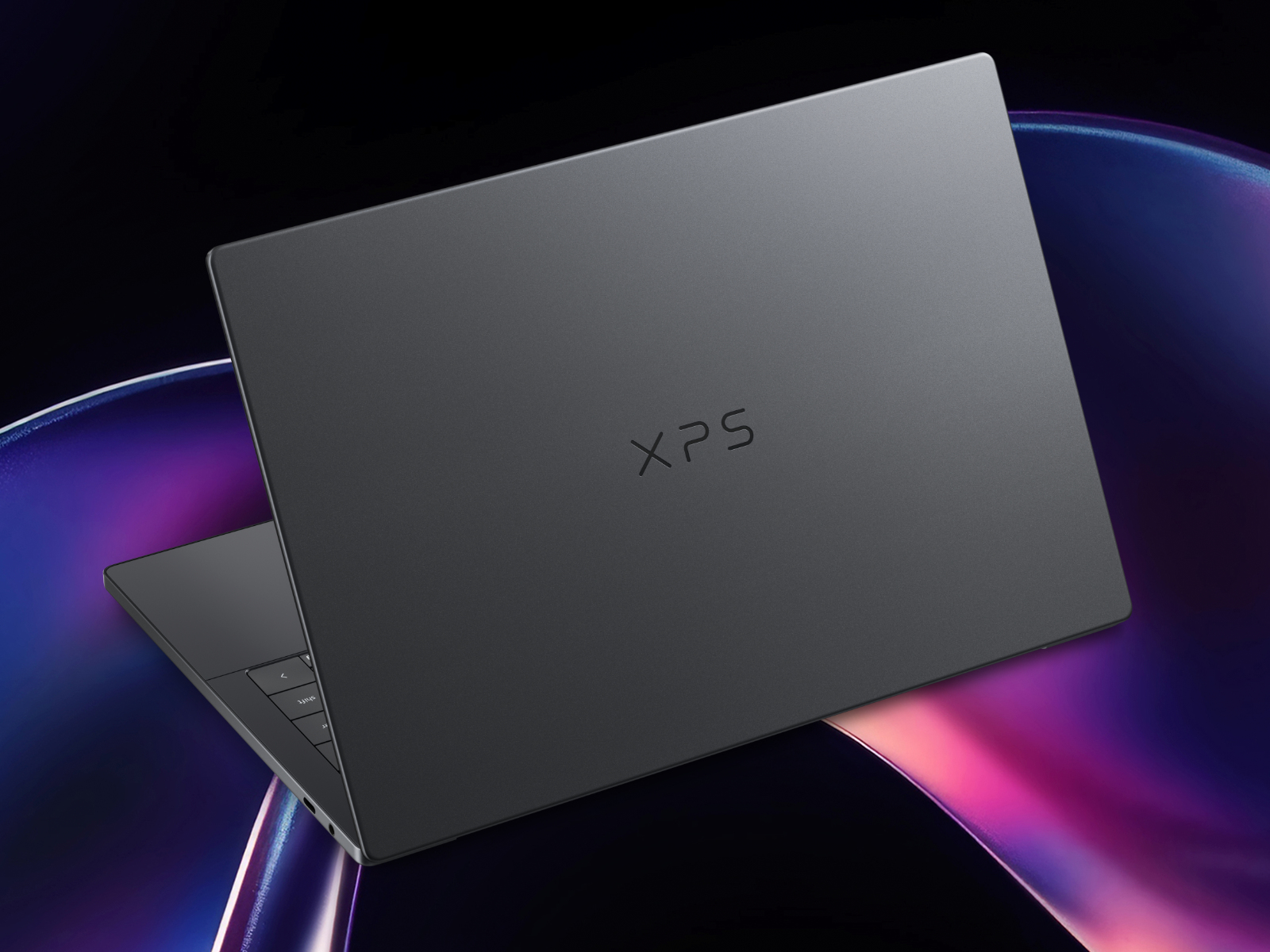
Dell XPS 14 (DA14260) With Intel Panther Lake Earns Ubuntu 26.04 LTS Certification and Tops Rival X7 358H Laptops on Linux
Dell’s 2026 flagship 14-inch ultrabook, the **XPS 14 (DA14260)**, has cleared official **Ubuntu 26.04 LTS** certification with Intel’s Core Ultra Series 3 "Panther Lake" silicon—delivering a rare out-of-the-box Linux experience on stock **Linux 7.0** and **Mesa 26.0** without relying on vendor-patched OEM kernels. Comprehensive Linux benchmarking published on November 18, 2026, shows that Dell’s thermal and power tuning also extracts substantially more performance from the Core Ultra X7 358H and integrated **Intel Arc B390 (Xe3)** GPU than competing Panther Lake designs, even as elevated memory and flash costs push high-end configurations near $3,000. For Linux laptop buyers, the significance of the DA14260 extends beyond raw benchmark charts. Historically, newly launched Intel or AMD mobile platforms forced Linux adopters to endure six to twelve months of broken suspend states, missing audio codecs, or unaccelerated graphics while waiting for upstream kernel support. By pairing early Dell–Intel–Canonical co-engineering with Ubuntu’s Long-Term Support hardware certification pipeline, the XPS 14 ships with working IPU-backed webcam support, haptic touchpad behavior, Wi-Fi 7, Thunderbolt 4 DisplayPort 2.1 output, and speaker audio straight from the factory image. ### How Upstream Quirks Solved the 120Hz OLED Suspend Trap That polished out-of-the-box behavior did not happen by accident. Public Ubuntu Kernel Team mailing list records from Canonical’s certification cycle reveal how engineering groundwork caught subtle silicon-display interactions before Ubuntu 26.04 LTS pre-loads reached customers. During automated certification testing on the DA14260 hardware (CID `202511-38076`), Canonical engineer Chia-Lin Kao identified a 100-percent reproducible regression on the system’s 2.8K (2880 x 1800) 120Hz OLED panel: after a suspend-and-resume cycle, the `i915` graphics driver renegotiated DisplayPort Panel Replay over DPCD, causing the screen to drop visibly below its nominal refresh rate until a cold reboot—even while tools such as `glmark2` continued reporting 120Hz rendering. Rather than burying a workaround inside a proprietary OEM image, Canonical pushed an upstream quirk (`drm/i915/psr: Disable Panel Replay on Dell XPS 14 DA14260`) via Stable Release Updates tracked under Launchpad Bug #2144712. As Dell’s own engineering team noted in its 2026 Linux laptop retrospective, avoiding the traditional post-launch lag requires validating hardware and kernel drivers before commercial silicon ships. On the DA14260, that upstream discipline pays off: users running stock Ubuntu 26.04 LTS on Linux 7.0 get stable suspend/resume and full graphics acceleration immediately, with an official upgrade path to the Linux 7.3 Hardware Enablement (HWE) stack from Ubuntu 26.10 scheduled for the next 26.04 point release to unlock further Xe3 graphics and efficiency gains. ### Benchmarking Panther Lake: Why Chassis Tuning Beats Silicon Parity A persistent misconception in portable hardware is that two laptops sharing the same processor deliver interchangeable performance. Across more than 200 Linux benchmarks tested on Ubuntu 26.04 LTS by Phoronix, the Dell XPS 14 (configured with an Intel Core Ultra X7 358H, 32GB of LPDDR5x-9600 memory, a 512GB Kioxia PCIe Gen4 NVMe SSD, and the 2.8K OLED panel) achieved **1.22x the overall geometric-mean performance** of the MSI Prestige 14 Flip AI running the exact same X7 358H processor in its performance profile. Even more strikingly, Dell’s 14-inch chassis reached **93 percent of the overall performance** of the Framework Laptop 13 Pro equipped with Intel’s flagship Core Ultra X9 388H. That gap stems from sustained power budgets and thermal dissipation inside Dell’s 14.6 mm, roughly 3-pound CNC-machined aluminum and Gorilla Glass 3 enclosure. Over the full benchmark suite, the XPS 14 averaged 23 watts and peaked at 65 watts—allowing it to pull ahead decisively in sustained multi-core compilation workloads such as building the Linux kernel, LLVM, and the Godot engine, as well as GPU-bound tests like GravityMark and Vulkan ray tracing on the Arc B390 iGPU. Where the MSI system favored slightly tighter efficiency in bursty browser benchmarks like Speedometer 3.1, Dell’s configuration traded a modest sliver of performance-per-watt for workstation-class throughput. ### Trade-Offs, Pricing Reality, and Who Should Buy It Despite the hardware polish, Linux buyers face real architectural and financial caveats. Unlike competing AMD Ryzen AI 9 HX 370 platforms—such as the Framework 13—Intel’s Panther Lake client architecture lacks AVX-512 execution units, leaving AMD ahead in select local AI inference workloads that leverage 512-bit vector instructions. Expansion is likewise constrained to soldered memory (16GB LPDDR5x-7467 on base tiers, or 32GB/64GB LPDDR5x-9600 on higher SKUs), a single audio jack, and three Thunderbolt 4 USB-C ports, though M.2 NVMe storage scales up to 4TB PCIe Gen5. The steepest barrier is price. While choosing Ubuntu over Windows 11 Home or Pro saves $100 to $160 respectively—starting from $1,899 on entry configurations when Dell rolled out North American Ubuntu SKUs—industry-wide memory and SSD inflation has pushed the reviewed Core Ultra X7 358H / 32GB / 2.8K OLED tier to roughly $3,000. For developers, Linux gamers eyeing integrated Xe3 graphics, and engineers seeking Apple-grade build quality without proprietary bootloaders, the DA14260 is arguably the cleanest Intel Linux ultrabook of 2026—provided their budget can stomach peak-component pricing. ### Sources & Further Reading - [Phoronix — Dell XPS 14 DA14260 Powered By Intel Panther Lake Delivers Nice Linux Experience](https://www.phoronix.com/review/dell-xps-14-panther-lake) - [Ubuntu Kernel Team Mailing List — SRU Panel Replay Quirk for Dell XPS 14 DA14260](https://lists.ubuntu.com/archives/kernel-team/2026-April/166865.html) - [Dell Official Blog — Year of the Linux Laptop: Linux Engineering on XPS](https://www.dell.com/en-us/blog/year-of-the-linux-laptop-omarchy-on-xps) - [Notebookcheck — Dell XPS 14 2026 Released With Ubuntu Linux and Up to 64 GB RAM](https://www.notebookcheck.net/Cheaper-Dell-XPS-14-2026-released-internationally-with-Ubuntu-Linux-and-up-to-64-GB-RAM.1313448.0.html) ~Linux ~Ubuntu ~Intel ~DellXPS ~PortablePC