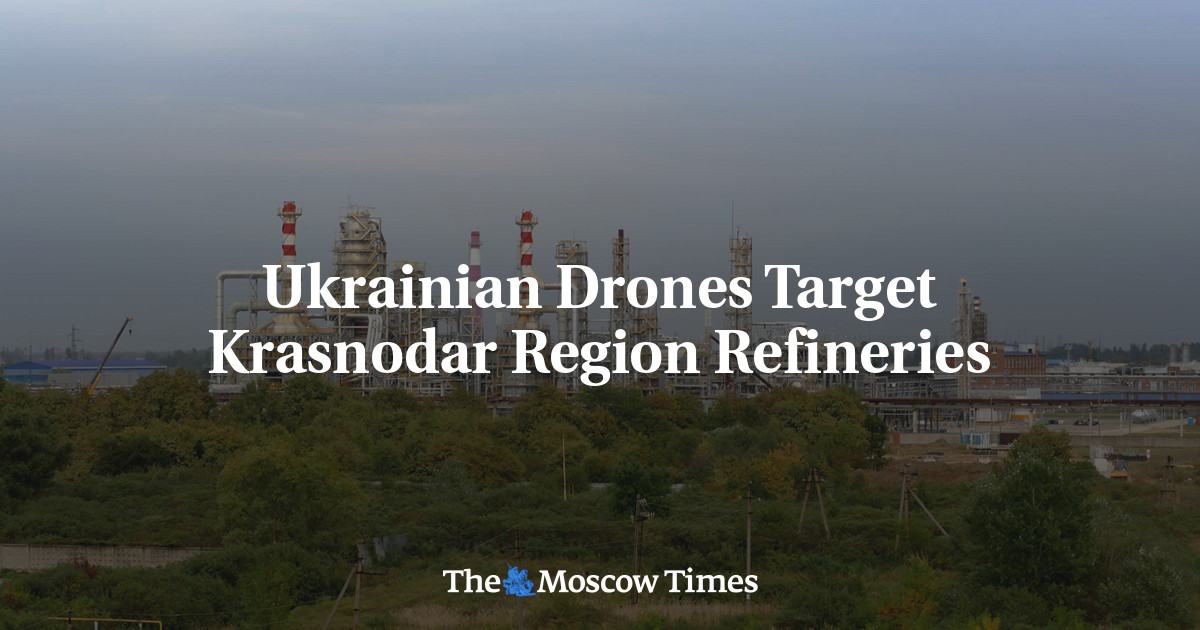
Ukrainian Drones Strike Afipsky and Ilsky Oil Refineries in Southern Russia’s Krasnodar Krai
Ukrainian long-range drones struck southern Russia’s Krasnodar Krai before dawn on November 18, sparking fires at two major industrial facilities in the Seversky district—home to the Afipsky and Ilsky oil refineries—and injuring at least four people, according to regional emergency authorities and independent Russian and Ukrainian reporting. Air-defense activity and explosions began around 4:40 a.m. local time, with residents in Krasnodar and surrounding towns reporting bright flashes, anti-aircraft fire, and thick smoke rising from the direction of the refining complexes. While Krasnodar Krai’s operational headquarters attributed the blazes to "falling drone debris" across nine residential and industrial sites without naming the plants, independent Russian outlets [The Moscow Times](https://www.themoscowtimes.com/2026/11/18/ukrainian-drones-target-krasnodar-region-refineries-a94294) and [Meduza](https://meduza.io/en/news/2026/11/18/ukrainian-drones-strike-two-oil-refineries-in-southern-russia), alongside [Ukrainska Pravda](https://www.pravda.com.ua/eng/news/2026/11/18/8063375/), identified the Afipsky and Ilsky refineries as the facilities hit. ### Why "Debris" Framing Collides With Repeated November Strikes Russian regional authorities routinely describe fires at strategic energy sites as the result of intercepted UAV fragments rather than direct hits, a standard communications formula intended to reassure domestic audiences that local air defenses functioned as planned. Yet the geography of the Seversky district—where Afipsky and Ilsky sit within close proximity along key transport arteries—and the sheer frequency of attacks this month point to a sustained, deliberate campaign against Russia’s southern refining corridor. The November 18 barrage marks the third major drone strike against the two Krasnodar complexes in less than two weeks: - **November 6:** The Afipsky refinery sustained a heavy overnight drone attack and subsequent industrial fire. - **November 16:** Ukrainian forces targeted the Ilsky refinery, with Ukraine’s General Staff confirming direct hits on primary crude distillation units AT-4, AT-5, and AT-6—the core thermal-separation towers without which a refinery cannot process raw crude into diesel, kerosene, or gasoline. - **November 18:** Both complexes were targeted simultaneously in an overnight saturation wave, compounding structural damage before repair crews could stabilize or bypass damaged distillation columns. ### The Compounding Bottleneck in Southern Fuel Logistics Hitting Afipsky and Ilsky repeatedly serves an operational purpose that goes well beyond symbolic headlines. Together, the two Krasnodar plants form an indispensable fuel-processing node for southern Russia, the North Caucasus, and military logistics supporting Russian forces across occupied southern Ukraine and the Black Sea basin. Unlike storage depots—where burned fuel can be replaced by rail tankers within days—primary crude distillation units rely on specialized high-pressure vessels, heat exchangers, and control electronics that take weeks or months to rebuild, particularly when Western sanctions restrict replacement parts. Every week that southern refining capacity runs below nameplate throughput forces Russian fuel distributors to haul refined diesel and aviation fuel by rail from distant interior refineries in the Volga and Urals regions. That rerouting adds cost, strains already congested freight rail lines, and tightens domestic supply margins heading into winter. ### Strategic Leverage Amid Sanctions and Shenzhen Diplomacy The timing of the November 18 strike also intersects with two broader pressures converging on the Kremlin this week. In Europe, the European Union recently [blacklisted Russia’s core oil refining network](https://www.mushimu.com/post/9422) alongside 40 financial institutions, tightening the vise on maritime insurance, export financing, and third-country crude-product laundering. At the diplomatic level, the overnight explosions in Krasnodar unfolded while Russian President Vladimir Putin was in China for [Shenzhen APEC talks and a trilateral summit](https://www.mushimu.com/post/9515) with U.S. President Donald Trump and Chinese leader Xi Jinping. Coming immediately after Ukrainian forces [struck the Crimean Bridge](https://www.mushimu.com/post/9537) using an indigenous drone-to-missile video relay rather than Starlink, the renewed assault on Afipsky and Ilsky underscores a clear strategic message from Kyiv: even as Moscow presses territorial and NATO-rollback demands in high-level diplomacy, Russia’s domestic energy backbone remains exposed to persistent, low-cost long-range attrition. ### Sources & Further Reading - [The Moscow Times (Russia — Independent) — Ukrainian Drones Target Krasnodar Region Refineries](https://www.themoscowtimes.com/2026/11/18/ukrainian-drones-target-krasnodar-region-refineries-a94294) - [Meduza (Russia — Independent, citing Krasnodar Krai Operational Headquarters) — Ukrainian drones strike two oil refineries in southern Russia](https://meduza.io/en/news/2026/11/18/ukrainian-drones-strike-two-oil-refineries-in-southern-russia) - [Ukrainska Pravda (Ukraine) — Drones target Krasnodar Krai refineries in overnight attack](https://www.pravda.com.ua/eng/news/2026/11/18/8063375/) ~WorldNews ~Russia ~Ukraine ~Energy ~Krasnodar