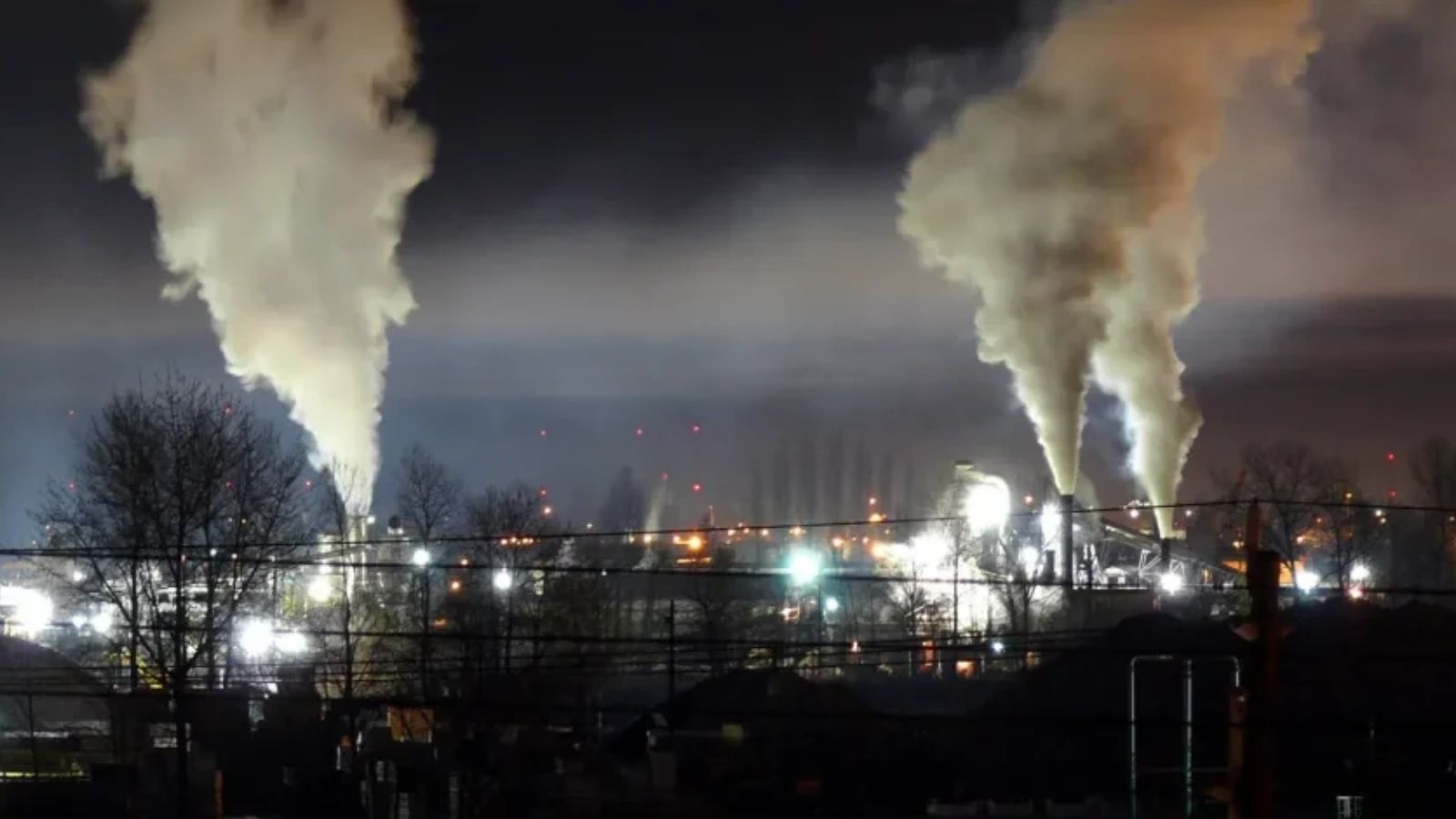
Global Carbon Budget at COP31: China’s Emissions Dip 0.9% as U.S. Climate Trajectory Diverges
As negotiators enter the final stretch of the COP31 climate summit in Antalya, Turkey, new data from the Global Carbon Project’s 2026 budget has crystallized a striking geopolitical inversion: global fossil-fuel carbon dioxide emissions are projected to dip 0.4% this year to 38.2 billion tonnes, led by a structural 0.9% decline in China—even as the United States participates without a formal federal delegation and emerging economies face surging energy demand. The findings, examined in reporting from [NPR](https://www.npr.org/2026/11/18/nx-s1-6044646/china-and-the-u-s-emissions-cop31-antalya), [Asia News Network](https://asianews.network/chinas-co2-emissions-set-to-decline-as-clean-energy-lead-grows/), [The Indian Express](https://indianexpress.com/article/india/co2-emissions-from-fossil-fuels-projected-to-decline-in-2026-study-10957944/), and [Argus Media](https://www.argusmedia.com/en/news-and-insights/latest-market-news/2902303-fossil-co2-emissions-projected-to-fall-in-2026-report), mark a symbolic shift away from decades of uninterrupted global emissions growth. Yet climate scientists at Antalya were quick to warn that a narrow plateau is far from the steep, sustained cuts required to hold warming near 1.5°C—and that part of 2026’s dip rests on temporary geopolitical shocks rather than policy permanence. ### China’s 0.9% Inflection vs. America’s Federal Absence Together, China and the United States remain the world’s two largest greenhouse gas emitters, but their trajectories at COP31 reflect starkly different industrial strategies. Accounting for roughly 32% of global fossil CO2 output, China’s projected 0.9% decline in 2026 follows years of breakneck domestic deployment in solar, wind, battery storage, and electric vehicles, paired with large-scale reforestation. While Beijing’s coal fleet remains massive, clean-power additions are now absorbing incremental electricity demand at a scale capable of bending the national curve downward. In contrast, U.S. climate diplomacy at Antalya has been defined by institutional retreat. With Washington absent from formal federal negotiations, subnational coalitions, state regulators, and private clean-energy investors have carried the U.S. presence at COP31. Although U.S., EU27, and Japanese fossil emissions are also projected to edge lower in 2026, analysts warn that federal deregulation and stalled clean-grid incentives risk slowing U.S. decarbonization just as China consolidates dominance over global clean-tech supply chains. ### Why Geopolitical Oil Shocks Complicate the 2026 Headline Climate researchers presenting the Global Carbon Budget cautioned against mistaking a 0.4% global dip for an irreversible victory. While structural renewable and EV adoption has prevented billions of tonnes of potential emissions over the past decade, a measurable share of 2026’s immediate contraction reflects conflict-driven oil supply disruptions and higher energy prices—including maritime and infrastructure instability in the Middle East. Relying on geopolitical supply shocks to suppress fossil fuel burn is neither durable nor equitable. Once supply routes normalize or prices soften, rebound emissions can quickly erase a fractional annual decline unless grids, heavy industry, and transport are structurally electrified. ### India’s Growth Dilemma and the COP31 Finance Battleground The sharpest divergence in the 2026 data sits outside the U.S.–China comparison. While mature economies and China plateau or edge down, India’s fossil CO2 emissions are projected to rise by more than 4% in 2026, driven by rapid industrial expansion, urbanization, and surging electricity demand for cooling during intensifying heatwaves. That split explains why COP31—running November 9–20 at the ANFAS Antalya Expo Center, where [fossil-fuel and banking delegations have outnumbered vulnerable nations](https://www.mushimu.com/post/9489)—has shifted from abstract 2050 pledges to hard implementation finance. For developing economies across South Asia, Africa, and Latin America, bending the emissions curve without sacrificing poverty reduction hinges on affordable grid capital and adaptation funding. Until wealthy nations bridge the climate-finance gap, 2026’s historic global plateau risks remaining a fragile pause rather than a decisive descent. ### Sources & Further Reading - [NPR (United States) — China’s climate emissions are plateauing. In the U.S., it’s a different story](https://www.npr.org/2026/11/18/nx-s1-6044646/china-and-the-u-s-emissions-cop31-antalya) - [Asia News Network (Asia) — China’s CO2 emissions set to decline as clean energy lead grows](https://asianews.network/chinas-co2-emissions-set-to-decline-as-clean-energy-lead-grows/) - [The Indian Express (India) — CO2 emissions from fossil fuels projected to decline in 2026: study](https://indianexpress.com/article/india/co2-emissions-from-fossil-fuels-projected-to-decline-in-2026-study-10957944/) - [Argus Media (Global) — Fossil CO2 emissions projected to fall in 2026: report](https://www.argusmedia.com/en/news-and-insights/latest-market-news/2902303-fossil-co2-emissions-projected-to-fall-in-2026-report) ~WorldNews ~Climate ~COP31 ~China ~UnitedStates