

A Photonic Chip Can Separate Light That a Camera Blends Together
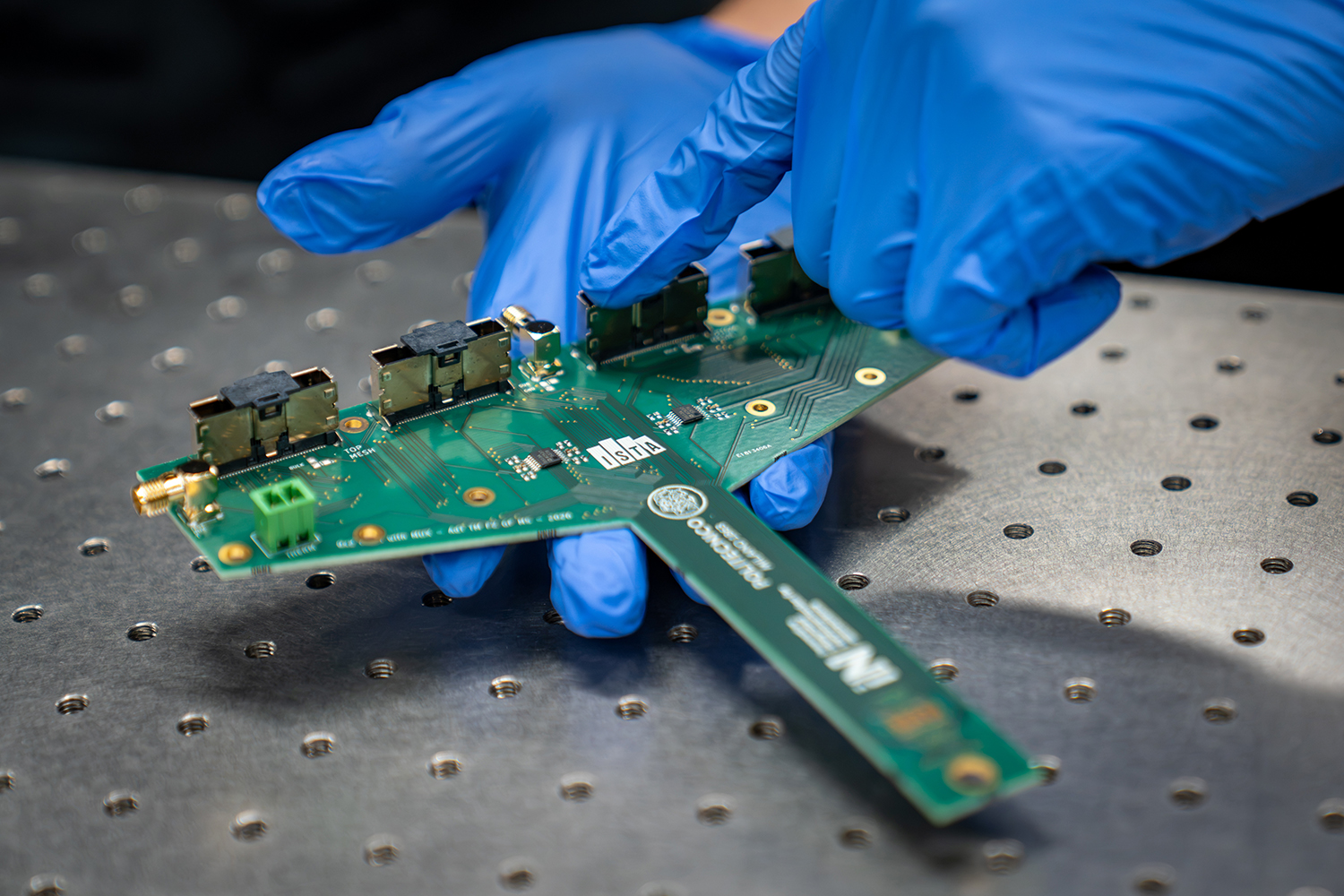 Image: Institute of Science and Technology Austria (ISTA), via Stanford Report. A camera can blend two sources into the same patch of an image, even when the light carries clues that they are separate. A new silicon photonic circuit demonstrated a way to read some of those clues directly: it learns the coherence modes of mixed light and routes them to different outputs. The researchers tested the chip with infrared lasers whose light fields overlapped. In a nine-input circuit, they separated the two strongest coherence modes and measured more than 98% fidelity against a tomography method run on the same chip. A separate rank-three test showed the approach can handle more than two modes. This is a lab demonstration, not a ready-made camera upgrade. The promise is that separating light by its correlation structure could reveal information that ordinary intensity images collapse together—potentially useful in microscopy, astronomy, and optical sensing. The team is now exploring whether the method could help analyze light from distant galaxies. The study appeared in *Nature Photonics* on October 30. Read the [research paper](https://www.nature.com/articles/s41566-026-02035-6) and [Stanford’s explanation](https://news.stanford.edu/stories/2026/11/chip-mixed-light-beams-microscopy). ~science