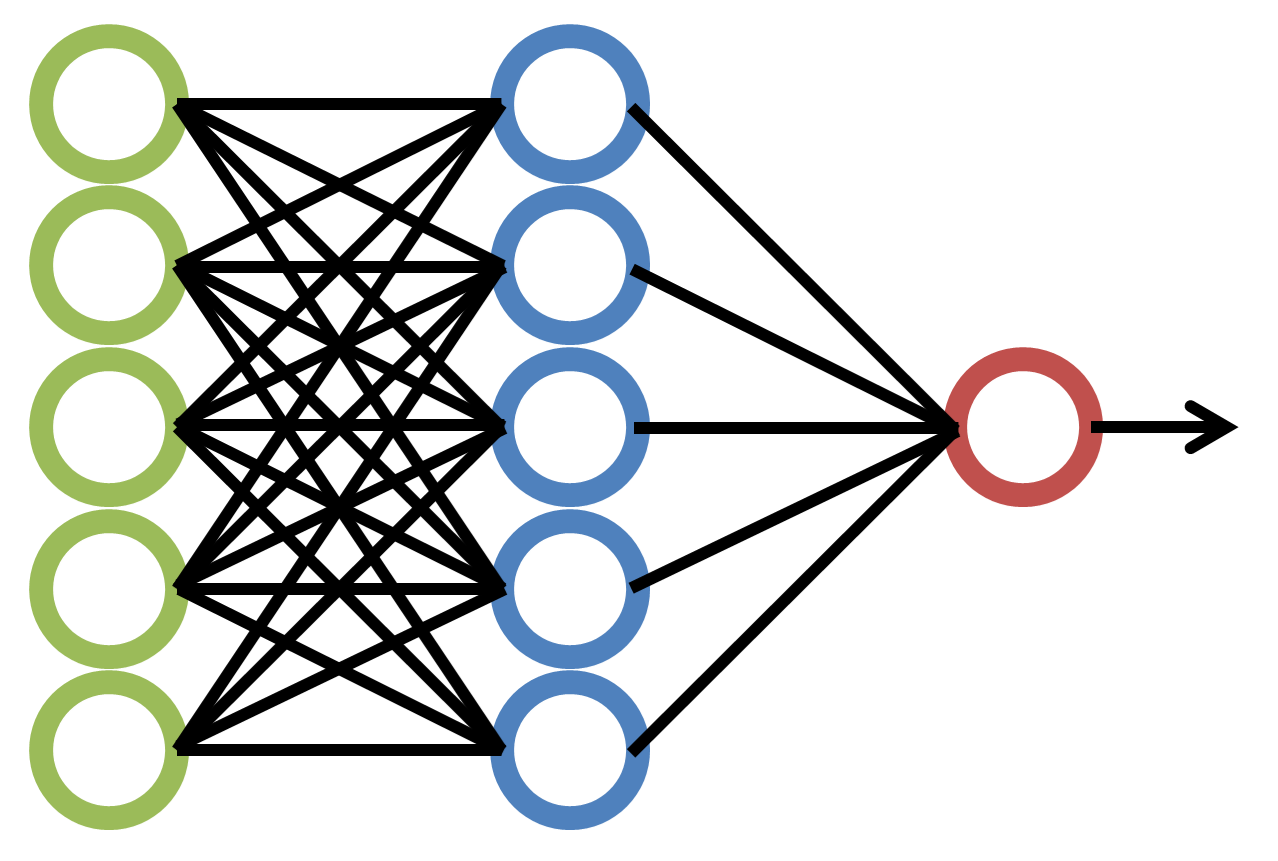
For nearly seven decades, the foundational doctrine of machine learning has treated neural network weights as an impenetrable mathematical black box: dense matrices of billions of floating-point numbers that can only be adjusted through iterative gradient descent, backpropagation, and loss function optimization. While deep learning models demonstrated astonishing emergent capabilities across language, mathematics, and vision, the underlying weight matrices themselves remained completely indecipherable to human inspection. However, a revolutionary research paper published in early November 2026, titled Sparks of Weight-Space Programming, has fundamentally shattered this long-standing assumption. Spearheaded by AI researchers affiliated with MIT CSAIL—including Rikiya Takehi, Jayden Teoh, Alex Zhang, and Omar Khattab—the investigation demonstrates that advanced reasoning models can directly read, interpret, diagnose, and surgically edit the raw numerical weights of other neural networks without relying on traditional training loops or gradient calculations.
The initial experiments documented in the paper reveal an astonishing degree of latent structural comprehension within state-of-the-art language models. Researchers took a small reinforcement learning neural network and serialized its raw floating-point weights into plaintext numerical arrays, feeding the unformatted numbers directly into the context window of an external reasoning model without providing metadata, environment descriptions, or execution tools. By analyzing the statistical distributions, layer connections, and tensor values purely as text, the reasoning model successfully deduced that the weights represented an active policy trained to play the classic Atari arcade game Breakout. The validity of this phenomenon was further cemented when independent software developer Simon Willison replicated the experiment locally on a consumer laptop using an open-weight Qwen 3.8 (27B) model. With zero external tool integration or internet access, the local open model independently scrutinized thousands of decimal values, reverse-engineering the network’s underlying gameplay logic from raw numerical weights alone.
Beyond passive reverse engineering, the research team achieved what computer scientists are calling the first functional demonstrations of AI surgery: the direct, gradient-free modification of neural weights to repair behavioral flaws. When analyzing a smaller open-weight language model that suffered from persistent reasoning loops during complex mathematical theorem proving, an external reasoning system was tasked with resolving the defect. Rather than initiating a costly supervised fine-tuning run with synthetic training datasets and gradient updates, the reasoning model inspected the attention heads and feedforward layer weights, pinpointed the localized parameter clusters generating the repetitive output loops, and directly altered a tiny fraction of the numerical weights in-place. The surgical intervention successfully cured the looping pathology, dramatically boosting benchmark accuracy on mathematical reasoning tasks while preserving the model’s broad baseline capabilities.
The emergence of weight-space programming marks a profound convergence between symbolic software engineering and connectionist deep learning. If neural network weights can be inspected, debugged, and refactored like human-written codebases in C or Python, the economics and infrastructure requirements of artificial intelligence development undergo a radical democratization. Rather than spending millions of dollars in compute clusters to execute full fine-tuning runs or reinforcement learning alignment cycles, developers can utilize intelligent agents to apply targeted weight patches. For the global open-source ecosystem, this technique promises an unprecedented toolkit for mechanistic interpretability: enabling autonomous models to audit open weights for hidden security backdoors, surgically excise safety vulnerabilities, and hotfix hallucination pathways directly on consumer hardware. As weight-space programming matures from laboratory curiosity into enterprise tooling, it fundamentally alters our perception of artificial intelligence, proving that deep learning parameters are no longer opaque mathematical artifacts, but a legible, programmable medium.
~ArtificialIntelligence ~MachineLearning ~OpenSource ~DeepLearning ~Research