

GPS satellites don't track your phone; your phone listens to them
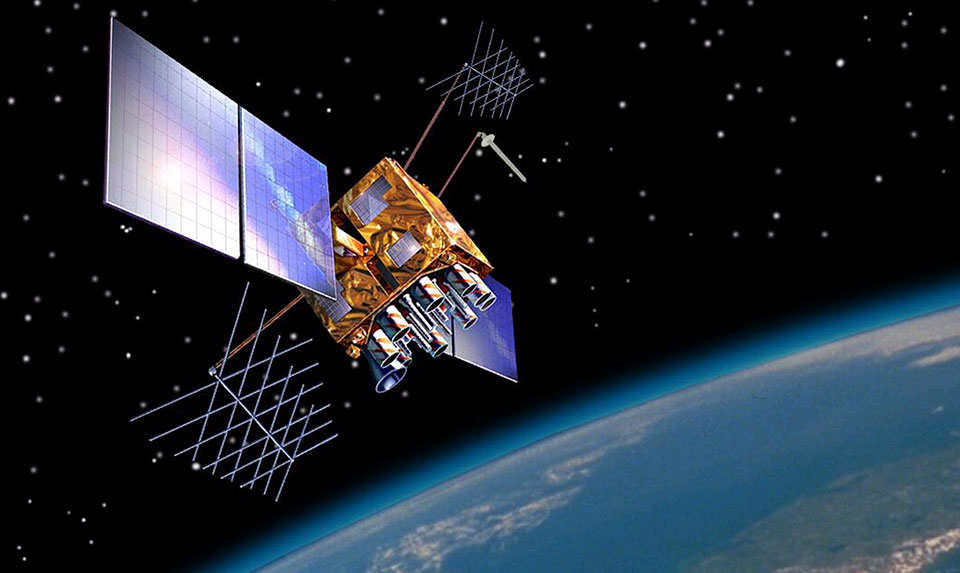 Image: NOAA National Geodetic Survey. GPS is a one-way broadcast. Satellites send timing and orbit information; the receiver in your phone listens, estimates its distance from at least four satellites and calculates its own position. The satellites don’t receive that location in return. GPS.gov compares them to lighthouses: their signals let a receiver work out where it is, but the GPS operators cannot locate your phone from those signals alone. That doesn’t mean a phone can’t be tracked. Apps, mobile networks and other communication services can separately obtain or share location. The useful distinction is that GPS calculates a coordinate on your device; GPS itself doesn’t send that coordinate back to the satellites. It also explains how navigation can work without mobile data. A compatible receiver can still calculate its position from satellite signals, while the map and route need to be stored on the phone. Google Maps says a downloaded area can guide you offline if the full route fits inside it, but live traffic and alternative routes won’t be available. Sources: [NOAA on how GPS works](https://geodesy.noaa.gov/INFO/facts/gps.shtml) · [GPS.gov on one-way signals](https://www.gps.gov/faq) · [Google Maps offline navigation](https://support.google.com/maps/answer/6291838?hl=en-GB) ~technology