

The AI Boom Could Trigger the Next Financial Crisis — Even If AI Succeeds
What if the biggest risk to the US economy isn't that artificial intelligence fails, but that the companies financing its infrastructure collapse before they can recover their investments? I've been connecting several developments in the US economy, and I think there's a potential financial crisis forming that deserves more attention. The housing market is struggling. AI infrastructure companies are taking on enormous amounts of debt. Expensive GPUs are being purchased before the data centers and electrical infrastructure needed to operate them are ready. Meanwhile, increasingly efficient AI hardware could undermine the profitability of some of those investments. Individually, these problems might be manageable. Together, they could create a dangerous financial feedback loop. Here's my theory. ## 1. The US economy is already showing signs of weakness According to the National Association of Realtors, pending home sales fell 7.3% month over month and 11.3% year over year in September 2026. These figures suggest a significant slowdown in housing market activity, although weaker transaction volumes alone do not establish that a nationwide housing price collapse is imminent. Realtor.com reports that housing inventory increased 5.4% over the same period, while median asking prices declined 1.4%. 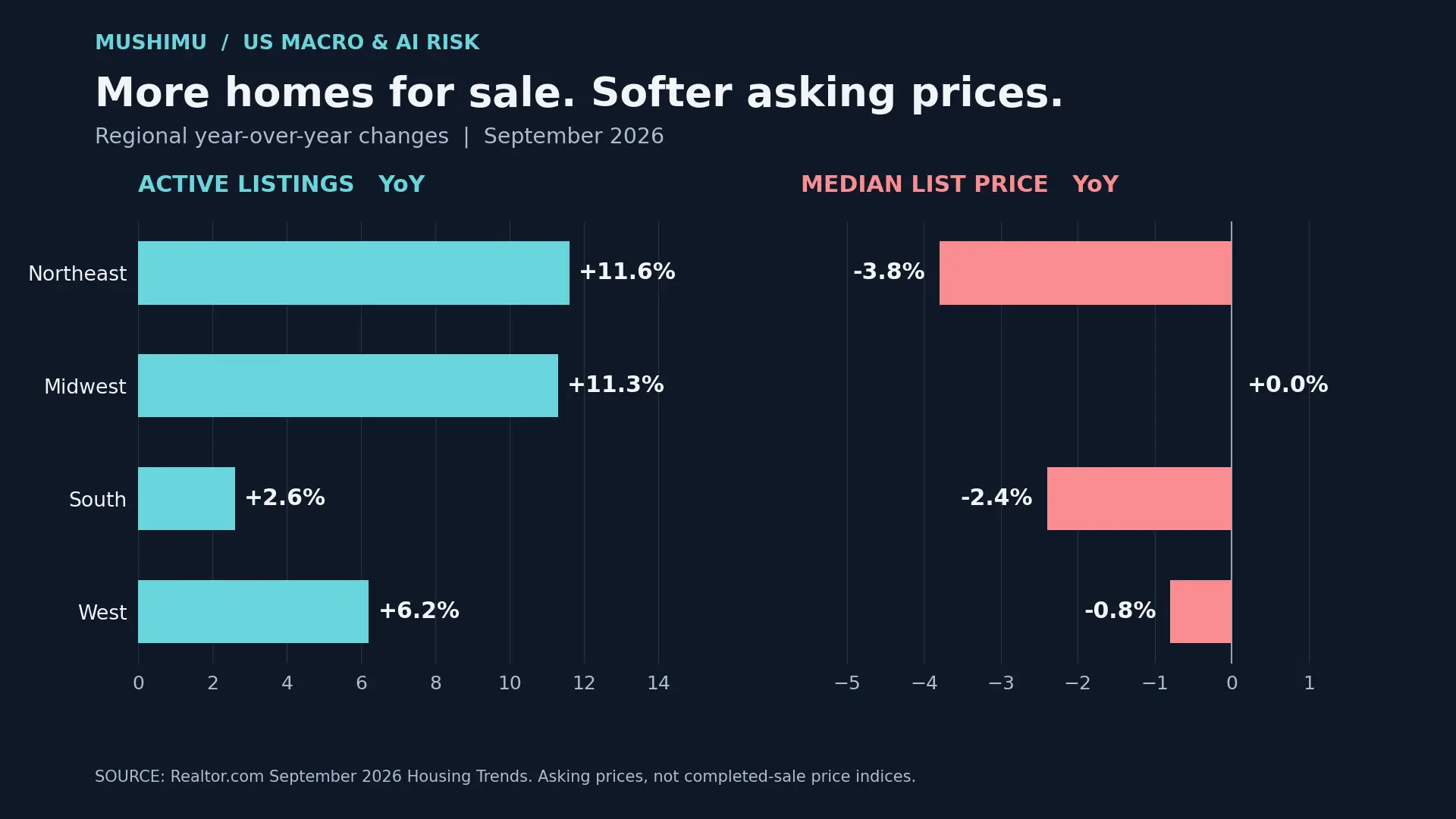 This isn't another 2008 yet. Nationwide home prices haven't collapsed, and mortgage distress remains far below the levels experienced during the financial crisis. But the housing market is showing clear signs of stagnation. Many homeowners are locked into low-interest mortgages and don't want to sell. Potential buyers are struggling with high prices and expensive financing. At the same time, AI infrastructure investment has become an important contributor to US economic growth. That raises an uncomfortable question: **How much momentum would the American economy actually have without the AI investment boom?** 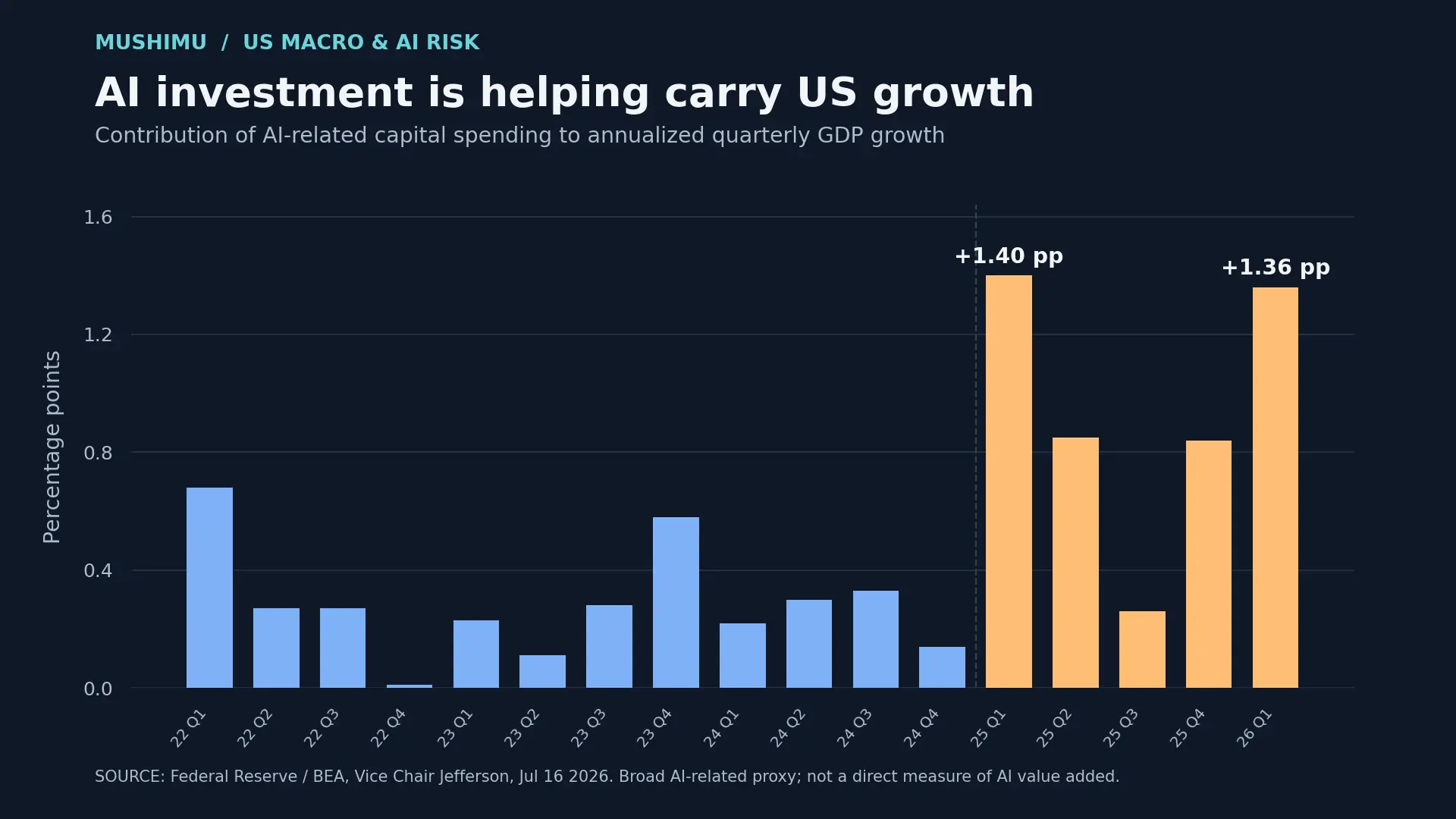 *AI-related capital spending has become an important driver of US economic growth. What happens if that investment suddenly slows?* ## 2. Billions in hardware that can't generate revenue yet This is where things get interesting. Business Insider reported on October 20 that Amazon developed an Early Rack Receipt program to receive Nvidia AI servers before the facilities needed to operate them were fully prepared. Internal plans described an initial $5 billion in GB300 server racks, followed by additional planned deliveries. Power constraints have delayed deployment at some sites. To be clear, that doesn't mean Amazon currently has all those billions sitting unused. Amazon also argues that receiving equipment early is a normal supply-chain strategy. But the underlying problem is real. Building a data center requires much more than buying GPUs. You need transformers, grid connections, cooling systems, electrical substations, and sufficient power generation. Some of that infrastructure takes years to build. 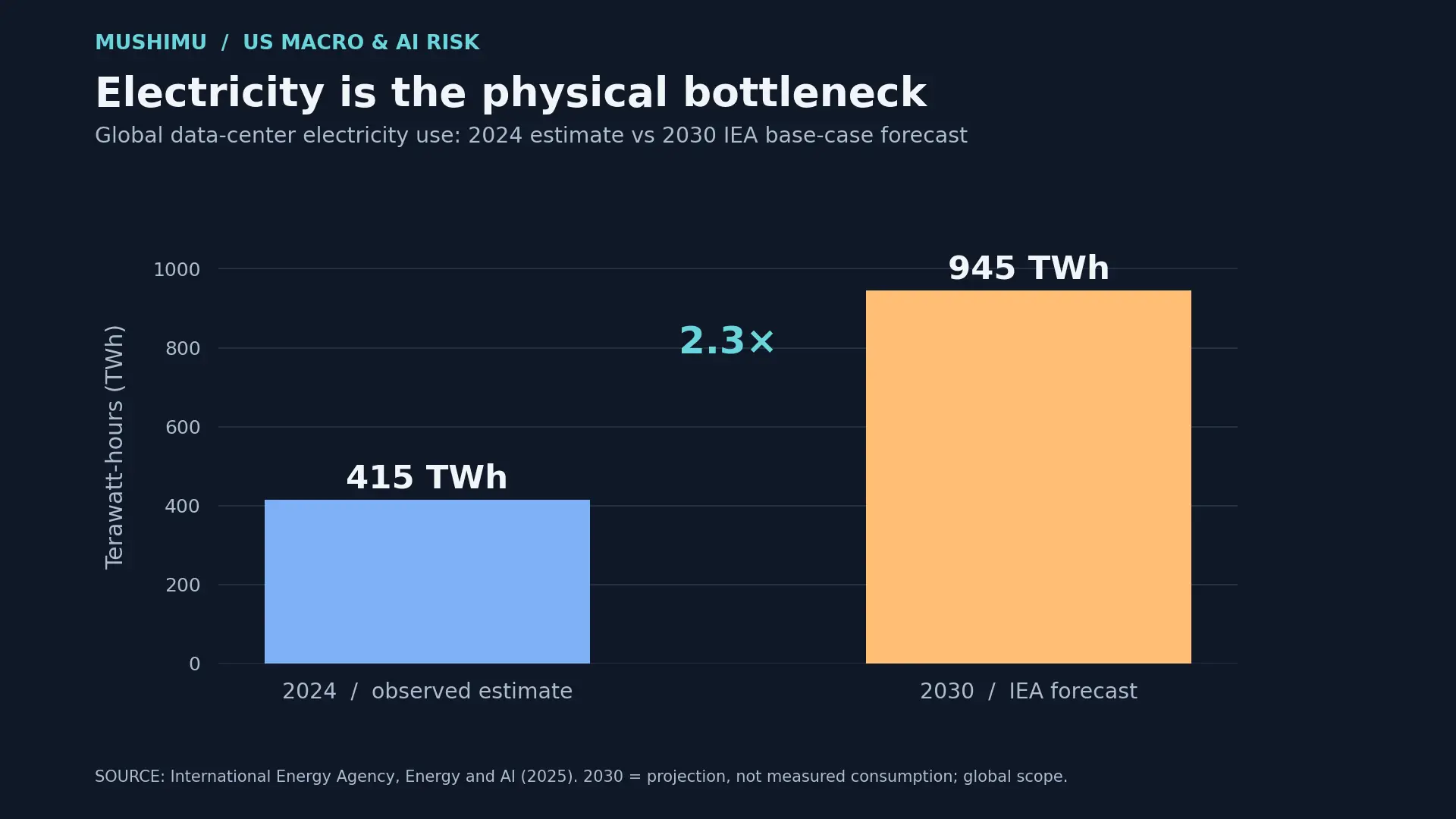 Meanwhile, the GPU industry moves through hardware generations much faster. Imagine a smaller AI infrastructure company borrowing billions to acquire GPUs. The equipment arrives, but the electrical connection is delayed. The servers aren't generating revenue, yet the debt continues accumulating interest. And by the time the data center becomes operational, newer hardware may already offer better performance per dollar. **You're financing assets that aren't producing income while their economic value may be declining.** Amazon has the financial resources and diversified businesses to absorb significant delays. A heavily leveraged GPU rental company might not. ## 3. The hardware economics are changing There's another risk that I think deserves much more attention. The initial AI boom created enormous demand for powerful accelerators equipped with expensive high-bandwidth memory (HBM). But as AI adoption expands, inference — actually running trained models — is becoming an increasingly important part of the market. Inference still needs fast memory, especially for large language models. HBM isn't suddenly becoming obsolete. However, not every inference workload requires the most expensive general-purpose GPU. Specialized accelerators, cheaper memory configurations, quantization, and more efficient models are changing the economics of computing. The key issue is not simply whether GPUs become obsolete. It's whether the revenue generated by each dollar invested in computing hardware declines faster than operators anticipated. A GPU can remain technically useful while becoming economically uncompetitive. If a newer accelerator delivers twice as many tokens per dollar, customers may demand lower prices from providers using older hardware. This creates a dangerous mismatch between technological progress and financial obligations. Hardware efficiency can improve rapidly, but debt principal, interest payments, electricity costs, and infrastructure expenses do not automatically decline at the same rate. And the impact won't be uniform. Operators with cheap electricity, high utilization, strong customer contracts, and access to inexpensive capital may survive. Highly leveraged operators with weaker pricing power could face a very different outcome. For some workloads, companies may increasingly prioritize cost per token over maximum raw performance. Consider what that means for a company that borrowed billions to purchase premium GPUs. It expects to rent those GPUs profitably for several years. But newer hardware may eventually deliver comparable results for certain workloads at substantially lower costs. Customers begin demanding cheaper alternatives. GPU rental prices come under pressure. Expected revenues decline. And the resale value of older hardware may fall. **The danger isn't that AI stops working. It's that AI becomes cheaper faster than investors can recover the money they spent building it.** There's an important counterargument: cheaper inference might stimulate so much additional demand that total computing revenue keeps growing. That's possible. But it doesn't guarantee that every company owning expensive older hardware will benefit equally. ## 4. The debt problem: CoreWeave and the neoclouds This brings us to companies such as CoreWeave, Nebius, Lambda, Crusoe, and other specialized AI infrastructure providers. Their financial situations differ, but some depend heavily on external financing to expand their computing capacity. CoreWeave is a particularly interesting example. Reuters reported in October that CoreWeave had roughly $50 billion in debt and borrowing commitments. However, this figure includes financing commitments and credit facilities, which should not be confused with debt already drawn and outstanding. This distinction matters. The relevant question is not just how much financing a company has arranged, but how much debt it has actually incurred, when that debt matures, how much it costs to service, and whether operating cash flows can support those obligations. 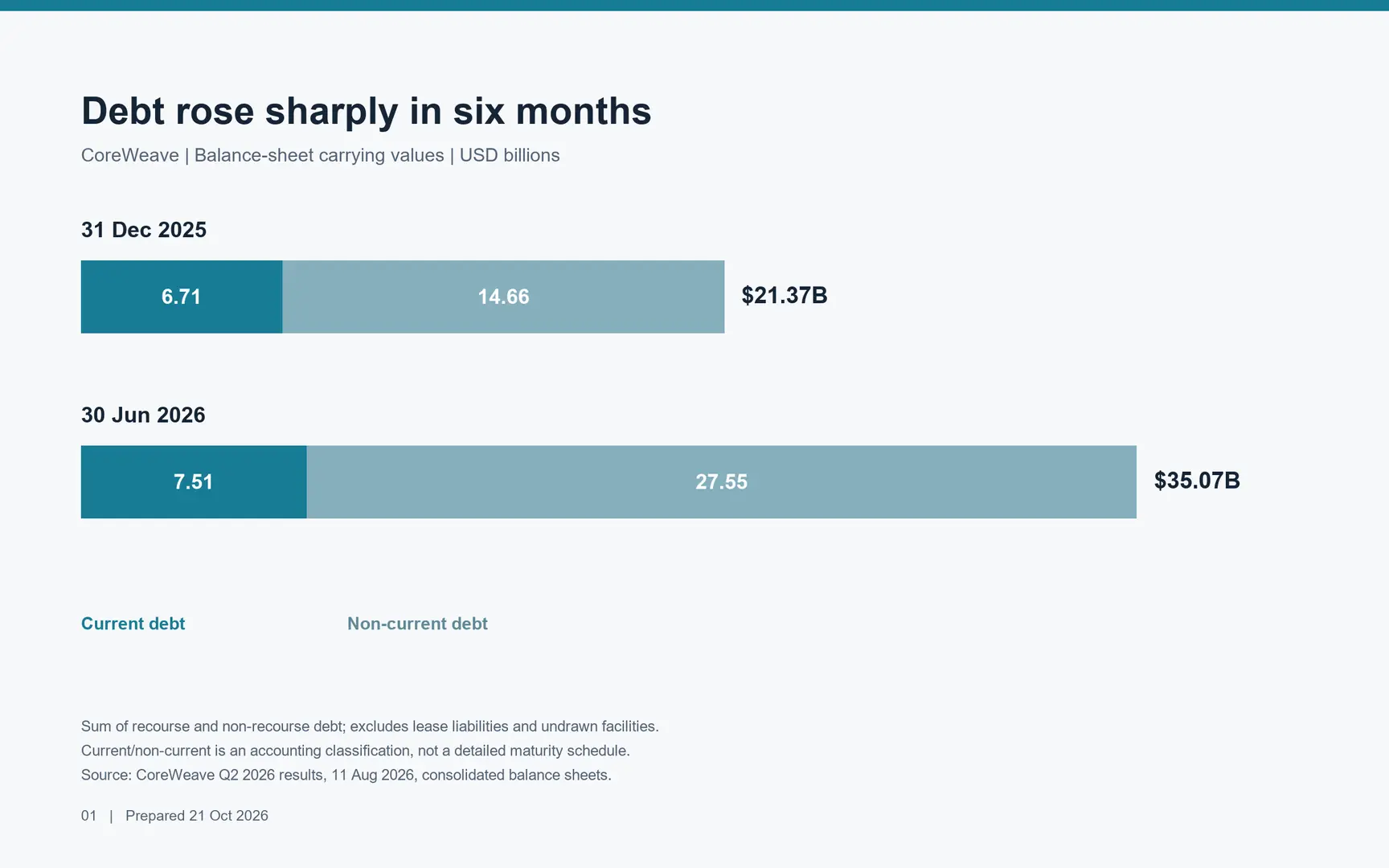 *Historical balance-sheet debt; excludes leases and undrawn commitments.* Yields on certain CoreWeave bonds approached 16% amid increasing investor concerns about its financing model. That doesn't mean the company pays 16% on all its debt. But it shows how expensive refinancing can become when investors start questioning a borrower's financial outlook. JPMorgan expects CoreWeave's free cash flow to remain negative until 2030. 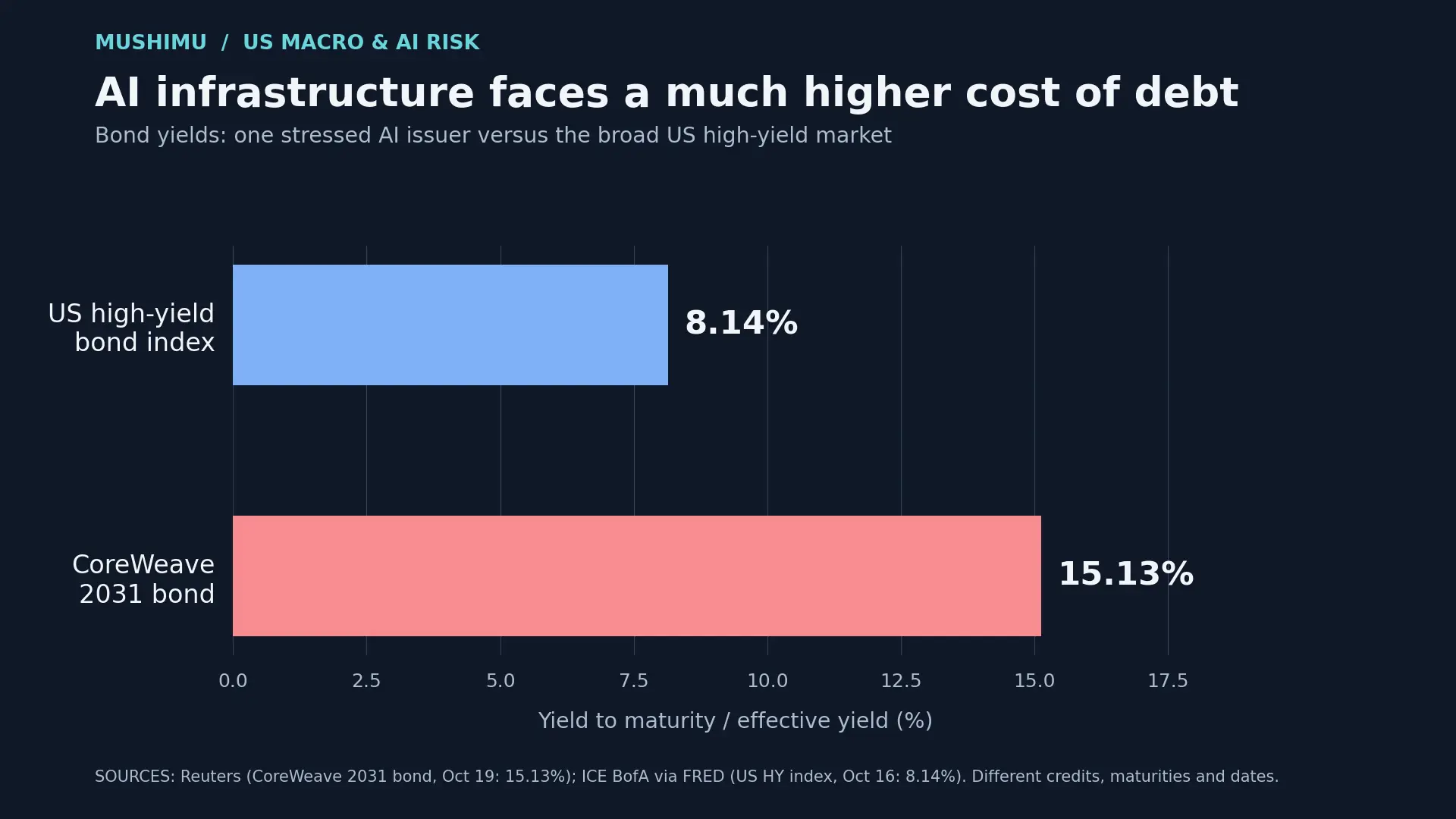 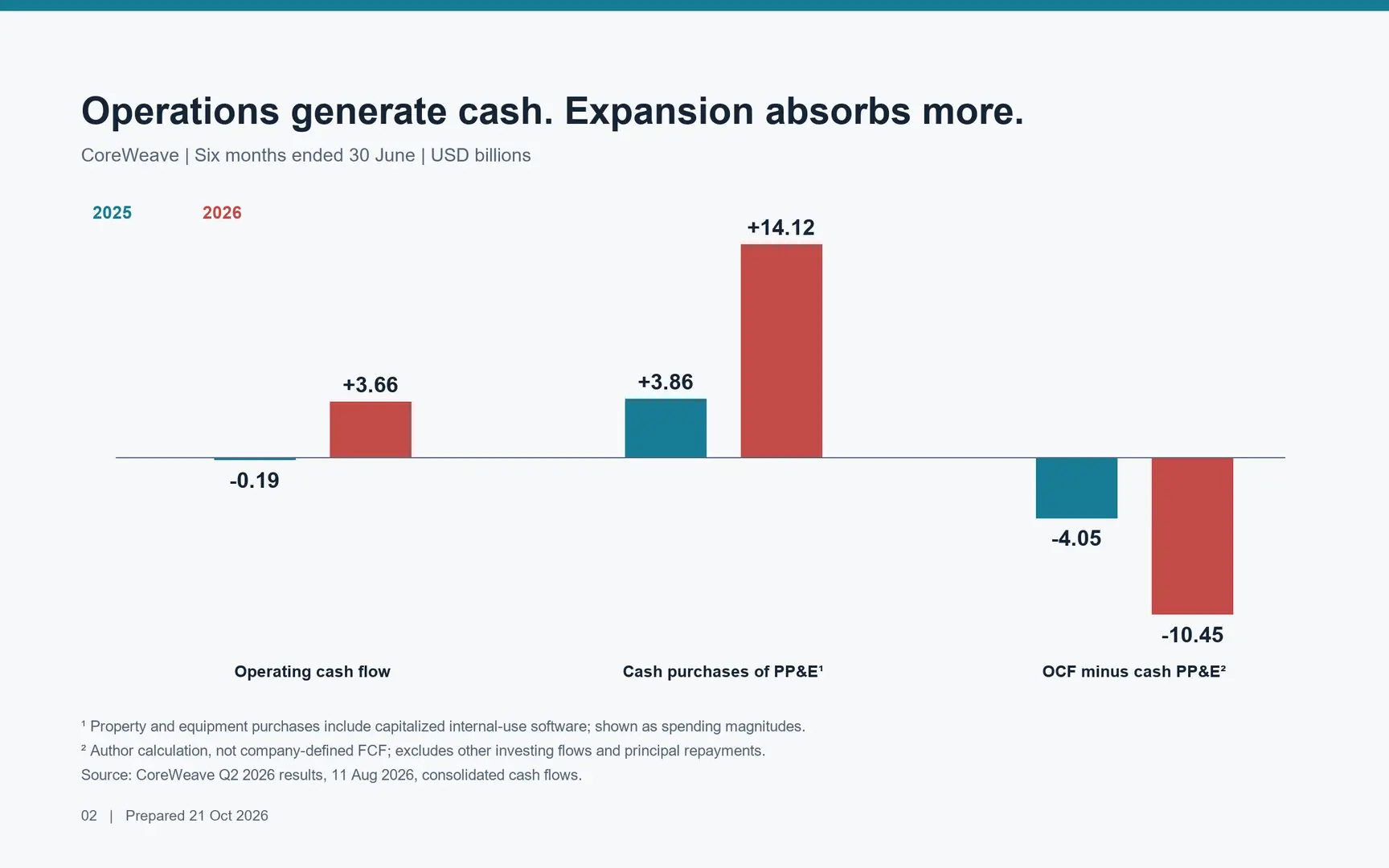 *Historical cash-flow data, not the JPMorgan forecast mentioned above. OCF minus cash PP&E is an author calculation, not company-defined free cash flow.* The company therefore needs to keep generating sufficient revenue and maintaining access to financing while its infrastructure expands. And here's another complication. The AI industry has developed increasingly interconnected financial relationships. Chipmakers invest in infrastructure providers. Infrastructure providers purchase their chips. AI companies sign long-term computing contracts. Banks and private credit funds finance those projects, partly against equipment and expected contractual revenues. None of this is inherently illegitimate. But it creates dependencies. **What happens if several major infrastructure companies encounter financial difficulties simultaneously?** ## 5. Could GPU collateral become a financial time bomb? This is where I see a potential parallel with 2008. I'm not suggesting that GPUs are the new subprime mortgages. The underlying assets and financing structures are very different. But the same fundamental problem can emerge: debt backed by assets whose value deteriorates faster than lenders anticipated. Imagine a hypothetical AI infrastructure company. It purchases $10 billion worth of GPUs and related equipment. It finances $7 billion through debt. Then electricity delays postpone revenue generation, while newer hardware reduces the resale value of its existing equipment by 40%. Its hardware is now worth approximately $6 billion. But it still owes $7 billion, assuming the original principal hasn't been repaid. 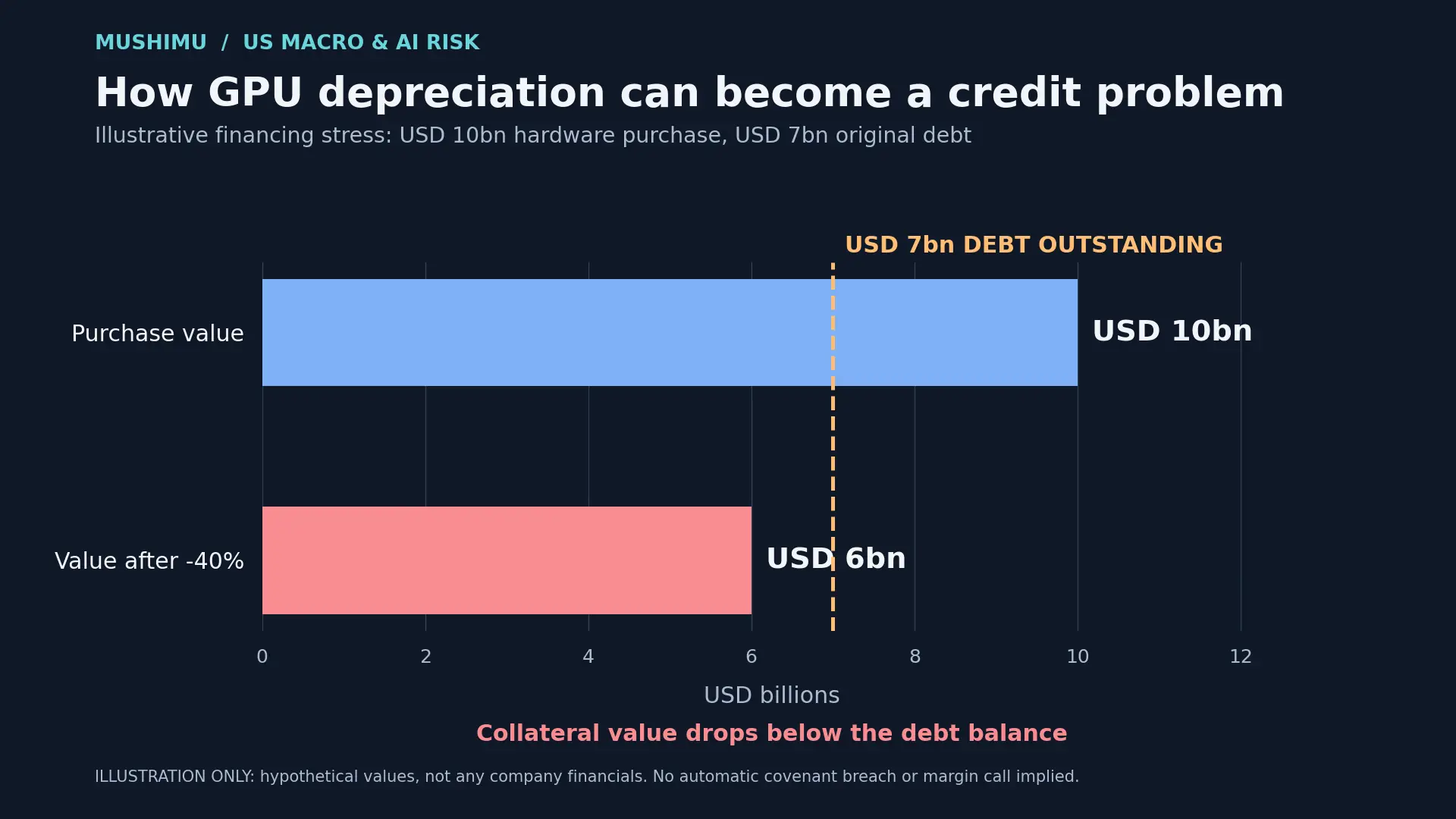 That doesn't automatically trigger bankruptcy or a margin call. Loan covenants, customer contracts, guarantees, and repayment schedules all matter. But declining collateral values are only half the problem. The other half is cash flow. 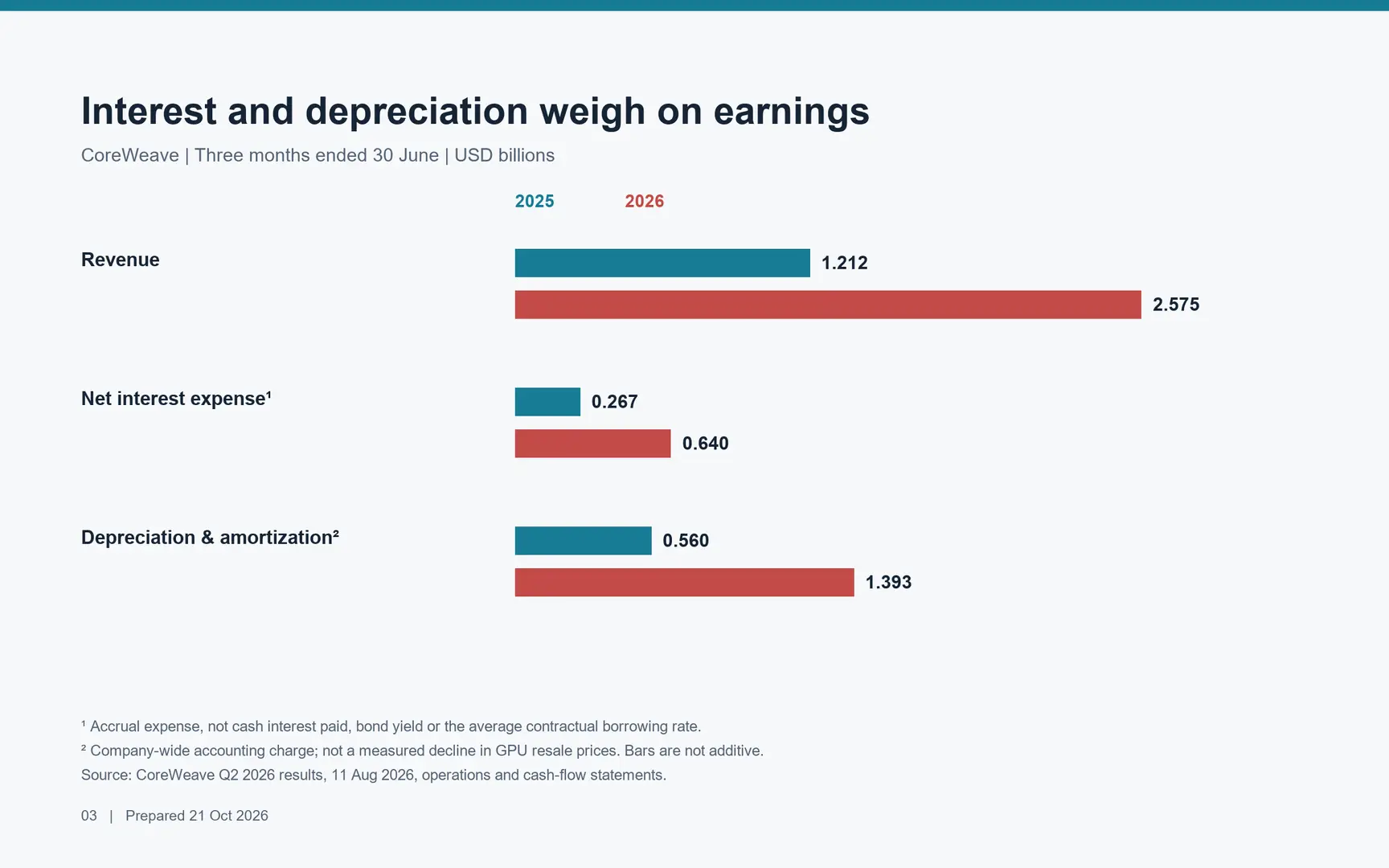 *CoreWeave historical accounting data. Depreciation and amortization are company-wide charges, not measured GPU resale losses. The simplified scenario below remains hypothetical.* ### Consider a simplified scenario: - Initial hardware investment: $10 billion. - Outstanding debt: $7 billion. - Annual revenue before the shock: $3 billion. - Annual operating expenses: $1.2 billion. - Average interest rate: 10%. - Annual interest expense: $700 million. Now assume that increased competition and falling GPU rental prices reduce annual revenue by 40%, while operating expenses remain unchanged. Revenue falls to $1.8 billion. After operating expenses, only $600 million remains before interest, taxes, and other financial obligations. That isn't enough to cover the $700 million in annual interest payments, let alone scheduled principal repayments. At the same time, a 40% decline in hardware resale values would reduce the estimated value of the original $10 billion equipment investment to $6 billion, below the assumed outstanding debt. The company would now face two simultaneous problems: deteriorating collateral coverage and insufficient operating cash flow to service its debt. This is a hypothetical stress test, not CoreWeave's actual financial position. But it illustrates how a profitable-looking infrastructure investment can become financially unsustainable when revenue declines, leverage is high, and fixed obligations remain. However, the company may face serious problems when refinancing. If lenders reassess the collateral, demand stronger guarantees, or reduce the amount they're willing to lend, the company may need to raise additional capital. If it cannot, it might be forced to sell equipment. Now imagine several companies doing this simultaneously. Distressed equipment sales put pressure on secondary-market GPU valuations. Falling collateral values make refinancing harder for other borrowers. Credit becomes more expensive. Projects get cancelled. More companies struggle. **A technological improvement could become a financial crisis through declining asset values, leverage, and forced selling.** The Bank for International Settlements has already warned that AI infrastructure financing increasingly involves private credit, special-purpose vehicles, and off-balance-sheet arrangements. These structures can create channels through which financial stress spreads beyond the original borrowers. ## 6. How this could spread to the rest of the economy Now connect that potential crisis to the wider American economy. Imagine that several heavily leveraged AI infrastructure providers default or restructure their debts. Investors become reluctant to finance similar projects. Large technology companies reconsider expansion plans. GPU orders slow. Data center construction projects are postponed. Equipment manufacturers, construction companies, electrical infrastructure suppliers, and related industries start feeling the effects. Technology valuations decline, potentially reducing household wealth and confidence. Companies reduce hiring or begin layoffs. Consumer spending weakens. And remember where we started: the housing market is already struggling. If unemployment rises, some homeowners who previously had the option of waiting may suddenly need to sell. That could increase housing supply and place additional pressure on prices. The original problem started with financing AI infrastructure. But the consequences could spread into housing, employment, consumer spending, and the broader credit market. **That's how an industry-specific financial correction could potentially turn into a recession.** The critical distinction is whether the losses remain concentrated among shareholders and specialist lenders or cause credit to tighten across the economy. ### The missing link: when does an AI credit crisis become systemic? This is probably the biggest uncertainty in my thesis. A few bankrupt AI infrastructure companies would not automatically trigger another 2008. Even substantial losses could remain concentrated among shareholders, private credit funds, and specialized lenders. For a broader financial crisis to develop, several additional conditions would likely need to emerge: - Significant and concentrated exposure among banks, institutional investors, or other interconnected lenders. - Simultaneous deterioration in the collateral backing infrastructure loans. - Refinancing failures affecting multiple borrowers rather than isolated companies. - Forced asset sales that push collateral valuations lower across the industry. - Credit tightening that spreads beyond AI infrastructure into unrelated sectors. The important question is therefore not simply how much debt the AI industry has accumulated, but who ultimately holds the risk, how that risk is distributed, and whether losses could force financial institutions to reduce lending elsewhere. Without that transmission mechanism, we could witness a severe AI infrastructure correction rather than a systemic financial crisis. And that distinction matters. 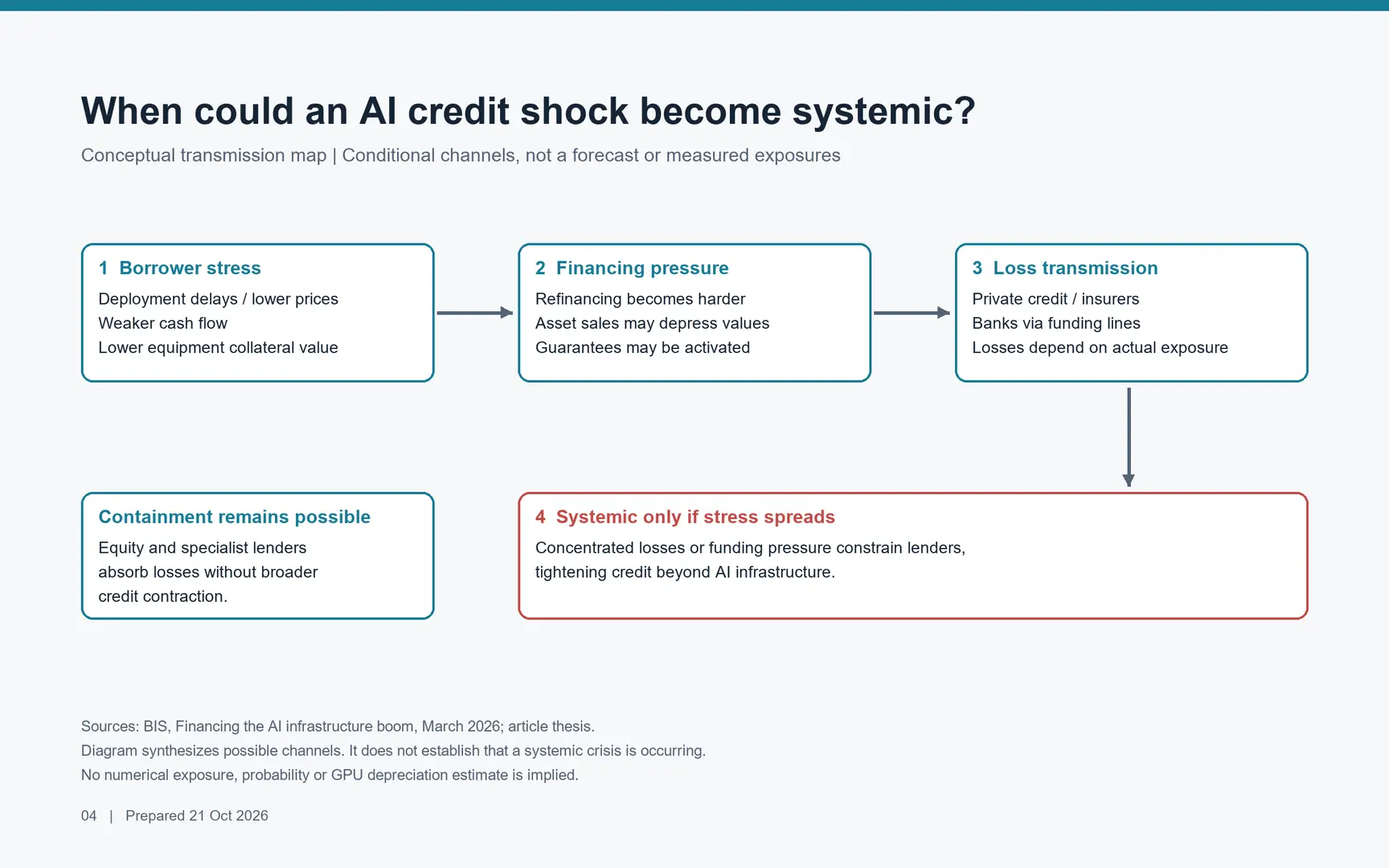 *Conditional transmission channels, not a forecast or measured financial exposures.* ## 7. Trump, the dollar, and the Fed's dilemma There's another complication. Trump has consistently favored lower interest rates, while a less expensive dollar could support American export competitiveness. But the Federal Reserve is still dealing with inflation. As of October 2026, borrowing costs remain elevated, and economists surveyed by Reuters expect the Fed to maintain its current rates in October, with another increase possible in December. Now imagine an AI-related financial shock hitting the economy while inflation remains persistent. The Fed would face competing pressures. Cutting interest rates could support refinancing and economic activity. But reducing rates too aggressively might aggravate inflation expectations or put additional pressure on the dollar. And there's a crucial distinction: **Lower short-term Fed rates don't automatically guarantee lower mortgage rates or cheaper long-term corporate financing.** 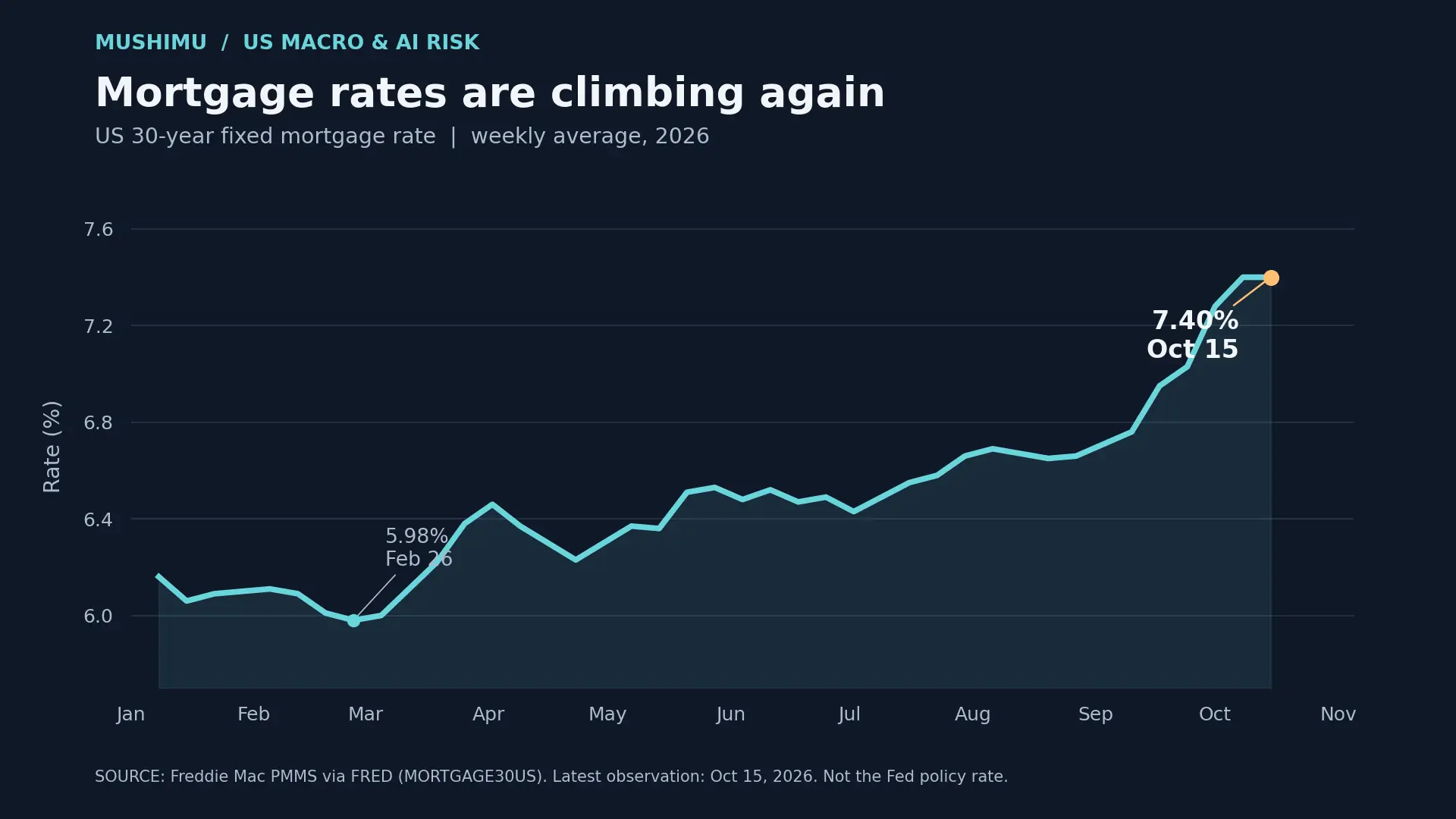 If investors become concerned about inflation, fiscal deficits, or long-term financial stability, they could continue demanding high yields on government and corporate bonds. That could leave the US facing a particularly difficult combination: Weakening growth, expensive credit, persistent inflation, and limited room for effective stimulus. ## 8. The scenario I'm watching for in 2027 I'm not predicting an inevitable financial collapse. But I think the following sequence is worth watching: 1. Expensive GPUs arrive faster than the power infrastructure needed to deploy them. 2. Delayed projects accumulate financing costs without generating their expected revenue. 3. More efficient inference hardware puts pressure on the profitability and resale value of some existing GPUs. 4. Lenders begin demanding higher yields, additional protection, or stronger collateral. 5. Some heavily leveraged infrastructure providers are forced to restructure. 6. Investors withdraw funding from similar projects, causing a broader contraction in AI infrastructure investment. 7. The investment slowdown spreads into employment, financial markets, construction, and eventually consumer spending. If this happens while the housing market is already weak and inflation prevents aggressive monetary easing, the economic consequences could be substantial. But there's also a completely different possibility. AI demand might grow fast enough to absorb all the additional computing capacity. Cheaper inference could create new industries and dramatically expand the market. Energy bottlenecks might be resolved faster than anticipated. And even if some infrastructure companies fail, the losses might remain contained within their investors and creditors. A financial crisis is therefore possible, not inevitable. ## 9. What would confirm or disprove this theory? A useful economic thesis should be falsifiable. Rather than simply predicting a crisis, I think we should identify the signals that would support or contradict this scenario throughout 2027. ### Warning signs that would strengthen the thesis - **GPU rental pricing:** Sustained declines in rental prices that outpace improvements in operating efficiency, putting pressure on infrastructure providers' revenue and margins. - **Corporate credit spreads:** Rising borrowing costs for AI infrastructure companies relative to comparable borrowers, indicating increasing concerns about credit risk. - **Cash flow deterioration:** Major infrastructure providers reporting persistent negative free cash flow, weakening liquidity, or growing dependence on refinancing. - **Delayed data center deployments:** Repeated postponements caused by electricity shortages, grid connection delays, or construction bottlenecks. - **Debt restructuring:** Multiple providers renegotiating loans, raising emergency capital, or selling hardware to meet obligations. - **Capital expenditure reductions:** Major cloud providers reducing planned AI infrastructure investment because expected returns no longer justify further expansion. - **Contagion outside AI:** Evidence that losses among infrastructure lenders are causing credit to tighten in other sectors. ### What would weaken or disprove the thesis? - AI inference demand growing fast enough to absorb new capacity while preserving acceptable provider margins. - GPU utilization remaining high despite rapid hardware improvements. - Infrastructure companies generating sufficient operating cash flow to service and refinance their debt. - Electricity and construction bottlenecks easing without significant financial damage. - Losses remaining concentrated among equity holders and specialized lenders, without meaningful spillovers into broader credit markets. The most important indicator isn't Nvidia's share price or even the total amount of money being invested in AI. It's whether the cash flows generated by AI infrastructure can justify the enormous amount of capital being committed to building it. If revenues, margins, and debt-servicing capacity improve alongside AI adoption, the bearish scenario becomes less convincing. If infrastructure investment keeps growing while cash flows deteriorate and financing costs rise, the warning signs become much harder to ignore. ## My conclusion: AI could succeed while its financing model fails I don't think the biggest risk to the AI industry is that artificial intelligence turns out to be useless. I think the more interesting risk is that AI succeeds, becomes dramatically cheaper, and transforms the economy — while some of the companies that financed its initial infrastructure expansion discover they paid too much for assets that are no longer generating the returns they expected. We're potentially looking at a dangerous combination: - Enormous upfront investments in computing hardware. - Heavy leverage among some infrastructure providers. - Electricity and construction bottlenecks delaying revenue generation. - Rapid technological improvements threatening the economic value of existing equipment. - Interconnected financing arrangements that could amplify losses. - An already weak housing market and limited monetary flexibility. None of these factors guarantees a crisis. But their interaction deserves serious attention. The US economy increasingly reminds me of a cyclist climbing a steep hill. He's still moving forward, but a significant part of his momentum is coming from an increasingly expensive engine. The housing market is struggling. Public borrowing remains elevated. Credit is becoming more expensive for vulnerable borrowers. And the AI investment boom, which is helping sustain economic growth, may itself be accumulating financial vulnerabilities. **What happens if that engine suddenly loses power?** Maybe the cyclist simply slows down and recovers. Or maybe he discovers that he was relying on that extra power much more than he realized. The internet survived the dot-com crash. AI would almost certainly continue developing after a major industry correction. But that doesn't mean every company financing its infrastructure would survive — or that the broader economy would emerge unharmed. **AI doesn't need to fail for an AI infrastructure bubble to burst. It only needs to become cheaper faster than some investors can recover their capital.** That's the central hypothesis. And I think it's worth debating before we find out how resilient the financing behind this boom really is. What do you think? Are we looking at a manageable correction in AI infrastructure spending, or could the combination of debt, technological depreciation, and energy bottlenecks create a much larger credit crisis? ## Sources - [National Association of Realtors — Pending Home Sales, September 2026](https://www.nar.realtor/newsroom/pending-home-sales-decreased-7-3-percent-in-september) - [Realtor.com — September 2026 Housing Market Trends](https://www.realtor.com/research/september-2026-data) - [Business Insider — Amazon's Nvidia hardware and data center power constraints](https://www.businessinsider.com/amazon-nvidia-ai-gpu-data-centers-power-shortages-2026-10) - [Reuters — AI credit worries and rising default insurance costs](https://www.reuters.com/business/media-telecom/global-markets-cds-ai-urgent-2026-10-15/) - [Reuters — CoreWeave debt and banking exposure](https://www.reuters.com/business/finance/coreweave-debt-selloff-poses-limited-risk-global-banks-jp-morgan-says-2026-10-20/) - [Bank for International Settlements — Financing the AI Infrastructure Boom](https://www.bis.org/publications/qr-202603/financing-ai-infrastructure-boom-on-and-off-balance-sheet-borrowing) - [Reuters — Federal Reserve rate expectations, October 2026](https://www.reuters.com/business/fed-skip-october-raise-rates-again-december-nearly-all-economists-say-2026-10-20/) ~AI ~Economics