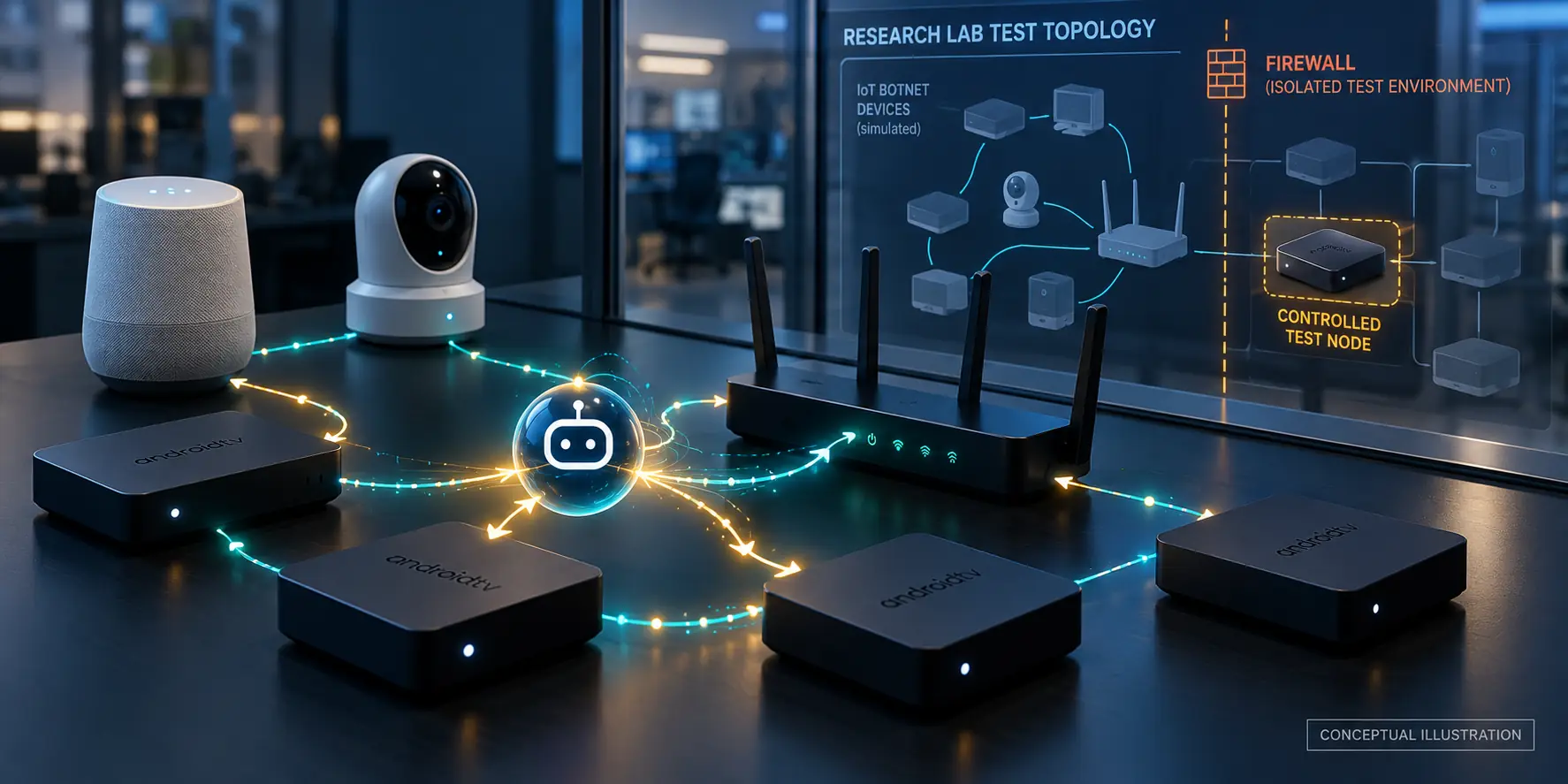
Anthropic tests AI replication using TV boxes and a controlled network
[Anthropic’s October 12 study](https://www.anthropic.com/research/self-replicating-ai) shows that AI models can perform parts of a self-replicating worm’s setup across connected devices, but it does not report an AI worm spreading in the wild. The tests point to a future IoT security risk; they do not show that today’s smart TVs are being infected by AI. The company’s researchers ran one 26-billion-parameter model across 15 inexpensive Android TV boxes, each costing about $55. The devices shared the workload at roughly 0.39 tokens per second. In a separate test, a 9-billion-parameter model got inference running on eight of nine hardware types. These experiments show that modest devices can host model workloads when linked together, not that the devices were compromised. For the end-to-end replication test, Anthropic used eight Android emulators in a firewalled Google Cloud network. GLM-5.2 reached all eight nodes in four out of five trials and seven in the fifth. But the researchers deliberately simplified initial access: the emulator network exposed an unauthenticated ADB port. They say this makes the result an upper bound on real-world success. No real consumer device was infected in this test, and the team did not demonstrate a model that was both small enough for the tested TV boxes and reliable enough to complete the whole cycle on its own. Anthropic estimates that small models could reach the tested capability by the end of 2026 if recent improvement continues. That is a trend-based extrapolation, not a confirmed release date or warning that a new worm is imminent. [Al Jazeera’s October 13 report](https://www.aljazeera.com/economy/2026/10/13/ai-could-self-replicate-on-home-devices-within-months-anthropic-says) also emphasizes the controlled setup and quotes an outside AI security expert who described the current result as concerning in trajectory, but not an existential threat. The near-term takeaway is familiar IoT security: devices with weak or outdated protections can be attractive botnet targets, whether malware uses AI or not. Anthropic says defenders could monitor unusually large model downloads, sustained traffic between devices that do not normally communicate, and scanning activity. For owners, keep device software updated, change default passwords and replace hardware that no longer receives security fixes. The research adds a possible layer of adaptability to a longstanding problem; it does not establish an active outbreak. *Conceptual illustration of connected devices; not a photograph or depiction of a real incident.*