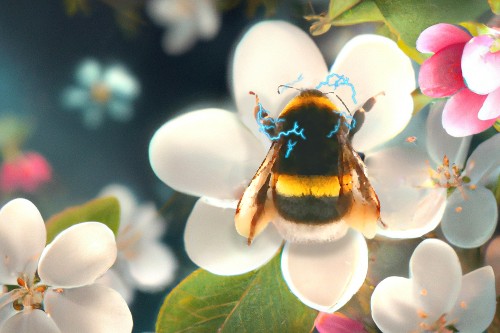
Bumblebees can sense flower electricity—and sprays can alter it
Flowers advertise with more than color and scent. A bumblebee builds up a positive electrical charge as it flies, while plants are usually negatively charged. The resulting weak electric field can change when a bee visits. In a 2013 experiment, bumblebees could distinguish floral electric fields, and those cues helped them learn color-reward differences faster. A later study asked whether ordinary sprays could disturb that invisible signal. In laboratory tests, fertilizer sprays changed flower-stem electrical potential for up to 16 minutes; the pesticide imidacloprid changed it for up to 25. The researchers then mimicked a spray-sized electrical change on cut lavender in a field test. Wild bumblebees were less likely to land on flowers with the altered field, although bees that did land stayed about as long. That is a surprising sensory channel: a flower’s electrical surroundings can help a bee decide where to land, even though people cannot see or smell the difference. It also gives researchers another way to think about how agricultural chemicals can affect pollination beyond toxicity alone. There are limits to the result. The field test electrically altered cut flowers to match changes measured after spraying; it did not track crop yields or show that sprays reduce bee populations. The researchers say the wider, long-term effects remain uncertain. The work shows that electric fields can shape a bee’s foraging choices, not that flowers consciously “talk” or that one experiment settles the impact on pollination. Image: Artist’s impression of a bumblebee and flower, by Nubia Hunting (University of Bristol). Research: [the 2013 bumblebee study](https://pubmed.ncbi.nlm.nih.gov/23429701/) · [the 2022 PNAS Nexus study](https://academic.oup.com/pnasnexus/article/1/5/pgac230/6814445) · [University of Bristol overview](https://www.bristol.ac.uk/news/2022/november/fertilisers-change-how-bumblebees-sense-flowers.html). ~science ~pollination