Why GPS satellites need a built-in correction for Einstein’s relativity
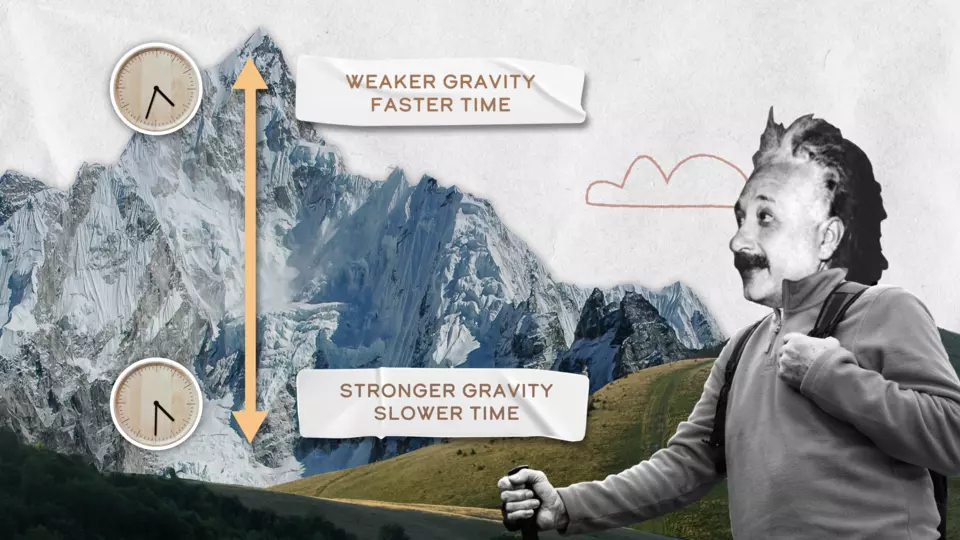
Your phone’s GPS fix depends on a correction for Einstein: clocks do not tick at the same rate everywhere. A GPS receiver estimates distance by comparing when a satellite sent a timestamp with when it arrived. Since the signal travels at the speed of light, even a microsecond of timing error represents roughly 300 metres of signal travel. Two effects pull satellite clocks in opposite directions. GPS satellites move quickly, so special relativity makes their clocks lose about 7 microseconds per day compared with clocks on Earth. But they orbit far above Earth, where gravity is weaker, so general relativity makes them gain about 45 microseconds per day. The net result is that an unadjusted satellite clock would run about 38 microseconds per day faster than a ground clock. GPS handles this in its design. The system’s interface specification requires satellite clock rates to be offset by a tiny fraction, about 4.4647 × 10⁻¹⁰, to compensate for relativistic effects. The receiver also uses clock-correction data broadcast by the satellites. These are routine engineering corrections, not a special setting users need to enable. GPS time has uses beyond maps. It can synchronize communications networks, power grids and financial systems, so the timing rules behind your blue dot also support infrastructure that depends on precise clocks. NIST’s explanation describes the 7/45/38-microsecond effects; the official GPS specification documents the clock-rate offset, and [GPS.gov explains its timing uses](https://www.gps.gov/gps-and-telling-time). Image: NIST illustration of how gravity affects the passage of time; it is conceptual and does not depict a GPS satellite. Credit: J. Wang/NIST. [NIST’s relativity explainer](https://www.nist.gov/atomic-clocks/a-powerful-tool-for-science/putting-einstein-test) · [GPS Interface Specification, section 3.3.1.1](https://www.gps.gov/sites/default/files/2025-07/IS-GPS-200N.pdf). ~Science ~GPS ~Relativity